

Global Medical Devices Market Size and Forecast – 2026 to 2033
The global medical devices market is estimated to be valued at USD 735.12 Bn in 2026 and is expected to reach USD 1,203.81 Bn by 2033, exhibiting a compound annual growth rate (CAGR) of 7.3% from 2026 to 2033. This significant growth is driven by the increasing demand for advanced healthcare solutions, rising prevalence of chronic diseases, and continuous innovation in medical technology.
Key Takeaways of the Global Medical Devices Market
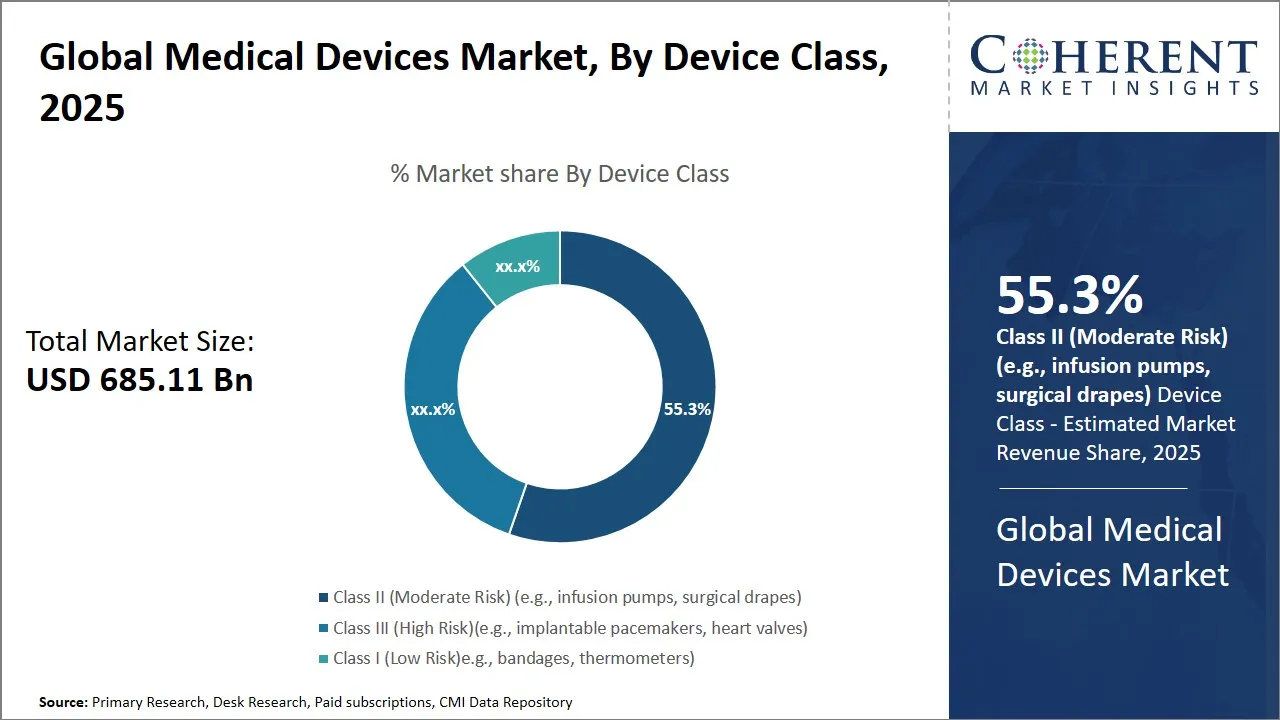
- Class II (Moderate Risk) (e.g., infusion pumps, surgical drapes) are more diverse than low-risk Class I devices, holding an estimated 56.3 % market share in 2026.
- The diagnostic devices segment dominates by product type, contributing 24.4 % in 2026, due to its broad range, from conventional equipment to advanced imaging and point-of-care test kits.
- AI-based devices lead the technology category, with a projected share of 33.2 % in 2026.
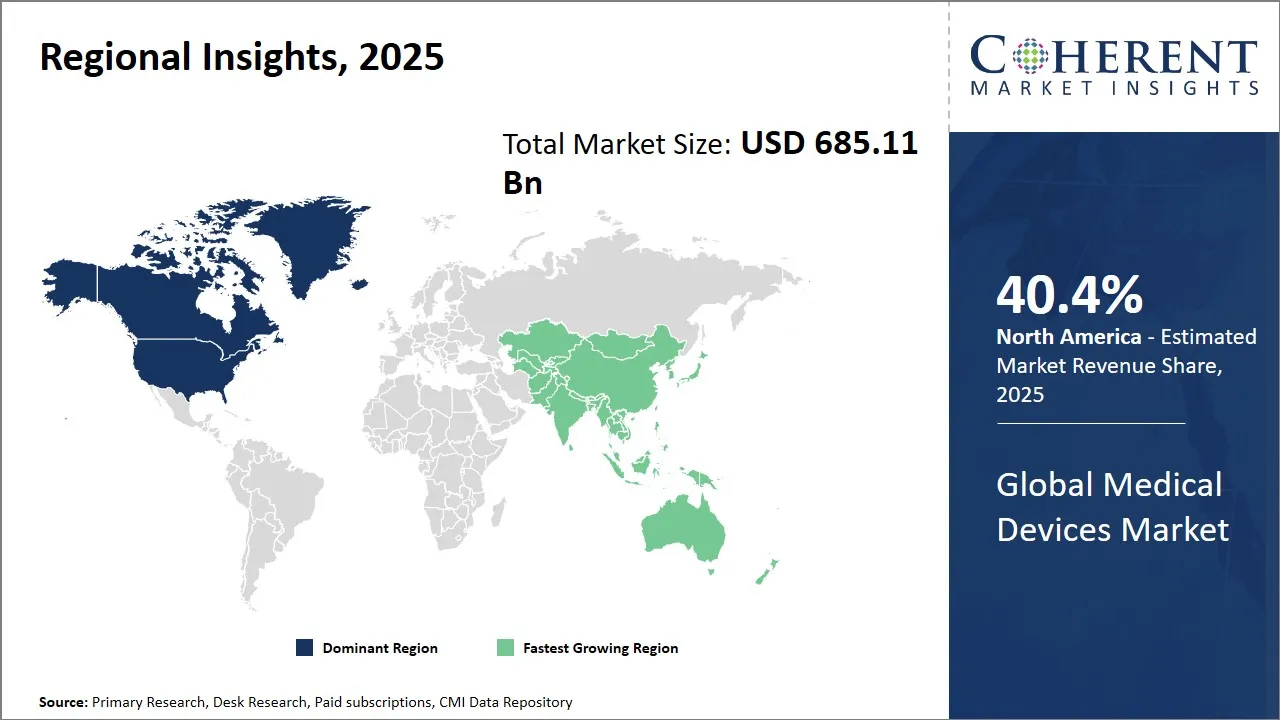
- North America is expected to lead the market, holding a share of 40.4% in 2026. Asia Pacific is anticipated to be the fastest-growing region, with an estimated market share of 24.5% in 2026.
Market Overview
Current market trends emphasize the integration of digital health technologies such as AI, IoT, and telemedicine within medical devices, enhancing diagnostics and remote patient monitoring. Additionally, there is a growing focus on minimally invasive procedures and wearable medical devices, which improve patient comfort and outcomes, fueling robust market expansion globally.
Current Events and Its Impact
Current Events | Description and its Impact |
Technological Advancements and AI Adoption |
|
Implementation of the EU Medical Device Regulation (MDR) |
|
Segmental Insights
- Current Industry Events of 2026
- Market Size Estimation
- Regional Breakdown
- Competitive Landscape
- Customer Intelligence
- Segmental Analysis
- Pricing Analysis
- Key Market Drivers, Challenges & Future Trends
- Customized Insights Section
Medical Devices Market Insights, By Device Class - Class II (Moderate Risk) (e.g., infusion pumps, surgical drapes) segment contributes the highest share of the market owing to its balanced risk profile and critical application in healthcare institutions
Class II (Moderate Risk)(e.g., infusion pumps, surgical drapes)are more elaborate and inclusive of a wide range of products, as compared to low-risk Class I devices and they lead with an estimated market share of 56.3% in 2026. Additionally, these devices are not subject to unavoidable risks of Class III implantable or life-sustaining products. This is an intermediate risk category that requires stringent regulation controls to maintain safety and effectiveness that prompts manufacturers to invest in quality, innovation, and compliance. All these are expected to increase the reliability and adoption of Class II devices in hospitals, outpatient centers, and home care areas.
In July 2024, Ranfac, a manager of medical device production, described the procedure of obtaining U.S. FDA approval of Class I devices and Class II devices, and emphasized the role of compliance in this process. In the case of Class I devices, such as bandages and masks, the procedure is less complicated, and Class II devices, such as syringes and catheters, demand more detailed regulation, including 510(k) clearance.
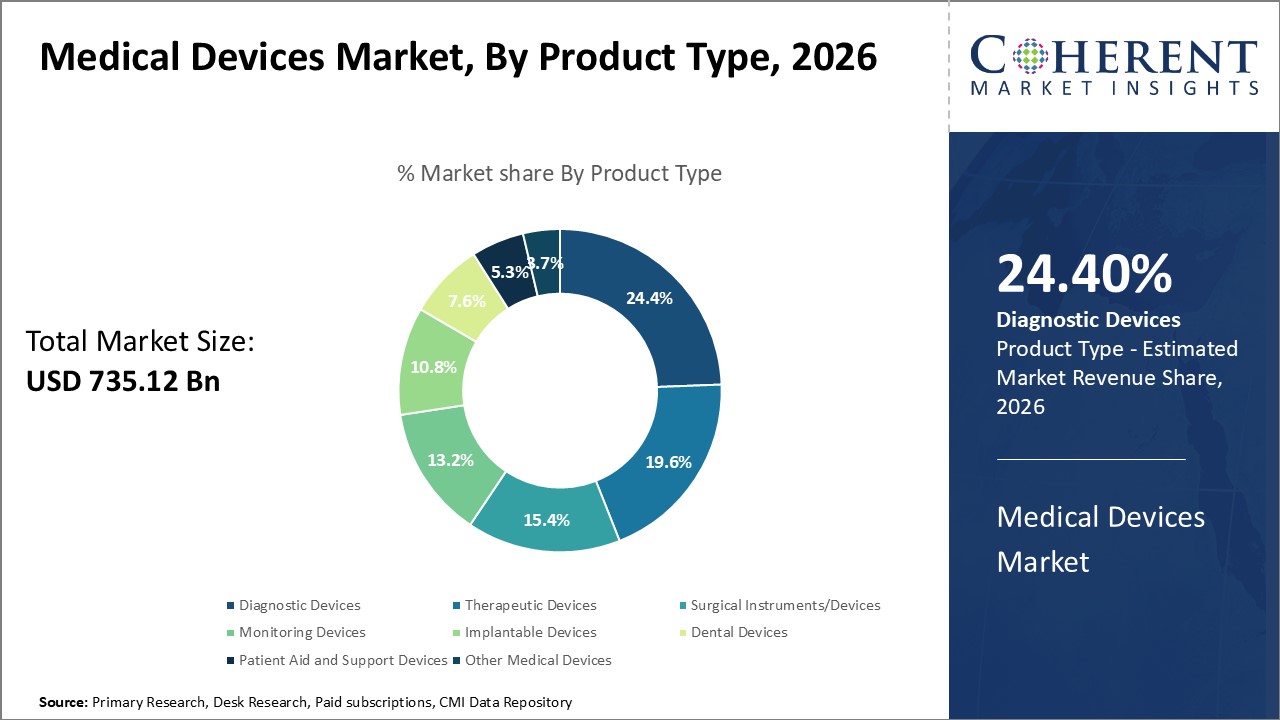
Medical Devices Market Insights, By Product Type - Diagnostic devices dominate the global medical devices market driven by the critical need for early and accurate disease detection and management
By Product Type, the Diagnostic Devices segment is dominant due to its wide range, from conventional diagnostic equipment to advanced imaging tools and point-of-care test kits. This increasing diagnostic complexity in modern medicine is expected to contribute a share of 24.4% in 2026. One of the reasons behind the expansion of diagnostic equipment is the rise in the prevalence of chronic diseases in the world including cancer, cardiovascular diseases, and diabetes and this enforced regular and sophisticated diagnostic assessment to monitor the progression of the disease and deliver personalized care.
In May 2025, Diagnostics.ai, an AI-based diagnostics leader, released its entirely-transparent machine learning platform to run real-time PCR diagnostics, which is in compliance to the new CE-IVDR requirements. This platform is also completely transparent because it gives a view of the exact method of how every result is obtained, which allows tracing and accuracy with a proven reliability of over 99.9%.
Medical Devices Market Insights, By Technology – Artificial Intelligence (AI)-based devices dominate the global medical devices market due to their ability to significantly enhance diagnostic accuracy
Artificial Intelligence (AI)-based devices are leading the technology category of the global medical devices market, with a projected share of 33.2% in 2026. These devices are transforming healthcare delivery by enhancing accuracy, efficiency, and personalization.AI-based medical devices can process complex clinical data, assist in the diagnostic process, optimize therapeutic intervention, and forecast patient outcomes based on machine learning, deep learning, and neural networks. The two factors enabling growth in this segment are tremendous volumes of healthcare data produced and the growing need to automate and be more precise in diagnosis and treatment planning.
In July 2025, the Punjab government released AI-scanning screening machines to detect the presence of cancer at an early stage, and this move is a big step towards supporting preventive care within the state in India. Such innovative technologies are based on artificial intelligence to enhance the accuracy of detecting early signs of cancer to improve more diagnostic and prompt intervention to improve patient outcomes.
Role of Artificial Intelligence (AI) in the Global Medical Devices Market
- Artificial Intelligence (AI) is revolutionizing, the global medical devices market by driving efficiency, cost reduction, and automation across various facets of the industry. Predictive analytics powered by AI enables healthcare providers to anticipate patient needs, optimize treatment plans, and enhance diagnostic accuracy, ultimately improving patient outcomes. Automation of routine processes such as data entry, inventory management, and regulatory compliance significantly reduces human error and operational costs. AI also supports data-driven decision-making, helping companies in the medical device sector analyze vast datasets to identify trends, improve product designs, and streamline supply chains. For instance, companies like Philips and GE Healthcare are already leveraging AI to improve imaging systems and develop personalized treatment protocols, thus enhancing the overall customer experience and boosting market competitiveness.
- The emergence of AI in the medical devices market also paves the way for new business models and innovative products and services. AI-powered devices are offering more personalized and adaptive healthcare solutions, such as wearables that monitor patient vitals in real-time and predict potential health risks. Additionally, AI-driven operational improvements in manufacturing, such as predictive maintenance for medical equipment, are ensuring better asset management and longer product life cycles. While AI provides significant advantages in efficiency and innovation, companies must consider the potential drawbacks, including the high costs of AI integration and the risks associated with data security and regulatory challenges.
Regional Insights
North America Medical Devices Market Analysis and Trends
North America's influence on the global medical devices market is driven by its well-developed healthcare infrastructure, which is expected to capture a market share of 40.4% in 2026. Additionally, the region benefits from a robust research and development ecosystem and a favorable regulatory environment. The U.S., especially has a leading role to play owing to the presence of major manufacturers of medical devices like Medtronic, Johnson and Johnson, and Boston Scientific. The U.S. Food and Drug Administration (FDA) offers well-defined regulatory guidelines that promote innovation and provide safety of patients, which creates a favorable environment of higher product development and commercialization.
In March 2026, Johnson and Johnson MedTech, one of the world leaders in the field of surgical technologies, released the DUALTO Energy System, which represents a multifunctional surgical platform to unite various types of energy to perform both open and minimally invasive surgeries. The DUALTO system is provided with the simplified user experience, Polyphonic Fleet digital device control, and the ability to use monopolar, bipolar, ultrasonic, and sophisticated bipolar energy devices.
Asia Pacific Medical Devices Market Analysis and Trends
The Asia Pacific region is the fastest-growing market in the global medical devices sector, with an expected market share of 24.5% in 2026. This growth is driven by the expansion of healthcare infrastructure, increasing healthcare awareness, and government initiatives aimed at improving access to medical services. China, India, Japan, and South Korea are among the key players in this boom through progressive policies that support domestic production as well as the influx of foreign capital in the sector, bolstering the local ecosystem.
In June 2026, Covestro began manufacturing its Desmopan Rx medical-grade Thermoplastic Polyurethane (TPU) at a newly qualified location in China. This marks the company’s second medical-grade TPU production facility, enabling it to supply its TPU material to the Asia Pacific region more quickly and flexibly. The TPU material is chosen for use in medical equipment such as flexible tubing and endoscopes, which must meet stringent international standards for biocompatibility and sterilization.
Medical Devices Market Outlook for Key Countries
U.S. Medical Devices Market Trends
The medical devices market in the U.S. is defined by a strong ecosystem of innovation powered by well-developed venture capital financing and the most advanced academic medical centers that provide the promotion of clinical research. Other companies such as Abbott Laboratories and Stryker have played a major role in the development of state-of-the-art devices in the field of cardiovascular health and orthopedic solutions. The well-developed regulatory system by the U.S. FDA has guaranteed quality products, making the companies very keen to introduce sophisticated technologies.
On September 26, 2026, StatLab Medical Products, a leading manufacturer of pathology supplies, announced the U.S. launch of Diapath's advanced pathology instruments, following its 2024 acquisition of Diapath. The company introduced the Donatello Tissue Processor, Galileo Microtome, and Dante Embedding Center at the National Society of Histotechnology Annual Convention in California, U.S.
Germany Medical Devices Market Trends
Germany is still ahead of Europe in terms of established medical device production industry and export orientation. It also has in it prominent industry players like B. Braun Melsungen and Fresenius Medical Care, which are the leaders of infusion therapy and dialysis products respectively. Competitiveness in high-tech medical solutions is facilitated by the focus of the country on accuracy in engineering and high standard quality manufacturing. The German reimbursement policies and good healthcare insurance system make innovative devices easy to access the market.
In April 2022, Siemens Healthineers, a global healthcare technology company headquartered in Germany, expanded its manufacturing footprint in India with the launch of a new production line for Computed Tomography (CT) scanners at its Bengaluru facility.
China Medical Devices Market Trends
The China medical devices market is growing at a high rate because of the massive medical reforms that are meant to ensure that more people have access to healthcare. The orientation of the government on increasing domestic production is reflected in the domination of the domestic sales by companies such as Mindray and Kehua Bio-Engineering and compete on the global scale. The regulatory changes have facilitated the processes of seeking approvals, where foreign direct investment is being attracted and partnership established with other foreign companies like Philips and Medtronic.
In July 2026, Evonik, a global leader in specialty chemicals, announced the opening of its largest medical device center in Shanghai, designed to serve the entire Asian market. The new facility focuses on the research, development, and processing of semi-finished components for bioresorbable medical devices.
Japan Medical Devices Market Trends
Japan has a developed market of medical devices with high quality of healthcare delivery and high levels of investments in research and development. Terumo and Olympus are among companies that are major players in the advanced medical devices like endoscopy and vascular intervention products. The government encourages innovation by using policies that serve as a recommendation of patient safety and reimbursement approvals through Pharmaceuticals and Medical Devices Agency (PMDA).
In March 2024, Asahi Kasei Medical, a core operating company of the Asahi Kasei Group, and AW Technologies announced an exclusive distribution agreement for AW Technologies' TrachFlush device in Japan. The device, designed to reduce discomfort for ventilated patients and ease the workload on healthcare professionals during tracheal suctioning, features a unique cuff pressure control system.
Market Players, Key Developments, and Competitive Intelligence
Key Developments
- On September 22, 2025, LOCTITE, a trusted partner in adhesive solutions for medical device manufacturing, launched a new range of flexible and rigid LED-curable adhesives, including LOCTITE AA 3951/AA 3953 and LOCTITE AA 3961/AA 3963. The launch is part of its 'Bonded for Life' campaign, aimed at helping manufacturers meet the growing demand for safer, smaller, and more sophisticated medical devices. These adhesives are designed to support advanced medical applications, improve production efficiency, and meet strict safety standards. LOCTITE’s comprehensive portfolio includes over 40 biocompatibility-tested products, supporting everything from surgical instruments to high-volume disposable devices.
- On September 23, 2025, Abselion, a life sciences technology company specializing in advanced medical devices, launched the Protein G Total Antibody Quantification Kit. This new kit, designed for use with Abselion’s Amperia benchtop platform, expands the company’s antibody quantification capabilities, enabling the analysis of a wider range of antibody isotypes and species. The kit includes sensor strips, detection reagents, buffers, and plates, and uses Amperia’s software for quick and accurate electrochemical detection, automating the quantification process without optical or fluidic components.
- On September 10, 2025, Tata Elxsi, a global leader in design and technology services, inaugurated the 'Bayer Development Centre in Radiology' at its Pune facility in India. This center will focus on co-developing advanced radiology devices and technology with Bayer, a leader in the radiology field, to enhance early diagnosis and treatment of critical illnesses.
- In June 2025, Cardinal Health, a leading healthcare services and products company, launched the Kendall DL Multi System in the U.S., a new medical device designed for the continuous monitoring of three vital signs cardiac activity, blood oxygen level, and temperature using a single system. This multi-parameter system simplifies patient monitoring and improves clinician workflows, offering a reliable and efficient solution for hospitals.
Top Strategies Followed by Global Medical Devices Market Players
- Established players dominate the market by leveraging substantial investments in research and development (R&D) to drive innovation and develop high-performance products that meet the evolving needs of healthcare providers and patients. These companies allocate significant resources towards improving device accuracy, safety, and usability, ensuring they remain at the forefront of technological advancements. Furthermore, they strategically form partnerships with major industry players, original equipment manufacturers (OEMs), and healthcare providers to strengthen their market presence.
- In February 2025, Esco Lifesciences Group and Allwin Medical Devices announced a strategic partnership aimed at enhancing offerings in the IVF market. Allwin, a prominent manufacturer of medical devices for women’s health, urology, gastroenterology, and interventional radiology, will expand Esco’s portfolio of instruments with its IVF consumables.
- Mid-level players in the medical devices sector typically adopt a different approach, focusing on cost-effective solutions that strike a balance between quality and affordability. These companies target price-sensitive consumers, including smaller healthcare facilities and developing markets where budget constraints are significant. By offering reliable yet affordable products, mid-level firms cater to the growing demand for accessible healthcare technologies without compromising essential performance standards.
- On September 16, 2025, at the EASD Conference, Dexcom, a global leader in glucose biosensing, unveiled its upcoming Smart Basal module, designed to simplify basal insulin management, currently under U.S. FDA and CE mark review. New data showed that Dexcom CGM technology optimizes glucose control in pregnant women with Type 1 diabetes and is more effective than fingersticks in reducing neonatal complications linked to gestational diabetes.
- Small-scale players carve out their niche within the global medical devices market by focusing on specialized features or innovative products that address unmet clinical needs or leverage novel technological advancements. These companies emphasize agility and innovation, often adopting cutting-edge technologies such as artificial intelligence, wearable sensors, or miniaturized devices to differentiate themselves in a crowded marketplace.
- On September 3, 2025, Spark Biomedical and Velentium Medical announced the launch of OhmBody, a non-invasive wellness product designed to reduce cramps, excessive menstrual blood loss, and other period-related symptoms like fatigue, gastric discomfort, and emotional fluctuations.
Market Report Scope
Medical Devices Market Report Coverage
| Report Coverage | Details | ||
|---|---|---|---|
| Base Year: | 2025 | Market Size in 2026: | USD 735.12 Bn |
| Historical Data for: | 2020 To 2024 | Forecast Period: | 2026 To 2033 |
| Forecast Period 2026 to 2033 CAGR: | 7.3% | 2033 Value Projection: | USD 1,203.81 Bn |
| Geographies covered: |
| ||
| Segments covered: |
| ||
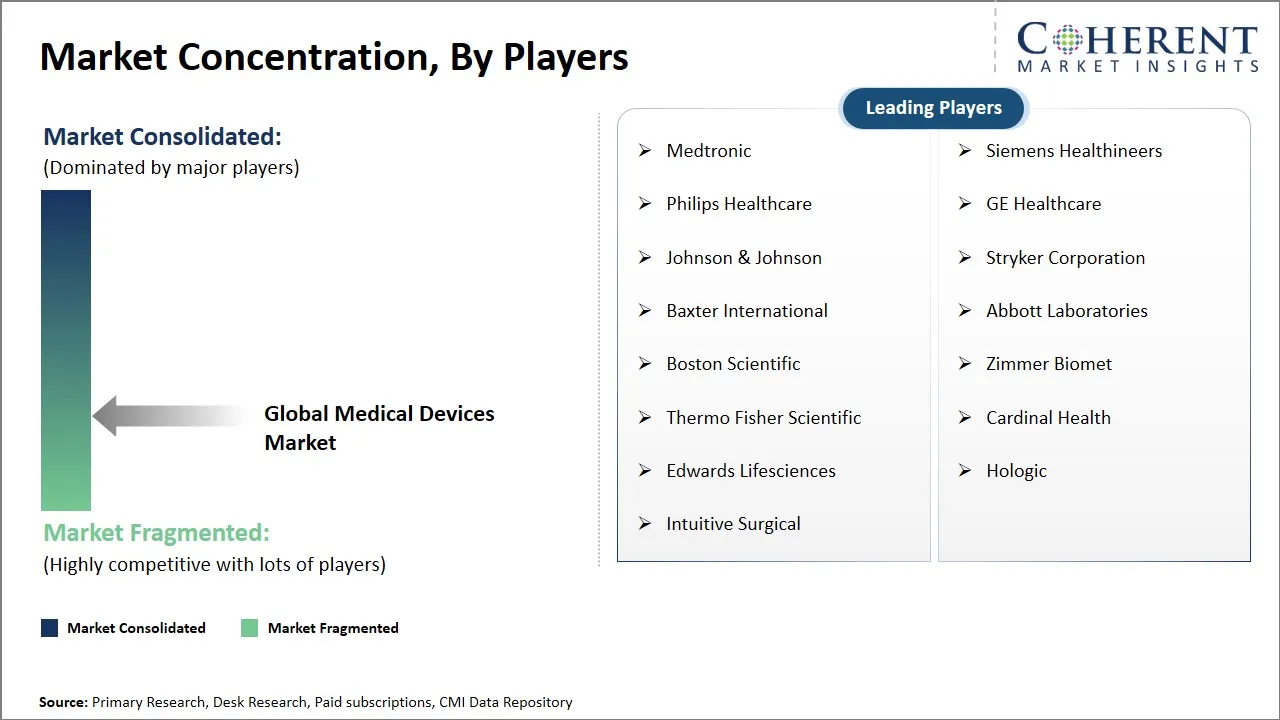
| Companies covered: | Medtronic, Siemens Healthineers, Philips Healthcare, GE Healthcare, Johnson & Johnson, Stryker Corporation, Baxter International, Abbott Laboratories, Boston Scientific, Zimmer Biomet, Thermo Fisher Scientific, Cardinal Health, Edwards Lifesciences, Hologic, and Intuitive Surgical | ||
| Growth Drivers: |
| ||
| Restraints & Challenges: |
| ||
Medical Devices Market Dynamics
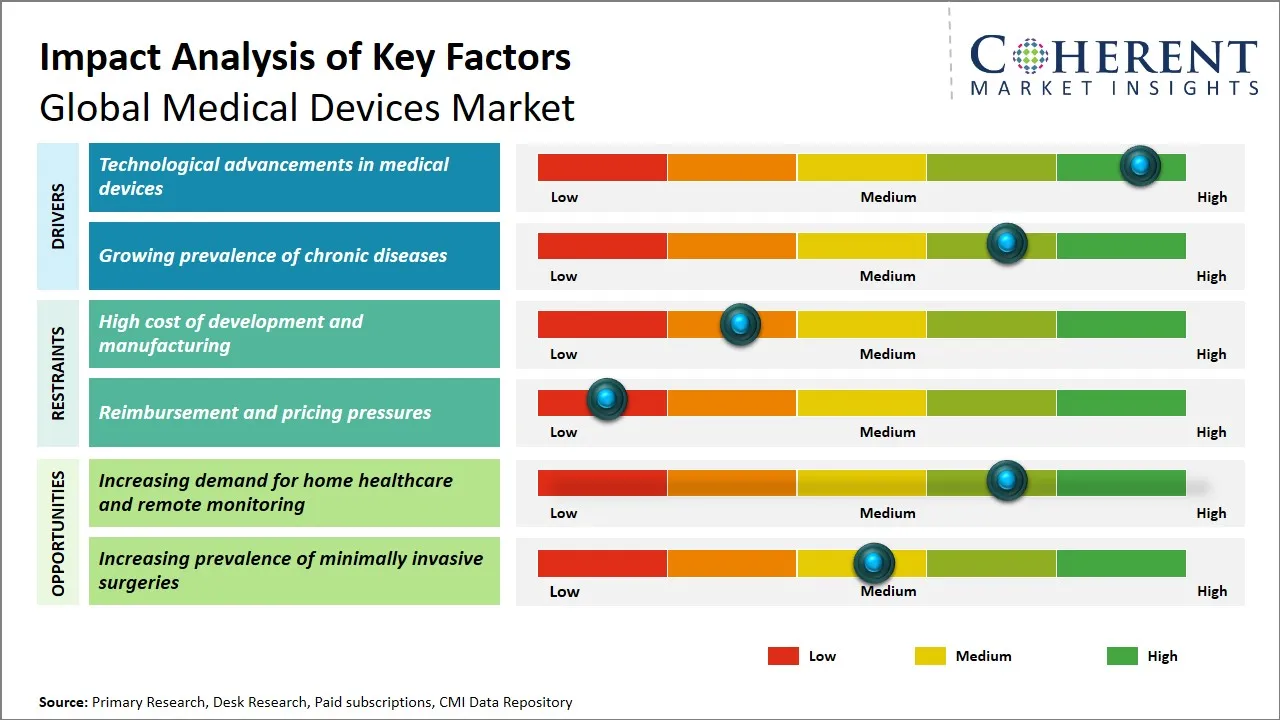
Medical Devices Market Driver - Technological Advancements in Medical Devices
Medical devices are changing healthcare delivery at a rapid rate due to advancements in technology with swift innovation that is enhancing the growth of the global medical devices market. Technological improvements like artificial intelligence (AI), machine learning, wearable sensors, and sophisticated imaging technologies boost the quality of the diagnostic process, personalized treatment, and remote monitoring of the patient. As an example, AI-powered algorithms can be applied to medical equipment to analyze and recommend clinical choices faster and allow wearable health devices and implantable ones to continuously measure vital signs and encourage preventive and proactive medicine. There are also new technologies in the minimally invasive surgical tools and robotic-assisted surgery systems which are enhancing the results of surgical procedures and decreasing the length of time patients need to recover.
In July 2024, the World Health Organization (WHO) introduced MeDevIS, an online resource that is aimed at improving the availability of medical devices and technologies in the world. The site is the first international open access clearing house of medical device information, which helps governments, regulators, and medical workers to choose, purchase, and employ medical devices to address a variety of health problems, such as infectious diseases, non-communicable diseases, and maternal and child health.
Medical Devices Market Opportunity - Increasing Demand for Home Healthcare and Remote Monitoring
The world market of medical devices is experiencing a great opportunity due to the increase in the need of home health care and remote monitoring devices. This is driven by the ageing population of the world, the rising rate of chronic diseases, and the rising desire to have patient-centric care models, which lay more focus on convenience and continuous health management in non-clinical environments. Technological progress, such as the use of wearables, telehealth, and IoT-powered medical devices, allows remote vital signs/glucose, cardiovascular, and other vital parameter monitoring, minimizing the number of visits to healthcare facilities and healthcare expenses.
In July 2025, U.S-based telehealth monitoring company, TeleMedCare unveiled a chronic patient remote patient monitoring (RPM) program with a top-tier health insurance company in the U.S. Since the insurance firm insured more than 500,000 people in five states, TeleMedCare was selected among other vendors of the RPM. The pilot phase of the program targets 300 patients who have chronic disease like congestive heart failure, chronic obstructive pulmonary disease, diabetes, and hypertension.
Analyst Opinion (Expert Opinion)
- The medical devices industry is presently undergoing a healthy growth, owing to various key drivers that include, persistent technological innovations, rising healthcare expenditure, and the growing population of the aging world over the globe. Diagnostic technologies, wearable devices, and minimally invasive devices have demonstrated great improvement in patient care and have increased the scope of treatment options. Also, the favorable regulatory environments especially in markets such as North America and Europe are making new products development and approval faster. With the current demand in the healthcare needs, particularly in the emerging markets, the demand of medical devices, both simple diagnostic equipment and innovative implantable devices will continue to be high. The companies also have an increasing prospect of tapping into the home healthcare devices as more consumers seek the ways of managing health on their own.
- Market however is not without its challenges. The main barriers to the industry include stringent regulatory barriers, expensive products and issues relating to device recall. Regardless of these challenges, new opportunities in such spheres as AI integration and the creation of the next-generation robotic surgery systems emerge. The recent conferences that include MedTech Conference 2023 in the U.S. and MEDICA Trade Fair 2022 in Germany have played a significant role in building trends in the industry by offering knowledge-sharing, discussions on policies, and displaying innovative technologies. Such incidents have assisted in guiding the discourse on the regulatory environment and integration of AI in healthcare which has contributed to the development and advancement of the sector. Particularly, the pilot programs like the European Union initiative called Horizon Europe, which was designed to promote innovation in the field of medical technology, are likely to promote market growth further.
Speak to the analyst
Want personalized insights?
Take the findings above to one of our principal consultants, or have the report rebuilt around the segments, geographies and competitors you actually track.
Market Segmentation
- Device Class Insights (Revenue, USD Bn, 2021 - 2033)
- Class II (Moderate Risk) (e.g., infusion pumps, surgical drapes)
- Class III (High Risk) (e.g., implantable pacemakers, heart valves)
- Class I (Low Risk) e.g., bandages, thermometers)
- Product Type Insights (Revenue, USD Bn, 2021 - 2033)
- Diagnostic Devices
- In-Vitro Diagnostics (IVD)
- Diagnostic Imaging
- Point-of-Care Testing
- Therapeutic Devices
- Cardiovascular Devices
- Orthopedic Devices
- Neurology Devices
- Respiratory Devices
- Diabetes Care Devices
- Wound Care Devices, etc.
- Surgical Instruments/Devices
- Minimally Invasive Surgical (MIS) Tools
- Robotic Surgery Systems
- General Surgical Instruments
- Monitoring Devices
- Wearable Health Devices
- Remote Patient Monitoring Systems
- Anesthesia Machines
- Implantable Devices
- Cardiac Implants (e.g., pacemakers, ICDs)
- Orthopedic Implants
- Neurostimulation Devices (Pain Management, Neurological Disorders)
- Dental Devices
- Orthodontic Appliances
- Implants and Prosthetics
- Diagnostic Tools
- Patient Aid and Support Devices
- Mobility Assistance Devices (Wheelchairs)
- Hearing Aids
- Respiratory Therapy Equipment (Ventilators)
- Continuous Positive Airway Pressure (CPAP) Machines
- Other Medical Devices
- Diagnostic Devices
- Technology Insights (Revenue, USD Bn, 2021 - 2033)
- Artificial Intelligence (AI)-Based Devices
- 3D-Printed Medical Devices
- Digital and Connected Platforms
- Laser-Enabled Instruments
- Nanotechnology-Based Devices
- Conventional Electro-mechanical & Disposable Devices
- End User Insights (Revenue, USD Bn, 2021 - 2033)
- Hospitals and Clinics
- Ambulatory Surgical Centers (ASCs)
- Diagnostic Laboratories
- Home Healthcare Providers
- Long-Term Care Facilities
- Academic and Research Institutions
- Medical Device Manufacturers
- Distribution Channel Insights (Revenue, USD Bn, 2021 - 2033)
- Offline
- Online
- Mode of Use Insights (Revenue, USD Bn, 2021 - 2033)
- Reusable Medical Devices
- Single-Use/Disposable Medical Devices
- Distribution Channel Insights (Revenue, USD Bn, 2021 - 2033)
- Hospital Pharmacies
- Retail Pharmacies
- Online Pharmacies
- Regional Insights (Revenue, USD Bn, 2021 - 2033)
- North America
- U.S.
- Canada
- Latin America
- Brazil
- Argentina
- Mexico
- Rest of Latin America
- Europe
- Germany
- U.K.
- Spain
- France
- Italy
- Russia
- Rest of Europe
- Asia Pacific
- China
- India
- Japan
- Australia
- South Korea
- ASEAN
- Rest of Asia Pacific
- Middle East
- GCC Countries
- Israel
- Rest of Middle East
- Africa
- South Africa
- North Africa
- Central Africa
- North America
- Key Players Insights
- Medtronic
- Siemens Healthineers
- Philips Healthcare
- GE Healthcare
- Johnson & Johnson
- Stryker Corporation
- Baxter International
- Abbott Laboratories
- Boston Scientific
- Zimmer Biomet
- Thermo Fisher Scientific
- Cardinal Health
- Edwards Lifesciences
- Hologic
- Intuitive Surgical
Sources
Primary Research Interviews
Primary Research Interviews
- Industry Stakeholders
- U.S. Department of Health & Human Services (HHS)
- National Institutes of Health (NIH) – Office of Medical Devices
- End Users
- National Health Service (NHS)
- American Medical Association (AMA)
Government and International Databases
- National Institute for Health and Care Excellence (NICE) – U.K.
- European Medicines Agency (EMA)
- Australian Therapeutic Goods Administration (TGA)
- Japan’s Pharmaceuticals and Medical Devices Agency (PMDA)
- World Intellectual Property Organization (WIPO)
- Canadian Medical Device Regulations (CMDR)
Trade Publications
- Healthcare IT News
- Orthopedic Design & Technology
- Diagnostic and Interventional Cardiology
- Pharmaceutical Technology
- Healthcare Purchasing News
- DeviceTalks
Academic Journals
- Journal of Medical Robotics and Computer Assisted Surgery
- The Journal of Cardiovascular Translational Research
- Journal of Clinical Engineering
- The Lancet – Medical Devices Special Issue
- International Journal of Medical Robotics and Computer Assisted Surgery
- Journal of Healthcare Engineering
Reputable Newspapers
- The Washington Post – Health Section
- Financial Times – Healthcare & Pharmaceutical
- The Independent – Health News
- The Times – Medical News
- USA Today – Health
- The New England Journal of Medicine (NEJM) – News
Industry Associations
- The International Medical Device Regulators Forum (IMDRF)
- The Global Harmonization Task Force (GHTF)
- International Society of Medical Shockwave Treatment (ISMST)
- Health Technology Assessment International (HTAi)
- The Medical Technology Association of Australia (MTAA)
- The British In Vitro Diagnostics Association (BIVDA)
Public Domain Resources
- World Bank – Health Systems
- United Nations Economic and Social Commission for Asia and the Pacific (ESCAP)
- National Library of Medicine (NLM)
- International Classification of Diseases (ICD-10)
- The Global Health Data Exchange (GHDx)
- U.S. Census Bureau – Health Statistics
Proprietary Elements
- CMI Data Analytics Tool: Proprietary analytics tool to analyze real-time market trends, consumer behavior, and technology adoption in market
- Proprietary CMI Existing Repository of Information for Last 8 Years
Get access to 250+ pages report
Every segment, forecast, competitor profile and data table behind the analysis above — available for instant download.
- ESOMAR Member
- ISO 9001:2015 Certified
- D-U-N-S Registered
- GDPR & CCPA Compliant
Missing comfort of reading report in your local language? Find your preferred language:
Transform your Strategy with Exclusive Trending Reports
Frequently Asked Questions
The global medical devices market is estimated to be valued at USD 735.12 Bn in 2026 and is expected to reach USD 1,203.81 Bn by 2033.
The CAGR of global medical devices market is projected to be 7.3% from 2026 to 2033.
Technological advancements in medical devices and growing prevalence of chronic diseases are the major factors driving the growth of the global medical devices market.
High cost of development and manufacturing and reimbursement and pricing pressures are the major factors hampering the growth of the global medical devices market.
In terms of device class, Class II (Moderate Risk) (e.g., infusion pumps, surgical drapes) is estimated to dominate the market revenue share in 2026.
Medtronic, Siemens Healthineers, Philips Healthcare, GE Healthcare, Johnson & Johnson, Stryker Corporation, Baxter International, Abbott Laboratories, Boston Scientific, Zimmer Biomet, Thermo Fisher Scientific, Cardinal Health, Edwards Lifesciences, Hologic, and Intuitive Surgical are the major players.
North America is expected to lead, the global medical devices market in 2026.