

Global AI Medical Device Validation Market Size and Forecast – 2026 To 2033
The global AI medical device validation market is expected to grow from USD 892.6 Mn in 2026 to USD 2,418.0 Mn by 2033, registering a compound annual growth rate (CAGR) of 15.3% from 2026 to 2033. The global AI medical device validation market is expected to witness a rapid growth driven by the increasing adoption of AI-enabled medical devices in across healthcare sector.
The U.S. Food and Drug Administration (FDA) stated that as of September 2026, more than 1,600 medical devices with AI had been approved for marketing in the U.S., highlighting the growing demand for validating the safety, accuracy and clinical effectiveness of a device.
Key Takeaways of the Global AI Medical Device Validation Market
- AI-enabled diagnostic imaging devices are projected to hold 31.6% of the global AI medical device validation market share in 2026, making it dominant device type segment. In North America, the U.S. leads the way in better evaluating AI medical devices through collaborations between academic centres and government agencies. In March 2026 the University of Maryland and U.S. Food and Drug Administration’s Center for Devices and Radiological Health announced a research collaboration to develop an approach to assessing the reliability, explainability and performance drift of AI devices before and after deployment.
- Software validation is projected to hold 24.7% of the global AI medical device validation market share in 2026, making it dominant validation type segment. In Europe, there is a push to boost the testing facilities for AI software in healthcare and for medical robotics. An EU-funded project called TEF-Health, that will run between 2023-2027, brings together 52 partners in 10 countries with a USD 66.14 million (EUR 60 million) budget. It aims to develop physical and digital testing infrastructures to validate health care AI technology at hospitals and simulated realistic clinical environments.
- Machine learning is projected to hold 29.8% of the global AI medical device validation market share in 2026, making it dominant AI technology segment. Asia Pacific, specifically China, is strengthening technical assessment of AI-enabled medical devices by regulatory activities related to the entire life cycle of medical devices. The China National Medical Products Administration (NMPA) issued measures in October 2025 to improve the practice of lifecycle regulation of high-end medical equipment, which was the first time to include AI and other technologies in the performance and safety assessments of biomaterial-based medical devices.
- North America market maintains dominance with an expected share of 46.3% in 2026, owing to its dominance in AI industry, the presence of well-established medical-device manufacturing & regulatory infrastructure and its focus on clinical validation. In April 2026, Health Canada issued the pre-market guidance for machine learning enabled medical devices which delineated the clinical evidence and validation study requirements for class III and IV medical devices to demonstrate safety & effectiveness.
- Asia Pacific is expected to exhibit the fastest growth in the global AI medical device validation market, registering an estimated CAGR of 18.6% during 2026–2033, attributed to the rising medical-device manufacturing in the region, rising investments in digital healthcare, and growth in the regulatory evaluation. In March 2026, Health Sciences Authority (HSA) Singapore achieved the WHO Maturity Level 4 (ML4) for the medical-device regulation which is the highest designation that is given by the framework of WHO benchmarking, and includes regulatory procedures from clinical evaluation to post-market surveillance.
Segmental Insights
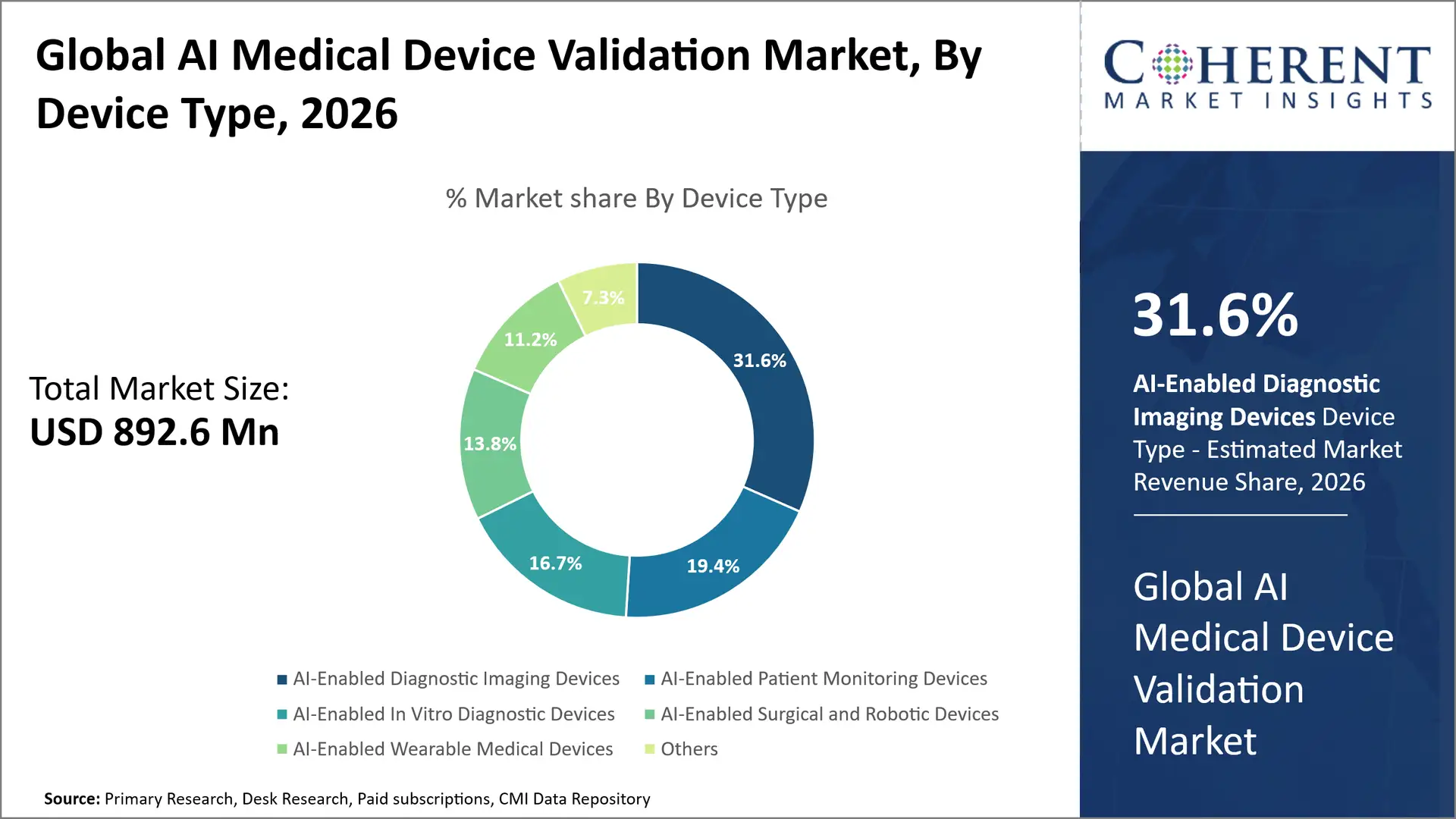
Why Do AI-Enabled Diagnostic Imaging Devices Dominate the Global AI Medical Device Validation Market?
AI-enabled diagnostic imaging devices are projected to hold the market share of 31.6% in 2026, owing to the growing utilization of AI in MRI, CT, ultrasound, and X-ray disease detection and evaluation. The application of AI for automatic image interpretation and early disease diagnosis could increase the need for validation of the accuracy, safety and clinical performance of algorithms. For instance, in March 2026, India’s Ministry of Health and Family Welfare launched the Cancer AI & Technology Challenge (CATCH) Grant Program. The program provides financial assistance of up to USD 5,305 (INR 50 lakh) for the pilot testing and validation of AI-based cancer screening and diagnostic solutions. (Source: Press Information Bureau)
- Current Industry Events of 2026
- Market Size Estimation
- Regional Breakdown
- Competitive Landscape
- Customer Intelligence
- Segmental Analysis
- Pricing Analysis
- Key Market Drivers, Challenges & Future Trends
- Customized Insights Section
Why Does Software Validation Represent the Largest Validation Type Segment in the AI Medical Device Validation Market?
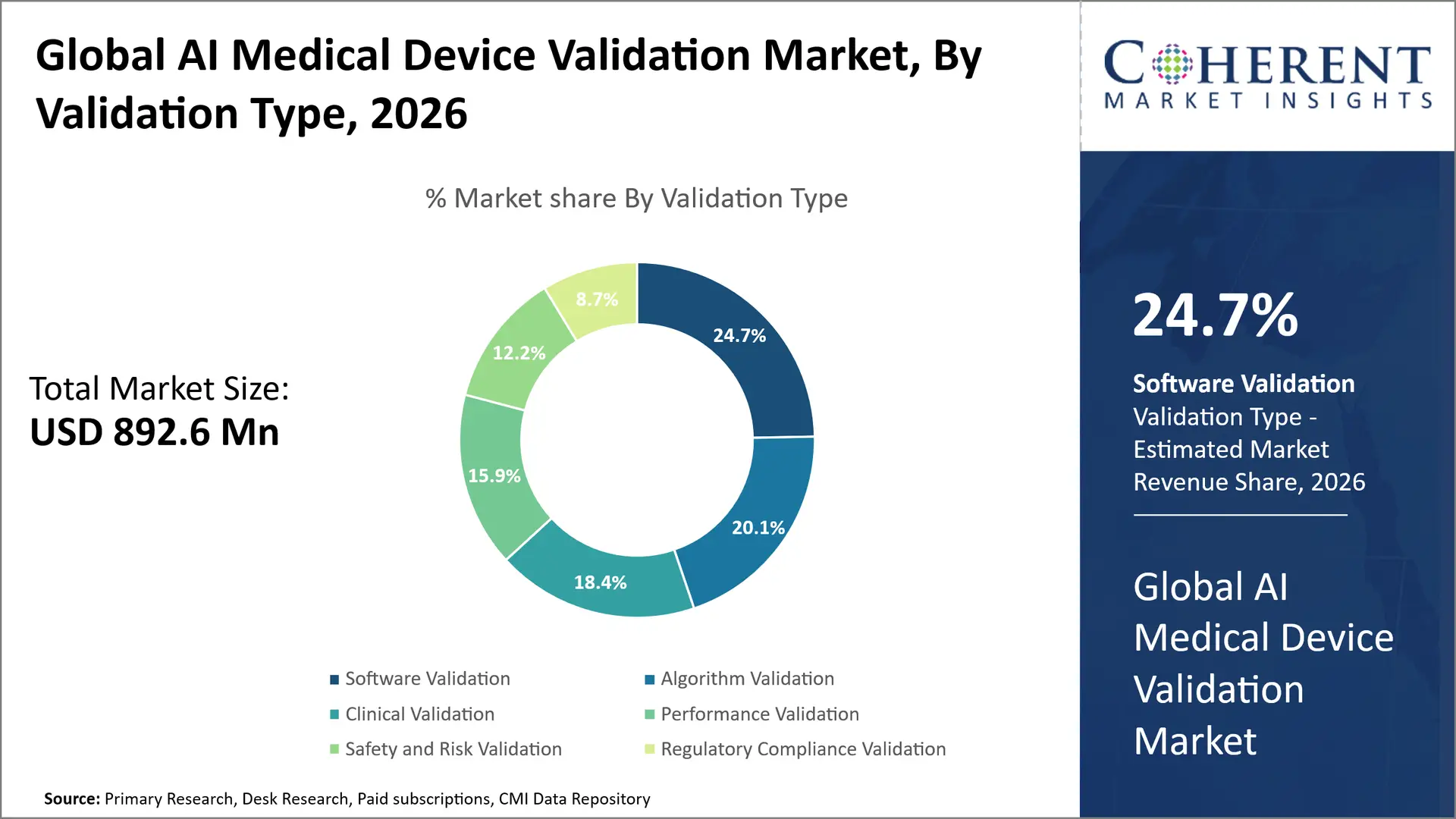
Software validation is projected to hold a market share of 24.7% in 2026, fueled by the increasing complexity of software algorithms and software updates along with the need of accuracy, safety and regulatory compliance. For instance, in August 2025, U.S. Food and Drug Administration (FDA) issued its final guidance on pre-determined change control plans for AI-enabled device software functions that included recommended documented procedures for development, validation, and implementation of software modifications while ensuring device safety and effectiveness.
Machine Learning Segment Dominates the Global AI Medical Device Validation Market
The machine learning segment is projected to hold a market share of 29.8% in 2026, owing to its ability to analyze complex clinical data sets, recognize patterns, and assess predictive accuracy across different patient groups. Additionally, it may need to test the algorithm and monitor its performance in diagnostic imaging, patient monitoring, and risk prediction. For instance, The Japan’s Agency for Medical Research and Development (AMED) has funded a project on post-market training and performance evaluation of machine-learning-based medical device software. As the model is updated with fresh clinical data, there are a need to reevaluate the algorithm's performance.
Current Events and their Impact
Current Events | Description and its Impact |
Australia's TGA Reviews Regulatory Framework for AI-Enabled Medical Devices (September 2026) |
|
UK MHRA Examines Validation and Post-Market Monitoring of AI Medical Devices (February 2026) |
|
AI Medical Device Validation Market Dynamics
Market Drivers
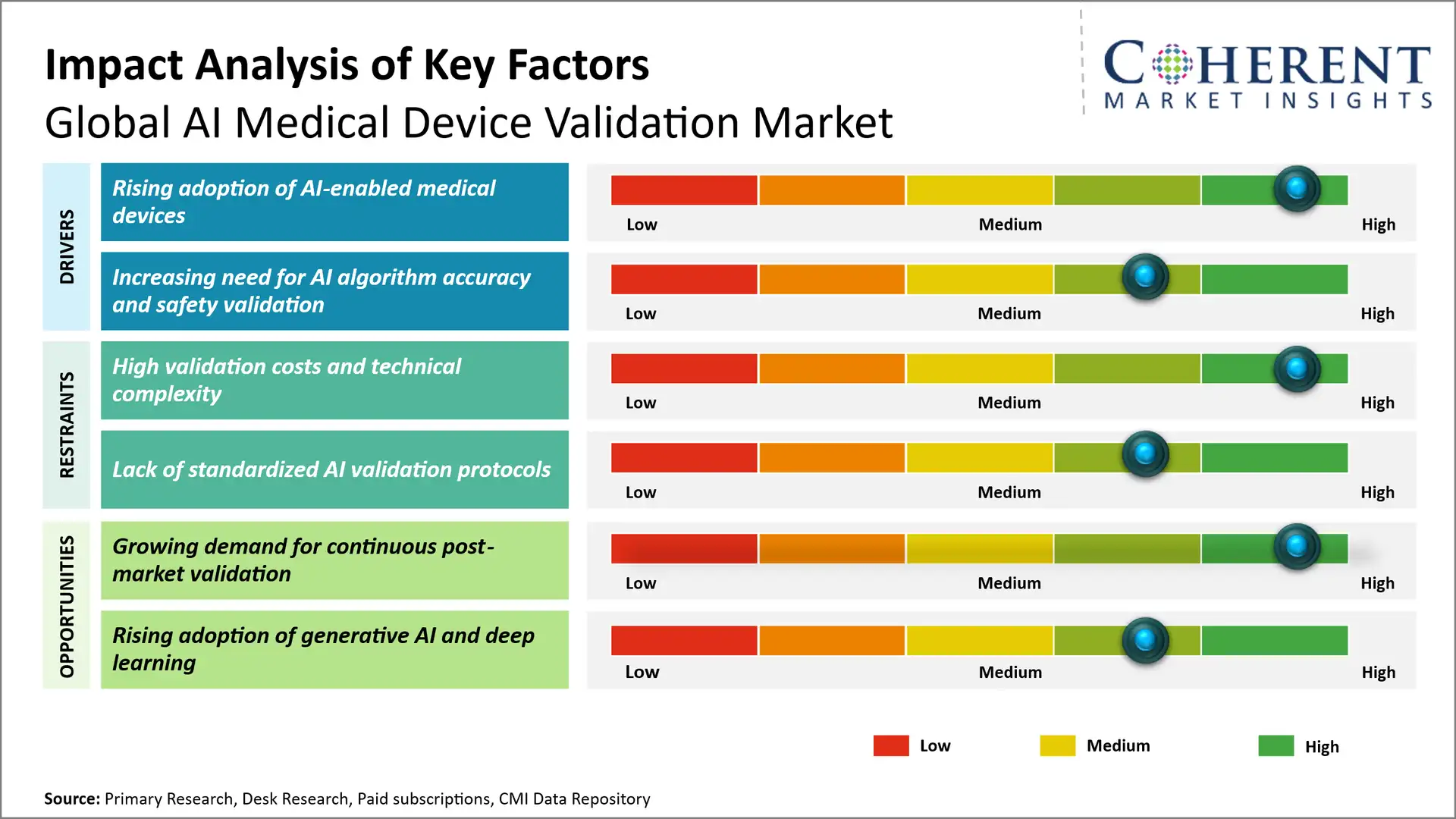
- Rising adoption of AI-enabled medical devices: The increased use of AI for imaging, cardiology, endoscopy, and monitoring patient is leading to further need for validation of device safety and performance. According to the Pharmaceuticals and Medical Devices Agency (PMDA) of Japan, as of September 2025, 51 software medical devices that contain AI were available from the 172 program medical devices that were officially approved.
- Increasing need for AI algorithm accuracy and safety validation: As algorithms become more sophisticated and are used directly in clinical decision-making, the need for extensive performance testing, bias assessment, and safety profiling is becoming more critical. The U.S. Food and Drug Administration's Center for Devices and Radiological Health is conducting focused research to develop the testing standards to quantify the accuracy of AI algorithms, the performance uncertainty, and assess reliability for clinical applications.
- Rising burden of chronic diseases and demand for advanced diagnostics: Increasing prevalence of cancer, cardiovascular and other chronic diseases will accelerate the demand for diagnostic and monitoring devices enabled with artificial intelligence. This has further increased the threshold for validation of clinical performance and safety. India’s Ministry of Health and Family Welfare, reported 1.50 million and 1.43 million cancer cases in 2023 and 2021, respectively, which highlights the requirement for reliable diagnostic solutions.
Emerging Trends
- Sustained post-market validation of the AI medical device: Continuous monitoring of algorithm performance over time is emphasized for monitoring accuracy degradation after implementation.
- Impact: The result is an improvement in the quality and reliability of the various medical equipment, providing the patient with greater safety and consolidating the same in terms of its functionality.
- Market Relevance: As a result, there is an increased need for post-market validation, real-world performance evaluation, and continuous surveillance solutions.
- Automation of AI medical device validation: Platforms driven by artificial intelligence are being used to facilitate test case generation, validation and verification, and documentation.
- Impact: It cuts down validation times, lowers the amount of manual work needed, and streamlines the test process.
- Market Relevance: These advancements offer a market opportunity for specific validation tools, automated testing platforms and lifecycle assurance services.
Regional Insights
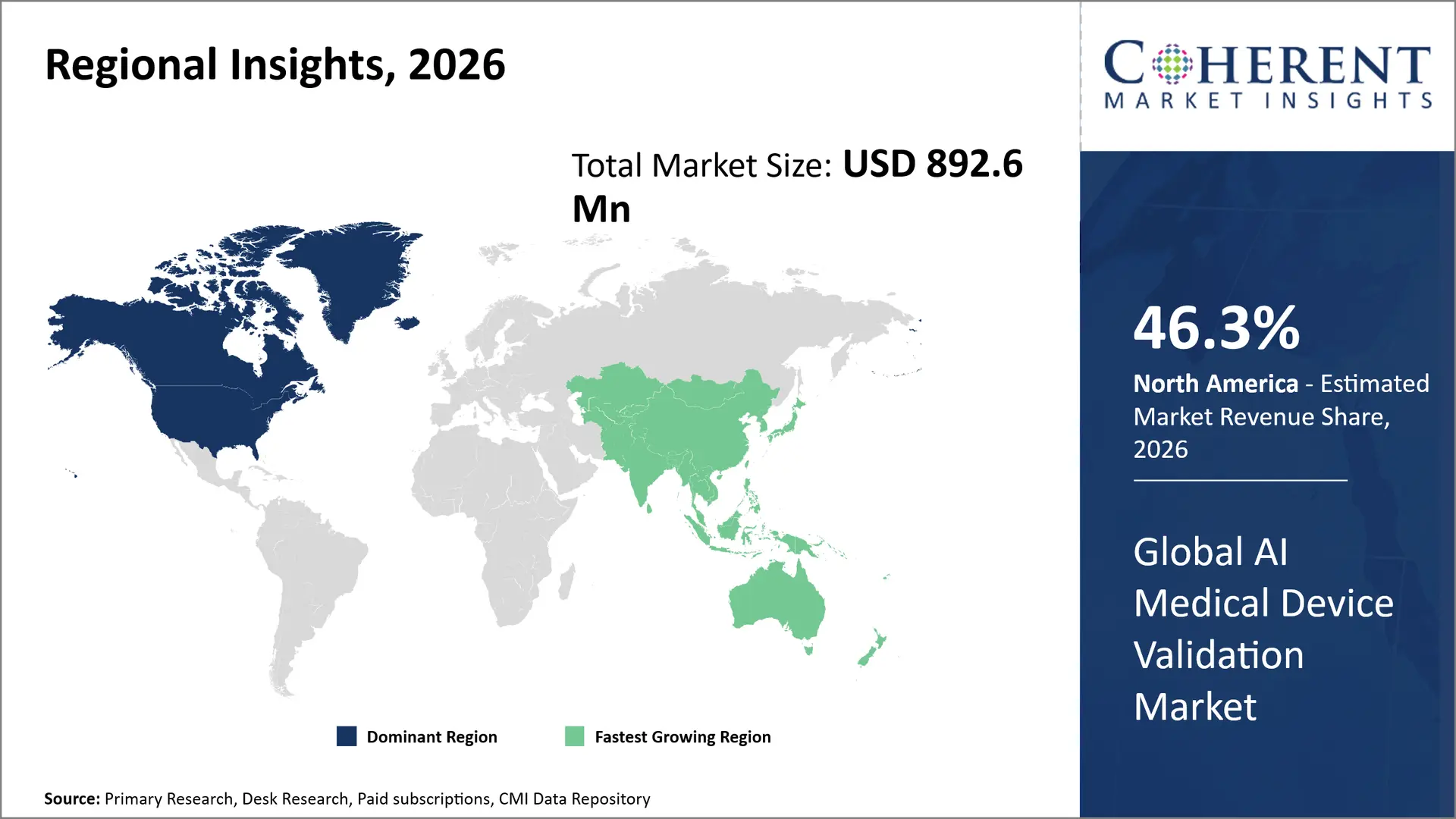
Why is North America a Strong Market for AI Medical Device Validation?
North America leads the global AI medical device validation market, accounting for an estimated 46.3% share in 2026, due to the presence of a well-established healthcare industry, favorable regulatory policies, and the rise in artificial intelligence investments. For instance, in May 2026, the U.S. Food and Drug Administration defined the assessment of devices based on artificial intelligence and machine learning as a critical field in its Experiential Learning Program. AI-based medical device monitoring, algorithm drift analysis, risk management and software accuracy validation for different settings have received great attention, and have reaffirmed the need for AI medical device validation expertise in the U.S.
Additionally, the presence of a well-established ecosystem of AI developers, medical device manufacturers, research laboratories, and regulatory authorities is likely to drive the development and validation of AI-enabled medical devices in the region. Moreover, the rising preference for personalized medicine and digital healthcare is expected to drive the demand for testing, clinical validation, and software performance validation of AI algorithms.
Why Does Asia Pacific AI Medical Device Validation Market Exhibit High Growth?
Asia Pacific is expected to exhibit the fastest growth in the global AI medical device validation market, registering an estimated CAGR of 18.6% during 2026–2033. The region is projected to account for 23.1% of the global market in 2026, owing to the rapid adoption of digitalized healthcare, the rising healthcare infrastructure and growing adoption of AI-based medical devices. Governments in the region have been supporting the adoption of AI by implementing favorable policies, subsidies, public-private partnerships that can improve healthcare outcomes and efficiency.
For instance, South Korea’s Ministry of Science and ICT launched the Dr. Answer 3.0 Medical AI Innovation Ecosystem Program in March 2026. The program is open to companies and medical institutions who seek to develop and test post-treatment disease management services by utilizing AI. This program seeks to promote the clinical use of AI-based services and demand for their performance test and validation. Additionally, the growing medical device manufacturing industry coupled with emerging regulations is pushing up demand for algorithm testing, clinical validation, and software performance validation.
Global AI Medical Device Validation Market Outlook for Key Countries
Why is the U.S. Leading Innovation and Adoption in the AI Medical Device Validation Market?
The U.S. leads the innovation and adoption in the AI medical device validation owing to the significant number of AI-enabled diagnostic imaging, clinical decision support, and patient monitoring developers, which would require validation of algorithms & software. Demand for validation of algorithms and software from the AI healthcare ecosystem would boost the validation services. Moreover, the approval pathway for AI and machine learning-enabled medical devices and the implementation of required post-market software performance evaluation, clinical validation, and lifecycle monitoring procedures would further increase the validation requirements.
Is China a Favorable Market for AI Medical Device Validation Market?
China is a lucrative market for the AI medical device validation as the country has a burgeoning domestic AI medical device industry, the advancement of AI enabled diagnostic imaging and clinical applications, and updated regulatory landscape from National Medical Products Administration (NMPA). More focus on product performance testing, clinical data, algorithm integrity and life-cycle management is providing avenues for validating services.
Is Japan Emerging as a Key Growth Hub for the AI Medical Device Validation Market?
Japan is considered a major growth center for the AI medical device validation market owing to high healthcare infrastructure, strong medicine industry, and AI adoption in diagnostic imaging and clinical applications. Moreover, the mature regulations for AI-based medical software in Japan are encouraging further development with an increased focus on algorithm performance, algorithm accuracy, clinical efficacy, software reliability, and surveillance.
Why Does Germany Top the European AI Medical Device Validation Market?
Germany is the leading market for the European AI medical device validation market, as it has a strong medical device manufacturing base, a mature medical technology ecosystem, and deep healthcare competence in medical imaging, diagnostics technologies. Moreover, the country's focus on engineering quality, clinical performance validation, and compliance to European Union MDR and AI related requirements can service the market demand for specialized testing of AI algorithms and validation of software and clinical evaluation.
Is AI Medical Device Validation Market Developing in UK?
The UK is an emerging market for AI medical device validation owing to the rising adoption of artificial intelligence in diagnostic imaging, clinical decision support, and healthcare software. The country's regulatory focus on the safety, clinical performance, and reliability of AI-enabled medical devices, and post-market surveillance will accelerate the need for validation and compliance solutions.
AI Medical Device Validation Requirements by Lifecycle Stage
Lifecycle stage | Key validation activities | Parameters assessed |
AI Model Development | Training and dataset validation | Data quality, representativeness, bias |
Pre-Market Testing | Software and algorithm validation | Accuracy, sensitivity, specificity, robustness |
Clinical Evaluation | Clinical performance validation | Clinical utility, reliability, patient safety |
Regulatory Assessment | Documentation and compliance validation | Traceability, risk management, regulatory conformity |
Post-Market Monitoring | Continuous performance and model drift validation | Algorithm drift, real-world performance, safety |
How is the growing demand for continuous post-market validation creating new growth opportunities in the AI medical device validation market?
The rise in use of artificial intelligence-powered medical devices after-market authorization is boosting demand for real-world performance monitoring of model performance, algorithm drift and clinical safety. This further supports the need for lifecycle validation and real-world performance monitoring. For instance, in December 2025, the U.S. Food and Drug Administration (FDA) published revisions to guidance on the use of real-world data (RWD) for the generation of real-world evidence (RWE). This guidance directly referenced the use of RWD for real-time monitoring of AI-enabled medical devices across their product life cycle.
Market Players, Key Development, and Competitive Landscape
Key Developments
- In May 2026, Tata Elxsi announced the launch of Ana Tel with Open Ana, an AI-native software development platform for healthcare and medical device companies. Ana Tel automates requirements traceability, test case generation, verification and validation artifacts and regulatory documentation for medical device software. Ana Tel aims to reduce Software as a Medical Device (SaMD) development and change-assessment cycles from eight weeks to 72 hours to enable rapid validation processes for AI-enabled medical devices.
- In April 2026, ValGenesis, Inc. has launched the second release of VAL (Val Genesis AI) designed to enable and increase validation activities in the entire life sciences industry within governed, human-led AI workflows. The new VAL platform enables validation protocol writing, traceability, gap assessments, execution reviews, and early detection of anomalies with human oversight, all in line with GxP. The new product launch is testimony to the increasing adoption of AI based automation in validation activities and lifecycle quality management.
Competitive Landscape
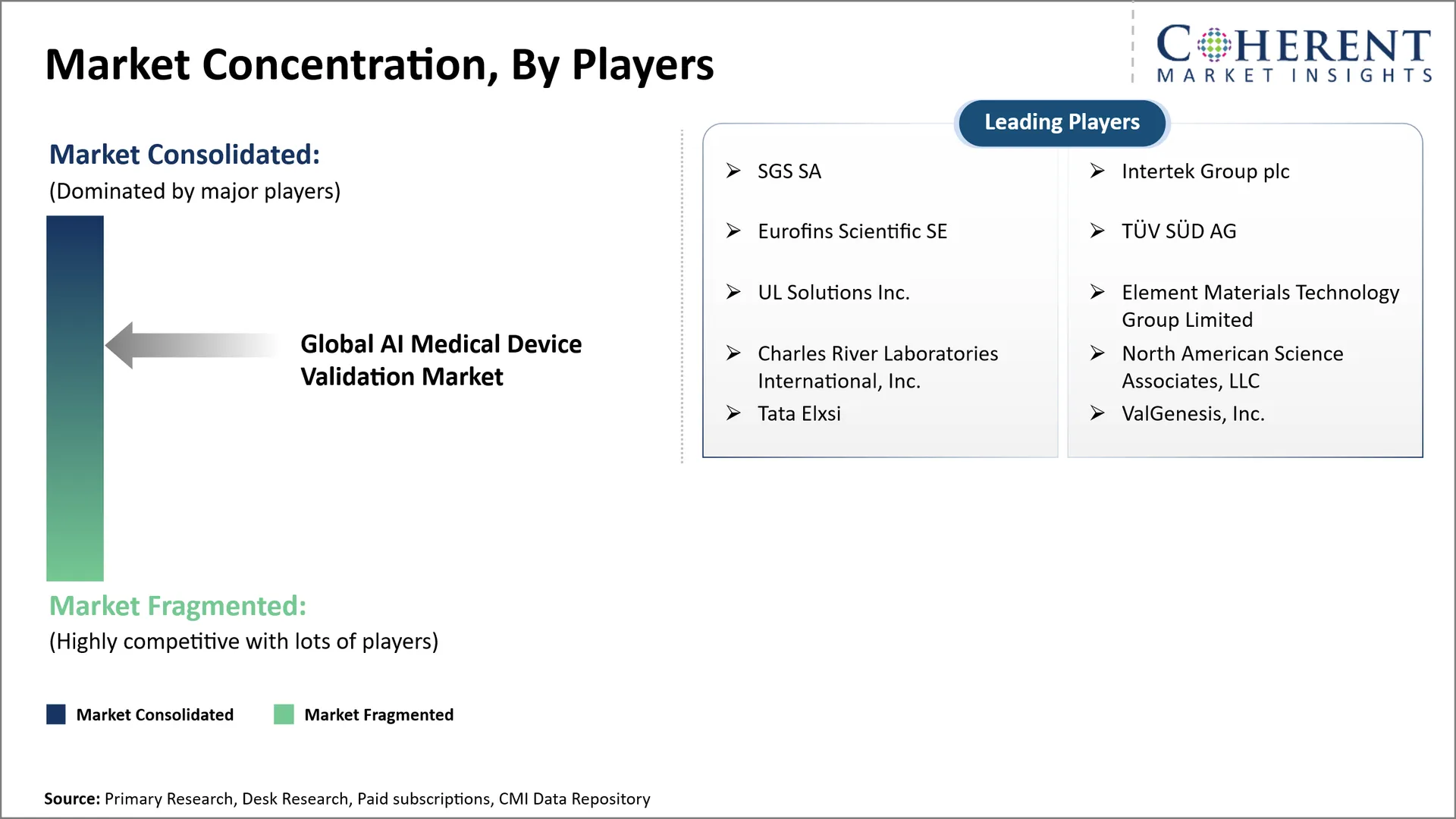
The global AI medical device validation market is fragmented and highly competitive. The high degree of competition in the market is attributed to the need for sophisticated validation capabilities, compliance with regulation, and reliable performance validation of AI-enabled medical devices. Market players are focusing on providing improved algorithms validation, software verification, clinical performance validation, automated validation, and post-market monitoring capabilities. Key focus areas include:
- Advanced validation approaches for AI algorithms, e.g. accuracy, robustness, and bias validation.
- Enhance software verification and validation for both medical device development and deployment.
- Growth in clinical performance testing to support safety and efficacy of devices in different patient populations
- Automation of testing processes to accelerate validation activities and shorten evaluation times.
- Improve post-market surveillance to detect algorithm drift and evaluate efficacy after software updates.
- Data Integrity, cybersecurity, interoperability and life-cycle risk management.
Market Report Scope
AI Medical Device Validation Market | |||
Report Coverage | Details | ||
Base Year | 2025 | Market Size in 2026: | USD 892.6 Mn |
Historical Data For: | 2020 To 2024 | Forecast Period: | 2026 To 2033 |
Forecast Period 2026 To 2033 CAGR: | 15.3% | 2033 Value Projection: | USD 2,418.0 Mn |
Geographies covered: |
| ||
Segments covered: |
| ||
Companies covered: | SGS SA, Intertek Group plc, Eurofins Scientific SE, TÜV SÜD AG, UL Solutions Inc., Element Materials Technology Group Limited, Charles River Laboratories International, Inc., North American Science Associates, LLC, Tata Elxsi, ValGenesis, Inc. | ||
Growth Drivers: |
| ||
Restraints & Challenges: |
| ||
Analyst Opinion (Expert Opinion)
- In the coming years, global AI medical device validation market is expected to shift to continuous, lifecycle validation as AI continues to embed into devices more regularly. The validation process will include automated validation, real-world performance validation and post market monitoring of algorithms. Additionally, generative artificial intelligence and adaptable machine learning algorithms will increase the need for novel validation approaches to ensure clinical validation and patient safety.
- The greatest opportunity is expected to be in machine learning AI-enabled diagnostic imaging devices in the U.S. As the algorithms for AI-enabled diagnostic imaging devices grow more sophisticated and are being applied to cancer detection, cardiovascular diagnosis, and brain assessment, there will be an increasing need for validated algorithms and clinical validation. Buyers that focus on specialty-specific imaging validation and automated testing capabilities should find attractive opportunities.
- In order to gain a competitive advantage market players should focus on automated validation platforms that can evaluate algorithms for accuracy, bias, robustness and performance across a broad clinical dataset. Building competencies in continuous post-market monitoring, validation of software lifecycle and cybersecurity assessment will add to their service portfolio. Building flexible validation frameworks that recognize the ever-changing nature of an AI model and varied regulatory requirements would help them build long-term customer relationships.
Speak to the analyst
Want personalized insights?
Take the findings above to one of our principal consultants, or have the report rebuilt around the segments, geographies and competitors you actually track.
Market Segmentation
- Device Type Insights (Revenue, USD Mn, 2021 - 2033)
- AI-Enabled Diagnostic Imaging Devices
- AI-Enabled Patient Monitoring Devices
- AI-Enabled In Vitro Diagnostic Devices
- AI-Enabled Surgical and Robotic Devices
- AI-Enabled Wearable Medical Devices
- Others
- Validation Type Insights (Revenue, USD Mn, 2021 - 2033)
- Software Validation
- Algorithm Validation
- Clinical Validation
- Performance Validation
- Safety and Risk Validation
- Regulatory Compliance Validation
- AI Technology Insights (Revenue, USD Mn, 2021 - 2033)
- Machine Learning
- Deep Learning
- Natural Language Processing (NLP)
- Computer Vision
- Generative AI
- Others
- Validation Stage Insights (Revenue, USD Mn, 2021 - 2033)
- Pre-Market Validation
- Clinical Validation
- Post-Market Validation
- End User Insights (Revenue, USD Mn, 2021 - 2033)
- Medical Device Manufacturers
- Contract Research Organizations (CROs)
- Hospitals and Healthcare Providers
- Testing, Inspection, and Certification (TIC) Organizations
- Academic and Research Institutes
- Others
- Regional Insights (Revenue, USD Mn, 2021 - 2033)
- North America
- U.S.
- Canada
- Latin America
- Brazil
- Argentina
- Mexico
- Rest of Latin America
- Europe
- Germany
- U.K.
- Spain
- France
- Italy
- Russia
- Rest of Europe
- Asia Pacific
- China
- India
- Japan
- Australia
- South Korea
- ASEAN
- Rest of Asia Pacific
- Middle East
- GCC Countries
- Israel
- Rest of Middle East
- Africa
- South Africa
- North Africa
- Central Africa
- North America
- Key Players Insights
- SGS SA
- Intertek Group plc
- Eurofins Scientific SE
- TÜV SÜD AG
- UL Solutions Inc.
- Element Materials Technology Group Limited
- Charles River Laboratories International, Inc.
- North American Science Associates, LLC
- Tata Elxsi
- ValGenesis, Inc.
Sources
Primary Research Interviews
- AI Medical Device Validation and Verification Specialists
- Medical Device Regulatory Affairs and Compliance Experts
- AI Algorithm Development and Clinical Validation Specialists
- Medical Device Quality Assurance and Risk Management Professionals
Stakeholders
- AI-Enabled Medical Device Manufacturers
- AI Medical Software and Algorithm Developers
- Medical Device Testing, Inspection, and Certification Organizations
- Contract Research Organizations (CROs) and Clinical Research Organizations
- Hospitals and Healthcare Providers
- Academic and Research Institutes
- End-use Sectors
- Medical Device Manufacturers
- Hospitals and Healthcare Providers
- Diagnostic Imaging Centers
- Clinical Research and Testing Organizations
- Regulatory & Health Bodies
- U.S. Food and Drug Administration (FDA)
- Pharmaceuticals and Medical Devices Agency (PMDA), Japan
- National Medical Products Administration (NMPA), China
- Medicines and Healthcare products Regulatory Agency (MHRA), UK
Databases
- FDA AI-Enabled Medical Device List
- FDA Medical Device Database
Public Domain Sources
- U.S. Food and Drug Administration (FDA)
- Health Canada
- Therapeutic Goods Administration (TGA), Australia
- Health Sciences Authority (HSA), Singapore
Proprietary Elements
- CMI Data Analytics Tool, Proprietary CMI Existing Repository of information for last 10 years.
Get access to 250+ pages report
Every segment, forecast, competitor profile and data table behind the analysis above — available for instant download.
- ESOMAR Member
- ISO 9001:2015 Certified
- D-U-N-S Registered
- GDPR & CCPA Compliant
Frequently Asked Questions
The global AI medical device validation market is estimated to be valued at USD 892.6 Mn in 2026 and is expected to reach USD 2,418.0 Mn by 2033.
AI-enabled diagnostic imaging devices dominates owing to their wide usage in clinical diagnosis, clinical imaging interpretation, and disease diagnosis, requiring a high degree of validation of the image quality, accuracy, and performance.
AI medical device validation is the validation of the accuracy, safety, reliability and clinical performance of a medical device enabled with AI. This validation must be performed to ensure a device performs as intended.
The CAGR of global AI medical device validation market is projected to be 15.3% from 2026 to 2033.
Rising adoption of AI-enabled medical devices, and increasing need for AI algorithm accuracy and safety validation are the major factors driving the growth of the global AI medical device validation market.
High validation costs and technical complexity, and lack of standardized AI validation protocols are the major factors hampering the growth of the global AI medical device validation market.
In terms of validation type, software validation is estimated to dominate the market revenue share in 2026.