

Global Clinical Decision Diagnostics Market Size and Forecast – 2026 To 2033
The global clinical decision diagnostics market is expected to grow from USD 9.62 Bn in 2026 to USD 25.84 Bn by 2033, registering a compound annual growth rate (CAGR) of 15.2% from 2026 to 2033. The market for global clinical decision diagnostics is poised for significant expansion, fueled by the rising need for early and accurate disease diagnosis and evidence-based clinical decision-making.
According to the World Health Organization (WHO), diagnostic results influence approximately 70% of healthcare decisions, while diagnostic services receive only 3–5% of healthcare budgets, highlighting substantial scope for greater adoption and investment in diagnostic technologies.
Key Takeaways of the Global Clinical Decision Diagnostics Market
- In Vitro Diagnostics (IVD) is projected to hold 36.8% of the global clinical decision diagnostics market share in 2026, making it dominant diagnostic type segment across Europe due to its structured regulatory framework for IVD classification and clinical performance. For instance, on September 9, 2026, the European Commission’s Medical Device Coordination Group (MDCG) issued revised guidance on the classification rules for IVD medical devices under Regulation (EU) 2017/746 (IVDR), providing updated regulatory direction for determining the risk class of IVDs. This supports a standardized regulatory environment for diagnostic products used in clinical decision-making.
- Disease diagnosis and detection is projected to hold 35.4% of the global clinical decision diagnostics market share in 2026, making it dominant clinical decision application segment across Asia Pacific due to substantial adoption potential as regulatory authorities strengthen diagnostic-device evaluation and clinical-use frameworks. For instance, in July 2026, Japan’s Pharmaceuticals and Medical Devices Agency (PMDA) opened public consultation on review points for software medical devices used for endoscopic-image diagnosis, specifically addressing software intended to support diagnosis using endoscopic images. This regulatory activity supports the development and evaluation of software-based diagnostic technologies in clinical diagnosis.
- Artificial intelligence and machine learning is projected to hold 40.6% of the global clinical decision diagnostics market share in 2026 making it dominant technology segment, with North America representing the leading regional market. For instance, in August 2026, the U.S. FDA issued a discussion paper seeking public input on the regulatory approach for generative-AI-enabled medical devices, addressing risk assessment, premarket evaluation, clinical confirmation, and post-market monitoring. The initiative is particularly relevant to AI systems that generate or support clinical information and diagnostic decisions.
- North America market maintains dominance with an expected share of 39.2% in 2026, bolstered by its well-established laboratory infrastructure, diagnostic reimbursement mechanisms, and regulatory oversight. For instance, in February 2026, the U.S. Centers for Medicare & Medicaid Services (CMS) updated the Clinical Laboratory Fee Schedule requirements for clinical diagnostic laboratory tests, with the 2026 reporting period covering laboratory test payment and utilization data. This established reimbursement and reporting framework supports the continued integration of laboratory diagnostics into clinical decision-making across U.S. healthcare settings
- Asia Pacific is expected to exhibit the fastest growth in the global clinical decision diagnostics market, registering an estimated CAGR of 16.8% during 2026–2033, driven by expanding AI-enabled diagnostics, digital health infrastructure, and regulatory modernization. For instance, in August 2026, China's National Medical Products Administration (NMPA) issued its “Artificial Intelligence + Drug Regulation” implementation opinions, calling for AI-assisted review of medical devices, intelligent product classification, clinical-trial data governance, and AI-enabled decision-support applications. These measures are strengthening the regulatory and digital ecosystem for AI-supported clinical diagnostics across the region
Segmental Insights
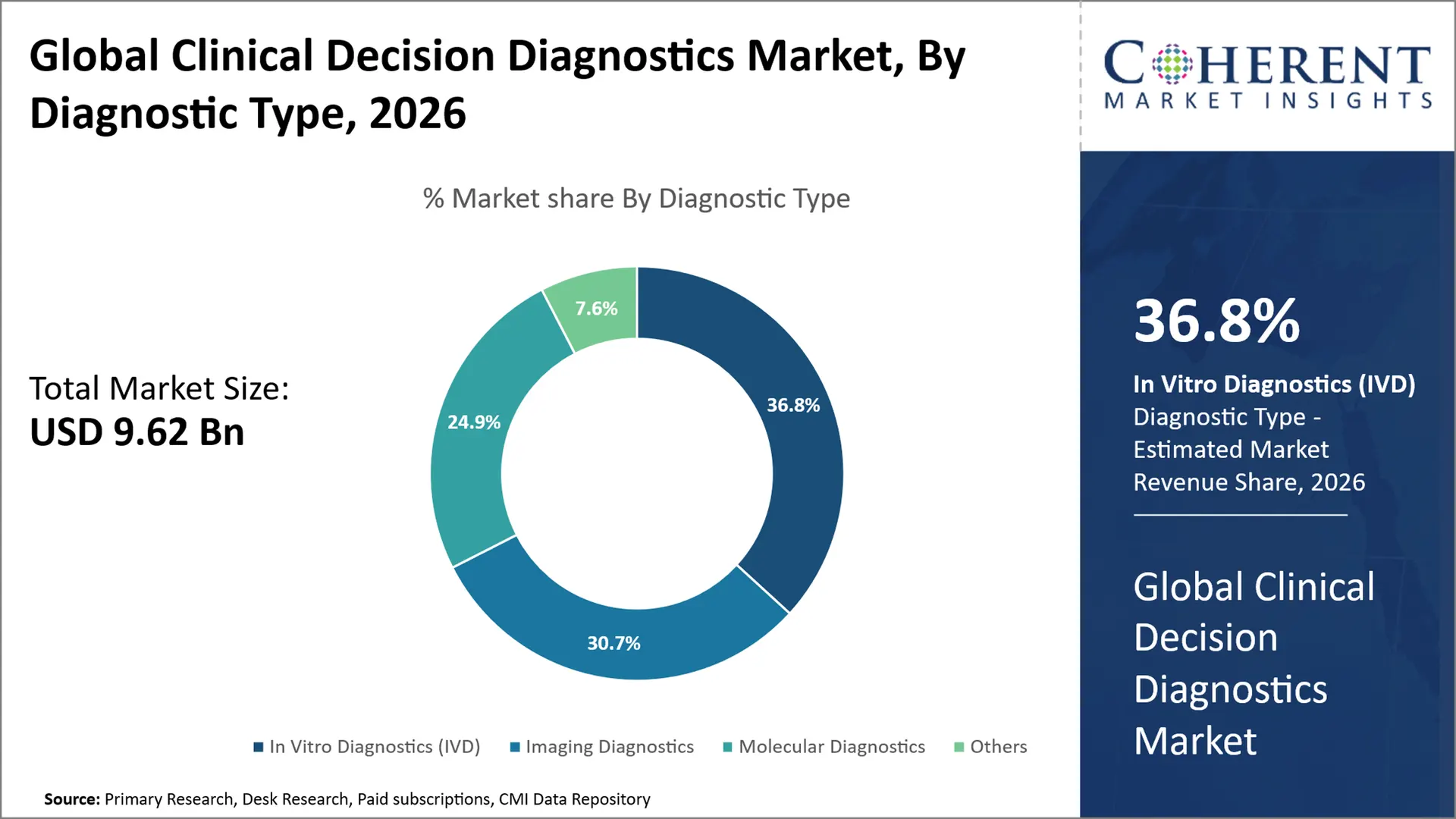
Why Do In Vitro Diagnostics (IVD) Dominate the Global Clinical Decision Diagnostics Market?
In Vitro Diagnostics (IVD) is projected to hold the market share of 36.8% in 2026, owing to the widespread utilization of IVD in discovering, monitoring and clinical determination making for illness detection. The growing regulatory focus on analytical as effectively as clinical efficiency of laboratory-based IVDs could more bolster the position of in vitro diagnostic (IVD) in clinical conclusion. For instance, from May 6, 2026, the U.S. Food and Drug Administration (FDA) began enforcing compliance for applicable in vitro diagnostics that are being offered as laboratory-developed tests in the areas of registration and listing, labeling, and investigational-use. This process improves the oversight of the diagnostic tests used in clinical labs and encourages more consistency across in vitro diagnostics.
- Current Industry Events of 2026
- Market Size Estimation
- Regional Breakdown
- Competitive Landscape
- Customer Intelligence
- Segmental Analysis
- Pricing Analysis
- Key Market Drivers, Challenges & Future Trends
- Customized Insights Section
Why Do Disease Diagnosis and Detection Represent the Largest Clinical Decision Application Segment in the Clinical Decision Diagnostics Market?
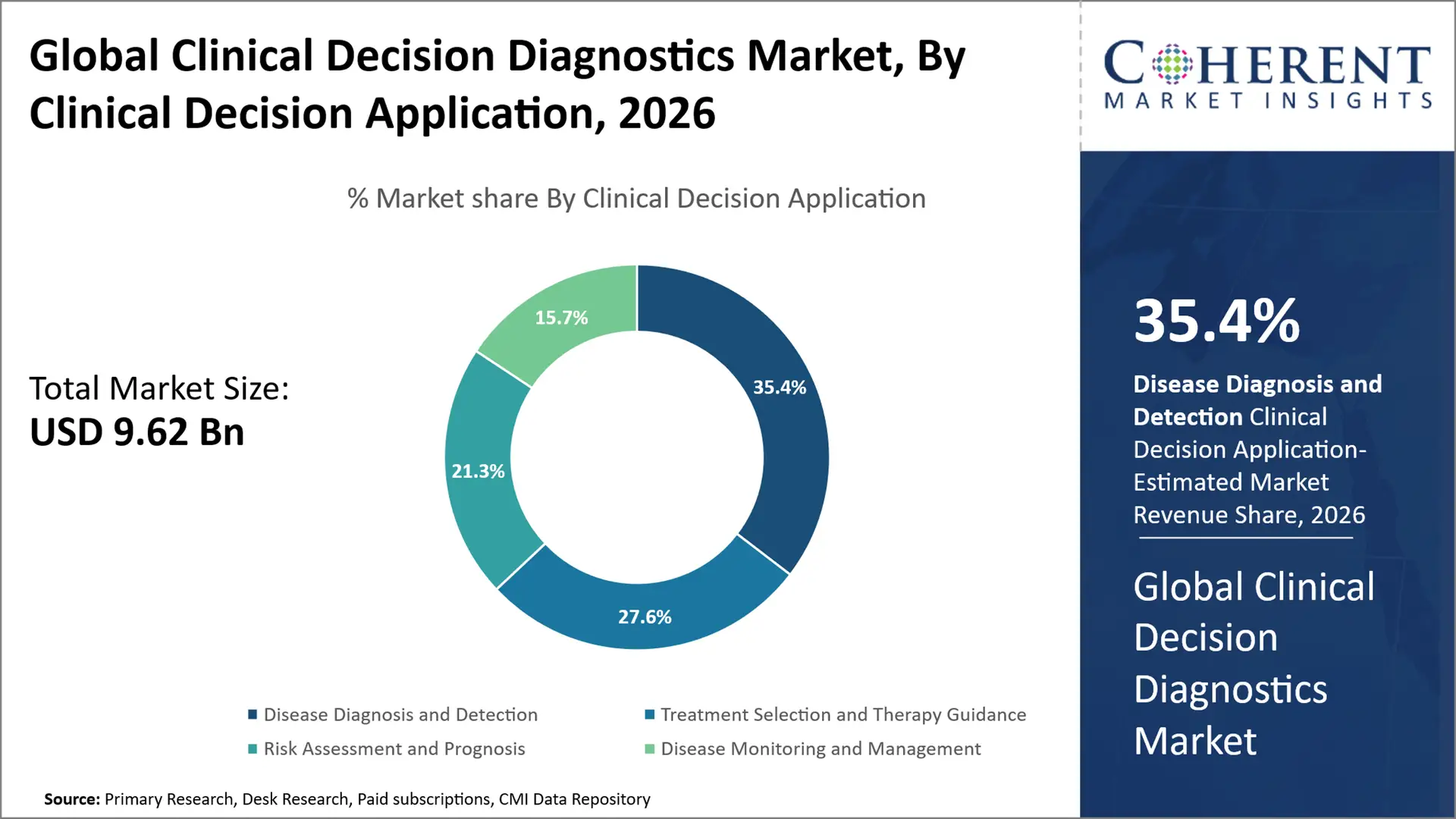
Disease diagnosis and detection is projected to hold a market share of 35.4% in 2026, as timely and precise diagnosis is key for developing therapies, disease surveillance, and patient management. The rising adoption of rapid molecular, imaging, and AI-assisted diagnostics and increasing implementation of them to accelerate disease diagnosis is estimated to augment this application of clinical decision diagnostics. For instance, in July 2026, the Emergency Use Listing (EUL) listing of the first molecular diagnostic test to the Bundibugyo virus was added by the World Health Organization (WHO). The test helps to rapid confirmation of infection for an earlier treatment of the disease.
Artificial Intelligence and Machine Learning Segment Dominates the Global Clinical Decision Diagnostics Market
The artificial intelligence and machine learning segment is projected to hold a market share of 40.6% in 2026, as it helps in studying complex imaging, laboratory, genomic, and patient-record data and converts this data into diagnostic insights. AI/ML is used increasingly in clinical workflows in order to allow for early detection of disease, risk prediction, and diagnostic assist. For instance, in June 2026, the UK Medicines and Healthcare Products Regulatory Agency (MHRA) published the Phase 2 AI Airlock report, a regulatory assessment of AI-enabled technologies for advanced cancer diagnosis and eye-disease detection. The report examined regulatory hurdles posed by AI-enabled diagnostics and the use of those tools in real world clinical situations.
Current Events and their Impact
Current Events | Description and its Impact |
UK Medicines and Healthcare products Regulatory Agency (MHRA Expands AI Airlock Programme for AI Medical Devices (April 2026) |
|
Health Canada Issues Guidance for Machine Learning-Enabled Medical Devices (April 2026) |
|
Singapore Updates National AI in Healthcare Guidelines (April 2026) |
|
Clinical Decision Diagnostics Market Dynamics
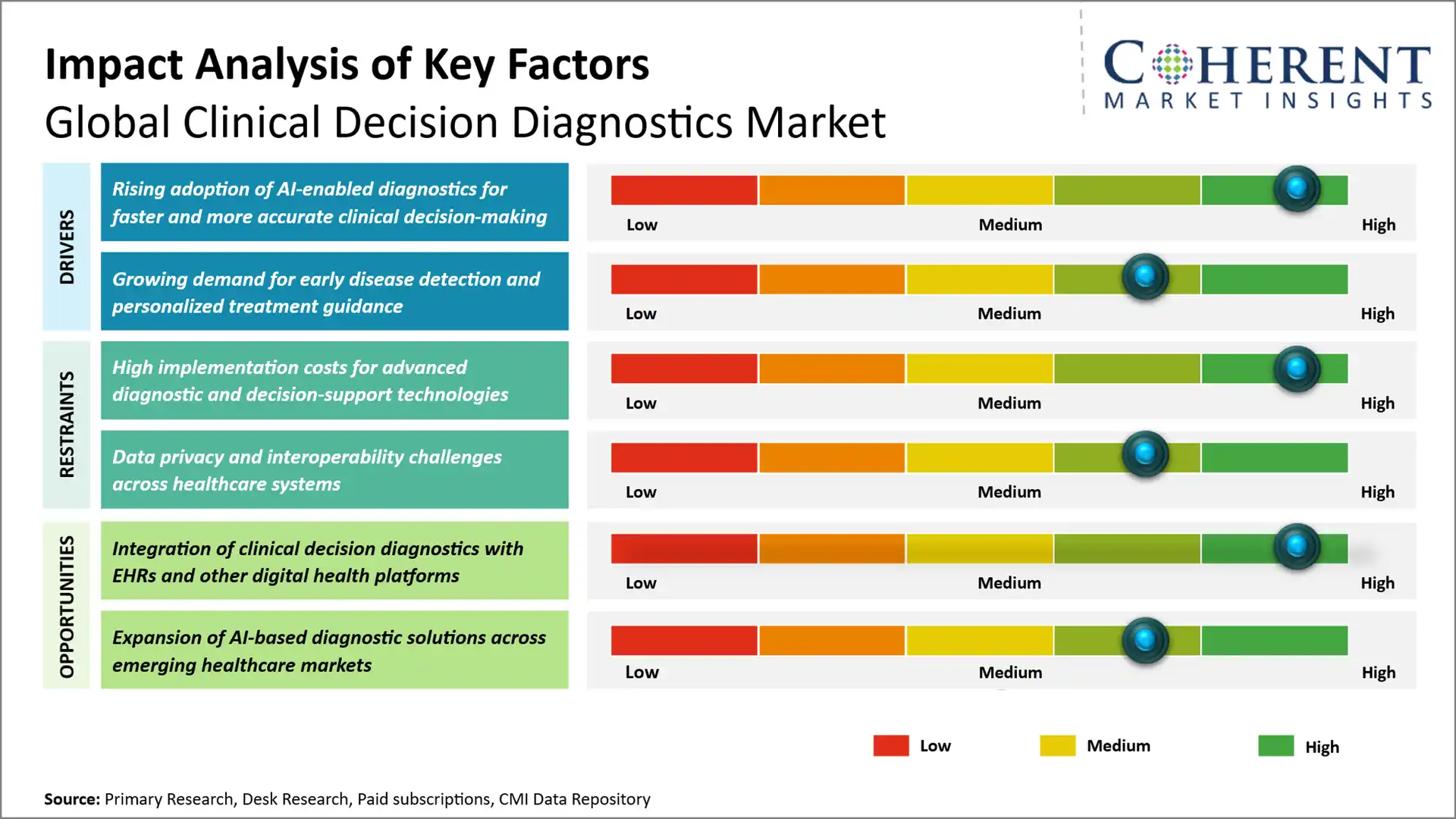
Market Drivers
- Rising adoption of AI-enabled diagnostics for faster and more accurate clinical decision-making: The adoption of AI-enabled diagnostic technologies is accelerating as healthcare providers increasingly use algorithms to interpret complex imaging, laboratory, and physiological data and support clinical decisions. AI is expanding diagnostic capabilities across areas such as radiology, cardiology, oncology, and ophthalmology, improving the speed of diagnostic assessment and risk identification. For instance, as of September 2026, the U.S. FDA had authorized more than 1,600 AI-enabled medical devices, many of which provide information supporting diagnosis, prognosis, and treatment decisions.
- Growing demand for early disease detection and personalized treatment guidance: The growing emphasis on earlier disease identification and patient-specific treatment selection is increasing demand for molecular diagnostics, biomarkers, genomic testing, and advanced diagnostic analytics. These technologies can help identify disease-associated biological signals earlier while supporting treatment decisions based on individual patient characteristics. For instance, in June 2026, NIH’s Translational and Diagnostic Oncology review program specifically prioritized biomarkers for early detection, diagnosis, prognosis, and prediction of treatment response using molecular profiling and computational approaches.
- Growing integration of diagnostic data with interoperable health IT systems: The increasing integration of diagnostic data with EHRs, APIs, and interoperable health IT systems is strengthening access to laboratory, imaging, and clinical information within decision-making workflows. This enables diagnostic platforms to combine patient-specific data from multiple sources and deliver timelier, context-rich insights. For instance, in July 2026, U.S. Office of the National Coordinator for Health Information Technology (ONC) released USCDI Version 7, adding new standardized data elements to advance interoperable health information exchange and patient care.
Emerging Trends
- Multimodal AI for clinical decision diagnostics: Diagnostic platforms are increasingly combining imaging, laboratory, molecular, genomic, and EHR data to generate more comprehensive clinical insights. This enables AI systems to support diagnosis, risk stratification, and treatment decisions from multiple data sources.
- Shift toward predictive and personalized diagnostics: Clinical diagnostics are moving beyond disease detection toward predicting disease progression, treatment response, and patient-specific risks. Growing use of biomarkers, molecular diagnostics, and predictive analytics is strengthening personalized clinical decision-making.
- Interoperable, embedded diagnostic decision support: Diagnostic intelligence is increasingly being embedded directly into EHRs, laboratory information systems, and imaging workflows rather than operating as standalone tools. Standards-based interoperability is enabling diagnostic results and AI-generated insights to become available within existing clinical workflows.
Regional Insights
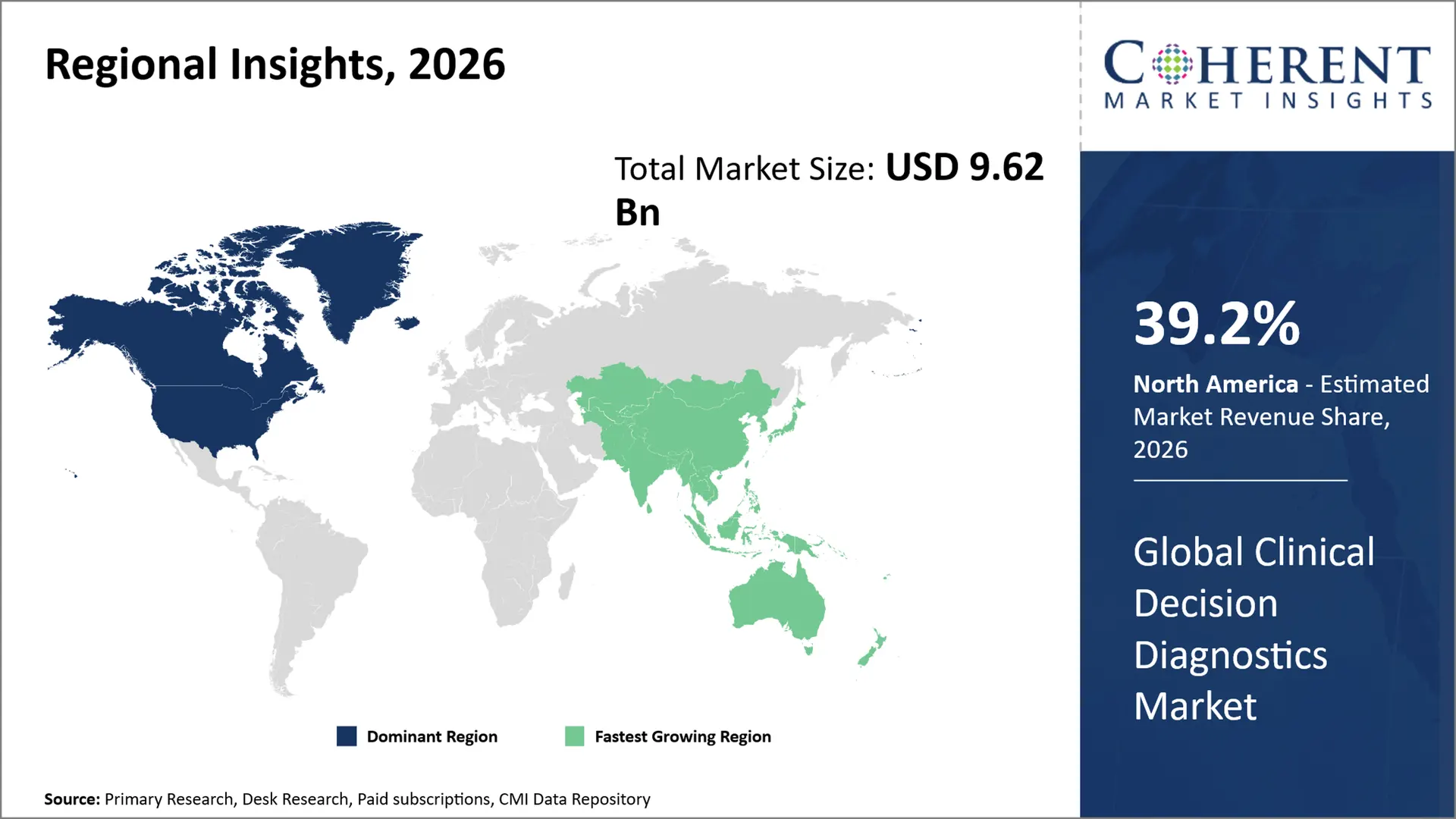
Why is North America a Strong Market for Clinical Decision Diagnostics?
North America leads the global clinical decision diagnostics market, accounting for an estimated 39.2% share in 2026, owing to strong healthcare infrastructure, high level of R&D investments, and active government programs encouraging precision medicine, diagnostics, and data-enabled healthcare. The laboratory & digital-health ecosystem makes it easy to incorporate AI, molecular diagnostics, imaging, and clinical data in day-to-day decision workflows.
Supported by federal programs the ecosystem encourage genomic research and precision medicine in combination with established standards and regulation pathways to enable innovation and day to day clinical adoption. For instance. in June 2026, the U.S. National Institutes of Health (NIH) announced funding opportunities under its PRIMED-AI program for the development of AI-based clinical decision-support tools that integrate medical imaging data with laboratory and other health data for personalized healthcare.
Why Does Asia Pacific Clinical Decision Diagnostics Market Exhibit High Growth?
Asia Pacific is expected to exhibit the fastest growth in the global clinical decision diagnostics market, registering an estimated CAGR of 16.8% during 2026–2033. The region is projected to account for 23.4% of the global market in 2026, fueled by increasing healthcare modernization, rising government investments in healthcare, and higher investments in digital health technologies. Rising adoption of personalized medicine, large patient population with rising prevalence of chronic disease, and growth in diagnostic infrastructure are seen to be contributing to the increasing demand for sophisticated clinical decision diagnostics.
Besides, growing foreign investment, regional collaborations, and rising public-private partnership are believed to drive the establishment of innovative diagnostic solutions at competitive rates. For instance, in July 2026, the Shanghai Municipal Commission of Science and Technology issued measures for supporting the high-investment foreign biomedical projects, including projects of biomedical-related medical-device enterprises; policies and measures include policy and fiscal incentives, resource support, and services in the whole process of projects. The objective is to become an important base for the international biomedical and medical-device investment and innovation. (Source: Shanghai Municipal People's Government)
Global Clinical Decision Diagnostics Market Outlook for Key Countries
Why is the U.S. Leading Innovation and Adoption in the Clinical Decision Diagnostics Market?
The U.S. is well positioned in the evolution and adoption of advanced diagnostic technologies through its mature healthcare ecosystem integrating AI-enabled diagnostics, molecular testing, imaging and clinical decision-support software into existing workflows. This mature ecosystem seems to provide a framework enabling advancement of diagnostic technologies from R&D to the bedside, enabling innovative diagnostic adoption in oncology, radiology, pathology and precision medicine. The country is also well-positioned as there is strong diagnostic data interoperability into EHR systems, laboratory platforms and data depositories.
Is Japan a Favorable Market for Clinical Decision Diagnostics Market?
Japan seems an attractive market for clinical decision diagnostics, with its mature diagnostic infrastructure and growing use of AI-enabled medical software. In addition, the country's aging population is projected to provide impetus for demand for enhanced ability to discover, treat and monitor diseases, and for personalized care. Furthermore, Pharmaceuticals and Medical Devices Agency (PMDA) SaMD review system facilitates the regulatory review and development of software for medical image diagnosis and clinical decision support.
Is China Emerging as a Key Growth Hub for the Clinical Decision Diagnostics Market?
China is emerging as a major growth market for clinical decision diagnostics, driven by accelerating hospital digitalization, increased use of artificial intelligence, and heightened investment in precision diagnostics. The National Medical Products Administration's emerging approach to regulation of AI-enabled medical devices facilitate regulatory approval for software-driven diagnostics and decision-support devices. The growing penetration of molecular diagnostics, medical imaging and AI-enabled clinical software is also expected to increase the addressable market.
Why Does Germany Top the European Clinical Decision Diagnostics Market?
Germany is expected to dominate the European clinical decision diagnostics market owing to the presence of advanced hospital & laboratory infrastructure along with high adoption of digital and precision diagnostics. The broad scale of statutory healthcare and a general eagerness to adopt diagnostic technology into standard clinical practice contributes to the high adoption rate. Moreover, innovative use of interoperable health data and digital medical applications increases demand for AI-enabled, data-driven decision tools.
Is Clinical Decision Diagnostics Market Developing in UK?
The UK’s Clinical Decision Diagnostics market is benefiting from the adoption of digital diagnostics, AI-enabled clinical decision tools and integrated health-data systems by the NHS. The Medicines and Healthcare products Regulatory Agency (MHRA) AI Airlock initiative provides a regulatory sandbox to help overcome challenges around the use of AI-enabled medical devices, including diagnostics. In addition, adoption of digitally enabled diagnosis by the NHS continues to grow, helping to fuel development.
Technology Applications by Clinical Decision Function
Technology / Diagnostic Area | Diagnosis & Detection | Risk & Prognosis | Treatment Guidance | Monitoring & Management |
AI & Machine Learning | ✓ | ✓ | ✓ | ✓ |
Imaging Diagnostics | ✓ | ✓ | ✓ | ✓ |
In Vitro Diagnostics (IVD) | ✓ | ✓ | ✓ | ✓ |
Molecular & Genomic Diagnostics | ✓ | ✓ | ✓ | ✓ |
Advanced Analytics & Predictive Algorithms | ✓ | ✓ | ✓ | ✓ |
Clinical Decision Support Software | ✓ | ✓ | ✓ | ✓ |
EHR & Multimodal Data Integration | ✓ | ✓ | ✓ | ✓ |
How is the integration of clinical decision diagnostics with EHRs and other digital health platforms creating new growth opportunities in the clinical decision diagnostics market?
The linking of clinical decision diagnostics with EHRs, FHIR-based health information exchange, and other digital health systems points toward possibilities for in-the-moment availability of diagnostic information and relevant patient data to inform clinical pathways. Interoperable systems may also serve to link laboratory, imaging, and other diagnostic data to enable more streamlined diagnosis, risk stratification, and treatment decisions. Furthermore, standards-based data exchange is driving a trend toward diagnostic solutions existing in a networked environment rather than being stand-alone. For instance, In January 2026, the U.S. Office of the National Coordinator for Health Information Technology (ONC) published a request for information on diagnostic imaging interoperability standards and certification. This request was for the access, exchange and use of X-ray, CT, MRI and ultrasound through certified health information technology.
Market Players, Key Development, and Competitive Intelligence
Key Developments
- On September 28, 2026, Leica Biosystems completed its acquisition of StatLab Medical Products, expanding its end-to-end anatomic pathology portfolio from specimen collection and preparation through digital imaging and AI-enabled diagnosis. The acquisition is intended to strengthen integrated pathology workflows and support faster, more consistent cancer diagnostics and treatment decision-making.
- On September 23, 2026, Oracle launched Oracle Health Oncology EHR, integrating oncology workflows, AI-driven clinical intelligence, and connected patient information with embedded AI agents and clinical decision support. The platform is designed to help oncology teams interpret complex information and support treatment planning across the cancer-care pathway.
- In July 2026, Co-Diagnostics, Inc. entered into a warrant inducement agreement to raise approximately USD 2.67 million, supporting development activities as the company progressed toward FDA review of its Co-Dx PCR platform. The company subsequently submitted its Co-Dx PCR Flu A/B & RSV upper respiratory multiplex test for FDA 510(k) review and CLIA Waiver consideration in August 2026.
- In June 2026, Merck KGaA agreed to acquire Bio-Techne for approximately USD 11.3 billion, combining Bio-Techne’s multi-omics, analytical technologies, precision diagnostics, and integrated workflow capabilities with Merck’s global life-science platform. The transaction is expected to strengthen offerings spanning research, testing, advanced therapeutics, and clinical decision-making.
Competitive Landscape
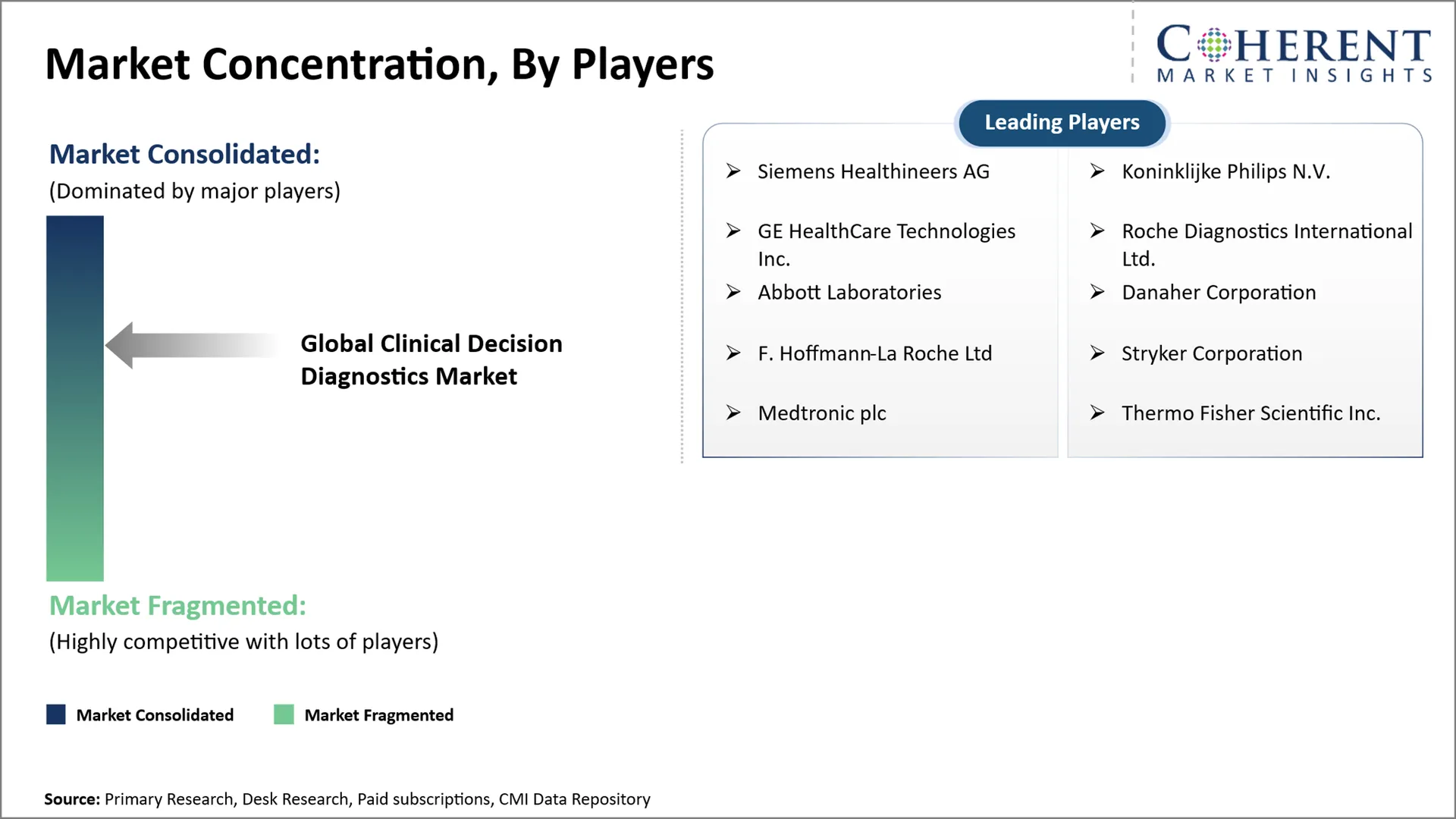
The global clinical decision diagnostics market is moderately competitive, with competition centered on diagnostic accuracy, AI capabilities, multimodal data integration, clinical validation, interoperability, and integration with existing healthcare workflows. Market participants are increasingly developing intelligent diagnostic solutions that combine laboratory, imaging, molecular, genomic, and patient-level data to support disease detection, risk assessment, prognosis, and treatment decisions.
Key focus areas include
- AI-powered interpretation of medical imaging, laboratory, and molecular diagnostic data
- Integration of multimodal clinical data for disease detection and risk assessment
- Development of predictive analytics for prognosis, disease progression, and treatment response
- Integration of diagnostic decision-support tools with EHR, LIS, PACS, and clinical workflows
- Expansion of point-of-care and real-time diagnostic decision-support capabilities
- Development of clinically validated generative AI and machine-learning technologies for diagnostic guidance
Market Report Scope
Global Clinical Decision Diagnostics Market Report Coverage | |||
Report Coverage | Details | ||
Base Year | 2025 | Market Size in 2026: | USD 9.62 Bn |
Historical Data For: | 2020 To 2024 | Forecast Period: | 2026 To 2033 |
Forecast Period 2026 To 2033 CAGR: | 15.2% | 2033 Value Projection: | USD 25.84 Bn |
Geographies covered: |
| ||
Segments covered: |
| ||
Companies covered: | Siemens Healthineers AG, Koninklijke Philips N.V., GE HealthCare Technologies Inc., Roche Diagnostics International Ltd., Abbott Laboratories, Danaher Corporation, F. Hoffmann-La Roche Ltd, Stryker Corporation, Medtronic plc, Thermo Fisher Scientific Inc. | ||
Growth Drivers: |
| ||
Restraints & Challenges: |
| ||
Analyst Opinion (Expert Opinion)
- In the coming years, global clinical decision diagnostics market will shift from standalone diagnostic outputs toward integrated, AI-enabled decision platforms that combine imaging, laboratory, molecular, genomic, and patient-record data. Diagnostic systems will increasingly move beyond disease detection to provide risk assessment, prognosis, treatment-response insights, and continuous clinical decision support, with interoperability becoming a core competitive requirement.
- The maximum opportunities are foreseen within molecular diagnostics for disease diagnosis & detection in China, where the combination of expanding precision-diagnostics adoption, increasing integration of clinical data, and growing demand for earlier and more targeted disease identification creates a scalable application opportunity. Oncology and infectious-disease diagnostics are particularly suited to this convergence because they require rapid interpretation of complex molecular and patient-level information.
- In order to gain a competitive advantage market players should prioritize clinically validated AI models, multimodal diagnostic-data integration, and seamless interoperability with EHR, laboratory, and imaging systems rather than competing solely on individual diagnostic technologies. Building disease-specific solutions with measurable clinical utility, explainable outputs, and scalable cloud or point-of-care deployment can strengthen differentiation while reducing implementation barriers for healthcare providers.
Speak to the analyst
Want personalized insights?
Take the findings above to one of our principal consultants, or have the report rebuilt around the segments, geographies and competitors you actually track.
Market Segmentation
- Diagnostic Type Insights (Revenue, USD Bn, 2021 - 2033)
- In Vitro Diagnostics (IVD)
- Imaging Diagnostics
- Molecular Diagnostics
- Others
- Clinical Decision Application Insights (Revenue, USD Bn, 2021 - 2033)
- Disease Diagnosis and Detection
- Treatment Selection and Therapy Guidance
- Risk Assessment and Prognosis
- Disease Monitoring and Management
- Technology Insights (Revenue, USD Bn, 2021 - 2033)
- Artificial Intelligence and Machine Learning
- Advanced Analytics and Decision-Support Algorithms
- Rule-Based Decision Support
- Others
- Disease Area Insights (Revenue, USD Bn, 2021 - 2033)
- Oncology
- Cardiovascular Diseases
- Infectious Diseases
- Neurological Disorders
- Others
- End User Insights (Revenue, USD Bn, 2021 - 2033)
- Hospitals and Clinics
- Diagnostic Laboratories
- Specialty and Reference Centers
- Others
- Regional Insights (Revenue, USD Bn, 2021 - 2033)
- North America
- U.S.
- Canada
- Latin America
- Brazil
- Argentina
- Mexico
- Rest of Latin America
- Europe
- Germany
- U.K.
- Spain
- France
- Italy
- Russia
- Rest of Europe
- Asia Pacific
- China
- India
- Japan
- Australia
- South Korea
- ASEAN
- Rest of Asia Pacific
- Middle East
- GCC Countries
- Israel
- Rest of Middle East
- Africa
- South Africa
- North Africa
- Central Africa
- North America
Sources
Primary Research Interviews
- Hospital and health-system executives responsible for diagnostic strategy, clinical technology adoption, and digital transformation
- Chief information, technology, data, and AI officers overseeing AI-enabled diagnostic and clinical decision-support deployment
- Pathology, radiology, and laboratory leaders responsible for diagnostic workflows, test utilization, and clinical interpretation
- Clinical decision-support and precision-medicine leaders evaluating AI, molecular, genomic, and multimodal diagnostic technologies
- Clinical informatics and health IT professionals integrating diagnostic platforms with EHRs, laboratory information systems, and imaging systems
- Diagnostic technology providers and implementation specialists developing AI-enabled diagnostic, imaging, laboratory, and clinical decision-support solutions
Stakeholders
- Hospitals and integrated health systems adopting AI-enabled diagnostic and clinical decision-support technologies
- Diagnostic laboratories and pathology networks implementing advanced laboratory and molecular diagnostic platforms
- Medical imaging providers and radiology centers deploying AI-assisted imaging and diagnostic interpretation
- Pharmaceutical and biotechnology companies using diagnostic technologies for precision medicine, biomarker identification, and companion diagnostics
- EHR, health IT, interoperability, and clinical decision-support platform providers
- AI, molecular diagnostics, imaging, and diagnostic technology companies developing clinical decision-support solutions
- Academic medical centers and research institutions developing and validating advanced diagnostic technologies
- End-use Sectors
- Hospitals and Health Systems
- Diagnostic Laboratories
- Imaging and Diagnostic Centers
- Specialty and Academic Medical Centers
- Ambulatory Care Centers
- Long-term and Post-acute Care Facilities
- Other Healthcare Facilities
- Regulatory & Health Bodies
- U.S. Food and Drug Administration (FDA) – oversight and regulatory guidance for AI-enabled medical devices, diagnostic technologies, and clinical decision-support software
- Centers for Medicare & Medicaid Services (CMS) – reimbursement, coverage, utilization, and healthcare-provider policies relevant to diagnostic services
- Office of the National Coordinator for Health Information Technology (ONC) – EHR interoperability, health IT standards, APIs, and clinical data exchange
- U.S. Department of Health and Human Services (HHS) – healthcare data, privacy, cybersecurity, digital health, and health IT policy
- European Medicines Agency (EMA) – regulatory considerations for AI and advanced technologies used in healthcare and medical products
- European Commission – European AI governance, digital health, medical-device, and data-related regulatory frameworks
- World Health Organization (WHO) – global guidance on digital health, AI governance, ethics, and responsible use of AI in healthcare
- National Medical Products Administration (NMPA), China – regulation and oversight of medical products and technology-enabled healthcare solutions
- Ministry of Health, Labour and Welfare (MHLW), Japan – regulation of medical devices, healthcare technology, digital health, and diagnostic technologies
Databases
- CMS Data – Medicare, Medicaid, claims, utilization, diagnostic-service, and healthcare-provider data
- ONC Health IT Data – EHR adoption, interoperability, APIs, health IT certification, and clinical data-exchange resources
- Healthcare Cost and Utilization Project (HCUP) – hospital utilization, diagnoses, procedures, admissions, and healthcare outcomes data
- ClinicalTrials.gov – clinical studies involving diagnostic technologies, AI-enabled medical devices, biomarkers, and clinical decision-support technologies
- WHO Global Health Observatory (GHO) – global disease burden, health-system, healthcare utilization, and health-status indicators
- OECD Health Statistics – healthcare expenditure, healthcare resources, diagnostic capacity, workforce, and health-system indicators
Associations
- American Hospital Association (AHA) – hospital operations, diagnostic services, healthcare technology adoption, and health-system transformation
- Healthcare Information and Management Systems Society (HIMSS) – health IT, AI, interoperability, clinical informatics, and digital-health transformation
- Healthcare Financial Management Association (HFMA) – healthcare finance, utilization, technology investment, and health-system management
- College of Healthcare Information Management Executives (CHIME) – healthcare IT leadership, digital transformation, AI adoption, and technology implementation
- Health Level Seven International (HL7) – healthcare interoperability standards, FHIR, and electronic health-information exchange
- International Medical Informatics Association (IMIA) – medical informatics, clinical decision support, digital health, and healthcare information systems
- Association for Healthcare Resource & Materials Management (AHRMM) – healthcare resource management, diagnostic supply chains, and technology-enabled healthcare operations
Public Domain Sources
- U.S. Department of Health and Human Services (HHS) – healthcare AI, health IT, data privacy, cybersecurity, and digital-health information
- Centers for Medicare & Medicaid Services (CMS) – diagnostic utilization, claims, reimbursement, healthcare-provider, and healthcare-service data
- Office of the National Coordinator for Health Information Technology (ONC) – EHR, interoperability, FHIR, APIs, health IT certification, and clinical data-exchange resources
- American Hospital Association (AHA) – public resources on hospital technology adoption, diagnostic services, healthcare transformation, and health-system trends
- World Health Organization (WHO) – global resources on digital health, AI in healthcare, clinical decision-making, health systems, and responsible AI adoption
Proprietary Elements
- CMI Data Analytics Tool
- Proprietary CMI Existing Repository of information for last 10 years.
Get access to 250+ pages report
Every segment, forecast, competitor profile and data table behind the analysis above — available for instant download.
- ESOMAR Member
- ISO 9001:2015 Certified
- D-U-N-S Registered
- GDPR & CCPA Compliant
Frequently Asked Questions
The global clinical decision diagnostics market is estimated to be valued at USD 9.62 Bn in 2026 and is expected to reach USD 25.84 Bn by 2033.
In Vitro Diagnostics (IVD) dominates due to its broad use in disease detection, routine testing, and clinical decision-making across healthcare settings.
Clinical decision diagnostics are diagnostic tools and technologies that analyze patient data to support accurate disease diagnosis, risk assessment, and treatment decisions.
The CAGR of global clinical decision diagnostics market is projected to be 15.2% from 2026 to 2033.
Rising adoption of AI-enabled diagnostics for faster and more accurate clinical decision-making, and growing demand for early disease detection and personalized treatment guidance are the major factors driving the growth of the global clinical decision diagnostics market.
High implementation costs for advanced diagnostic and decision-support technologies, and data privacy and interoperability challenges across healthcare systems are the major factors hampering the growth of the global clinical decision diagnostics market.
In terms of technology, artificial intelligence and machine learning is estimated to dominate the market revenue share in 2026.