
Global AI Multi-Omics Analytics Market Size and Forecast – 2026 To 2033
The global AI multi-omics analytics market is expected to grow from USD 1,160.0 Mn in 2026 to USD 6,459.1 Mn by 2033, registering a compound annual growth rate (CAGR) of 27.8% from 2026 to 2033. The market for global AI multi-omics analytics is poised for significant expansion, fueled by the growing volume of biological data and demand for precision medicine.
In June 2026, the U.S. National Institutes of Health (NIH) reported that its All of Us program had made data from over 747,000 participants, including more than 535,000 whole-genome sequences, available to researchers, supporting AI-enabled biomarker discovery and disease research.
Key Takeaways of the Global AI Multi-Omics Analytics Market
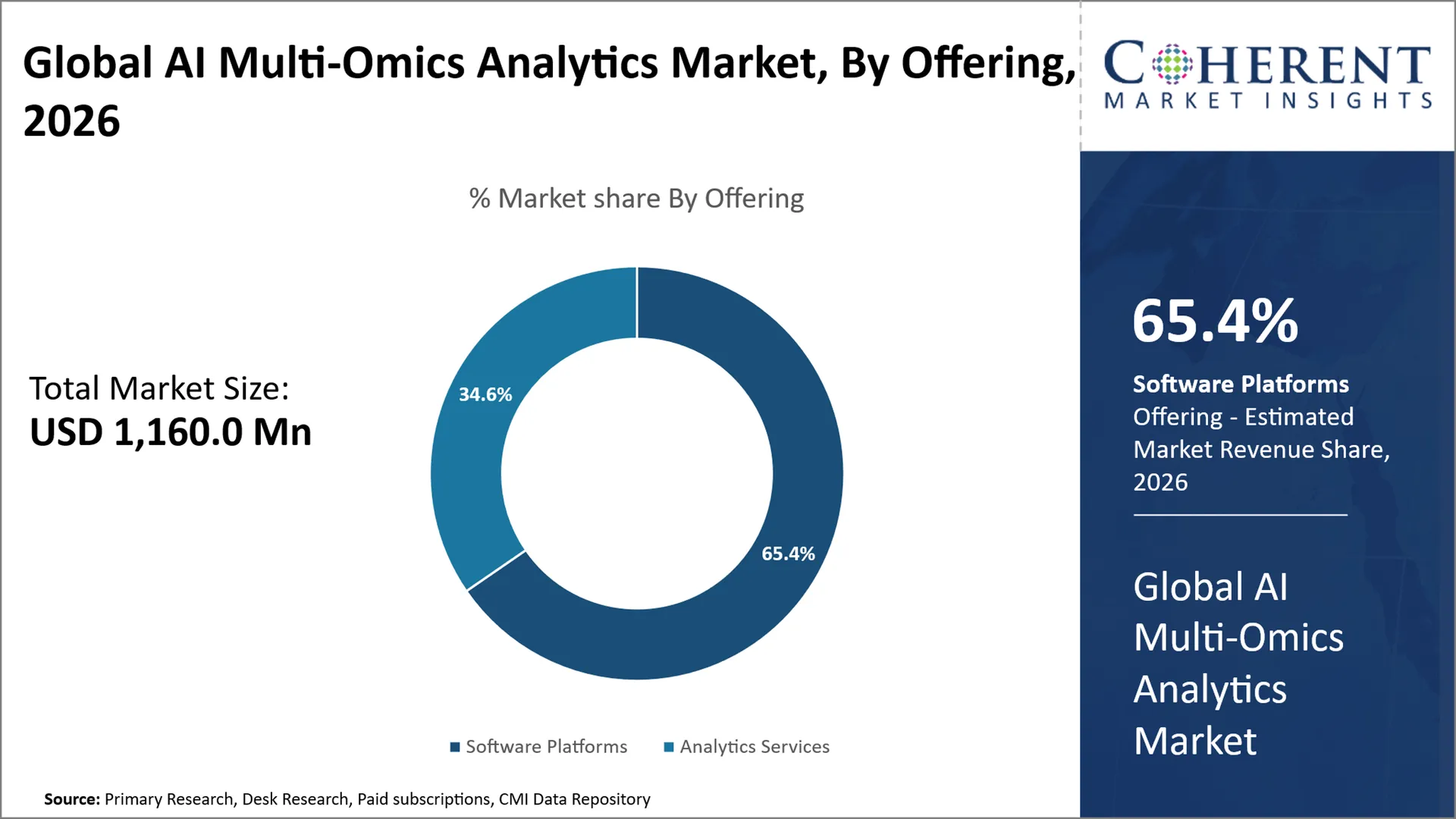
- Software platforms are projected to hold 65.4% of the global AI multi-omics analytics market share in 2026, making it dominant offering segment, with North America expected to remain a leading market due to its established biomedical research infrastructure and adoption of computational biology tools. The U.S. National Institutes of Health (NIH) provides authorized researchers access to its All of Us Researcher Workbench, supporting analysis of genomic and health data at scale. This infrastructure supports research applications that can benefit from AI-enabled multi-omics analytics.
- Genomics is projected to hold 29.7% of the global AI multi-omics analytics market share in 2026, making it dominant omics data type segment, across Europe benefitted from established genomic medicine initiatives and the integration of genomic data into research and clinical pathways. For instance, the UK’s National Health Service Genomic Medicine Service provides access to whole-genome sequencing tests and supports genomic interpretation for clinical care. These capabilities help strengthen the role of genomic data in precision medicine and integrated multi-omics research.
- Machine learning is projected to hold 57.8% of the global AI multi-omics analytics market share in 2026, making it dominant AI technology segment, across Asia Pacific as governments expand precision-medicine research and AI-enabled healthcare capabilities. For instance, Singapore’s National Precision Medicine Programme has sequenced 100,000 Singaporeans and links genomic, lifestyle, and healthcare data to improve understanding of disease and support targeted healthcare. These initiatives create opportunities for machine-learning applications that identify patterns across complex biological datasets.
- North America market maintains dominance with an expected share of 40.8% in 2026, bolstered by its established life sciences research ecosystem, advanced biotechnology infrastructure, and investment in precision medicine. For instance, the U.S. National Cancer Institute’s Cancer Moonshot initiative supports research to accelerate cancer prevention, diagnosis, and treatment, strengthening the broader research environment for biomarker discovery and data-driven oncology. These investments support persistent demand for advanced analytical approaches, including AI-enabled multi-omics research.
- Asia Pacific is expected to exhibit the fastest growth in the global AI multi-omics analytics market, registering an estimated CAGR of 29.4% during 2026–2033, driven by government investment in genomic research, expanding biomedical data infrastructure, and the growing adoption of precision medicine. For instance, Japan’s Ministry of Health, Labour and Welfare established a national basic plan to promote genomic medicine, supporting the development and use of genomic information in healthcare and research. These initiatives are expected to strengthen demand for advanced bioinformatics and AI-enabled multi-omics analysis across the region.
Segmental Insights
Why Do Software Platforms Dominate the Global AI Multi-Omics Analytics Market?
Software platforms are projected to hold the market share of 65.4% in 2026, by enabling data integration, data standardization, and data analysis with the help of artificial intelligence to interpret the complex data derived from genomics, transcriptomics, proteomics, and metabolomics. Cloud scalability, visualization, and flexible workflows simplify the discovery of biomarkers and drug development across research teams. For instance, Illumina’s Partek Flow software is a multi-omics analysis platform that enables researchers to integrate, analyze, and visualize genomic, transcriptomic, epigenomic, and proteomic data. Configurable workflows, cloud or on-premises deployment, enabling complex biological data analysis and biomarker discovery.
- Current Industry Events of 2026
- Market Size Estimation
- Regional Breakdown
- Competitive Landscape
- Customer Intelligence
- Segmental Analysis
- Pricing Analysis
- Key Market Drivers, Challenges & Future Trends
- Customized Insights Section
Why Does Genomics Represent the Largest Omics Data Type Segment in the AI Multi-Omics Analytics Market?
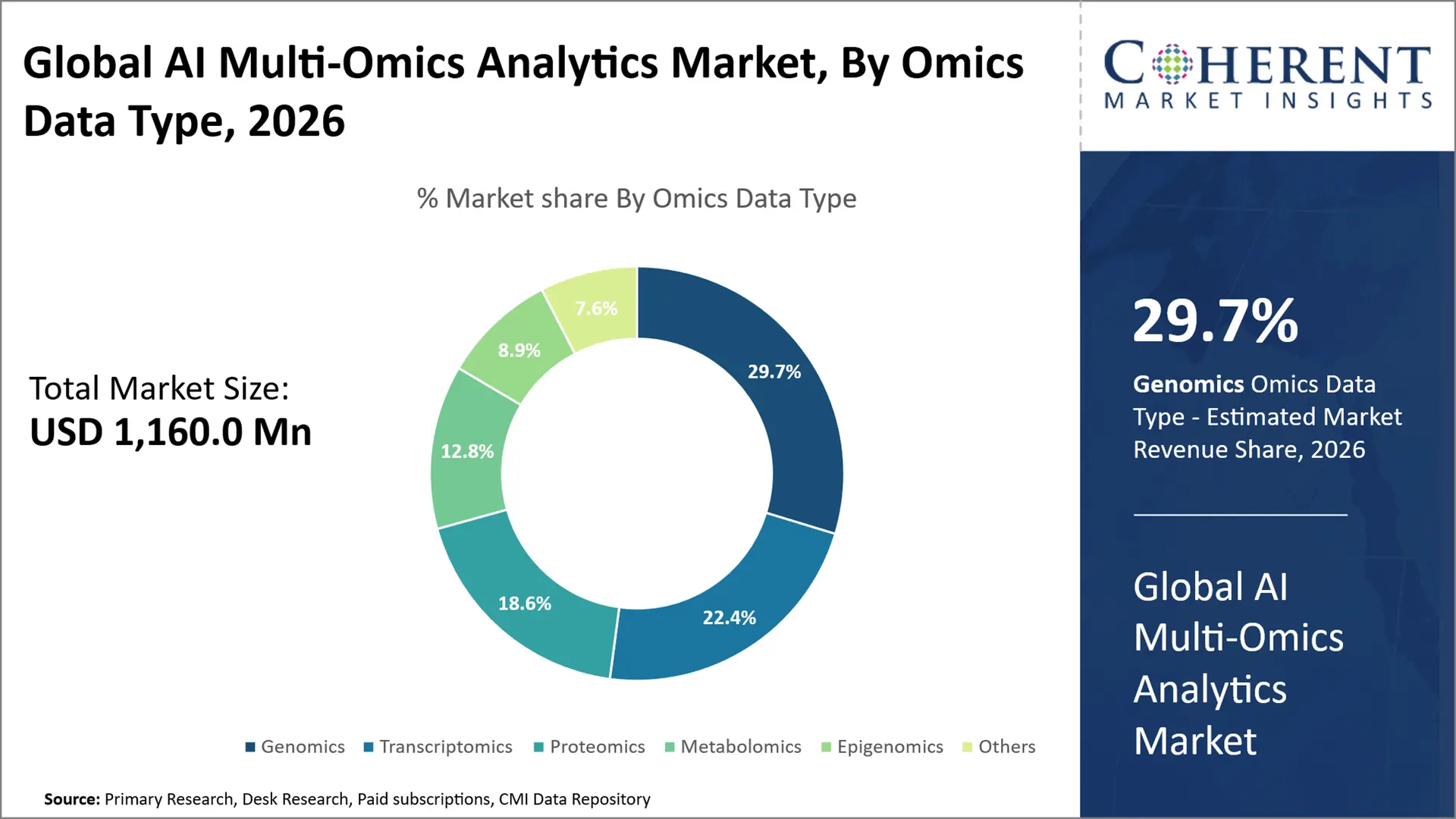
Genomics is projected to hold a market share of 29.7% in 2026, owing to the wide utilization of next-generation sequencing and its central role in identifying genetic variants, disease-related mutations, and therapeutic targets. Genomic analysis based on artificial intelligence enables biomarker identification and provides a basis for genetic data integration with transcriptomic and proteomic data. For instance, the U.S. National Human Genome Research Institute’s Genome Sequencing Program supports large-scale genomic research to improve understanding of human disease and advance genomic medicine.
Machine Learning Segment Dominates the Global AI Multi-Omics Analytics Market
The machine learning segment is projected to hold a market share of 57.8% in 2026, due to its capability to analyze high-dimensional omics data, to perform feature selection, and to discover disease/biomarker related features. In addition, its lower computational needs and interpretable output make it suitable for classification, risk prediction, and multi-omics data integration. For instance, in January 2026, research published by the National Library of Medicine, introduced a multivariate random forest framework to integrate multi-omics datasets and identify shared biomarkers across cancer types, demonstrating the value of machine learning in biomarker discovery.
Current Events and their Impact
Current Events | Description and its Impact |
India Highlights AI-Enabled Multi-Omics Research at Multi-Omics Summit 2026 (March 2026) |
|
the U.S. National Institutes of Health (NIH) Bridge2AI Program Advances to Its Next Stage (January 2026) |
|
UK Life Sciences Sector Plan Prioritizes Health Data and Multi-Omics Infrastructure (July 2025) |
|
AI Multi-Omics Analytics Market Dynamics
Market Drivers
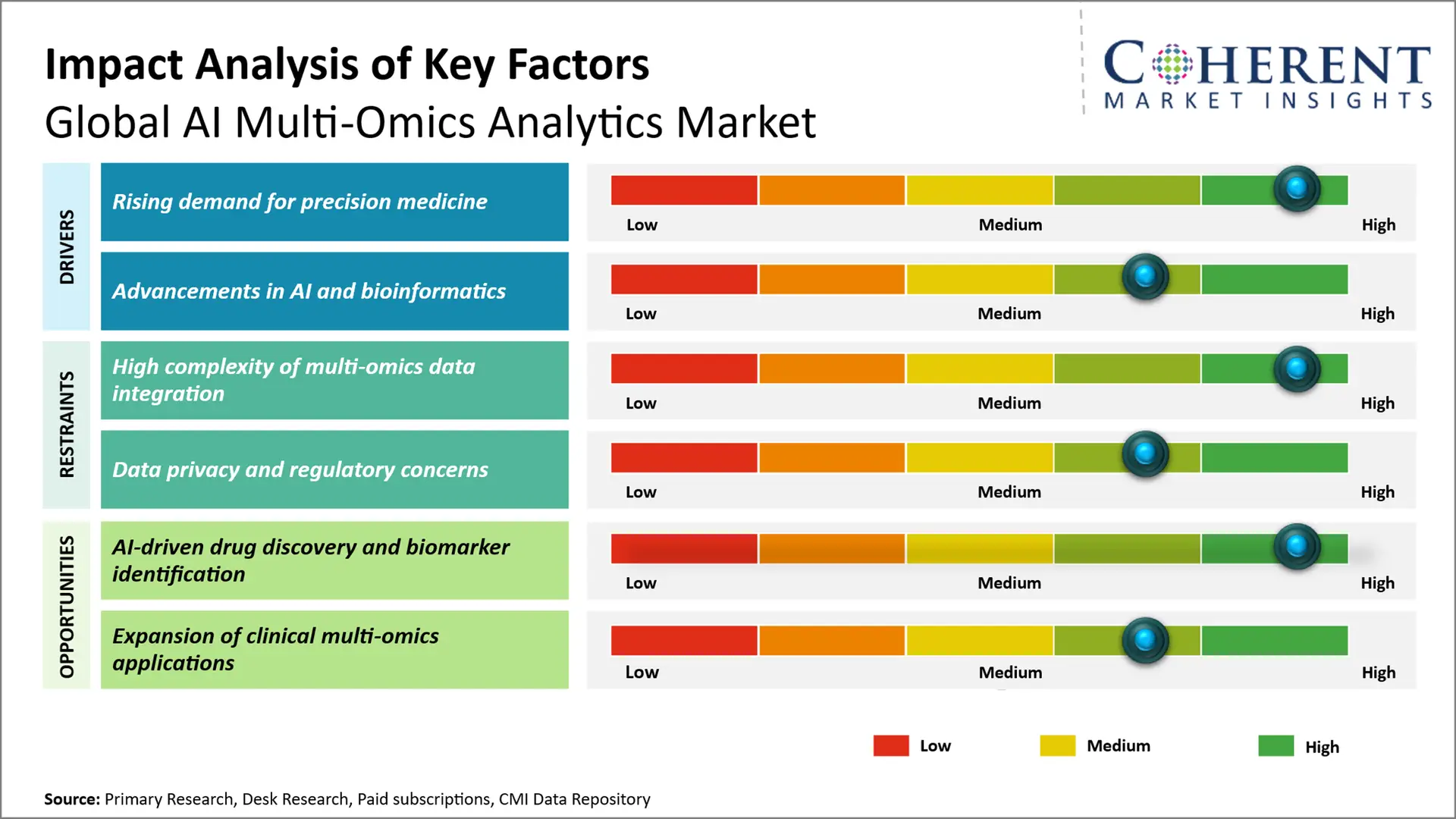
- Rising demand for precision medicine: The rising demand for customized treatments has driven the need for AI-enabled multi-omics analytics, which integrates molecular and clinical data to discover disease patterns, potential biomarkers, and therapeutic options for each patient. To illustrate, the U.S. National Institutes of Health’s Trans-Omics for Precision Medicine (TOPMed) Program is expanding from genome sequencing to generate genomic, epigenomic, transcriptomic, proteomic, and metabolomic data to understand the molecular basis of health and disease. The increasing focus on integrated biological data is improving the need for sophisticated AI-based analytical tools in precision medicine research.
- Advancements in AI and bioinformatics: Recent advances in deep learning, computational biology, and scalable data-processing technologies are improving the ability to integrate and interpret complex multi-omics datasets. These advances allow researchers to elucidate molecular relationships, prioritize therapeutic targets, and spped-up data-driven drug discovery. In July 2025, the European Bioinformatics Institute (EMBL-EBI) featured CORNETO, a machine-learning tool that combines multiple omics datasets with existing biological knowledge to map molecular interactions and identify disease-related pathways. This progress shows how improved AI algorithms and bioinformatics tools can unveil insights from complex multi-omics data and aid drug discovery research.
- Growing Investments in Drug Discovery and Development: Increasing investment in pharmaceutical R&D is driving demand for AI-powered multi-omics analytics to identify therapeutic targets, understand disease mechanisms, and improve drug candidate selection. By integrating molecular datasets, these tools can help researchers prioritize promising compounds and support more efficient, data-driven drug development. For instance, the Innovative Health Initiative (IHI), a public-private partnership supported by the European Union, funds collaborative research projects that use health data and advanced technologies to accelerate the development of innovative medicines. These collaborative investments support the broader research ecosystem in which AI-enabled multi-omics solutions are increasingly applied.
Emerging Trends
- Generative AI and foundation models for multi-omics integration: Genomic, transcriptomic, proteomic, and metabolomic datasets can now be integrated using generative AI and biological foundation models. These methods can aid in the identification of complex biological relationships, improve biomarker discovery, and generate new hypotheses for disease research and drug development.
- Integration of single-cell and spatial multi-omics data: Researchers are increasingly combining single-cell sequencing, spatial transcriptomics, and other omics datasets to investigate cellular diversity and the molecular organization of tissues. AI-powered analytics can help interpret these high-dimensional datasets, supporting research into disease progression, tumor microenvironments, and treatment response.
- AI-enabled multi-omics for precision medicine: The use of multi-omics analytics in patient classification, disease-risk assessment, and prospective therapeutic target identification is growing. AI-based platforms can aid in the creation of more individualized diagnostic and treatment plans by combining molecular profiles with clinical data.
Regional Insights
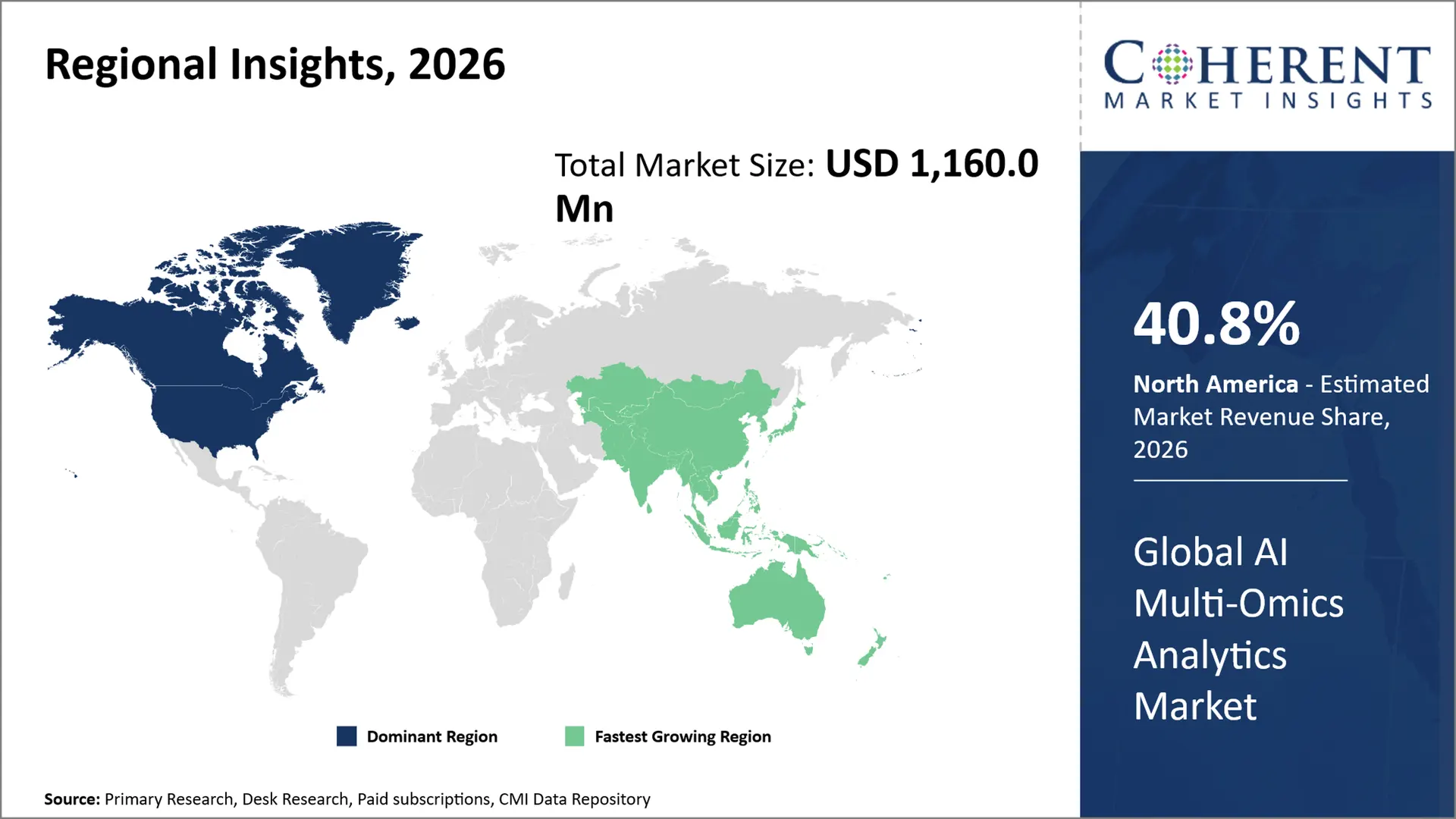
Why is North America a Strong Market for AI Multi-Omics Analytics?
North America leads the global AI multi-omics analytics market, accounting for an estimated 40.8% share in 2026, driven by its pioneering biomedical research infrastructure, healthy biotech industry, and high investments in the field of AI in life sciences. Indeed, the availability of ample funding from research institutes such as NIH coupled with the existing government policies and regulations for advanced medical technologies have contributed significantly towards this regional dominance.
For instance, the U.S. National Institutes of Health (NIH) invests in biomedical data infrastructure efforts through programmes like the All of Us Research Programme, which provides researchers with genomic and health data to advance precision medicine and data-driven biomedical research. In addition, the established research and academic institutions coupled with the collaborations between academia, healthcare, and biotech industries are anticipated to reduce time-to-market for multi-omics in drug discovery and precision medicine.
Why Does Asia Pacific AI Multi-Omics Analytics Market Exhibit High Growth?
Asia Pacific is expected to exhibit the fastest growth in the global AI multi-omics analytics market, registering an estimated CAGR of 29.4% during 2026–2033. The region is projected to account for 23.1% of the global market in 2026, attributed to the booming biopharmaceutical industry and rising adoption of artificial intelligence and digital health technologies. In addition, soaring prevalence of the government initiative for precision medicine and genomic research in China, Japan, South Korea, and India is surging the demand for multi-omics integrated data analysis.
For instance, India’s GenomeIndia Project, led by the Department of Biotechnology, generated a reference dataset of 10,000 whole genomes from diverse Indian populations to support population-specific genomic research and precision medicine. This initiative provides a foundation for AI-driven analysis of genetic variation and disease-associated biomarkers. Furthermore, increasing demand for low-cost diagnostics, biomarkers discovery and AI-enabled drug development, is further cementing the growth of the region's market.
Global AI Multi-Omics Analytics Market Outlook for Key Countries
Why is the U.S. Leading Innovation and Adoption in the AI Multi-Omics Analytics Market?
The U.S. is expected to hold a leading position in the AI multi-omics analytics market owing to its advanced system of pharmaceutical research & development, modeling/computation biology, and the high number of biotech enterprises that are focusing on the development of AI- enabled research platform. The usage of combined data of genomics, transomics, proteomics, and clinical to complement drug target detection, biomarker discovery, and the research of precision medicine. Furthermore, collaboration of pharma companies and technology developers is expected to give a boost to innovation and its acceptance.
Is China a Favorable Market for AI Multi-Omics Analytics Market?
China presents a favorable outlook for AI multi-omics analytics market driven by its developing biotech industry, its strong genomics investigation potential, and its growth in the field of precision oncology. In addition, there will probably be an even bigger market for integrated solution-based platforms which combine genomics, transcriptomics, and proteomics to pinpoint disease biomarkers and separate patients, and aid in drug discovery.
Is Japan Emerging as a Key Growth Hub for the AI Multi-Omics Analytics Market?
Japan is emerging as a significant hub for the development of the AI multi-omics analytics market driven by the country's expertise in biomedical, pharma and precision medicine. It is expected that demand may grow for approaches that use genomic, transcriptomic and proteomic data to enable oncology research, biomarker discovery and pharmaceutical target identification. The mature life sciences ecosystem of Japan and application of data-driven healthcare could also open the doors for AI enabled multi-omics applications in drug discovery and translational science.
Why Does Germany Top the European AI Multi-Omics Analytics Market?
Germany leads the European AI multi-omics analytics market owing to well established pharmaceutical and biotech industry, advanced infrastructure for molecular biology research and strong bioinformatics capabilities. The high usage of integrated genome, transcriptome and proteome analysis in cancer research, drug discovery and biomarker research are some of the factors contributing to the high demand for AI enabled multi-omics platforms. Additionally, partnerships between biotech companies, academic research institutes, and pharma companies are accelerating AI multi-omics analytics adoption.
Is AI Multi-Omics Analytics Market Developing in UK?
UK is primed for market expansion due to its strength in areas such as computational biology, biomedical data and genomic medicine. New market opportunities are expected to include AI tools that analyze combined molecular and clinical data to discover disease sub-types or predict treatment-response. An increased focus on translation of biomedical discoveries into clinical practice should help provide for the uptake of multi-omics analytics.
Key Public Multi-Omics Data Resources Supporting AI-Driven Drug Discovery and Biomarker Identification
Public data resource | Data type / focus | Relevance to AI multi-omics analytics |
NCBI Gene Expression Omnibus (GEO) | Gene expression and functional genomics | Supports AI-based disease classification, gene-expression analysis, and biomarker discovery. |
NCI Genomic Data Commons (GDC) | Cancer genomics and clinical data | Enables analysis of cancer molecular profiles for therapeutic target and biomarker identification. |
Human Protein Atlas | Protein expression and tissue-specific data | Supports the investigation of protein biomarkers and potential therapeutic targets. |
PRIDE Archive | Proteomics and mass spectrometry data | Enables protein-expression analysis and discovery of candidate disease biomarkers. |
MetaboLights | Metabolomics data | Supports identification of metabolic signatures associated with disease and treatment response. |
How is the AI-driven drug discovery and biomarker identification creating new growth opportunities in the AI multi-omics analytics market?
The multi-omics analytics enabled by AI combines genomics, transcriptomics and proteomics, indicating that treatment targets and predictability markers are identified. This is expected to improve the efficiency of drug discovery and aid personalized medicine. Moreover, increased investment in pharmaceutical R&D and developments in artificial intelligence and computing infrastructure will continue to fuel demand. For instance, in June 2025, the U.S. National Institutes of Health (NIH) featured research on large language models and graph-based AI. The research is based on the analysis of omics and biomedical literature data, discovery of disease targets and signaling pathway maps, as well as prediction of potential drug combinations.
Market Players, Key Development, and Competitive Landscape
Key Developments
- On October 20, 2026, Metabolon, Inc. announced Splash & Ripple, a new bioinformatics application designed to translate metabolomic biomarkers into candidate protein mechanisms and actionable multi-omics hypotheses. The application combines curated metabolite–protein relationships, network algorithms, interactive exploration, and optional AI-assisted interpretation to help researchers prioritize biological mechanisms and downstream experiments.
- On October 20, 2026, Sinopia Biosciences, Inc. announced a USD 2.5 million NIH Small Business Innovation Research (SBIR) Phase II grant to advance its AI-powered metabolomics foundation model. The project aims to integrate metabolomics datasets generated using different platforms and analytical methods, improving biological interpretation and the identification of potential drug targets and therapeutic compounds through its LEADS platform.
- On October 20, 2026, Ultima Genomics, Inc. announced the commercial launch of paired-end sequencing on its UG200 Series and Solaris 2.0 Max sequencing consumables, delivering up to 20 billion reads per wafer. The advances aim to reduce whole-genome sequencing costs to approximately USD 60 per genome at 30× coverage, supporting large-scale genomic research and AI-driven multi-omics discovery.
- On October 14, 2026, Illumina, Inc. launched its BioInsight Platform, a unified software environment integrating genomic analysis tools, purpose-built AI, and curated biological datasets. The platform aims to help researchers interpret complex genomic and multi-omics data, accelerate biological discovery, and identify potential drug targets. The launch also includes DRAGEN v4.6, expanding deployment flexibility for genomic data analysis across supported computing environments.
Competitive Landscape
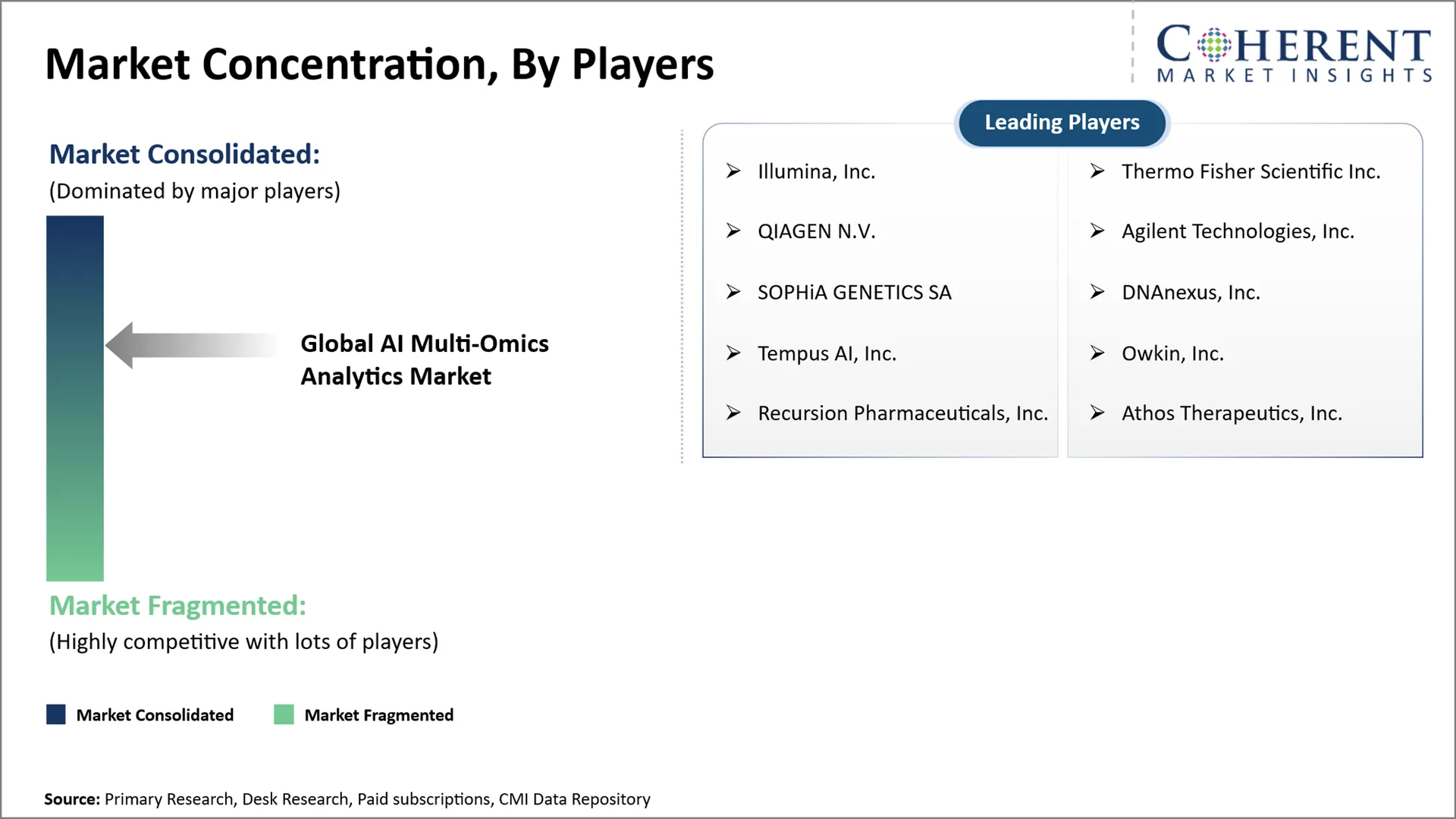
The global AI multi-omics analytics market is moderately fragmented, with competition spanning established life sciences technology providers, specialized bioinformatics firms, AI software developers, and cloud-based analytics providers. Competition is centered on AI capabilities, multi-omics data integration, predictive modeling, interoperability, scalability, and analytical accuracy. Key focus areas include:
- AI-driven integration of genomic, transcriptomic, proteomic, metabolomic, and epigenomic datasets
- Machine learning and deep learning for biomarker discovery and therapeutic target identification
- Predictive modeling for disease mechanisms, treatment response, and patient stratification
- Data harmonization and interoperability across heterogeneous biological datasets
- Cloud-based platforms for scalable analytics and collaborative research
- Generative AI and biological foundation models for data interpretation and hypothesis generation
- Explainable AI, model validation, data privacy, and reproducibility in biomedical research
Market Report Scope
AI Multi-Omics Analytics Market Report Coverage | |||
Report Coverage | Details | ||
Base Year | 2025 | Market Size in 2026: | USD 1,160.0 Mn |
Historical Data For: | 2020 To 2024 | Forecast Period: | 2026 To 2033 |
Forecast Period 2026 To 2033 CAGR: | 27.8% | 2033 Value Projection: | USD 6,459.1 Mn |
Geographies covered: |
| ||
Segments covered: |
| ||
Companies covered: | Illumina, Inc., Thermo Fisher Scientific Inc., QIAGEN N.V., Agilent Technologies, Inc., SOPHiA GENETICS SA, DNAnexus, Inc., Tempus AI, Inc., Owkin, Inc., Recursion Pharmaceuticals, Inc., Athos Therapeutics, Inc. | ||
Growth Drivers: |
| ||
Restraints & Challenges: |
| ||
Analyst Opinion (Expert Opinion)
- In the coming years, global AI multi-omics analytics market is expected to evolve from specialized research applications toward integrated analytical platforms that combine genomic, transcriptomic, proteomic, metabolomic, and epigenomic data to generate actionable biological insights. As AI algorithms become more capable of interpreting complex molecular relationships, adoption is likely to expand across drug discovery, biomarker identification, disease classification, and precision medicine. Over the longer term, the market’s development will depend on the ability to demonstrate reproducible results, integrate diverse datasets, and translate computational findings into clinically and commercially useful outcomes.
- The maximum opportunities are foreseen within AI-enabled multi-omics software platforms for drug discovery in the U.S., where pharmaceutical companies can integrate genomic, transcriptomic, and proteomic data to identify therapeutic targets, prioritize drug candidates, and improve research efficiency. A second opportunity exists in AI-powered biomarker discovery and patient stratification for oncology in China, where expanding precision medicine research can increase demand for integrated molecular analysis. Cloud-based multi-omics analytics for precision medicine in India also offers growth potential as healthcare research and biotechnology capabilities expand.
- In order to gain a competitive advantage market players should move beyond standalone omics analysis and develop integrated, clinically relevant AI platforms capable of combining diverse biological datasets with reliable predictive outputs. Building proprietary analytical capabilities, improving data interoperability, validating models across diverse populations, and offering scalable cloud-based deployment can strengthen differentiation. Strategic partnerships with pharmaceutical companies, biotechnology firms, and research institutions, alongside transparent AI outputs and robust data governance, can help improve customer trust and long-term adoption.
Speak to the analyst
Want personalized insights?
Take the findings above to one of our principal consultants, or have the report rebuilt around the segments, geographies and competitors you actually track.
Market Segmentation
- Offering Insights (Revenue, USD Mn, 2021 - 2033)
- Software Platforms
- Analytics Services
- Omics Data Type Insights (Revenue, USD Mn, 2021 - 2033)
- Genomics
- Transcriptomics
- Proteomics
- Metabolomics
- Epigenomics
- Others
- AI Technology Insights (Revenue, USD Mn, 2021 - 2033)
- Machine Learning
- Deep Learning
- Others
- Application Insights (Revenue, USD Mn, 2021 - 2033)
- Drug Discovery and Development
- Biomarker Discovery
- Clinical Diagnostics and Precision Medicine
- Others
- End User Insights (Revenue, USD Mn, 2021 - 2033)
- Pharmaceutical and Biotechnology Companies
- Academic and Research Institutes
- Hospitals and Clinical Laboratories
- Contract Research Organizations (CROs)
- Others
- Regional Insights (Revenue, USD Mn, 2021 - 2033)
- North America
- U.S.
- Canada
- Latin America
- Brazil
- Argentina
- Mexico
- Rest of Latin America
- Europe
- Germany
- U.K.
- Spain
- France
- Italy
- Russia
- Rest of Europe
- Asia Pacific
- China
- India
- Japan
- Australia
- South Korea
- ASEAN
- Rest of Asia Pacific
- Middle East
- GCC Countries
- Israel
- Rest of Middle East
- Africa
- South Africa
- North Africa
- Central Africa
- North America
- Key Players Insights
- Illumina, Inc.
- Thermo Fisher Scientific Inc.
- QIAGEN N.V.
- Agilent Technologies, Inc.
- SOPHiA GENETICS SA
- DNAnexus, Inc.
- Tempus AI, Inc.
- Owkin, Inc.
- Recursion Pharmaceuticals, Inc.
- Athos Therapeutics, Inc.
Sources
Primary Research Interviews
- Bioinformatics and computational biology experts developing AI-driven multi-omics integration workflows
- Genomics, transcriptomics, proteomics, and metabolomics research leaders evaluating integrated analytical platforms
- Pharmaceutical and biotechnology R&D executives overseeing drug discovery, target identification, and biomarker development
- AI/ML scientists and data scientists building predictive models for molecular profiling, disease classification, and therapeutic response
- Precision medicine and translational research specialists applying multi-omics insights to patient stratification and disease research
- Laboratory directors and omics platform managers responsible for biological data generation, quality control, and analytical workflows
- Academic researchers and principal investigators conducting AI-enabled multi-omics research
- Bioinformatics service providers and CRO executives delivering outsourced omics analysis and computational biology services
Stakeholders
- Pharmaceutical companies applying AI multi-omics analytics to drug discovery, target validation, and therapeutic development
- Biotechnology companies developing molecular profiling, biomarker discovery, and precision medicine solutions
- Bioinformatics and computational biology providers developing integrated multi-omics software and analytical tools
- Genomics, proteomics, and metabolomics laboratories generating biological datasets for downstream AI analysis
- Academic and research institutions conducting systems biology, functional genomics, and multi-omics research
- Hospitals and clinical laboratories exploring molecular profiling and precision medicine applications
- Contract research organizations (CROs) providing multi-omics data analysis and translational research services
- Cloud computing and data infrastructure providers supporting large-scale biological data storage and processing
- AI software developers building machine learning, deep learning, and biological foundation models
- End-use Sectors
- Pharmaceutical Companies
- Biotechnology companies
- Academic and research institutions
- Hospitals and clinical laboratories
- Contract research organizations
- Government-funded biomedical research organizations
- Regulatory & Health Bodies
- U.S. Food and Drug Administration (FDA) – regulatory considerations for AI-enabled medical products, clinical evidence, and drug development.
- National Institutes of Health (NIH) – biomedical research, multi-omics programs, AI research, and genomic data resources.
- National Human Genome Research Institute (NHGRI) – genomics research, genomic data science, and computational genomics initiatives.
- European Medicines Agency (EMA) – scientific and regulatory considerations for AI use in medicines development.
- European Commission – European AI governance, data protection, and research policy relevant to biomedical analytics.
- Medicines and Healthcare products Regulatory Agency (MHRA), UK – regulation of medicines and medical devices, including relevant AI-related regulatory considerations.
- Central Drugs Standard Control Organisation (CDSCO), India – regulation of drugs, clinical research, and medical devices.
Databases
- Gene Expression Omnibus (GEO) – gene expression, transcriptomics, and functional genomics datasets.
- Sequence Read Archive (SRA) – publicly available high-throughput sequencing data.
- Database of Genotypes and Phenotypes (dbGaP) – controlled-access genomic and associated phenotypic datasets.
- ENCODE Project – functional genomics data, gene regulation, and epigenomic datasets.
- Human BioMolecular Atlas Program (HuBMAP) – molecular and cellular data for mapping human tissues and organs.
- Human Cell Atlas (HCA) – single-cell and cellular reference datasets supporting cell biology and multi-omics research.
- ProteomeXchange – proteomics datasets contributed by participating repositories.
- PRIDE Archive – mass spectrometry-based proteomics data.
- MetaboLights – metabolomics studies and associated experimental metadata.
- European Nucleotide Archive (ENA) – nucleotide sequence data supporting genomics and transcriptomics research.
- The Cancer Genome Atlas (TCGA) – molecular and clinical datasets for cancer research, including genomic and transcriptomic profiles.
- National Center for Biotechnology Information (NCBI) BioProject – repository of biological research projects and associated datasets.
Associations
- International Society for Computational Biology (ISCB) – computational biology, bioinformatics, and AI-driven biological research.
- American Society of Human Genetics (ASHG) – human genetics and genomic research.
- American Society for Biochemistry and Molecular Biology (ASBMB) – molecular biology, biochemistry, and omics-related research.
- Human Proteome Organization (HUPO) – proteomics research, standards, and international collaboration.
- Metabolomics Society – metabolomics research, analytical methods, and data standardization.
- International Society for Molecular and Clinical Epidemiology (ISMCE) – molecular and clinical research relevant to disease investigation and translational science.
- Global Alliance for Genomics and Health (GA4GH) – frameworks and standards for responsible genomic and health data sharing.
- European Bioinformatics Institute (EMBL-EBI) – bioinformatics resources, biological databases, and computational life sciences research.
Public Domain Sources
- National Institutes of Health (NIH) – biomedical research funding, genomics initiatives, and AI-related research resources.
- National Human Genome Research Institute (NHGRI) – genomics research programs, genomic data science, and research policy.
- National Cancer Institute (NCI) – cancer genomics, proteomics, molecular characterization, and precision oncology resources.
- National Center for Biotechnology Information (NCBI) – genomic, transcriptomic, sequence, and molecular biology databases.
- European Molecular Biology Laboratory–European Bioinformatics Institute (EMBL-EBI) – open biological databases and computational biology resources.
- European Commission – European research funding, AI governance, and life sciences policy.
- World Health Organization (WHO) – health research policy, digital health, and responsible AI guidance.
- National Medical Research Council (NMRC), Singapore – biomedical and translational research funding and initiatives.
Proprietary Elements
- CMI Data Analytics Tool, Proprietary CMI Existing Repository of information for last 10 years.
Get access to 250+ pages report
Every segment, forecast, competitor profile and data table behind the analysis above — available for instant download.
- ESOMAR Member
- ISO 9001:2015 Certified
- D-U-N-S Registered
- GDPR & CCPA Compliant
Frequently Asked Questions
The global AI multi-omics analytics market is estimated to be valued at USD 1,160.0 Mn in 2026 and is expected to reach USD 6,459.1 Mn by 2033.
Software platforms dominate due to their ability to integrate, process, and analyze complex multi-omics datasets efficiently.
AI multi-omics analytics uses artificial intelligence to integrate and interpret multiple biological data types to support biomarker discovery, drug development, and precision medicine.
The CAGR of global AI multi-omics analytics market is projected to be 27.8% from 2026 to 2033.
Rising demand for precision medicine, and advancements in AI and bioinformatics are the major factors driving the growth of the global AI multi-omics analytics market.
High complexity of multi-omics data integration, and data privacy and regulatory concerns are the major factors hampering the growth of the global AI multi-omics analytics market.
In terms of AI technology, machine learning is estimated to dominate the market revenue share in 2026.