

Global AI-Powered Histopathology Diagnostics Market Size and Forecast – 2026 To 2033
The global AI-powered histopathology diagnostics market is expected to grow from USD 1,185.0 Mn in 2026 to USD 4,120.0 Mn by 2033, registering a compound annual growth rate (CAGR) of 19.5% from 2026 to 2033. The global market for AI-powered histopathology diagnostics is projected to witness significant growth during the forecast period attributed to the rising adoption of AI in diagnosis and growing government support for AI-based diagnostic validation clinical applications.
The Government of India has announced the Cancer AI & Technology Challenge (CATCH) Grant Program under the IndiaAI Mission in March 2026. It provides pilot funding support for up to USD 5,349 (INR 50 lakh) and scale-up support of up to USD 10,698 (INR 1 crore) for AI-based healthcare solutions. It also includes diagnostic solutions opening the door for AI-based histopathology solutions. (Source: Press Information Bureau)
Key Takeaways of the Global AI-Powered Histopathology Diagnostics Market
- Software is projected to hold 68.4% of the global AI-powered histopathology diagnostics market share in 2026, making it dominant component segment. North America is the most significant market due to the presence of well-established digital pathology infrastructure and research landscape. In September 2025, the U.S. National Institutes of Health (NIH) granted USD 2.8 million to UC Davis Health for an AI-based digital pathology tool for quantitative tissue assessment.
- Deep learning is projected to hold 48.7% of the global AI-powered histopathology diagnostics market share in 2026, making it technology segment. Europe is improving its research environment in computational pathology with public funding for innovation. Around USD 2.29 million (EUR 1.98 million) funding has been awarded for the Comp Hemato Pathology project, overseen by the Helmholtz Zentrum München in Germany and funded by the European Union, to develop AI models for automated classification and improved diagnosis of blood diseases.
- Cancer diagnosis is projected to hold 42.8% of the global AI-powered histopathology diagnostics market share in 2026, making it dominant application segment. Asia Pacific, specifically India is creating opportunities for the use of AI for cancer diagnosis by empowering citizens with various government schemes for AI-based diagnostic innovation. India’s Department of Science and Technology in February 2026 supported the development of Autoscope, an automated whole-slide imaging and AI-based diagnostic platform to make diagnostics accessible.
- North America market maintains dominance with an expected share of 39.6% in 2026, owing to the strong digital pathology infrastructure, large biomedical research funding, and the early adoption of artificial intelligence in clinical workflows. In July 2026, the U.S. National Cancer Institute’s K99/R00 award program will support research that uses artificial intelligence tools & genomic and histopathological data to improve precision in cancer medicine.
- Asia Pacific is expected to exhibit the fastest growth in the global AI-powered histopathology diagnostics market, registering an estimated CAGR of 28.6% during 2026–2033, owing to the healthcare digitization, the advancement in AI research infrastructure, and rising acceptance of technologically advanced diagnostic solutions. The Government of South Korea announced a national strategy for the proliferation of AI-powered healthcare in August 2026 which includes the installation of AI medical support devices at public healthcare centers and primary care clinics that are far from urban regions.
Segmental Insights
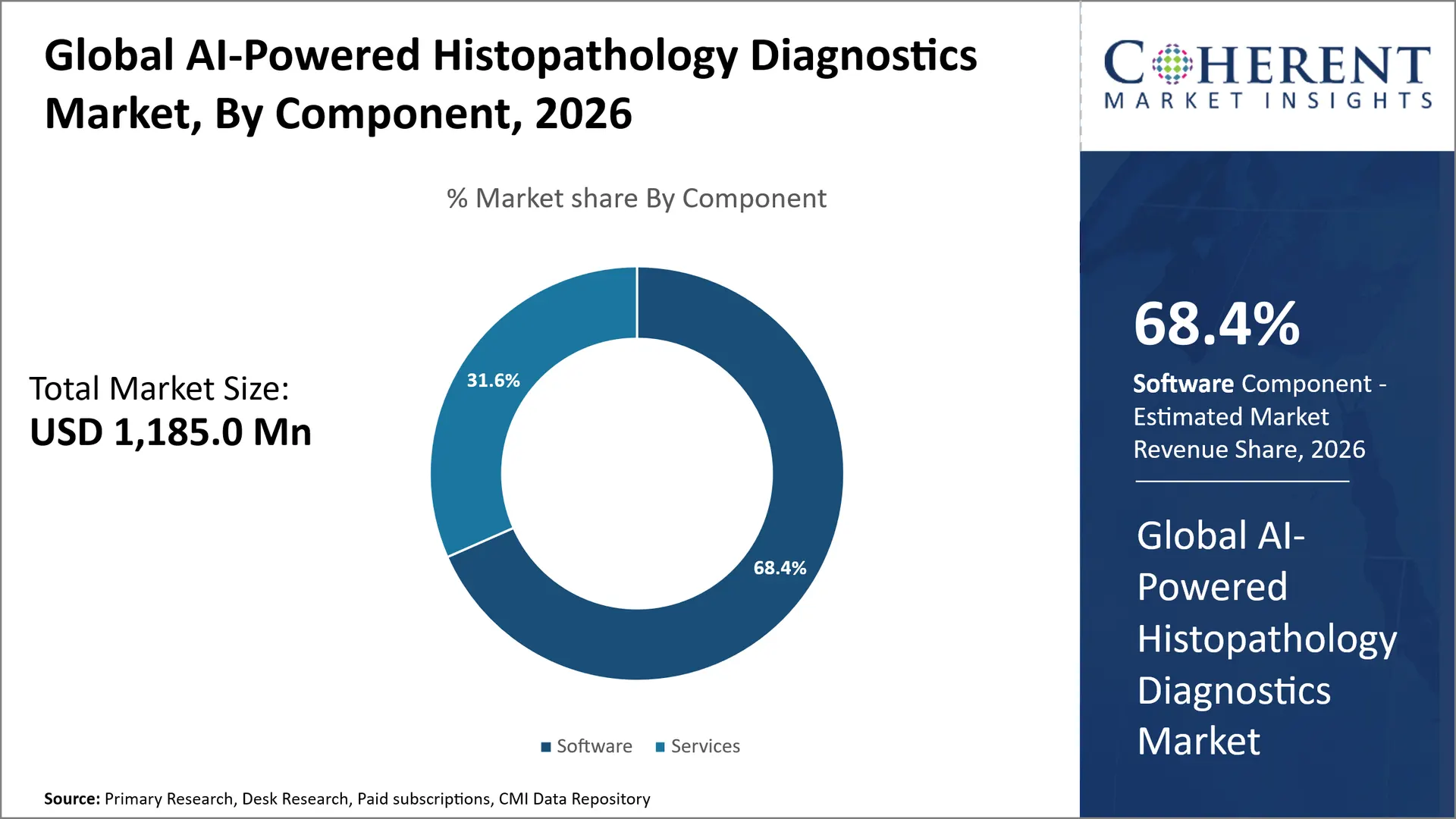
Why Do Software Dominate the Global AI-Powered Histopathology Diagnostics Market?
Software is projected to hold the market share of 68.4% in 2026, owing to its ability to automate whole-slide image analysis, locate tissue abnormalities, quantify biomarkers, and integrate diagnostic processes with laboratory information systems. Additionally, scalability, algorithm upgrade and cloud-based capabilities may drive the segment growth. For instance, in July 2026, India’s Central Drugs Standard Control Organization (CDSCO) issues guidance on medical device software, including AI-based digital pathology solutions. The guidance covers the use of digital pathology solutions for data exchange, the ease of data sharing, interoperability, and integration with the Ayushman Bharat Digital Mission (ABDM).
- Current Industry Events of 2026
- Market Size Estimation
- Regional Breakdown
- Competitive Landscape
- Customer Intelligence
- Segmental Analysis
- Pricing Analysis
- Key Market Drivers, Challenges & Future Trends
- Customized Insights Section
Why Do Deep Learning Represent the Largest Technology Segment in the AI-Powered Histopathology Diagnostics Market?
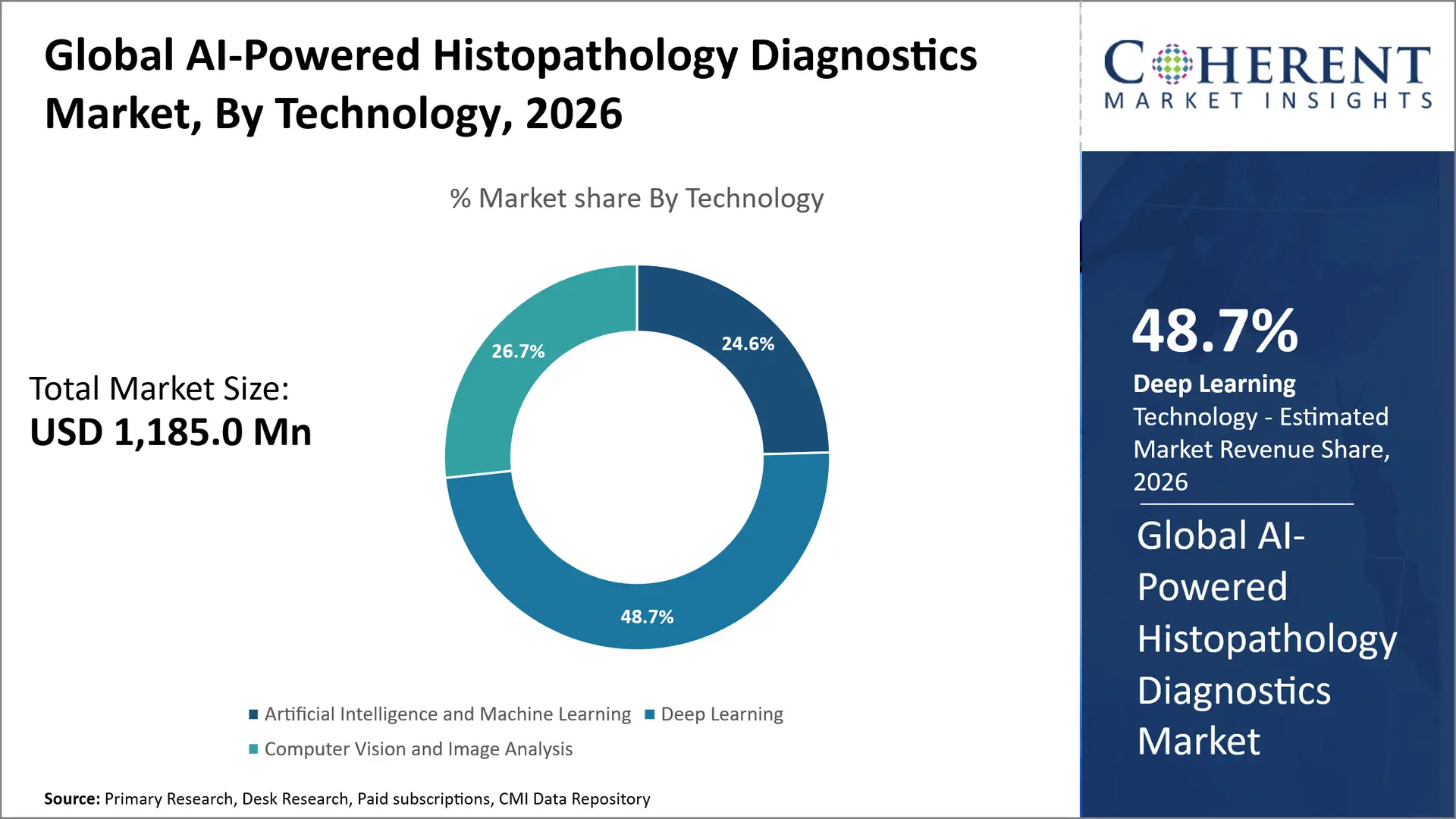
Deep learning is projected to hold a market share of 48.7% in 2026, as it can automatically derive complex morphological features, biomarkers and novel tissue patterns allowing the detection of subtle tissue abnormalities and help in accurate disease grading and classification. The future pathologists are expected to leverage upon improvements in convolutional neural networks and image segmentation. For instance, the Deep Learning Microscope for Slide-Free and Digital Histology project (Award No. R01DE032051) was funded by the U.S. National Institute of Dental and Craniofacial Research (NIDCR), part of the National Institutes of Health, through March 2027 to develop deep learning-based methods for digital histology and faster tissue evaluation. (Source: U.S. Department of Health & Human Services)
Cancer Diagnosis Segment Dominates the Global AI-Powered Histopathology Diagnostics Market
The cancer diagnosis segment is projected to hold a market share of 42.8% in 2026, due to the vital role of histopathology in the confirmation of tumor type, grading, and progression of disease. The AI-based systems help in automated detection of cancerous tissue patterns, reduction of interobserver variations and quantitative analysis in precision oncology. For instance, in January 2025, the U.S. National Cancer Institute awarded a funding grant to a research program titled, “Advancing Thyroid Cancer Diagnostics with AI-enhanced Multimodal Optical Histopathology”. The project focuses on work towards new artificial intelligence-enabled imaging modalities for thyroid cancer. (Source: U.S. Department of Health & Human Services)
Current Events and their Impact
Current Events | Description and its Impact |
U.S. National Cancer Institute Highlights Clinical Validation of AI in Digital Pathology (April 2026) |
|
India's CDSCO Clarifies Regulatory Requirements for AI-Enabled Medical Devices (March 2026) |
|
AI-Powered Histopathology Diagnostics Market Dynamics
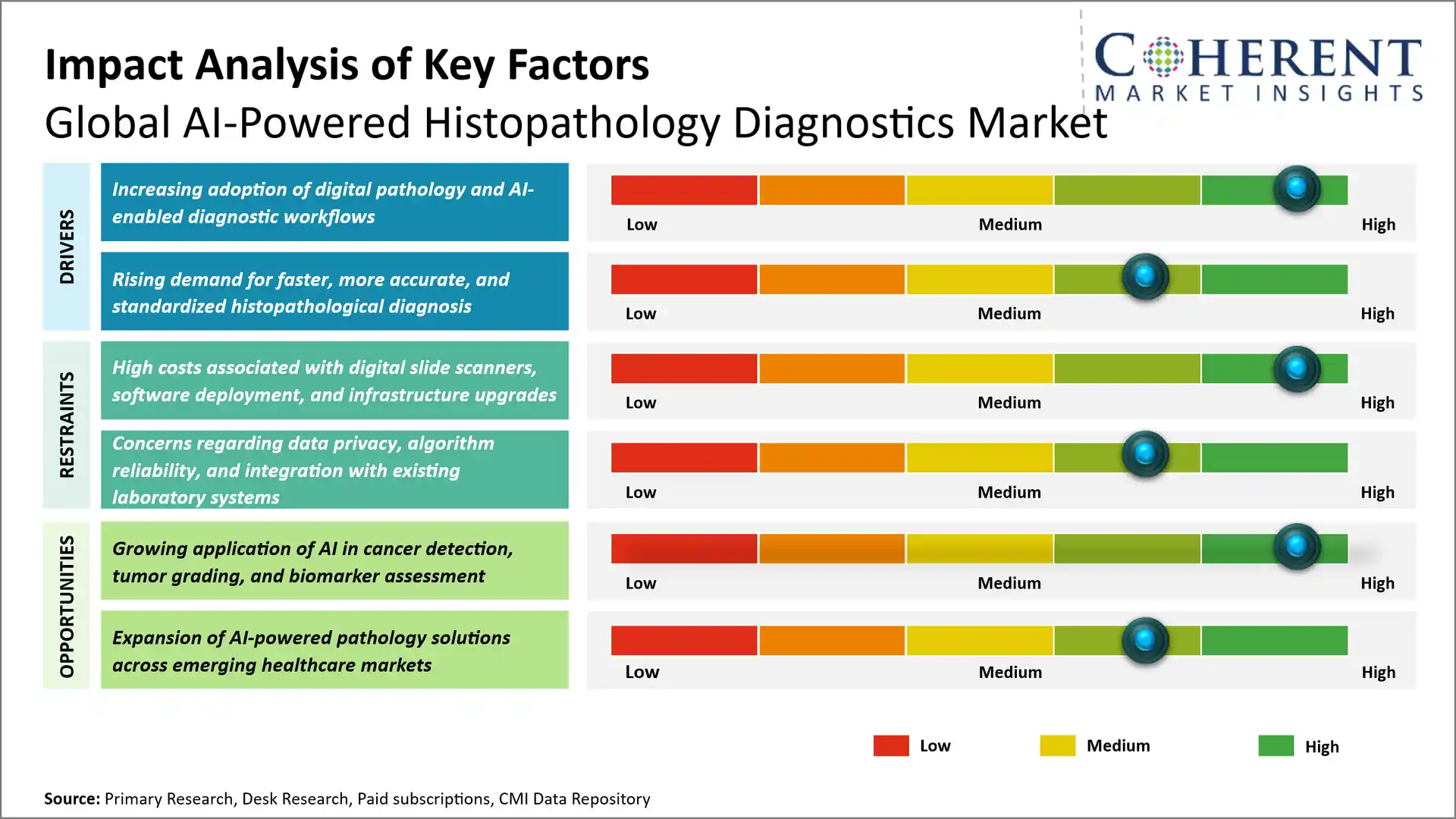 Market Drivers
- Increasing adoption of digital pathology and AI-enabled diagnostic workflows: Digital pathology infrastructure and AI-based diagnostic tools enable a shift from visual assessment of slides toward automated image analysis. This translates into increased efficiency, accuracy and workflow scalability of diagnosis. In February 2026, the Government of India announced Strategy for AI in Healthcare (SAHI) and Benchmarking Open Data Platform for Health AI (BODH), to accelerate responsible AI adoption and to set a testing and benchmarking framework for healthcare AI solutions before deployment at scale.
- Rising demand for faster, more accurate, and standardized histopathological diagnosis: Growing incidence of timely and consistent tissue-based diagnosis is expected to drive the adoption of AI software that help pathologists in tumor detection, grading and biomarker quantification. AI-based analysis can significantly reduce the inter-observer variation, cut down slide review time and offer comparable accuracy between laboratories. The UK government's National Institute for Health and Care Excellence (NICE) released the final scope for AI-based diagnostic for prostate cancer histopathology in April 2026, which highlights the use of these tools in improving the accuracy, reporting consistency and turnaround time while assisting pathologist-led diagnosis.
- Growing integration of AI with precision oncology and biomarker analysis: The adoption of artificial intelligence in histopathology is growing as a means for tumor classification, biomarker quantification and molecular profiling for more personalized diagnosis and treatment approaches for cancer and molecular profiling, thus allowing a more personalized diagnosis and treatment of cancer. These features are helping clinicians understand the disease in more detail and improving stratification of patients for targeted therapies. In 2025, the US's NIH's Human Tumor Atlas Network funded a programme, which is working on computational approaches to leveraging tissue imaging, molecular profiling and spatial information to improve understanding of tumor biology.
Emerging Trends
- Integration of multimodal AI in digital pathology: AI is leveraging integration of histopathology images with other clinical, genomic and molecular data to enable analysis of entire tissues.
- Impact: Improves disease classification, biomarker evaluation and response prediction.
- Market Relevance: Increasing incidence of precision oncology is one of the major factors augmenting the adoption and development of multimodal AI-powered pathology solutions.
- Cloud-based and interoperable digital pathology platforms: The use of cloud-enabled pathology platforms is becoming more prevalent, enabling pathologists to analyze slides remotely and view stored images.
- Impact: They can be used to have an effective interaction with the records and significantly help in making work easier for the employees.
- Market Relevance: The increase in digital pathology infrastructure is increasing demand for and adoption of scalable solutions of AI software across hospital and diagnostic labs.
Regional Insights
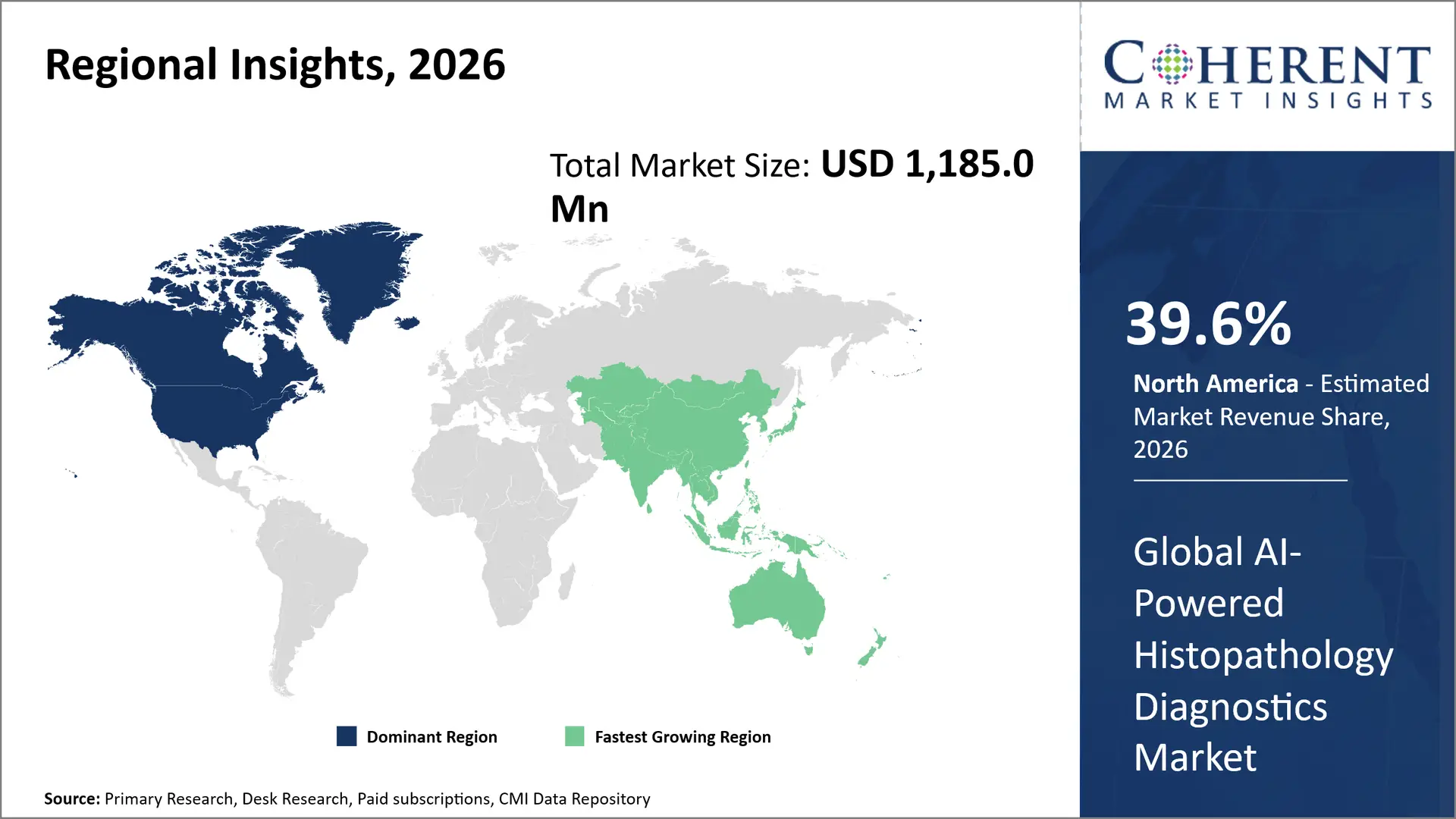
Why is North America a Strong Market for AI-Powered Histopathology Diagnostics?
North America leads the global AI-powered histopathology diagnostics market, accounting for an estimated 39.6% share in 2026, due to the region's superior healthcare infrastructure, high penetration of digital pathology, and well-developed artificial intelligence ecosystem. North America has been able to proffer these benefits owing to high levels of government support in the form of supportive regulations, as well as funding programs that promote artificial intelligence incorporation in medical diagnostics.
For instance, the National Library of Medicine of the U.S. National Institutes of Health has provided a USD 591,896 continuation grant to the project "Advancing Digital Pathology through Novel Machine Learning Methodologies". The project involves furthering machine-learning methodologies to improve histopathology image analysis and diagnosis, guarantee diagnostic consistency, and achieve tissue image and data integration with clinical and molecular knowledge. (Source: U.S. Department of Health & Human Services) Moreover, the extensive collaboration among healthcare providers, research organizations, and technology developers is yet another factor fueling the evolution, validation, and clinical acceptance of AI-enabled histopathology solutions.
Why Does Asia Pacific AI-Powered Histopathology Diagnostics Market Exhibit High Growth?
Asia Pacific is expected to exhibit the fastest growth in the global AI-powered histopathology diagnostics market, registering an estimated CAGR of 28.6% during 2026–2033. The region is projected to account for 24.1% of the global market in 2026, attributed to the rapid pace of healthcare digitalization, growing diagnostic infrastructure and increasing investments in medical AI. Government policies in China, India, Japan and South Korea are being designed and implemented to encourage AI implementations in healthcare and support collaboration among academic players, industry players and startups.
For instance, in March 2026, the Government of India announced four centers of excellence in Artificial Intelligence, including the healthcare center led by various renowned academic institutions. The AI Centres of Excellence comprise a network of collaborating academic and research institutions, industry organizations, and startups, with an overall investment of USD 159.4 million (INR 1,490 crore) by the government to facilitate the development of scalable AI-based healthcare solutions. Additionally, increasing need for affordable diagnostic solutions and growing adoption of digital pathology solutions are providing immense scope for growth in the region.
Global AI-Powered Histopathology Diagnostics Market Outlook for Key Countries
Why is the U.S. Leading Innovation and Adoption in the AI-Powered Histopathology Diagnostics Market?
The U.S. catalyzes innovation and adoption of AI-powered histopathology diagnostics market attributed to the extensive ecosystem of AI pathology developers, and greater access to advanced whole slide imaging infrastructure and computational pathology tools for cancer research. The presence of leading biomedical research institutes and specialized digital pathology companies foster development of deep-learning based algorithms for tumor classification, biomarker quantification, and to aid diagnostic decision making.
Is Japan a Favorable Market for AI-Powered Histopathology Diagnostics Market?
Japan is an attractive market for AI- powered histopathology diagnostics due to its sophisticated healthcare infrastructure, existing medical imaging industry, and medical technology capabilities. Widespread digital healthcare implementation, growing adoption of precision oncology, and AI application to clinical diagnosis will foster opportunities for automated tissue-image analysis, tumour classification and biomarker quantification. Aging population and needs for accelerated workflows will additionally fuel the long-term opportunities for AI-enabled pathology.
Is China Emerging as a Key Growth Hub for the AI-Powered Histopathology Diagnostics Market?
China is emerging as a lucrative growth territory for the AI-powered histopathology diagnostics market attributed to digital pathology infrastructure expansion, rising investments in healthcare AI, and accelerated adoption of precision oncology. Furthermore, the presence of growing domestic medical technology market and advancements in AI-based image analysis platforms (to support optimized automated tumor recognition, tissue classification, and diagnostic decision-making) coupled with growth of smart hospitals and increasing incorporation of AI within clinical workflows are creating lucrative opportunities for the market expansion.
Why Does Germany Top the European AI-Powered Histopathology Diagnostics Market?
Germany is the most mature European market for AI-powered histopathology diagnostics because of its mature medical technology sector, sophisticated laboratory infrastructure and extensive scientific activities in computational medicine. The German know-how in digital imaging, precision diagnostics, and biomedical engineering supports the creation and integration of AI-based tissue analysis and diagnostics. Collaboration of university hospitals and research institutions, with producers of medical technology, benefits clinical validation of AI-guided histopathology platforms.
Is AI-Powered Histopathology Diagnostics Market Developing in India?
The growth of the for AI-powered histopathology diagnostics market in India is supported by the digitization of healthcare in the country, increasing investments in medical AI and growth in digital pathology network. India's huge diagnostic laboratory network and growing demand for cancer-specific diagnostics, market players will have a vast scope to develop solutions based on AI for slide analysis, automated tumour detection and classification and streamline pathology workflows. Initiatives by the government to promote innovation in AI in the healthcare sector and local manufacturing of diagnostic solutions will further support market growth.
Comparative Analysis of AI-Powered Histopathology Diagnostic Applications Across Major Cancer Types
Cancer type | Histopathology application | Key AI-enabled capabilities | Diagnostic relevance |
Lung cancer | Tumor subtype classification | Tissue classification, tumor identification, biomarker assessment | Supports cancer characterization and precision oncology |
Breast cancer | Tumor classification and grading | Tumor detection, biomarker quantification, tissue classification | Supports treatment planning and patient stratification |
Prostate cancer | Gleason grading and tumor detection | Gland segmentation, cancer detection, grading assistance | Improves consistency in pathological assessment |
Colorectal cancer | Tumor grading and tissue analysis | Polyp classification, tumor segmentation, cellular analysis | Supports diagnostic assessment and disease classification |
Gastric cancer | Tumor detection and classification | Morphological analysis, tissue segmentation, tumor grading | Supports pathological evaluation and clinical decision-making |
How is the growing application of AI in cancer detection, tumor grading, and biomarker assessment creating new growth opportunities in the AI-powered histopathology diagnostics market?
As artificial intelligence becomes more prevalent in the diagnosis of cancer, tumor grading and evaluation of biomarkers, it has opened up new avenues for AI-powered diagnostics in histopathology. Deep-learning algorithms are able to automate tissue image analysis, detect delicate morphological features, and make tumor classification more standardized for precision oncology and treatment decisions. For instance, the National Cancer Grid showcased an AI-powered oral cancer histopathology prognostication project under India's 2026 Cancer AI & Technology Challenge (CATCH) to detect tumour invasion pattern and to formulate standard pathological assessment across different clinics.
Market Players, Key Development, and Competitive Intelligence
Key Developments
- In July 2026, CellCarta launched a consortium on global digital pathology & AI – a collaborative effort of seven technology firms working to accelerate digital pathology, image analysis and precision diagnostics with AI to power biomarker discovery, patient stratification, clinical trial execution and companion diagnostics development in oncology and other therapeutic areas. The partnership highlights the growing collaboration to integrate AI capabilities with histopathology and clinical research workflows.
- In June 2026, Leica Biosystems Nussloch GmbH extended the use of artificial intelligence-driven digital pathology in the EMEA region. Leica Biosystems is making it easier for laboratories to deploy artificial intelligence-enabled digital pathology by expanding use of a market-leading digital pathology solution across the EMEA region. The solution includes artificial intelligence-assisted quality control to detect common whole-slide imaging artifacts to improve imaging and laboratory efficiency.
Competitive Landscape
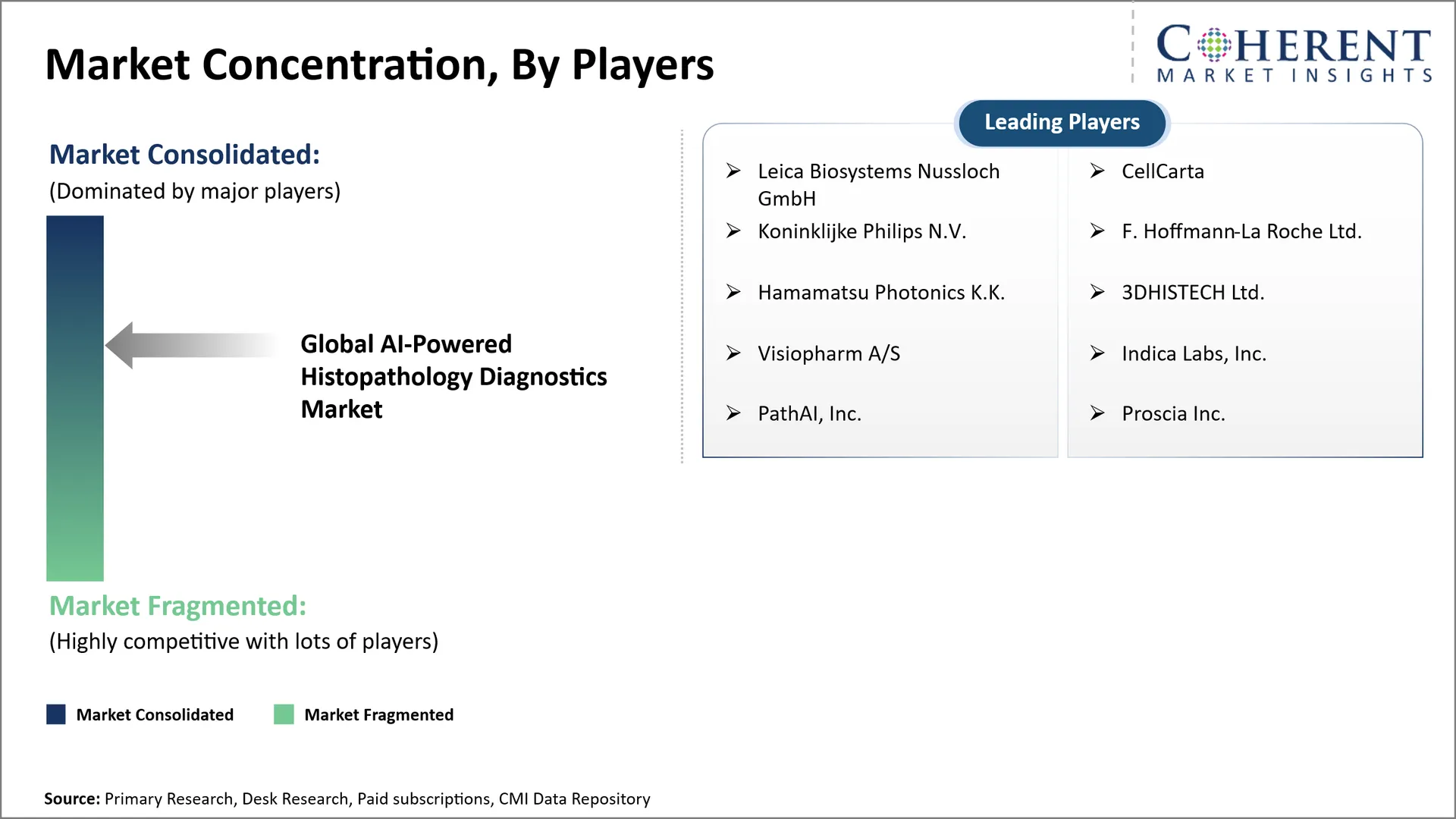
The global AI-powered histopathology diagnostics market is highly competitive, characterized by increased competition and rate of technology innovations by specialists in the AI software field, providers of digital pathology and medical imaging solutions, and healthcare technology companies. Major players are focusing on advanced deep-learning algorithms, digital pathology, and driving clinical integration of AI-image analytics for routine diagnostics.
Key focus areas include
- Deep learning methods for automated tissue segmentation, tumor detection and histopathological image analysis.
- Combination of intelligent platform with WSIs scanner and LIMS.
- Improved AI tools for cancer grading, biomarker quantification and prognosis.
- Broadened Multimodal AI solutions in the scope of integrating histo-pathological images with genomic, molecular and clinical data.
- Development of cloud-based platform to facilitate remote diagnostics, image sharing, and collaborative pathology work flow.
- Strategic partnerships with hospitals, diagnostic laboratories, academia and pharma to leverage clinical applications.
Market Report Scope
Global AI-Powered Histopathology Diagnostics Market Report Coverage | |||
Report Coverage | Details | ||
Base Year | 2025 | Market Size in 2026: | USD 1,185.0 Mn |
Historical Data For: | 2020 To 2024 | Forecast Period: | 2026 To 2033 |
Forecast Period 2026 To 2033 CAGR: | 19.5% | 2033 Value Projection: | USD 4,120.0 Mn |
Geographies covered: |
| ||
Segments covered: |
| ||
Companies covered: | Leica Biosystems Nussloch GmbH, CellCarta, Koninklijke Philips N.V., F. Hoffmann-La Roche Ltd., Hamamatsu Photonics K.K., 3DHISTECH Ltd., Visiopharm A/S, Indica Labs, Inc., PathAI, Inc., Proscia Inc. | ||
Growth Drivers: |
| ||
Restraints & Challenges: |
| ||
Analyst Opinion (Expert Opinion)
- In the coming years, the global AI-powered histopathology diagnostics market will shift from independent image analysis systems to multiplexed, combined diagnostic workflows. Deep-learning systems will be instrumental in tumor detection, grading, biomarker quantification and response prediction and to augment diagnosis workflows. The role of pathologic images integrated with other data types, especially genomics is likely to expand in precision oncology and decision support.
- The significant opportunities are expected to be the largest for deep learning in cancer diagnosis and tumor grading in China and India. These markets have high potential due to their high diagnostic volume, a burgeoning digital pathology ecosystem, and expanding need for affordable cancer diagnostics. Cost-efficient whole-slide imaging analysis solutions and accurate tumor classification algorithms are likely to be adopted by hospitals and diagnostic laboratories.
- In order to gain a competitive advantage market players should focus on creating algorithms with clinical accuracy that can perform across different tissues, specimen types, patient groups and multiple staining techniques. Supporting multimodal artificial intelligence, harmonization with laboratory information systems and medical-grade cloud-enabled diagnostic platforms will support product differentiation. Finally, building partnerships with hospitals and pathology laboratories will be key for conducting clinical validation, clinical integration and commercial expansion.
Speak to the analyst
Want personalized insights?
Take the findings above to one of our principal consultants, or have the report rebuilt around the segments, geographies and competitors you actually track.
Market Segmentation
- Component Insights (Revenue, USD Mn, 2021 - 2033)
- Software
- Services
- Technology Insights (Revenue, USD Mn, 2021 - 2033)
- Artificial Intelligence and Machine Learning
- Deep Learning
- Computer Vision and Image Analysis
- Application Insights (Revenue, USD Mn, 2021 - 2033)
- Cancer Diagnosis
- Disease Classification and Grading
- Tumor Detection and Quantification
- Prognosis and Treatment Decision Support
- End User Insights (Revenue, USD Mn, 2021 - 2033)
- Hospitals and Clinics
- Diagnostic Laboratories
- Academic and Research Institutions
- Others
- Regional Insights (Revenue, USD Mn, 2021 - 2033)
- North America
- U.S.
- Canada
- Latin America
- Brazil
- Argentina
- Mexico
- Rest of Latin America
- Europe
- Germany
- U.K.
- Spain
- France
- Italy
- Russia
- Rest of Europe
- Asia Pacific
- China
- India
- Japan
- Australia
- South Korea
- ASEAN
- Rest of Asia Pacific
- Middle East
- GCC Countries
- Israel
- Rest of Middle East
- Africa
- South Africa
- North Africa
- Central Africa
- North America
- Key Players Insights
- Leica Biosystems Nussloch GmbH
- CellCarta
- Koninklijke Philips N.V.
- F. Hoffmann-La Roche Ltd.
- Hamamatsu Photonics K.K.
- 3DHISTECH Ltd.
- Visiopharm A/S
- Indica Labs, Inc.
- PathAI, Inc.
- Proscia Inc.
Sources
Primary Research Interviews
- Histopathologists and oncopathologists
- Digital pathology and computational pathology specialists
- AI and machine learning research specialists
- Molecular diagnostics and biomarker research experts
Stakeholders
- Digital pathology software developers
- AI-based diagnostic technology providers
- Hospitals and specialized cancer care centers
- Diagnostic laboratories and academic medical institutions
- End-use Sectors
- Hospitals and cancer care centers
- Diagnostic and pathology laboratories
- Academic medical centers and research hospitals
- Pharmaceutical and biotechnology research organizations
- Regulatory & Health Bodies
- U.S. Food and Drug Administration (FDA)
- National Institute of Standards and Technology (NIST)
- Central Drugs Standard Control Organisation (CDSCO), India
- National Institute for Health and Care Excellence (NICE), UK
Databases
- National Institutes of Health (NIH) RePORTER
- National Cancer Institute (NCI) Research Database
- Cancer Imaging Biobank (CAIB), India
- National Cancer Grid (NCG) CATCH Grant Database
Public Domain Sources
- National Cancer Institute (NCI)
- National Institutes of Health (NIH)
- Ministry of Health and Family Welfare, Government of India
- National Cancer Grid (NCG)
Proprietary Elements
- CMI Data Analytics Tool
- Proprietary CMI Existing Repository of information for last 10 years.
Get access to 250+ pages report
Every segment, forecast, competitor profile and data table behind the analysis above — available for instant download.
- ESOMAR Member
- ISO 9001:2015 Certified
- D-U-N-S Registered
- GDPR & CCPA Compliant
Frequently Asked Questions
The global AI-powered histopathology diagnostics market is estimated to be valued at USD 1,185.0 Mn in 2026 and is expected to reach USD 4,120.0 Mn by 2033.
Software dominates due to its ability to facilitate whole-slide image analysis, an automated approach to tissue anomaly detection, aid in tumor classification and embed artificial intelligence insights into pathology workflows.
AI based histopathology diagnostics utilizes artificial intelligence and deep learning algorithms to analyze the digitized images of tissues, to facilitate the automatic detection, classification, and grading of various diseases.
The CAGR of global AI-powered histopathology diagnostics market is projected to be 19.5% from 2026 to 2033.
Increasing adoption of digital pathology and AI-enabled diagnostic workflows, and rising demand for faster, more accurate, and standardized histopathological diagnosis are the major factors driving the growth of the global AI-powered histopathology diagnostics market.
High costs associated with digital slide scanners, software deployment, and infrastructure upgrades, and concerns regarding data privacy, algorithm reliability, and integration with existing laboratory systems are the major factors hampering the growth of the global AI-powered histopathology diagnostics market.
In terms of application, cancer diagnosis is estimated to dominate the market revenue share in 2026.