

Global Artificial Organ Technologies Market Size and Forecast – 2026 To 2033
The global artificial organ technologies market is expected to grow from USD 42.8 Bn in 2026 to USD 78.6 Bn by 2033, registering a compound annual growth rate (CAGR) of 9.1% from 2026 to 2033. The market for global artificial organ technologies is poised for significant expansion, fueled by the persistent gap between organ demand and transplant availability.
According to the Global Observatory on Donation and Transplantation, 173,727 solid-organ transplants were performed across 91 reporting countries in 2024, while 668,160 patients were on transplant waiting lists across 75 reporting countries. This unmet clinical need is encouraging continued innovation in artificial organs and organ-support technologies as potential alternatives or bridges to transplantation for selected patients.
Key Takeaways of the Global Artificial Organ Technologies Market
- Artificial heart is projected to hold 34.6% of the global artificial organ technologies market share in 2026, making it dominant organ type segment, across North America driven by the growing need for advanced cardiac support amid persistent organ-transplant shortages. For instance, according to the U.S. government-supported Organ Procurement and Transplantation Network (OPTN) and Scientific Registry of Transplant Recipients (SRTR), the U.S. performed a record 4,636 heart transplants in 2024, while 9,444 patients were on the heart transplant waiting list that year. This gap highlights the continued need for technologies that support patients with advanced heart failure while they await transplantation
- Mechanical is projected to hold 39.4% of the global artificial organ technologies market share in 2026, making it dominant technology segment, with Europe representing an important market due to its established medical-device regulatory framework and use of mechanical organ-support systems. For instance, the European Union’s Medical Device Regulation (EU) 2017/745 establishes requirements for medical-device safety, performance, and clinical evaluation, providing a regulatory framework for qualifying mechanical organ-support technologies.
- External and extracorporeal is projected to hold 63.3% of the global artificial organ technologies market share in 2026, making it dominant usage type segment, with Asia Pacific offering growth opportunities through expanding access to renal replacement and other organ-support treatments. For instance, China’s National Medical Products Administration (NMPA) regulates medical-device registration, including devices used in extracorporeal treatment. This regulatory pathway supports the commercialization of qualifying technologies used in organ-support care.
- North America market maintains dominance with an expected share of 39.6% in 2026, bolstered by a high volume of organ transplantation procedures, advanced healthcare infrastructure, and sustained investment in organ-support technologies. For instance, according to the U.S. Health Resources and Services Administration (HRSA), more than 49,000 organ transplants were performed in the U.S. in 2025, highlighting the substantial demand for organ-replacement and support solutions.
- Asia Pacific is expected to exhibit the fastest growth in the global artificial organ technologies market, registering an estimated CAGR of 10.8% during 2026–2033, driven by advances in bioengineering and growing government support for translating regenerative technologies into clinical practice. For instance, in January 2026, China’s National Healthcare Security Administration introduced a pricing framework that specifically includes bioprinting procedures for tissues, blood vessels, and organs, helping establish a pathway for the clinical adoption of emerging organ-engineering technologies. This initiative is expected to support the region’s developing ecosystem for tissue engineering and future artificial-organ applications.
Segmental Insights
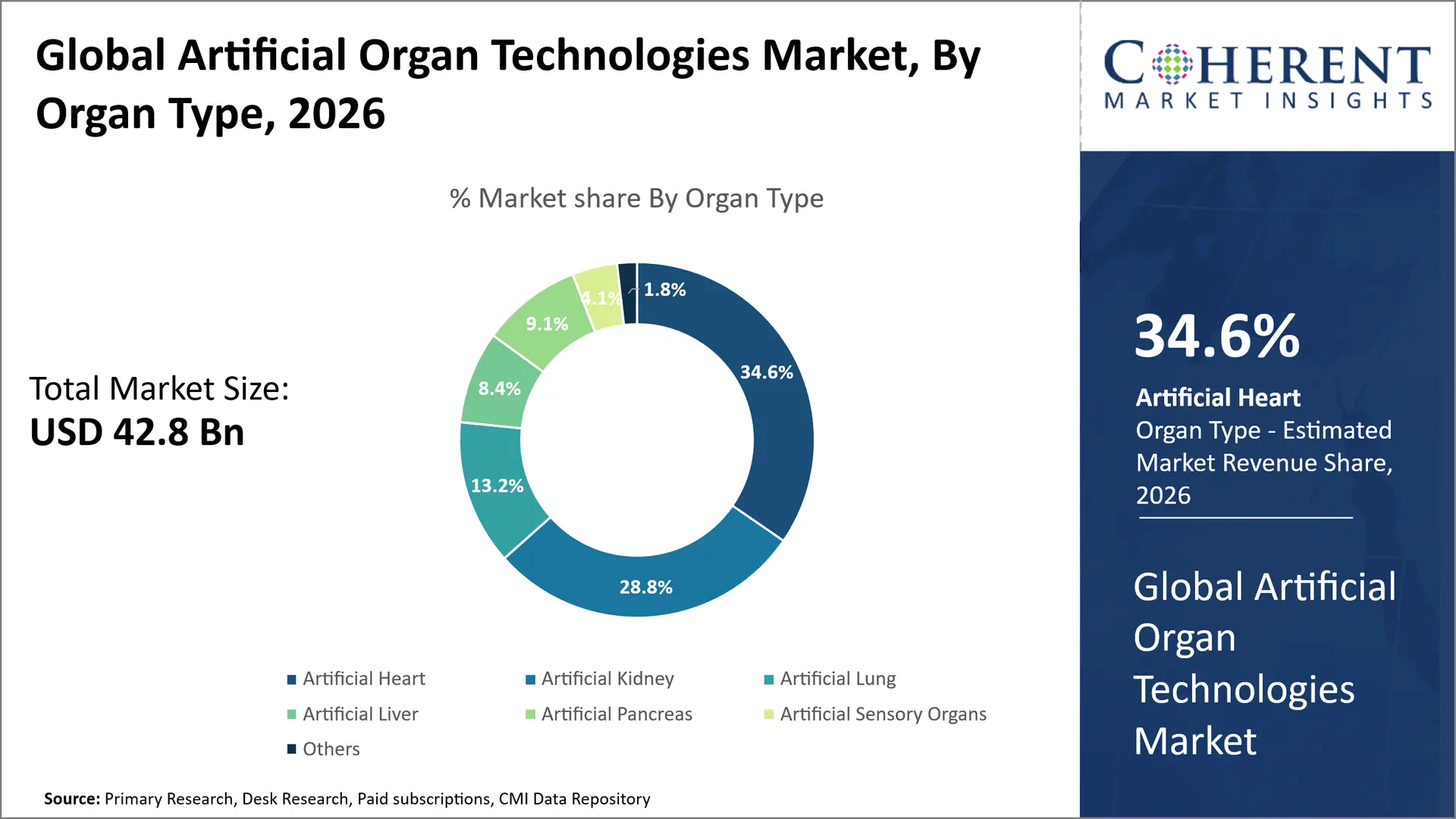
Why Do Artificial Heart Dominate the Global Artificial Organ Technologies Market?
Artificial heart is projected to hold the market share of 34.6% in 2026, ascribed to increasing use of mechanical circulatory support in patients suffering from end-stage heart failure and the current demand-supply mismatch of donor hearts. Furthermore, innovations in total artificial hearts and ventricular assist devices indicate improved therapy options for transplant candidates. For instance, in July 2024, the Texas Heart Institute performed the first human implantation of the BiVACOR Total Artificial Heart, a magnetically levitated device designed to replace both heart ventricles and support patients awaiting transplantation.
- Current Industry Events of 2026
- Market Size Estimation
- Regional Breakdown
- Competitive Landscape
- Customer Intelligence
- Segmental Analysis
- Pricing Analysis
- Key Market Drivers, Challenges & Future Trends
- Customized Insights Section
Why Do Mechanical Represent the Largest Technology Segment in the Artificial Organ Technologies Market?
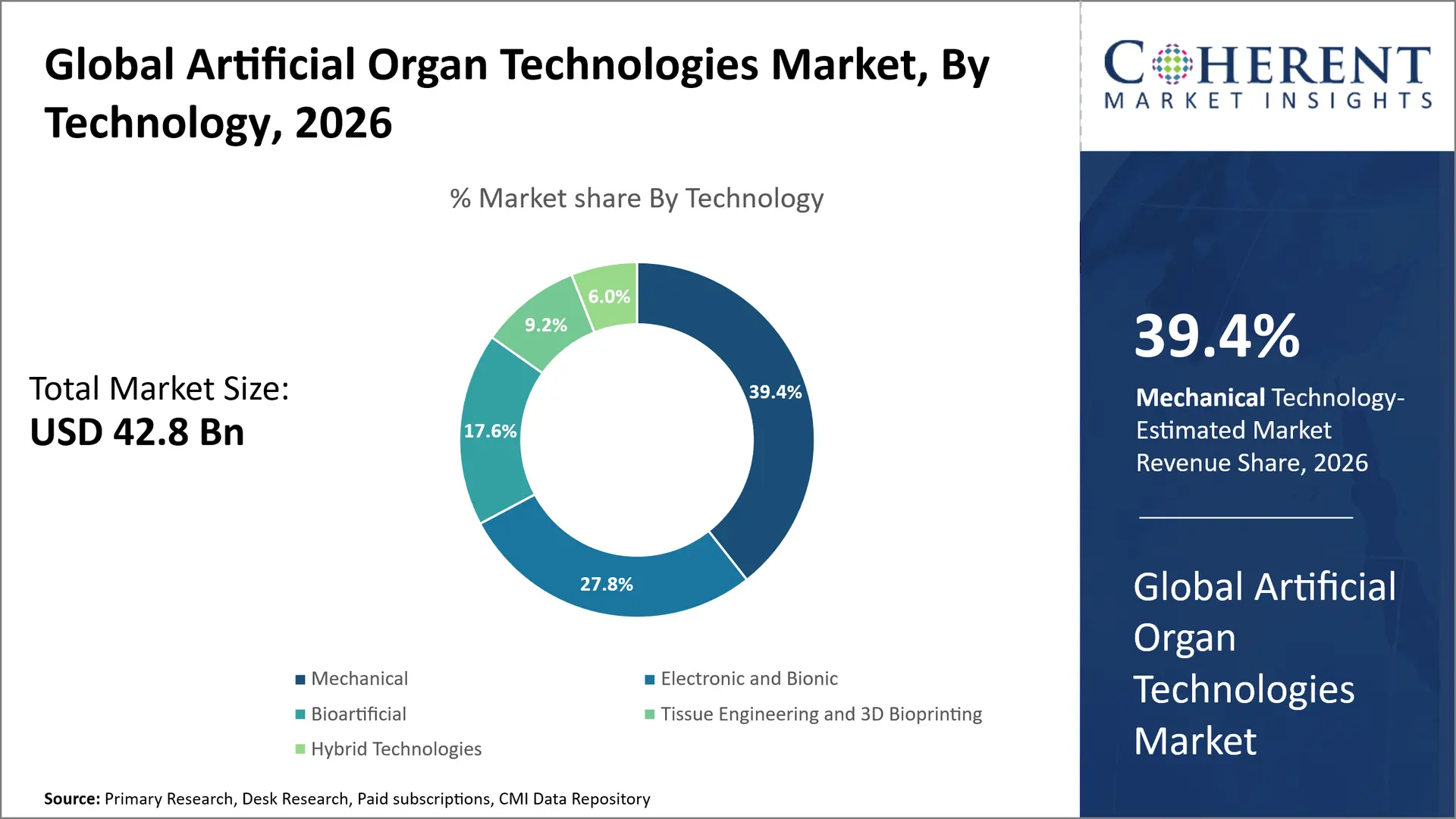
Mechanical is projected to hold a market share of 39.4% in 2026, as a result of their established clinical use, certainty in engineering, and capacity to deliver quick support to an organ. Furthermore, the mechanical circulatory support and dialysis applications have an advantage because of mature device configurations, long-lasting materials and gains in performance and monitoring. For instance, the U.S. Food and Drug Administration (FDA) classifies hemodialyzers with expanded solute-removal profiles as devices used in artificial kidney systems, reflecting the established role of mechanically engineered technologies in renal replacement therapy.
External and Extracorporeal Segment Dominates the Global Artificial Organ Technologies Market
The external and extracorporeal segment is projected to hold a market share of 63.3% in 2026, as they are used to provide medical and surgical support to organ function without permanent implantation of the device, and are used widely in both acute and chronic care. Dialysis and extracorporeal membrane oxygenation (ECMO) enable kidney filtration and respiratory support, respectively, while offering flexibility for temporary treatment and bridging to recovery or transplantation. For instance, in November 2024, the U.S. Food and Drug Administration (FDA) approved the Quanta SC+ hemodialysis system for home use, supporting flexible, non-implantable kidney replacement therapy outside traditional hospital settings.
Current Events and their Impact
Current Events | Description and its Impact |
U.S. HHS Seeks Regulatory Input on Donor-Derived Pancreatic Islet Cell Therapies (September 2026) |
|
U.S. HHS Accelerates Human-Based Research Technologies (September 2026) |
|
China Strengthens Clinical Translation of Bioprinting Technologies (March 2026) |
|
Artificial Organ Technologies Market Dynamics
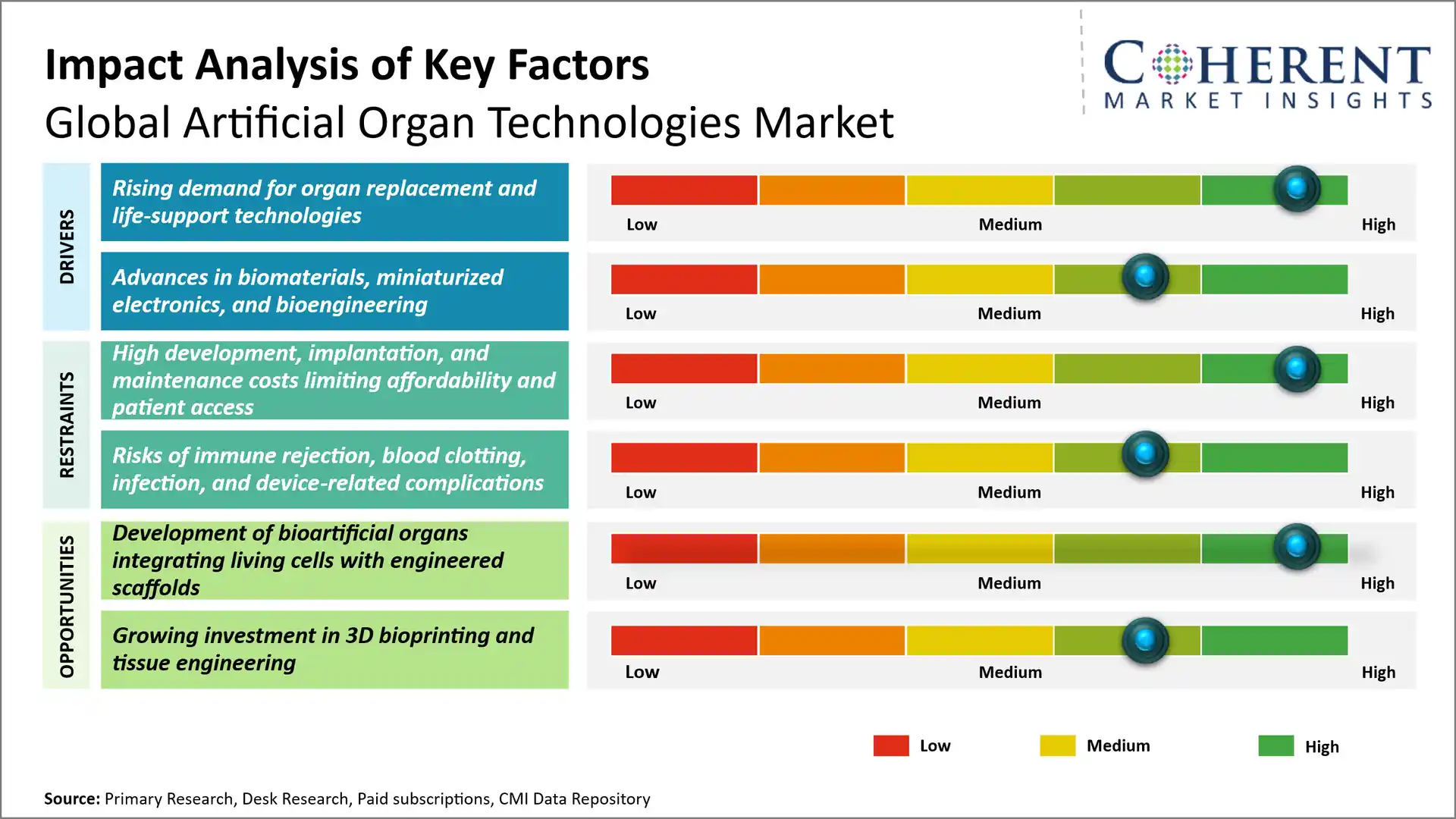
Market Drivers
- Rising demand for organ replacement and life-support technologies: The rising prevalence of end-stage organ failure, coupled with a persistent shortage of donor organs, is increasing the need for artificial organs and life-support technologies that can sustain vital organ functions. For instance, according to India’s Ministry of Health and Family Welfare, 89,839 patients were on the national organ transplant waiting list as of March 3, 2026, despite 20,019 organ transplants being performed during 2025. This substantial unmet need is strengthening the rationale for continued development of artificial organs and advanced organ-support systems.
- Advances in biomaterials, miniaturized electronics, and bioengineering: Advances in biocompatible materials, miniaturized electronic components, and bioengineering are improving the functionality, durability, and physiological compatibility of artificial organs. For instance, in September 2025, the U.S. National Institutes of Health (NIH) announced an USD 87 million investment over three years to establish the Standardized Organoid Modeling Center, which will use advanced technologies, including robotics and AI, to improve the reproducibility of organoid models and accelerate biomedical research.
- Growing investment in regenerative medicine and organ-engineering research: Increasing investment in regenerative medicine and organ engineering is accelerating research into bioengineered tissues and artificial organs that could restore or replicate vital organ functions. For instance, in January 2026, the U.S. Advanced Research Projects Agency for Health (ARPA-H) announced awards under its PRINT program, with funding of up to USD 176.8 million over five years, to develop 3D-bioprinted replacement organs, including kidneys, hearts, and livers. The initiative aims to address organ shortages by advancing personalized, immune-matched organ manufacturing.
Emerging Trends
- Integration of tissue engineering and 3D bioprinting: Advances in 3D bioprinting, biomaterials, and scaffold engineering are accelerating the development of artificial tissues and bioengineered organ structures. Research is increasingly focused on improving vascularization, tissue functionality, and compatibility with the human body.
- Development of bioartificial organs: Researchers are increasingly combining living cells with engineered materials to develop bioartificial organs that replicate selected biological functions more closely than conventional mechanical devices. Progress in cell-based engineering and regenerative medicine is creating opportunities for future applications in kidney, liver, and pancreatic support.
- Miniaturization and smart monitoring of artificial organs: Advances in sensors, microelectronics, and connected monitoring systems are enabling more compact organ-support devices with improved performance tracking and patient monitoring. These technologies can help clinicians identify device complications earlier and support more personalized management of patients requiring long-term organ assistance.
Regional Insights
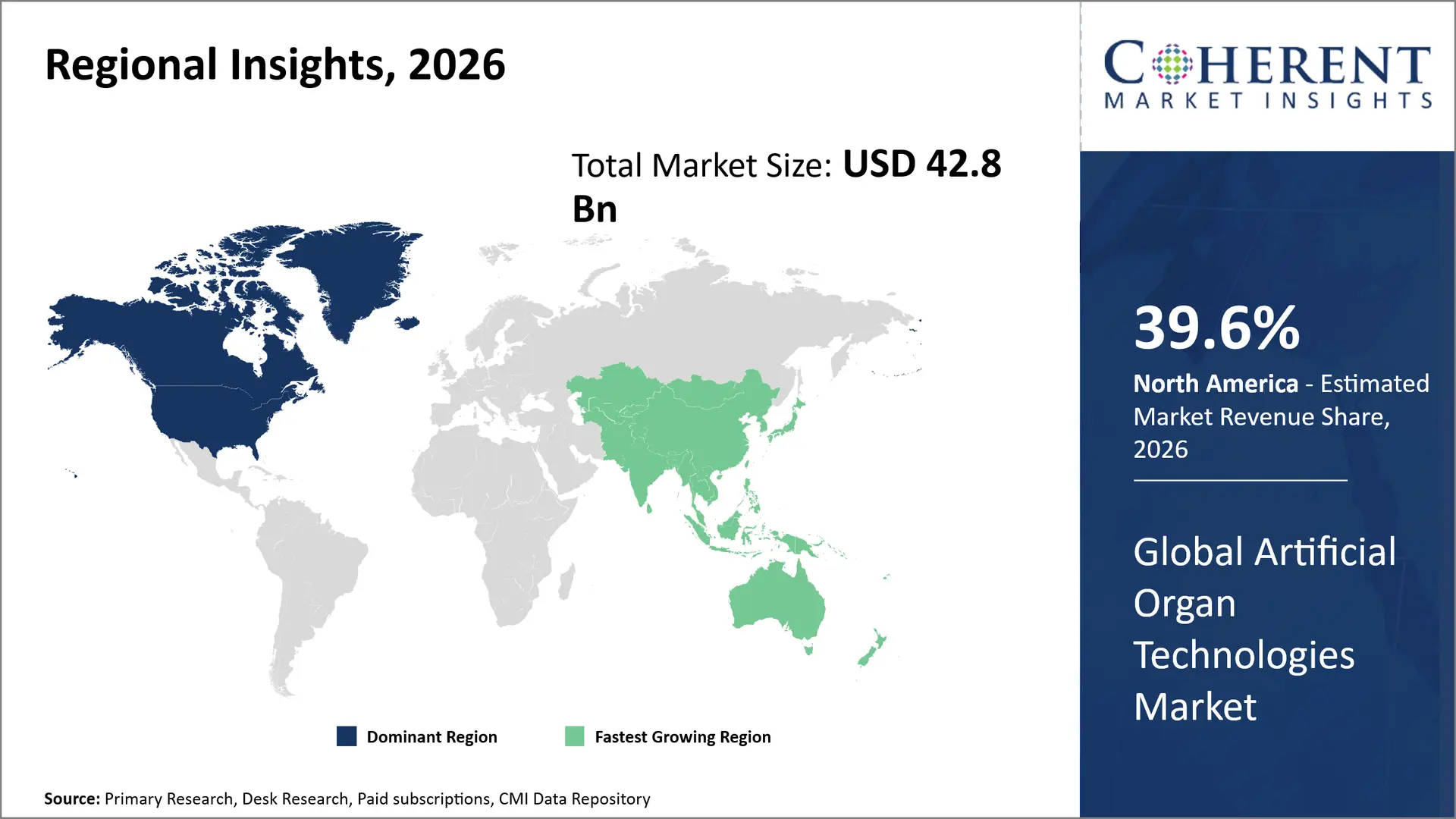
Why is North America a Strong Market for Artificial Organ Technologies?
North America leads the global artificial organ technologies market, accounting for an estimated 39.6% share in 2026, due to well-established healthcare infrastructure, strong R&D capabilities and established healthcare device manufacturing industry. The collaborative efforts of academic institutions and research centers is anticipated to drive market growth and the sales of these devices globally.
Additionally, supportive government policies such as inclusion of substantial fundings for regenerative medicine and favorable regulatory pathways, further catalyze market leadership. For instance, the 21st Century Cures Act of the U.S. allocated USD 30 million for four years to the Regenerative Medicine Innovation Project (RMIP), which is run by the National Institutes of Health. RMIP intends to fund human clinical research that uses adult stem cells and develop regenerative methods to replace or repair damaged organs or tissues.
Why Does Asia Pacific Artificial Organ Technologies Market Exhibit High Growth?
Asia Pacific is expected to exhibit the fastest growth in the global artificial organ technologies market, registering an estimated CAGR of 10.8% during 2026–2033. The region is projected to account for 24.1% of the global market in 2026, owing to the growing healthcare infrastructure, surging demand for organ support devices, and growing investments in biotech research. The emerging economies such as China, India, and South Korea are focusing on establishing in-house medical-device manufacturing industries as a part of government initiatives for the fostering innovation and building manufacturing capabilities.
For instance, in December 2025, the Government of India announced that its USD 360.5 million (INR 3,420 crore) Production Linked Incentive (PLI) Scheme for Medical Devices had helped commission 22 greenfield projects, with production of 55 products, including high-end medical devices. (Source: Press Information Bureau)
Global Artificial Organ Technologies Market Outlook for Key Countries
Why is the U.S. Leading Innovation and Adoption in the Artificial Organ Technologies Market?
The U.S. market is leading innovator and adopter in the artificial organ technologies market driven by the existing ecosystem for advanced medical-device development, clinical research, and commercialization. Existing capability for complex technologies such as mechanical circulatory support systems, VADs, artificial heart systems and extracorporeal organ support may translate to clinical implementation. Furthermore, collaboration with medical-device companies, hospitals, and biomedical research facilities is in pace for continued market product development and deployment in specialty care settings.
Is Japan a Favorable Market for Artificial Organ Technologies Market?
Japan is a promising market for artificial organ technologies driven by its mature medical-device manufacturing, precision engineering and sophisticated dialysis systems. The need for artificial kidney systems and ventricular assist devices may be the result of a need to manage kidney failure and cardiovascular failure over a longer term. Moreover, country’s engineering expertise in regenerative medicine and tissue engineering provide a market for next-generation bioartificial organs.
Is China Emerging as a Key Growth Hub for the Artificial Organ Technologies Market?
China has emerged as an important growth market for artificial organ technologies driven by the growing domestic manufacturing of medical devices, research into biomedical engineering and growth in organ-supply support systems. Growing demand for dialysis technologies, mechanical circulatory support and extracorporeal systems offers potential opportunities for local manufacturers. In addition, tissue engineering, 3D bioprinting is a promising avenue for China to grow into next-generation artificial organs development.
Why Does Germany Top the European Artificial Organ Technologies Market?
Germany leads the European artificial organ technologies market owing to its highly developed medical-devices manufacturing industry, engineering skills, along with longstanding expertise in extracorporeal blood treatment and mechanical circulatory support. In addition, its specific medical centres and medical-research institutes might support clinical development of artificial organ systems including artificial kidneys and artificial hearts.
Is Artificial Organ Technologies Market Developing in UK?
The growing ecosystem of clinical research in the UK and its adoption of advanced organ-support technologies through National Health Service are likely to be driving the UK artificial organ technologies market. Furthermore, the rise in use of tissue engineering and regenerative medicine may benefit the development of next-generation bioartificial organs.
Global Solid-Organ Transplant Activity, 2024 vs. 2025
Indicator | 2024 | 2025 | Reported change |
Kidney transplants | 110,467 | 116,775 | +3% |
Liver transplants | 42,497 | 45,554 | +5% |
Heart transplants | 10,287 | 10,748 | +3.5% |
Lung transplants | 8,236 | 8,472 | +3% |
Pancreas transplants | 2,066 | 2,148 | +2.5% |
Total solid-organ transplants | 173,727 | More than 183,800 | - |
How is the development of bioartificial organs integrating living cells with engineered scaffolds creating new growth opportunities in the artificial organ technologies market?
Bioartificial organs present potential innovative approaches in the global artificial organ technologies market by combining living cells and architectural structures. The integration of a living cell culture with an engineered organ scaffolds might reconstruct the biological activity of the organ in question and could provide increased biocompatibility. Substantial research into stem-cell techniques, biomaterials and tissue engineering raises hope for more functional, personalized devices to reduce organ shortages. For instance, in August 2025, U.S. National Institutes of Health (NIH) announced the development of lung- and intestinal-specific organoids with organ-specific blood vessels that are generated from human pluripotent stem cells. This advance addresses a major obstacle in designing functional tissues, organoids, and bioartificial organs has been effective vascularization that ensures the flow of oxygen and nutrients.
Market Players, Key Development, and Competitive Landscape
Key Developments
- On October 14, 2026, the University of Oxford and Terumo Corporation launched a six-year research partnership, backed by more than USD 9 million from Terumo, to advance organ perfusion technologies for transplantation and explore new therapeutic applications. The collaboration aims to extend perfusion technology beyond its established transplant role and support future innovations in organ preservation and patient care.
- In April 2024, United Therapeutics Corporation announced the world’s first successful transplant of its genetically engineered UT thymokidney, a pig-derived kidney incorporating a thymus component, into a living human recipient. This milestone highlights progress in xenotransplantation as a potential approach to addressing organ shortages, although further clinical validation is required.
Competitive Landscape
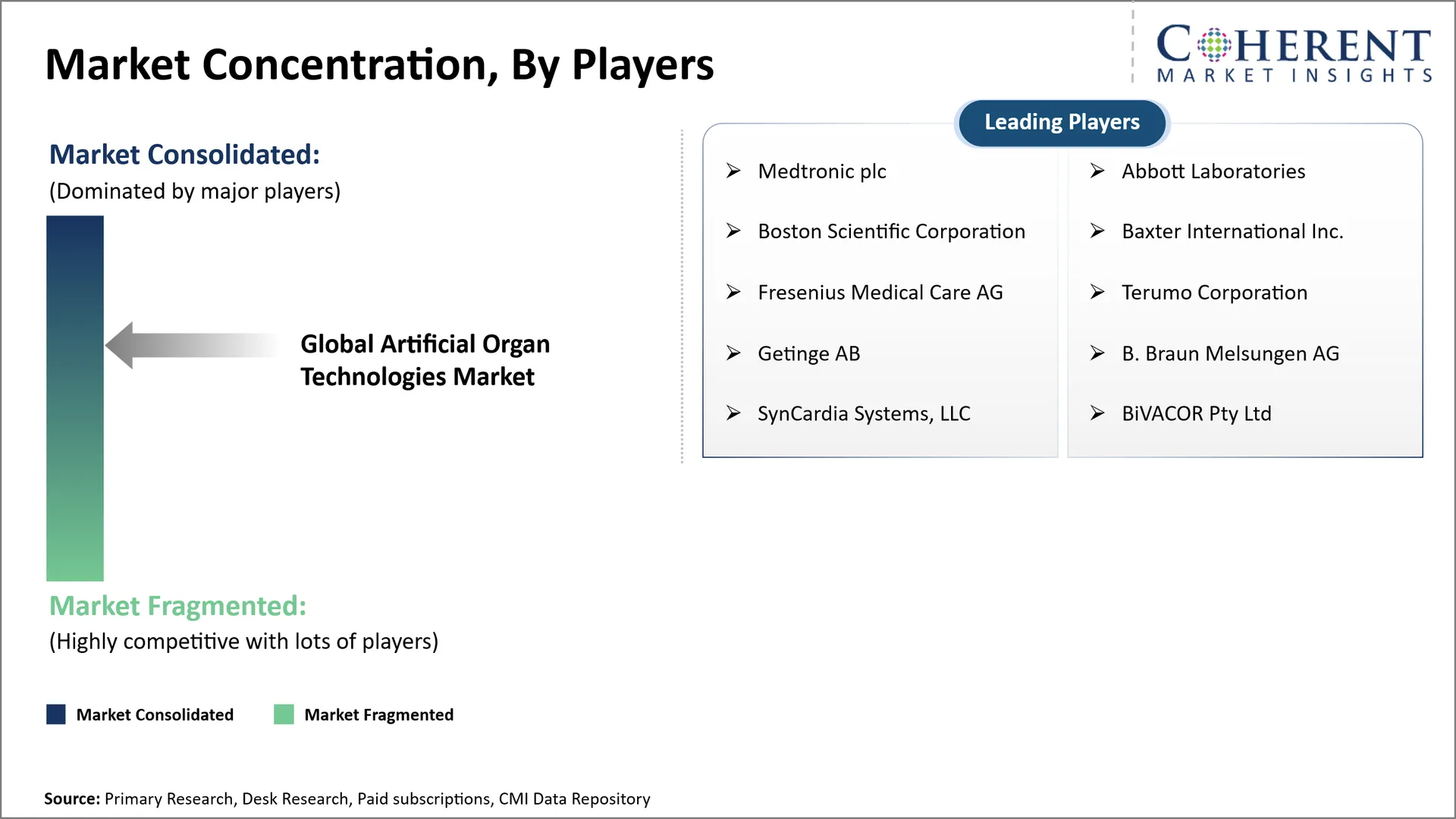
The global artificial organ technologies market is moderately competitive, with market dynamics shaped by advances in mechanical organ replacement, bioartificial organ development, tissue engineering, and extracorporeal support technologies. Market participants and research institutions are increasingly focusing on improving organ functionality, biocompatibility, device durability, and patient outcomes. Key focus areas include:
- Development of bioartificial organs integrating living cells with engineered scaffolds
- Advancement of mechanical and electronic technologies for artificial heart, kidney, and lung support
- Expansion of tissue engineering, stem-cell research, and 3D bioprinting for organ reconstruction
- Improvement of biocompatible materials, vascularization, and immune compatibility
- Enhancement of miniaturized sensors, real-time monitoring, and smart control systems for artificial organ performance
- Strengthening of clinical validation, device safety, and regulatory compliance to support wider adoption
Market Report Scope
Artificial Organ Technologies Market Report Coverage | |||
Report Coverage | Details | ||
Base Year | 2025 | Market Size in 2026: | USD 42.8 Bn |
Historical Data For: | 2020 To 2024 | Forecast Period: | 2026 To 2033 |
Forecast Period 2026 To 2033 CAGR: | 9.1% | 2033 Value Projection: | USD 78.6 Bn |
Geographies covered: |
| ||
Segments covered: |
| ||
Companies covered: | Medtronic plc, Abbott Laboratories, Boston Scientific Corporation, Baxter International Inc., Fresenius Medical Care AG, Terumo Corporation, Getinge AB, B. Braun Melsungen AG, SynCardia Systems, LLC, BiVACOR Pty Ltd. | ||
Growth Drivers: |
| ||
Restraints & Challenges: |
| ||
Analyst Opinion (Expert Opinion)
- In the coming years, global artificial organ technologies market will be shaped by the transition from conventional mechanical organ-support devices toward more advanced, biologically integrated, and personalized solutions. While artificial hearts, dialysis systems, and extracorporeal devices will remain important due to their established clinical applications, bioartificial organs, tissue engineering, and 3D bioprinting represent longer-term opportunities to replicate complex physiological functions. Commercial progress will depend on improving device reliability, biocompatibility, clinical outcomes, and affordability while navigating stringent regulatory requirements.
- The maximum opportunities are foreseen within artificial kidney technologies for renal replacement and long-term kidney support, particularly in India and China, where expanding access to renal care and cost-effective treatment solutions could create opportunities for portable, wearable, and more accessible dialysis technologies. In parallel, artificial heart and ventricular assist technologies in the United States offer opportunities through advanced cardiac care and specialized treatment centers. Over the longer term, bioartificial liver and kidney systems may become attractive development areas as tissue engineering and cell-based technologies advance, although their commercialization remains less mature.
- In order to gain a competitive advantage market players should prioritize technologies that address clear clinical needs, including improved portability, reduced treatment burden, enhanced biocompatibility, and longer device life. Companies should also pursue collaborations with hospitals, clinical research institutions, and biomedical engineering centers to accelerate validation and refine product design. A differentiated strategy combining scalable manufacturing, cost-efficient solutions for emerging markets, robust clinical evidence, and early regulatory planning will be essential to achieving sustainable commercial adoption.
Speak to the analyst
Want personalized insights?
Take the findings above to one of our principal consultants, or have the report rebuilt around the segments, geographies and competitors you actually track.
Market Segmentation
- Organ Type Insights (Revenue, USD Bn, 2021 - 2033)
- Artificial Heart
- Artificial Kidney
- Artificial Lung
- Artificial Liver
- Artificial Pancreas
- Artificial Sensory Organs
- Others
- Technology Insights (Revenue, USD Bn, 2021 - 2033)
- Mechanical
- Electronic and Bionic
- Bioartificial
- Tissue Engineering and 3D Bioprinting
- Hybrid Technologies
- Usage Type Insights (Revenue, USD Bn, 2021 - 2033)
- Implantable
- External and Extracorporeal
- End User Insights (Revenue, USD Bn, 2021 - 2033)
- Hospitals
- Specialty Clinics and Transplant Centers
- Ambulatory Surgical Centers
- Academic and Research Institutes
- Others
- Regional Insights (Revenue, USD Bn, 2021 - 2033)
- North America
- U.S.
- Canada
- Latin America
- Brazil
- Argentina
- Mexico
- Rest of Latin America
- Europe
- Germany
- U.K.
- Spain
- France
- Italy
- Russia
- Rest of Europe
- Asia Pacific
- China
- India
- Japan
- Australia
- South Korea
- ASEAN
- Rest of Asia Pacific
- Middle East
- GCC Countries
- Israel
- Rest of Middle East
- Africa
- South Africa
- North Africa
- Central Africa
- North America
- Key Players Insights
- Medtronic plc
- Abbott Laboratories
- Boston Scientific Corporation
- Baxter International Inc.
- Fresenius Medical Care AG
- Terumo Corporation
- Getinge AB
- B. Braun Melsungen AG
- SynCardia Systems, LLC
- BiVACOR Pty Ltd
Sources
Primary Research Interviews
- Cardiologists, cardiac surgeons, and heart-failure specialists involved in artificial heart and ventricular assist device applications.
- Nephrologists, dialysis specialists, and renal replacement therapy experts.
- Thoracic surgeons, pulmonologists, and specialists in extracorporeal lung support.
- Biomedical engineers and researchers specializing in artificial organs, biomaterials, tissue engineering, and 3D bioprinting.
- Regenerative-medicine specialists working on stem cells, bioartificial organs, and engineered tissue constructs.
- Clinical investigators and transplant specialists evaluating artificial organ performance, safety, and patient outcomes.
Stakeholders
- Artificial heart, ventricular assist device, and mechanical circulatory support developers.
- Dialysis equipment, artificial kidney, and extracorporeal blood-treatment technology developers.
- Artificial lung, liver-support, and other organ-support system manufacturers.
- Biomaterials, tissue-engineering, and 3D-bioprinting technology developers.
- Hospitals, transplant centers, dialysis centers, and specialized cardiac-care facilities.
- Biomedical research institutions, regenerative-medicine centers, and academic laboratories.
- End-use Sectors
- Hospitals and specialized cardiac-care centers
- Dialysis and renal-care centers
- Transplant centers
- Intensive care units and critical-care facilities
- Specialty surgical centers
- Research and academic institutions
- Biomedical engineering and regenerative-medicine laboratories
- Regulatory & Health Bodies
- U.S. Food and Drug Administration (FDA) — medical devices, artificial organ-support systems, and applicable biological products.
- European Medicines Agency (EMA) — applicable advanced therapy medicinal products and biological therapies.
- Medicines and Healthcare products Regulatory Agency (MHRA), UK — medical devices and applicable biological products.
- Pharmaceuticals and Medical Devices Agency (PMDA), Japan — medical devices and regenerative-medicine products.
- National Medical Products Administration (NMPA), China — medical-device registration and applicable biological products.
- Central Drugs Standard Control Organisation (CDSCO), India — medical devices, applicable biological products, and clinical-trial oversight.
Databases
- ClinicalTrials.gov — clinical trials involving artificial hearts, ventricular assist devices, extracorporeal systems, and bioengineered tissues.
- FDA Premarket Approval (PMA) Database — premarket approvals and regulatory records for high-risk medical devices.
- FDA 510(k) Premarket Notification Database — medical-device clearance records.
- FDA Biological Products Database — applicable biological-product approvals.
- WHO International Clinical Trials Registry Platform (ICTRP) — international clinical-trial records.
- EU Clinical Trials Information System (CTIS) — clinical-trial information for medicinal products in the European Union.
- Global Observatory on Donation and Transplantation — global organ-transplant activity and related data.
- U.S. Organ Procurement and Transplantation Network (OPTN) — U.S. organ transplantation, waiting-list, and donation statistics.
Associations
- American Society for Artificial Internal Organs (ASAIO)
- International Society for Heart and Lung Transplantation (ISHLT)
- American Society of Nephrology (ASN)
- International Society of Nephrology (ISN)
- European Society for Organ Transplantation (ESOT)
- The Transplantation Society (TTS)
- Tissue Engineering and Regenerative Medicine International Society (TERMIS)
- International Society for Biofabrication (ISBF)
Public Domain Sources
- U.S. Food and Drug Administration (FDA) — medical-device regulation, safety requirements, and applicable biological-product information.
- National Institutes of Health (NIH) — biomedical engineering, artificial organ research, and regenerative-medicine developments.
- National Center for Biotechnology Information (NCBI) — scientific literature and biomedical research on artificial organs, biomaterials, and tissue engineering.
- European Medicines Agency (EMA) — regulatory information for advanced therapy medicinal products and biological therapies.
- World Health Organization (WHO) — global health information, transplantation, and biomedical research resources.
- National Heart, Lung, and Blood Institute (NHLBI) — research on cardiovascular devices, heart failure, and circulatory support technologies.
- National Institute of Diabetes and Digestive and Kidney Diseases (NIDDK) — kidney failure, dialysis, and artificial kidney research.
- Indian Council of Medical Research (ICMR) — biomedical and clinical research in India.
- Health Resources and Services Administration (HRSA) — U.S. organ donation, transplantation, and transplant-system data.
Proprietary Elements
- CMI Data Analytics Tool, Proprietary CMI Existing Repository of information for last 10 years.
Get access to 250+ pages report
Every segment, forecast, competitor profile and data table behind the analysis above — available for instant download.
- ESOMAR Member
- ISO 9001:2015 Certified
- D-U-N-S Registered
- GDPR & CCPA Compliant
Frequently Asked Questions
The global artificial organ technologies market is estimated to be valued at USD 42.8 Bn in 2026 and is expected to reach USD 78.6 Bn by 2033.
Artificial heart dominates due to the growing need for advanced cardiac support, rising cases of severe heart failure, and demand for heart replacement technologies.
Artificial organ technologies are devices and bioengineered systems designed to replace, support, or replicate the functions of damaged or failing human organs.
The CAGR of global artificial organ technologies market is projected to be 9.1% from 2026 to 2033.
Rising demand for organ replacement and life-support technologies, and advances in biomaterials, miniaturized electronics, and bioengineering are the major factors driving the growth of the global artificial organ technologies market.
High development, implantation, and maintenance costs limiting affordability and patient access, and risks of immune rejection, blood clotting, infection, and device-related complications are the major factors hampering the growth of the global artificial organ technologies market.
In terms of technology, mechanical is estimated to dominate the market revenue share in 2026.