

Regenerative Medicine (Bone and Joint) Market Size and Share Analysis- 2026 To 2033
The Regenerative Medicine (Bone and Joint) Market size is anticipated to grow at a CAGR of 11% with USD 10.3 Bn in 2026 and is expected to reach USD 21.3 Bn in 2033. The primary drivers are defined by rising prevalence of osteoarthritis, osteoporosis, bone fractures, sports injuries, and degenerative joint disorders, along with increasing adoption of orthobiologics, stem cell therapies, biomaterials, and tissue-engineered bone graft substitutes. The International Osteoporosis Foundation states that one in three women and one in five men over age 50 experience osteoporotic fractures, creating sustained need for bone regeneration and fracture-healing technologies. This is strengthening demand for stem cell-based therapies, biomaterial implants, platelet-rich plasma, and advanced bone graft substitutes across orthopedic hospitals, specialty clinics, and surgical centers.
Key Takeaways
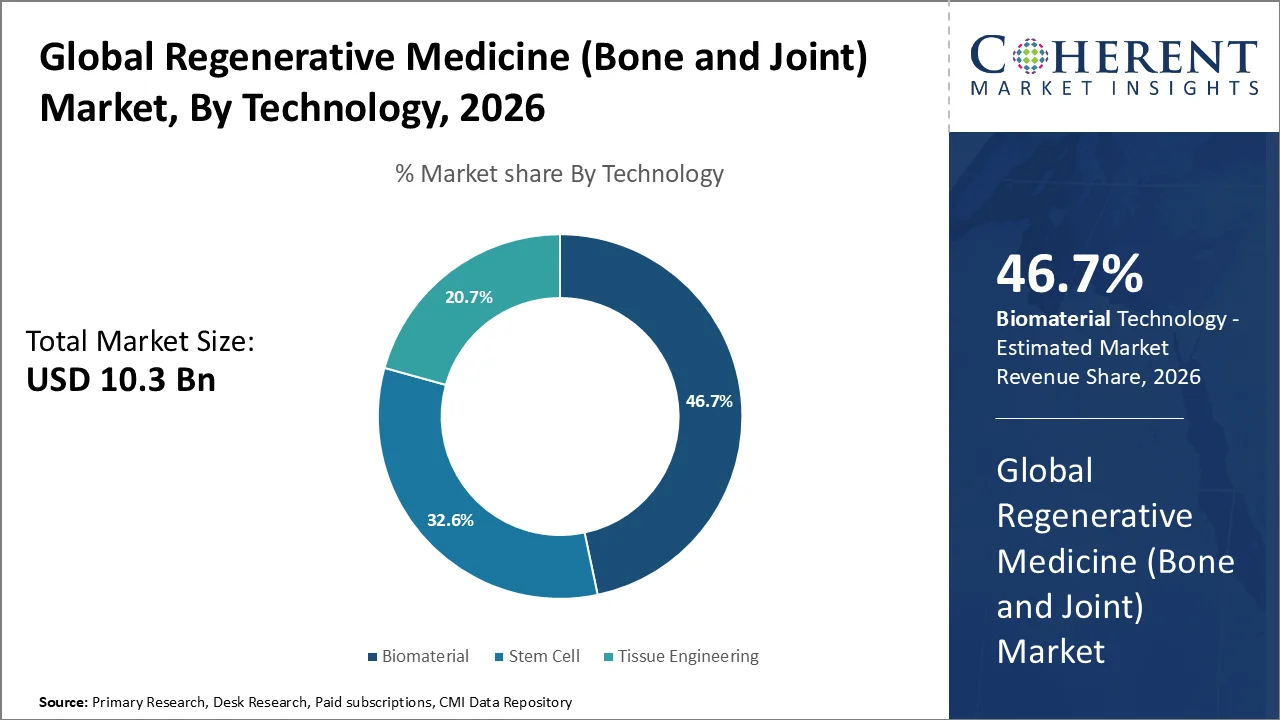
- The biomaterial segment is likely to dominate the market with 46.7% in 2026. The segment’s growth is owing to the rising use of biocompatible scaffolds, synthetic bone graft materials, hydrogels, and ceramic-based implants for bone repair and joint regeneration.
- The bone graft substitutes segment is set to lead with 40.2% in 2026. The segment’s growth is owing to the increasing number of orthopedic, spinal fusion, trauma, and reconstructive procedures. Between 2001 and 2022, a total of 1,557,247 orthopedic surgeries were performed, including 189,881 hip replacement procedures.
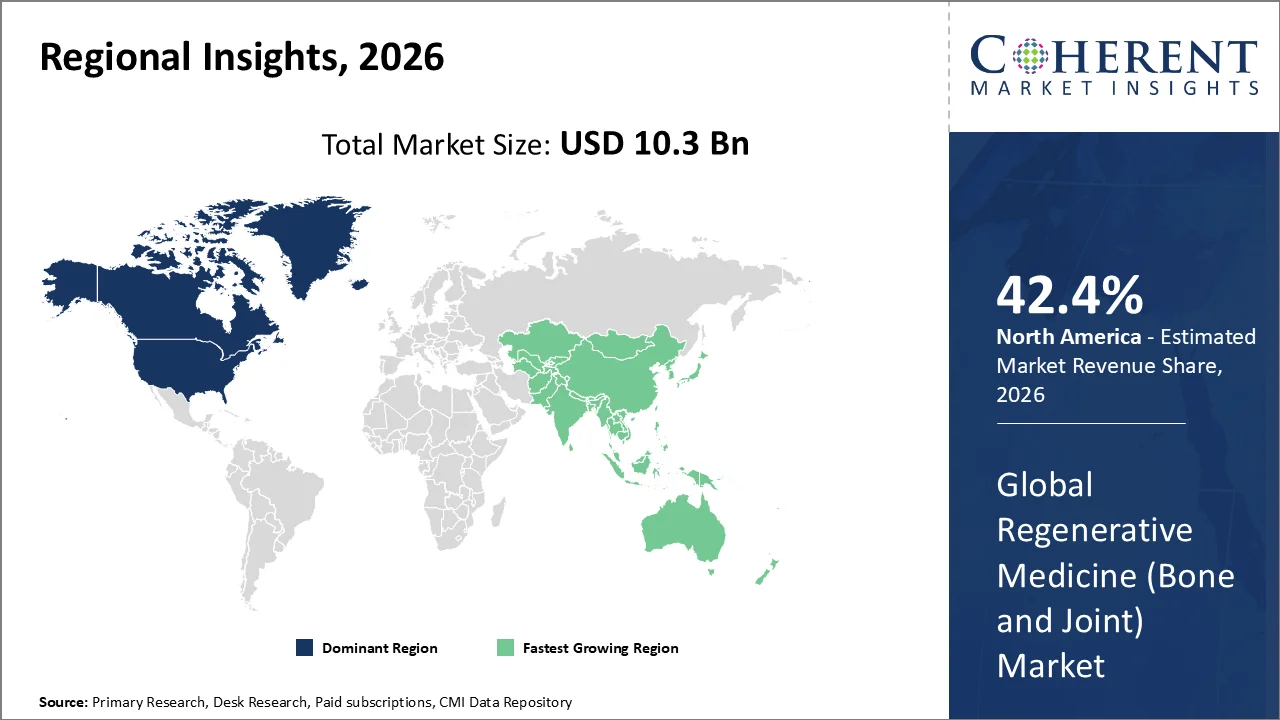
- North America is expected to acquire the prominent share of 42.4% in 2026. The region’s growth is owing to the advanced orthopedic care infrastructure, high adoption of regenerative therapies, strong clinical research activity, and rising arthritis burden, with diagnosed arthritis affecting 18.9% of U.S. adults in 2022.
Segmental Insights
Why is Biomaterial Segment Acquiring the Largest Share?
On the basis of technology, the biomaterial segment is projected to account for the largest Regenerative Medicine (Bone and Joint) Market share of 46.7% in 2026. The segment’s growth is owing to the broad use in bone graft substitutes, cartilage scaffolds, tissue matrices, synthetic ceramics, bioactive glass, collagen-based membranes, and hydroxyapatite-based products.
CDC data shows about 33 million U.S. adults have osteoarthritis. This create a long-term need for solutions that preserve joint function, repair cartilage, and support bone healing.
In December 2025, Regentis Biomaterials priced its U.S. IPO to support development of orthopedic hydrogel implants for regenerative medicine. Its lead GelrinC platform is a cell-free, off-the-shelf hydrogel implant designed to regenerate damaged knee cartilage.
- Current Industry Events of 2026
- Market Size Estimation
- Regional Breakdown
- Competitive Landscape
- Customer Intelligence
- Segmental Analysis
- Pricing Analysis
- Key Market Drivers, Challenges & Future Trends
- Customized Insights Section
Bone Graft Substitutes hold the Largest Market Share
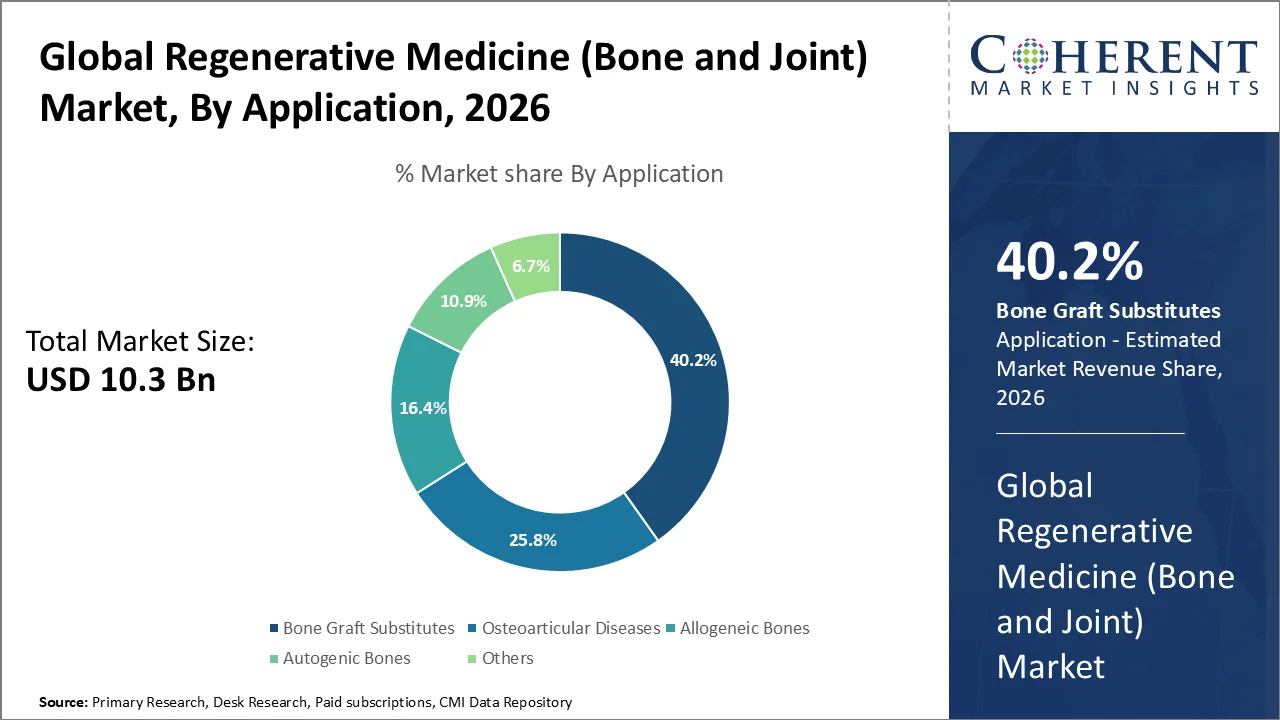
On the basis of application, the bone graft substitutes segment lead with a major 40.2% share in 2026. The growth is owing to the wide use in spinal fusion, trauma reconstruction, dental and maxillofacial surgery, joint revision, bone defect repair, and orthopedic oncology-related reconstruction. NIH-indexed review notes that bone is the second most transplanted tissue after blood, highlighting the high clinical relevance of bone replacement materials.
In December 2025, Xtant Medical launched the nanOss Strata, its next-generation synthetic bone graft for spinal and orthopedic applications. The hydroxycarbonapatite-based graft is designed to mimic human bone structure, improve osteoconductivity, enhance cellular activity, as well as support bone healing after implantation.
Market Drivers
Autologous Cellularized Scaffold Therapy are Transforming the Regenerative Medicine (Bone and Joint) Market in the U.S.
The U.S. is becoming a major innovation hub for autologous cellularized scaffold therapies. This approach uses a patient’s own cells, expands or prepares them under controlled conditions, and combines them with a biologic or biomaterial scaffold to support tissue repair. Cellularized scaffold therapy provides a regenerative matrix that supports the chondrocyte activity, tissue integration, as well as repair of symptomatic cartilage defects.
In August 2024, Vericel announced the FDA approval and commercial availability of MACI Arthro, an arthroscopic delivery option for MACI. In March 2026, the firm also announced the FDA approval for its new advanced therapy manufacturing facility, which is expected to expand production capacity. These developments indicate that regenerative cartilage repair is moving from niche clinical use toward broader commercial orthopedic adoption.
Injectable Cartilage and Bone Regeneration: A Major Breakthrough in the Regenerative Medicine (Bone and Joint) Market
Injectable cartilage and bone regeneration is emerging as a major breakthrough because it aims to repair damaged joint tissue through minimally invasive delivery rather than open surgery or full joint replacement. These approaches can include biomaterial scaffolds, biologic signaling molecules, controlled-release systems, stem-cell-based therapies, and tissue-specific regenerative cues.
In November 2025, Stanford Medicine announced research showing that inhibiting the 15-PGDH protein regenerated joint cartilage in mice and also triggered regenerative responses in human cartilage tissue samples taken from knee replacement surgeries. Stanford reported that treated human tissue began regenerating articular cartilage after one week in laboratory testing.
Such innovations are expected to accelerate the Regenerative Medicine (Bone and Joint) Market growth during the forecast period.
Current Events and Their Impact on the Regenerative Medicine (Bone and Joint) Market
Current Event | Description and its Impact |
ARPA-H NITRO Program Advancing Regenerative Osteoarthritis Therapies in the U.S. |
|
Regulatory Tightening on Unapproved Stem Cell and Exosome-Based Orthopedic Therapies |
|
Regenerative Medicine (Bone and Joint) Market Trends
- Rising demand for minimally invasive orthobiologic treatments such as PRP, BMAC, MSC injections, and viscosupplementation supports faster recovery, lower surgical burden, and improved joint function.
- Personalized regenerative therapies using patient-specific cells, growth factors, biologics, and scaffold-based implants are gaining traction for cartilage repair, bone healing, and sports injury management.
- Advanced bone grafts, DBM products, and scaffold-based fusion materials are gaining use in orthopedic and spine repair. Recent clinical evidence shows 2-year fusion rates of around 92% for autografts and 86% for demineralized bone matrix, supporting demand for biologic and synthetic bone regeneration products.
- Growing osteoarthritis and joint degeneration cases are increasing demand for cartilage and bone regeneration therapies. WHO reports around 528 million people were living with osteoarthritis globally, with knee osteoarthritis affecting about 365 million people.
- Reimbursement and evidence requirements are strongly shaping adoption of regenerative joint therapies. CMS currently lists platelet-rich plasma injections for musculoskeletal injuries and joint conditions as non-covered, which may limit PRP uptake but also push the market toward clinically validated, reimbursable bone grafts, cell therapies, and approved regenerative products.
Regional Insights
North America Dominates Owing to the Advanced Orthopedic Infrastructure
The North America region accounts for 42.4% of the market share in 2026. The region’s growth is owing to the high osteoarthritis prevalence, strong orthopedic surgical infrastructure, favorable specialist access, advanced regulatory pathways, and early adoption of biomaterials and cell-based therapies. The U.S. is the key contributor due to its large patient pool and concentration of orthopedic device and regenerative medicine companies.
The region also benefits from the high orthopedic procedure tracking as well as registry infrastructure. The AAOS American Joint Replacement Registry analyzed 4 million hip and knee arthroplasties in its 2024 report, thereby reflecting the large institutional capacity for orthopedic innovation.
In July 2025, Genascence received FDA RMAT designation for GNSC-001, a potential first-in-class gene therapy for knee osteoarthritis. The single-injection treatment is designed to block IL-1 signaling, reduce inflammation and joint pain, and support long-term disease management.
Asia Pacific Regenerative Medicine (Bone and Joint) Market Trends
Asia Pacificis expected to witness strong growth in market over the forecast period. The region’s growth is owing to the aging populations, rising osteoarthritis burden, expanding private orthopedic care, improving regulatory pathways, and rising adoption of cell-based therapies in countries such as China, India, Japan, and South Korea.
In August 2025, RegenOrthoSport opened a new regenerative orthopedics center in Indiranagar, Bengaluru, offering advanced intraosseous cell therapy. The non-surgical treatment targets arthritis-related bone damage, helping reduce pain, restore function, and address rising knee osteoarthritis cases in Karnataka.
Advanced Orthopedic Care and Strong FDA Oversight are Accelerating the Regenerative Medicine (Bone and Joint) Market in United States
The U.S. is the most important country market owing to the high osteoarthritis burden, advanced orthopedic care, strong FDA oversight, and substantial company activity in cartilage repair and bone graft substitutes.
The FDA data shows 91 RMAT designation requests in fiscal year 2025, thereby indicating the strong development activity across regenerative medicine.
In May 2025, Summit Products Group launched to advance surgical and regenerative wound care solutions through strategic commercialization support. The firm also formed an alliance with NovaBone to distribute NovaForm Wound Matrix, a bioglass and collagen-based dressing for acute and surgical wounds.
China Regenerative Medicine (Bone and Joint) Market Trends
China is expected to be a high-growth country market. The growth is owing to its large aging population, rising osteoarthritis prevalence, expanding orthopedic hospital infrastructure, and increasing domestic interest in regenerative therapies.
A 2025 GBD-based analysis reported that China had 152.85 million osteoarthritis prevalence cases, thereby showing a very large patient base for bone and joint care.
In June 2025, CGBio established Sol Cent Bio, a China joint venture with Shanghai Sanyou Medical, to expand its regenerative medicine presence. The venture will localize production of allogeneic bone grafts, acellular dermal matrices, stem cell separation systems, and related regenerative tools.
Who are the Major Companies in Regenerative Medicine (Bone and Joint) Industry
Some of the major key players in Regenerative Medicine (Bone and Joint) Market are Anika Therapeutics, Inc, Arthrex, Inc., Baxter International, Inc., CONMED Corporation, Johnson & Johnson, Medtronic, Plc, Smith & Nephew plc, Stryker Corporation, Zimmer Holdings, Inc., Aziyo Biologics, and Ortho Regenerative Technologies Inc.
Key News
- In December 2025, Cipla and Stempeutics launched Ciplostem, a DCGI-approved allogeneic MSC therapy for Grade II and III knee osteoarthritis. The single-dose intra-articular injection aims to reduce inflammation and pain, improve joint function, and support cartilage maintenance.
- In October 2025, Allied Pain & Spine Institute launched OrthoGen Health, a regenerative medicine division serving Silicon Valley. The program offers PRP, BMAC, and other non-surgical orthobiologic treatments for osteoarthritis, joint, spine, and sports-related injuries.
- In February 2025, Evergen launched AI-powered bone graft image processing software developed with the University of Florida. The system analyzes CT bone graft scans in under 10 seconds, improving tissue-processing efficiency, clinical decision-making, and access to regenerative medicine treatments.
Market Report Scope
Regenerative Medicine (Bone and Joint) Market Report Coverage
| Report Coverage | Details | ||
|---|---|---|---|
| Base Year: | 2025 | Market Size in 2026: | USD 10.3 Bn |
| Historical Data for: | 2020 To 2024 | Forecast Period: | 2026 To 2033 |
| Forecast Period 2026 to 2033 CAGR: | 11% | 2033 Value Projection: | USD 21.3 Bn |
| Geographies covered: |
| ||
| Segments covered: |
| ||
| Companies covered: | Anika Therapeutics, Inc, Arthrex, Inc., Baxter International, Inc., CONMED Corporation, Johnson & Johnson, Medtronic, Plc, Smith & Nephew plc, Stryker Corporation, Zimmer Holdings, Inc., Aziyo Biologics, and Ortho Regenerative Technologies Inc. | ||
| Growth Drivers: |
| ||
| Restraints & Challenges: |
| ||
Analyst Opinion
- Regenerative medicine for bone and joint disorders is driven by strong clinical need. Around 1.71 billion people globally live with musculoskeletal conditions, including osteoarthritis, fractures, bone injuries, and joint disorders. This shows the market is growing due to real unmet treatment demand, not only innovation trends.
- Osteoarthritis remains one of the largest target areas for bone and joint regenerative therapies. Globally, 595 million people had osteoarthritis in 2020, and cases are projected to rise sharply across knee, hip, hand, and other joints by 2050. This is supporting the demand for cartilage repair, cell therapy, and tissue regeneration solutions.
- Joint replacement and orthopedic procedures create a strong opportunity for regenerative alternatives. The U.S. joint registry has analyzed over 4.4 million hip and knee arthroplasty procedures, while ARPA-H’s NITRO program is advancing injectable bone and cartilage regenerative therapies for osteoarthritis, aiming to repair joints and reduce dependence on conventional surgeries.
Speak to the analyst
Want personalized insights?
Take the findings above to one of our principal consultants, or have the report rebuilt around the segments, geographies and competitors you actually track.
Market Segmentation
- By Technology (Revenue, USD Bn, 2021-2033)
- Stem Cell
- Biomaterial
- Tissue Engineering
- By Application (Revenue, USD Bn, 2021-2033)
- Bone Graft Substitutes
- Osteoarticular Diseases
- Allogeneic Bones
- Autogenic Bones
- Others
- By Region (Revenue, USD Bn, 2021-2033)
- North America
- U.S.
- Canada
- Latin America
- Brazil
- Mexico
- Argentina
- Rest of Latin America
- Europe
- Germany
- U.K.
- France
- Italy
- Spain
- Russia
- Rest of Europe
- Asia Pacific
- China
- India
- Japan
- Australia
- South Korea
- ASEAN
- Rest of Asia Pacific
- Middle East
- GCC
- Israel
- Rest of Middle East
- Africa
- South Africa
- Central Africa
- North Africa
- North America
Sources
Primary Research Interviews
- Orthopedic surgeons
- Rheumatologists
- Sports medicine specialists
- Regenerative medicine physicians
- Hospital administrators
- Ambulatory orthopedic center managers
- Stem cell therapy providers
- Platelet-rich plasma (PRP) therapy providers
- Bone graft and cartilage repair product manufacturers
- Medical device distributors
- Key opinion leaders (KOLs) in orthopedics and regenerative medicine
Databases
- World Health Organization (WHO)
- Centers for Disease Control and Prevention (CDC)
- National Institutes of Health (NIH)
- U.S. Food and Drug Administration (FDA)
- European Medicines Agency (EMA)
- Organisation for Economic Co-operation and Development (OECD)
Magazines
- Orthopedics Today
- Orthopedic Design & Technology
- Medical Device Network
- Regenerative Medicine Today
Journals
- Journal of Orthopaedic Research
- Bone & Joint Journal
- Journal of Bone and Joint Surgery
- Regenerative Medicine
- Stem Cells Translational Medicine
- Cartilage
- Osteoarthritis and Cartilage
Newspapers
- The New York Times
- The Guardian
- The Wall Street Journal
- Financial Times
Associations
- American Academy of Orthopaedic Surgeons
- Orthopaedic Research Society
- International Cartilage Regeneration & Joint Preservation Society
- American Orthopaedic Society for Sports Medicine
- European Federation of National Associations of Orthopaedics and Traumatology
- International Society for Cell & Gene Therapy
Public Domain Sources
- Company Annual Reports and Investor Presentations
- Government Health Ministry Publications
- Clinical Trial Registries Such as ClinicalTrials.gov
- FDA Regenerative Medicine Advanced Therapy (RMAT) Designations
- EMA Advanced Therapy Medicinal Products (ATMP) Publications
- Hospital and Academic Research Institute Publications
Proprietary Elements
- CMI Data Analytics Tool
- Proprietary CMI Existing Repository of Information for Last 10 Years
Get access to 250+ pages report
Every segment, forecast, competitor profile and data table behind the analysis above — available for instant download.
- ESOMAR Member
- ISO 9001:2015 Certified
- D-U-N-S Registered
- GDPR & CCPA Compliant
Missing comfort of reading report in your local language? Find your preferred language:
Transform your Strategy with Exclusive Trending Reports
Frequently Asked Questions
The Regenerative Medicine (Bone and Joint) Market is expected to reach USD 21.3 Bn in 2033.
Major players operating in the global Regenerative Medicine (Bone and Joint) Market include Anika Therapeutics, Inc, Arthrex, Inc., Baxter International, Inc., CONMED Corporation, Johnson & Johnson, Medtronic, Plc, Smith & Nephew plc, Stryker Corporation, Zimmer Holdings, Inc., Aziyo Biologics, and Ortho Regenerative Technologies Inc.
The high treatment costs, strict regulatory approval processes, inadequate insurance reimbursement policies, and scientific limitations in fully replicating complex, living bone and cartilage structures are the key factors hampering growth of the market.
The rising elderly population, a high prevalence of arthritic and degenerative conditions, technological innovations in stem cell therapy and biomaterials is boosting the demand for Regenerative Medicine (Bone and Joint).
The Regenerative Medicine (Bone and Joint) Market is anticipated to grow at a CAGR of 11% between 2026 and 2033.
Among regions, North America is expected to account for a largest market share in the global Regenerative Medicine (Bone and Joint) Market over the forecast period.
The market outlook remains positive due to aging population and rising rates of osteoarthritis, and the sector transitioning from traditional surgical repair to biologic restoration.