

Anti-body Coupled T Receptor Therapy Market Size and Share Analysis - 2026 To 2033
The global antibody-coupled T receptor therapy market size is estimated to be valued at USD 55.0 Mn in 2026 and is projected to grow at a CAGR of 10.8% during the forecast period (2026–2033), reaching approximately USD 112.6 Mn by 2033. This growth is attributable to rising prevalence of cancer, increasing adoption of targeted immunotherapies for cancer treatment, and increasing investments in cell and gene therapy research.
Key Takeaways from the Anti-body Coupled T Receptor Therapy Market Report
- Lymphoma is expected to account for the largest market share of 41.8% in 2026 due to strong clinical success of adoptive T-cell therapies in hematologic malignancies, favorable regulatory approvals, and a large number of ongoing clinical trials targeting B-cell lymphomas. For example, CAR-T therapies have shown a pooled overall response rate of 71.4% in patients with relapsed or refractory large B-cell lymphoma, supporting their clinical success.
- North America is projected to dominate the global anti-body coupled T receptor therapy industry with a share of 48.5% in 2026 due to increasing adoption of advanced cell therapies, high investment in research and development as well as strong presence of biotechnology companies engaged in TCR-T clinical development. For example, 438 cell and gene therapies were in development in the United States as of January 2026.
- Asia Pacific, holding a share of 18.6% in 2026, is anticipated to emerge as the fastest-growing market for anti-body coupled T receptor therapies during the forecast period, owing to increasing investments in precision oncology, expanding clinical research, and growing adoption of advanced immunotherapies.
Anti-body Coupled T Receptor Therapy Market Overview
The global anti-body coupled T receptor therapy market is poised to grow rapidly during the forecast period. This is primarily due to rising cancer burden, increasing demand for targeted and personalized immunotherapies, growing investments in cell therapy research, and continuous advancements in T-cell engineering technologies. Expanding clinical trials, supportive regulatory initiatives, and increasing collaborations between biotechnology companies and research institutions are also supporting market growth.
Anti-body coupled T receptor (ACTR) therapy is a type of immunotherapy used to treat cancer by utilizing the body's own immune system to target cancer cells. In this therapy, T cells are collected from the patient, genetically engineered to express an antibody-coupled T-cell receptor (ACTR), expanded in the laboratory, and then infused back into the patient along with tumor-targeting monoclonal antibodies.
The engineered T cells recognize antibodies bound to cancer cells, enabling selective destruction of tumor cells while minimizing damage to healthy tissues. ACTR therapy offers a flexible treatment approach, as the same engineered T cells can be combined with different monoclonal antibodies to target various types of cancer. In addition, its therapeutic activity can be adjusted by modifying the dose of the targeting antibody, which may help improve treatment outcomes while reducing side effects.
Advantages of ACTR therapy over conventional cell therapies is expected to play a key role in boosting market growth during the forecast period. Unlike traditional CAR-T therapies, ACTR platforms can potentially be redirected using different therapeutic antibodies, offering greater treatment flexibility, broader tumor targeting, and reduced off-target toxicity.
ACTR therapy is an emerging adoptive T-cell therapy designed to provide greater flexibility than conventional CAR-T cell therapy by using antibody-mediated tumor targeting. Approved CAR-T therapies, such as Kymriah (Novartis AG) and Yescarta (Gilead Sciences, Inc.), have demonstrated significant clinical benefits in hematological malignancies but are associated with adverse events including cytokine release syndrome (CRS) and immune effector cell-associated neurotoxicity syndrome (ICANS).
Segmental Insights
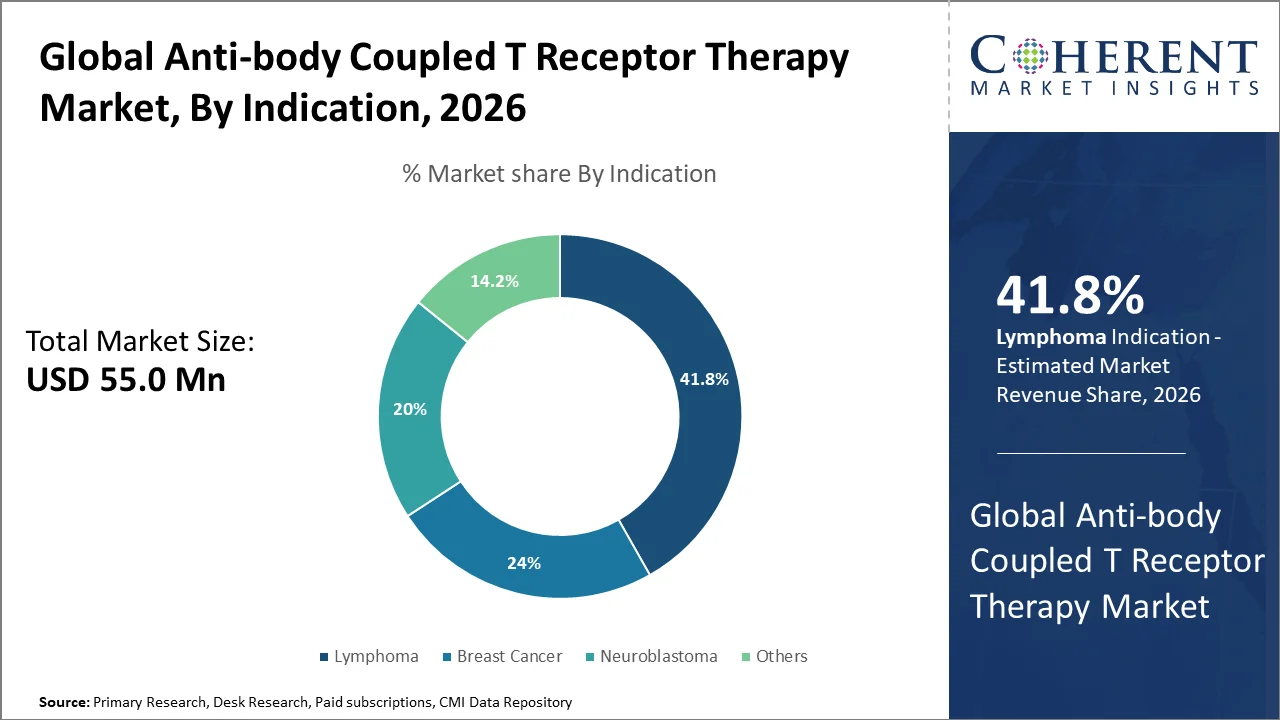
Which Indication Dominates the Global Antibody Coupled T Receptor Therapy Market?
Lymphoma Leads the Market with Over Two-Fifths Share
According to Coherent Market Insights’ latest anti-body coupled T receptor therapy market analysis, lymphoma is set to account for the largest market share of 41.8% in 2026. This dominance can be attributed to high prevalence of B-cell lymphomas, increasing adoption of targeted immunotherapies, and strong clinical success of T-cell receptor-based treatments in hematologic malignancies.
The U.S. FDA reports that marginal zone lymphoma accounts for about 7% of all B-cell non-Hodgkin lymphomas, with around 7,460 new cases diagnosed annually in the U.S. This high lymphoma burden is expected to fuel demand for antibody coupled T receptor therapy during the forecast period.
Growing regulatory approvals, ongoing clinical trials, and rising investments in cell therapy research are also supporting segment growth. In addition, availability of well-defined tumor-associated antigens in lymphoma has improved treatment response rates, making it one of the primary indications for antibody coupled T receptor therapies.
- Current Industry Events of 2026
- Market Size Estimation
- Regional Breakdown
- Competitive Landscape
- Customer Intelligence
- Segmental Analysis
- Pricing Analysis
- Key Market Drivers, Challenges & Future Trends
- Customized Insights Section
Anti-body Coupled T Receptor Therapy Market Growth Drivers
Rising Global Cancer Burden
Increasing incidence of solid tumors and hematological malignancies is driving demand for advanced immunotherapies. ACTR therapy offers a targeted approach for patients with relapsed, refractory, or treatment-resistant cancers. The World Health Organization (WHO) projects that global new cancer cases will increase by approximately 77% by 2050, reaching more than 35 million cases annually. This rising disease burden is expected to provide a strong impetus for the growth of the antibody-coupled T receptor therapy market during the forecast period.
Anti-body Coupled T Receptor Therapy Market Opportunities
Expansion of Clinical Research and Investments
Pharmaceutical and biotechnology companies are increasing investments in engineered T-cell therapies through strategic collaborations, licensing agreements, and clinical trials, paving way for the development of novel therapies. Thus, expansion of clinical research is expected to create lucrative growth opportunities for the antibody coupled T receptor therapy market during the forecast period.
For example, in October 2025, JW Therapeutics and Regeneron Pharmaceuticals, Inc. expanded their strategic collaboration to advance TCR-T cell therapy development. The agreement aims to accelerate cell therapy innovation and expand the companies’ global platform potential in cancer immunotherapy.
Anti-body Coupled T Receptor Therapy Market Trends
Development of Combination Immunotherapies
Growing adoption of combination immunotherapies is a key trend shaping the antibody-coupled T cell receptor (ACTR) therapy market. ACTR therapies are increasingly being evaluated in combination with immune checkpoint inhibitors, monoclonal antibodies, cytokines, and other targeted therapies to enhance anti-tumor activity as well as improve clinical outcomes. These combination approaches aim to overcome tumor immune evasion, increase treatment response rates, and extend the therapeutic benefits of ACTR therapies across a wider range of cancer indications.
Current Events and Their Impact on the Anti-body Coupled T Receptor Therapy Market
Current Event | Description and its Impact |
Adaptimmune Sells TECELRA and TCR Therapy Portfolio to US WorldMeds |
|
FDA Grants Breakthrough Therapy Designation to lete-cel |
|
Regional Insights
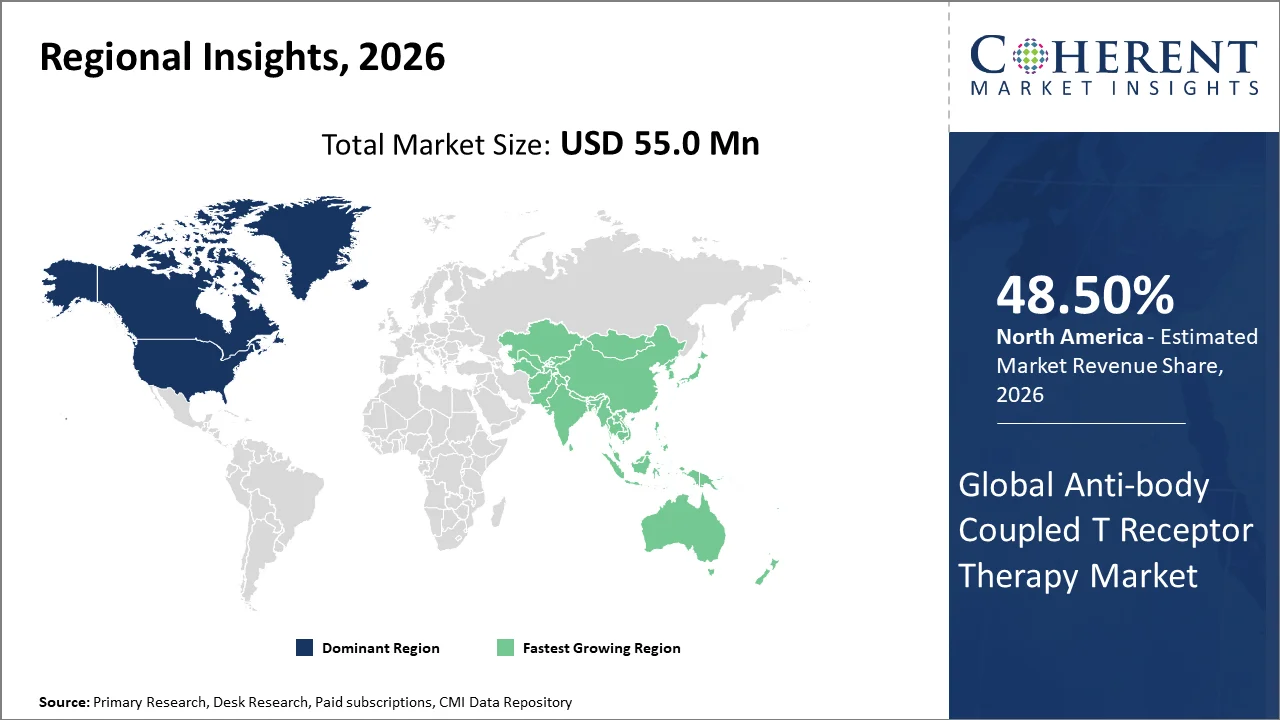
North America Set to Retain its Global Market Dominance Through 2033
North America is expected to retain its dominance over the global antibody coupled T receptor therapy market with an estimated 48.50% share in 2026. This can be attributed to strong presence of biotechnology companies, increasing investment in cell and gene therapy research, rising clinical trials for T-cell receptor (TCR)-based therapies, and growing adoption of precision oncology across the region.
Rising cancer prevalence is playing a key role in boosting North America antibody coupled T receptor therapy market. According to the American Cancer Society, approximately 2.11 million new cancer cases are projected to be diagnosed in the U.S. in 2026. This will likely fuel demand for advanced targeted immunotherapies such as antibody-coupled TCR therapies for solid tumors and hematological cancers during the forecast period.
Asia Pacific to Become Central Hub for Industry Players
Asia Pacific anti-body coupled T receptor therapy market is projected to grow rapidly during the forecast period, capturing a global market share of 18.6% in 2026. This is mostly due to increasing cancer incidence, expanding biotechnology manufacturing, rising healthcare spending, growing investments in cell and gene therapies, and improving access to advanced cancer treatments across China, Japan, South Korea, and India.
The growing number of cancer patients is a major factor driving demand for TCR-based therapies in Asia Pacific. According to the International Agency for Research on Cancer (IARC) GLOBOCAN 2022 estimates, China recorded 4,824,703 new cancer cases in 2022. This rising cancer burden is increasing the need for innovative immunotherapies and next-generation targeted cancer treatments across the region.
Anti-body Coupled T Receptor Therapy Market Outlook – Country-wise
U.S. Anti-body Coupled T Receptor Therapy Market Trends
The United States is expected to remain a leading market for anti-body coupled T receptor therapies during the forecast period. This is mainly due to rising prevalence of cancer, increasing investments in cell and gene therapy research, favorable regulatory environment for advanced therapies, and growing clinical trial activity. Rising collaborations between pharmaceutical companies and research institutions are also accelerating therapy development and commercialization.
China Anti-body Coupled T Receptor Therapy Market Forecast
The antibody coupled T receptor therapy market in China is expected to grow rapidly during the assessment period. This can be attributed to expanding biopharmaceutical manufacturing capabilities, rising government support for innovative cancer therapies, increasing domestic clinical trials, and growing investments by local biotechnology companies. Increasing burden of cancer and improvements in healthcare infrastructure are also supporting market growth.
Who are the Major Companies in the Anti-body Coupled T Receptor Therapy Market?
Some of the major players in Anti-body Coupled T Receptor Therapy Market are Unum Therapeutics, Pfizer Inc., Novartis AG, Johnson and Johnson Services, Inc., GSK plc, The Bristol-Myers Squibb Company, and Others.
Key Strategies Adopted by Industry Players
Leading manufacturers of anti-body coupled T receptor therapies are adopting various organic and inorganic strategies to boost their revenue as well as gain a competitive edge in the industry. These include new product launches and approvals, increasing investments in R&D, clinical trials, partnerships, mergers and acquisitions, and distribution agreements.
- In July 2026, scientists at The Wistar Institute developed a new bispecific T cell engager (BTE) to target ovarian cancer cells. The therapy showed potential in preclinical studies by helping T cells recognize and attack ovarian cancer cells.
- In April 2026, Johnson & Johnson presented clinical and real-world study data in cancer care at ASCO 2026. The presentation included TALVEY, a bispecific T-cell engager antibody that targets CD3 on T cells and GPRC5D on multiple myeloma cells.
- In October 2025, JW Therapeutics and Regeneron Pharmaceuticals, Inc. expanded their collaboration to advance TCR-T cell therapy development. The partnership focuses on accelerating next-generation cancer immunotherapy innovation.
Market Report Scope
Anti-body Coupled T Receptor Therapy Market Report Coverage
| Report Coverage | Details | ||
|---|---|---|---|
| Base Year: | 2025 | Market Size in 2025: | USD 55.0 Mn |
| Historical Data for: | 2020 To 2024 | Forecast Period: | 2026 To 2033 |
| Forecast Period 2026 to 2033 CAGR: | 10.8% | 2033 Value Projection: | USD 112.6 Mn |
| Geographies covered: |
| ||
| Segments covered: |
| ||
| Companies covered: | Unum Therapeutics, Pfizer Inc., Novartis AG, Johnson and Johnson Services, Inc., GSK plc, The Bristol-Myers Squibb Company, and Others. | ||
| Growth Drivers: |
| ||
| Restraints & Challenges: |
| ||
Analyst Opinion (Expert Opinion)
- Cancer burden continues to create strong demand for new TCR therapies. According to the WHO, cancer accounted for around 10 million deaths globally in 2024. As more patients need effective treatment for solid tumors, demand for advanced TCR-based therapies is expected to increase. A growing cancer patient population supports long-term investment and clinical development of antibody-coupled TCR therapies.
- Solid tumors represent an excellent opportunity for TCR therapeutics. While other cell therapies primarily aim at hematological malignancies, TCR therapies coupled with antibodies are being designed to detect intracellular tumor targets present in solid tumors.
- Clinical partnerships are speeding up innovation. Biotech companies in the contemporary world are increasingly partnering with pharmaceutical firms and research institutes to improve TCR targeting, antibody engineering, and manufacturing capabilities. More collaborations can shorten development timelines and improve the chances of bringing new therapies to market.
- Improved targeting can help enhance the safety of the therapy. The main aim of the researchers is the development of antibodies coupled with T cell receptors with enhanced ability to target the cancerous cells without damaging the normal cells.
Speak to the analyst
Want personalized insights?
Take the findings above to one of our principal consultants, or have the report rebuilt around the segments, geographies and competitors you actually track.
Market Segmentation
- By Indication Insights (Revenue, USD Mn, 2021 - 2033)
- Lymphoma
- Breast Cancer
- Neuroblastoma
- Other Indications
- By Region Insights (Revenue, USD Mn, 2021 - 2033)
- North America
- U.S.
- Canada
- Latin America
- Brazil
- Argentina
- Mexico
- Rest of Latin America
- Europe
- Germany
- U.K.
- Spain
- France
- Italy
- Russia
- Rest of Europe
- Asia Pacific
- China
- India
- Japan
- Australia
- South Korea
- ASEAN
- Rest of Asia Pacific
- Middle East
- GCC Countries
- Israel
- Rest of Middle East
- Africa
- South Africa
- North Africa
- Central Africa
- North America
Sources
Primary Research Interviews
- Chief Executive Officers (CEOs)
- Chief Medical Officers (CMOs)
- Vice Presidents of Research & Development
- Clinical Research Directors
- Immunotherapy Scientists
- Cell Therapy Manufacturing Specialists
- Regulatory Affairs Professionals
- Hospital Oncologists
- Hematologists
- Academic Researchers
- Biotechnology Company Executives
- Distribution and Supply Chain Managers
Databases
- PubMed
- MEDLINE
- Embase
- ClinicalTrials.gov
- EU Clinical Trials Register
- NIH RePORTER
- GenBank
- NCBI Gene Database
- U.S. FDA Database
- European Medicines Agency (EMA) Database
Magazines
- BioCentury
- Genetic Engineering & Biotechnology News (GEN)
- Pharmaceutical Technology
- BioProcess International
- Drug Discovery World
- Life Science Leader
Journals
- Nature Biotechnology
- Nature Medicine
- Nature Reviews Drug Discovery
- Blood
- Journal of Clinical Oncology
- The Lancet Oncology
- Cancer Discovery
- Clinical Cancer Research
- Molecular Therapy
- Journal for ImmunoTherapy of Cancer
- Frontiers in Immunology
- Cell
Newspapers
- The Wall Street Journal
- Financial Times
- The New York Times
- USA Today
- The Guardian
- The Washington Post
Associations
- American Society of Clinical Oncology (ASCO)
- American Association for Cancer Research (AACR)
- Society for Immunotherapy of Cancer (SITC)
- European Society for Medical Oncology (ESMO)
- American Society of Hematology (ASH)
- International Society for Cell & Gene Therapy (ISCT)
- Biotechnology Innovation Organization (BIO)
- Alliance for Regenerative Medicine (ARM)
- European Hematology Association (EHA)
Public Domain Sources
- U.S. Food and Drug Administration (FDA)
- European Medicines Agency (EMA)
- National Institutes of Health (NIH)
- National Cancer Institute (NCI)
- World Health Organization (WHO)
- Centers for Disease Control and Prevention (CDC)
- European Commission
- National Center for Biotechnology Information (NCBI)
- U.S. National Library of Medicine
- ClinicalTrials.gov
- Organisation for Economic Co-operation and Development (OECD)
- World Bank
- United Nations (UN)
Proprietary Elements
- CMI Data Analytics Tool
- Proprietary CMI Existing Repository of information for last 10 years
Get access to 250+ pages report
Every segment, forecast, competitor profile and data table behind the analysis above — available for instant download.
- ESOMAR Member
- ISO 9001:2015 Certified
- D-U-N-S Registered
- GDPR & CCPA Compliant
Missing comfort of reading report in your local language? Find your preferred language:
Transform your Strategy with Exclusive Trending Reports
Frequently Asked Questions
The global market is estimated to be valued at USD 55.0 Mn in 2026.
The global Anti-body Coupled T Receptor Therapy Market value is expected to reach USD 112.6 Mn by 2033.
The global market is poised to exhibit a CAGR of 10.8% from 2026 to 2033.
Major growth factors include increasing prevalence of cancer, rising demand for targeted and personalized immunotherapies, advancements in T-cell engineering and antibody coupling technologies, and growing investments in cell and gene therapy research.
Lymphoma is expected to account for the largest market share of 41.8% in 2026.
Some major companies in the Antibody Coupled T Receptor Therapy Market include Unum Therapeutics, Pfizer Inc., Novartis AG, Johnson and Johnson Services, Inc., GSK plc, The Bristol-Myers Squibb Company, and Others.
North America, with a 48.50% share in 2026, is set to lead the market during the forecast period.