

Human Embryonic Stem Cells Market Size and Share Analysis: 2026 - 2033
The human embryonic stem cells market was valued at USD 1.5 Bn in 2026 and is forecast to reach a value of USD 2.1 Bn by 2033 at a CAGR of 9.72% between 2026 and 2033.
Key Takeaways
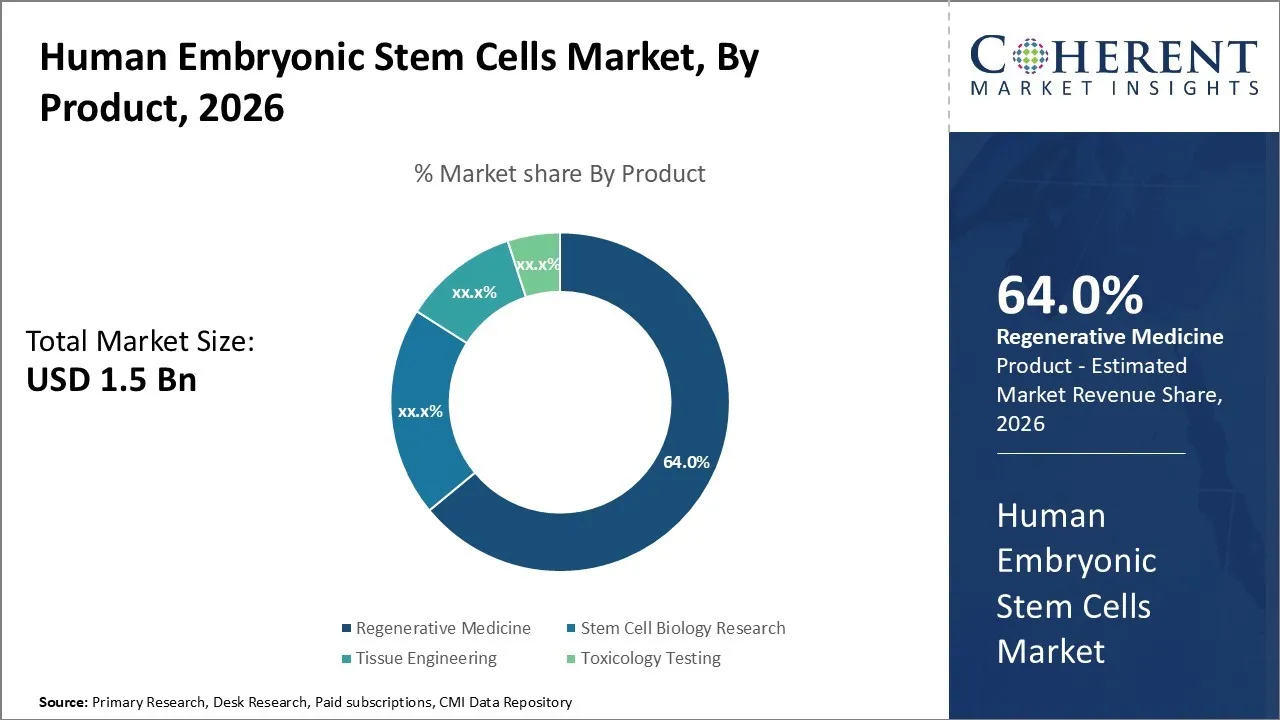
- Based on product, the regenerative medicine segment is expected to hold 64% share of the market in 2026.
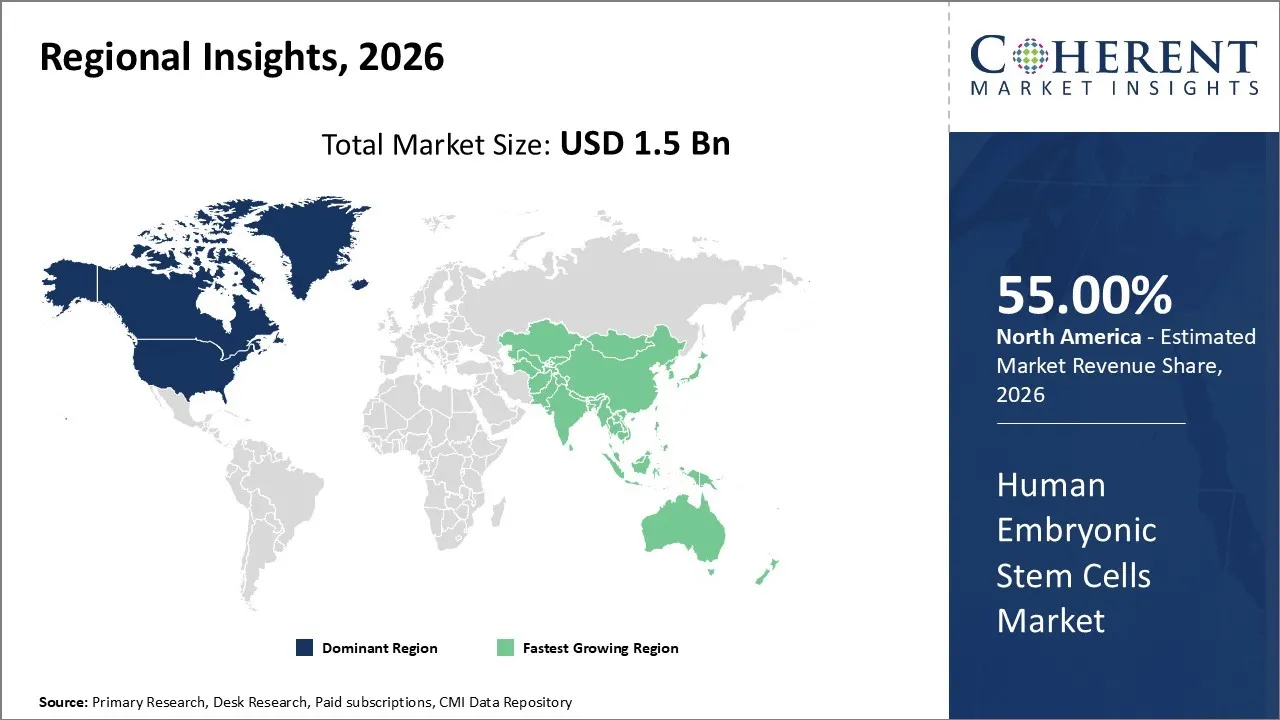
- Based on Region, North America is set to lead the human embryonic stem cells market with 55% share in 2026. While, Asia Pacific is anticipated to have the fastest growing region.
Market Overview
The global human embryonic stem cells market is experiencing strong growth due to the increase in focus on the development of stem cell therapies across the globe. Moreover, rise in prevalence of cardiac & malignant diseases and increase in demand for regenerative medicines across the globe is expected to boost growth of the market. However, high cost of the procedure and stringent regulatory guidelines and ethical issues are major factors expected to hamper the growth of the human embryonic stem cells market.
Current Events and their Impacts on the Human Embryonic Stem Cells Market
Current Event | Description and its Impact |
Lineage Cell Therapeutics Initiates Preclinical Program for Corneal Endothelial Cell Therapy (COR1) |
|
Bio-Techne Launches Cultrex™ Synthetic Hydrogel for 3D Stem Cell and Organoid Research |
|
Segmental Insights
- Current Industry Events of 2026
- Market Size Estimation
- Regional Breakdown
- Competitive Landscape
- Customer Intelligence
- Segmental Analysis
- Pricing Analysis
- Key Market Drivers, Challenges & Future Trends
- Customized Insights Section
Human Embryonic Stem Cells Market Insights, By Product - regenerative medicine represent the largest share
In terms of product, the regenerative medicine segment is expected to lead the market with 64% share in 2026, driven by the high potential of hESCs to repair or replace damaged tissues and organs, providing transformative treatment alternatives for a wide array of chronic and degenerative diseases. The possibility of generating healthy cells to restore normal function in diseased organs has positioned regenerative medicine at the edge of this market.
For instance, leading institutions such as the National Institutes of Health (NIH) have highlighted the promising applications of human embryonic stem cells in treating conditions like Parkinson’s disease, spinal cord injuries, Type 1 diabetes, etc. Recent clinical trials sponsored by organizations like the California Institute for Regenerative Medicine (CIRM) have shown supportive results wherein hESC-derived cell therapies have shown safety and efficacy in regenerating lost tissue function.
Regional Insights
North America Human Embryonic Stem Cells Market Analysis & Trends
North America is expected to dominate the Human Embryonic Stem Cells market with 55% share in 2026, primarily due to its advanced healthcare infrastructure, supportive regulatory framework, as well as a high investment in biomedical research. The United States remains the epicenter of groundbreaking stem cell research as well as clinical applications, bolstered by substantial funding from federal bodies like the National Institutes of Health (NIH).
For instance, in March 2026, Lineage Cell Therapeutics has started early testing of a new treatment called COR1, made from donated corneal cells. This treatment is for eye diseases that affect the cornea, such as Fuchs dystrophy and bullous keratopathy. The news shows that the medical industry is still interested in using cell-based treatments to help with the shortage of donor corneas and the limits of current surgeries.
Asia Pacific Human Embryonic Stem Cells Market Analysis & Trends
Asia Pacific is expected to exhibit the fastest growth, benefiting from dynamic government initiatives, burgeoning research capabilities, and progressive regulatory reforms. Several APAC nations have recognized the transformative potential of hESCs, enacting supportive policies to stimulate stem cell research and biomedical innovation. Countries like China, Japan, South Korea, India, and Australia are at the edge within the APAC region, driven by national programs aimed at advancing regenerative medicine.
For instance, China’s Ministry of Science and Technology has released the National Stem Cell Innovation Center, which works heavily on embryonic stem cell research and translational medicine. This move has accelerated the pace of research, clinical trials, and pilot commercialization efforts for products derived from hESCs.
Human Embryonic Stem Cells Market Outlook Country-Wise
The U.S. Human Embryonic Stem Cells Market Trends
The U.S. contributes the highest share in the human embryonic stem cells (hESC) market in the region owing to its well-established biomedical research infrastructure, significant federal and private funding, and favorable regulatory frameworks supporting innovative stem cell research. The U.S. is home to many leading academic institutions, biotechnology companies, as well as medical research centers that are pioneers in the development and application of hESC technologies.
For instance, Florida iss Now Home to Live Stem Cell and Exosome Therapy. For Floridians who once considered traveling to Latin America or overseas for stem cell therapy, there is now a domestic option. Springs Rejuvenation’s Miami clinic is among the first in the United States to offer live stem cell therapy, a cutting-edge approach that goes beyond traditional exosome or PRP treatments.
China Human Embryonic Stem Cells Market Trends
China contributes the highest share in the Human Embryonic Stem Cells (hESC) market in the region, owing to several major factors embedded in both government policy as well as its robust biotechnology infrastructure. The nation benefits majorly from supportive regulatory frameworks as well as strategic investments aimed at pioneering stem cell research and regenerative medicine. Chinese research institutions such as the Institute of Zoology at the Chinese Academy of Sciences and leading universities like Peking University have established advanced stem cell research centers that focus on the cultivation, differentiation, and clinical implementation of hESCs.
Market Report Scope
Human Embryonic Stem Cells Market Report Coverage
| Report Coverage | Details | ||
|---|---|---|---|
| Base Year: | 2025 | Market Size in 2026: | USD 1.5 Bn |
| Historical Data for: | 2020 To 2024 | Forecast Period: | 2026 To 2033 |
| Forecast Period 2026 to 2033 CAGR: | 9.72% | 2033 Value Projection: | USD 2.1 Bn |
| Geographies covered: |
| ||
| Segments covered: |
| ||
| Companies covered: | Takara Bio Inc., ViaCyte Inc., PromoCell GmbH, Merck KgaA, PeproTech Inc., Astellas Pharma Inc., Thermo Fisher Scientific, Lineage Cell Therapeutics Inc., and STEMCELL Technologies Inc., among others | ||
| Growth Drivers: |
| ||
| Restraints & Challenges: |
| ||
Human Embryonic Stem Cells Market Driver
Increasing prevalence of chronic diseases and degenerative disorders
The increasing prevalence of chronic diseases and degenerative disorders significantly propels the demand and advancement of the Human Embryonic Stem Cells (hESC) market. Chronic illnesses such as diabetes, cardiovascular diseases, neurodegenerative disorders like Parkinson’s and Alzheimer’s, as well as musculoskeletal conditions such as osteoarthritis, have been on the rise globally.
Human Embryonic Stem Cells Market Opportunity
Expanding applications in drug discovery and toxicity testing
The expanding applications of human embryonic stem cells (hESCs) in drug discovery and toxicity testing represent a transformative opportunity in the stem cell market, driven by the increasing demand for more accurate, reliable, and ethical alternatives to traditional preclinical models. Traditionally, drug discovery has relied heavily on animal models and immortalized cell lines, which frequently fail to replicate human physiology and disease processes accurately.
Analyst Opinion (Expert Opinion)
- The Human Embryonic Stem Cells (hESC) market is poised for significant advancements due to growing research activities and increasing applications in regenerative medicine and drug discovery. One of the primary drivers is the expanding use of hESCs in developing therapies for chronic and degenerative diseases such as Parkinson’s, Alzheimer’s, and diabetes, which are on the rise globally.
- Additionally, technological advancements in stem cell isolation and cultivation techniques are advancing the efficiency as well as reliability of hESC-based applications, anticipated to drive the market growth.
- However, ethical as well as regulatory concerns surrounding the use of embryonic stem cells remain a significant restraint, potentially limiting widespread adoption and funding opportunities in certain regions. Strict government policies and societal debates influence research pace and investment, especially in conservative markets. Despite this, opportunities lie in the increasing collaborations between academic institutions and biotechnology firms aiming to develop novel stem cell therapies. Furthermore, innovation in personalized medicine as well as tissue engineering presents a promising frontier for hESC applications.
- Regionally, North America continues to dominate the market due to its well-established research infrastructure, favorable regulatory environment, and substantial funding for stem cell research. Meanwhile, the Asia-Pacific region is emerging as the fastest-growing market, fueled by high investments in biotechnology, growing healthcare expenditure, as well as expanding pharmaceutical research activities. Countries like China, Japan, and India are playing an increasingly critical role in advancing hESC research, supported by progressive regulatory reforms and government initiatives promoting regenerative medicine.
Speak to the analyst
Want personalized insights?
Take the findings above to one of our principal consultants, or have the report rebuilt around the segments, geographies and competitors you actually track.
Global Human Embryonic Stem Cells Market: Key Developments
- In March 2026, ImmuneBridge has raised USD 7.7 million to expand its cell therapy manufacturing business. The company plans to use its experience to create a platform that other biotech companies can use to develop and make their own cell therapies more easily.
Market Segmentation
- By Product
- Regenerative Medicine
- Stem Cell Biology Research
- Tissue Engineering
- Toxicology Testing
- By Region
- North America
- U.S.
- Canada
- Latin America
- Brazil
- Argentina
- Mexico
- Rest of Latin America
- Europe
- Germany
- U.K.
- Spain
- France
- Italy
- Russia
- Rest of Europe
- Asia Pacific
- China
- India
- Japan
- Australia
- South Korea
- ASEAN
- Rest of Asia Pacific
- Middle East & Africa
- GCC Countries
- Israel
- Rest of Middle East & Africa
- North America
- Key Players
- Takara Bio Inc.
- ViaCyte Inc.
- PromoCell GmbH
- Merck KgaA
- PeproTech Inc.
- Astellas Pharma Inc.
- Thermo Fisher Scientific
- Lineage Cell Therapeutics Inc.
- STEMCELL Technologies Inc.
Sources
Primary Research Interviews
- Stem cell research scientists and laboratory directors
- Biotechnology and pharmaceutical company executives
- Clinical trial investigators and principal researchers
- Regulatory affairs specialists in regenerative medicine
- Others
Databases
- ClinicalTrials.gov
- PubMed/MEDLINE
- BioPharma Dive Intelligence Database
- Others
Magazines
- Nature Biotechnology
- Cell Stem Cell Magazine
- Regenerative Medicine World
- BioWorld Intelligence
- Others
Journals
- Stem Cells and Development
- International Journal of Stem Cells
- Cell Reports Medicine
- Others
Newspapers
- Financial Times (Life Sciences Section)
- The Wall Street Journal (Healthcare & Biotech)
- Reuters Health News
- Bloomberg Healthcare
- Others
Associations
- International Society for Stem Cell Research (ISSCR)
- California Institute for Regenerative Medicine (CIRM)
- Alliance for Regenerative Medicine (ARM)
- International Stem Cell Banking Initiative (ISCBI)
- Others
Public Domain Sources
- U.S. Food and Drug Administration (FDA) databases
- European Medicines Agency (EMA) reports
- World Health Organization (WHO) publications
- National Institutes of Health (NIH) resources
- Others
Proprietary Elements
- CMI Data Analytics Tool
- Proprietary CMI Existing Repository of Information for the Last 8 Years
Get access to 250+ pages report
Every segment, forecast, competitor profile and data table behind the analysis above — available for instant download.
- ESOMAR Member
- ISO 9001:2015 Certified
- D-U-N-S Registered
- GDPR & CCPA Compliant
Missing comfort of reading report in your local language? Find your preferred language:
Transform your Strategy with Exclusive Trending Reports
Frequently Asked Questions
The global human embryonic stem cells market size was valued at USD 1.5 Bn in 2026 and is expected to reach USD 2.1 Bn in 2033.
Major players operating in the market include Takara Bio Inc., ViaCyte Inc., PromoCell GmbH, Merck KgaA, PeproTech Inc., Astellas Pharma Inc., Thermo Fisher Scientific, Lineage Cell Therapeutics Inc., and STEMCELL Technologies Inc., among others
Among product, the regenerative medicine segment estimated significant revenue in 2026.
High prevalence of cardiac and malignant diseases and high demand for regenerative medicines across the globe is fueling the growth of the market.
The market is estimated to exhibit a CAGR of 9.72% till 2033.
Among region, North America is expected to witness significant growth over the forecast period.