

Lyme Disease Diagnostics Market Size and Share Analysis - 2026 To 2033
The global Lyme disease diagnostics market size is estimated to total USD 1.39 Bn in 2026 and is projected to grow at a CAGR of 6.8% during the forecast period (2026-2033), reaching USD 2.20 Bn by 2033. This can be attributed to rising incidence of Lyme disease, growing demand for early and accurate diagnosis, and advancements in molecular and serological diagnostic technologies. In 2023, over 89,000 Lyme disease cases were reported to the CDC by U.S. states and the District of Columbia.
Key Takeaways from the Lyme Disease Diagnostics Market Report
- By diagnostics test, enzyme linked immunosorbent assay (ELISA) is projected to account for the largest market revenue share of 46% in 2026 due to its use as the first step in two-tier Lyme disease testing, cost-effectiveness, availability, and wide adoption in hospitals and laboratories. For example,
- Diagnostic laboratories are poised to lead the market with a share of 38% in 2026 due to centralized testing capacity, advanced equipment availability, and high testing volumes from hospitals and clinic. For instance, in the United States, around 14 Bn laboratory tests are performed in the U.S. each year across more than 266,000 CLIA-certified laboratories.
- North America is expected to dominate the global lyme disease diagnostics industry with a share of 43% in 2026 due to high Lyme disease incidence, established diagnostic infrastructure as well as strong physician awareness. For instance, the S. CDC estimates that about 476,000 Americans are diagnosed and treated for Lyme disease each year, highlighting the demand for diagnostic testing across the region.
- Asia Pacific, registering a CAGR of 8.2%, is anticipated to emerge as the fastest-growing market for lyme disease diagnostic tests during the forecast period, owing to improving healthcare infrastructure, increasing awareness of tick-borne diseases, and growing investments in infectious disease surveillance and diagnostic capabilities.
Lyme Disease Diagnostics Market Overview
The global Lyme disease diagnostics market is projected to exhibit steady growth during the forecast period. This growth is primarily driven by increasing incidence of Lyme disease, rising awareness of early diagnosis, expanding availability of advanced molecular and serological diagnostic tests, and supportive government initiatives for vector-borne disease surveillance.
Growing adoption of laboratory-based testing, improvements in diagnostic accuracy, and increasing healthcare spending are also supporting market expansion. Furthermore, ongoing research and development activities aimed at developing rapid and highly sensitive diagnostic technologies are expected to create new growth opportunities for the market over the forecast period.
Lyme disease is caused by the bacterium Borrelia burgdorferi (Bb) and is transmitted to humans through the bite of infected blacklegged ticks. Common symptoms include fever, fatigue, headache, and a skin rash known as erythema migrans. If left untreated, the infection can spread to the joints, heart, and nervous system. The Centers for Disease Control and Prevention (CDC) recommends a two-step testing approach for the laboratory diagnosis of Lyme disease.
The first step uses an enzyme immunoassay (EIA), such as ELISA, or an indirect immunofluorescence assay (IFA). If the initial test is positive or equivocal, it is followed by a confirmatory test, such as a Western blot or a second EIA under modified two-tier testing. ELISA is the most widely used screening test, while confirmatory testing helps improve diagnostic accuracy.
Ongoing research is focused on developing faster and more accurate diagnostic tests, creating opportunities for innovation in the Lyme disease diagnostics market. For example, companies are developing improved serological assays, PCR-based molecular tests, multiplex diagnostics, and point-of-care testing.
Increasing government initiatives and surveillance programs to monitor and control tick-borne diseases is positively impacting sales of lyme disease diagnostics products. Similarly, integration of digital health and AI-based diagnostic tools to support disease detection and clinical decision-making will bode well for the market during the assessment period.
Segmental Insights
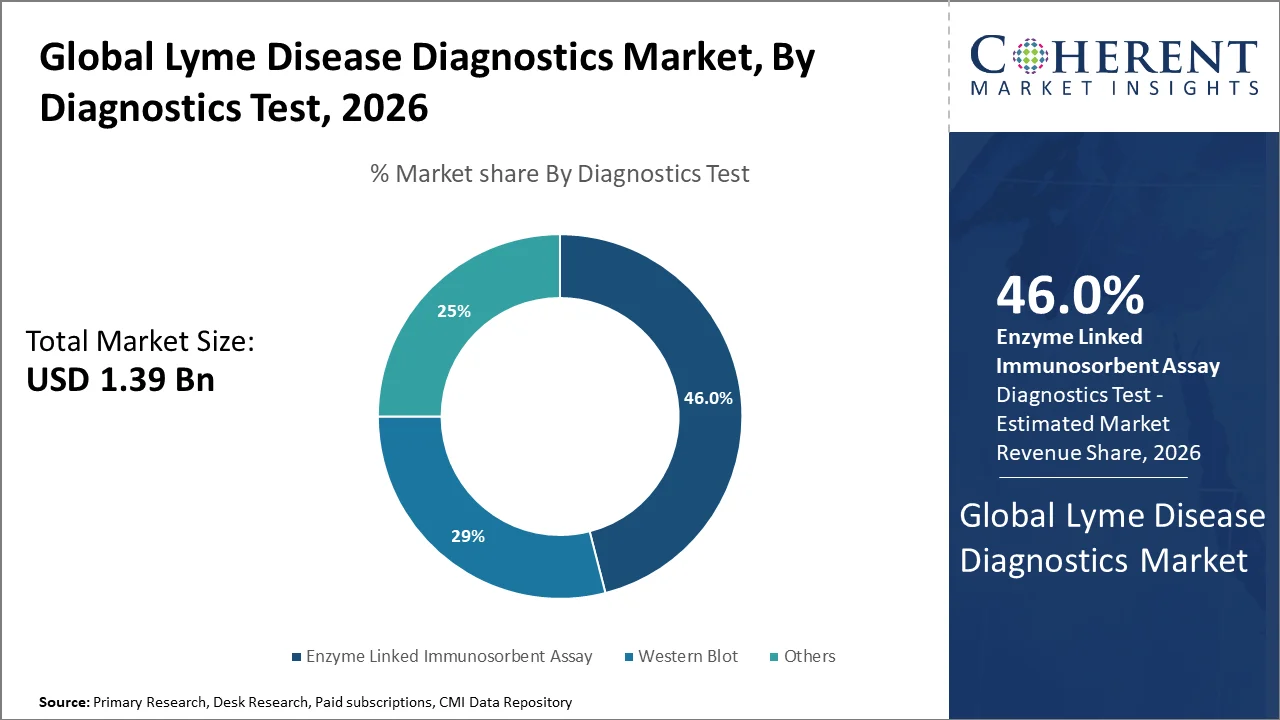
Which Diagnostics Test Dominates the Global Lyme Disease Diagnostics Market?
ELISA Leads the Global Lyme Disease Diagnostics Market
According to Coherent Market Insights’ lyme disease diagnostics market analysis, enzyme linked immunosorbent assay (ELISA) is set to account for the largest revenue share of 46% in 2026. This dominance can be attributed to its high sensitivity, cost-effectiveness, ease of use, and widespread adoption as the first-line screening test for Lyme disease.
ELISA is recommended in the standard two-tier testing approach and is widely used in hospitals, diagnostic laboratories, and public health programs for early and reliable detection of Borrelia burgdorferi antibodies. This rising adoption of ELISA is expected to boost Lyme disease diagnostics market value in the coming years.
- Current Industry Events of 2026
- Market Size Estimation
- Regional Breakdown
- Competitive Landscape
- Customer Intelligence
- Segmental Analysis
- Pricing Analysis
- Key Market Drivers, Challenges & Future Trends
- Customized Insights Section
Who is the Leading End User of Lyme Disease Diagnostics Tests?
Diagnostic Laboratories Remain Leading End Users of Lyme Disease Diagnostics Tests
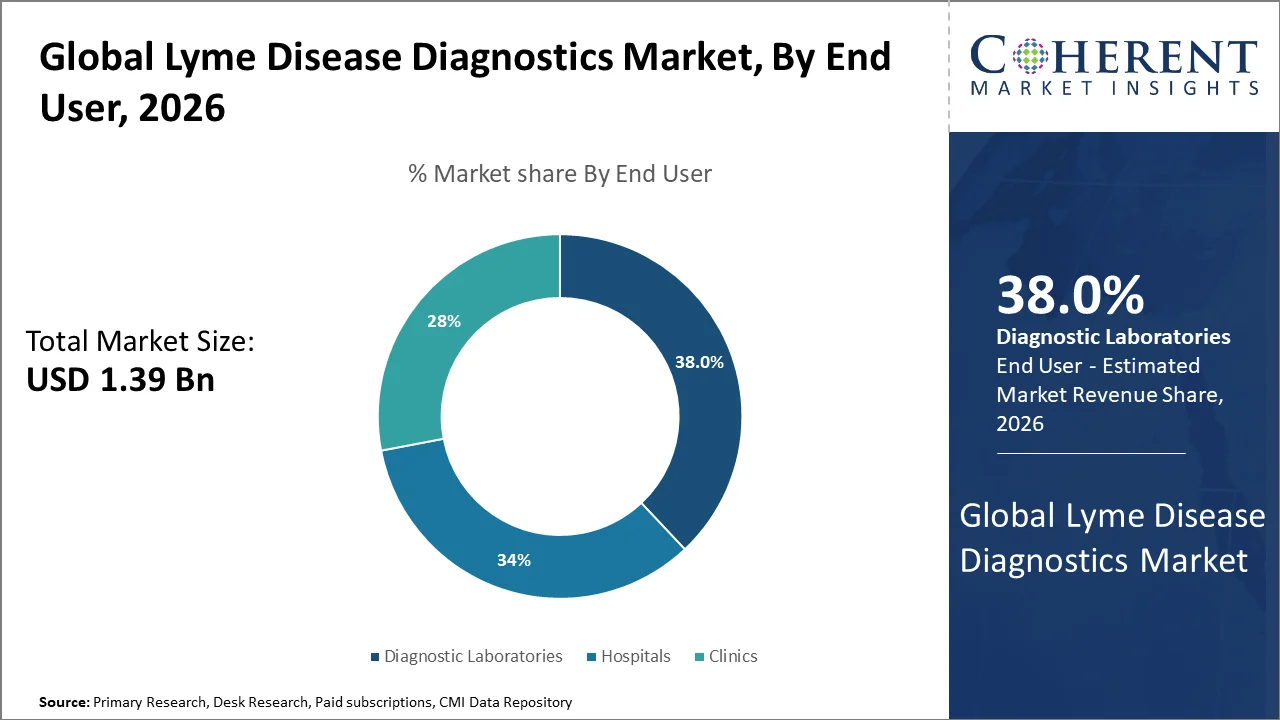
By end user, diagnostic laboratories are projected to lead the market during the forecast period, holding a share of 38% in 2026. This can be attributed to their high testing volumes, advanced diagnostic infrastructure, and widespread use of serological and molecular testing methods for Lyme disease detection.
Diagnostic laboratories receive samples from hospitals, clinics, and physician offices, enabling centralized testing with high accuracy and faster turnaround times. Growing awareness of early diagnosis and increasing demand for confirmatory testing are also expected to boost growth of the target segment during the forthcoming period.
Lyme Disease Diagnostics Market Growth Drivers
Rising Incidence of Lyme Disease and Other Tick-Borne Infections
There is a rise in the cases of Lyme disease and other tick-borne infections due to climate change, expanding tick habitats, and increased outdoor activities. According to the World Health Organization's Global Vector Control Response 2017–2030, the estimated or reported annual global number of Lyme disease cases is 532,125, based on data compiled from published studies. This growing burden of Lyme disease is expected to increase the demand for Lyme disease diagnostic tests during the forecast period.
Lyme Disease Diagnostics Market Opportunities
Growing Awareness of Early Diagnosis
Increasing awareness among healthcare providers and the public about the importance of early Lyme disease diagnosis is creating lucrative growth opportunities for the lyme disease diagnostics market. Educational campaigns, improved disease surveillance, and better access to diagnostic services are encouraging more people to undergo testing, supporting the demand for Lyme disease diagnostic tests during the forecast period.
Lyme Disease Diagnostics Market Trends
Shift Toward Advanced Molecular and Rapid Diagnostic Technologies
Continuous advancements in molecular diagnostics and rapid testing technologies are improving the early and accurate detection of Lyme disease. Diagnostic companies in the contemporary world are increasingly developing PCR-based tests, multiplex assays, and rapid point-of-care tests that offer higher sensitivity and faster results than conventional methods. This trend is expected to support growth of the Lyme disease diagnostics market during the forecast period.
Current Events and Their Impact on the Lyme Disease Diagnostics Market
Current Event | Description and its Impact |
CDC Reports Record Lyme Disease Cases |
|
WHO Strengthens Tick-Borne Disease Surveillance |
|
Regional Insights
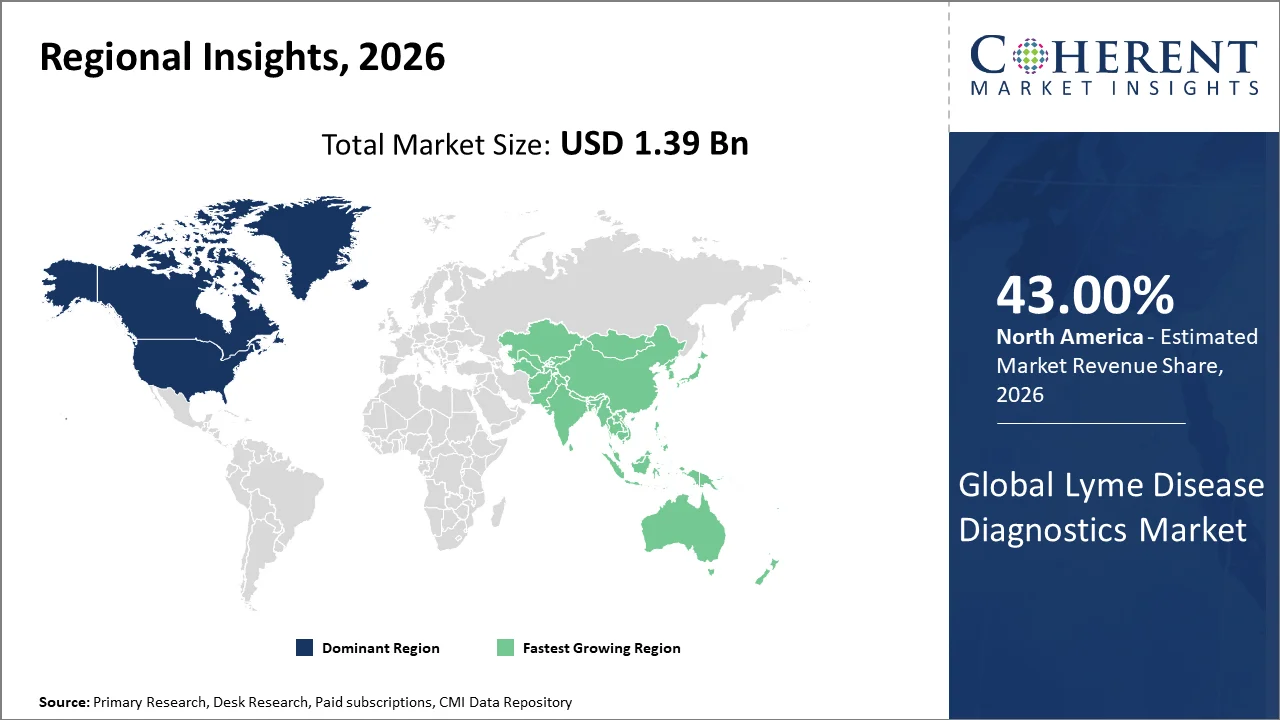
High Lyme Disease Burden Driving Market Growth in North America
North America is expected to dominate the global lyme disease diagnostics market, accounting for 43% of the market share in 2026. This growth is mostly driven by high incidence of Lyme disease, increasing awareness about early diagnosis, strong public health surveillance, and wide availability of advanced laboratory testing. Favorable reimbursement policies and the presence of leading diagnostic companies are also supporting market growth.
Rising number of Lyme disease cases is a major factor driving demand for Lyme diagnostic tests in North America. According to the U.S. Centers for Disease Control and Prevention (CDC), more than 89,000 Lyme disease cases were reported in 2023, while the agency estimates that around 476,000 people are diagnosed and treated for Lyme disease each year in the United States. The growing disease burden is increasing the need for accurate and timely diagnostic testing across the region.
Europe Remains a Key Lyme Disease Diagnostics Market
Europe is projected to hold over 28% of the global lyme disease diagnostics market share in 2026. The is mostly due to rising prevalence of tick-borne diseases, increasing public awareness, improved diagnostic capabilities as well as stronger surveillance programs across several European countries. Rising healthcare spending and growing focus on infectious disease monitoring are also supporting market expansion in the region.
Increasing burden of Lyme disease across Europe is creating strong demand for diagnostic solutions. According to a CDC Emerging Infectious Diseases review, more than 200,000 Lyme disease cases are estimated to occur annually in Western Europe, making it one of the most common tick-borne diseases in the region. This rising disease burden is encouraging healthcare providers to expand access to early and accurate Lyme disease testing.
Lyme Disease Diagnostics Market Outlook – Country-wise
U.S. Lyme Disease Diagnostics Market Trends
The United States is expected to remain a leading market for lyme disease diagnostics during the forecast period. This is mainly due to high prevalence of Lyme disease, widespread availability of advanced molecular and serological diagnostic tests, favorable reimbursement policies, and continuous investments in infectious disease surveillance and diagnostic innovation.
China Lyme Disease Diagnostics Market Forecast
The lyme disease diagnostics market in China is expected to grow steadily during the assessment period. This can be attributed to increasing government efforts to strengthen vector-borne disease surveillance, expanding diagnostic laboratory infrastructure, rising awareness among healthcare professionals, and improving access to advanced diagnostic technologies in both urban and rural healthcare settings.
Who are the Major Companies in the Lyme Disease Diagnostics Market?
Some of the major players in Lyme Disease Diagnostics Market are Abbott Laboratories, Affymetrix Inc., Alere Inc., Baxter International Inc., Bio-Rad Laboratories, Boulder Diagnostics, Canon Life Sciences, Covance Inc., Fresenius Medical Care AG & Co., GlaxoSmithKline Pharmaceuticals Ltd., Roche Diagnostics International Ltd., Siemens AG, and T2 Biosystems, and Immunetics Inc.
Key Strategies Adopted by Industry Players
Leading manufacturers of lyme disease diagnostics products are adopting various organic and inorganic strategies to boost their revenue as well as gain a competitive edge in the industry. These include new product launches and approvals, increasing investments in R&D, collaborations, partnerships, mergers and acquisitions, and distribution agreements.
- In July 2026, IGeneX Inc. announced that a study published in the journal Microbiology Spectrum evaluated its FDA-cleared single-step immunoblot tests for Lyme disease. The study found that these tests improved the detection of Lyme disease, especially in the early stages of infection.
- In April 2025, EpitigenX announced the launch of the Lyme VIsE Assay, a diagnostic test powered by its proprietary Epitogen technology. The test is designed to improve the detection of Borrelia strains associated with Lyme disease.
- In August 2024, Epitogen launched the EpitogenX Advanced Lyme Disease Diagnostic Kit. The kit is designed to improve the accuracy and reliability of Lyme disease detection.
Market Report Scope
Lyme Disease Diagnostics Market Report Coverage
| Report Coverage | Details | ||
|---|---|---|---|
| Base Year: | 2025 | Market Size in 2026: | USD 1.39 Bn |
| Historical Data for: | 2020 To 2024 | Forecast Period: | 2026 To 2033 |
| Forecast Period 2026 to 2033 CAGR: | 6.8% | 2033 Value Projection: | USD 2.20 Bn |
| Geographies covered: |
| ||
| Segments covered: |
| ||
| Companies covered: | Abbott Laboratories, Affymetrix Inc., Alere Inc., Baxter International Inc., Bio-Rad Laboratories, Boulder Diagnostics, Canon Life Sciences, Covance Inc., Fresenius Medical Care AG & Co., GlaxoSmithKline Pharmaceuticals Ltd., Roche Diagnostics International Ltd., Siemens AG, and T2 Biosystems, and Immunetics Inc. | ||
| Growth Drivers: |
| ||
| Restraints & Challenges: |
| ||
Analyst Opinion (Expert Opinion)
- Rising Lyme disease cases are increasing demand for testing. About 476,000 people are diagnosed and treated for Lyme disease each year in the United States. This growing disease burden is increasing the need for faster and more accurate diagnostic tests.
- Early diagnosis remains a major focus. Lyme disease symptoms often look like those of other illnesses, making diagnosis difficult in the early stages. This is increasing demand for more sensitive and reliable diagnostic tests that can detect infection sooner.
- New diagnostic technologies are improving testing. Advances in molecular testing and improved antibody-based assays are helping laboratories provide faster and more accurate results. This is supporting wider adoption of advanced Lyme disease diagnostic solutions.
- Greater awareness is expanding testing demand. Increased public awareness, better physician education, and stronger surveillance programs are encouraging more people with tick bites or early symptoms to seek testing. This is driving steady growth in the Lyme disease diagnostics market.
Speak to the analyst
Want personalized insights?
Take the findings above to one of our principal consultants, or have the report rebuilt around the segments, geographies and competitors you actually track.
Market Segmentation
- By Diagnostics Test Insights ( Revenue, USD Bn, 2021 - 2033)
- Enzyme Linked Immunosorbent Assay
- Western Blot
- Others
- By End User Insights ( Revenue, USD Bn, 2021 - 2033)
- Hospitals
- Clinics
- Diagnostic Laboratories
- By Region Insights ( Revenue, USD Mn, 2021 - 2033)
- North America
- U.S.
- Canada
- Latin America
- Brazil
- Argentina
- Mexico
- Rest of Latin America
- Europe
- Germany
- U.K.
- Spain
- France
- Italy
- Russia
- Rest of Europe
- Asia Pacific
- China
- India
- Japan
- Australia
- South Korea
- ASEAN
- Rest of Asia Pacific
- Middle East
- GCC Countries
- Israel
- Rest of Middle East
- Africa
- South Africa
- North Africa
- Central Africa
- North America
Sources
Primary Research Interviews
- Diagnostic kit manufacturers
- IVD companies
- Hospital laboratory managers
- Infectious disease specialists
- Microbiologists
- Cinical laboratory professionals
- Distributors
- Healthcare procurement managers
- Regulatory experts
Databases
- PubMed, MEDLINE
- Embase
- Scopus
- ClinicalTrials.gov
- Centers for Medicare & Medicaid Services (CMS) Database
- FDA Medical Device Databases
Magazines
- Clinical Lab Products
- Medical Laboratory Observer
- Laboratory Medicine
- Diagnostic World
Journals
- The Lancet Infectious Diseases
- Clinical Infectious Diseases
- Journal of Clinical Microbiology
- Emerging Infectious Diseases
- Diagnostic Microbiology and Infectious Disease
- PLOS Neglected Tropical Diseases
Newspapers
- The New York Times
- The Wall Street Journal
- The Washington Post
- Financial Times
Associations
- Infectious Diseases Society of America (IDSA)
- American Society for Microbiology (ASM)
- European Society of Clinical Microbiology and Infectious Diseases (ESCMID)
- International Lyme and Associated Diseases Society (ILADS)
- American Clinical Laboratory Association (ACLA)
Public Domain sources
- World Health Organization (WHO)
- U.S. Centers for Disease Control and Prevention (CDC)
- U.S. Food and Drug Administration (FDA)
- European Centre for Disease Prevention and Control (ECDC)
- National Institutes of Health (NIH)
- National Library of Medicine (NLM)
- UK Health Security Agency (UKHSA)
- European Medicines Agency (EMA)
Proprietary Elements
- CMI Data Analytics Tool
- Proprietary CMI Existing Repository of information for last 10 years.
Get access to 250+ pages report
Every segment, forecast, competitor profile and data table behind the analysis above — available for instant download.
- ESOMAR Member
- ISO 9001:2015 Certified
- D-U-N-S Registered
- GDPR & CCPA Compliant
Missing comfort of reading report in your local language? Find your preferred language:
Transform your Strategy with Exclusive Trending Reports
Frequently Asked Questions
The global market is estimated to be valued at USD 1.39 Bn in 2026.
The global Lyme Disease Diagnostics Market value is expected to reach USD 2.20 Bn by 2033.
The global market is poised to exhibit a CAGR of 6.8% from 2026 to 2033.
Major growth factors include rising incidence of Lyme disease, increasing awareness and early diagnosis, advancements in molecular and serological diagnostic technologies, growing government support for tick-borne disease surveillance, and expanding access to diagnostic testing in endemic regions.
Enzyme linked immunosorbent assay (ELISA) is set to account for the largest market share of 46% in 2026
Some major companies in the Lyme Disease Diagnostics Market include Abbott Laboratories, Affymetrix Inc., Alere Inc., Baxter International Inc., Bio-Rad Laboratories, Boulder Diagnostics, Canon Life Sciences, Covance Inc., Fresenius Medical Care AG & Co., GlaxoSmithKline Pharmaceuticals Ltd., Roche Diagnostics International Ltd., Siemens AG, and T2 Biosystems, Immunetics Inc.
North America, with a 43% share in 2026, is set to lead the market during the forecast period.