

Global Artificial Organ Market Size and Forecast – 2026 - 2033
The Global Artificial Organ Market is estimated to be valued at USD 23.40 Bn in 2026 and is expected to reach USD 42.23 Bn by 2033, exhibiting a compound annual growth rate (CAGR) of 8.8% from 2026 to 2033. This significant growth is driven by advancements in biotechnology and material sciences, increasing the demand for organ replacement therapies, and rising incidences of organ failure worldwide.
Key Takeaways of the Global Artificial Organ Market
- The Artificial Heart segment is expected to hold the largest share of the global artificial organ market, accounting for 31.1 % in 2026.
- The Neonates segment is expected to have the largest share among patient categories, with 38.8% in 2026, due to the critical and unique medical requirements of this group.
- Hospitals will remain the leading end users in the market, accounting for 25.2 % of the share in 2026, owing to their robust infrastructure, highly skilled personnel, and capacity to manage complex medical treatments.
- North America is expected to lead the market, holding a share of 37.3 % in 2026. Asia Pacific is anticipated to be the fastest-growing region, with a market share of 26.2% in 2026.
Market Overview
Market trends in the artificial organ sector highlight a surge in research and development activities focused on biocompatible and 3D-printed organs, aiming to reduce transplant rejection and improve patient outcomes. Integration of artificial intelligence and machine learning is enhancing organ functionality and monitoring, while collaborations between healthcare companies and technology firms are accelerating innovation. Furthermore, increasing regulatory approvals and investments in regenerative medicine indicate a strong shift towards sustainable and accessible organ replacement solutions globally.
Current Events and Its Impact
Current Events | Description and its impact |
Awareness on Deceased Donor Organ Donation |
|
Regulation Changes for Artificial Organs |
|
Segmental Insights
- Current Industry Events of 2026
- Market Size Estimation
- Regional Breakdown
- Competitive Landscape
- Customer Intelligence
- Segmental Analysis
- Pricing Analysis
- Key Market Drivers, Challenges & Future Trends
- Customized Insights Section
Artificial Organ Market Insights, By Organ Type – Artificial Heart Segment is Dominant Due To the Critical Need for End-Stage Heart Failure Solutions and Advancements in Biocompatibility and Durability of Devices Like VADs and TAHs
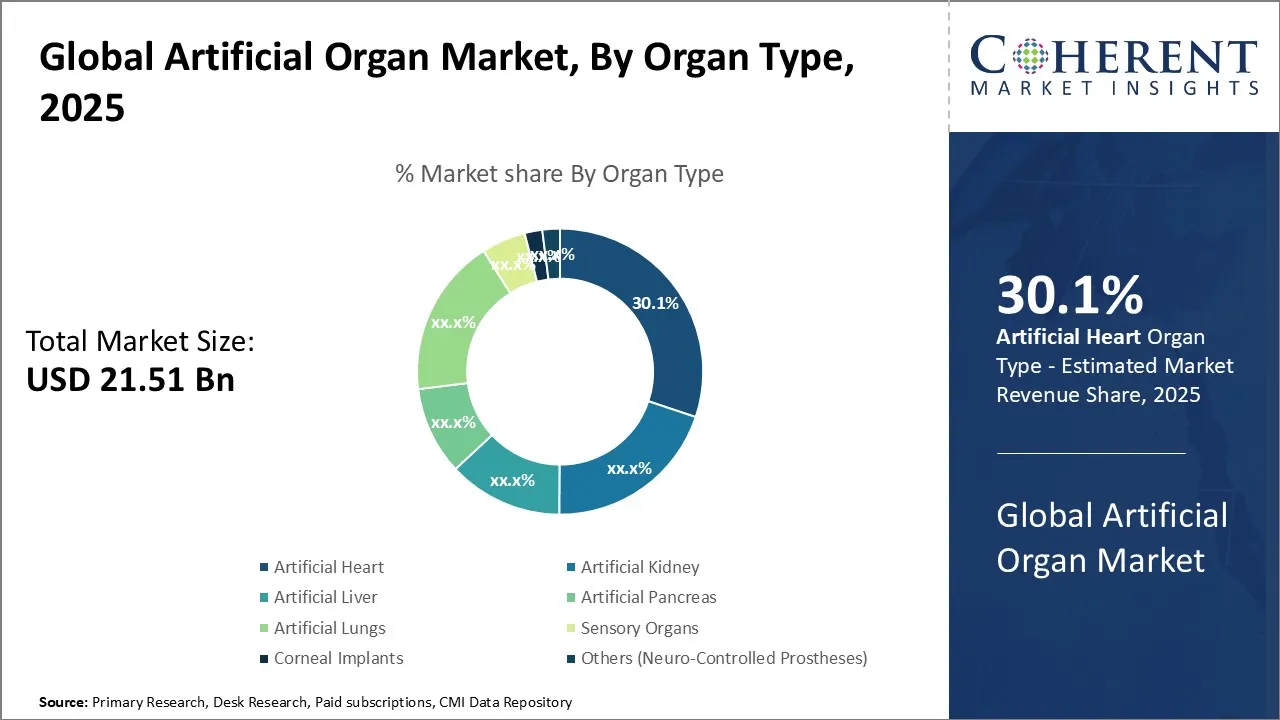
In terms of the organ type, the Artificial Heart segment commands the highest share of the global artificial organ market with an estimated 31.1% in 2026. This dominance can be attributed to the critical role artificial hearts, including Ventricular Assist Devices (VADs) and Total Artificial Hearts (TAHs), play in addressing end-stage heart failure, a condition with limited treatment alternatives. Cardiovascular diseases remain a leading cause of mortality worldwide, fueling the demand for advanced cardiac support technologies.
In January 2022, the School of Medical Research and Technology (SMRT) at IIT Kanpur launched Hridyantra, a grand challenge-based program aimed at developing an advanced artificial heart or left ventricular assist device (LVAD).
The evolution of artificial heart technology has significantly improved biocompatibility, durability, and miniaturization, allowing for better patient outcomes and quality of life. Ventricular Assist Devices, for example, provide mechanical assistance to failing ventricles, with improvements in implantable designs reducing risks of infection and thrombosis. Total Artificial Hearts, which replace both ventricles, respond to more severe cardiac conditions and have witnessed advances in sensor integration and adaptive flow control, enhancing their physiological compatibility.
Artificial Organ Market Insights, By Patient Type – Neonatal Patient Segment Is Dominant Driven by The Rising Incidence of Congenital Organ Defects and The Need for Specialized Artificial Organs in Neonatal Intensive Care
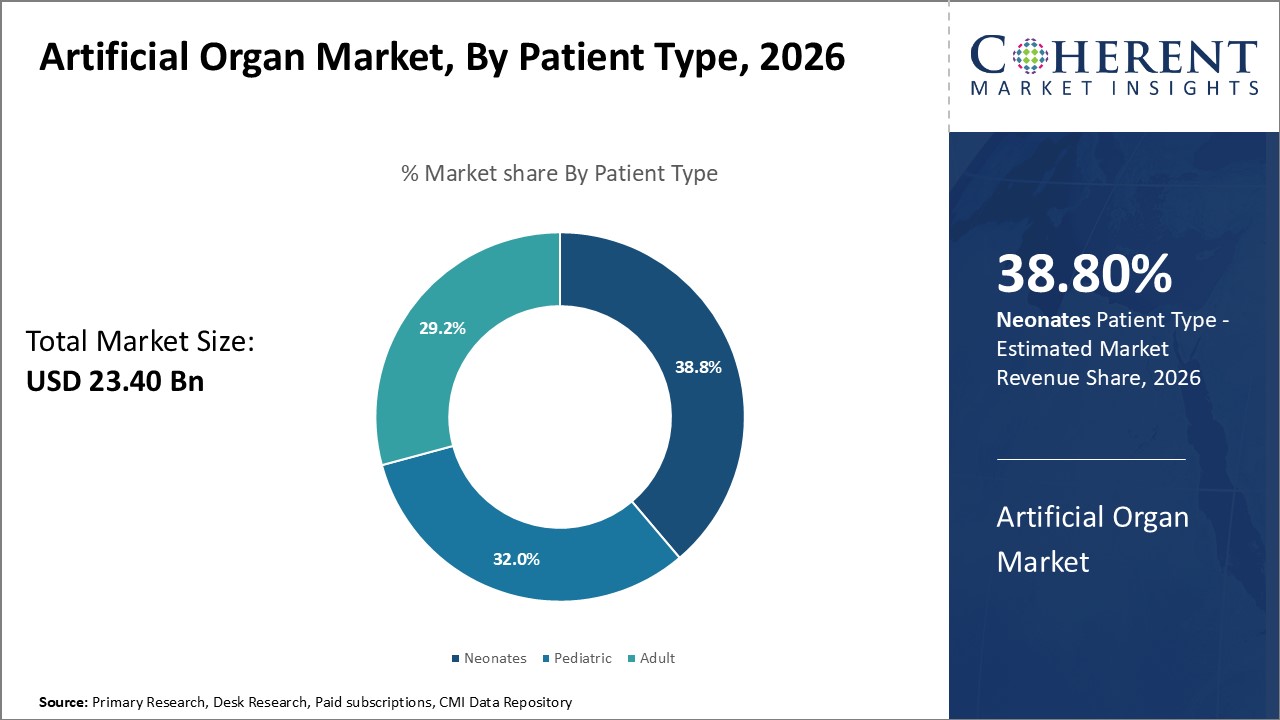
Among patient typologies, the neonates segment holds the largest share in the global artificial organ market with an estimated share of 38.8% in 2026, primarily propelled by the unique and urgent needs of this patient group. Neonates, especially those born prematurely or with congenital organ defects, require specialized artificial organs tailored to their limited body size and immature physiology. Advances in neonatal intensive care units (NICUs) and pediatric organ support systems have significantly improved survival rates, creating a critical demand for artificial organs designed for this vulnerable population.
One of the key growth drivers is the rising incidence of congenital abnormalities involving critical organs such as the heart, kidneys, and lungs in newborns. Artificial organs for neonates often function as life-sustaining bridges, enabling vital organ functions while physicians manage underlying conditions or await donor organs. For example, neonatal ventricular assist devices and extracorporeal membrane oxygenation (ECMO) systems provide temporary but essential support for cardiac and pulmonary insufficiency respectively during newborn critical care.
Artificial Organ Market Insights, By End User – Hospitals Segment is Dominant Due To Comprehensive Infrastructure, Skilled Personnel, And The Capacity To Manage Complex Artificial Organ Implantation And Post-Surgical Care
Within the global artificial organ market, hospitals contribute the highest share with an estimated 25.2% in 2026 as end users, driven by their comprehensive infrastructure, skilled personnel, and capacity to deliver complex medical interventions. Hospitals serve as primary care centers for patients requiring implantation or management of artificial organs, given their ability to integrate multi-disciplinary teams, advanced diagnostic tools, and surgical facilities essential for device implantation and follow-up.
The availability of specialized departments such as cardiology, nephrology, pulmonology, and transplant units within hospital settings creates an integrated environment systemically conducive to the adoption and utilization of advanced artificial organ technologies. Hospitals also have established post-surgical intensive care units capable of managing critical recovery periods, necessary for minimizing risks associated with artificial organ implantation procedures.
Role of Artificial Intelligence (AI) On The Global Artificial Organ Market
- Artificial Intelligence (AI) is playing a transformative role in the global artificial organ market by significantly enhancing operational efficiencies, reducing costs, and improving decision-making processes. AI-driven technologies such as predictive analytics are helping researchers and healthcare providers forecast organ transplant outcomes, optimize donor-recipient matching, and improve graft survival rates. AI’s automation capabilities streamline complex processes like organ manufacturing, quality control, and patient monitoring, minimizing human error and accelerating production timelines. By leveraging AI, companies can also provide more personalized care through tailored treatment plans for transplant patients, enhancing patient outcomes and satisfaction. Moreover, AI's ability to analyze vast amounts of data enables healthcare providers to make informed, data-driven decisions that can improve both clinical and operational performance.
- Emerging opportunities created by AI in the artificial organ sector include the development of innovative products and services, such as AI-powered artificial organs with adaptive capabilities that adjust in real time to the patient’s needs. AI also fosters new business models like predictive maintenance and remote monitoring services, which can enhance patient care and generate recurring revenue streams. Companies in the Global Artificial Organ Market can leverage AI to gain a competitive advantage by implementing AI technologies in R&D, product development, and customer service, fostering long-term growth and scalability. However, while AI presents clear benefits, challenges such as data privacy concerns, the high cost of implementation, and the need for continuous learning and adaptation should be addressed to ensure its effective and ethical use in this market. Balancing innovation with these challenges will be critical for companies seeking sustainable success in the evolving landscape of artificial organ technologies.
Regional Insights
North America Artificial Organ Market Analysis and Trends
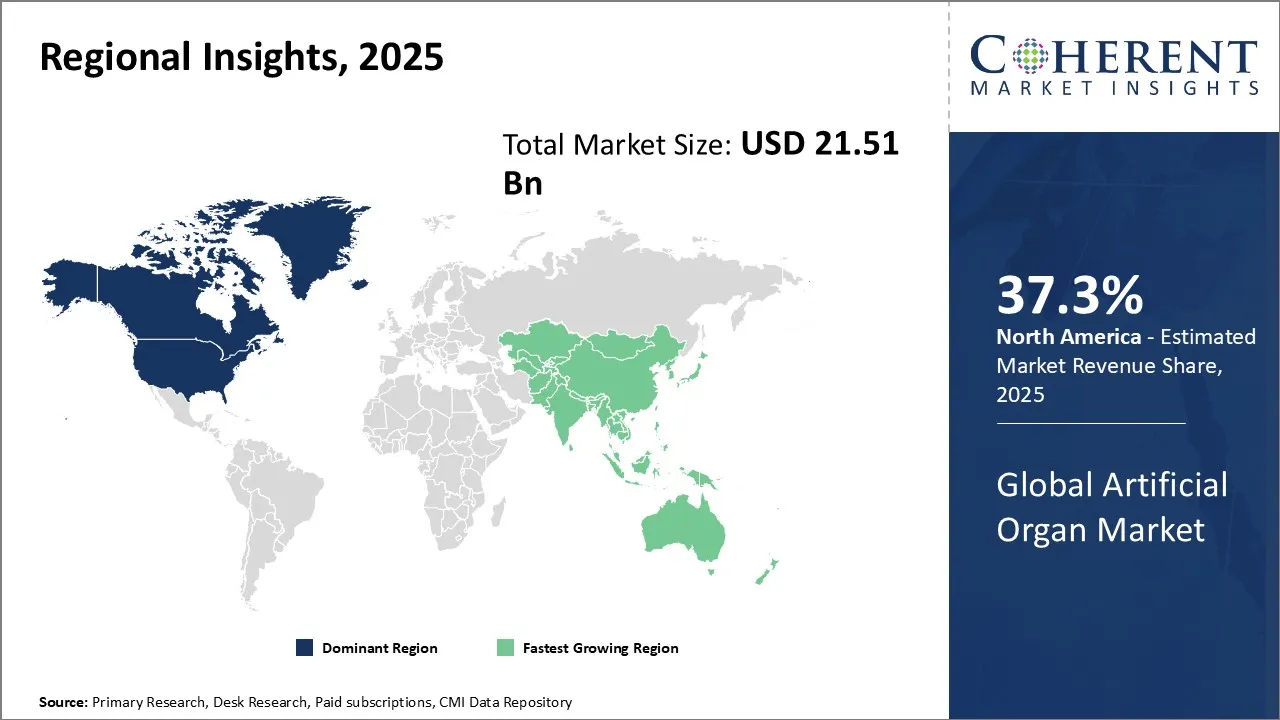
In North America, the dominance in the global artificial organ market with an estimated share of 37.3% in 2026 stems from a mature healthcare infrastructure, advanced technological capabilities, and strong research and development investments. The region benefits from supportive government policies that facilitate innovation through grants and streamlined regulatory frameworks, particularly by the U.S. Food and Drug Administration (FDA).
For instance, in February 2022, Vanderbilt University Medical Center, Carnegie Mellon University, and Cornell University received an USD 87 million grant from the U.S. Department of Defense to support the development of an artificial lung platform.
The presence of leading medical device companies such as Medtronic, Abbott Laboratories, and Boston Scientific catalyzes the market by driving innovation and offering a wide portfolio of artificial organs, including heart, lung, and kidney substitutes. Furthermore, the extensive healthcare ecosystem, encompassing top-tier hospitals and research institutions, fosters clinical trials and accelerates product approvals.
Asia Pacific Artificial Organ Market Analysis and Trends
Meanwhile, the Asia Pacific region is expected to exhibit the fastest growth in the artificial organ market with a share of 26.2% in 2026, attributed to increasing healthcare investments, rising patient awareness, and expanding medical infrastructure across emerging economies. Government initiatives in countries like China, India, and Japan emphasize enhancing healthcare accessibility and fostering innovation, which has attracted significant foreign direct investment. The growing presence of both global and regional companies, such as Terumo Corporation (Japan), Shenzhen MicroPort Medical (China), and BPL Medical Technologies (India), is propelling the development and commercialization of artificial organs adapted to local patient needs. For example, Terumo has been instrumental in advancing medical technologies, including artificial organs and healthcare devices, in Asia Pacific. The company has a significant presence in Japan and is actively contributing to the development of artificial organs like artificial heart pumps and dialysis equipment. Terumo's innovations are targeted towards improving patient outcomes and making organ replacement therapies more accessible in the region.
Artificial Organ Market Outlook for Key Countries
U.S. Artificial Organ Market Trends
The market in the U.S. remains a global leader due to its robust healthcare infrastructure and strong innovation ecosystem. Major players like Medtronic, Abbott Laboratories, and Abiomed have pioneered artificial organ technologies including ventricular assist devices, synthetic lungs, and bioartificial kidneys. Regulatory support via expedited approvals and reimbursement policies enhance market penetration. The U.S. also hosts world-class transplant centers and research facilities, accelerating clinical validation and commercial scaling of cutting-edge devices.
In April 2024, United Therapeutics Corporation, a leading biotechnology company, announced the world’s first successful transplant of a UThymoKidney, marking a historic milestone in transplantation. The transplant, performed on April 12, 2024, involved a genetically modified pig kidney and thymus tissue to help the human immune system accept the organ. This is the first-ever xenothymokidney transplant, as well as the first combined mechanical heart pump and organ transplant.
Canada Artificial Organ Market Trends
The Canada artificial organ market is experiencing robust growth, driven by several key factors. Technological advancements in biocompatible materials, robotics, and artificial intelligence are enhancing the functionality and accessibility of artificial organs. Government initiatives, such as the CAD 2 million investment in AI-based organ and tissue donation research, are further accelerating innovation and adoption in this sector.
In May 2022, the Canadian government has announced a CAD 2 million investment to support AI-based organ donation research. This funding, announced by Health Minister Jean-Yves Duclos during National Organ Transplantation and Donation Awareness Week, will support two projects aimed at improving organ donation outcomes. BI Expertise, a Quebec-based company specializing in AI and cloud computing integration, and Ortho BioMed, a Toronto-based medical technology firm, will each receive CAD 1 million to develop AI-driven tools for better matching organ donors with recipients.
Germany Artificial Organ Market Trends
Germany artificial organ market benefits from a sophisticated healthcare system and substantial public and private research and development (R&D) funding. German firms such as Otto Bock Healthcare and Fresenius Medical Care play pivotal roles, especially in the development of renal and cardiac support devices. The country’s strategic position within Europe facilitates collaboration with other markets, aiding in shared innovation and standardization. Government backing through healthcare reforms and innovation grants sustains the advancement and adoption of artificial organ technologies.
U.K. Artificial Organ Market Trends
The U.K. artificial organs market is experiencing steady growth, driven by an aging population, increasing prevalence of chronic diseases necessitating organ replacement or augmentation, and advancements in medical technology. The market is characterized by a diverse range of products, including artificial hearts, kidneys, and bionic implants such as cochlear devices and orthopedic prosthetics. Technological innovations, such as the integration of artificial intelligence and machine learning into medical devices, are enhancing the functionality and performance of bionic implants, leading to improved patient outcomes.
In February 2024, University of Bradford has developed Organ Quality Assessment (OrQA), an AI-based app using facial recognition technology to assess transplant organs more efficiently. Shortlisted for the Medipex NHS Innovation Awards, OrQA aims to reduce organ waste in the U.K. by quickly evaluating donor organs, potentially saving lives and costs. The technology could increase kidney and liver transplants in the UK and expand to include other organs. It also has significant potential for the US healthcare market.
China Artificial Organ Market Trends
China’s rapidly expanding artificial organ market is driven by increasing chronic disease prevalence and enhanced healthcare infrastructure, especially in tier 1 and tier 2 cities. Domestic companies such as Shenzhen MicroPort Medical and Mindray Medical have intensified their focus on artificial organ technology advancements, supported by government policies under the “Made in China 2026” initiative. The regulatory environment is evolving to facilitate faster clinical trials and approvals. Additionally, China’s extensive manufacturing capabilities and cost advantages make it a hub for production and export, further propelling market growth.
In August 2022, the China Organ Transplantation Development Foundation (COTDF), a key organization in China’s organ transplant sector, established the China Organ Transplant Response System (COTRS) Scientific Committee on September 2021. This committee, composed of clinical experts, health administrators, and medical ethics professionals, aims to enhance the quality and efficiency of organ transplantation in China. It covers six working groups focused on heart, lung, liver, kidney, pancreas, and small bowel transplants.
Market Players, Key Developments, and Competitive Intelligence
Key Developments
- In April 2024, ImmuONE, a biotech company supported by the University of Hertfordshire, developed the world’s first 3D human lung model to test inhaled medicines, fragrances, and sprays without animal trials. The innovative system, now used by major pharmaceutical companies, helps speed products to market while improving research accuracy. With labs in Stevenage and plans to expand to the U.S., ImmuONE aims to scale up production and attract further investment to advance safer, more effective inhalation therapies.
- In October 2024, Sparsh Hospitals, a leader in healthcare innovation, launched India’s first advanced on-site 3D printing lab at its Infantry Road facility in Bengaluru, India. The lab is set to transform orthopedics and personalized healthcare by offering comprehensive solutions, including scanning, customized prosthetics, implants, and surgical models. Dr. Sharan Shivaraj Patil, Chairman and Chief Orthopedic Surgeon at Sparsh Hospitals, emphasized that the 3D printing technology will enhance surgical precision, reduce recovery times, and lower long-term healthcare costs.
- In July 2024, the National Kidney Foundation emphasized progress on an implantable artificial kidney, designed to provide continuous filtration for stage 3-4 kidney disease patients.
- In July 2021, Draper, a U.S.-based engineering research organization, developed an innovative artificial lung device using biomimetic microfluidics to improve ECMO performance and safety. Backed by a USD 4.9 million U.S. Army grant, Draper created the BLOx system, which mimics natural lung structures to reduce clotting, stabilize blood flow, and enable more portable, low-flow respiratory support. In tests, BLOx achieved record-high blood flow rates for a microfluidic device while minimizing complications. Draper’s approach aims to make ECMO simpler, safer, and more accessible for critical care and emergency settings.
Top Strategies Followed by Global Artificial Organ Market Players
- Established leaders in the artificial organ market are key players with significant market share, extensive financial resources, and the capability to drive innovation through heavy investments in research and development (R&D). These companies focus on creating high-performance artificial organs that meet stringent regulatory standards and address complex medical needs, such as heart failure, kidney failure, and lung disorders.
- In April 2024, Medtronic, one of the global leaders in medical technology, introduced the Avalus Ultra aortic tissue valve, which features a PEEK base for enhanced circularity retention and a larger effective orifice to improve forward flow. This innovative valve is a significant advancement in heart valve technology, improving the efficiency of heart function for patients with aortic valve diseases. In the broader context of the artificial organ market, this development complements other artificial heart technologies, such as ventricular assist devices (VADs) and total artificial hearts (TAHs).
- Mid-level players in the artificial organ market focus on delivering cost-effective solutions that provide a balance between quality and affordability. These companies cater to price-sensitive consumers in both developed and emerging economies. While they may not have the same resources as established leaders, they provide reliable products that meet acceptable performance standards without the premium pricing of leading brands.
- In February 2024, Carmat, a medical technology company, introduced a software upgrade for its Aeson artificial heart. The new update enables real-time detection of potential malfunctions and makes adjustments to ensure continuous patient support.
- Small-scale players in the artificial organ market often focus on niche segments, developing specialized artificial organs or devices that address specific clinical requirements or patient preferences. These companies tend to be agile and more adaptable, using emerging technologies such as 3D printing, biomaterials, and wearable sensors to differentiate their products in a highly competitive market.
- In February 2022, Vanderbilt University Medical Center, Carnegie Mellon University, and Cornell University received an USD 87 million grant from the U.S. Department of Defense to support the development of an artificial lung platform.
Market Report Scope
Artificial Organ Market Report Coverage
| Report Coverage | Details | ||
|---|---|---|---|
| Base Year: | 2025 | Market Size in 2026: | USD 23.40 Bn |
| Historical Data for: | 2020 To 2024 | Forecast Period: | 2026 To 2033 |
| Forecast Period 2026 to 2033 CAGR: | 8.8% | 2033 Value Projection: | USD 42.23 Bn |
| Geographies covered: |
| ||
| Segments covered: |
| ||
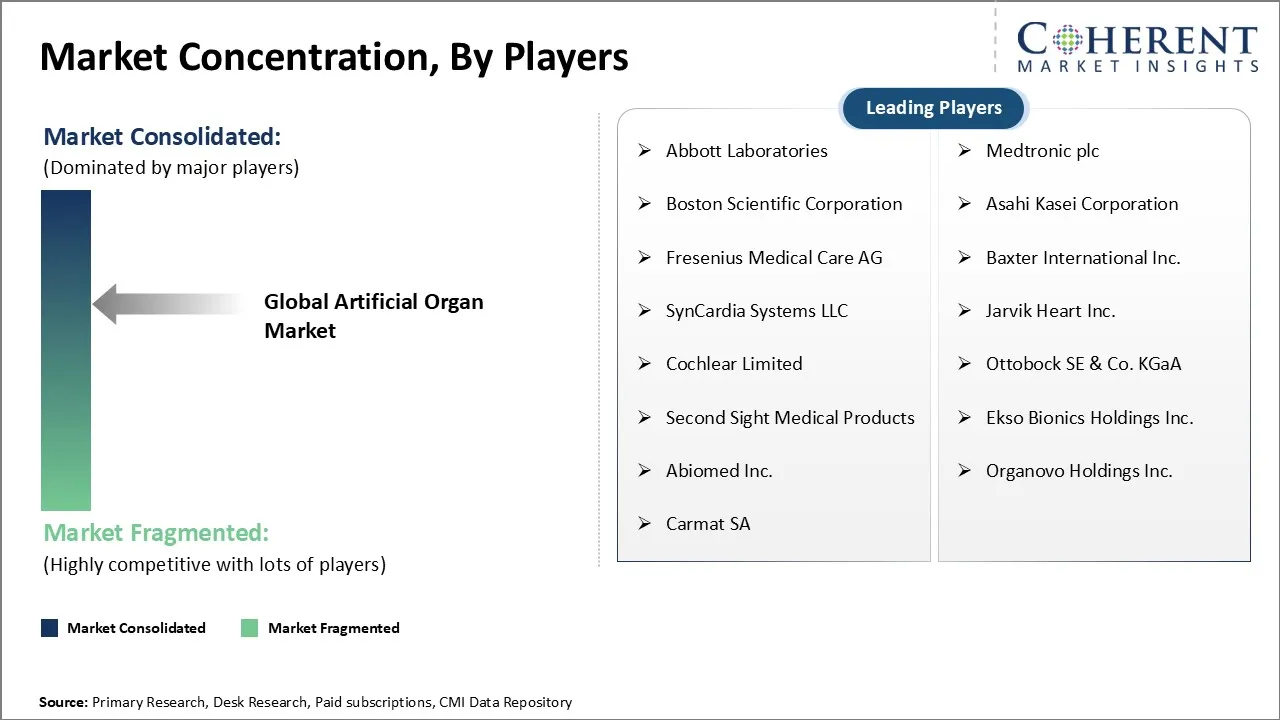
| Companies covered: | Abbott Laboratories, Medtronic plc, Boston Scientific Corporation, Asahi Kasei Corporation, Fresenius Medical Care AG, Baxter International Inc., SynCardia Systems LLC, Jarvik Heart Inc., Cochlear Limited, Ottobock SE & Co. KGaA, Second Sight Medical Products, Ekso Bionics Holdings Inc., Abiomed Inc., Organovo Holdings Inc., and Carmat SA | ||
| Growth Drivers: |
| ||
| Restraints & Challenges: |
| ||
Market Dynamics
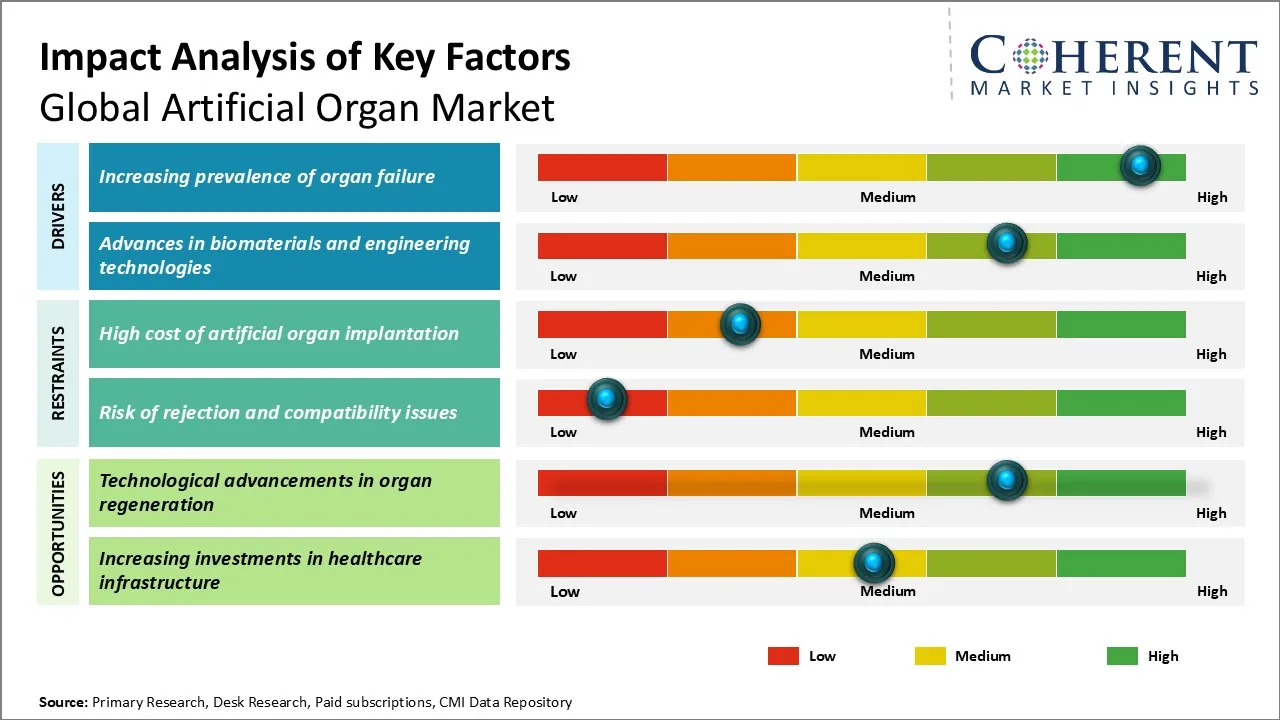
Artificial Organ Market Driver - Increasing Prevalence of Organ Failure
The rising incidence of organ failure across the globe is a primary factor driving the demand for artificial organs, as healthcare systems grapple with the growing burden posed by chronic diseases and aging populations. Conditions such as end-stage renal disease, heart failure, and liver cirrhosis have become increasingly common due to lifestyle-related risk factors including diabetes, hypertension, and obesity, which contribute significantly to organ dysfunction. Additionally, the shortage of donor organs and long waiting lists for transplants have intensified the need for alternative solutions, making artificial organs a viable and often the only option for many patients. Advances in medical technology, coupled with the increasing survival rates of patients suffering from severe organ damage, further underscore the necessity for artificial organ interventions. Consequently, this escalation in organ failure prevalence not only heightens patient demand but also propels innovation and investment in artificial organ development, positioning it as a critical area within the broader medical device landscape.
In May 2025, according to National Library of Medicine, a study examining acute noncardiac organ failure in non-acute myocardial infarction (AMI) cardiogenic shock patients found that acute kidney injury (AKI) is the most common organ failure, affecting 38.1% of cases. Multiorgan failure significantly increases the risk of in-hospital mortality, with the risk escalating as more organs fail. Neurological failure was found to be the deadliest among noncardiac organ failures.
Artificial Organ Market Opportunity - Technological Advancements in Organ Regeneration
The global artificial organ market stands to benefit significantly from rapid technological advancements in organ regeneration, which represent a transformative opportunity to address the chronic shortage of donor organs and improve patient outcomes. Innovations in tissue engineering, 3D bioprinting, and stem cell technology are at the forefront, enabling the development of bioartificial organs that closely mimic natural organ functions. These cutting-edge technologies facilitate the creation of patient-specific organs using their own cells, reducing the risk of immune rejection and the need for lifelong immunosuppressive therapies. Moreover, advancements in biomaterials and scaffold design have enhanced the durability, biocompatibility, and functionality of artificial organs, leading to longer life spans and improved integration within the human body. Research focused on regenerative medicine is also accelerating the repair and regeneration of damaged organs, expanding treatment options beyond replacement to actual healing, which can potentially reduce healthcare costs and hospital stays.
In August 2024, researchers at Harvard's Wyss Institute for Biologically Inspired Engineering and the John A. Paulson School of Engineering and Applied Science (SEAS) have developed a groundbreaking 3D printing method to create vascular networks that mimic human blood vessels. The new technique, called coaxial sacrificial writing in functional tissue (co-SWIFT), prints blood vessels with a multilayer structure composed of smooth muscle and endothelial cells surrounding a hollow core.
Analyst Opinion (Expert Opinion)
- The global artificial organ market is poised for significant growth, driven by advancements in biotechnology, AI, and regenerative medicine. Key market dynamics include rising demand for life-saving organ transplants due to increasing incidences of chronic diseases like heart failure, kidney disease, and lung disorders. Technological innovations in biocompatible materials, 3D bioprinting, and robotic surgeries are revolutionizing artificial organ development. Additionally, regulatory support through expedited approval processes and funding for organ transplantation research continues to accelerate market growth. While emerging opportunities lie in xenotransplantation and wearable artificial organs, challenges such as high production costs, regulatory hurdles, and organ rejection risks must be addressed.
- Recent conferences like the American Society of Hematology (ASH) Annual Meeting and the European Society for Artificial Organs (ESAO) Congress have played crucial roles in fostering discussions on innovation and ethical considerations in artificial organ development. Real-world examples include the U.S. FDA-approved UThymoKidney transplant by United Therapeutics in 2024, marking a milestone in xenotransplantation. Additionally, government-led initiatives like China’s COTRS Scientific Committee aim to enhance the efficiency of organ donation and transplantation systems, further impacting the market outlook. These efforts, combined with ongoing research and collaboration, set the stage for significant advancements in artificial organ technologies.
Speak to the analyst
Want personalized insights?
Take the findings above to one of our principal consultants, or have the report rebuilt around the segments, geographies and competitors you actually track.
Market Segmentation
- Organ Type Insights (Revenue, USD Bn, 2021 - 2033)
- Artificial Heart
- Ventricular Assist Devices (VADs)
- Total Artificial Hearts (TAHs)
- Artificial Kidney
- Wearable Artificial Kidneys
- Implantable Renal Devices
- Artificial Liver
- Bioartificial Liver Support Systems
- Extracorporeal Liver Assist Devices
- Artificial Pancreas
- Closed-Loop Insulin Delivery Systems
- Implantable Glucose Monitors
- Artificial Lungs
- Extracorporeal Membrane Oxygenation (ECMO)
- Implantable Oxygenators
- Sensory Organs
- Cochlear Implants (Hearing)
- Retinal Implants (Vision)
- Corneal Implants
- Bionic Limbs
- Myoelectric Prosthetics
- Others (Neuro-Controlled Prostheses)
- Artificial Heart
- Patient Type Insights (Revenue, USD Bn, 2021 - 2033)
- Neonates
- Pediatric
- Adult
- End User Insights (Revenue, USD Bn, 2021 - 2033)
- Hospitals
- Transplant Centers
- Ambulatory Surgical Centers
- Emergency and Trauma Centers
- Home Care Settings
- Others (Research Institutes, etc.)
- Application Insights (Revenue, USD Bn, 2021 - 2033)
- Transplantation
- Chronic Disease Management
- Other Emergency or Acute Care
- Technology Insights (Revenue, USD Bn, 2021 - 2033)
- Mechanical
- Electronic or Bionic
- Biomechanical Hybrid
- Biomaterials-Based Technology (e.g., Decellularized Scaffolds, 3D-Bioprinted Tissues)
- Others
- Regional Insights (Revenue, USD Bn, 2021 - 2033)
- North America
- U.S.
- Canada
- Latin America
- Brazil
- Argentina
- Mexico
- Rest of Latin America
- Europe
- Germany
- U.K.
- Spain
- France
- Italy
- Russia
- Rest of Europe
- Asia Pacific
- China
- India
- Japan
- Australia
- South Korea
- ASEAN
- Rest of Asia Pacific
- Middle East
- GCC Countries
- Israel
- Rest of Middle East
- Africa
- South Africa
- North Africa
- Central Africa
- North America
- Key Players Insights
- Abbott Laboratories
- Medtronic plc
- Boston Scientific Corporation
- Asahi Kasei Corporation
- Fresenius Medical Care AG
- Baxter International Inc.
- SynCardia Systems LLC
- Jarvik Heart Inc.
- Cochlear Limited
- Ottobock SE & Co. KGaA
- Second Sight Medical Products
- Ekso Bionics Holdings Inc.
- Abiomed Inc.
- Organovo Holdings Inc.
- Carmat SA
Sources
Primary Research Interviews
- Hospitals and Medical Institutions
- Industry Experts and Clinical Specialists
- Healthcare Professionals (Surgeons, Cardiologists, Nephrologists)
- Medical Device Manufacturers
- Key Opinion Leaders (KOLs) in Organ Transplantation
Government and International Databases
- National Institutes of Health (NIH)
- World Health Organization (WHO)
- U.S. Food and Drug Administration (FDA)
- European Medicines Agency (EMA)
- Centers for Disease Control and Prevention (CDC)
- National Health Service (NHS) Digital
Trade Publications
- The Lancet
- Journal of Heart and Lung Transplantation
- Artificial Organs Journal
- BioMed Central (BMC) Health Services Research
- Medical Device Network
- MedTech Europe Publications
Academic Journals
- Nature Biotechnology
- Journal of Artificial Organs
- Annals of Biomedical Engineering
- Journal of Medical Devices
- Regenerative Medicine
- Journal of Translational Medicine
Reputable Newspapers
- The New York Times
- The Guardian
- The Financial Times
- The Washington Post
- The Wall Street Journal
Industry Associations
- International Society for Heart and Lung Transplantation (ISHLT)
- The International Society for Artificial Organs (ISAO)
- The European Society for Artificial Organs (ESAO)
- The American Heart Association (AHA)
- The American Society of Nephrology (ASN)
- National Organ Transplantation Network (NOTN)
Public Domain Resources
- National Institutes of Health (NIH) Data Sharing
- World Bank Health Indicators
- U.S. National Library of Medicine
Proprietary Elements:
- CMI Data Analytics Tool: Proprietary analytics tool to analyze real-time market trends, consumer behavior, and technology adoption in market
- Proprietary CMI Existing Repository of Information for Last 8 Years
Get access to 250+ pages report
Every segment, forecast, competitor profile and data table behind the analysis above — available for instant download.
- ESOMAR Member
- ISO 9001:2015 Certified
- D-U-N-S Registered
- GDPR & CCPA Compliant
Missing comfort of reading report in your local language? Find your preferred language:
Transform your Strategy with Exclusive Trending Reports
Frequently Asked Questions
The global artificial organ market is estimated to be valued at USD 23.40 Bn in 2026 and is expected to reach USD 42.23 Bn by 2033.
The CAGR of the global artificial organ market is projected to be 8.8% from 2026 to 2033.
Increasing prevalence of organ failure and advances in biomaterials and engineering technologies are the major factors driving the growth of the global artificial organ market.
High cost of artificial organ implantation and risk of rejection and compatibility issues are the major factors hampering the growth of the global artificial organ market.
In terms of organ type, artificial heart is estimated to dominate the market revenue share in 2026.
Abbott Laboratories, Medtronic plc, Boston Scientific Corporation, Asahi Kasei Corporation, Fresenius Medical Care AG, Baxter International Inc., SynCardia Systems LLC, Jarvik Heart Inc., Cochlear Limited, Ottobock SE & Co. KGaA, Second Sight Medical Products, Ekso Bionics Holdings Inc., Abiomed Inc., Organovo Holdings Inc., and Carmat SA are the major players in the global artificial organ market.
3D printing technology has revolutionized the artificial organ market by enabling the development of highly personalized and complex organ structures. It allows for the customization of organs or devices such as prosthetics and bioartificial organs, ensuring a better fit and more effective patient outcomes.