

Global Bilirubin Blood Test Market Size and Forecast – 2026 To 2033
The global bilirubin blood test market is expected to grow from USD 1.42 Bn in 2026 to USD 2.28 Bn by 2033, registering a compound annual growth rate (CAGR) of 7% from 2026 to 2033. The market for bilirubin blood test is poised for significant expansion, fueled by the soaring burden of liver diseases, which continue to raise the demand for liver function tests and bilirubin testing.
According to the International Journal of Pharmaceutical Chemistry and Analysis, about 2 million deaths occur annually, and 4% of all deaths are caused by liver disease, which ranks as the 11th leading cause of death worldwide. The surging burden of hepatic disorders is driving the demand for diagnostic tests, including bilirubin blood tests, to support early diagnosis, disease monitoring, and treatment management.
(Source: International Journal of Pharmaceutical Chemistry and Analysis)
Key Takeaways of the Global Bilirubin Blood Test Market
- Total bilirubin test is projected to hold 52.4 % of the global bilirubin blood test market share in 2026, making it the dominant test type segment, across North America due to their routine use in liver function panels and neonatal jaundice screening. For instance, the American Academy of Pediatrics (AAP) 2022 guideline recommends universal predischarge bilirubin screening for newborns using total serum bilirubin or transcutaneous bilirubin measurement. The guideline-driven testing approach continues to support high testing volumes across hospitals and diagnostic laboratories in the region. (Source: Pediatrics Nationwide)
- Liver disease diagnosis and monitoring are projected to hold 46.8 % of the global bilirubin blood test market share in 2026, making it the dominant application segment, across Europe due to the increasing burden of chronic liver diseases and emphasis on early disease management. For instance, according to the European Association for the Study of the Liver (EASL), liver disease causes approximately 300,000 deaths annually across Europe. The substantial disease burden continues to drive demand for bilirubin testing as a routine component of liver function assessment and disease monitoring. (Source: European Association for the Study of the Liver)
- Hospitals are projected to hold 48.6 % of the global bilirubin blood test market share in 2026, making it the dominant end user segment, across Asia Pacific due to the high volume of childbirths and hospital-based neonatal care services. For instance, according to India's National Family Health Survey (NFHS-6), institutional deliveries increased from 88.6% in 2019-21 to 90.6% in 2023-24, while postnatal care for newborns within two days of delivery improved from 79.1% to 85.3%. The growing coverage of facility-based childbirth and newborn care continues to support hospital-based bilirubin testing for neonatal jaundice screening and management. (Source: Ministry of Health and Family Welfare)
- North America maintains dominance with an expected share of 35.7 % in 2026, bolstered by high prevalence of liver diseases and widespread adoption of routine liver function testing. For instance, according to the U.S. Centers for Disease Control and Prevention (CDC), approximately 4.5 million adults aged 18 years and older in the U.S. were living with diagnosed liver disease, while chronic liver disease and cirrhosis accounted for 52,274 deaths in 2024. The substantial patient population requiring diagnosis and disease monitoring continues to support strong demand for bilirubin testing across the region. (Source: Centers for Disease Control and Prevention)
- Asia Pacific is expected to exhibit the fastest growth with an estimated contribution of 25.1 % share in 2026, driven by increasing investments in viral hepatitis elimination and liver disease screening programs. For instance, China's Healthy China 2030 initiative and National Viral Hepatitis Control Program continue to expand access to hepatitis screening and management services. The growing emphasis on early liver disease detection is expected to support demand for bilirubin testing as a routine component of liver function assessment across the region. (Source: ScienceDirect)
- Development of Non-Invasive and Home-Based Bilirubin Monitoring Solutions: Growing demand for patient-centric diagnostics is creating opportunities for non-invasive bilirubin monitoring technologies. Manufacturers are investing in portable and smartphone-enabled bilirubin assessment devices that enable screening outside traditional laboratory settings. Such innovations have the potential to expand testing access in remote areas and support home-based neonatal monitoring
- Rising Incidence of Drug-Induced Liver Injury (DILI): The increasing use of prescription drugs, biologics, and combination therapies has led to a growing incidence of drug-induced liver injury (DILI) worldwide. Bilirubin testing is routinely utilized alongside liver enzyme assessments to evaluate hepatic toxicity and monitor treatment-related liver dysfunction. The expanding need for liver safety monitoring in patients receiving long-term or high-risk therapies continues to support demand for bilirubin blood testing across healthcare settings.
Segmental Insights
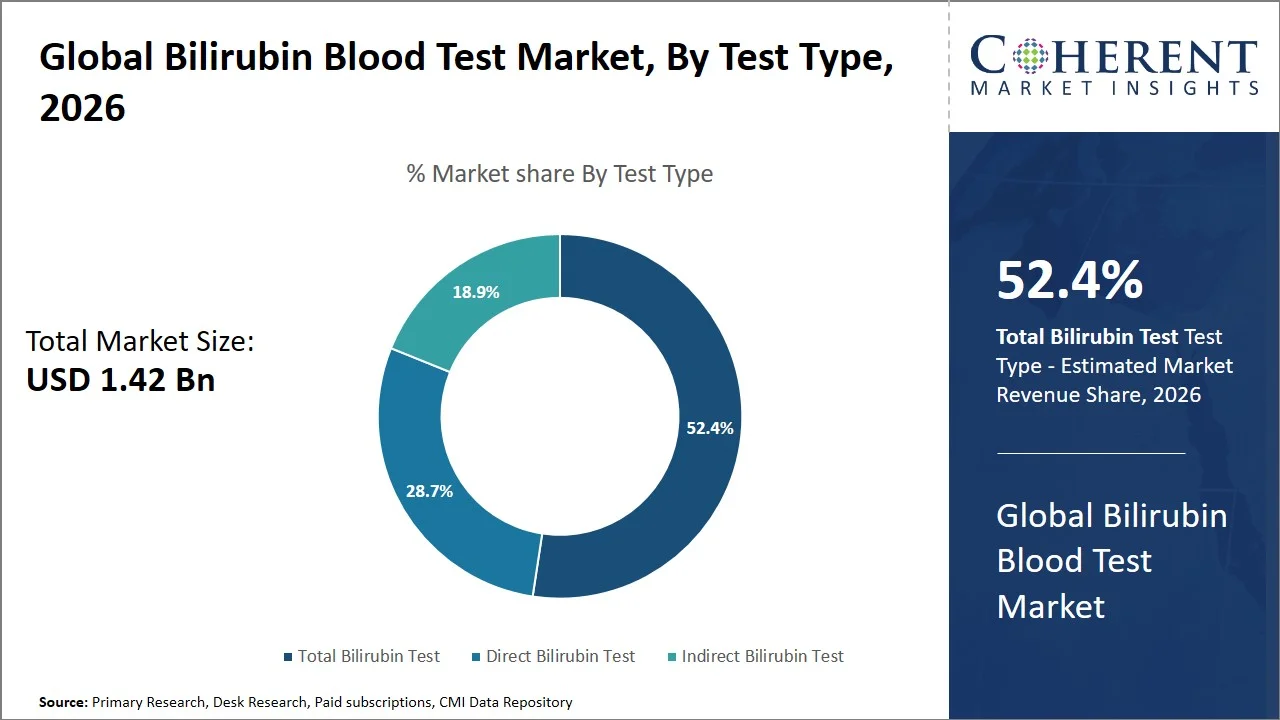
Why Does Total Bilirubin Test Dominate the Global Bilirubin Blood Test Market?
Total bilirubin test is projected to hold a market share of 52.4% in 2026, because it serves as the first and foremost diagnostic method for a spectrum of liver diseases, bile duct disorders and causes of hemolytic disorders. The overall bilirubin levels in the blood are clearly depicted by the total bilirubin test, a vital constituent of the liver function test panels commonly performed in most hospitals, labs and clinics across the globe. Additionally, these tests integrate easily into the existing automated analyzers in laboratories that process many samples on a daily basis. For instance, Cleveland Clinic states total bilirubin testing as a routine diagnostic measure is used to evaluate liver health, bile duct function, and disorders associated with abnormal red blood cell breakdown, illustrating its broad clinical relevance and adoption. (Source: Cleveland Clinic)
- Current Industry Events of 2026
- Market Size Estimation
- Regional Breakdown
- Competitive Landscape
- Customer Intelligence
- Segmental Analysis
- Pricing Analysis
- Key Market Drivers, Challenges & Future Trends
- Customized Insights Section
Why Does Liver Disease Diagnosis and Monitoring Represent the Largest Application Segment in the Bilirubin Blood Test Market?
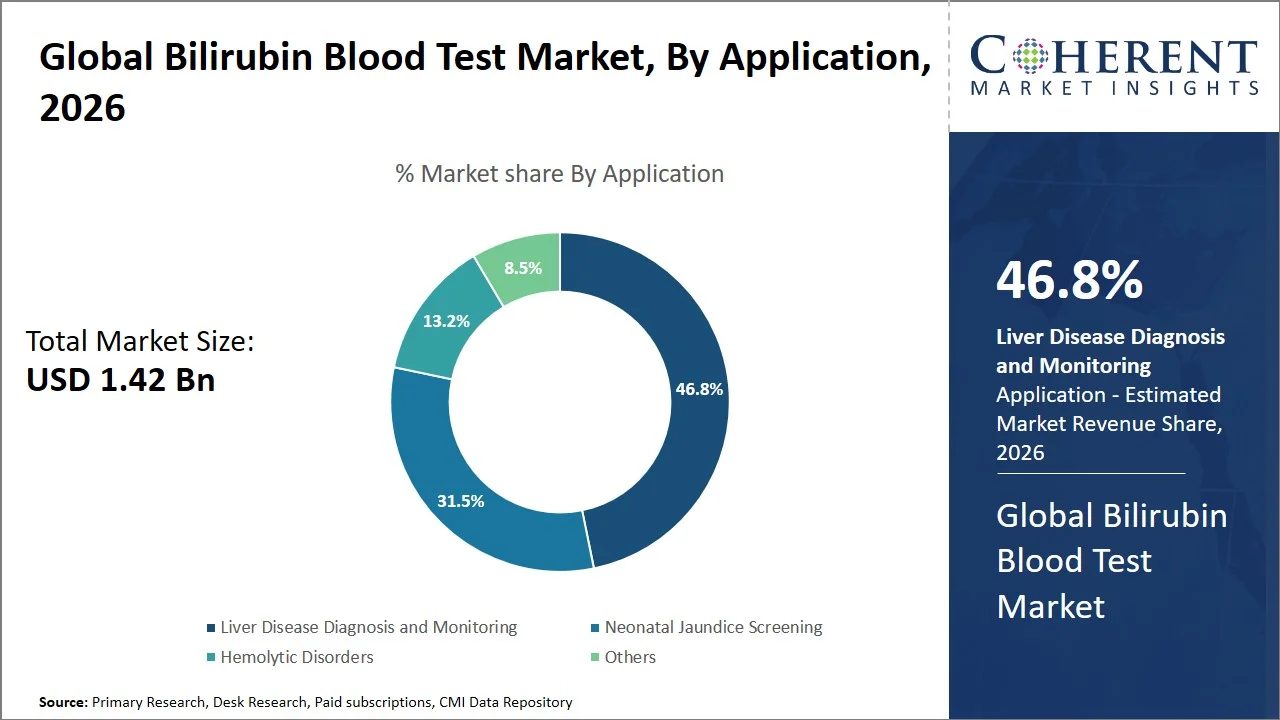
Liver disease diagnosis and monitoring is projected to hold a market share of 46.8% in 2026, attributed to the extensive use of bilirubin tests as a significant diagnostic marker in evaluating the function and detecting diseases of the liver. Bilirubin test is often coupled with liver enzyme test for efficient detection of different liver disorders, their progress and patient treatment. Increasing number of patients experiencing liver diseases, on an increase, has amplified the test consumption across the world. For instance, the American Association for the Study of Liver Diseases (AASLD) lists measurement of the serum level of bilirubin as a key parameter in evaluating and managing patients with liver diseases, reflecting its importance in routine hepatology practice. (Source: American Association for the Study of Liver Diseases)
Hospitals Segment Dominates the Global Bilirubin Blood Test Market
The hospitals segment is projected to hold a market share of 48.6% in 2026, due to their centralized diagnostic laboratories, larger patient pool, as well as advanced facilities like hepatology, neonatal care, and pediatrics departments that require these tests on a large scale for diagnosis, detection and monitoring for neonatal jaundice and other diseases. Besides their fully computerized lab with large number of automated analyzers, high volumes are maintained due to shared services in laboratories networks across a hospital campus. For instance, in September 2024 the U.K.’s National Health Service (NHS) announced its plans for a program to introduce additional community diagnostic centers (CDCs) strategically deployed in hospital networks. This aims to enhance patient access to diagnostic testing, bolster hospitals’ diagnostic capacity, and enable increased use of standard laboratory tests, including the assessment of bilirubin. (Source: NHS England)
Currents Events and their Impact
Current Events | Description and its Impact |
European Union Begins Implementation of In Vitro Diagnostic Regulation (IVDR) Transition Measures (December 2025) |
|
U.S. FDA Clearance of BiliWrap Home-Use Phototherapy System for Neonatal Hyperbilirubinemia (May 2025) |
|
(Source: European Commission, Food and Drug Administration)
Bilirubin Blood Test Market Dynamics
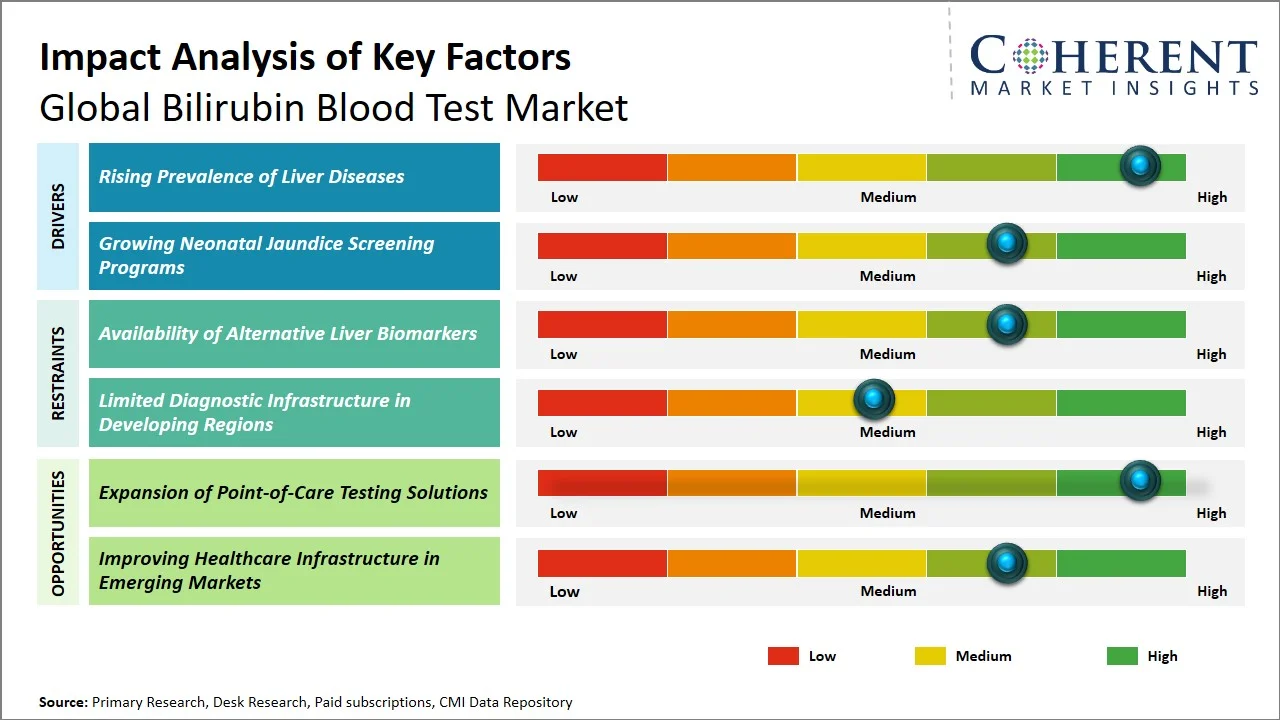
Market Drivers
- Rising Prevalence of Liver Diseases: Bilirubin blood test is an indispensable component for the diagnosis, screening, and monitoring of different liver related conditions. Higher awareness on chronic liver disease issues along with the immediate diagnosis requirement propels greater access to medical tests among the medical providers. Healthcare providers increasingly rely on bilirubin testing to assess disease progression and treatment outcomes in patients with hepatic disorders. For instance, the World Health Organization estimates that 240 million people were living with chronic hepatitis B infection in 2024, with 0.9 million new infections each year. Additionally, hepatitis B resulted in an estimated 1.1 million deaths, mostly from cirrhosis and hepatocellular carcinoma. (Source: World Health Organization)
- Growing Neonatal Jaundice Screening Programs: Neonatal jaundice screening programs are witnessing increased implementation which subsequently, are contributing to the global demand for the bilirubin blood testing market. Various health systems around the globe consider hyperbilirubinemia can be prevented at an early stage with improved outcomes in infants. Hence, Bilirubin blood testing is becoming one of the mandatory tests at the neonatal care and maternity centers. For instance, India's Rashtriya Bal Swasthya Karyakram (RBSK) promotes early identification and management of health conditions among children, including neonatal disorders, supporting the adoption of diagnostic screening practices in newborn care.
Emerging Trends
- Integration of Advanced Automation in Clinical Laboratories: Fully automated clinical chemistry analyzers, with their improved sampling processes and integrated data management features, are witnessing widespread adoption across diagnostic laboratories. This development helps deliver higher throughput, faster turnaround times, and greater bilirubin measurement accuracy to the higher volumes that hospital-based and reference laboratories need.
- Rising Focus on Assay Standardization and Quality Assurance: As assay standardization, calibrator traceability, and quality assurance processes become increasingly more important, labs and healthcare providers are seeking a way to boost the consistency of bilirubin test results. These providers will implement a standardized test methodology along with sophisticated reagent solutions to enhance their overall accuracy across different testing platforms.
Regional Insights
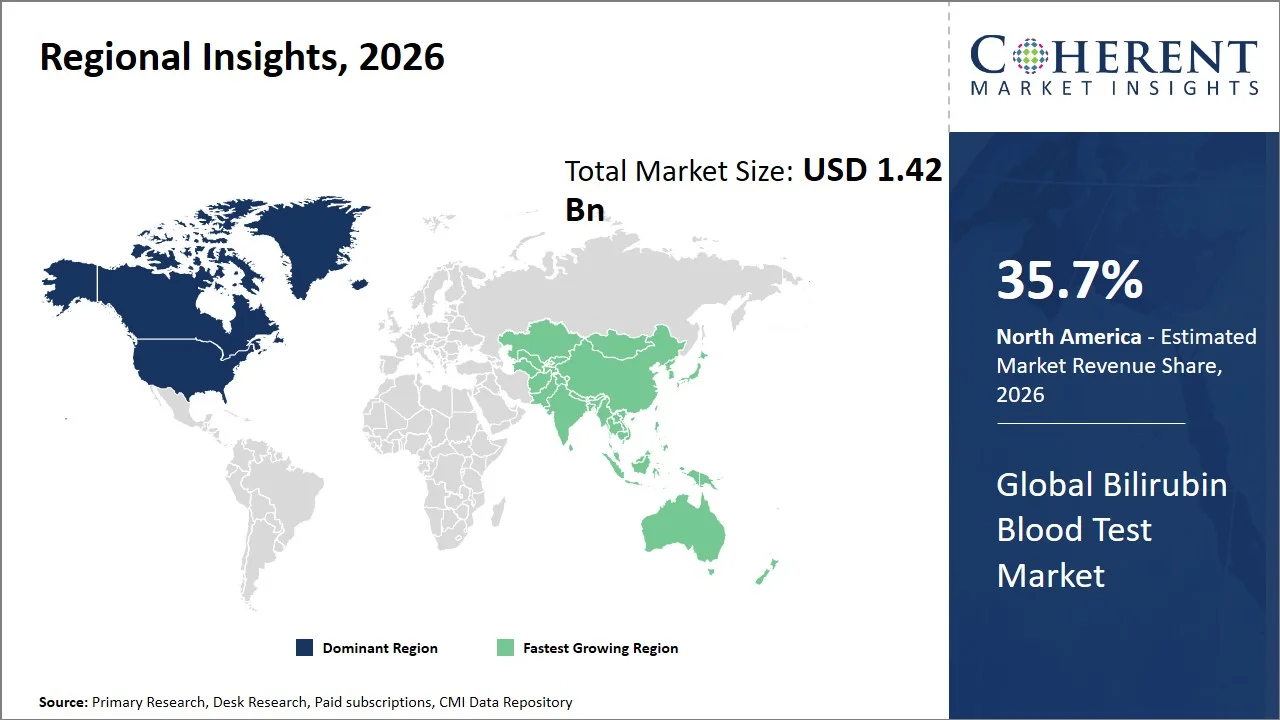
Why is North America a Strong Market for Bilirubin Blood Tests?
North America leads the global bilirubin blood test market, accounting for an estimated 35.7% share in 2026, due to well-developed infrastructure, a substantial number of key market players, and favorable regulatory guidelines. In the U.S. and Canada, the diagnostic laboratories, as well as research & development institutes, have been strongly investing in developing technological and innovations in the market. Furthermore, government initiatives for early detection of liver and neonatal diseases and extensive availability of healthcare facilities with reimbursement policies favoring regular bilirubin testing.
For instance, the U.S. Department of Health and Human Services (HHS) launched the Viral Hepatitis National Strategic Plan 2021-2025, a comprehensive initiative that sets priorities and provides a roadmap to end viral hepatitis as a U.S. public health problem by 2030. A key element of the plan’s strategy involves increasing access to hepatitis services and encouraging liver function tests such as the bilirubin test, a critical measure used in managing viral liver disease.
Why Does the Asia Pacific Bilirubin Blood Test Market Exhibit High Growth?
The Asia Pacific bilirubin blood test market is expected to exhibit the fastest growth with an estimated contribution of 25.1% share to the global market in 2026, due to improved healthcare infrastructure, huge patient populace, and rising awareness of diagnosis across emerging countries such as China, India and Japan. The rapid urbanization coupled with increasing government health care expenses in the APAC countries are paving way for increase in demand for diagnostic tests and services across region. Moreover, the countries in the region are instituting several measures supporting maternal and child health services which will eventually create indirect impact on demand of bilirubin blood test.
For instance, China’s National Program for Child Development (2021-2030) aims to expand on earlier initiatives to improve neonatal healthcare, enhance screening for child diseases at an early stage and take the best approaches in managing child health at the national level. This includes improving the capacity of maternal and newborn healthcare services and promoting availability of diagnosis of other child-specific diseases.
Global Bilirubin Blood Test Market Outlook for Key Countries
Why is the U.S. Leading Innovation and Adoption in the Bilirubin Blood Test Market?
The U.S. dominates the bilirubin blood test market attributed to the pervasive implementation of sophisticated automated clinical chemistry systems and high-throughput neonatal screening across hospitals and other medical centers. The market is fueled by rapid incorporation of non-invasive bilirubin screening tests, the presence of highly sensitive bilirubin testing techniques and point-of-care solutions, and consistent enhancements in diagnostic instrumentation and digital laboratory workflows. This collectively makes the U.S. the largest market for implementation and commercialization of next-generation bilirubin blood tests.
Is Japan a Favorable Market for Bilirubin Blood Tests?
Japan is one of the most promising markets for the bilirubin blood test market, driven by its highly modernized and clinical lab automation environment along with emphasis placed by medical professionals on timely detection of disease. This has resulted in the usage of high-end clinical chemistry analyzers, therefore resulting in an appropriate inclusion of bilirubin in liver panel testing. Japan’s aged populace with growing liver and metabolic disease diagnoses further boosts the usage of tests in clinical and diagnostic laboratories as well as in hospitals. The persistent adoption of high-precision diagnostic technologies further strengthens Japan's position as an attractive market for manufacturers of bilirubin blood tests.
Is China Emerging as a Key Growth Hub for the Bilirubin Blood Test Market?
China is positioned as a key growth hub in the global bilirubin blood test market driven by the growth in healthcare infrastructure in labs and rising use of automated clinical chemistry tests by hospital and labs. The country’s large patient pool demanding liver function assessment and neonatal care services continue to generate considerable testing demand. Continual up-gradation of laboratory in hospitals and increase in the range of available diagnostic equipment is aiding to support this growth in terms of revenue generation and market share.
Why Does Germany Top the European Bilirubin Blood Test Market?
Germany is the leader in the European market for bilirubin blood tests due to broad the implementation of automated clinical chemistry testing on the level of hospital laboratories and private medical diagnostic laboratories (MLABs) networks. Germany is one of the leading countries of origin for producers of diagnostic instruments and utilization of high through laboratory analyzers, making available of testing bilirubin for regular tests along with liver function profile.
Is the Bilirubin Blood Test Market Developing in India?
India is a high-potential market for bilirubin blood tests owing to expanding diagnostic lab networks and the adoption of automated clinical chemistry systems in health facilities. Strong initiatives towards improving maternal and neonatal care are leading the usage of bilirubin testing for jaundice screening and treatment in hospitals. These initiatives are increasing the availability of low-cost diagnostic solutions and in turn increasing the access to testing beyond major urban centers.
Product Innovation Landscape in the Global Bilirubin Blood Test Market
Innovation/Product Type | Innovation Description | Key Advantage | End User Impact |
Transcutaneous Bilirubinometers | Non-invasive bilirubin measurement through skin sensors | Eliminates blood sampling | Improves neonatal screening efficiency |
Portable Bilirubin Analyzers | Compact point-of-care testing devices | Faster results and decentralized testing | Supports bedside and remote diagnostics |
Automated Bilirubin Assays | Integration into high-throughput clinical chemistry analyzers | Higher testing capacity and accuracy | Enhances laboratory productivity |
Bilirubin Test Strips | Rapid strip-based bilirubin detection technologies | Low-cost and easy-to-use testing | Expands access in resource-limited settings |
Digital-Enabled Testing Platforms | Connectivity with LIS/EHR systems | Improved data management and reporting | Streamlines clinical workflow |
Biosensor-Based Bilirubin Detection | Advanced sensor technologies under development | Potential for real-time monitoring | Supports future home-based testing |
How is the expansion of point-of-care testing solutions creating new growth opportunities in the bilirubin blood test market?
The global bilirubin blood test market is presenting new opportunities as the demand increases for low-cost, decentralized diagnostic testing. Hospitals and clinics need fast-turning bilirubin tests to expand neonatal screening or diagnosis of liver problems among patients in resource-limited regions. Portable, low-maintenance analyzers that are equivalent in precision to a laboratory test the push towards portable point-of-care testing. For instance, in August 2023, researchers at Rice University confirmed the accuracy of the BiliDx platform, a cost-effective jaundice testing technology designed for newborn screening in low-resource hospitals. The device demonstrated performance comparable to laboratory reference methods, illustrating its potential to expand access to bilirubin testing and support early diagnosis in underserved regions. (Source: Rice University)
Market Players, Key Development, and Competitive Intelligence
Key Developments
- In November 2025, Agios Pharmaceuticals announced positive topline results from its Phase 3 RISE UP trial evaluating mitapivat for sickle cell disease. The therapy demonstrated significant improvements in hemoglobin levels and disease-related outcomes among treated patients. As sickle cell disease is linked to increased bilirubin production due to red blood cell breakdown, advancements in disease management are expected to support continued demand for bilirubin testing for monitoring hemolytic activity and treatment response.
- In September 2023, IIT Kanpur signed a technology transfer agreement with Sensa Core Medical Instrumentation for the commercialization of a novel diagnostic strip for bilirubin analysis in human blood. The technology is designed to enable rapid, affordable, and accurate bilirubin measurement, improving access to diagnostic testing in both laboratory and point-of-care settings. The development is expected to enhance early detection and monitoring of liver disorders and neonatal jaundice, supporting the adoption of advanced bilirubin testing solutions.
Competitive Landscape
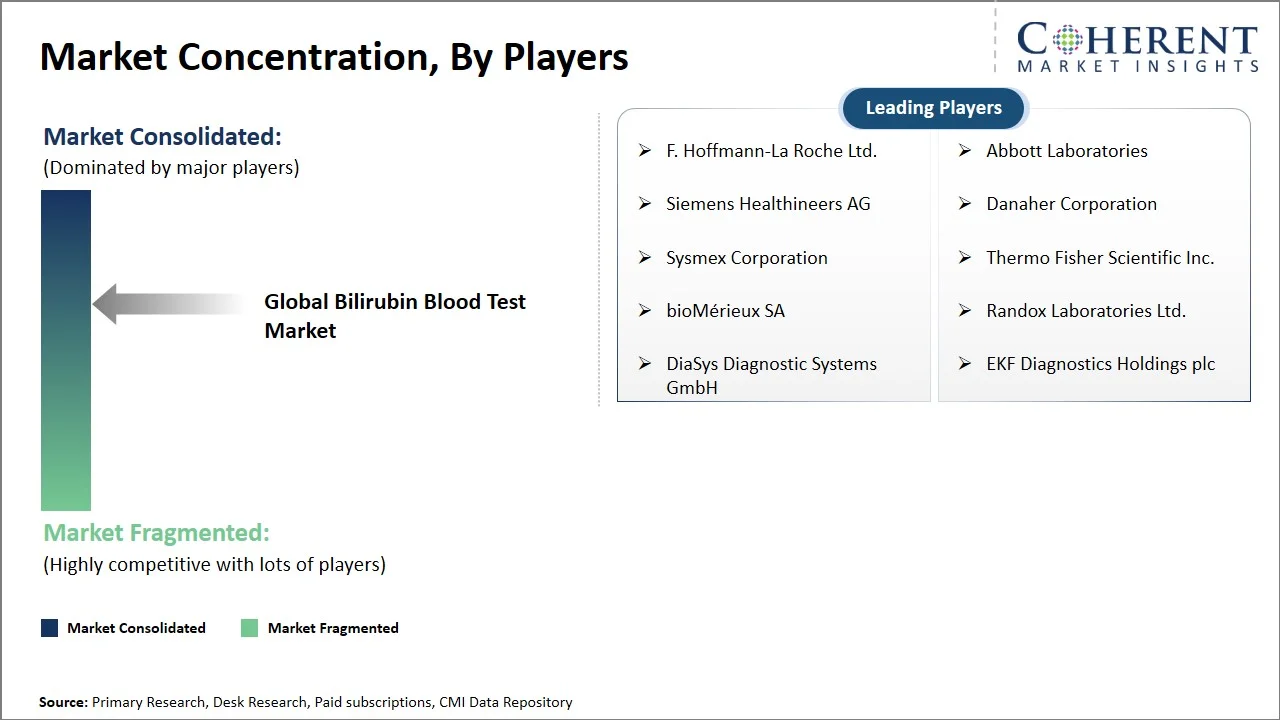
The global bilirubin blood test market is moderately consolidated. The competition revolves around the aspects such as accuracy of tests, turnaround time, automation facility and accordance with developing standards for clinical diagnostic. Players operating in the global bilirubin blood test market are concentrated towards strengthening their portfolios of bilirubin reagents, compatibility of reagents with automated clinical chemistry analyzers and in hospital and diagnostic laboratory segments. Collaborations with other companies, product invention and achieving regulatory approvals are the critical strategies.
Key focus areas include
- Development of high-sensitivity bilirubin assays and reagents to improve diagnostic accuracy and early disease detection
- Integration of bilirubin testing into automated clinical chemistry platforms to enhance laboratory efficiency and throughput
- Expansion of point-of-care and non-invasive bilirubin testing solutions for neonatal jaundice screening and decentralized diagnostics
- Regulatory approvals and geographic expansion to strengthen presence across emerging healthcare markets
- Strategic partnerships with hospitals, diagnostic laboratories, and healthcare providers to increase product adoption and market penetration
Market Report Scope
Bilirubin Blood Test Market Report Coverage
| Report Coverage | Details | ||
|---|---|---|---|
| Base Year: | 2025 | Market Size in 2026: | USD 1.42 Bn |
| Historical Data for: | 2020 To 2024 | Forecast Period: | 2026 To 2033 |
| Forecast Period 2026 to 2033 CAGR: | 7% | 2033 Value Projection: | USD 2.28 Bn |
| Geographies covered: |
| ||
| Segments covered: |
| ||
| Companies covered: | F. Hoffmann-La Roche Ltd., Abbott Laboratories, Siemens Healthineers AG, Danaher Corporation, Sysmex Corporation, Thermo Fisher Scientific Inc., bioMérieux SA, Randox Laboratories Ltd., DiaSys Diagnostic Systems GmbH, and EKF Diagnostics Holdings plc | ||
| Growth Drivers: |
| ||
| Restraints & Challenges: |
| ||
Analyst Opinion (Expert Opinion)
- In the coming years, the bilirubin blood test market is expected to see consistent growth driven by the increasing adoption of automation and point-of-care (POC) testing technologies along with emphasis on early diagnosis of liver diseases and neonatal jaundice. The advancement of in vivo (point-of-care) bilirubin detection instruments coupled with growing acceptance of decentralization of testing facilities will aid the growth. As healthcare systems increasingly prioritize preventive care and rapid diagnostics, they are likely to integrate bilirubin testing more fully into routine screening and disease monitoring protocols.
- The maximum opportunities will probably exist within neonatal jaundice screening across India and Southeast Asia due to high institutional deliveries, increasing healthcare infrastructure for newborns and government support through mothers and child health initiatives that enhance the need for bilirubin test. Meanwhile, diagnosis and management of liver disease across China holds a large opportunity due to the high prevalent population of hepatitis and chronic liver diseases which necessitate routine bilirubin testing.
- In order to obtain a competitive advantage, market participants must emphasize the development of affordable, point-of-care, non-invasive bilirubin testing for use in neonatal care as well as in decentralized healthcare facilities. They must also enhance ties with maternity homes, hospitals, and diagnostic laboratory networks and widen reach in growing markets in the Asia Pacific. For optimal growth and differentiated products, investments in test accuracy, for use in automated analyzers, and timely regulatory clearances will prove vital.
Speak to the analyst
Want personalized insights?
Take the findings above to one of our principal consultants, or have the report rebuilt around the segments, geographies and competitors you actually track.
Market Segmentation
- Test Type Insights (Revenue, USD Bn, 2021 - 2033)
- Total Bilirubin Test
- Direct Bilirubin Test
- Indirect Bilirubin Test
- Application Insights (Revenue, USD Bn, 2021 - 2033)
- Liver Disease Diagnosis and Monitoring
- Neonatal Jaundice Screening
- Hemolytic Disorders
- Others
- End User Insights (Revenue, USD Bn, 2021 - 2033)
- Hospitals
- Diagnostic Laboratories
- Physician Offices and Clinics
- Ambulatory Surgical Centers
- Home Care Settings
- Others
- Regional Insights (Revenue, USD Bn, 2021 - 2033)
- North America
- U.S.
- Canada
- Latin America
- Brazil
- Argentina
- Mexico
- Rest of Latin America
- Europe
- Germany
- U.K.
- Spain
- France
- Italy
- Russia
- Rest of Europe
- Asia Pacific
- China
- India
- Japan
- Australia
- South Korea
- ASEAN
- Rest of Asia Pacific
- Middle East
- GCC Countries
- Israel
- Rest of Middle East
- Africa
- South Africa
- North Africa
- Central Africa
- North America
- Key Players Insights
- F.Hoffmann-La Roche Ltd.
- Abbott Laboratories
- Siemens Healthineers AG
- Danaher Corporation
- Sysmex Corporation
- Thermo Fisher Scientific Inc.
- bioMérieux SA
- Randox Laboratories Ltd.
- DiaSys Diagnostic Systems GmbH
- EKF Diagnostics Holdings plc
Sources
Primary Research Interviews
- Clinical chemists and laboratory directors involved in liver function and clinical chemistry testing
- Neonatologists and pediatricians managing neonatal jaundice screening and treatment
- Hepatologists and gastroenterologists involved in liver disease diagnosis and monitoring
- Diagnostic laboratory managers from hospital and independent laboratory networks
- Product managers and regulatory affairs professionals from bilirubin testing and IVD companies
- Procurement specialists from hospitals and diagnostic laboratory chains
Stakeholders
- Bilirubin blood test manufacturers and in-vitro diagnostics (IVD) companies
- Clinical chemistry analyzer and reagent suppliers
- Healthcare distributors and laboratory equipment providers
- End-use Sectors
- Hospitals and multispecialty healthcare facilities
- Independent diagnostic laboratories
- Neonatal intensive care units (NICUs)
- Physician offices and outpatient clinics
- Academic and research institutions
- Regulatory & Health Bodies
- U.S. Food and Drug Administration (FDA)
- Centers for Medicare & Medicaid Services (CMS)
- European Medicines Agency (EMA)
- European Centre for Disease Prevention and Control (ECDC)
- Pharmaceuticals and Medical Devices Agency (PMDA), Japan
- National Medical Products Administration (NMPA), China
Databases
- FDA 510(k) Premarket Notification Database
- FDA Medical Device Registration and Listing Database
- CMS Clinical Laboratory Fee Schedule (CLFS) Database
- OECD Health Statistics Database
- World Bank Health Indicators Database
- WHO Global Health Observatory (GHO)
Magazines
- Clinical Lab Products
- Medical Laboratory Observer (MLO)
- Laboratory Medicine Magazine
- Diagnostics World News
- Healthcare Purchasing News
- Medical Design & Outsourcing
Journals
- Clinical Chemistry
- Clinical Biochemistry
- Clinical Laboratory
- Journal of Clinical Laboratory Analysis
- Annals of Hepatology
- Pediatric Research
Newspapers
- The Wall Street Journal
- Financial Times
- USA Today
- The New York Times
- The Guardian
Associations
- American Association for Clinical Chemistry (AACC/ADLM)
- American Association for the Study of Liver Diseases (AASLD)
- European Association for the Study of the Liver (EASL)
- International Federation of Clinical Chemistry and Laboratory Medicine (IFCC)
- Asia Pacific Association for the Study of the Liver (APASL)
Public Domain Sources
- World Health Organization (WHO) – Hepatitis and Liver Disease Resources
- Centers for Disease Control and Prevention (CDC) – Chronic Liver Disease and Cirrhosis Statistics
- National Institutes of Health (NIH) – Liver Disease and Neonatal Jaundice Research
- Centers for Medicare & Medicaid Services (CMS) – Clinical Laboratory Testing and Reimbursement Programs
- European Association for the Study of the Liver (EASL) – Clinical Practice Guidelines
- World Bank – Healthcare Infrastructure and Health Expenditure Statistics
Proprietary Elements
- CMI Data Analytics Tool, Proprietary CMI Existing Repository of information for last 10 years.
Get access to 250+ pages report
Every segment, forecast, competitor profile and data table behind the analysis above — available for instant download.
- ESOMAR Member
- ISO 9001:2015 Certified
- D-U-N-S Registered
- GDPR & CCPA Compliant
Missing comfort of reading report in your local language? Find your preferred language:
Transform your Strategy with Exclusive Trending Reports
Frequently Asked Questions
The global bilirubin blood test market is estimated to be valued at USD 1.42 Bn in 2026 and is expected to reach USD 2.28 Bn by 2033.
Total bilirubin test dominates due to its routine use in liver function assessment, neonatal jaundice screening, and diagnosis of hepatobiliary disorders.
A bilirubin blood test measures the level of bilirubin in the bloodstream to evaluate liver function, bile duct health, and red blood cell breakdown.
The CAGR of global bilirubin blood test market is projected to be 7% from 2026 to 2033.
Rising prevalence of liver diseases, and growing neonatal jaundice screening programs are the major factors driving the growth of the global bilirubin blood test market.
Direct bilirubin is processed by the liver and excreted through bile, while indirect bilirubin is the unprocessed form produced from red blood cell breakdown.
Bilirubin is a key biomarker used to assess liver function and identify conditions such as hepatitis, cirrhosis, bile duct obstruction, and jaundice.