

Global Biogas Plant Market Size and Forecast – 2026-2033
The global biogas plant market is estimated to be valued at USD 5.19 Bn in 2026 and is expected to reach USD 8.06 Bn by 2033, exhibiting a compound annual growth rate (CAGR) of 6.5% from 2026 to 2033.
Key Takeaways of the Biogas Plant Market
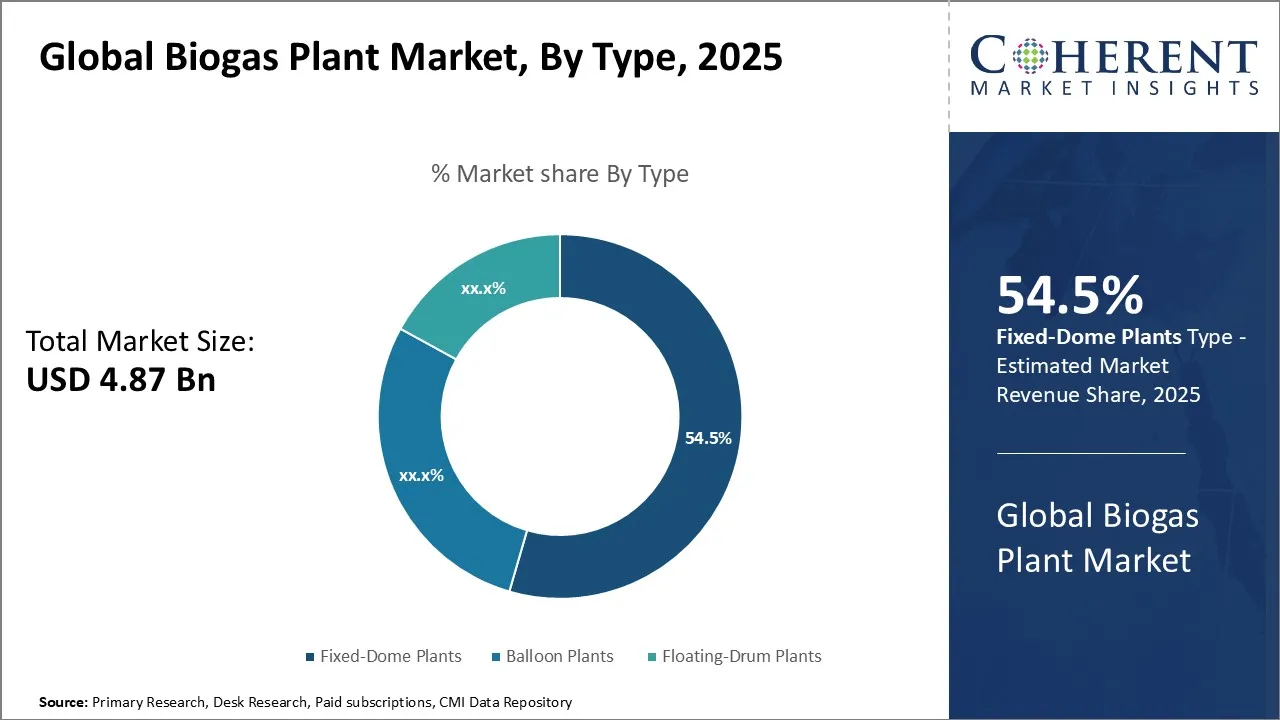
- The fixed-dome plants segment is expected to account for 55.5 % of the market share in 2026.
- The agricultural waste segment is projected to hold a 35.5 % share of the global biogas plant market in 2026.
- The continuous flow filling segment is expected to capture 53.5 % of the market share in 2026.
- Europe is set to lead the global biogas plant market in 2026 with a 51.6 % share. Asia Pacific, with an estimated share of 23.5% in 2026, and it is projected to be the fastest-growing region.
Market Overview
The market trend in the biogas plant industry is increasingly driven by the integration of advanced technologies such as anaerobic digestion and biomethane upgrading, enhancing energy efficiency and output quality. Additionally, supportive government policies and incentives aimed at reducing carbon footprints are propelling the market expansion. Growing awareness regarding environmental sustainability and the need to transition away from fossil fuels further bolster the adoption of biogas plants globally, positioning the market for robust and sustained growth over the forecast period.
Current Events and Its Impact
Current Events | Description and its Impact |
Policy Support for Renewable Energy |
|
Technological Advancements in Biogas Production |
|
Segmental Insights
- Current Industry Events of 2026
- Market Size Estimation
- Regional Breakdown
- Competitive Landscape
- Customer Intelligence
- Segmental Analysis
- Pricing Analysis
- Key Market Drivers, Challenges & Future Trends
- Customized Insights Section
Biogas Plant Market Insights, by Type - Fixed-Dome Plants Segment Dominates the Market Due to their Robust Design and Cost-Efficiency
The fixed-dome plants segment is projected to account for 55.5% share in 2026, due to their simple, durable design and economic advantages. The fixed-dome structure, typically made from concrete, eliminates the need for moving parts or external gasholders, reducing both initial investment and maintenance costs. This simplicity appeals especially to rural and agricultural communities, where financial constraints and limited technical expertise require reliable yet affordable biogas solutions.
For example, in India’s rural states such as Madhya Pradesh and Uttar Pradesh, fixed-dome biogas plants under the National Biogas and Manure Management Programme (NBMMP) have been widely adopted by farming households. These installations provide sustainable cooking gas while converting animal dung and crop residues into biogas, showcasing the model’s suitability for low-cost, high-impact rural energy solutions.
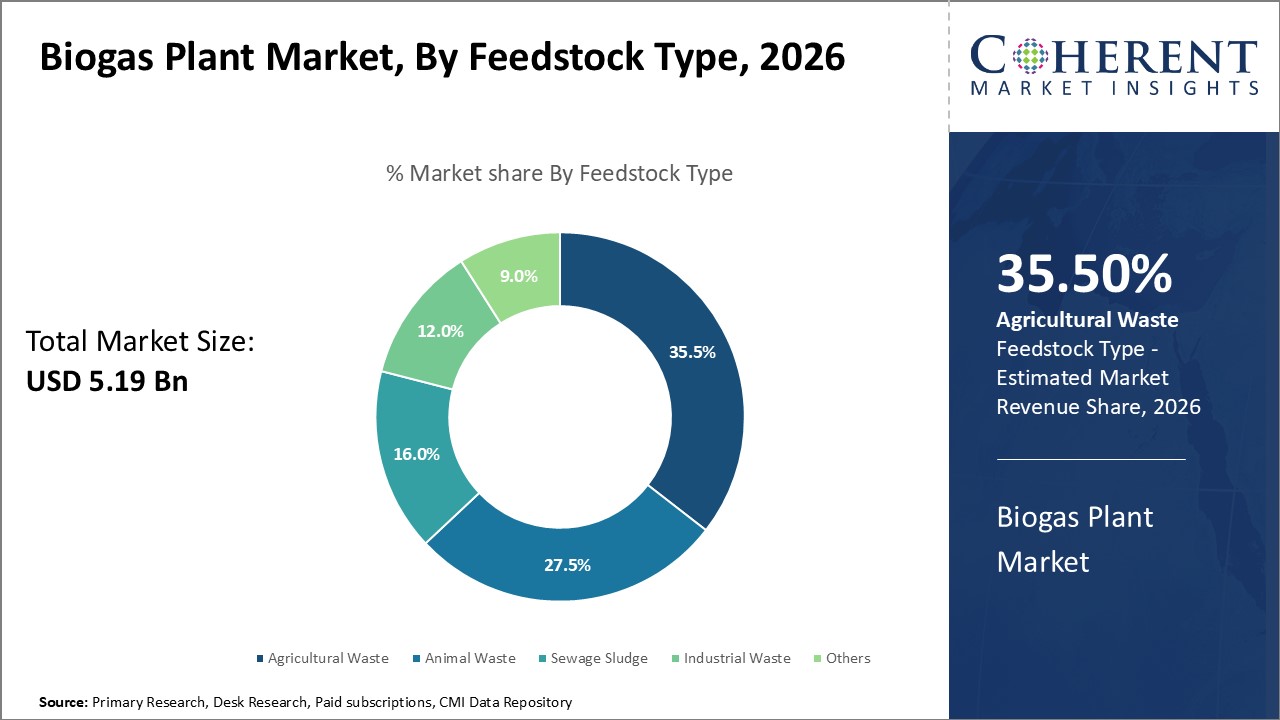
Biogas Plant Market Insights, by Feedstock Type - Agricultural Waste Segment Dominates the Market Due to Abundant Availability and Circular Economy Benefits
The agricultural waste segment is expected to hold 35.5% share in 2026, reflecting its widespread availability and the economic incentives tied to its utilization. The vast quantities of crop residues, husks, stalks, and other agricultural by-products generated worldwide provide a steady and low-cost input for anaerobic digestion, making agricultural waste an attractive resource for biogas production.
One of the key growth factors for the agricultural waste segment is the drive toward sustainable waste management and reduction of open-field burning, which has severe environmental and health impacts. Using agricultural residues as feedstock converts what would otherwise contribute to air pollution into a valuable energy source, thereby aligning with government regulations and environmental goals. This synergy encourages farmers and agribusinesses to invest in biogas plants that capitalize on their existing waste streams.
Biogas Plant Market Insights, by Operation Mode - Continuous Flow Filling Segment Dominates the Market Due to Enhanced Efficiency and Scalability
The continuous flow filling segment is projected to hold 53.5% share in 2026, because it offers significant advantages in terms of process stability, gas production efficiency, and scalability. Unlike semi-batch systems, continuous flow plants maintain a steady inflow of organic material and simultaneous outflow of digestate, ensuring uninterrupted microbial activity within the digester. This steady-state operation optimizes anaerobic digestion, resulting in consistent biogas output.
This operational mode is particularly attractive for commercial and industrial applications where predictable energy supply is paramount. Continuous flow plants cater efficiently to large volumes of feedstock, allowing operators to manage waste input in a controlled and automated manner. This automated feeding system reduces labor requirements and minimizes the risk of process disturbances caused by irregular substrate loading.
Regional Insights
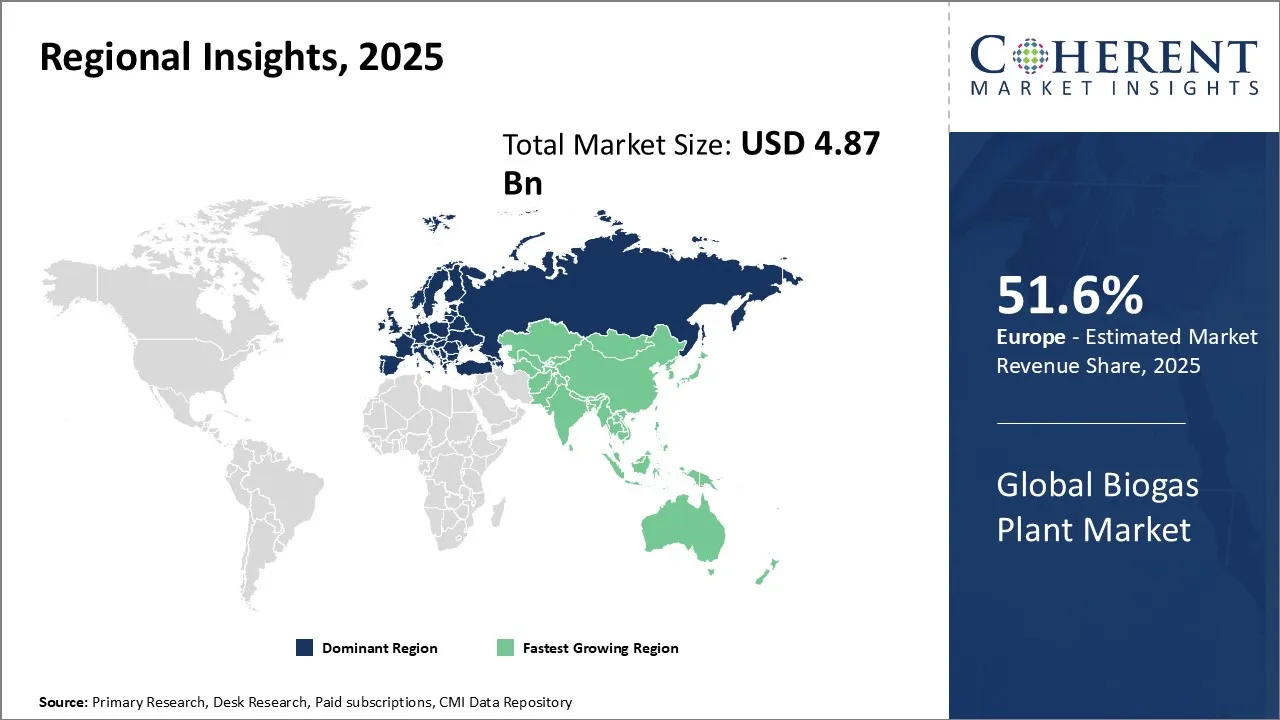
Europe Biogas Plant Market Analysis and Trends
The Europe region is projected to lead the market with a 51.6% share in 2026, driven by a well-established market ecosystem supported by robust governmental policies aimed at renewable energy adoption and carbon reduction targets. European countries have long prioritized sustainability, leading to significant investments in biogas infrastructure and technology innovation.
The presence of strong industry players, such as Nordex, MT-Energie, and WELTEC BIOPOWER, has fostered competitive advancements in efficient biogas production and processing solutions. The European Union’s supportive trade dynamics, including subsidies, feed-in tariffs, and green energy mandates, further fortify the market's leadership. Additionally, stringent environmental regulations encourage agricultural and industrial waste utilization, promoting the expansion of biogas plants.
Asia Pacific Biogas Plant Market Analysis and Trends
The Asia Pacific region is expected to exhibit the fastest growth in the market contributing 23.5% share in 2026, fueled by escalating energy demand, government incentives, and the pressing need to manage agricultural and organic waste sustainably. Countries like China and India have launched national initiatives promoting biogas technologies to address energy deficits and rural electrification.
Rapid industrialization and urbanization have heightened the demand for decentralized energy solutions, propelling biogas projects. Key companies such as Beijing Gas Group, Green Planet Energy, and Thermax Limited are actively driving innovation and regional expansion. The region’s dynamic trade environment allows for technology transfer and collaborative ventures that accelerate the market development.
Biogas Plant Market Outlook for Key Countries
Germany Biogas Plant Market Analysis and Trends
Germany biogas plant market stands out due to its early adoption and integration of biogas into its energy mix, supported by generous subsidies under the Renewable Energy Sources Act (EEG). The country benefits from an advanced agricultural sector providing ample feedstock, and firms like MT-Energie and WELTEC BIOPOWER lead in supplying state-of-the-art plant technology, enhancing operational efficiency. Germany’s strong research and development ecosystem continuously improves digesters and upgrading technologies, maintaining the country’s pioneering role in the Europe biogas plant market.
China Biogas Plant Market Analysis and Trends
China biogas plant market is rapidly evolving as the government prioritizes renewable energy to combat pollution and reduce fossil fuel dependence. The expansion of rural biogas plants and industrial-scale anaerobic digestion facilities is a result of substantial policy support and investment. Companies such as Beijing Gas Group and Jinjiang Environment actively contribute by introducing large-scale biogas projects and advanced technologies that integrate waste-to-energy solutions within urban and agricultural frameworks, fostering sustainable development.
U.S. Biogas Plant Market Analysis and Trends
The U.S. exhibits a growing interest in biogas driven by renewable portfolio standards and incentives from the Department of Energy and Environmental Protection Agency. The country’s diverse energy portfolio and agricultural base provide opportunities for biogas adoption. Companies like DVO, Inc. and Xebec Adsorption Inc. are significant players, with strong emphasis on landfill gas recovery and agricultural waste biogas plants. The U.S. benefits from strong private-public partnerships and innovative financing models, which facilitate the market expansion and technology penetration.
India Biogas Plant Market Analysis and Trends
India biogas plant market growth is propelled by rural energy needs, government programs like the National Biogas and Manure Management Programme (NBMMP), and growing awareness of clean energy benefits. The country’s large agricultural sector creates abundant raw material availability for biogas production. Key players include Thermax Limited and EcoInfra Energy Solutions, which focus on small to medium-scale plants suitable for rural communities and industrial waste management. India’s emphasis on sustainable development goals supports market momentum by enabling off-grid energy solutions.
France Biogas Plant Market Analysis and Trends
France continues to lead in Western Europe with a substantial focus on integrating biogas into the national energy transition framework. Feed-in tariffs and investment grants nurture market competitiveness and encourage innovation. Companies, such as Prodeval and Akuo Energy, have significant influence, developing projects that convert agricultural residues and organic waste into biogas while integrating power-to-gas and biomethane upgrading technologies. France’s supportive regulatory framework and strong agricultural sector reinforce its position as a key market player in Europe.
Factors Affecting the Biogas Plant Market Growth
- Environmental Regulations: Growing pressure to reduce carbon emissions and shift away from fossil fuels is propelling the adoption of biogas solutions, especially as governments impose renewable energy mandates.
- Government Incentives: Financial subsidies, favorable policies, and renewable fuel standards are pushing investments in biogas plant infrastructure across major regions.
- Waste Management Demand: Urbanization and industrial growth result in more organic waste, which supports biogas adoption as a sustainable waste-to-energy solution.
- Feedstock Availability: Large agricultural and food industry sectors produce ample organic waste (manure, crop residues, food processing by-products), supporting feedstock needs for biogas production.
- Technological Advancements: Continual improvements in anaerobic digestion, upgrading systems, and feedstock management have reduced operational costs and improved plant efficiency; digitalization further enhances productivity.
Market Players, Key Development, and Competitive Intelligence
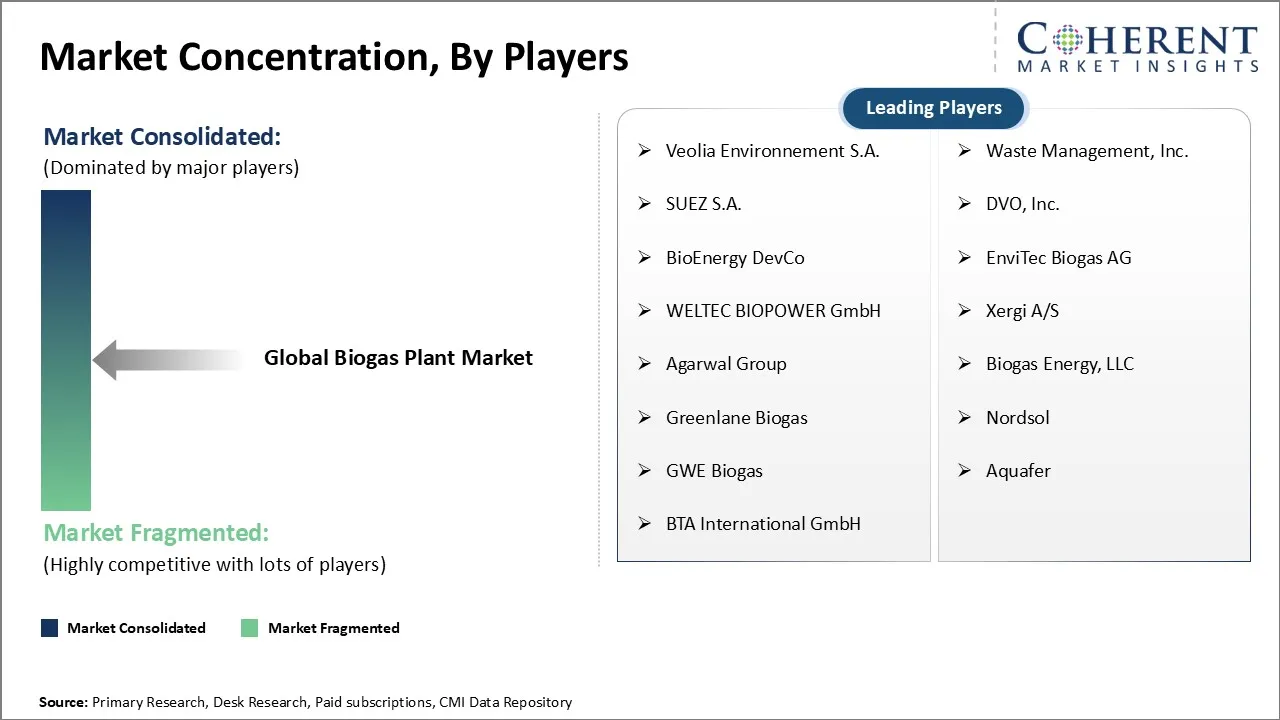
Key Developments
- On September 8, 2025, Goa became the first state to successfully operate a municipal solid waste to biogas and biogas to energy plant for nine years. Chief Minister Pramod Sawant highlighted that this innovative facility has been pivotal in addressing the state's energy needs. Goa's industries require 300 tons of biomass briquettes daily to fuel their boilers, which are currently supplied by neighboring states, as Goa does not generate sufficient biomass from agriculture like other states.
- On September 8, 2025, Korea announced plans to launch its first commercial-scale biogas-based biomethanol plant. Biofriends Inc. and Cheongmyeong Co. have signed a memorandum of understanding (MOU) to establish this groundbreaking facility, marking a significant step toward the large-scale production of eco-friendly fuel from domestically produced biogas. Biofriends, which had previously explored the feasibility of producing between 45,000 and 100,000 tons of biomethanol annually, plans to build a plant capable of producing 60,000 to 80,000 tons per year. The company will utilize its synthesis gas conversion technology to enhance the value of domestic biogas, aiming to create a stable, sustainable fuel supply chain.
Top Strategies Followed by Global Biogas Plant Market Players
- Established industry leaders invest heavily in research and development (R&D) to innovate high-performance products that address efficiency, environmental sustainability, and operational reliability. These companies focus on creating advanced biogas solutions capable of processing diverse feedstocks with improved output quality. By leveraging global networks, they effectively tailor offerings to regional needs, ensuring regulatory compliance and customer support, thereby maintaining their dominant market stance.
- For example, EnviTec Biogas AG, developed biogas plants capable of processing a variety of feedstocks, including agricultural residues and food waste, while maintaining high methane yields.
- Mid-level players in the biogas plant market adopt a balanced approach by focusing on cost-effective solutions that harmonize quality with affordability. Recognizing the presence of price-sensitive consumers, particularly in developing economies, these companies design modular and scalable biogas systems that reduce upfront investment and operational expenses. Their target segments often include small-to-medium enterprises, agricultural businesses, and community-based projects requiring sustainable yet economically viable energy alternatives.
- For example, Biogas Nord offers flexible biogas plants that can be customized based on farm sizes or community energy needs, making them ideal for rural and semi-urban applications. Their designs are modular, which allows for easy expansion and upgrades as the need for energy grows.
- Small-scale players in the global biogas plant market thrive by focusing on niche segments and pioneering innovative features tailored for specific regional demands or application needs. These companies leverage cutting-edge technologies such as advanced digesters, automation, and remote monitoring systems to differentiate themselves within a competitive environment. Their agility allows them to quickly adapt to emerging trends, develop customized solutions, and integrate localized feedstock options or modular designs attractive to small farms and decentralized energy users.
- For example, BTS Biogas, created small-scale biogas solutions that are specifically designed for agricultural waste processing on farms. These systems often feature advanced digesters, remote monitoring capabilities, and automation technologies, enabling operators to track performance and optimize plant operations in real-time.
Market Report Scope
Biogas Plant Market Report Coverage
| Report Coverage | Details | ||
|---|---|---|---|
| Base Year: | 2025 | Market Size in 2026: | USD 5.19 Bn |
| Historical Data for: | 2020 To 2024 | Forecast Period: | 2026 To 2033 |
| Forecast Period 2026 to 2033 CAGR: | 6.5% | 2033 Value Projection: | USD 8.06 Bn |
| Geographies covered: |
| ||
| Segments covered: |
| ||
| Companies covered: | Veolia Environnement S.A., Waste Management, Inc., SUEZ S.A., DVO, Inc., BioEnergy DevCo, EnviTec Biogas AG, WELTEC BIOPOWER GmbH, Xergi A/S, Agarwal Group, Biogas Energy, LLC, Greenlane Biogas, Nordsol, GWE Biogas, Aquafer, and BTA International GmbH | ||
| Growth Drivers: |
| ||
| Restraints & Challenges: |
| ||
Biogas Plant Market Dynamics
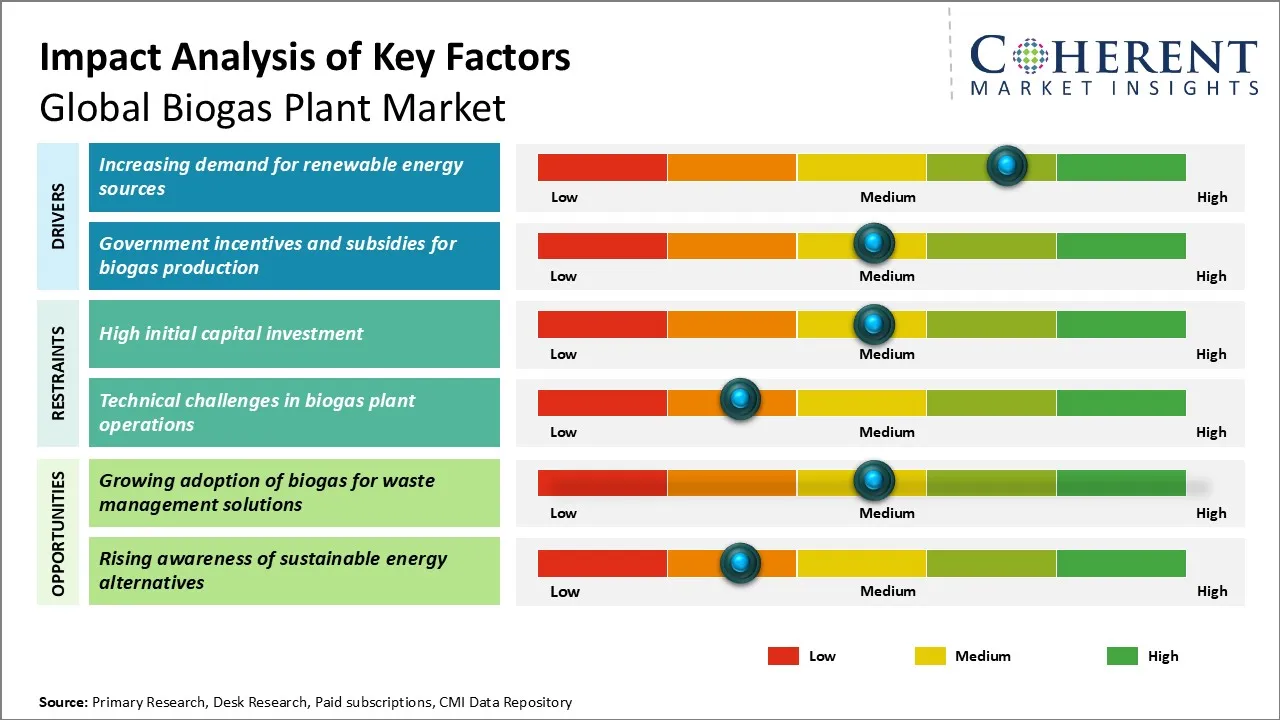
Biogas Plant Market Driver - Increasing Demand for Renewable Energy Sources
The escalating global emphasis on sustainability and environmental protection is driving the demand for renewable energy sources, positioning biogas plants as a pivotal solution in the transition towards cleaner energy. With increasing concerns over climate change and the depletion of fossil fuel reserves, governments and industries are aggressively seeking alternatives that reduce carbon footprints and promote energy independence. Biogas plants, which convert organic waste into usable energy, offer a dual advantage by not only generating renewable energy but also addressing waste management challenges. This growing preference for green technologies is further supported by policy incentives and regulatory frameworks encouraging the adoption of renewable resources.
For example, in countries like Germany and the U.K., biogas plants are being integrated into national energy strategies to replace conventional fossil fuels, aligning with their goals to achieve net-zero emissions. Germany's "Energiewende" (Energy Transition) initiative has been a strong driver for biogas plant development, which is contributing to the country's renewable energy generation capacity.
Biogas Plant Market Opportunity - Growing Adoption of Biogas for Waste Management Solutions
The global biogas plant market is witnessing significant growth opportunities driven by the increasing adoption of biogas technology for efficient waste management solutions. Rapid urbanization and industrialization have led to escalating volumes of organic waste, food waste management, including agricultural residues, food processing waste, and municipal solid waste, creating a pressing need for sustainable waste treatment methods. Biogas plants offer a dual advantage by simultaneously addressing waste disposal challenges and generating renewable energy in the form of biogas. Governments worldwide are implementing stringent regulations to manage organic waste and reduce landfill dependency, which further propels the demand for biogas-based waste treatment systems.
Biogas plants offer a compelling solution by addressing waste disposal challenges while simultaneously generating renewable energy in the form of biogas. This dual benefit is driving the expansion of the market, particularly in regions where waste management practices are under increasing scrutiny due to environmental concerns. For example, in China, which is experiencing rapid urbanization and is a major producer of organic waste, biogas plants have become an integral part of municipal solid waste treatment.
Analyst Opinion (Expert Opinion)
- The global biogas plant market is rapidly evolving, driven by the urgent need for sustainable energy solutions and waste management practices. Insights from the International Biogas Congress (2023) and the Renewable Energy Summit (2022) highlighted pivotal trends, with companies like EnviTec Biogas and Xergi at the forefront of innovation.
- EnviTec’s recent project in Germany, which integrates advanced anaerobic digestion technology, exemplifies the industry's potential to convert organic waste into renewable energy efficiently. Discussions at these conferences underscored the importance of regulatory support and financial incentives in fostering market growth, as many regions are still navigating policy frameworks for biogas development. However, challenges such as high initial investment costs and technological barriers in scaling operations were noted as significant hurdles.
- Companies that focus on modular designs and local partnerships to enhance community engagement will likely secure a competitive advantage. Furthermore, leveraging digital technologies for operational optimization can improve efficiency and reduce costs. Ultimately, the biogas plant market’s trajectory will depend on its ability to innovate while effectively addressing the dual challenges of energy production and waste management in a sustainable manner.
Speak to the analyst
Want personalized insights?
Take the findings above to one of our principal consultants, or have the report rebuilt around the segments, geographies and competitors you actually track.
Market Segmentation
- Type Insights (Revenue, USD Bn, 2021 - 2033)
- Fixed-Dome Plants
- Balloon Plants
- Floating-Drum Plants
- Feedstock Type Insights (Revenue, USD Bn, 2021 - 2033)
- Agricultural Waste
- Animal Waste
- Sewage Sludge
- Industrial Waste
- Others
- Operation Mode Insights (Revenue, USD Bn, 2021 - 2033)
- Continuous Flow Filling
- Semi-Batch Filling
- Digester Type Insights (Revenue, USD Bn, 2021 - 2033)
- Wet Anaerobic Digester
- Dry Anaerobic Digester
- Application Insights (Revenue, USD Bn, 2021 - 2033)
- Power Generation
- Heating
- Transportation Fuel
- Others
- Regional Insights (Revenue, USD Bn, 2021 - 2033)
- North America
- U.S.
- Canada
- Latin America
- Brazil
- Argentina
- Mexico
- Rest of Latin America
- Europe
- Germany
- U.K.
- Spain
- France
- Italy
- Russia
- Rest of Europe
- Asia Pacific
- China
- India
- Japan
- Australia
- South Korea
- ASEAN
- Rest of Asia Pacific
- Middle East
- GCC Countries
- Israel
- Rest of Middle East
- Africa
- South Africa
- North Africa
- Central Africa
- North America
- Key Players Insights
- Veolia Environnement S.A.
- Waste Management, Inc.
- SUEZ S.A.
- DVO, Inc.
- BioEnergy DevCo
- EnviTec Biogas AG
- WELTEC BIOPOWER GmbH
- Xergi A/S
- Agarwal Group
- Biogas Energy, LLC
- Greenlane Biogas
- Nordsol
- GWE Biogas
- Aquafer
- BTA International GmbH
Sources
Primary Research Interviews
- Project Manager – Leading Biogas Plant Manufacturer
- Operations Manager – Major Biogas Plant Facility
- Sustainability Director – Biogas Technology Solutions Provider
- Regulatory Affairs Head – International Renewable Energy Association
Stakeholders
- Manufacturers
- End Use Sectors:
- Agriculture (Manure and Waste Treatment)
- Municipal Waste Management
- Industrial Waste and Energy Generation
- Energy Utilities and Power Companies
- Regulatory & Certification Bodies
- Technology Providers (Biogas Purification, Conversion, and Storage)
- Investment Firms and Green Financing Institutions
Databases
- International Energy Agency (IEA) Biogas Data
- International Renewable Energy Agency (IRENA) Biogas Market Data
- U.S. Energy Information Administration (EIA) Renewable Energy Data
Magazines
- Renewable Energy World – Focus on Biogas Technologies and Market Trends
- Biogas Journal – Industry Insights on Biogas Production and Utilization
- Energy and Environment Magazine – Biogas Market Development and Sustainability
- Green Energy News – Innovations in Biogas and Sustainable Energy
Journals
- Renewable and Sustainable Energy Reviews – Biogas Technology and Sustainability
- Bioresource Technology – Research on Biogas Production from Organic Waste
- Energy for Sustainable Development – Economic and Environmental Impact of Biogas
- Journal of Cleaner Production – Biogas Systems for Waste-to-Energy Applications
- Renewable Energy – Advances in Biogas and Anaerobic Digestion
Newspapers
- The Financial Times – Biogas Plant Investment and Market Opportunities
- The Guardian – Growth of Biogas and Waste-to-Energy Technologies
- Asia Times – Biogas Adoption in Asia and Regulatory Developments
- The New York Times – Trends in Renewable Energy and Biogas Solutions
Associations
- International Biogas and Biomethane Association (IBBA)
- European Biogas Association (EBA)
- American Biogas Council (ABC)
- World Biogas Association (WBA)
Public Domain Sources
- U.S. EPA – Biogas and Landfill Gas Emission Standards
- European Commission – Biogas Directive and Waste-to-Energy Guidelines
- United Nations Economic Commission for Europe (UNECE) – Biogas Market Analysis
- OECD – Biogas Energy Market Assessment and Sustainability
Proprietary Elements
- CMI Data Analytics Tool, Proprietary CMI Existing Repository of information for last 8 years.
Get access to 250+ pages report
Every segment, forecast, competitor profile and data table behind the analysis above — available for instant download.
- ESOMAR Member
- ISO 9001:2015 Certified
- D-U-N-S Registered
- GDPR & CCPA Compliant
Missing comfort of reading report in your local language? Find your preferred language:
Transform your Strategy with Exclusive Trending Reports
Frequently Asked Questions
The global biogas plant market is estimated to be valued at USD 5.19 Bn in 2026 and is expected to reach USD 8.06 Bn by 2033.
The CAGR of the global biogas plant market is projected to be 6.5% from 2026 to 2033.
Increasing demand for renewable energy sources and government incentives and subsidies for biogas production are the major factors driving the growth of the global biogas plant market.
High initial capital investment and technical challenges in biogas plant operations are the major factors hampering the growth of the global biogas plant market.
In terms of type, the fixed-dome plants segment is estimated to dominate the market revenue share in 2026.
Veolia Environnement S.A., Waste Management, Inc., SUEZ S.A., DVO, Inc., BioEnergy DevCo, EnviTec Biogas AG, WELTEC BIOPOWER GmbH, Xergi A/S, Agarwal Group, Biogas Energy, LLC, Greenlane Biogas, Nordsol, GWE Biogas, Aquafer, and BTA International GmbH are the major players.
Europe is expected to lead the global biogas plant market in 2026.