
Flat 45% off this market research report
Nov 26 – 29 · Direct purchase only · Not applicable to customized reports
Global Breathable Antimicrobial Coatings Market Size and Share Analysis- 2026 To 2033
The breathable antimicrobial coatings market is predicted to maintain a considerable size of USD 750 Mn in 2026 and therefore reaching USD 1558.0 Mn by 2033, following a CAGR of 11%. This sector is known to commercialize specialized surface treatments, which are designed to prohibit microbial growth and permit the transmission of air or water vapor through coated substrates at the same time.
Such characteristics of breathable antimicrobial coatings makes them highly useful in minimizing moisture accumulation, material degradation, fungal colonization, and microbial contamination. Thus, the increasing demand for hygienic building materials, infection-resistant medical textiles, moisture-permeable protective coatings, and antimicrobial functional finishes is fueling growth in this sector.
Advancements in water-based formulations, silver-ion technologies, nanocomposite materials, and non-metallic antimicrobial agents are further enlarging the field of their commercial applications across healthcare, construction, textiles, food processing, and industrial environments. For instance, in October 2025, LG Electronics announced extension of its PuroTec antimicrobial glass powder portfolio at K 2025 in Germany by introducing five core product lines, featuring glass-matrix-based antimicrobial additives. This addition is suitable for use in plastics, coatings, powder coatings, and textiles.
Key Takeaways of the Global Breathable Antimicrobial Coatings Market
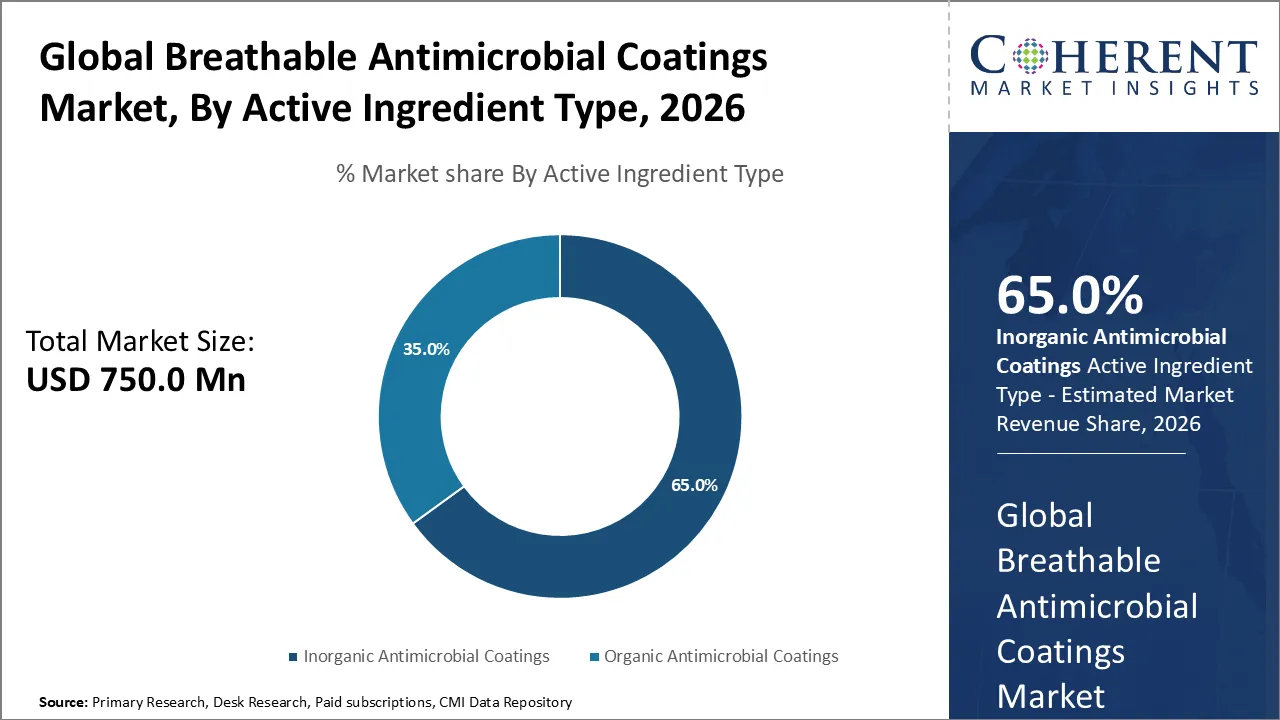
- The category of inorganic antimicrobial coatings is expected to account for 65.0% of the global breathable antimicrobial coatings market share in 2026. The extended antimicrobial functionality of silver, copper, and zinc-based materials support their broad incorporation into porous substrates and moisture-permeable polymer systems. A study published by the Royal Society of Chemistry (RSC) in December 2024 identified the potential of newly developed copper(I)-based antimicrobial additives in achieving more than 99.9% reduction in Staphylococcus aureus, while being incorporated into water-based white latex paints and transparent coatings. It also showed results from a nine-month limited field study in which antimicrobial-painted surfaces recorded approximately 60% lower microbial bioburden than environmental control surfaces.
- The water-based coatings are poised to hold 48.0% market share in 2026. Heavy use in making porous construction materials, meeting lower solvent requirements, and suitability for occupied indoor environments consolidates this dominance. A 2025 study available through the National Institutes of Health (NIH) evaluated water-based transparent acrylic coatings on beech wood. Pretreatment using a 1% high-molecular-weight polyethylenimine solution produced 72% reduction in water uptake compared with untreated wood and 23.2% reduction in surface energy. It also recorded coating adhesion strength of 3.55 MPa, compared with 3.54 MPa for untreated samples.
- The healthcare & pharmaceutical is estimated to account for 34.0% market share in 2026. Increasing utilization of antimicrobial wound-contact materials, medical fabrics, and hygienic facility finishes is enabling substantial expansion in demand from this use case. A 2025 NLM article evaluated multilevel antimicrobial polymer (MAP-1) coatings on bedding materials in a long-term healthcare facility. The study examined 288 samples from 96 bedsheets and demonstrated 80.37% and 87.31% reduction in total viable bacteria and methicillin-resistant Staphylococcus aureus (MRSA), respective, after 7 days of use.
- North America is projected to maintain dominance by holding a 36.0% revenue share in the global breathable antimicrobial coatings market in 2026. The wide availability of established medical material manufacturers, commercial building maintenance programs, and specialized antimicrobial technology suppliers consolidate the region’s leadership. According to the International Trade Administration (ITA), the U.S. accounted for 46% of global medical device sales in 2024, making it the world's largest landscape for this industry.
- Asia Pacific is anticipated to emerge as the fastest-growing regional marketplace during 2026-2033. Amplifying capacity in technical textile manufacturing, urban infrastructure development, and healthcare access is creating lucrative opportunities for specialized coating manufacturers. In this regard, in a March 2026 publication, the Ministry of Textiles in India estimated the country to retain a positive trade balance of Rs. 3,017 crores for technical textiles during FY 2025-26. Furthermore, in February 2026, the National Technical Textiles Mission approved 16 new research projects focusing on advanced technical textiles, functional fabrics, high-performance fibres, protective equipment, and industrial composite systems.
Segmental Insights
Why Does Inorganic Antimicrobial Coatings Dominate the Global Breathable Antimicrobial Coatings Market?
The Inorganic Antimicrobial Coatings Sub-Segment is Anticipated to Capture 65.0% of the Global Breathable Antimicrobial Coatings Market Share in 2026. Growth in this category is primarily attributed to the incorporation of metallic ions and metal oxide particles into porous coating matrices at a large scale, as they help enable sustained microbial growth inhibition without necessarily forming an impermeable surface barrier. Specifically, silver, copper, and zinc-based antimicrobial additives are gaining popularity for use in textile finishes, medical materials, and moisture-exposed architectural coatings.
Controlled release and nano-encapsulation are being investigated in an attempt to further enhance antimicrobial effectiveness and to retain the properties of a material. Furthermore, the versatility of inorganic antimicrobials to be incorporated into polymers, textiles and even minerals are enhancing their market appeal within the antimicrobial coatings industry.
For instance, in November 2024, Imbed Biosciences gained 510(k) approval for its Microlyte Ag/Lidocaine wound matrix, combining both antiseptic and analgesic properties. Continuing this theme of innovative development, in September 2025, Reolite was registered by the U.S. Environmental Protection Agency (EPA) registration for its silver-ion (Ag⁺) and zinc-ion (Zn²⁺) antisepic powder. This was worldwide approval for a biocide containing two active components.
- Current Industry Events of 2026
- Market Size Estimation
- Regional Breakdown
- Competitive Landscape
- Customer Intelligence
- Segmental Analysis
- Pricing Analysis
- Key Market Drivers, Challenges & Future Trends
- Customized Insights Section
Why is Water-based the Most Preferred Formulation?
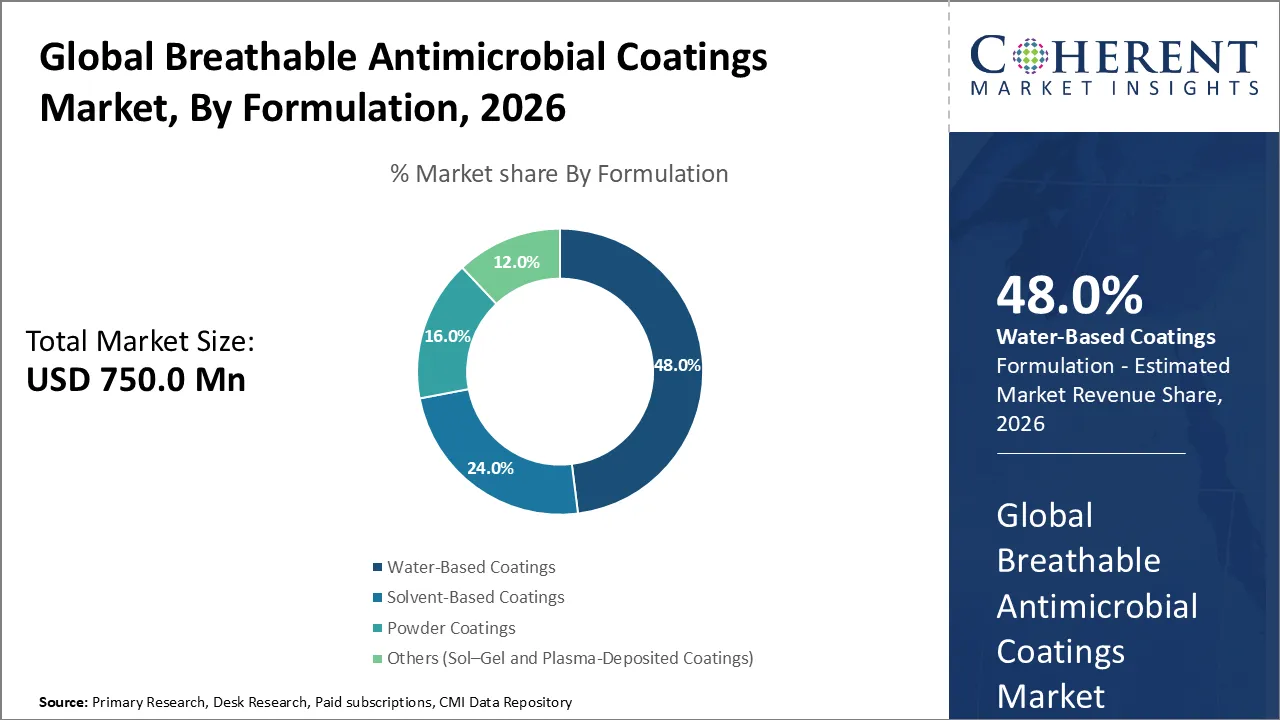
Water-based coatings are expected to hold 48.0% of the global breathable antimicrobial coatings market in 2026. Waterborne acrylic and polyurethane dispersions can be formulated to optimally control permeability and the bonding behaviour of coatings applied to different substrates. This is especially pertinent to plaster, stonework, cementitious and fibrous materials since poor moisture release from these substrates can lead to premature coating degradation. As an example of bio-based particle coatings, a 2024 RSC article described how test material had been successfully produced with an air permeability range of 23-31 mm/s and with a high fabric water contact angle (around 150°).
Subsequently, the positioning of this formulation largely benefits from the increasing demand for moisture-compatible architectural finishes, lower-emission coating systems, and formulations suitable for application within occupied buildings. Evidencing continued innovation in these moisture-management architectural coatings, in April 2025, Mapei introduced a water-based interior paint, Dursilite Equilibra, which is designed to resist mold and reduce condensation through specialized polymer microspheres.
Healthcare And Pharmaceutical Dominates the Global Breathable Antimicrobial Coatings Market
The healthcare and pharmaceutical segment is projected to acquire 34.0% of the global breathable antimicrobial coatings market share in 2026. Demand from this field of application majorly originates from the increasing cases of healthcare-associated infection (HAI), where a 2026 PLOS Journal identified an annual 136 million antibiotic resistant HAIs worldwide. Further analysis unveiled that 7% and 15% of hospitalized patients in high-income countries (HICs) and low- and middle-income countries (LMICs) were affected by at least one HAI, respectively. Besides, 30% of intensive care unit (ICU) patients most possibly develop HAIs, with 10% of HAI-afflicted patients dying.
These figures indicate the growing need to maintain moisture balance around wounds, preserve patient comfort, and protect medical materials from microbial deterioration is encouraging the development of specialized antimicrobial surface technologies. Subsequently, manufacturers are localizing antimicrobial functionality, biocompatibility, controlled moisture transmission, and resistance to address the surge induced by repeated healthcare requirements. As evidence, in February 2026, Polaroid Therapeutics secured CE marking for its antimicrobial gelling fiber dressing, POLTX_Fiber, incorporating proprietary Antimicrobial Polymer Technology.
Current Events and Their Impact on the Global Breathable Antimicrobial Coatings Market
Current Event | Description and its Impact |
Implementation of Awaab’s Law for Damp and Mold Remediation in England (October 2025) |
|
U.S. EPA Investment in School Indoor Air Quality Improvement (2024) |
|
Global Breathable Antimicrobial Coatings Market Dynamics
Market Drivers
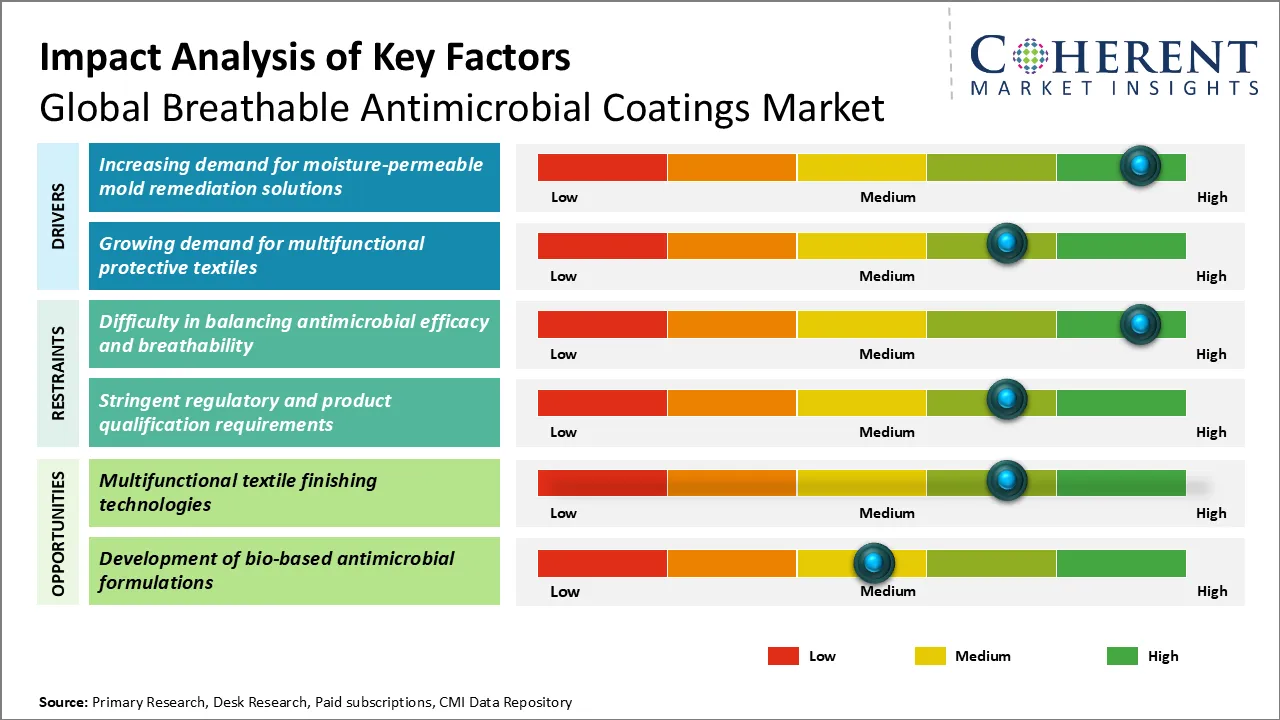
- Increasing demand for moisture-permeable mold remediation solutions: Conventional dense coating films can impede the movement of moisture from porous walls and mineral substrates, particularly in bathrooms, basements, kitchens, and humid industrial facilities. Whereas breathable antimicrobial coatings offer a complementary protective solution by allowing water vapor to escape while resisting microbial deterioration of the coating film.
- Thus, property managers and professional remediation contractors prioritizing coating compatibility with masonry, plaster, concrete, and insulated building systems is creating opportunities for manufacturers in the global breathable antimicrobial coatings market. Specifically, those offering specialized vapor-permeable acrylic and mineral-based coatings.
- Around 31% of UK households (approx. 7.7 million) suffered from condensation, damp and/or mould according to the UK Governments English Housing Survey 2024-2025 (published July 2026) [RB15]. Additionally, the 2026 UK government Weather Resilient Homes report identified 4.2 million properties that had been damaged by water after 2024 storms. 28% of solid built properties also had warping issues as a result of moisture.
- Growing surge in multifunctional protective textiles: Smart functionals are becoming more popular. Conventional fabric treatments can cause poor breathability and impede moisture permeability if too thick. Functional fabrics on the worldwide smart breathable anti-microbial market, however, are able to effectively combat moisture, smell and bacteria, whilst still allowing an individual wearing them to remain comfortable. This advantageous offering is attracting greater consumer preference towards this sector.
- Tracing this surge, manufacturers are now expanding their portfolio in microporous polymer coatings and lightweight surface treatments that preserve the functional properties of sportswear, workwear, medical garments, and outdoor textiles. Therefore, continued product development in this aspect fosters innovations in breathable protective clothing and coated technical fabrics.
- Testifying to the growing interest in this category, in October 2025, an NLM article-indexed study evaluated an experimental microporous polyurethane-coated cotton fabric, which achieved air permeability of 210 L/m²/s and water vapor permeability of 480 g/m²/day. Commercial implementation of this revenue pathways can further be exemplified by the launch of AEROVENT ZERO, a high-performance PFAS-free waterproof and breathable textile material, which was a collaborative development of ANTA and Donghua University in August 2025.
Global Breathable Antimicrobial Coatings Market Trends
- Development of sustainable antimicrobial textile systems: Manufacturers are increasingly combining antimicrobial material protection with environmental performance. For instance, in September 2024, Microban International partnered with CiCLO Technology to incorporate antimicrobial functionality and enhanced end-of-life biodegradation characteristics into synthetic fibers, yarns, and fabrics.
- Thermo-regulation and protection: There has been interest in the development of a product that can both thermo regulate and protect. In February 2025, being part of this developing group, Polygiene Group launched a new product called StayCool. This is a thermoregulatory product which also works in conjunction with their current deodorizing range. It cools textiles by 2-3 degrees in humid and warm conditions.
- Emergence of heavy-metal alternatives: Growing interest in non-metallic active ingredients is encouraging deeper research into chitosan, bio-based polymers, and immobilized antimicrobial compounds. Evidencing these R&D efforts, in December 2024, Microban International launched a nature-inspired, heavy-metal-free textile odor treatment, Freshology, at ISPO Munich.
Regional Insights
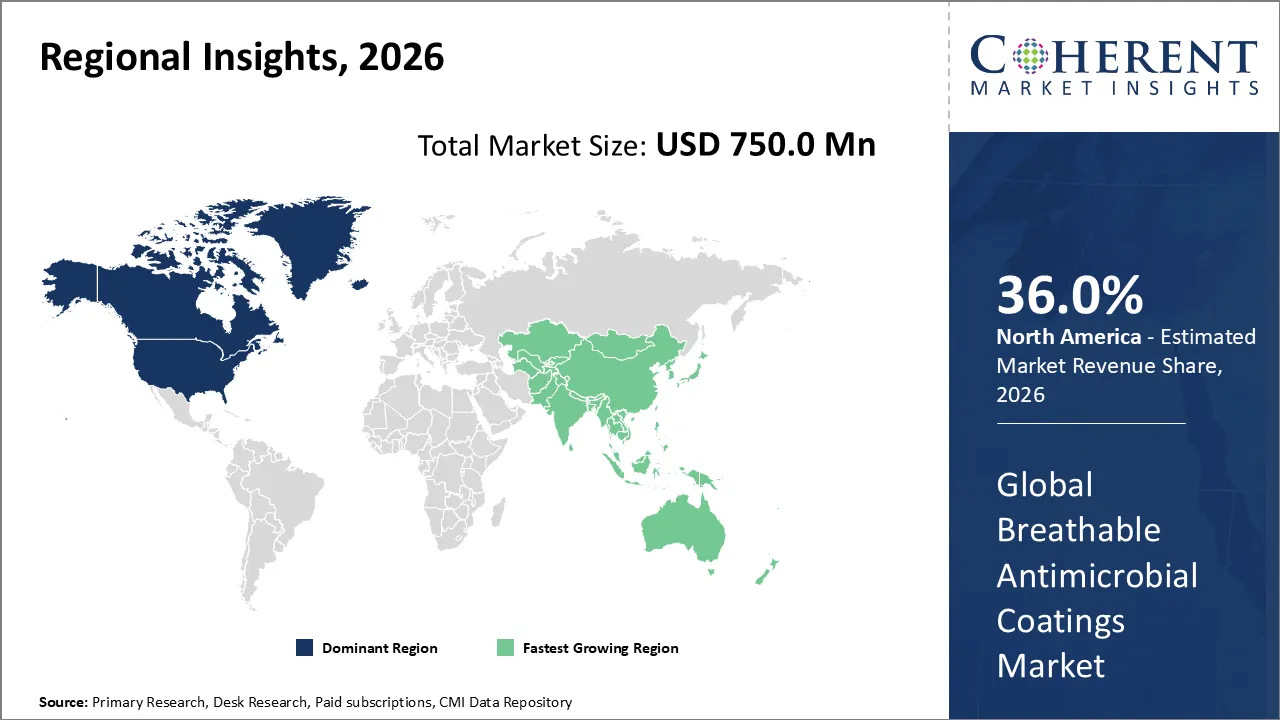
Why Does North America Dominate the Global Breathable Antimicrobial Coatings Market?
North America is expected to lead the global breathable antimicrobial coatings market by capturing a 36.0% revenue share in 2026. This proprietorship consolidation comes from the region being home to established specialty chemical manufacturers, advanced healthcare material development capabilities, and a mature professional building maintenance industry. Such an enriching factor can be testified by the presence of a domestic pioneer Microban International, launching a portfolio of PFAS-free water-resistant textile treatments, H₂O Shield, across America in June 2025. In addition, this portrays the regional capabilities progressing beyond antimicrobial protection into complementary functional textile technologies.
On the other hand, commercial property owners and institutional facility managers in North America are increasingly prioritizing coatings that combine resistance to microbial deterioration, while maintaining compatibility with moisture-sensitive substrates. For instance, in September 2024, the New York State Department of Health announced USD 5 million in funding to support school environmental health initiatives, including training in mold and moisture management and indoor air quality improvement. The region's mature medical technology industry also supports demand for differentiated antimicrobial materials with controlled permeability and substrate-specific performance.
Why Is Asia Pacific Emerging as the Fastest-Growing Breathable Antimicrobial Coatings Market?
Asia Pacific is projected to register the fastest growth in the global breathable antimicrobial coatings market share during 2026-2033. The region’s accelerated growth is fueled by its extensive textile manufacturing ecosystem, increasing investment in specialty chemical production, and growing commercialization of advanced healthcare materials. In particular, China, India, Japan, and South Korea represent themselves as a consortium of important demand bases for antimicrobial coating developers targeting technical fabrics, medical substrates, filtration materials, and moisture-exposed infrastructure.
Leading APAC Countries in Textile Exports and Textile Processing Machinery Imports, 2024
Country | Textile Exports (USD Bn) | Textile Processing Machinery Imports (USD Mn) |
China | 268 | 259 |
Vietnam | 49.8 | 329 |
India | 39.2 | 258 |
Indonesia | 13.5 | 144 |
South Korea | 10.3 | 102 |
Moreover, the presence of large textile processing clusters and an enlarging HAI & chronic wound epidemiology provide opportunities for suppliers in this sector. Evidencing such an incremental consumer base, an NLM-cited analysis of studies conducted between January 1, 2000, and July 15, 2024 found that the South-East Asian Region presented the highest prevalence of HAI, with the rate reaching almost 40%. Besides, increasing support from commercial manufacturing authorization supports the introduction of advanced antimicrobial wound-contact technologies within the Indian healthcare ecosystem. For instance, in November 2025, India's Department of Atomic Energy, in collaboration with Cologenesis Pvt. Ltd., introduced a nitric oxide-releasing wound dressing, ColoNoX, for diabetic foot ulcer management.
Global Breathable Antimicrobial Coatings Market Outlook for Key Countries
Why Is the U.S. a Major Commercial Hub for Breathable Antimicrobial Coatings?
The U.S. breathable antimicrobial coatings market is empowered by extensive commercial construction activity, advanced specialty chemical manufacturing, and established distribution networks for professional protective coatings. Displaying the scale of the underlying construction industry that provides potential application opportunities for specialty architectural coatings, during the first nine months of 2026, construction expenditure in the country amounted to USD 1,649.6 billion, as described by the U.S. Census Bureau in its November 2026 report.
The availability of specialized formulation laboratories and antimicrobial efficacy testing infrastructure is further enabling the required assistance in widespread commercialization of differentiated coating systems. Besides, the growing demand for moisture-compatible surface protection also creates opportunities within the broader protective coatings industry. To utilize such a diverse demand base and domestic capabilities, manufacturers are increasingly targeting building refurbishment projects, institutional facilities, healthcare environments, and high-performance consumer materials.
Is China Becoming a Manufacturing Powerhouse for Breathable Antimicrobial Coatings?
China's breathable antimicrobial coatings market is augmenting through its integrated chemical manufacturing industry, large-scale fabric processing infrastructure, and expanding production of specialized polymer materials. As evidence, the National Bureau of Statistics recorded a 3.0% and 7.8% increase in the value added for textile industry and manufacture of raw chemical materials & chemical products from 2024 to 2025, respectively. Additionally, the country's capabilities in nanoparticle manufacturing, polyurethane processing, and large-volume textile finishing provide a favorable environment for commercializing novel formulations.
These opportunities are particularly significant for suppliers offering scalable application methods compatible with existing manufacturing equipment. Thus, domestic manufacturers are increasingly developing surface treatments suitable for incorporation into high-performance fabrics and porous industrial substrates. For instance, in November 2024, Technical Control showcased its latest development of high-performance water-based polyurethane resins for screen printing and textile inkjet printing at the China Import and Export Fair Complex in Guangzhou. The formulation is capable of delivering exceptional adhesion and wash resistance on a variety of substrates, including cotton, denim, nylon, and spandex.
Germany Breathable Antimicrobial Coatings Market Analysis and Trends
Germany's growth in the breathable antimicrobial coatings market is driven by its mature specialty chemical industry, advanced textile finishing expertise, and extensive technical capabilities in polymer formulation. Exemplifying the country's favorable industrial finishing capabilities, in 2025, the nationwide textile and clothing industry garnered a total turnover of over €28 billion, involving more than 8 thousand active companies, as updated by 2026 case study.
As a result, the focus of German chemical manufacturers is concentrated on producing durable functional additives that can be integrated into existing industrial textile manufacturing processes. This is to address the growing demand for improved material longevity and differentiated hygiene-related properties, which is therefore promoting collaboration between specialty additive producers and industrial finishing companies. As evidence, in July 2025, SANITIZED AG and Germany-based RUDOLF signed a strategic distribution partnership covering Sanitized textile additive technologies.
U.K. Breathable Antimicrobial Coatings Market Analysis and Trends
The U.K. breathable antimicrobial coatings market is notably backed by the rising local demand for residential property rehabilitation, damp-resistant building finishes, and professional mold remediation services. This is a direct impact growing concerns over older housing stock, moisture-related building defects, and condensation challenges. The English Housing Survey 2024-2025 reported that approximately 1.4 million dwellings, representing 5% of England's housing stock, experienced damp problems in 2024. It is imposing a massive surge in coating systems compatible with porous plaster and masonry.
As a result, suppliers capable of offering vapor-permeable anti-fungal coatings supported by appropriate application guidance are well-positioned to serve housing associations and professional maintenance contractors. A real-world case of capitalizing this opportunity is MouldAway UK expanding its presence towards Scotland by earning exclusive distributorship of a revolutionary anti-mould coating system, Inducoat Fungi, with the event taking place in August 2025.
Japan Breathable Antimicrobial Coatings Market Analysis and Trends
Japan is marking a significant leap in revenue generation from the breathable antimicrobial coatings market, which is a result of the nation’s technological expertise in functional fibers, precision surface engineering, medical materials, and high-performance polymer systems. Such advantageous capabilities can be seen in an October 2025 commercial event, when Toray Industries announced the international launch of its Toray Premium GOUSEN select series of high-technology fibers. These four high-value-added brands harness the company’s proprietary polymer and composite spinning technologies to deliver breakthrough performance.
To capitalize on the same, Japanese manufacturers are extending their cohort of development for lightweight textile treatments and specialized materials to address the unmet need from healthcare, daily-use products, and performance apparel. The demographic profile of Japan also provides allied demand context for elderly-care textiles and advanced medical materials, where 36.25 million residents were found to be aged 65 years and over, as updated by the World Economic Forum in 2024.
How Is the Development of Multifunctional Textile Finishes Creating New Growth Opportunities in the Breathable Antimicrobial Coatings Market?
Combining antimicrobial protection with water resistance, thermal regulation, and moisture management can enable manufacturers to differentiate sportswear, medical apparel, industrial workwear, and protective fabrics. Subsequently, the continued development of multifunctional textile finishes can bring along an important growth opportunity for the global breathable antimicrobial coatings market. Textile manufacturers are increasingly showing interest in treatments that deliver multiple functional properties without substantially increasing fabric weight or compromising wearer comfort. Thus, opportunities from this surge are particularly attractive for companies with a broad pipeline of coating technologies that can be applied using conventional textile finishing equipment.
This scope of portfolio expansion can be testified by a research cohort formed through participation from established institutions of India, which was published in a November 2025 Journal of Progress in Organic Coatings. The study investigated fluorine-free composite coatings for wearable cotton fabrics that combined breathability, self-cleaning performance, and light-induced microbial deactivation. Optimized coatings of candle soot/polydimethylsiloxane/polylactic acid (CS/PDMS/PLA) composite showed high water repellence with a water contact angle of 159 ± 2° and a low sliding angle of 6°.
Furthermore, the coating demonstrated superior mechanical stability by retaining its superhydrophobicity even after 55 sandpaper abrasion cycles, 12 adhesive tape peeling cycles, 140 min of ultrasound, and 90 min of washing treatment. Besides, the surface temperature of coated cotton fabric rose to 70.2 °C within 60 s under 1 sun solar illumination. These results justifies the study considering the novel composite as a potential solution for wearable cotton fabric with light-induced self-sterilization.
Market Players, Key Development, and Competitive Intelligence
Key Developments
- In January 2026, Archroma and HeiQ announced a partnership to commercialize advanced antimicrobial and odor-control technologies for textile manufacturers. The collaboration combines specialty chemical expertise with functional material innovation and international distribution capabilities.
- In February 2026, RUDOLF officially assumed exclusive worldwide distribution rights for Sanitized textile technologies, expanding the commercial availability of antimicrobial treatments for clothing and home textiles.
Competitive Landscape
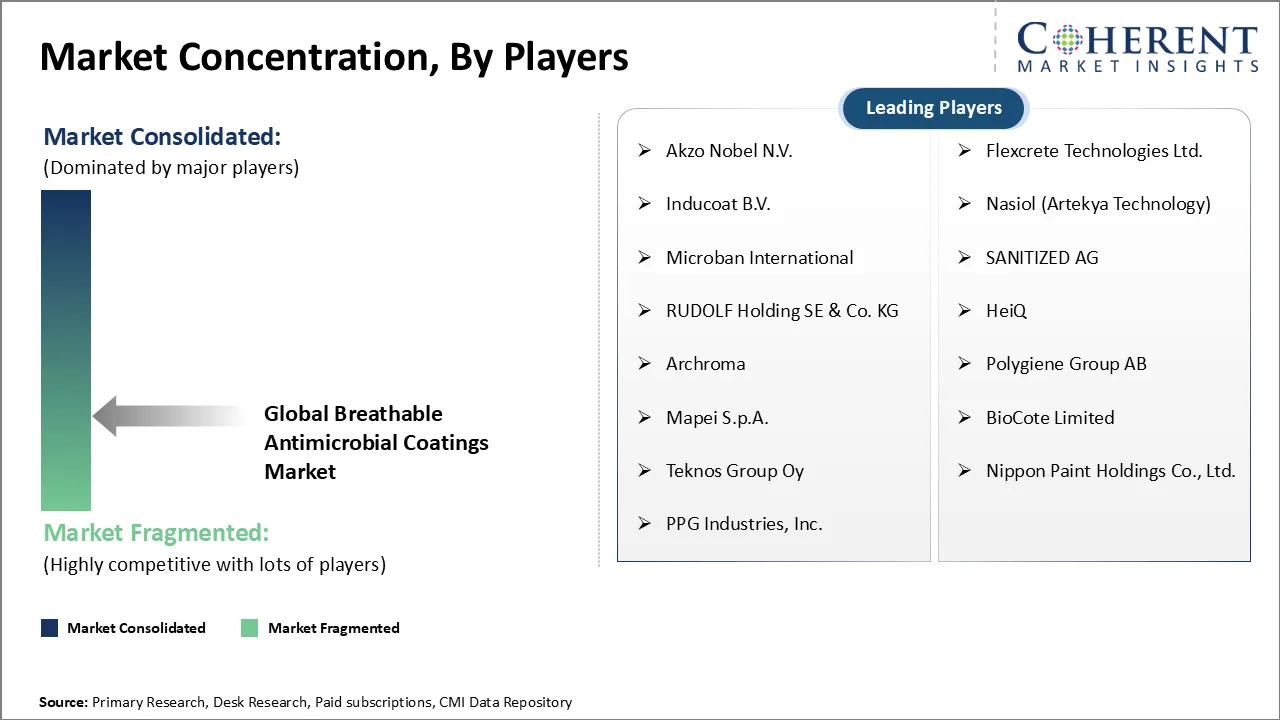
The global breathable antimicrobial coatings market is characterized by competition among architectural coating manufacturers, specialty antimicrobial technology providers, textile chemical companies, and medical material developers. In terms of individual operations, Flexcrete Technologies and Inducoat focus on moisture-permeable hygienic coatings for construction and refurbishment applications, while Nasiol specializes in thin-film nanocoatings offering antimicrobial surface functionality.
On the other hand, Microban International, SANITIZED AG, and RUDOLF concentrate on antimicrobial additives and functional finishing technologies that can be integrated into different substrate systems. Whereas HeiQ, Archroma, and Polygiene Group are pursuing differentiated commercial opportunities in performance textiles, functional fabrics, and material protection technologies.
In addition to this competitive consortium, specialized medical material companies are also considering participation in this sector, targeting antimicrobial wound-contact substrates and advanced surface protection applications within the broader wound dressing industry. For instance, in April 2026, Safe N Simple LLC and Advamedica Inc. joined forces to enable nationwide distribution of MaxioCel chitosan-based gelling fibre wound dressings across America.
Top Manufacturers and Notable Products/Solutions in the Global Breathable Antimicrobial Coatings Market
Company/Manufacturer | Notable Product/Brand | Key Features |
Flexcrete Technologies Ltd. | Water-based elastomeric antimicrobial coating, vapor permeability, hygienic architectural applications, moisture-compatible surface protection. | |
Inducoat B.V. | Mold-resistant finishing film, vapor permeability, compatibility with moisture-exposed building substrates. | |
Nasiol (Artekya Technology) | Breathable silane-based nanocoating, antibacterial and antiviral functionality, transparent surface protection. | |
Flexcrete Technologies Ltd. | High-build elastomeric hygiene coating, vapor permeability, flexibility, application in hygiene-sensitive environments. | |
Microban International | Heavy-metal-free antimicrobial technology designed for incorporation into water-based coating formulations. | |
Microban International | Zinc-based antimicrobial and antifungal technology suitable for textiles, paints, coatings, and polymer systems. | |
SANITIZED AG | Sanitized Textile Technologies | Functional antimicrobial textile treatments, integrated material protection, apparel and home textile applications. |
RUDOLF Holding SE & Co. KG | RUCO-BAC | Antimicrobial textile finishing technologies, including silver-based functional treatments. |
Market Report Scope
Global Breathable Antimicrobial Coatings Market Report Coverage
Report Coverage | Details | ||
Base Year: | 2025 | Market Size in 2026: | USD 750.0 Mn |
Historical Data for: | 2020 to 2024 | Forecast Period: | 2026 to 2033 |
CAGR: | 11.0% | 2033 Value Projection: | USD 1,557.1 Mn |
Geographies covered: |
| ||
Segments covered: |
| ||
Companies covered: | Akzo Nobel N.V., Flexcrete Technologies Ltd., Inducoat B.V., Nasiol, Microban International, SANITIZED AG, RUDOLF Holding SE & Co. KG, HeiQ, Archroma, Polygiene Group AB, Mapei S.p.A., BioCote Limited, Teknos Group Oy, Nippon Paint Holdings Co., Ltd., and PPG Industries, Inc. | ||
Growth Drivers: |
| ||
Restraints & Challenges: |
| ||
Analyst Opinion (Expert Opinion)
- The global breathable antimicrobial coatings market is transitioning from conventional single-function surface protection toward multifunctional coating systems engineered to maintain moisture transmission, antimicrobial activity, and substrate durability. Manufacturers are expected to increasingly differentiate their offerings through application-specific permeability performance rather than relying solely on antimicrobial efficacy claims. Coatings designed for masonry, fabrics, and medical substrates will require distinct formulation architectures and product testing approaches. In February 2025, Polygiene Group expanded its portfolio by introducing a moisture-activated textile treatment, StayCool, that reduces fabric temperature by 2-3°C and is compatible with cotton, synthetic fibres, and recycled textiles. The technology is specifically designed for sportswear, workwear, and everyday apparel.
- The strongest commercial opportunities are anticipated in professional building refurbishment, advanced medical materials, and functional textile processing. The increasing sophistication of specialty additives within the textile chemicals industry is expected to support the development of coating systems that can be integrated into existing finishing lines without substantial manufacturing modifications. For instance, in June 2026, Biocompatibility Innovation (BCI) launched a plant-derived surface technology, B-Kool, which prevents bacterial contamination through a mechanical rather than biocidal mechanism. Developed for medical devices and life-support equipment, the technology offers an alternative to conventional antimicrobial chemistries.
- Market participants should prioritize measurable performance differentiation, including water vapor transmission, antimicrobial durability after washing, coating adhesion under humid conditions, and resistance to repeated cleaning. Developing standardized product documentation and establishing partnerships with substrate manufacturers, medical material developers, and professional coating applicators could strengthen commercialization prospects. Manufacturers should distinguish between protection of the coated material and claims concerning human infection prevention.
Speak to the analyst
Want personalized insights?
Take the findings above to one of our principal consultants, or have the report rebuilt around the segments, geographies and competitors you actually track.
Market Segmentation
- By Active Ingredient Type (Revenue, USD Mn, 2021-2033)
- Inorganic Antimicrobial Coatings
- Silver-Based Coatings
- Copper-Based Coatings
- Zinc-Based Coatings
- Others (Titanium Dioxide and Magnesium Oxide)
- Organic Antimicrobial Coatings
- Quaternary Ammonium Compound-Based Coatings
- Chitosan-Based Coatings
- Organic Polymer-Based Coatings
- Others (Plant-Derived Antimicrobial Agents and Organic Acids)
- Inorganic Antimicrobial Coatings
- By Formulation (Revenue, USD Mn, 2021-2033)
- Water-Based Coatings
- Solvent-Based Coatings
- Powder Coatings
- Others (Sol–Gel and Plasma-Deposited Coatings)
- By Application (Revenue, USD Mn, 2021-2033)
- Healthcare & Pharmaceutical
- Mold Remediation
- Textiles
- Indoor Air Quality & HVAC
- Food & Beverage Processing
- Others (Packaging and Industrial Filtration)
- By Region (Revenue, USD Mn, 2021-2033)
- North America
- U.S.
- Canada
- Latin America
- Brazil
- Mexico
- Argentina
- Rest of Latin America
- Europe
- Germany
- U.K.
- France
- Italy
- Spain
- Russia
- Rest of Europe
- Asia Pacific
- China
- India
- Japan
- Australia
- South Korea
- ASEAN
- Rest of Asia Pacific
- Middle East
- GCC
- Israel
- Rest of Middle East
- Africa
- South Africa
- Central Africa
- North Africa
- North America
- Key Players
- Akzo Nobel N.V.
- Flexcrete Technologies Ltd.
- Inducoat B.V.
- Nasiol (Artekya Technology)
- Microban International
- SANITIZED AG
- RUDOLF Holding SE & Co. KG
- HeiQ
- Archroma
- Polygiene Group AB
- Mapei S.p.A.
- BioCote Limited
- Teknos Group Oy
- Nippon Paint Holdings Co., Ltd.
- PPG Industries, Inc.
Sources
Primary Research Interviews
- Breathable antimicrobial coating manufacturers and formulation specialists
- Antimicrobial additive and specialty chemical manufacturers
- Architectural and protective coating R&D professionals
- Technical textile manufacturers and textile finishing specialists
- Medical textile and antimicrobial wound dressing manufacturers
- Mold remediation and building maintenance service providers
- HVAC filtration and indoor air quality solution providers
- Regulatory affairs specialists and antimicrobial efficacy testing experts
- Key opinion leaders (KOLs) in polymer science, nanotechnology, and antimicrobial surface engineering
Databases
- U.S. Environmental Protection Agency (EPA)
- U.S. Food and Drug Administration (FDA)
- National Institutes of Health (NIH)
- National Library of Medicine (NLM) – PubMed and PubMed Central
- U.S. Census Bureau – Construction Spending Database
- International Trade Administration (ITA)
- Observatory of Economic Complexity (OEC)
- National Bureau of Statistics of China (NBS)
- World Economic Forum (WEF)
- English Housing Survey (EHS)
- World Intellectual Property Organization (WIPO) – PATENTSCOPE
- United Nations Industrial Development Organization (UNIDO)
Magazines
- Coatings World
- European Coatings
- Paint & Coatings Industry (PCI)
- Textile World
- Technical Textiles International
- Specialty Chemicals Magazine
- International Fiber Journal
- Nonwovens Industry
- Medical Product Outsourcing
- Textile Today
Journals
- Progress in Organic Coatings
- Materials Advances
- RSC Advances
- ACS Omega
- ACS Applied Materials & Interfaces
- PLOS ONE
- Journal of Coatings Technology and Research
- Surface and Coatings Technology
- Carbohydrate Polymers
- Journal of Industrial Textiles
- Advanced Healthcare Materials
- Journal of Applied Polymer Science
- Frontiers in Sustainability
- Journal of Hospital Infection
Newspapers
- The New York Times
- The Wall Street Journal
- Financial Times
- The Guardian
- The Economic Times
- Reuters
- China Daily
- The Japan Times
- Handelsblatt
Associations
- American Coatings Association (ACA)
- World Coatings Council (WCC)
- British Coatings Federation (BCF)
- European Council of the Paint, Printing Ink and Artists’ Colours Industry (CEPE)
- German Paint and Printing Ink Association (VdL)
- American Association of Textile Chemists and Colorists (AATCC)
- International Textile Manufacturers Federation (ITMF)
- Association of the Nonwoven Fabrics Industry (INDA)
- European Disposables and Nonwovens Association (EDANA)
- ASTM International
- Association for Professionals in Infection Control and Epidemiology (APIC)
- European Wound Management Association (EWMA)
- Confederation of Indian Textile Industry (CITI)
Public Domain Sources
- Company Annual Reports and Investor Presentations
- Corporate Press Releases, Product Launch Announcements, and Strategic Partnership Disclosures
- U.S. EPA Antimicrobial Product Registration and Indoor Air Quality Improvement Program Publications
- U.S. FDA 510(k) Premarket Notification Database and Medical Device Clearance Announcements
- U.K. Government English Housing Survey and Weather Resilient Homes Assessment Publications
- U.K. Government Awaab’s Law Regulatory and Implementation Documents
- New York State Department of Health School Environmental Health Funding Announcements
- Ministry of Textiles, Government of India – National Technical Textiles Mission Publications
- Department of Atomic Energy, Government of India – Technology Commercialization Announcements
- Royal Society of Chemistry Research Publications on Antimicrobial Additives and Functional Coatings
- National Library of Medicine Research Publications on Antimicrobial Polymers, Healthcare-Associated Infections, and Breathable Textile Coatings
- International Trade Administration Medical Device Industry Reports
- Observatory of Economic Complexity Textile Export and Textile Processing Machinery Import Statistics
- National Bureau of Statistics of China – Textile and Chemical Manufacturing Industry Statistics
- University Research Publications on Multifunctional Textile Finishes and Nanocomposite Coatings
- Manufacturer Technical Datasheets and Product Performance Specifications
- Patent Publications Related to Vapor-Permeable Antimicrobial Coatings and Bio-Based Surface Treatments
- Publicly Available Research on Antimicrobial Efficacy, Air Permeability, and Water Vapor Transmission
Proprietary Elements
- CMI Data Analytics Tool
- Proprietary CMI Existing Repository of Information for the Last 10 Years
Get access to 250+ pages report
Every segment, forecast, competitor profile and data table behind the analysis above — available for instant download.
- ESOMAR Member
- ISO 9001:2015 Certified
- D-U-N-S Registered
- GDPR & CCPA Compliant
Frequently Asked Questions
The global breathable antimicrobial coatings market is estimated to reach USD 1,557.1 Mn by 2033, compared with USD 750.0 Mn in 2026.
Prominent market participants include Flexcrete Technologies Ltd., Inducoat B.V., Nasiol, Microban International, SANITIZED AG, RUDOLF Holding SE & Co. KG, HeiQ, Archroma, Polygiene Group AB, and Akzo Nobel N.V.
Technical difficulties in maintaining simultaneous antimicrobial activity and breathability, stringent regulatory requirements, formulation costs, and long-term performance qualification requirements are the primary factors hampering market growth.
Increasing demand for mold-resistant architectural finishes, growing adoption of antimicrobial technical textiles, advancements in porous coating formulations, and expanding applications in medical materials are driving market growth.
The global breathable antimicrobial coatings market is anticipated to grow at a CAGR of 11.0% between 2026 and 2033.
North America is estimated to dominate the global breathable antimicrobial coatings market, accounting for approximately 36.0% of market share in 2026, while Asia Pacific is projected to emerge as the fastest-growing region.
Breathable antimicrobial coatings are functional surface treatments that inhibit microbial growth while permitting the movement of air or moisture vapor through the coating layer.