

Global Medical Textiles Market Size and Forecast – 2026-2033
The global medical textiles market is estimated to be valued at USD 38.12 Bn in 2026 and is expected to reach USD 50.16 Bn by 2033, exhibiting a compound annual growth rate (CAGR) of 4.0% from 2026 to 2033.
Key Takeaways of the Medical Textiles Market
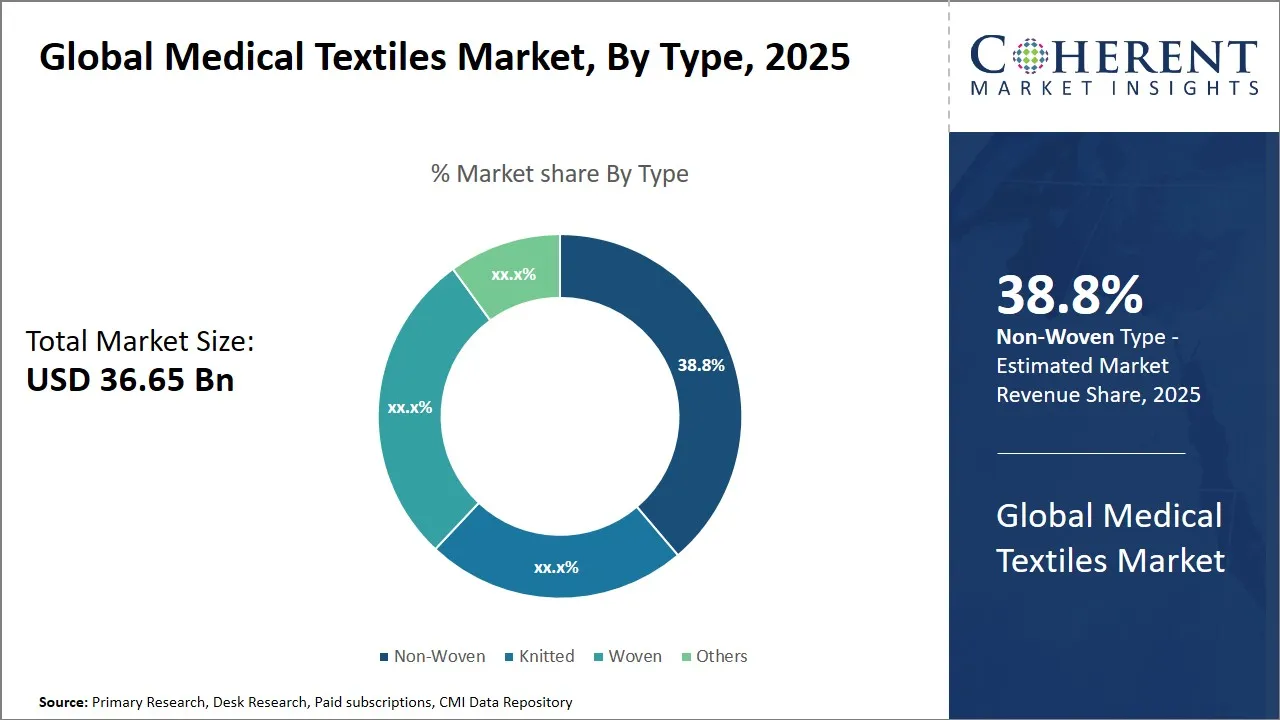
- The non-woven segment is projected to account for 39.8 % of the global medical textiles market share in 2026.
- The implantable goods segment is expected to capture 32.2% of the medical textiles market share in 2026.
- Asia Pacific is projected to lead the global medical textiles market in 2026 with a 34.3 % share. North America, holding an estimated 22.3% share, and it is expected to be the fastest-growing region.
Market Overview
Some of the key trends in the market also include the integration of smart and interactive textiles with nanotechnology, nanomaterials for medical use to improve antimicrobial, breathable, and durable functions. Besides, the increasing aged population and growth of chronic diseases have influenced the demand for different types of specialty medical textiles. Sustainability is also trending: manufacturers are also focusing on green material and process adoption in line with global drives for sustainability at minimal environmental impact, while the stringency of regulatory requirements is met.
Current Events and Its Impact
Current Events | Description and its Impact |
Smart/active medical textiles pilots scale |
|
Raw material volatility (PP, PET, viscose, specialty fibers) |
|
Segmental Insights
- Current Industry Events of 2026
- Market Size Estimation
- Regional Breakdown
- Competitive Landscape
- Customer Intelligence
- Segmental Analysis
- Pricing Analysis
- Key Market Drivers, Challenges & Future Trends
- Customized Insights Section
Medical Textiles Market Insights, By Type - Non-Woven Segment Dominates Market due to its Versatile Properties and Cost-Effectiveness
The non-woven segment holds the 39.8% of the global medical textiles market share in 2026, owing to the adaptability and wide applications in healthcare of non-woven materials. Non-woven medical textiles are fabrics that have been specially engineered from fibers via bonding, resulting in unique features such as absorbency, softness, bacterial barrier, and breathability because no weaving or knitting is involved. Such characteristics make non-wovens very ideal for use in disposable medical products that require sterility, hygiene, and comfort in clinical settings.
The wide utilization of non-woven medical textiles in disposable surgical gowns, drapes, masks, and wound dressings is one of the major factors contributing to the growth rate of non-woven medical textiles. The healthcare industry is increasingly using single-use, disposable products to help reduce infection rates and cross-infections within a medical setting, thereby driving demand directly for non-woven materials. Their superior barrier properties protect both the patient and the healthcare worker from pathogens and help maintain sterile environments during surgeries and other invasive procedures.
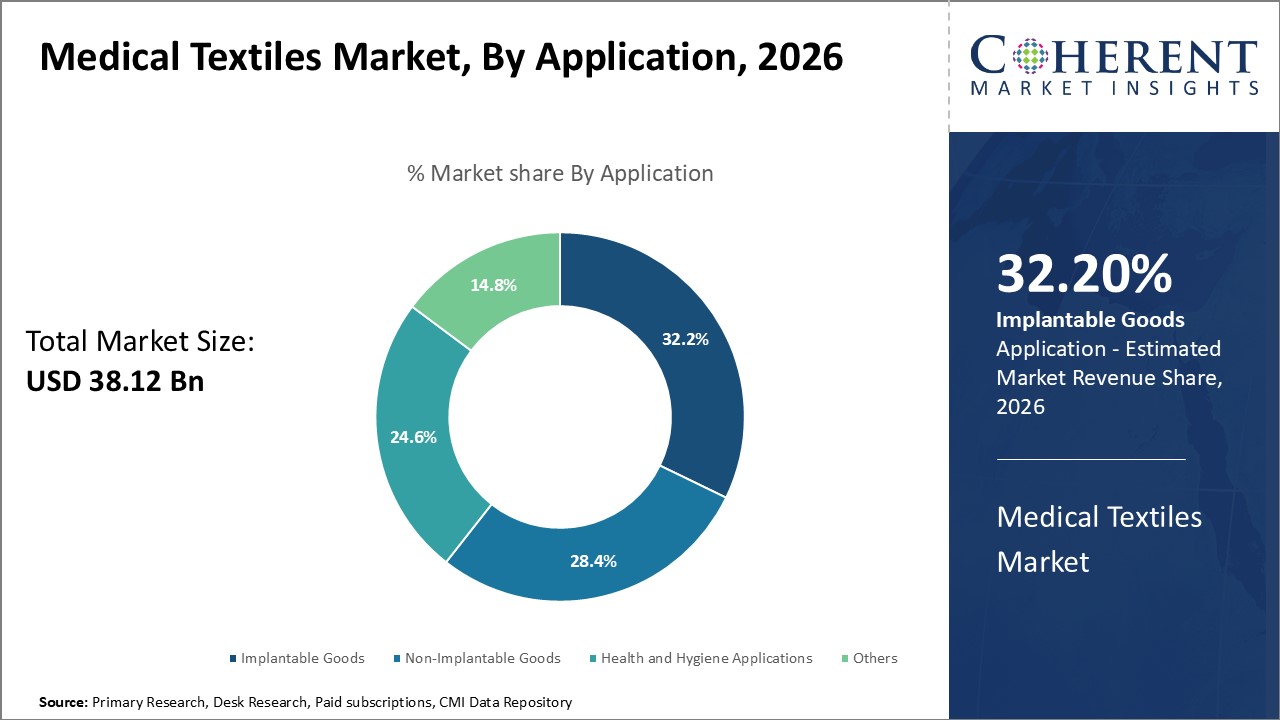
Medical Textiles Market Insights, By Application - Implantable Goods Segment Dominates the Market Driven by Increasing Demand for Advanced Biomedical Devices and Tissue Engineering
Implantable goods segment hold the 32.2% of the market share in 2026, due to rapid advancements in biomedical technology and the growing prevalence of chronic diseases requiring implantable medical devices. The types of implantable medical textiles include materials used in devices like hernia meshes, vascular grafts, artificial ligaments, and sutures that are permanently or temporarily put within the human body.
Among the key drivers for growth in implantable textiles is an increase in the incidence of cardiovascular diseases, orthopedic disorders, and other chronic health conditions that require surgical interventions involving implantations of medical devices. These devices, in most cases, need durable, biocompatible textiles that can support mechanical functioning and integrate into the human body without adverse immune responses.
Regional Insights
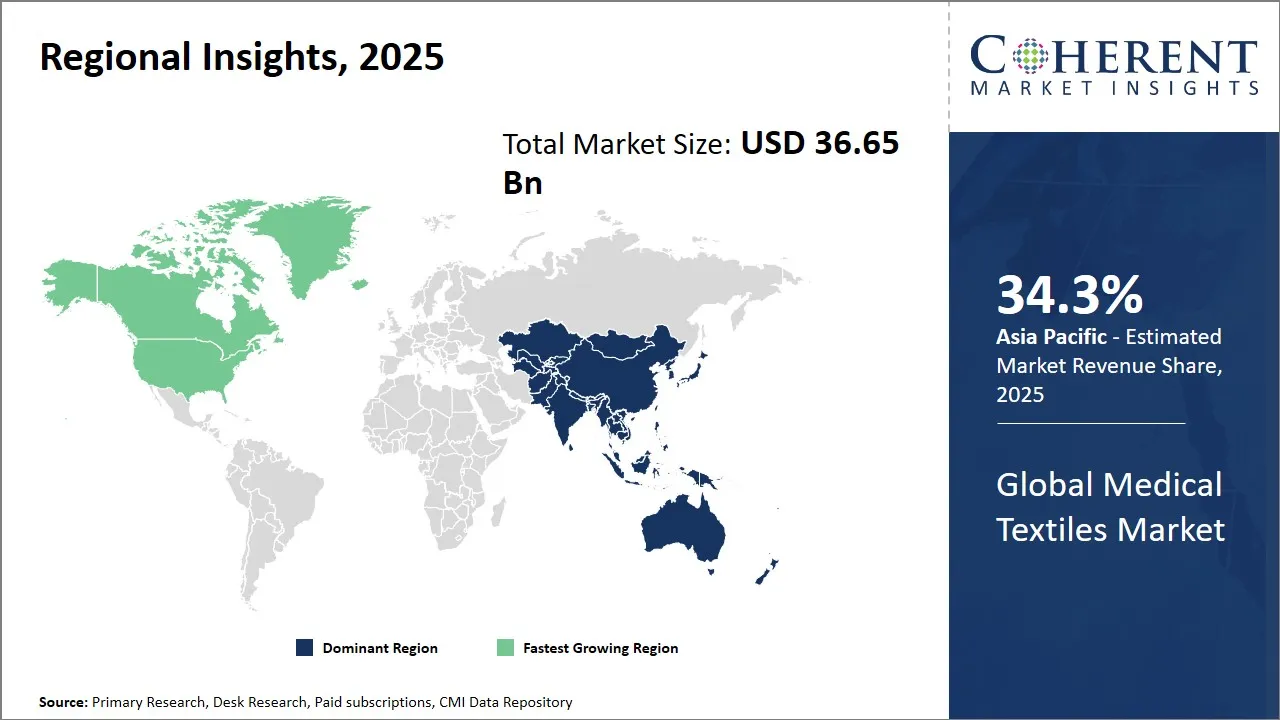
Asia Pacific Medical Textiles Market Analysis and Trends
The Asia Pacific region is projected to lead the market with a 34.3% share in 2026, driven by factors such as large patient pools, increasing access to healthcare, and accelerating industrialization for healthcare manufacturing hubs including China, India, and Japan. Government policies to improve infrastructure in the healthcare sector and promote domestic production to reduce reliance on imports further drive the growth momentum. Also, rapid urbanization and increasing disposable incomes are driving up demand for sophisticated medical textiles, comprising nonwovens used in disposable medical products.
The region is also seeing increases in foreign direct investment and joint ventures that help in transferring technological know-how. Major contributors include Toray Industries of Japan, Ahlstrom-Munksjö of China, and Cosmo Speciality Fibres of India, who derive substantial value through competence development at the regional and global levels. These developments are together cementing a dynamic market ecosystem with enhancements in supply networks and regulatory standards.
North America Medical Textiles Market Analysis and Trends
The North America region is expected to exhibit the fastest growth in the market contributing 22.3% share in 2026, with the region's advanced healthcare infrastructure, strong presence of leading medical textile manufacturers, and high R&D activities being the growth factors. The U.S., a key contributor within the region, features well-established regulatory frameworks and government initiatives on healthcare innovation and modernization of medical equipment.
North America medical textiles market ecosystem benefits from the wide usage of high-quality medical textiles like wound dressings, surgical gowns, and implantable textiles. This is due to higher spending on healthcare and rising awareness of infection control. Leading companies such as 3M, Kimberly-Clark, and Medline Industries have influenced the market significantly with their extensive product portfolios and continuous innovation. Well-established trade links and streamlined supply chains facilitate the efficient distribution both intra-nationally and extra-nationally.
Global Medical Textiles Market Outlook for Key Countries
U.S. Medical Textiles Market Analysis and Trends
The U.S. medical textiles market continues to be one of the global leaders, coupled with a combination of technological innovation and strict regulatory standards laid down by the FDA. It hosts several leading companies such as 3M and Medline Industries, which are highly investing in developing innovative medical textile products for various medical applications. Government initiatives to modernize healthcare also accelerate the demand for sophisticated medical textiles. The mature healthcare setup with deeply penetrated hospital infrastructure contributes to early adoption of novel textile products, including smart and implantable medical textiles, bolstering the leading position of the U.S.
Germany Medical Textiles Market Analysis and Trends
Germany still leads the European market in medical textiles, thanks to its strong industrial base coupled with high healthcare spending. With a reputation for precision manufacturing and numerous research studies in textile technology, companies like Freudenberg Medical have played a vital role in developing nonwoven fabrics and surgical textiles. Germany's strict regulatory environment gives quality standards a boost, supporting the adoption of reliable products in medical textiles. Strategic initiatives with an aim toward healthcare digitization and smart textiles create a favorable innovative market outlook. Germany is strategically positioned at the center of Europe, which enhances trade advantages to better access the market.
China Medical Textiles Market Analysis and Trends
The medical textiles market in China is developing quickly owing to rising domestic demand for healthcare services and increasing government support for the development of healthcare infrastructure. Companies such as Ahlstrom-Munksjö and Jiangsu Coatex are important in scaling up production to produce affordable medical textiles for both domestic consumption and export markets. China's determination to be self-sufficient in manufacturing medical supplies and its policies to encourage local innovation help further accelerate market growth. Increasing investments in cleanroom textiles and disposable medical products within an improving regulatory environment place China in a strong position in the global supply chain.
India Medical Textiles Market Analysis and Trends
India medical textiles market offers great potential, as its large population base meets with ever-improving access to healthcare in both urban and rural areas. Domestic firms like Cosmo Speciality Fibres and Garware Technical Fibres have consequently shown good growth, with their prime focus on affordable, multipurpose medical textiles for surgical and wound care. Government schemes aimed at overall improvement in healthcare infrastructure, coupled with initiatives on indigenous production under the 'Make in India' campaign, are also acting as positive catalysts. The growth of the medical tourism industry also supports demand for good quality medical textiles, consequently encouraging regional competitiveness.
Japan Medical Textiles Analysis and Market
Advanced technological capabilities and a very developed healthcare system are the factors behind Japan's leading position in the medical textiles market. Strong research institutions and corporations, such as Toray Industries, support Japan's attempt to be on the cutting edge in innovating with biocompatible and implantable textiles. Stringent national regulations ensure high safety and quality standards, subsequently encouraging demand for premium medical textile products. Japan supports export-oriented growth strategies by leveraging trade agreements for better market access. The demographic elements include an aging population that is in greater need of specialized medical textiles, which links directly to Japan's strategic importance in the Asia Pacific medical textiles landscape.
Macro and Micro Economic Factors Impacting on Medical Textiles Market Growth
Micro Economic Factors
- Growth in Healthcare Spending: Worldwide, rising expenditure on healthcare is facilitating expansion in hospitals, outpatient centers, and home health settings—driving up demand for surgical gowns, drapes, and hygiene textiles.
- Chronic Disease Prevalence: The escalation of diabetes, cardiovascular, and respiratory disorders is fueling continuous medical care usage, particularly for advanced wound dressings, compression therapies, and wearable monitoring textiles.
- Inflation and Raw Material Costs: Rising international pricing pressures on synthetic, cotton, and advanced fibers (especially due to supply chain disruptions and trade tensions) are increasing costs for manufacturers, potentially impacting product accessibility, especially in lower income regions.
- Government Action and Regulation: Policies that address infection prevention (disposable nonwoven materials), quality specifications, and sustainability (biobased fibers) strongly influence market growth, particularly in EU and North America.
Micro Economic Factors
- New Technologies: Rapid advancements are taking place in intelligent textiles (sensors, conductive textile fibers, antimicrobial coatings), supporting new product introductions for real time health monitoring and personalized treatment at home while working toward a new higher production cost.
- Production and Logistics: Limited raw materials, and logistics limitations can raise costs and force trade-offs on quality in some locations, which will affect supply and competitor differentiation
- Regulatory Requirements: Rigorous standards for product testing / approval (antimicrobial, breathability, fluid barrier) are costly for manufacturers in R&D and operations and create barriers for new entrants, specifically smaller manufacturers.
Market Players, Key Development, and Competitive Intelligence
Key Development
- In August 2025, Corza Medical, a prominent global producer of surgical technology and components for medical devices, introduced its Biomedical Textiles Innovation Lab, a cutting-edge facility specifically aimed at enabling OEM partners to rapidly prototype, test, and refine medical materials made from textiles.
Top Strategies Followed by Global Medical Textiles Market Players
- Established Players: In medical textiles, established players invest a majority of their focus on research and development in order to make high-performance, advanced medical textiles that meet regulations and/or rapidly adapt to shifting healthcare needs and trends. Established companies also have a very clear customer-first mentality based around the performance of their products, as they improve biocompatibility, antimicrobial features, and longevity. The collaborations that these companies develop allow for the sharing of proprietary competencies, faster product development, and extensibility of applications.
- For instance, 3M advanced wound care portfolio includes both the Tegaderm and Coban systems, prominent for their work in surgical applications of antimicrobial protection and chronic wound applications of moisture management, respectively.
- Mid-scale players: in the medical textiles sector pursue a strategy where their products are economically viable while providing acceptable quality of product. Smaller companies are able to serve consumers that are cost-sensitive, especially small hospitals and emerging markets, allowing for affordable performance and broadened access to medical textiles in constrained budgets. Small and mid-cap firms partner with technology firms, contract manufacturers, and distributors to effectively build their technology capabilities as well as to have sources for scaled production and sales.
- For example, Ahlstrom-Munksjo manufactures single-use gowns from biodegradable medical fabrics. Ahlstrom-Munksjo is a small- to mid-cap company that has made a commitment to sustainability and costs less than competitors.
- Smaller players and startups are differentiating themselves by focusing on niche applications and innovative product functionalities that frequently satisfy unmet needs in specific medical applications. They can also adapt quickly to new technologies such as nanofiber technology, smart textiles, and bioactive coatings, in ways that larger competitors cannot, giving them access to cutting-edge product capabilities.
- For example, Myant Inc. develops smart textile wearables that track biosignals like ECG and temperature, coinciding with trends to expand telemedicine.
Market Report Scope
Medical Textiles Market Report Coverage
| Report Coverage | Details | ||
|---|---|---|---|
| Base Year: | 2025 | Market Size in 2026: | USD 38.12 Bn |
| Historical Data for: | 2020 To 2024 | Forecast Period: | 2026 To 2033 |
| Forecast Period 2026 to 2033 CAGR: | 4.0% | 2033 Value Projection: | USD 50.16 Bn |
| Geographies covered: |
| ||
| Segments covered: |
| ||
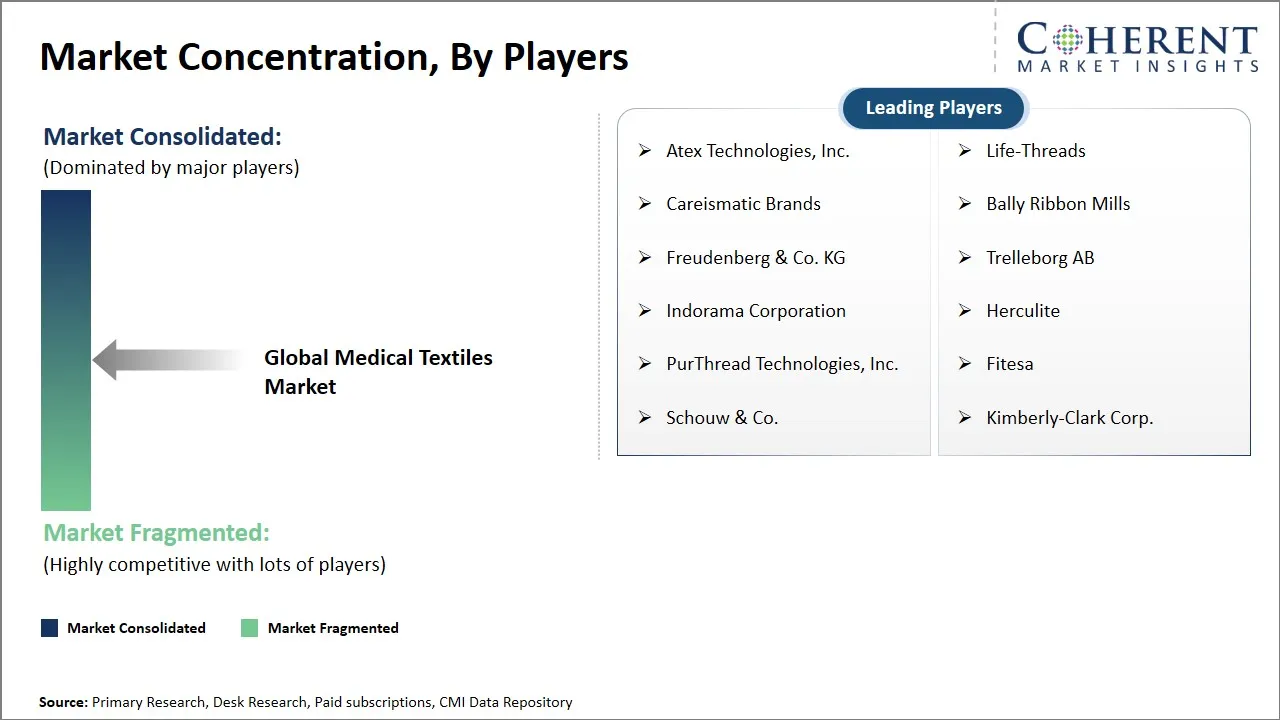
| Companies covered: | Atex Technologies, Inc., Life-Threads, Careismatic Brands, Bally Ribbon Mills, Freudenberg & Co. KG, Trelleborg AB, Indorama Corporation, Herculite, PurThread Technologies, Inc., Fitesa, Schouw & Co., and Kimberly-Clark Corp. | ||
| Growth Drivers: |
| ||
| Restraints & Challenges: |
| ||
Medical Textiles Market Dynamics
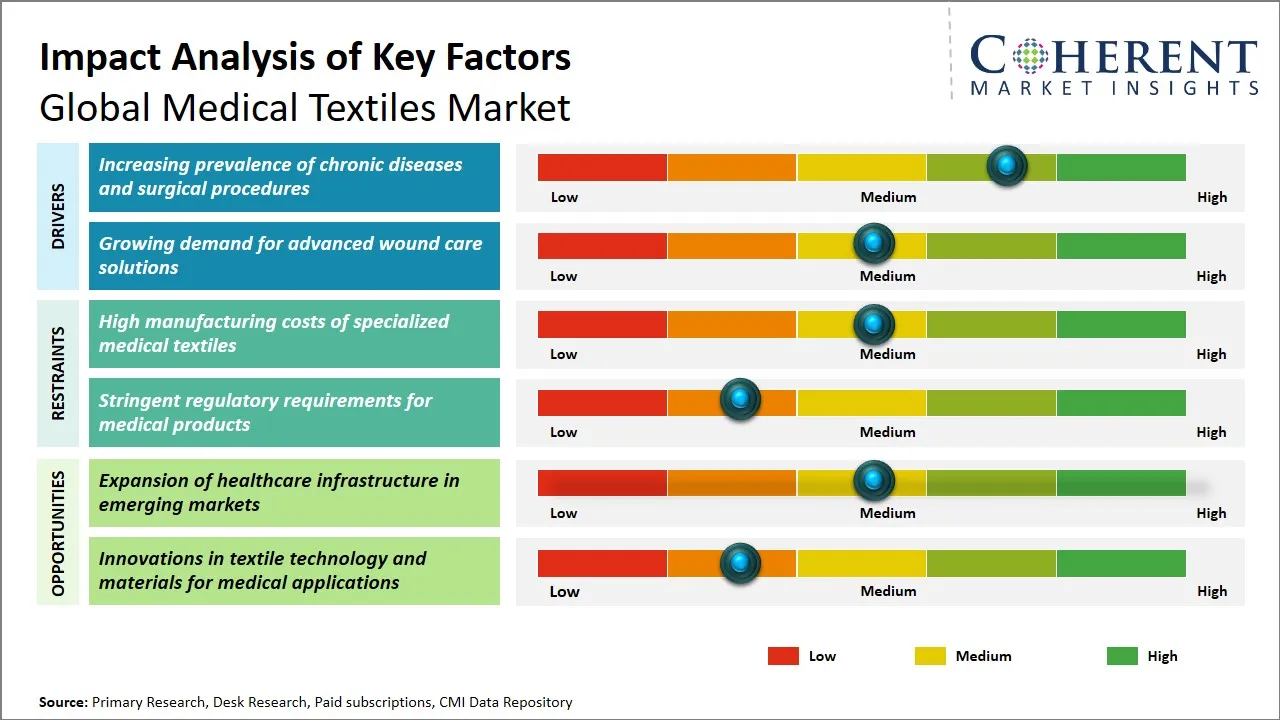
Medical Textiles Market Driver - Increasing Prevalence of Chronic Diseases and Surgical Procedures
The increasing prevalence of chronic disease such as diabetes, cardiovascular disease, and pulmonary disease, has increased the demand for advanced healthcare solutions. Both chronic disease and surgical procedures typically require a long course of treatment, management of wounds, and procedures requiring additional surgery, which require a variety of specialized textile products including wound dressings, surgical gowns, implants, and bandages.
The World Health Organization (WHO) estimates noncommunicable disease accounts for over 74% of the world's deaths. Also, the incidence of surgical procedures related to diabetes, surgical procedures related to chronic wounds, and chronic wounds themselves, is escalating in emerging economies. As an example, there is an increased incidence and use of advanced wound dressings in countries such as India and China, as a result of the increase in diabetic foot ulcers and surgical infections that hospitals are now turning to these advanced textile materials for management, often from major global textile materials companies, such as 3M Health Care and Smith & Nephew.
Medical Textiles Market Opportunity - Expansion of Healthcare Infrastructure in Emerging Markets
The worldwide medical textiles industry is going to greatly benefit from the quick development of healthcare infrastructure in emerging markets, especially India, Brazil, China, and the Southeast Asian region. Each of these markets is seeing large investments to build new hospitals, clinics, and specialized healthcare facilities originating from increased commitment by the government to public health and rising awareness of healthcare needs among the population. In concert with this expansion, there is also growing demand for sophisticated medical solutions (surgical gowns, wound care products, implants, and hygiene textiles) that all require medical textiles of the highest quality.
For instance, India's healthcare infrastructure investment reached US$1.3 billion in FY 2024, and over 4,000 new hospital beds have been announced in public-private partnership (IBEF, 2024). China continues to see government programs like the Healthy China 2030 Plan driving large scale expansion of tertiary hospitals (and thus growing demand for locally produced surgical drapes, gowns, and implantable textiles provided by companies like Winner Medical and Jiangsu A&C Textile Co. Ltd.).
Analyst Opinion (Expert Opinion)
- Growth in the medical textiles market is expected based on advances in healthcare technology and a growing need for medical textile innovation in wound care and surgical products. According to the MedTech Conference (2023) and the International Conference on Medical Textiles (2022) there are important developments to note, with companies like Smith & Nephew and Medtronic leading development in biocompatible textiles and smart textiles.
- One product from Smith & Nephew - an antimicrobial wound dressing with advanced textile, illustrates how fast the market space has evolved to meet the needs of infection control in the workplace. Healthcare practitioners consistently addressed the need for testing and regulatory compliance regarding product safety and efficacy.
- One challenge often cited that prevented market growth was the high cost of production and the need for continuous innovations. Those companies willing to engage in doing R&D for next generation medical textiles or partnerships with clinical healthcare providers will be better suited to move forward in their space in the market. Ultimately, the medical textiles market is only as strong as its capability for innovation while meeting the immediate health-needs of consumers and dealing with a competitive work environment and maintaining high quality through adherence to standards.
Speak to the analyst
Want personalized insights?
Take the findings above to one of our principal consultants, or have the report rebuilt around the segments, geographies and competitors you actually track.
Market Segmentation
- Type Insights (Revenue, USD Bn, 2021 - 2033)
- Non-Woven
- Knitted
- Woven
- Others
- Application Insights (Revenue, USD Bn, 2021 - 2033)
- Implantable Goods
- Non-Implantable Goods
- Health and Hygiene Applications
- Others
- Regional Insights (Revenue, USD Bn, 2021 - 2033)
- North America
- U.S.
- Canada
- Latin America
- Brazil
- Argentina
- Mexico
- Rest of Latin America
- Europe
- Germany
- U.K.
- Spain
- France
- Italy
- Russia
- Rest of Europe
- Asia Pacific
- China
- India
- Japan
- Australia
- South Korea
- ASEAN
- Rest of Asia Pacific
- Middle East
- GCC Countries
- Israel
- Rest of Middle East
- Africa
- South Africa
- North Africa
- Central Africa
- North America
- Key Players Insights
- Atex Technologies, Inc.
- Life-Threads
- Careismatic Brands
- Bally Ribbon Mills
- Freudenberg & Co. KG
- Trelleborg AB
- Indorama Corporation
- Herculite
- PurThread Technologies, Inc.
- Fitesa
- Schouw & Co.
- Kimberly-Clark Corp.
Sources
Primary Research Interviews
- R&D Director – Leading Medical Textile Manufacturer
- Procurement Manager – Major Healthcare Supplies Retailer
- Innovation Head – Well-Known Surgical Textiles Brand
- Sustainability Officer – Hospital Procurement Group
Stakeholders
- Manufacturers: Wound care textiles, implantable fabrics, nonwoven disposable producers
- End-use Sectors
- Hospitals and healthcare institutions
- Diagnostic laboratories
- Home healthcare and elderly care centers
- Regulatory & Certification Bodies
- Procurement Organizations and Group Purchasing Organizations (GPOs)
- E-commerce Platforms and Medical Suppliers
- Technology Integration Players: Smart textiles (wearable sensors, antimicrobial finishes) suppliers
Databases
- UN Comtrade Database – Imports/exports of medical textiles and healthcare fabrics
- India Import Export (EXIM) Database – Trade flows for surgical, wound care, and hygiene textiles
- Global Trade Atlas – International trade statistics for medical fabrics, dressings, PPE
Magazines
- Textile Today – Innovations in medical and healthcare textiles
- Medical Device & Diagnostics Industry – Trends in textile-based medical products
- Nonwovens Industry Magazine – Disposable medical fabrics and hygiene products
- Advanced Textiles Source – High-performance medical and technical textiles
Journals
- International Journal of Medical Textile – Advances in biocompatible fabrics and wound dressings
- Journal of Industrial Textiles – Performance and application of textiles in medical fields
- Journal of Biomedical Materials Research – Textile materials used in implants and wound management
- Textile Research Journal – Technological advances and market applications in medical textiles
Newspapers
- The Financial Times – Global growth of medical PPE and healthcare textiles
- The Guardian – Sustainability in hospital textile supply chains
- Asia Health Journal – Expansion of medical textiles usage in Asia-Pacific healthcare systems
- European Textile News – Regulatory updates, health policies affecting medical textiles
Associations
- Association of Medical Textile Manufacturers
- International Association for Medical and Healthcare Textiles (IAMHT)
- EDANA (European Disposables and Nonwovens Association)
- American Association of Textile Chemists and Colorists (AATCC)
Public Domain Sources
- FDA – Guidelines for medical textiles and devices
- European Commission – Medical device regulations for textile products
- World Health Organization – Safety standards and global usage of medical textiles
- OECD – Health system assessments and regulations for medical supplies
Proprietary Elements
- CMI Data Analytics Tool, Proprietary CMI Existing Repository of information for last 8 years.
Get access to 250+ pages report
Every segment, forecast, competitor profile and data table behind the analysis above — available for instant download.
- ESOMAR Member
- ISO 9001:2015 Certified
- D-U-N-S Registered
- GDPR & CCPA Compliant
Missing comfort of reading report in your local language? Find your preferred language:
Transform your Strategy with Exclusive Trending Reports
Frequently Asked Questions
The global medical textiles market is estimated to be valued at USD 38.12 Bn in 2026 and is expected to reach USD 50.16 Bn by 2033.
The CAGR of the global medical textiles market is projected to be 4.0% from 2026 to 2033.
Increasing prevalence of chronic diseases and surgical procedures and growing demand for advanced wound care solutions are the major factors driving the growth of the global medical textiles market.
Key medical applications driving demand for medical textiles: implantable goods (e.g., hernia meshes, vascular grafts), surgical/protective apparel & drapes (gowns, masks), wound-care products (dressings, bandages), and hygiene/healthcare disposables.
High manufacturing costs of specialized medical textiles and stringent regulatory requirements for medical products are the major factors hampering the growth of the global medical textiles market.
In terms of type, the non-woven is estimated to dominate the market revenue share in 2026.
Atex Technologies, Inc., Life-Threads, Careismatic Brands, Bally Ribbon Mills, Freudenberg & Co. KG, Trelleborg AB, Indorama Corporation, Herculite, PurThread Technologies, Inc., Fitesa, Schouw & Co., and Kimberly-Clark Corp. are the major players.