

Nanomaterials Market Size and Forecast – 2026 to 2033
Nanomaterials Market is estimated to be valued at USD 18.77 Bn in 2026 and is expected to reach USD 48.25 Bn in 2033, exhibiting a compound annual growth rate (CAGR) of 14.4% from 2026 to 2033.
Key Takeaways
- By Product Type, Nanoparticles hold the largest market share of 70.5% in 2026 owing to the wide and expanding applications across industries.
- By Structure Type, Non-Polymer Organic Nanomaterials expected to hold the largest market share in 2026 owing to the superior and multifunctional properties.
- By End User Industry, Healthcare acquired the prominent market share in 2026 owing to its rising prevalence of chronic and complex diseases.
- By Region, Europe dominates the overall market with an estimated share of 38.77% in 2026 owing to the strong government funding & supportive regulatory frameworks.
Market Overview
The nanomaterials market continues to grow as industries increasingly use nanoscale materials for their distinctive mechanical, electrical, and chemical properties. Electronics, healthcare, energy, automotive, and construction companies drive demand by adopting nanomaterials for drug delivery systems, sensors, batteries, coatings, and lightweight composites. Ongoing advances in nanotechnology research, strong government support, and rising emphasis on high-performance and sustainable materials accelerate market progress, positioning nanomaterials as a key enabler of next-generation industrial and technological innovation.
Current Events and Its Impact on the Nanomaterials Market
Current Events | Description and Its Impacts |
Geopolitical Developments |
|
Economic and Supply Chain Factors |
|
Environmental and Sustainability Trends |
|
Role of AI (Artificial Intelligence) in Nanomaterials Industry
AI is transforming nanomaterials research by rapidly accelerating how new materials are discovered, designed, and optimized. Machine-learning models can analyze vast datasets to predict material properties, identify ideal nanoparticle structures, and guide the synthesis of nanomaterials with targeted functions. AI also helps simulate nanoscale interactions, reducing the need for costly experiments and enabling faster innovation in fields such as drug delivery, energy storage, and electronics. By uncovering complex structure–function relationships and suggesting novel material combinations, AI enables scientists to create smarter, more efficient nanomaterials tailored for specific applications, ultimately speeding up advancements across nanotechnology.
In August 2025, MIT researchers developed an AI-driven method for designing more effective RNA-delivery nanoparticles. They trained a machine-learning model called the Composite Material Transformer (COMET) on thousands of existing particles, enabling it to predict improved designs. The model also helped identify particles suited to different cell types and revealed how to integrate new materials into the delivery systems.
- Current Industry Events of 2026
- Market Size Estimation
- Regional Breakdown
- Competitive Landscape
- Customer Intelligence
- Segmental Analysis
- Pricing Analysis
- Key Market Drivers, Challenges & Future Trends
- Customized Insights Section
Segmental Insights
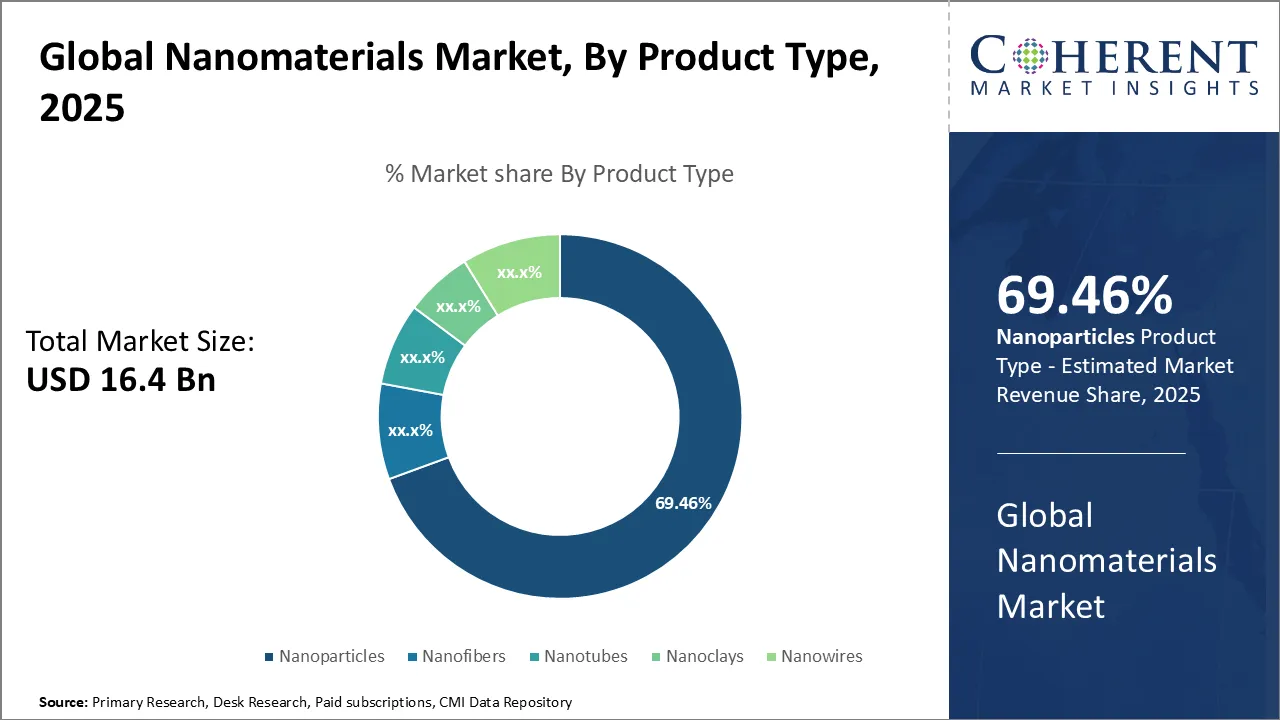
Nanomaterials Market Insights, By Product Type: Nanoparticles contribute the highest share of the market owing to its advances in research & manufacturing.
Nanoparticles hold the largest market share of 70.5% in 2026. Nanoparticles propel growth in the nanomaterials market as industries actively pursue materials with superior strength, conductivity, and surface reactivity. They enhance drug delivery, elevate sensor performance, improve battery output, and strengthen coatings, driving widespread use in healthcare, electronics, and energy fields. Increasing investment in nanotechnology research, advancements in scalable nanoparticle manufacturing, and rising deployment in environmental solutions further accelerate market expansion, establishing nanoparticles as critical building blocks in advanced materials and emerging technologies. For instance, in February 2025, Korean biotech Mepsgen has introduced its microfluidics-based NanoCalibur system in the U.S., aiming to expand access to a scalable and reproducible platform for manufacturing lipid nanoparticles and other delivery formats used in mRNA, gene therapy, and targeted therapeutics.
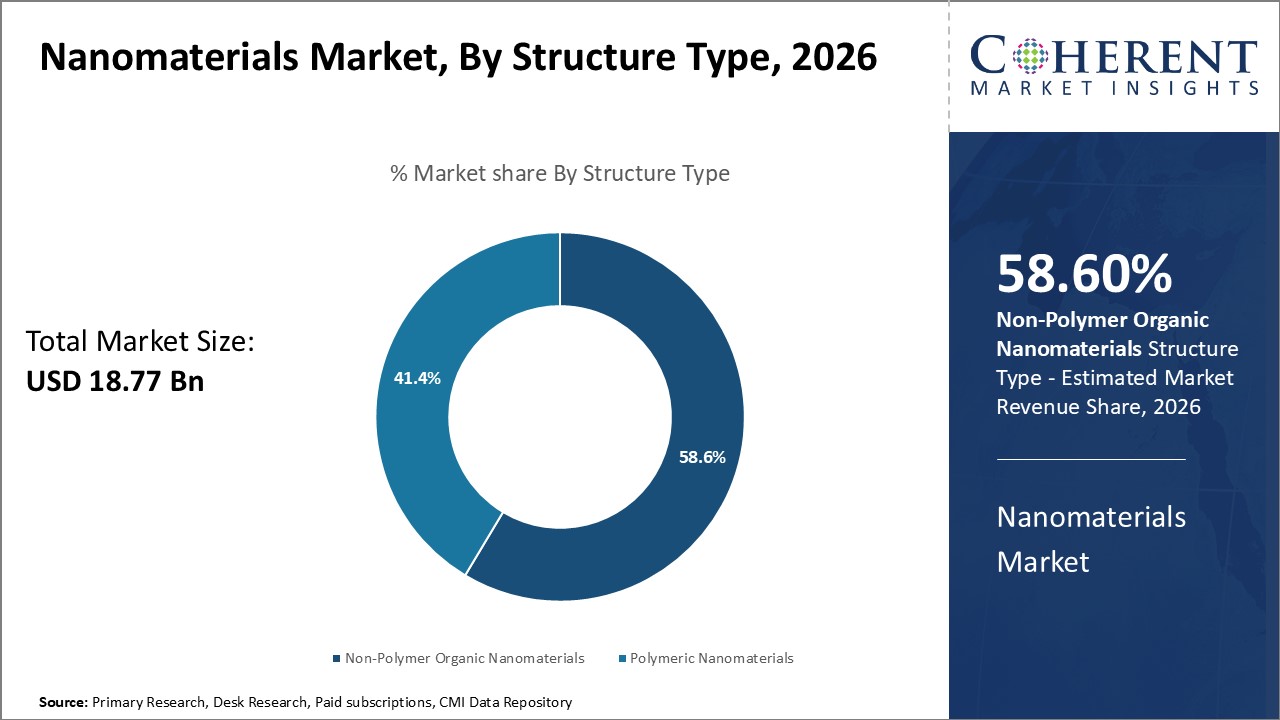
Nanomaterials Market Insights, By Structure Type: Non-Polymer Organic Nanomaterials contribute the highest share of the market owing to its growing demand for sustainability and eco-conscious.
Non-polymer organic nanomaterials drive growth in the nanomaterials market as their superior electrical, thermal, and mechanical properties support high-performance applications. Industries adopt graphene, carbon nanotubes, and fullerenes for flexible electronics, advanced energy storage systems, sensors, and lightweight composite structures. Continued advancements in synthesis techniques, increasing focus on sustainable and energy-efficient materials, and broader integration into biomedical and environmental solutions further strengthen demand, establishing these nanomaterials as key enablers of next-generation technological progress.
Nanomaterials Market Insights, By End User Industry: Healthcare contributes the highest share of the market owing to its advancements in medical diagnostics & imaging.
The healthcare segment drives growth in the nanomaterials market as medical and pharmaceutical industries actively apply nanoscale materials for advanced diagnostics, targeted drug delivery, and precision therapies. Nanomaterials improve imaging, biosensing, and regenerative medicine applications, enhancing patient outcomes and treatment efficiency. Increasing research investment, the creation of nano-enabled medical devices, and rising demand for personalized medicine further boost their adoption. Their use in antimicrobial coatings, wound healing, and infection control also establishes nanomaterials as vital tools in modern healthcare innovation. For instance, in April 2024, IIT Bombay opened its advanced 10X GMP facility to strengthen the link between research and real-world application. The center will produce nanomaterials, tissue-engineered grafts, CAR-T constructs, and drug nanoparticles needed for human clinical trials.
Regional Insights
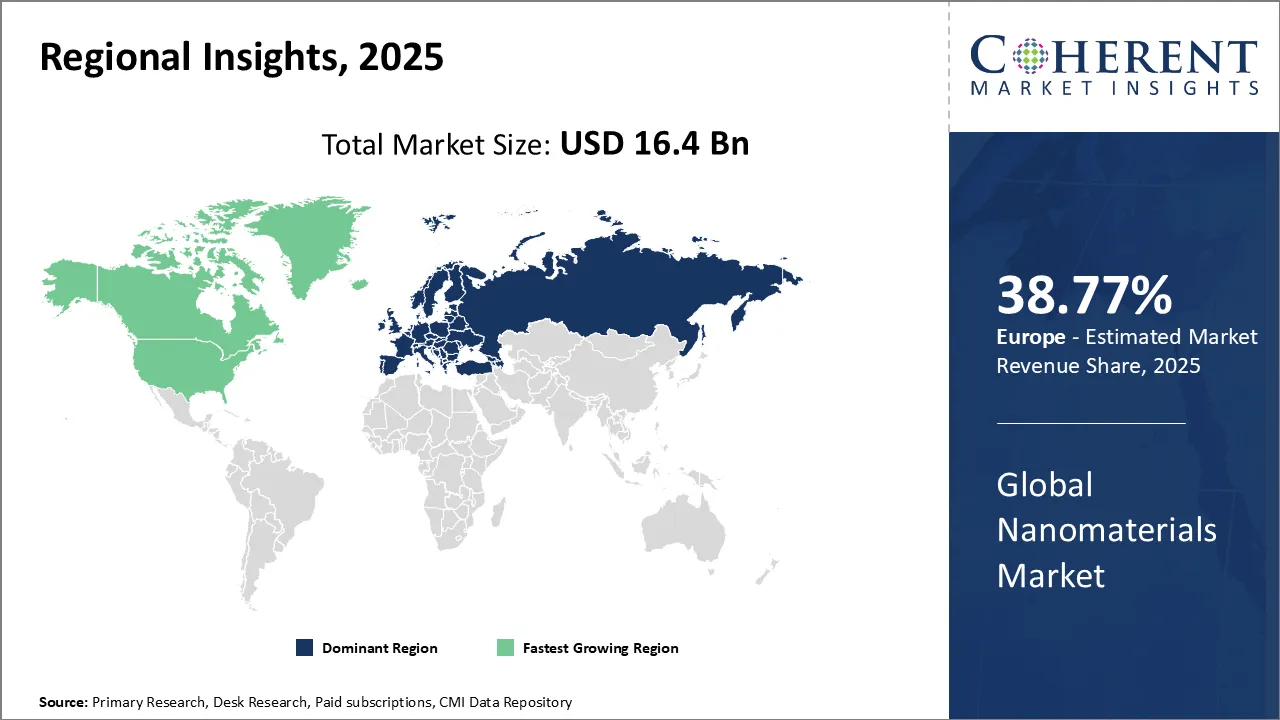
Europe Nanomaterials Market Trends
Europe dominates the overall market with an estimated share of 38.77% in 2026. Europe’s nanomaterials market is rapidly adopting high‑value, multi‑sector applications, including lightweight composites for automotive and aerospace, as well as advanced coatings, energy storage solutions, and biomedical products. Research institutions, manufacturers, and regulators actively collaborate to drive innovation while maintaining safety and compliance, enabling widespread integration of nanomaterials across industries. Rising demand in electronics, healthcare, and green-energy systems is establishing Europe as a hub where sustainable, high-performance nanotechnology actively shapes industrial transformation and future-ready materials strategies.
North America Nanomaterials Market Trends
Industries across North America—from aerospace and automotive to electronics, healthcare, and energy—are rapidly adopting nanomaterials to enhance performance and efficiency. Research labs, startups, and large corporations actively transform discoveries such as carbon nanotubes, quantum dots, nano‑coatings, and advanced composites into practical products. Strong R&D investment and growing demand for lightweight materials, battery components, and medical solutions are driving nanotechnology to reshape manufacturing, energy, and healthcare sectors. Regulators also enforce safety measures, supporting the responsible expansion of nanomaterials across industrial and consumer applications. For instance, Thermo Fisher Scientific has introduced the Phenom Pharos G2 Desktop FEG-SEM to broaden access to advanced nanomaterial research capabilities.
United Kingdom Nanomaterials Market Trends
Industries across the UK—including healthcare, electronics, energy, and construction—are rapidly adopting nanoscale innovations. Domestic producers and research institutions actively develop advanced nanoparticles, nanofibres, nanotubes, and nanoclays for drug delivery, diagnostics, energy storage, lightweight composites, coatings, and sustainable materials. Regulatory changes have prompted local manufacturers to increase production, while close collaboration among academia, industry, and government drives commercialisation. Rising demand for medical, renewable-energy, and high-performance materials positions the UK as a dynamic hub for next-generation nanotechnology solutions.
United States Nanomaterials Market Trends
Sectors across the U.S., including healthcare, electronics, energy, and advanced manufacturing, are rapidly adopting nanoscale materials to enhance performance and functionality. Medical researchers and biotech companies actively use carbon-based nanomaterials, titanium nanometals, and metal/oxide nanoparticles for drug delivery, diagnostics, energy storage, and lightweight structural components. Strong R&D investment and support from government and private institutions drive the fast commercialization of innovations. As applications in electronics, renewable energy, and medicine grow, the United States leads globally in transforming nanoscale breakthroughs into practical industrial and consumer products. For instance, in September 2026, AERO MATERIALS, a university spinoff, launched an ultra-light nanomaterial developed over ten years in Professor Rainer Adelung’s lab at Kiel University. The team is now moving this nanostructure from research into commercial production.
End-User Feedback and Unmet Needs in the Nanomaterials Market
- Performance and Reliability Expectations: End-users demand consistent performance from nanomaterials under diverse operating conditions. Variability in batch quality and stability issues often hinder adoption. Industries such as aerospace and electronics highlight the need for materials that maintain mechanical, thermal, and chemical properties reliably over extended periods, ensuring predictable outcomes in critical applications.
- Cost and Scalability Challenges: Many users express concern over high production costs and limited scalability of advanced nanomaterials. Small and medium enterprises, in particular, struggle to integrate nanomaterials economically. There is a growing call for cost-effective synthesis methods, scalable manufacturing techniques, and supply chains that support widespread adoption without compromising quality or functionality.
- Safety and Regulatory Clarity: End-users emphasize clearer safety guidelines and regulatory frameworks. Handling, disposal, and potential environmental impact of nanomaterials remain uncertain. Industries seek standardized testing protocols, hazard assessments, and transparent regulations to mitigate risks and ensure safe integration, especially in healthcare, food packaging, and consumer electronics applications.
Nanomaterials Market Trend
Expanding Multi-sector Applications
Nanomaterials are increasingly finding applications across diverse sectors including healthcare, electronics, energy, automotive, and aerospace. Industries are leveraging their unique properties—such as enhanced strength, conductivity, and reactivity—to develop lightweight composites, advanced coatings, energy storage devices, and drug delivery systems. The convergence of nanotechnology with traditional manufacturing is fostering innovation, enabling companies to create high-performance products that improve efficiency, durability, and functionality across multiple industrial and consumer applications.
Focus on Sustainable and Green Nanotechnology
Environmental concerns are pushing the nanomaterials market toward eco-friendly and sustainable solutions. Researchers and manufacturers are developing biodegradable nanomaterials, energy-efficient synthesis processes, and recyclable nanocomposites to reduce environmental impact. End-users increasingly prefer materials that support green energy systems, water purification, and waste reduction, creating opportunities for innovation. Sustainable nanomaterials are gaining prominence in industries aiming to meet regulatory standards, corporate sustainability goals, and growing consumer demand for environmentally responsible technologies.
Nanomaterials Market Opportunity
Advanced Healthcare and Drug Delivery
Nanomaterials present significant opportunities in healthcare, particularly in targeted drug delivery, diagnostics, and regenerative medicine. Researchers are designing nanoparticles that improve drug solubility, stability, and controlled release, reducing side effects and enhancing therapeutic outcomes. Hospitals and biotech companies are exploring nanoscale carriers, imaging agents, and biosensors, enabling precise treatments. As demand for personalized medicine grows, nanomaterials offer an innovative path to improve patient care, streamline treatment processes, and accelerate the development of next-generation medical solutions.
Market Report Scope
Nanomaterials Market Report Coverage
| Report Coverage | Details | ||
|---|---|---|---|
| Base Year: | 2025 | Market Size in 2026: | USD 18.77 Bn |
| Historical Data for: | 2020 To 2024 | Forecast Period: | 2026 To 2033 |
| Forecast Period 2026 to 2033 CAGR: | 14.4% | 2033 Value Projection: | USD 48.25 Bn |
| Geographies covered: |
| ||
| Segments covered: |
| ||
| Companies covered: | ACS Material, American Elements, Arkema Group, BASF SE, Cabot Corporation, CHASM Advanced Materials Inc., Chengdu Organic Chemicals Co. Ltd (Timesnano), Jiangsu Cnano Technology Co. Ltd, LG Chem, Nano-C, Nanocyl SA, Nanophase Technologies Corporation, OCSiAl, Raymor Industries Inc., Showa Denko K.K., And Zyvex Technologies | ||
| Growth Drivers: |
| ||
| Restraints & Challenges: |
| ||
Nanomaterials Market News
- In April 2024, SiAT, a leading Taiwanese nanomaterials manufacturer for batteries, has formed a strategic partnership with Japan’s Zeon Corporation to launch a single-walled carbon nanotube conductive paste.
- In March 2025, Jawaharlal Nehru Technological University Hyderabad (JNTUH) has launched a five-day GIAN 2025 special course focused on “Nano Materials in Chemical and Biosensors.”
Analyst Opinion (Expert Opinion)
- The future trajectory of the nanomaterials market is expected to center increasingly on carbon-based nanomaterials—particularly Carbon Nanotubes (CNTs) and graphene—given their proven performance and scalability across multiple industrial sectors. CNTs currently represent an estimated 62.5% of global demand for carbon nanomaterials in 2024, while graphene is experiencing the most rapid growth due to its exceptional conductivity and low weight, which enable high-performance applications in energy storage and advanced composites.
- Significant industry shifts are already evident. Producers of lithium-ion batteries are incorporating CNTs and graphene derivatives into electrode designs, a trend especially visible in electric-vehicle and renewable-energy battery supply chains, as these materials improve conductivity and extend cycle life beyond the capabilities of conventional inputs. In parallel, aerospace and automotive manufacturers are deploying CNT-reinforced polymers to achieve superior tensile strength and meaningful weight reduction, making such materials central to the development of next-generation lightweight composites.
- Despite these advances, the market landscape is becoming crowded with smaller suppliers offering “nanomaterial solutions.” Given the stringent technical requirements for purity, uniformity, and reproducible synthesis, many of these firms are unlikely to remain competitive. The leading companies will be those with disciplined, quality-focused operating models that invest in automated, high-precision manufacturing and can consistently deliver industrial-grade material performance. Recent research indicates that AI-driven synthesis platforms can substantially reduce CNT production cycle times while achieving consistent quality, signaling that automation and data-centric processes may become decisive advantages as the market matures.
Speak to the analyst
Want personalized insights?
Take the findings above to one of our principal consultants, or have the report rebuilt around the segments, geographies and competitors you actually track.
Market Segmentation
- Global Nanomaterials Market, By Product Type
- Nanoparticles
- Nanofibers
- Nanotubes
- Nanoclays
- Nanowires
- Global Nanomaterials Market, By Structure Type
- Non-Polymer Organic Nanomaterials
- Polymeric Nanomaterials
- Global Nanomaterials Market, By End-User Industry
- Healthcare
- Electronics
- Energy
- Construction
- Rubber
- Personal Care
- Other End-User Industries
- Regional Insights (Revenue, USD Bn, 2021 - 2033)
- North America
- U.S.
- Canada
- Latin America
- Brazil
- Argentina
- Mexico
- Rest of Latin America
- Europe
- Germany
- U.K.
- Spain
- France
- Italy
- Russia
- Rest of Europe
- Asia Pacific
- China
- India
- Japan
- Australia
- South Korea
- ASEAN
- Rest of Asia Pacific
- Middle East
- GCC Countries
- Israel
- Rest of Middle East
- Africa
- South Africa
- North Africa
- Central Africa
- North America
- Key Players Insights
- ACS Material
- American Elements
- Arkema Group
- BASF SE
- Cabot Corporation
- CHASM Advanced Materials Inc.
- Chengdu Organic Chemicals Co. Ltd (Timesnano)
- Jiangsu Cnano Technology Co. Ltd
- LG Chem
- Nano-C
- Nanocyl SA
- Nanophase Technologies Corporation
- OCSiAl
- Raymor Industries Inc.
- Showa Denko K.K.
- Zyvex Technologies
Sources
Primary Research interviews
- Interviews with R&D heads of leading nanomaterials manufacturing companies
- Discussions with product development managers in automotive, aerospace, and electronics sectors
- Insights from academic researchers specializing in nanotechnology and materials science
- Conversations with regulatory experts on nanomaterial safety and compliance
Databases
- PubChem
- Scopus
- Web of Science
- IEEE Xplore
Magazines
- Nanotechnology Now
- Advanced Materials Today
- Materials Today
- Chemical & Engineering News
Journals
- Nature Nanotechnology
- ACS Nano
- Journal of Nanomaterials
- Small
Newspapers
- The New York Times – Science & Technology section
- The Guardian – Technology & Innovation section
- Financial Times – Energy and Materials section
- The Wall Street Journal – Technology section
Associations
- International Association of Nanotechnology (IANT)
- European Technology Platform on Nanomedicine (ETPN)
- American Chemical Society (ACS) Nanoscience & Nanotechnology Division
- Materials Research Society (MRS)
Public Domain sources
- U.S. National Nanotechnology Initiative (NNI) reports
- European Commission – Horizon 2020 nanotechnology publications
- World Intellectual Property Organization (WIPO) patent databases
- U.S. FDA & EMA regulatory guidelines on nanomaterials
Proprietary Elements
- CMI Data Analytics Tool
- Proprietary CMI Existing Repository of information for last 8 years
Get access to 250+ pages report
Every segment, forecast, competitor profile and data table behind the analysis above — available for instant download.
- ESOMAR Member
- ISO 9001:2015 Certified
- D-U-N-S Registered
- GDPR & CCPA Compliant
Missing comfort of reading report in your local language? Find your preferred language:
Transform your Strategy with Exclusive Trending Reports
Frequently Asked Questions
The Nanomaterials Market is estimated to be valued at USD 18.77 Bn in 2026, and is expected to reach USD 48.25 Bn by 2033.
The CAGR of the Nanomaterials Market is projected to be 14.4% from 2026 to 2033.
Growing use of nanomaterials in healthcare industry and increasing demand from wastewater treatment industry are fuelling market.
The NanoParticles segment is the leading component segment in the market.
High cost of the technology is the major factors restraining the market.
ACS Material, American Elements, Arkema Group, BASF SE, Cabot Corporation, CHASM Advanced Materials Inc., Chengdu Organic Chemicals Co. Ltd (Timesnano), Jiangsu Cnano Technology Co. Ltd, LG Chem, Nano-C, Nanocyl SA, Nanophase Technologies Corporation, OCSiAl, Raymor Industries Inc., Showa Denko K.K., And Zyvex Technologies