

Artificial Turf Market Size and Forecast — 2026-2033
The Global Artificial Turf Market size is estimated to be valued at USD 4.17 billion in 2026 and is expected to reach USD 7.2 billion by 2033, exhibiting a compound annual growth rate (CAGR) of 9.7% from 2026 to 2033.
Overview
Artificial turf consists of synthetic fibers designed to replicate the look and performance of natural grass, widely utilized in sports fields, landscaping, and commercial applications. Originally developed with nylon fibers in the 1960s, the technology has advanced to include polyethylene and polypropylene fibers with improved softness, durability, and UV stability. The infill system—comprising sand, rubber, or organic materials—enhances shock absorption and surface traction. Recent product innovations have focused on environmentally sustainable materials, non-toxic infills, and temperature-regulating yarns.
Key Takeaways
Nylon dominates the market segment with a 35% industry share, favored for its durability and resilience, driving continuous innovation in this subsegment. Landscaping applications are witnessing steady expansion due to growing awareness around water conservation.
Sports fields continue to lead application usage, reflecting high investments in stadium upgrades and facility refurbishment, especially in North America and Europe.
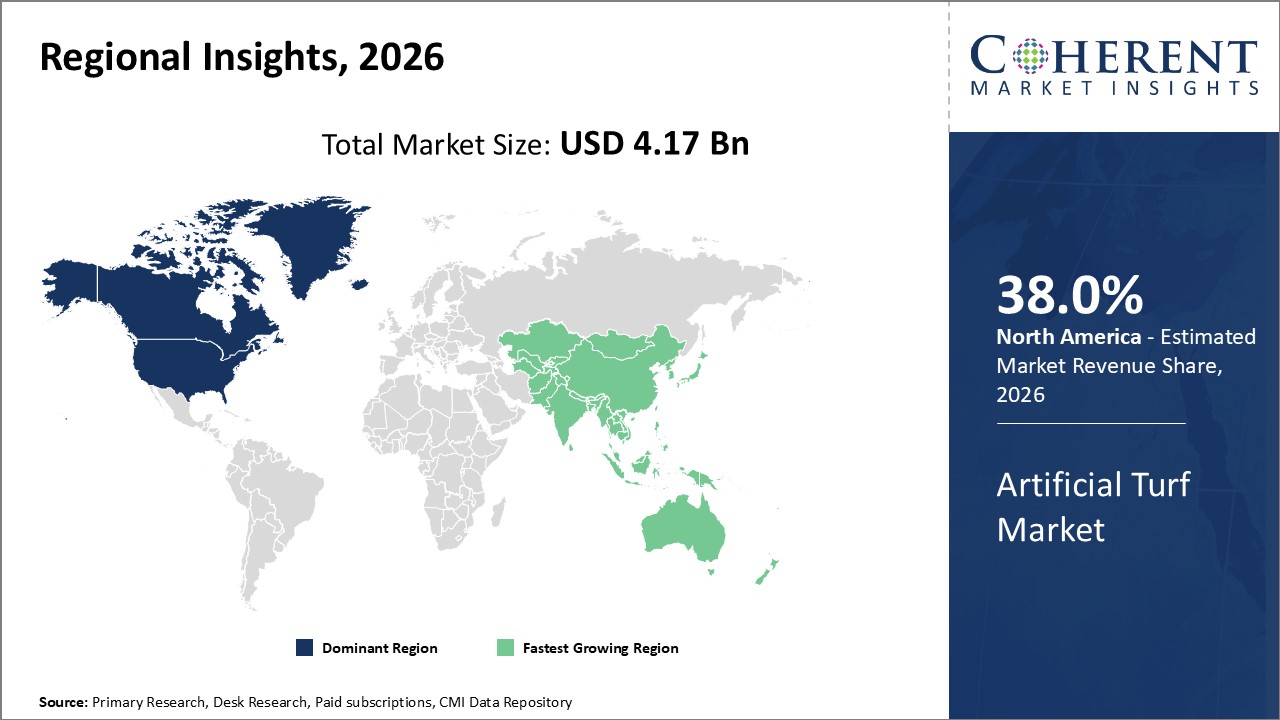
North America holds the largest market share, accounting for over 38% of the global market revenue, supported by robust sports infrastructure and environmentally driven policies.
Asia Pacific emerges as the fastest-growing region, fueled by expanding urbanization and government initiatives encouraging artificial turf use in public spaces and sports education institutions.
Artificial Turf Market Segmentation Analysis
Artificial Turf Market Insights, By Segment Type
Nylon dominates the market share with 35%. Its superior resilience and ability to withstand heavy traffic make it the preferred material for sports turf applications. Its durability reduces replacement frequency, driving long-term cost-efficiency for buyers, further supported by advancements in UV treatment technologies introduced in 2025. Polyethylene is the fastest-growing subsegment, gaining traction due to its soft texture and realistic look, making it highly applicable for landscaping and residential uses.
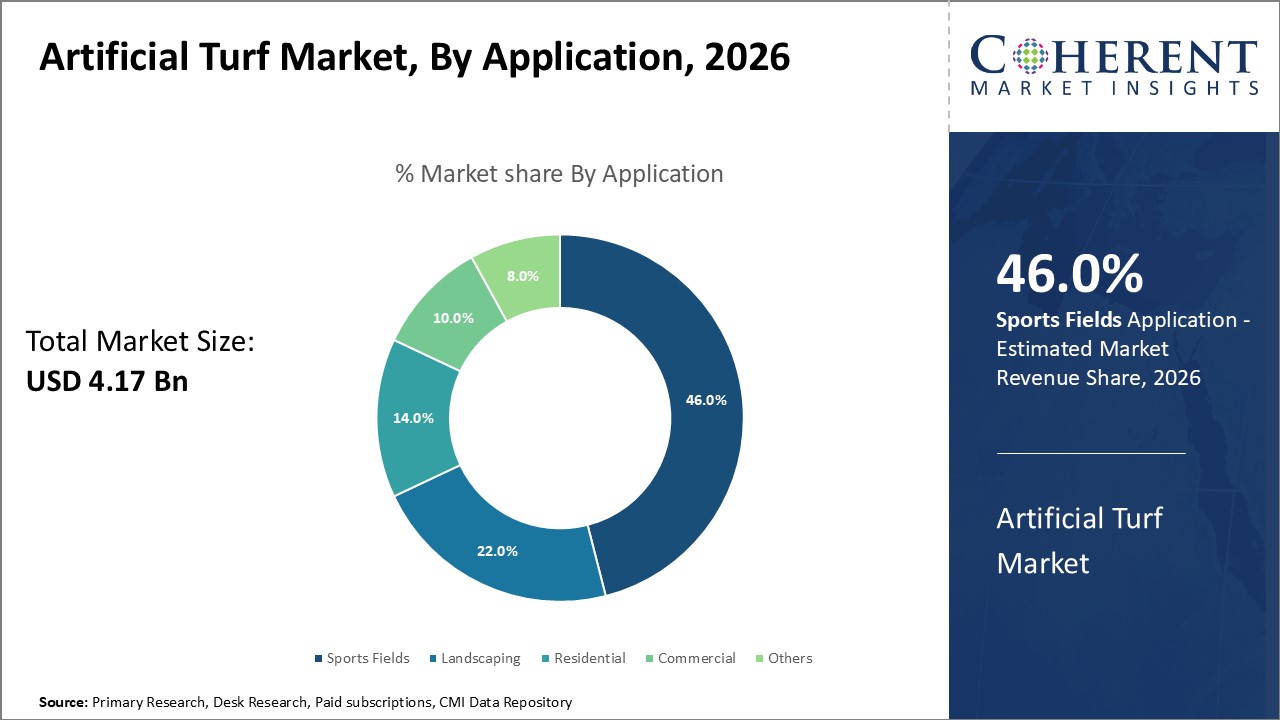
Artificial Turf Market Insights, By Application
Sports Fields dominate the industry with 46% market share. Sporting infrastructure upgrades globally, including installations in football, rugby, and baseball arenas, propel this subsegment. Recent installations at major international stadiums in 2025 highlight the critical role of synthetic turf in providing consistent playing surfaces irrespective of weather. Landscaping is emerging as the fastest-growing application, driven by stringent environmental regulations and water scarcity concerns, encouraging synthetic over natural grass for urban and commercial outdoor spaces. Residential applications continue to expand steadily as homeowners seek low-maintenance and aesthetically pleasing yard solutions.
Artificial Turf Market Insights, By End-Use
Outdoor dominates the market share due to extensive use in sports fields, landscaping, and commercial spaces exposed to natural elements. The Outdoor segment benefits from advances in drainage technology and UV-resistant materials, ensuring turf longevity and enhanced performance, evident in multiple storm-resilient turf projects in 2025. Hybrid turf is the fastest-growing end-use segment, blending natural grass and synthetic fibers for improved playability and environmental sustainability, becoming popular in professional sports and golf courses.
Artificial Turf Market Trends
The market trend is shifting towards sustainable and smart turf solutions, driven by rising environmental concerns and technological advancements.
For example, in 2025, a major stadium in Europe adopted sensor-embedded turf enabling real-time monitoring of surface conditions, enhancing athletic safety and performance.
Additionally, biodegradable turf products introduced in North America have opened new avenues for eco-conscious consumers.
Hybrid turf systems are gaining momentum globally as a balanced alternative, combining natural aesthetics with synthetic durability.
Artificial Turf Market Insights, By Geography
North America Artificial Turf Market Analysis and Trends
In North America, the dominance in the market is attributed to significant investments in sports infrastructure, government water conservation policies, and high consumer awareness about sustainable landscaping. The region accounts for over 38% of the global artificial turf market size, bolstered by the presence of key market players and strong demand from both commercial and residential sectors.
Asia Pacific Artificial Turf Market Analysis and Trends
Meanwhile, the Asia Pacific exhibits the fastest growth, with a CAGR exceeding 11%, driven by rapid urbanization, increased disposable incomes, and government initiatives promoting sports and green urban spaces. Countries like China, India, and Australia are pivotal in this growth, supported by expanding turf manufacturing facilities and rising exports.
Artificial Turf Market Outlook for Key Countries
USA Artificial Turf Market Analysis and Trends
The U.S. market leads global artificial turf demand with over 25% market share in 2026. Substantial investments in renovating sports stadiums for soccer and American football, alongside stringent water usage regulations in states like California, have accelerated turf adoption. Key players such as TurfTech Solutions and FieldTurf Tarkett have capitalized on this environment, rolling out advanced turf systems with enhanced durability and eco-friendliness. The U.S. government’s emphasis on sustainable landscaping in public parks has also amplified market revenue growth.
China Artificial Turf Market Analysis and Trends
China’s artificial turf market is expanding rapidly, propelled by expanding sports infrastructure in preparation for international events and a growing real estate sector that incorporates synthetic turf for urban landscaping. Local companies, supported by increasing production capacities for synthetic fibers, have positioned China as a key exporter in the artificial turf supply chain. Government policies encouraging urban greening and water resource management further stimulate demand, making China an essential growth engine for the Asia Pacific market.
Analyst Opinion
Artificial Turf Market Demand Driven by Sports Applications: Recent data from 2025 indicates that sports facilities constitute the largest application segment, accounting for over 46% of market share in artificial turf demand. The shift from natural grass to synthetic turf in football, soccer, and baseball stadiums is fueled by durability and lower maintenance costs, supporting consistent usage and revenue growth.
Rising Residential and Commercial Landscaping Adoption: In 2026, the residential sector saw a 28% increase in artificial turf installation, primarily driven by drought-prone regions in the U.S. and Australia implementing water-saving measures. Commercial real estate developments are adopting turf for aesthetic and low-maintenance landscapes, further contributing to market revenue.
Pricing Dynamics and Production Capacity Expansion: Manufacturers have optimized production processes, leading to a 10% reduction in pricing over 2025, thus improving market penetration in cost-sensitive regions. Increased production capacity, particularly in the Asia Pacific, has supported export growth, enabling market players to capture previously untapped markets worldwide.
Import and Export Trends Influencing Market Growth: North America imported approximately 35% more artificial turf products in 2025 compared to the previous year, while Asia Pacific consolidated its position as a leading exporter, driven by investments in synthetic fiber manufacturing. These trade dynamics illustrate the evolving global supply chain and its impact on market share distribution.
- Current Industry Events of 2026
- Market Size Estimation
- Regional Breakdown
- Competitive Landscape
- Customer Intelligence
- Segmental Analysis
- Pricing Analysis
- Key Market Drivers, Challenges & Future Trends
- Customized Insights Section
Market Scope
| Report Coverage | Details | ||
|---|---|---|---|
| Base Year: | 2025 | Market Size in 2026: | USD 4.17 billion |
| Historical Data for: | 2020 To 2024 | Forecast Period: | 2026 To 2033 |
| Forecast Period 2026 to 2033 CAGR: | 9.7% | 2033 Value Projection: | USD 7.2 billion |
| Geographies covered: |
| ||
| Segments covered: |
| ||
| Companies covered: | XGrass Industries, TurfTech Solutions, Synthetic Lawn Corp, GreenField Sports Turf, EverLawn Technologies, PolyWeave Corp, AstroTurf LLC, Fasegrass Industries, FieldTurf Tarkett, TenCate Grass, SYNLawn Group, Ennis Flint. | ||
| Growth Drivers: |
| ||
Artificial Turf Market Growth Factors
The proliferation of sports activities worldwide is a primary growth driver, with major international events catalyzing demand for sustainable and high-performance turf solutions. Water scarcity, especially in areas like California and Australia, is pushing homeowners and commercial properties towards artificial turf adoption to conserve water resources. Innovations in turf materials, such as UV resistance and enhanced drainage capabilities, have significantly improved product longevity, making artificial turf more attractive for wider applications. Moreover, increasing government mandates for sustainable landscaping and reduced chemical usage in public spaces accelerate the shift to synthetic options, strengthening market revenue streams.
Artificial Turf Market Development
In February 2026, the Moore Park All-Weather sporting field in Sydney began using a new cork-based infill system as part of a full field resurfacing initiative. The shift away from traditional rubber-crumb materials was implemented to address growing health and environmental concerns, showcasing the region’s broader move toward safer, more sustainable synthetic turf technologies.
In May 2026, the Austin Independent School District (AISD) initiated a major $2.4 billion renovation program that includes the rollout of artificial turf installations across 11 high-school campuses. As part of the upgrade process, several sports teams temporarily relocated their practice activities, reflecting AISD’s push to modernize athletic infrastructure and improve long-term facility performance.
Key Players
Leading Companies of the Market
XGrass Industries
Synthetic Lawn Corp
GreenField Sports Turf
EverLawn Technologies
PolyWeave Corp
AstroTurf LLC
Fasegrass Industries
FieldTurf Tarkett
TenCate Grass
SYNLawn Group
Ennis Flint
Competitive strategies witnessed include aggressive mergers and acquisitions, as evident when FieldTurf Tarkett expanded its footprint through the acquisition of regional manufacturers in 2025, boosting production capacities and market share. Similarly, TenCate Grass invested heavily in R&D to develop eco-friendly turf solutions, leading to a 16% increase in sales in North America in 2026.
Artificial Turf Market Future Outlook
Future market expansion will be driven by sustainability and performance enhancement. Manufacturers are increasingly adopting recyclable polymers, organic infills, and antimicrobial coatings to minimize environmental impact. Innovations in fiber engineering aim to reduce heat retention and improve playability under extreme weather conditions. Smart turf systems integrated with sensors for moisture, temperature, and surface wear monitoring are expected to enhance maintenance efficiency. With growing interest in sustainable urban design, artificial turf will continue to penetrate residential and commercial green spaces, while government sports infrastructure programs will reinforce global demand.
Artificial Turf Market Historical Analysis
The artificial turf market originated in the 1960s with the installation of the first synthetic playing surface at the Houston Astrodome, primarily developed for sports applications. Early turf systems were made from nylon fibers that provided durability but lacked softness and heat resistance. Through the 1980s and 1990s, technological innovation introduced polyethylene and polypropylene fibers, significantly improving comfort, UV stability, and safety for athletes. Adoption extended beyond stadiums to landscaping, residential, and commercial environments as water scarcity and maintenance costs of natural grass became major concerns. Growing public acceptance and aesthetic improvements turned synthetic turf into a mainstream landscaping solution.
Sources
Primary Research Interviews:
Sports Facility Directors
Landscape Designers
Turf Manufacturers
Municipal Planners
Databases:
FIFA Quality Programme
U.S. EPA Water Efficiency Data
Statista Sports Reports
OECD Urban Development Data
Magazines:
Sports Field Management
Landscape Architecture Magazine
Green Building News
Athletic Business
Journals:
Journal of Sports Engineering and Technology
Urban Forestry & Urban Greening
Environmental Research Letters
Sports Technology Journal
Newspapers:
The Guardian (Sports)
The Times (Environment)
The Hindu (Sports)
The Economic Times (Infrastructure)
Associations:
Synthetic Turf Council (STC)
FIFA, European Turfgrass Society (ETS)
ASTM International
Get access to 250+ pages report
Every segment, forecast, competitor profile and data table behind the analysis above — available for instant download.
- ESOMAR Member
- ISO 9001:2015 Certified
- D-U-N-S Registered
- GDPR & CCPA Compliant
Missing comfort of reading report in your local language? Find your preferred language:
Transform your Strategy with Exclusive Trending Reports
Frequently Asked Questions
Dominant market players include XGrass Industries, FieldTurf Tarkett, and TenCate Grass, known for their extensive production capacity and innovation-led product lines.
The market is expected to expand from USD 4.17 billion in 2026 to approximately USD 7.2 billion by 2033, exhibiting a CAGR of 9.7%.
Sports fields and landscaping segments present the largest growth opportunities, with sustained investments driving demand for artificial turf products.
Further integration of eco-friendly materials and smart turf technologies will redefine market dynamics, enhancing performance and sustainability.
The market is highly competitive with key players adopting technology innovation, mergers, and regional expansions, while challenges include managing raw material costs and regulatory compliance.
Market companies focus on strategic partnerships, local manufacturing expansion, and product innovation to enhance market reach and meet sector-specific needs.