

Engineering Plastics Market Analysis & Forecast 2026-2033
Global engineering plastics market is estimated to be valued at USD 133.57 Bn in 2026 and is expected to reach USD 199.52 Bn by 2033, exhibiting a compound annual growth rate (CAGR) of 5.9% from 2026 to 2033.
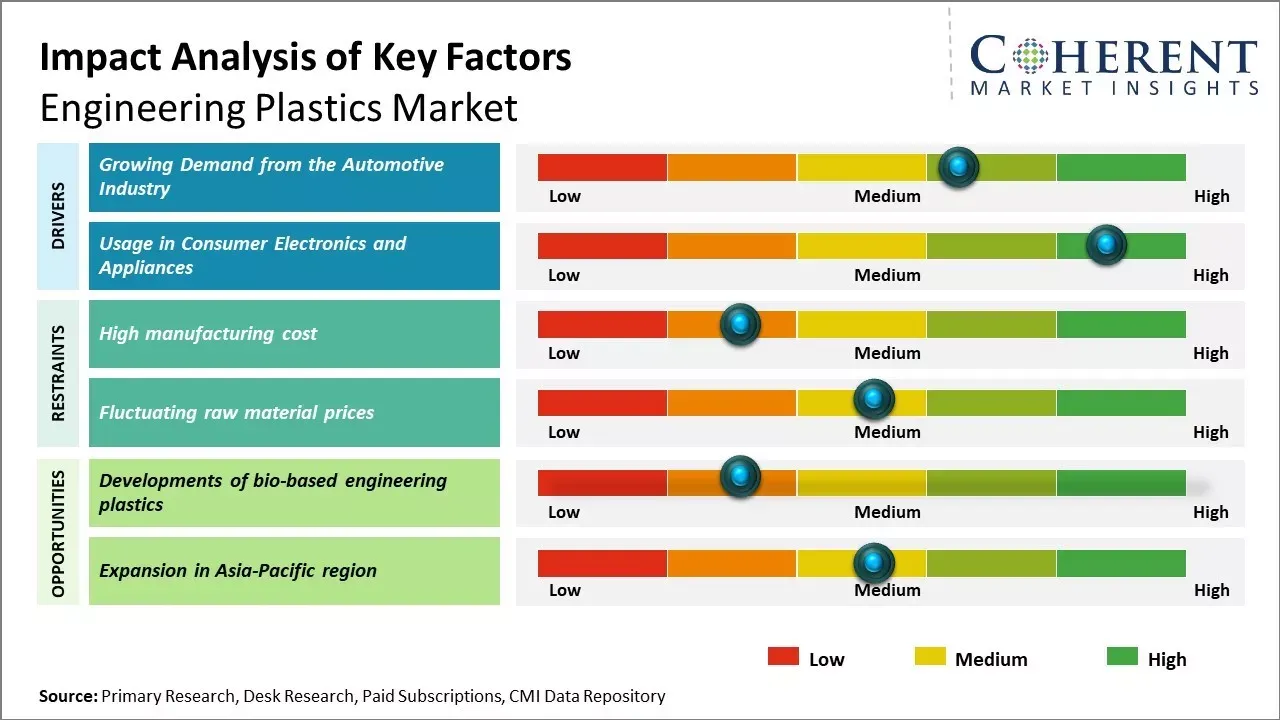
Key Takeaways
- By Product Type, Polyamides segment is estimated to account for 27.7% of the global engineering plastics market in 2026. Its dominance stems from a unique balance of strength, rigidity, and processability, and other properties.
- By Application Type, the electrical and electronics segment is projected to contribute 37.1% of the market share in 2026, driven by the ongoing miniaturization trend and rising performance requirements of electronic components.
- North America is anticipated to lead the engineering plastics market with an estimated 39.9% share in 2026, supported by robust manufacturing capabilities, a strong presence of automotive and electronics industries, and consistent investment in advanced material R&D.
Market Overview
The global Engineering Plastics Market is witnessing robust growth, driven by increasing demand across automotive, electrical and electronics, and consumer goods sectors. Key product types include acrylonitrile butadiene styrene (ABS), polyamides, and polycarbonates, with ABS leading the market. Superior mechanical properties, thermal resistance, and lightweight characteristics are fuelling widespread adoption. Technological advancements and sustainability initiatives are further enhancing material performance.
Current Events and its Impact on the Engineering Plastics Market
Current Event | Description and its impact |
Product Launches and Approvals |
|
Strategic Deals and Expansion |
|
Changing Global Landscape |
|
Pricing Analysis: Engineering Plastics Market
The pricing of engineering plastics is influenced by multiple factors, including raw material costs (such as crude oil derivatives), supply-demand dynamics, production technologies, and regulatory compliance. In 2025, prices are expected to remain moderately volatile due to fluctuations in global petrochemical markets and logistical constraints. High-performance engineering plastics like polyphenylene sulfide (PPS) and polyetheretherketone (PEEK) command premium prices due to their superior properties and limited global producers.
ABS, polycarbonate, and polyamide remain competitively priced, with strong demand in automotive and consumer electronics sustaining their value. However, the growing shift toward sustainable and bio-based alternatives may lead to higher initial costs, offset by long-term benefits in recyclability and compliance.
Geographically, North America and Europe witness higher average prices due to stringent quality standards and environmental regulations, while Asia Pacific offers more cost-competitive options driven by mass production and scale. Overall, pricing trends are closely tied to innovation, feedstock volatility, and end-user application growth.
- Current Industry Events of 2026
- Market Size Estimation
- Regional Breakdown
- Competitive Landscape
- Customer Intelligence
- Segmental Analysis
- Pricing Analysis
- Key Market Drivers, Challenges & Future Trends
- Customized Insights Section
Technological Advancements: Engineering Plastics Market
Technological advancements are significantly reshaping the engineering plastics market, driving innovation across product development, performance, and sustainability. Key breakthroughs include the development of high-temperature-resistant polymers and lightweight composites that enhance fuel efficiency in automotive and aerospace applications.
Advanced polymer blending and compounding techniques have improved mechanical strength, chemical resistance, and thermal stability, making engineering plastics suitable for increasingly complex and demanding environments.
The integration of nanotechnology has led to the creation of nan composites with superior barrier properties, electrical conductivity, and flame resistance, expanding usage in electronics, medical devices, and packaging. Additionally, progress in 3D printing materials is enabling customized manufacturing of functional engineering plastic components across diverse sectors.
One notable area of application is the production of precision components CNC machined by engineering plastics, which are gaining traction in high-performance industries such as medical, aerospace, and electronics. These machined parts offer tight tolerances, high durability, and excellent surface finishes, making them ideal for critical applications where metal alternatives may be less suitable.
Sustainability-driven innovation is also gaining momentum, with manufacturers investing in bio-based engineering plastics and enhanced recycling technologies. These eco-friendly materials aim to reduce environmental impact without compromising performance, aligning with global regulatory trends and rising consumer preference for green alternatives.
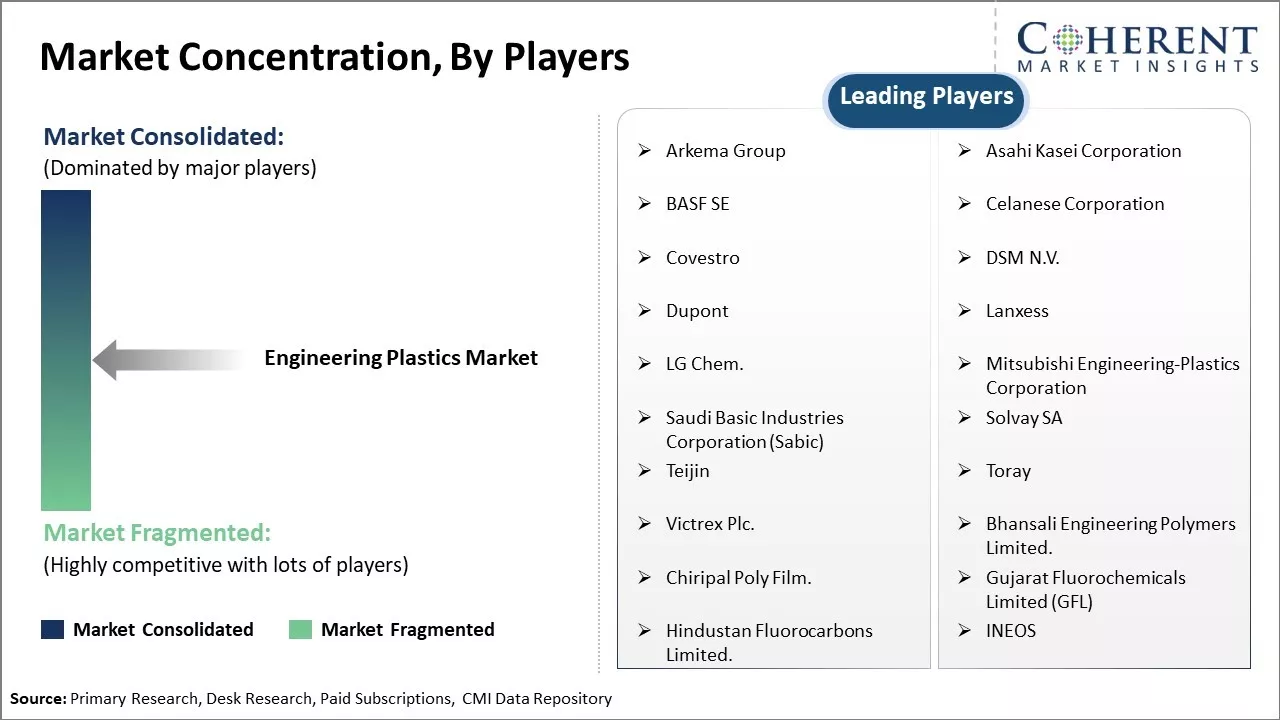
Market Concentration and Competitive Landscape
Engineering Plastics Market Trends
- Growing Demand from the Automotive Industry
The automotive industry is always at the forefront of adopting new materials to reduce weight and improve fuel efficiency of vehicles. Engineering plastics are increasingly becoming materials of choice for various auto components due to their high strength-to-weight ratio as compared to metals. As regulations around the world become stricter for automakers to achieve certain mileage targets and reduce emissions, there is a renewed focus on substituting heavier metal parts with lightweight plastics.
Engineering thermoplastics like polycarbonate, polyamide, acrylonitrile butadiene styrene, and polyoxymethylene allow automakers to shed valuable pounds from an average car that helps in fuel consumption. Engineering plastics provide designers greater flexibility to optimize part performance. For example, polyamides are finding more applications in under-the-hood components like air intake manifolds and fluid connector assemblies because of their fuel and oil resistance combined with fatigue and impact resistance.
On the body exterior, polycarbonate usage is growing for applications ranging from daytime running lamp covers to side view mirror housing. These parts previously used coated metals but plastics reduce not just weight but part complexity and assembly costs. As automotive technology becomes more advanced with trends like hybrid and electric vehicles gaining traction, there has been huge demand for high performance plastics from auto OEMs and their suppliers in the near future.
In May 2019, SRF Ltd announced that it would sell its engineering plastics business to DSM for ₹320 crore. The divestment decision was part of SRF's strategy to focus on its core chemical operations, following their view that scaling the plastics unit “would have taken significant time”.
- Usage in Consumer Electronics and Appliances
Growing consumer products industry can drive the market growth. Nowadays consumer expects high-tech devices and appliances that are lightweight, durable, and packed with features. This pushes OEMs to utilize materials like polycarbonate, polyamide, acrylic, and modified polyphenylene oxide in devices ranging from smartphones, laptops, and TVs to washing machines, refrigerators, and blenders.
Engineering thermoplastics allow thinner and more compact designs without compromising on strength. For example, polycarbonate is the material of choice for parts like phone casings, tablet covers, and appliance exterior panels due to its impact resistance and ability to be moulded into complex shapes. Polyamides are used as structural components, drawers, and fasteners where their self-lubricating nature prevents wear and tear.
February 2025, Mysuru City Corporation (MCC) collaborated with Jagruth Tech to convert category‑3 plastic waste into interlocking bricks, earning Rs 2.6 lakh by selling Extended Producer Responsibility (EPR) credits. This initiative processed some 275 tonnes of plastic and turned it into building materials with strong market demand showcasing a circular‑economy approach within the engineering plastics realm.
Opportunities In the Engineering Plastics Market
- Developments of bio-based engineering plastics
The growth of the global engineering plastics market faces a major restraint owing to the developments taking place in the field of bio-based engineering plastics. As environmental concerns rise globally and plastics disposal becomes a challenge, the industry is exploring more sustainable alternatives. This is where bio-based engineering plastics have found major traction in recent years.
Bio-based plastics are derived from renewable biomass sources such as sugarcane, corn starch, vegetable fats, and oils, rather than petroleum. They help reduce dependence on fossil fuels and make the production process more eco-friendly. Several variants of bio-polyesters, bio-polyamides, and PHA (polyhydroxyalkanoate)-based plastics have been developed, which exhibit properties comparable to traditional engineering thermoplastics.
Major automotive and consumer goods manufacturers have started adopting these sustainable biomaterials for various components. For example, Ford Motor Company launched an initiative in 2020 to incorporate recycled and bio-based materials in vehicles to reduce environmental impact. At the same time, emerging opportunities in specialized applications such as the engineering plastics market for 5G components are helping offset this restraint.
The high-performance requirements of 5G technology, including excellent thermal resistance, signal integrity, and lightweight properties, are driving demand for advanced engineering plastics in antenna modules, connectors, and circuit boards. As manufacturers strive to balance performance with sustainability, innovation in both bio-based and high-frequency compatible engineering plastics will shape the future direction of the market.
Segmental Insights
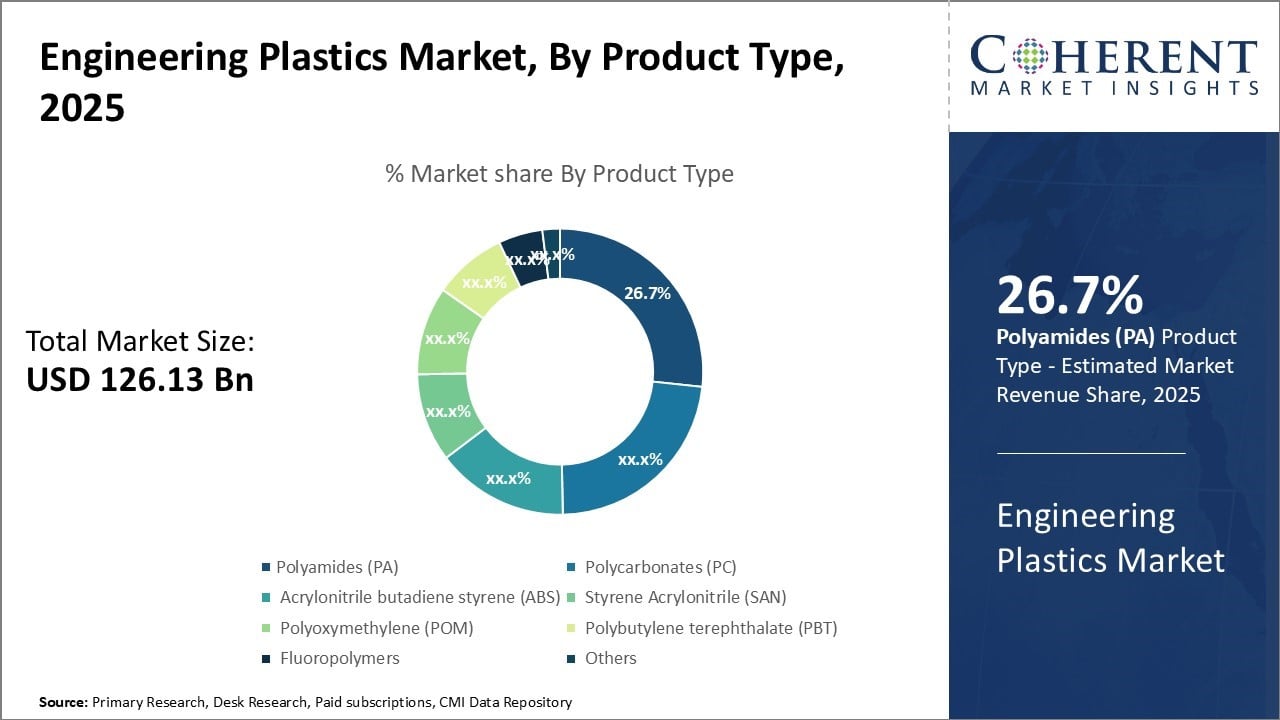
Global Engineering Plastic Market Insights, By Product Type
Polyamides (PA) segment is estimated to account for 27.7% of the global engineering plastics market in 2026. This dominance is attributed to its excellent combination of strength, rigidity, and ease of processing, making it an ideal choice for diverse applications across automotive, consumer electronics, and household goods industries. The material’s high impact resistance, lightweight nature, and aesthetic versatility support its use in high-volume and precision molding applications.
Moreover, ongoing advancements in bio-based and recycled ABS are addressing sustainability concerns, increasing its appeal among environmentally conscious manufacturers. As industries worldwide seek durable yet cost-effective alternatives to metals and traditional plastics, ABS continues to serve as a core material in both mature and emerging economies. Strong demand from Asia Pacific and North America, coupled with growing interest in electric vehicles and smart appliances, further cements ABS’s leading market position.
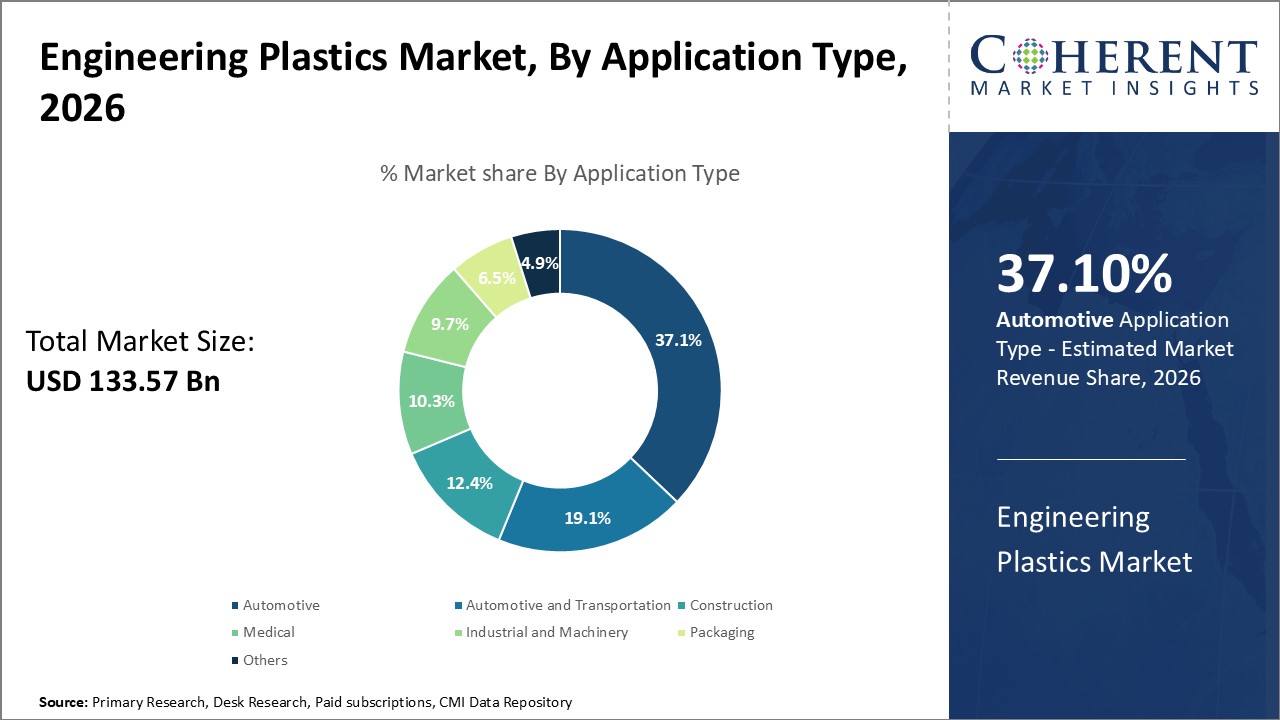
Global Engineering Plastic Market Insights, By Application Type
The electrical and electronics segment is projected to contribute 37.1% of the engineering plastics market share in 2026, fuelled by the increasing miniaturization of components and heightened performance requirements in modern devices. Materials such as polycarbonate, polyamides, and polyphenylene sulfide offer superior flame resistance, dimensional stability, and thermal and electrical insulation, making them essential in applications ranging from connectors and switches to enclosures and circuit boards.
As consumer electronics, smart home devices, and 5G infrastructure continue to expand, so does the need for reliable, high-performance plastic components. Regulatory compliance with standards such as RoHS and WEEE is also influencing manufacturers to adopt recyclable and eco-friendly engineering plastics. This sustained demand, particularly in Asia Pacific and North America, is expected to reinforce the segment’s dominance and accelerate innovations in high-precision polymer technologies.
Regional Insights
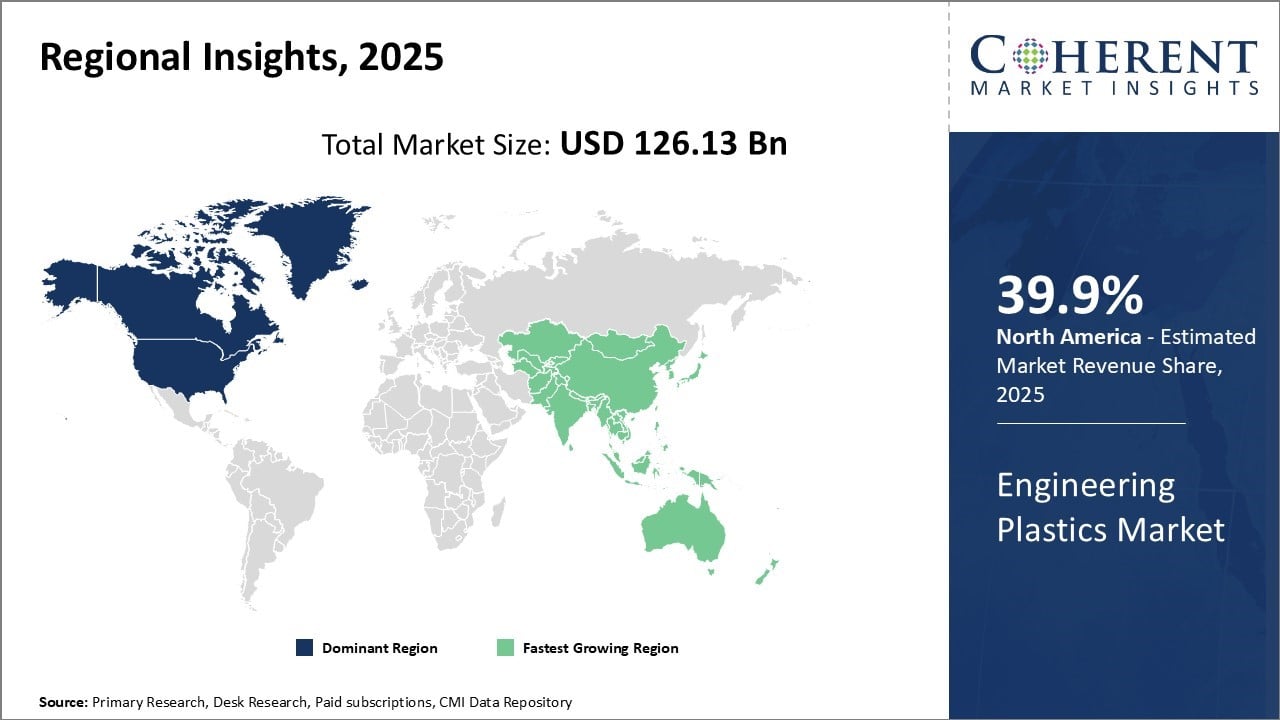
North America Engineering Plastics Market Trends and Analysis
North America is anticipated to lead the global engineering plastics market with a projected 39.9% market share in 2026, driven by its robust manufacturing infrastructure, technological maturity, and extensive end-user demand across automotive, electrical, and industrial sectors. The region’s well-established automotive and electronics industries continue to generate consistent demand for lightweight, high-performance materials, particularly as manufacturers shift toward fuel efficiency, miniaturization, and electrification.
The United States remains the innovation powerhouse within the region, supported by a strong industrial base, advanced R&D capabilities, and widespread adoption of sustainable plastic alternatives. Regulatory pressure to reduce environmental impact is accelerating the integration of bio-based and recyclable engineering plastics in production processes. Government-led initiatives promoting circular economy models and funding for material innovation are further reinforcing this shift.
Strategic collaborations between raw material suppliers, OEMs, and academic institutions are boosting innovation pipelines, enabling the development of high-precision, application-specific polymers. In sectors such as electric vehicles, aerospace, and 5G telecommunications, engineering plastics are increasingly replacing metals due to their favourable strength-to-weight ratios, chemical resistance, and process ability.
Furthermore, increasing investment in recycling infrastructure and localized production facilities is enhancing supply chain resilience and reducing dependency on imports. As industries in the region continue to embrace digital transformation and sustainable manufacturing, North America is expected to retain its dominant position in the global engineering plastics market.
Engineering Plastics Market Dominating Countries
United States
The United States leads the global engineering plastics market, driven by its advanced manufacturing capabilities, strong R&D infrastructure, and expansive demand from key sectors such as automotive, aerospace, consumer electronics, and industrial machinery. Representing the largest portion of North America’s projected 39.9% market share in 2026, the U.S. benefits from its early adoption of high-performance polymers, commitment to sustainable materials, and ongoing innovation in lightweight and recyclable plastics.
Federal initiatives supporting the circular economy, along with favourable regulatory frameworks for advanced materials, are accelerating the development and commercialization of bio-based and engineering-grade plastics. Strategic investments by leading players such as DuPont, Celanese, SABIC, and BASF (with U.S. operations) continue to strengthen the country's global leadership.
Additionally, collaborations among research institutions, OEMs, and material suppliers foster rapid innovation, especially in electric vehicles, 5G infrastructure, and precision medical devices. These dynamics ensure the U.S. remains the core driver of global engineering plastics innovation and adoption.
Canada
Canada complements U.S. leadership in the engineering plastics market with its growing focus on sustainable manufacturing, high environmental standards, and well-integrated industrial ecosystem. The country’s demand for engineering plastics is rising steadily across sectors such as automotive, construction, renewable energy, and electronics. Canadian industries are increasingly incorporating advanced polymers to enhance energy efficiency, reduce carbon emissions, and meet durability standards.
Government-led programs such as the Industrial Research Assistance Program (IRAP) and Sustainable Development Technology Canada (SDTC) are fostering R&D in biodegradable and high-performance plastic alternatives. Universities and research centres across the country actively collaborate with global polymer manufacturers and domestic OEMs to develop next-generation materials.
As the Canadian economy continues to emphasize clean technologies and industrial innovation, the country plays a key strategic role in bolstering North America's dominance in the global engineering plastics market.
Market Report Scope
Engineering Plastics Market Report Coverage
| Report Coverage | Details | ||
|---|---|---|---|
| Base Year: | 2025 | Market Size in 2026: | USD 133.57 Bn |
| Historical Data for: | 2020 To 2024 | Forecast Period: | 2026 To 2033 |
| Forecast Period 2026 to 2033 CAGR: | 5.9% | 2033 Value Projection: | USD 199.52 Bn |
| Geographies covered: |
| ||
| Segments covered: |
| ||
| Companies covered: | Arkema Group, Asahi Kasei Corporation, BASF SE, Celanese Corporation, Covestro, DSM N.V., Dupont, Lanxess, LG Chem., Mitsubishi Engineering-Plastics Corporation, Saudi Basic Industries Corporation (Sabic), Solvay SA, Teijin, Toray, Victrex Plc., Bhansali Engineering Polymers Limited., Chiripal Poly Film., Gujarat Fluorochemicals Limited (GFL), Hindustan Fluorocarbons Limited., INEOS | ||
| Growth Drivers: |
| ||
| Restraints & Challenges: |
| ||
Analyst Viewpoint – Engineering Plastics Market
- The global engineering plastics market is set for sustained expansion, fuelled by increasing demand across automotive, electrical, electronics, and industrial sectors. Analysts highlight a notable shift toward lightweight, high-performance materials that replace conventional metals, driven by stringent fuel efficiency, emission norms, and miniaturization trends in component design.
- Technological advancements such as the development of heat-resistant polymers, nanocomposites, and bio-based engineering plastics are seen as game-changers. These innovations are enabling applications in electric vehicles, 5G infrastructure, medical devices, and aerospace, enhancing product functionality and sustainability. Analysts emphasize that ongoing R&D and material customization are critical to meeting evolving end-user requirements.
- While raw material price volatility and recycling infrastructure gaps in emerging markets remain challenges, the long-term outlook is optimistic. Strategic partnerships, regional capacity expansions, and increasing adoption of eco-friendly alternatives are expected to enhance supply chain resilience, boost market penetration, and drive long-term global growth in the engineering plastics sector.
Engineering Plastics Market: Key Development
- In June 2025, BASF launched a new grade of Ultramid® Advanced N, a high-performance polyphthalamide (PPA) for electric vehicle components. Designed for elevated thermal and mechanical requirements, this innovation supports the e-mobility shift and strengthens BASF’s leadership in automotive light weighting solutions.
- In April 2025, SABIC introduced a flame-retardant polycarbonate copolymer series optimized for 5G base stations and advanced electronics. These new materials enhance electrical insulation, meet strict fire safety norms, and offer superior dimensional stability, catering to next-gen telecom infrastructure.
- In February 2025, Covestro expanded its polycarbonate production facility in Shanghai, doubling its output capacity. This strategic expansion addresses growing regional demand, improves supply chain resilience, and reinforces Covestro’s footprint in the fast-growing Asia Pacific market.
- In November 2024, DuPont announced the development of renewable-source-based polyamides, aimed at reducing carbon emissions across industrial applications. These bio-based materials offer the same mechanical performance as traditional plastics while aligning with sustainability targets.
- In August 2024, LG Chem unveiled a new line of recycled engineering plastics made from post-consumer waste, targeted at the consumer electronics and automotive sectors. This development promotes circular economy practices and meets rising regulatory and OEM sustainability requirements.
Market Segmentation
- By Product Type (Revenue, USD Bn, 2021 - 2033)
- Polyamides (PA)
- Polycarbonates (PC)
- Acrylonitrile butadiene styrene (ABS)
- Styrene Acrylonitrile (SAN)
- Polyoxymethylene (POM)
- Polybutylene terephthalate (PBT)
- Fluoropolymers
- Others
- By Applications (Revenue, USD Bn, 2021 - 2033)
- Automotive and Transportation
- Interiors and Safety
- Engine and Mechanical
- Exteriors and Structural
- Others (include fuel systems, electrical and electronics)
- Electrical and Electronics
- Consumer Appliances
- Others (include lighting, optical media, wire and cable, electronic components)
- Construction
- Glazing and Sky Lighting
- Pipes and Fittings
- Others (Wall outlets, building bricks)
- Medical
- Diagnostic and Drug Delivery Systems
- Medical Devices
- Others (include surgical instruments, orthopedic implant, and orthopedics)
- Industrial and Machinery
- Packaging
- Others
- Automotive and Transportation
- By Region (Revenue, USD Bn, 2021 - 2033)
- North America
- U.S.
- Canada
- Latin America
- Brazil
- Argentina
- Mexico
- Rest of Latin America
- Europe
- Germany
- U.K.
- Spain
- France
- Italy
- Russia
- Rest of Europe
- Asia Pacific
- China
- India
- Japan
- Australia
- South Korea
- ASEAN
- Rest of Asia Pacific
- Middle East
- GCC Countries
- Israel
- Rest of Middle East
- Africa
- South Africa
- North Africa
- Central Africa
- North America
- Company Profiles
- Arkema Group
- Asahi Kasei Corporation
- BASF SE
- Celanese Corporation
- Covestro
- DSM N.V.
- Dupont
- Lanxess
- LG Chem.
- Mitsubishi Engineering-Plastics Corporation
- Saudi Basic Industries Corporation (Sabic)
- Solvay SA
- Teijin
- Toray
- Victrex Plc.
- Bhansali Engineering Polymers Limited
- Chiripal Poly Film
- Gujarat Fluorochemicals Limited (GFL)
- Hindustan Fluorocarbons Limited
- INEOS
Sources
The Stakeholders Consulted
- Polymer and plastic component manufacturers
- Engineering plastic resin suppliers and compounders
- Product design and R&D engineers from automotive, electronics, and packaging sectors
- OEMs in automotive, electrical, aerospace, and industrial sectors
- Regulatory and compliance officers from material certification agencies
- Procurement heads from industrial and consumer goods manufacturers
- Government agencies overseeing materials innovation and circular economy policies
Databases Opened
- PlasticsEurope – Market and Sustainability Data
- U.S. Department of Commerce – Plastics Material and Resins Statistics
- India Plastics Export Promotion Council – Resin Production and Trade Stats
- World Bank Open Data – Manufacturing Sector Indicators’
Magazines & Trade Publications
- Plastics News
- Chemical & Engineering News (C&EN)
- Plastics Technology Magazine
- Modern Plastics India
- Manufacturing.net – Materials & Engineering Section
Scientific and Industry Journals
- Journal of Applied Polymer Science
- Polymer Engineering and Science
- International Journal of Plastics Technology
- Advanced Materials Research
- Macromolecular Materials and Engineering
Newspapers & Media Outlets
- The Wall Street Journal – Materials & Industry
- Bloomberg – Global Commodity and Plastics News
- Reuters – Chemicals and Manufacturing Coverage
- The Economic Times – Manufacturing & Trade
- Business Standard – Polymer and Engineering Market News
Associations and Regulatory Bodies
- American Chemistry Council – Plastics Division
- Society of Plastics Engineers (SPE)
- BIS (Bureau of Indian Standards) – Engineering Plastics
- European Chemical Industry Council (CEFIC)
- Ministry of Environment, Forest and Climate Change, India – Plastic Waste Management Guidelines
Public Domain Sources
- U.S. Environmental Protection Agency (EPA) – Plastics and Recycling Reports
- European Commission – Plastics Strategy and Circular Economy Reports
- World Bank – Environmental Impact of Plastics Reports
- International Energy Agency (IEA) – Energy Use in Plastics Production
- International Renewable Energy Agency (IRENA) – Sustainable Materials Data
Proprietary Research Elements
- CMI Data Analytics Tool
- Proprietary CMI Repository of Market Data (covering past 8 years)
- CMI Expert Interviews and Transcripts (focused on materials selection, resin performance, cost trends, and end-use demand in engineering plastics)
Get access to 250+ pages report
Every segment, forecast, competitor profile and data table behind the analysis above — available for instant download.
- ESOMAR Member
- ISO 9001:2015 Certified
- D-U-N-S Registered
- GDPR & CCPA Compliant
Missing comfort of reading report in your local language? Find your preferred language:
Transform your Strategy with Exclusive Trending Reports
Frequently Asked Questions
The Engineering Plastics Market is estimated to be valued at USD 133.57 Bn in 2026, and is expected to reach USD 199.52 Bn by 2033.
The CAGR of the Engineering Plastics industry is projected to be 5.9% from 2026 to 2033.
Growing demand from the automotive industry and usage in consumer electronics and appliances are the major factors driving the growth of global engineering plastics market.
High manufacturing cost and fluctuating raw material prices are the major factors hampering the growth of global market.
In terms of product type, acrylonitrile butadiene styrene (ABS) segment is estimated to dominate the market in 2026.
Arkema Group, Asahi Kasei Corporation, BASF SE, Celanese Corporation, Covestro, DSM N.V., Dupont, Lanxess, LG Chem., Mitsubishi Engineering-Plastics Corporation, Saudi Basic Industries Corporation (Sabic), Solvay SA, Teijin, Toray, Victrex Plc., Bhansali Engineering Polymers Limited., Chiripal Poly Film., Gujarat Fluorochemicals Limited (GFL), Hindustan Fluorocarbons Limited., INEOS are the major players.
North America is expected to lead the global engineering plastics industry.