

Stearates Market Size and Forecast — 2026-2033
Stearates Market is estimated to be valued at USD 7.76 Bn in 2026 and is expected to reach USD 13.47 Bn in 2033, exhibiting a compound annual growth rate (CAGR) of 8.2% from 2026 to 2033. Because of its superior releasing qualities and potent ability to prevent mound adhering and fouling when producing rubber and plastics, zinc stearates have the biggest market share. As a result, zinc stearates are now widely used in the rubber and plastics sectors as a release agent. Zinc stearates are also beneficial in a variety of applications, such as cosmetics, medicines, and food. For instance, in March 2023, Algol Chemicals and German company Evonik Operations GmbH have signed a distribution agreement for VESTAKEEP® PEEK polymers. The agreement covers Algol Chemicals’ Finnish, Scandinavian and Baltic markets.
Market Growth from Increased Demand for Magnesium and Zinc Stearates
Zinc and magnesium stearates have gained great popularity around the globe as a result of extensive study and substantial advancements in the manufacturing of metallic stearates and among the many varieties of metallic stearates now on the market. As an efficient acid scavenger and processing aid, zinc stearates are being used in a variety of polyolefin applications. For instance, in March 2022, according to Sunshine organic pvt ltd.gnesium stearate improves life of dies and punches as their wear and tear is reduced and increases the production speed by ensuring proper flow ability.
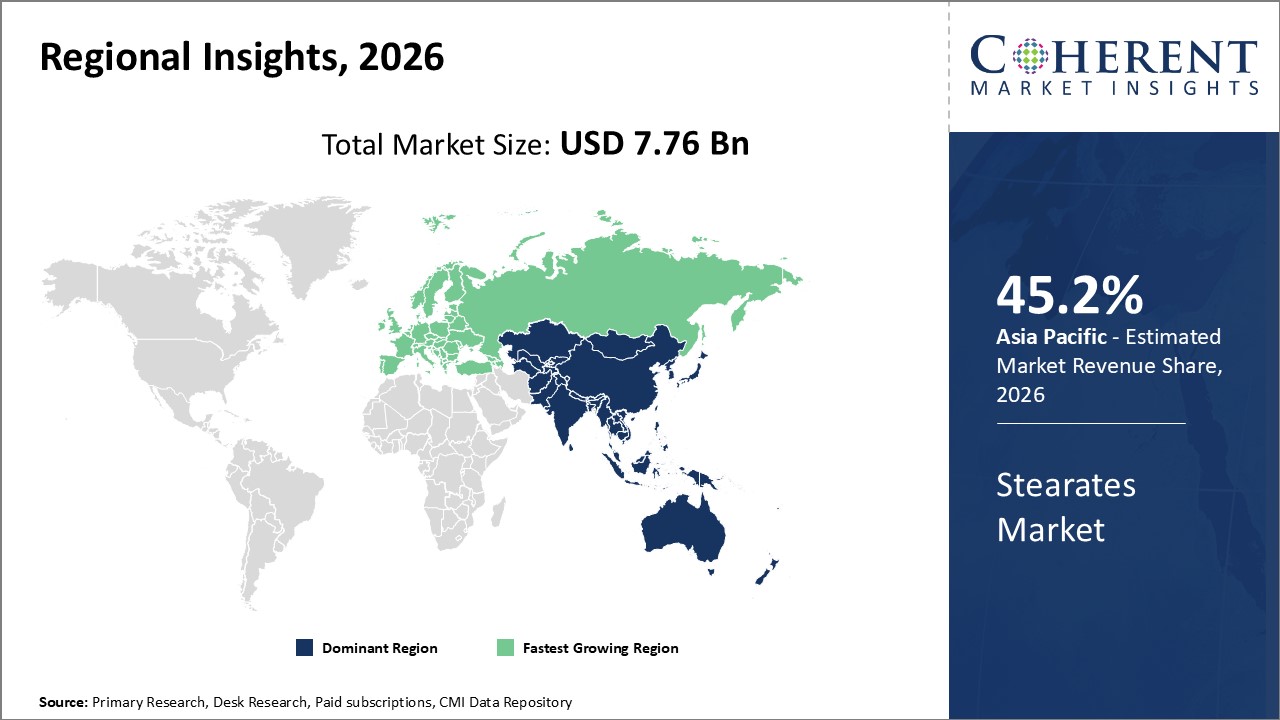
Figure 1. Global Stearates Market Share (%) in terms of Value, By Region, in 2026
Global Stearates Market: Restraints
Stringent Environmental Regulations
Stringent environmental regulations are one of the major factors restraining the growth of the metallic stearates market. Many countries have implemented strict regulations on the use of metallic stearates due to their potential environmental and health hazards. For example, metallic stearates can release toxic gases when burned, and they can also accumulate in soil and water, leading to environmental pollution. In addition, some metallic stearates have been classified as hazardous chemicals by regulatory authorities, which restricts its use in certain applications. For instance, in 2022, according to Atman Chemicals, concern has been raised about the stearic acid in magnesium stearate raising cholesterol levels, as stearic acid is a saturated fat. This should not be a concern because even normal dietary intake of stearic acid has been shown to have no significant effect on total cholesterol, low-density lipoprotein (LDL) or high-density lipoprotein (HDL) cholesterol levels. In addition, the amount of stearic acid from magnesium stearate in supplements is very small.
Global Stearates Market: Market Opportunities
In the near future, it is anticipated that the expanding usage of aluminum stearates in the manufacture of aluminum greases would present lucrative prospects. In the paint and coatings business, aluminum greases are frequently employed as water-repellent components. Because of the expanding building and construction sector worldwide, several manufacturers are boosting their output of aluminum stearates. Consequently, the market is expanding due to the increased demand for aluminum stearates.
It is anticipated that manufacturers' increased attention on creating a cutting-edge method of producing metallic stearates would present significant business prospects. For the production of metallic stearates, precipitation or double decomposition are now the most often utilized processes. Manufacturers are concentrating its efforts on R & D to create more cutting-edge and environmentally responsible processes for the manufacturing of metallic stearates, nevertheless.
- Current Industry Events of 2026
- Market Size Estimation
- Regional Breakdown
- Competitive Landscape
- Customer Intelligence
- Segmental Analysis
- Pricing Analysis
- Key Market Drivers, Challenges & Future Trends
- Customized Insights Section
Stearates Market Report Coverage
| Report Coverage | Details | ||
|---|---|---|---|
| Base Year: | 2025 | Market Size in 2026: | USD 7.76 Bn |
| Historical Data for: | 2020 To 2024 | Forecast Period: | 2026 To 2033 |
| Forecast Period 2026 to 2033 CAGR: | 8.2% | 2033 Value Projection: | USD 13.47 Bn |
| Geographies covered: |
| ||
| Segments covered: |
| ||
| Companies covered: | American eChem Inc., Baerlocher GmbH, Corporation Sierra Madre S.A. de C.V., Dover Chemical Corporation, FACI S.p.A., Ferro Corporation, Hummel Croton, Inc., Mallinckrodt Pharmaceuticals, Mexichem S.A.B. de C.V. and Nitika Pharmaceutical Specialties Private Limited (Nikita Chemicals) | ||
| Growth Drivers: |
| ||
| Restraints & Challenges: |
| ||
For instance, according to an article published by CNA, the Construction Industry Joint Committee (CIJC) has said that the shortage of manpower may lead to delay in construction projects attributed to workplace safety, and other factors.
However, emerging geographic scenarios, enhanced domestic supply chain, and strong public investments are projected to drive the growth of metallic stearates market in the growing construction sector.
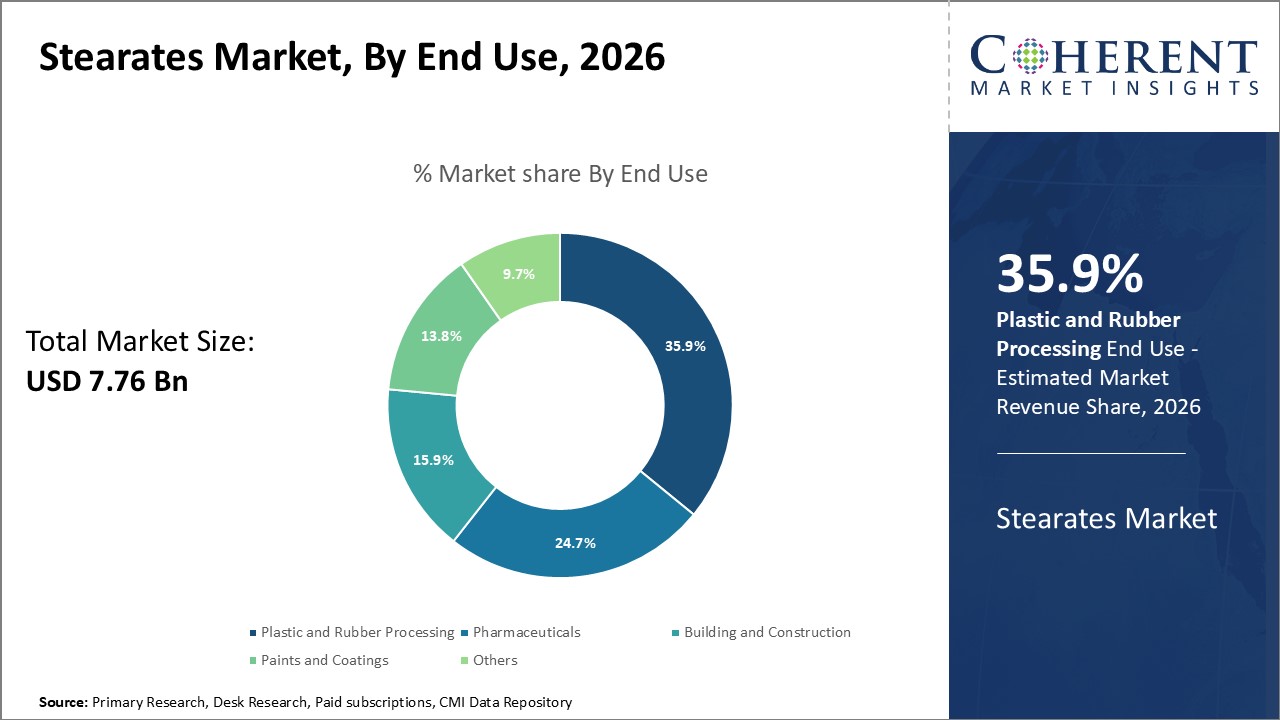
Figure 2. Global Stearates Market Share (%) in terms of Value, By End Use, in 2026
Global Stearates Market: Market Segmentation
Asia Pacific region dominated the global stearates market in 2026, accounting for 45.2% share in terms of value.
Global Stearates Market: By End Use
On the basis of end use in 2026, the plastic & rubber processing segment has accounted the largest market share of 35.9% in terms of value, followed by building & construction and others segment respectively.
Global Stearates Market: Recent Developments
- On June 2021, the distribution arrangement between PMC Organometallix, Inc. and Safic-Alcan, a global distributor of specialty chemicals, has been expanded to include the African continent. African countries are now included in the scope of the distribution agreement between Safic-Alcan and PMC Organometallix, Inc., a wholly owned subsidiary of PMC Group, N.A., Inc. Safic-Alcan will start acting as an official distributor of fine chemicals and FASCAT catalysts produced by PMC Organometallix.
- On October 2020, in order to develop metal stearates and specialty additives, Valtris Specialty Chemicals joined forces with Ravago Chemicals North America. Within the Life Ingredients Division, RCNA will market the Valtris materials as part of its current product line for the food, nutraceutical, pharmaceutical, and personal care industries. By working together, the two businesses will be able to better serve various US sectors and source and distribute unique additives to them.
- On September 2020 ILC Dover, a supplier of single-use flexible solutions for the manufacturing of pharmaceutical and biopharmaceutical products has acquired Solo Containment, a U.K.-based maker of flexible film isolators. With the addition of aseptic flexible isolators to its high containment and powder transfer systems, the acquisition will enable ILC Dover to strengthen its pharmaceutical and biopharmaceutical business internationally.
- On March 2021, In Europe, Valtris Specialty Chemicals, announced a major increase in the capacity for the manufacturing of benzoaldehyde. Hexyl cinnamaldehyde and other aroma compounds, which are widely utilized in the flavor and fragrance business, particularly in cleaning goods, are produced using benzoaldehyde as a key raw material.
Global Stearates Market: Key Companies
American eChem Inc., Baerlocher GmbH, Corporation Sierra Madre S.A. de C.V., Dover Chemical Corporation, FACI S.p.A., Ferro Corporation, Hummel Croton, Inc., Mallinckrodt Pharmaceuticals, Mexichem S.A.B. de C.V. and Nitika Pharmaceutical Specialties Private Limited (Nikita Chemicals)
Sources
Primary Research Interviews
- Metallic stearate producers (e.g., Baerlocher, PMC Biogenix, Faci, Peter Greven, Dover Chemical)
- PVC, rubber, cosmetic and pharmaceutical excipient formulators
- Concrete admixture and release-agent suppliers
Databases
- UN Comtrade stearate trade data
- ECHA REACH registrations
- Eurostat chemical production data
Magazines
- Plastics Compounding
- Happi
Journals
- Journal of Vinyl and Additive Technology (SPE/Wiley)
- International Journal of Pharmaceutics (Elsevier)
Newspapers
- Reuters Chemicals
- Financial Times – Chemicals
Associations
- AOCS
- IPEC
- SPE Vinyl Division
Public Domain Sources
- U.S. FDA GRAS data
- ECHA REACH
- ResearchGate publications on metallic stearates
Proprietary Elements
- CMI Data Analytics Tool, Proprietary CMI Existing Repository of information for last 10 years.
*Definition: Esters of fatty acids make up stearates. They have a large amount of lubricating usage as additives. It aids in reducing resistance between fillers and polymers. They can be divided into non-metal and metal stearates. Calcium, zinc, and magnesium stearates are examples of metal stearates, whereas glycerol monostearate (GMS) and different animal fats are examples of non-metal stearates.
Get access to 250+ pages report
Every segment, forecast, competitor profile and data table behind the analysis above — available for instant download.
- ESOMAR Member
- ISO 9001:2015 Certified
- D-U-N-S Registered
- GDPR & CCPA Compliant
Missing comfort of reading report in your local language? Find your preferred language:
Transform your Strategy with Exclusive Trending Reports
Frequently Asked Questions
The Stearates Market is estimated to be valued at USD 7.76 Bn in 2026, and is expected to reach USD 13.47 Bn by 2033.
The CAGR of the Stearates Market is projected to be 8.2% from 2026 to 2033.
Rising Polymer Demand across a Range of End-Use Industries and Market Growth from Increased Demand for Magnesium and Zinc Stearates
American eChem Inc., Baerlocher GmbH, Corporation Sierra Madre S.A. de C.V., Dover Chemical Corporation, FACI S.p.A., Ferro Corporation, Hummel Croton, Inc., Mallinckrodt Pharmaceuticals, Mexichem S.A.B. de C.V. and Nitika Pharmaceutical Specialties Private Limited (Nikita Chemicals)
Stringent Environmental Regulations is the main factor to hampered the growth of market