

Global Closed-Loop Neuromodulation Devices Market Size and Forecast – 2026 To 2033
The global closed-loop neuromodulation devices market is expected to grow from USD 2,620.0 Mn in 2026 to USD 6,950.0 Mn by 2033, registering a compound annual growth rate (CAGR) of 15.0% from 2026 to 2033. The global market for closed-loop neuromodulation devices is projected to witness significant growth during the forecast period attributed to the rising global prevalence of neurological conditions and increasing demand for novel treatment solutions.
The World Health Organization (WHO) estimates that neurological disease affects more than 3 billion people around the world or 40% of the globe’s population, and causes some 11 million deaths annually. With the global health burden of these diseases, there is an increasing demand for adaptive neuromodulation devices to provide more precise, individualized stimulation based on real-time monitoring of neural activity.
Key Takeaways of the Global Closed-Loop Neuromodulation Devices Market
- Implantable closed-loop neuromodulation devices are projected to hold 86.4% of the global closed-loop neuromodulation devices market share in 2026, making it dominant product type segment. North America is estimated to hold a major market share owing to the presence of well-established implantable neuromodulation ecosystem, advanced neurological research infrastructure, and increasing implantable neuromodulation research activities in the region. In May 2026, the U.S. National Institute of Neurological Disorders and Stroke (NINDS) announced the launch of a multisite research project for (DBS) closed-loop deep brain stimulation for treatment of chronic pain. The project involves research based on stimulation that is based on patients' pain-related neural activity.
- Spinal cord stimulation (SCS) is projected to hold 34.6% of the global closed-loop neuromodulation devices market share in 2026, making it technology segment. Europe is progressing in adaptive neuromodulation research by means of public research funding and academic cooperation programmes. The EU-funded FRESCO4NoPain project includes the research at Aalborg University in Denmark on EEG-triggered, closed loop spinal cord neuromodulation that adapts stimulation to brain activity in order to facilitate pain modulation.
- Chronic pain is projected to hold 32.4% of the global closed-loop neuromodulation devices market share in 2026, making it dominant application segment. Asia Pacific is creating a wave of opportunities by increasing clinical research involving feedback-controlled stimulation solutions for the treatment of chronic pain. The Australian clinical trial registered in the Australian New Zealand Clinical Trials Registry in August 2026, is testing biomarker-based neural dosing using evoked compound action potential (ECAP)-controlled closed-loop SCS in patients with chronic, intractable pain.
- North America market maintains dominance with an expected share of 43.7% in 2026, attributed to the growing ecosystem of neurological research, prevalent implantable devices infrastructure, and immense public funding for the research related to neurotechnology. In September 2026, the U.S. National Institute of Neurological Disorders and Stroke (NINDS) provided about USD 549,740 to Michigan Technological University for research on TinyML-driven closed-loop deep brain stimulation for Parkinson's disease; this is an energy-efficient and adaptive stimulation.
- Asia Pacific is expected to exhibit the fastest growth in the global closed-loop neuromodulation devices market, registering an estimated CAGR of 13.8% during 2026–2033, attributable to the rising clinical research, neurological rehabilitation services and artificial intelligence enabled adaptive stimulation technology rising in the region. Singapore General Hospital launched the AIM RECOVER study, in which researchers aim to evaluate an artificial intelligence (AI)-based closed-loop, multielectrode transcutaneous spinal cord stimulation (tSCS) platform that can automatically modulate the stimulation parameters in response to real-time information about movement and muscle activity in individuals with SCI in March 2026.
Segmental Insights
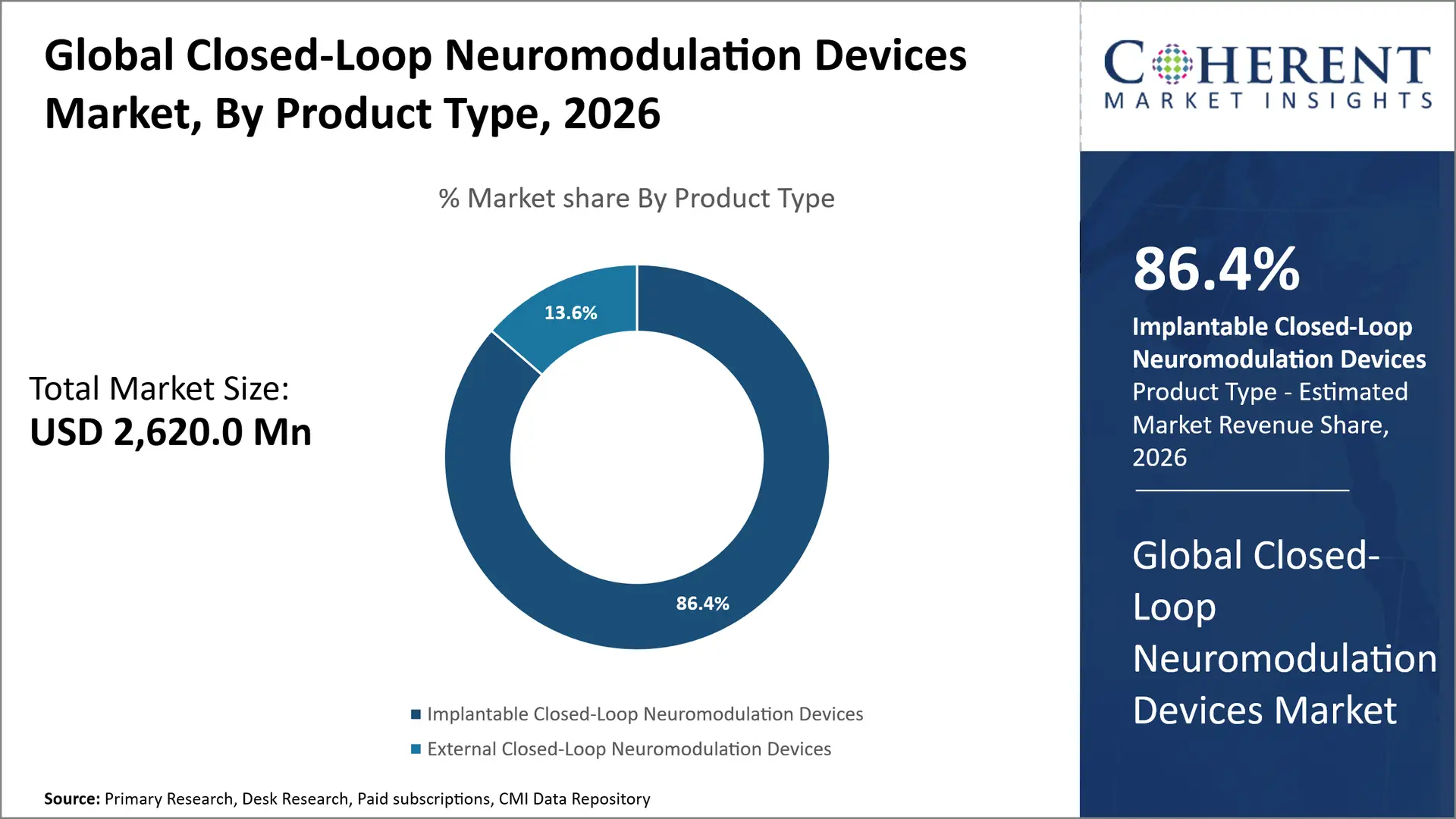
Why Do Implantable Closed-Loop Neuromodulation Devices Dominate the Global Closed-Loop Neuromodulation Devices Market?
Implantable closed-loop neuromodulation devices are projected to hold the market share of 86.4% in 2026, owing to their ability to offer real-time neural sensing while providing stimulation and modulating the therapy as per the patient's current requirement. This would enable a more tailored approach toward diseases like epilepsy or Parkinson's disease. Furthermore, their constant mode of therapy delivery along with lesser programming and operation, implantable systems are foreseen to be more popular. For instance, in February 2025, U.S. Food and Drug Administration (FDA) approved Medtronic BrainSense Adaptive Deep Brain Stimulation (aDBS) feature. The brain sensing technology enables the neurostimulator to adjust stimulation in response to brain activity allowing for truly personalized treatment of Parkinson's disease.
- Current Industry Events of 2026
- Market Size Estimation
- Regional Breakdown
- Competitive Landscape
- Customer Intelligence
- Segmental Analysis
- Pricing Analysis
- Key Market Drivers, Challenges & Future Trends
- Customized Insights Section
Why Do Spinal Cord Stimulation (SCS) Represent the Largest Technology Segment in the Closed-Loop Neuromodulation Devices Market?
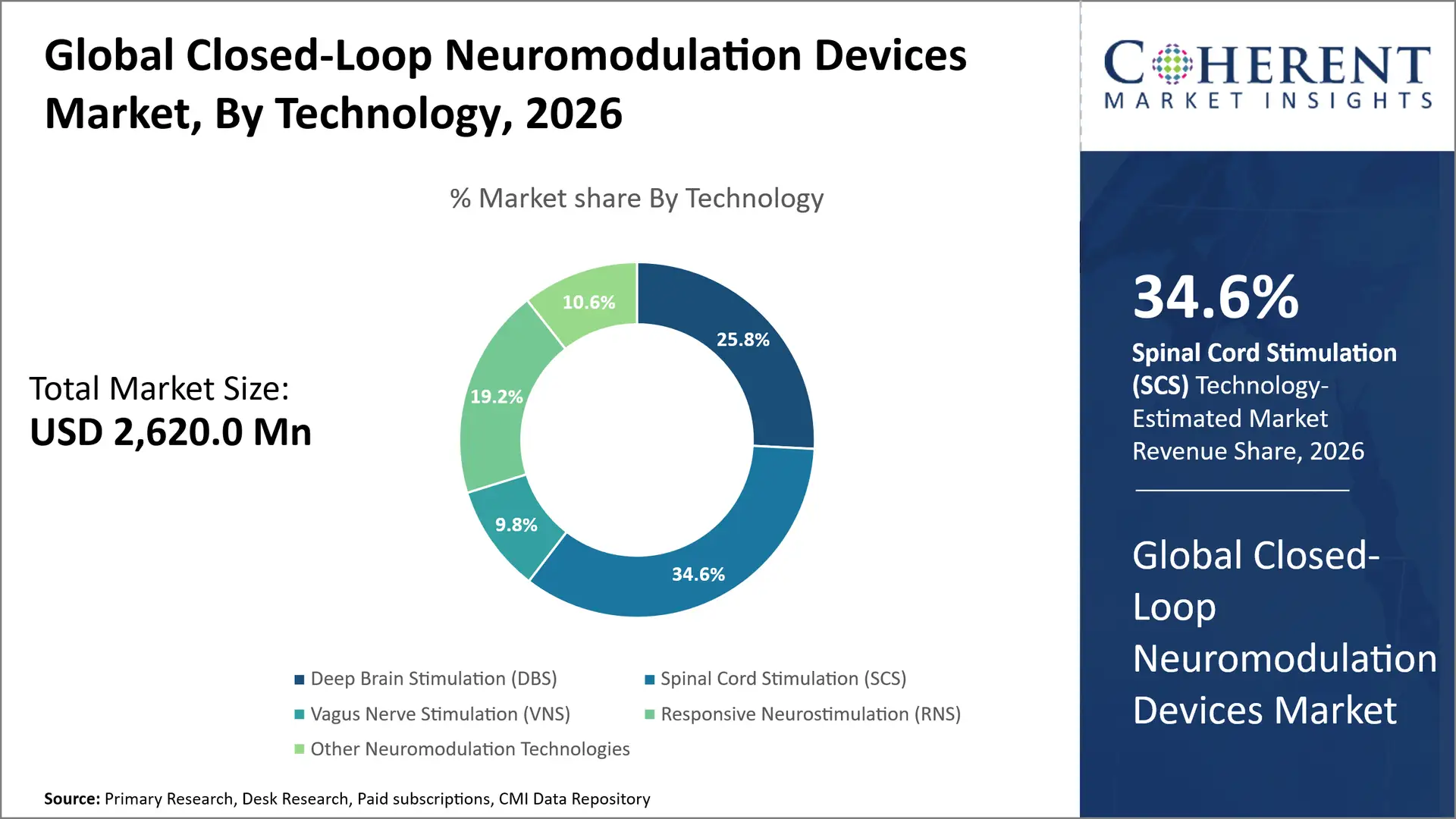
Spinal Cord Stimulation (SCS) is projected to hold a market share of 34.6% in 2026, owing to its broad application in the management of chronic, refractory pain. Also, the advent of closed-loop systems where stimulation is automatically adjusted based on neural feedback in real time should increase the precision of the stimulation and allow for long-term reduction of pain compared to fixed-output systems. For example, a 36-month results of the EVOKE blinded randomized clinical trial published by the National Library of Medicine, reported 77.6% of subjects administered ECAP-controlled closed-loop SCS experienced at least 50% pain reduction compared with 49.3% of subjects administered open-loop SCS in May 2024.
Chronic Pain Segment Dominates the Global Closed-Loop Neuromodulation Devices Market
The chronic pain segment is projected to hold a market share of 32.4% in 2026, due to the proven effectiveness of spinal cord stimulation in the treatment of persistent back pain, neuropathic pain, and other indications in which the effectiveness of standard care procedures may be in question. Closed-loop devices provide real-time neural feedback that can deliver a more consistent level of stimulation. For instance, in a systematic review and meta-analysis of 7 included studies and 453 total patients, published by the National Library of Medicine, the pooled pain-response rate in patients treated with ECAP-controlled closed-loop spinal cord stimulation was 90%, highlighting the therapeutic efficacy of closed-loop stimulation has in treating chronic pain.
Current Events and their Impact
Current Events | Description and its Impact |
U.S. NIH Funds Multisite Closed-Loop Deep Brain Stimulation Research for Chronic Pain (April 2026) |
|
U.S. NIH Updates Funding Opportunity for Next-Generation Closed-Loop Neuromodulation Devices (March 2025) |
|
Closed-Loop Neuromodulation Devices Market Dynamics
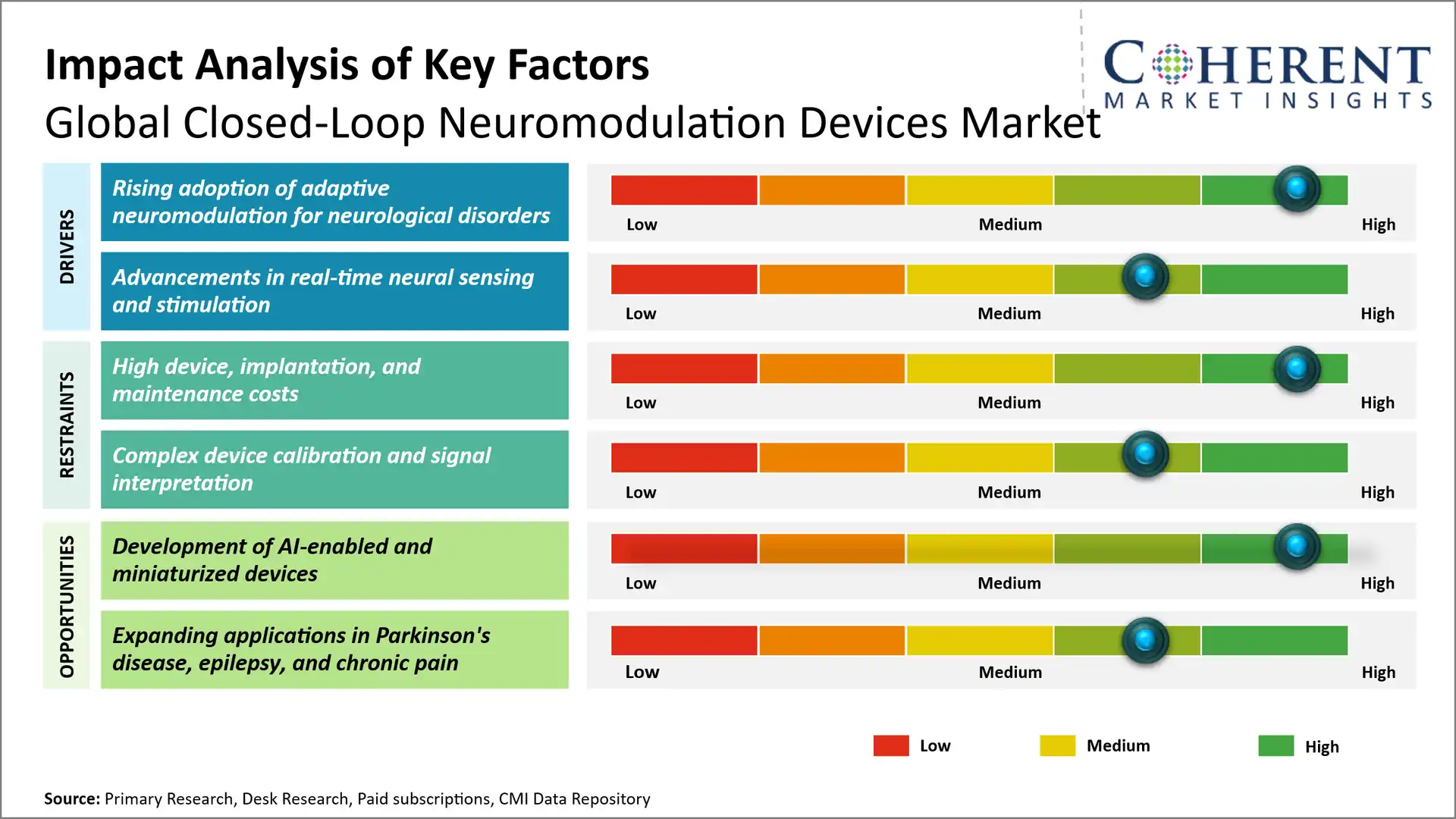 Market Drivers
- Rising adoption of adaptive neuromodulation for neurological disorders: The global closed-loop neuromodulation devices market is projected to grow, owing to growing adoption of adaptive neuromodulation for neurological disorder. These closed-loop or adaptive neuromodulation systems can modulate the stimulation based on neural activity rather than a fixed parameter setting. This technique helps to customize the symptom management, and may improve symptom management for the patients having neurological disorder like Parkinson's disease. According to a study published in Nature Medicine in August 2024, the adaptive deep brain stimulation use improved the motor symptoms and quality of life in comparison to standard stimulation among patient with Parkinson's disease in a blinded randomized feasibility trial.
- Advancements in real-time neural sensing and stimulation: Next-generation closed-loop neuromodulation devices are being driven by continuous real-time neural sensing, recording, and stimulation. These devices are combining high-resolution neural recording with signal processing and adaptive stimulation so that they can be able to follow changes in neural activity and react more precisely and quickly. In January 2026, a team of researchers published a paper describing a wireless 60-channel AI-enabled neurostimulation platform that can record neural signals and provide programmable stimulation for real-time decoding of brain states in a preclinical model.
- Growing prevalence of drug-resistant neurological disorders: The increasing prevalence of drug-refractory neurological disorders such as epilepsy is creating a need for next-generation therapies that can offer an alternative treatment options to pharmacological approaches. The non-drug approach of responsive neurostimulation (RNS) treatment is FDA-approved as it activates stimulation after abnormal activity is detected in a patient with drug-resistant focal epilepsy.
Emerging Trends
- Integration of artificial intelligence and machine learning in adaptive neuromodulation: Use of machine learning and artificial intelligence algorithms in closed-loop neuromodulation systems to decode neural signals and optimize stimulation settings.
- Impact: By integrating the stimulation, the system can adjust according to the variation of the neuronal activity and the patient’s reaction in order to achieve a more accurate and individualized treatment.
- Market Relevance: Increasing adoption of intelligent feedback algorithms is expected to improve product differentiation and expand the clinical indications of closed-loop devices.
- Development of multimodal neural sensing and biomarker-based stimulation: The field is advancing as companies and researchers develop devices that incorporate neural biomarkers such as evoked compound action potentials and local field potentials, and physiologic signals, to guide stimulation adjustments.
- Impact: Multimodal sensing can enable a more accurate detection of the neural-state and more adaptive stimulation that is tailored to the shifting state of the patients.
- Market Relevance: These improvements are expected to support the development of the next generation of closed-loop deep brain stimulation (DBS) and spinal cord stimulation (SCS) systems, the expansion of indications, and higher demand for advanced sensing solutions.
Regional Insights
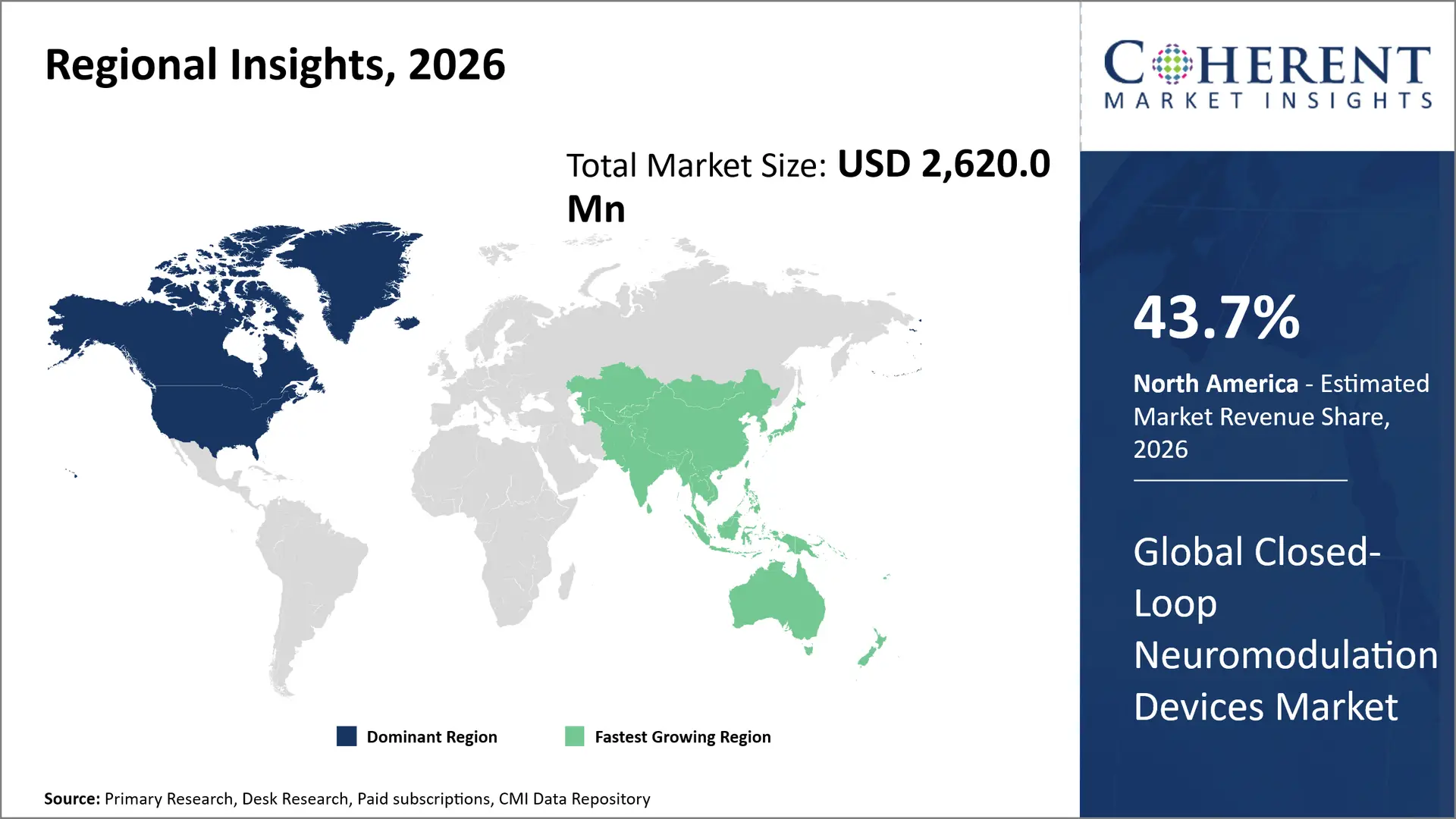
Why is North America a Strong Market for Closed-Loop Neuromodulation Devices?
North America leads the global closed-loop neuromodulation devices market, accounting for an estimated 43.7% share in 2026, owing to the presence of mature healthcare infrastructure, superior facilities for neuromodulation treatment, and a strong R&D framework. High governmental funding for advanced medical devices propels the innovation of real-time neural sensing, closed-loop stimulation, and implantable neurostimulation systems. Additionally, well-defined reimbursement policies and a defined medical device approval process in the region are likely to propel clinical adoption and the market.
For instance, the U.S. Centers for Medicare & Medicaid Services (CMS) reimburses for the implantation and programming of spinal cord stimulation devices with the following CPT (Current Procedural Terminology) codes: 63650 (implantation of percutaneous electrode array), 63655 (implantable paddle electrode), and 63685 (pulse generator implantation or replacement). In addition, it provides reimbursement for electronic analysis and programming of implanted neurostimulators and stimulation systems with (CPT) 95970, 95971 and 95972, including closed loop parameters and detection algorithms.
Why Does Asia Pacific Closed-Loop Neuromodulation Devices Market Exhibit High Growth?
Asia Pacific is expected to exhibit the fastest growth in the global closed-loop neuromodulation devices market, registering an estimated CAGR of 13.8% during 2026–2033. The region is projected to account for 21.3% of the global market in 2026, owing to the growth in healthcare infrastructure, the rising prevalence of neurological disorder, and investments in emerging medical technologies. The government of countries such as China, Japan, and South Korea have introduced favorable policies to foster medical device innovation and develop indigenous manufacturing capacity. The governments of the aforesaid countries have also rolled out initiatives to improve access to healthcare for aging populations.
For instance, in November 2025, the South Korea Ministry of Trade, Industry and Resources, along with three other government ministries, announced a USD 706.1 million (KRW 940.8 billion) investment for 2026-2032 during the second phase of its Inter-Ministerial Advanced Medical Device Research and Development Program. The program aims to support the development of advanced medical technologies, localization of key medical devices, and domestic manufacturing through research, clinical trials and commercialization. Furthermore, growing activity in clinical trials and limited spurt in specialized neurology and neurosurgery clinics bolster the market growth of adaptive deep brain stimulation and spinal cord stimulation in the emerging economies of Asia Pacific.
Global Closed-Loop Neuromodulation Devices Market Outlook for Key Countries
Why is the U.S. Leading Innovation and Adoption in the Closed-Loop Neuromodulation Devices Market?
The U.S. has been driving innovation and adoption of closed-loop neuromodulation devices owing to the early maturation of the convergence of neural engineering, clinical neuroscience and implantable-device development. The U.S. research ecosystem has been maturing feedback-controlled DBS and spinal cord stimulation (SCS), which leverages neural biomarkers for personalized stimulation rather than using the traditional approach of static parameters. Collaborative efforts between academic medical centers, neuroscience researchers and medical device companies provides an efficient transition of experimental neural-sensing technologies to clinical applications.
Is Japan a Favorable Market for Closed-Loop Neuromodulation Devices Market?
Japan is a highly attractive market for closed-loop neuromodulation devices due to the rising adoption of more advanced (adaptive) stimulation technologies. Japan has a clear-cut reimbursement and regulatory pathway for implantable neuromodulation devices. The aging population ensures continuous demand for therapies for Parkinson's disease and other chronic pain and neurological conditions. Japan was one of the first countries to approve adaptive DBS, with its Percept RC neurostimulator obtaining local approval before the device received FDA approval in the U.S.
Is China Emerging as a Key Growth Hub for the Closed-Loop Neuromodulation Devices Market?
China is expected to emerge as a major growth hub for the closed-loop neuromodulation devices market with the ongoing advancements in domestic deep brain stimulation (DBS) technologies and the integration of real-time neural signal monitoring with adaptive stimulation. The country's burgeoning clinical research ecosystem is enabling the development of applications for Parkinson's, Epilepsy and neurological rehabilitation. Moreover, domestic device development is slowly beginning to spread beyond traditional open-loop stimulation. Market opportunity exists predominantly in the implantable DBS market and will depend on greater clinical acceptance, regulatory progress and affordability.
Why Does Germany Top the European Closed-Loop Neuromodulation Devices Market?
Germany accounts for the highest share in the European closed-loop neuromodulation devices market, primarily due to the availability of broad experience in deep brain stimulation (DBS), spinal cord stimulation (SCS), and functional neurosurgery. University medical centres in Germany are collaborating to treat movement-disorder neurology, neurosurgery, and neuroengineering to converge toward the clinical testing and optimization of adaptive stimulation mechanisms. Moreover, the country's strong position in medical technology research, exemplified by Freiburg's Brain Links-Brain Tools ecosystem, is accelerating the development of neural interfaces and feedback-controlled devices.
Is Closed-Loop Neuromodulation Devices Market Developing in UK?
The UK closed-loop neuromodulation devices market is growing and being driven by clinical approval of adaptive DBS and closed loop SCS, clinical use through dedicated centers of NHS, as well as research programs studying feedback control stimulation in Parkinson's disease, chronic pain and other neurological conditions. Additionally, the UK government is supporting neurotechnology research by investing into funding, although the general adoption is still to come to turn into clinical use as pathways to evidence and cost effectiveness will need to be established within NHS.
Comparison of Closed-Loop Neuromodulation Technologies by Clinical Application
Technology | Major Clinical Application | Neural Feedback Parameter | Key Therapeutic Function |
Deep Brain Stimulation (DBS) | Parkinson’s disease, essential tremor | Local field potentials (LFPs) | Adaptive stimulation based on abnormal brain activity |
Spinal Cord Stimulation (SCS) | Chronic pain | Evoked compound action potentials (ECAPs) | Adjusts stimulation according to neural responses |
Responsive Neurostimulation (RNS) | Drug-resistant epilepsy | Abnormal intracranial electrical activity | Detects and responds to seizure-related activity |
Vagus Nerve Stimulation (VNS) | Epilepsy and other neurological conditions | Physiological or neural feedback signals, depending on system | Adjusts stimulation based on detected patient-state signals |
How is the development of AI-enabled and miniaturized devices creating new growth opportunities in the closed-loop neuromodulation devices market?
The global closed-loop neuromodulation devices market has great potential with the integration of artificial intelligence (AI)-enabled stimulation algorithms and miniature implantable devices to record neural signals and determine parameters for stimulation in real time. This can improve the implant comfort, energy consumption and personalized therapy. For instance, in July 2025, researchers filed a report in Scientific Reports on a fully autonomous, wireless closed-loop vagus nerve stimulation system. The system designed used a miniaturized implant (15 mm diameter, 0.952 grams) to automatically change stimulation parameters while analyzing feedback from the live heartbeat in preclinical tests. (Source: Springer Nature Limited)
Market Players, Key Development, and Competitive Intelligence
Key Developments
- In October 2026, Saluda Medical, Inc. introduced the full commercial launch of the U.S. developed CAP24 surgical paddle lead. The first and only U.S. Food and Drug Administration (FDA)-approved, closed-loop surgical paddle lead, the CAP24 lead synchronizes with the Evoke system to constantly track the neural response while automatically optimizing spinal cord stimulation (SCS) after every pulse, increasing access to closed-loop neuromodulation technology for the treatment of chronic pain.
- In October 2025, Boston Scientific Corporation announced the signing of a definitive agreement to acquire Nalu Medical, Inc., a medical technology company focused on the development of minimally invasive neuromodulation therapies for chronic pain. The acquisition was part of Boston Scientific's Neuromodulation portfolio expansion through the combination of Nalu's PNS system.
Competitive Landscape
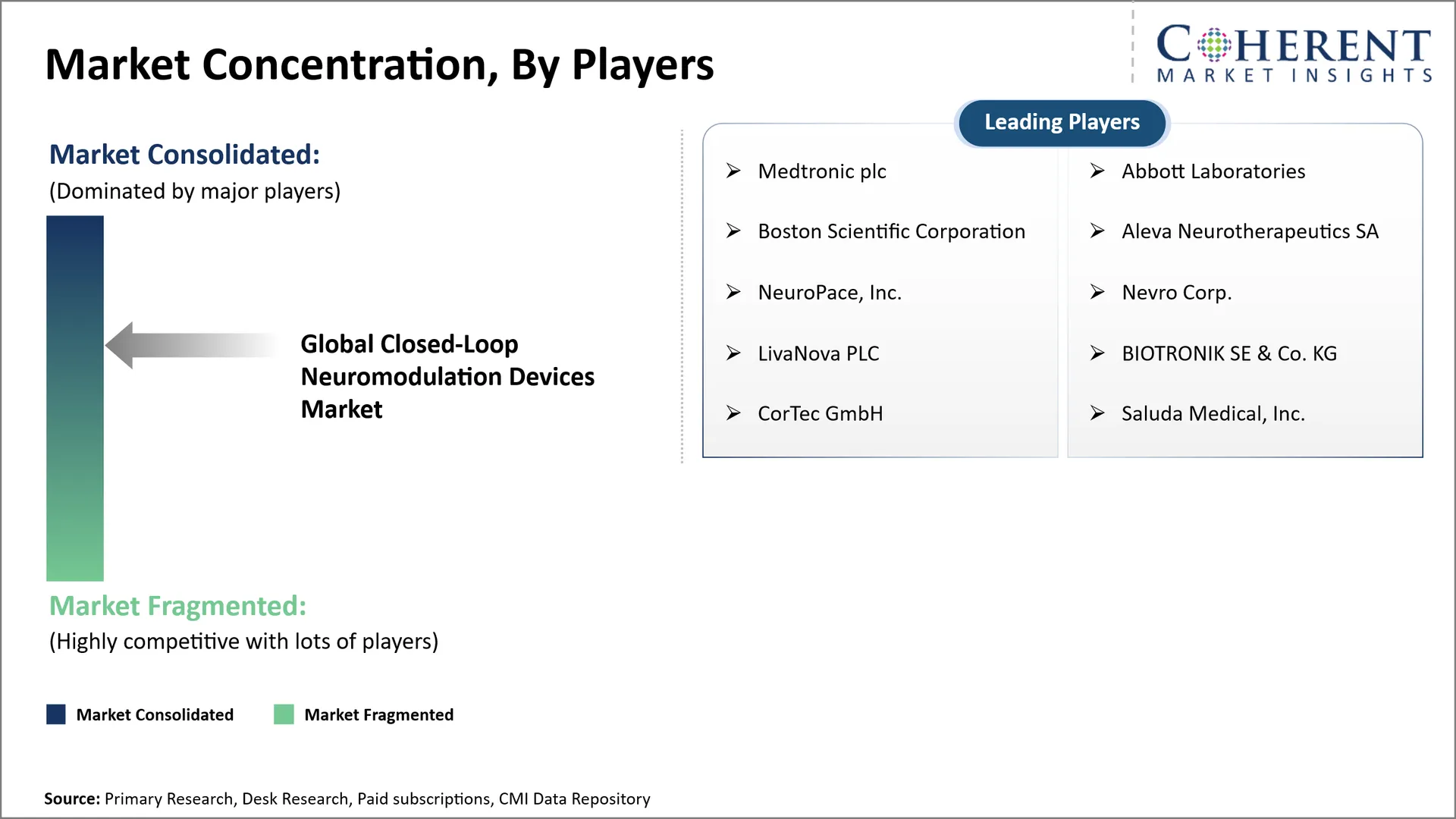
The global Closed-Loop Neuromodulation Devices market is highly competitive, characterized by continuous innovation and advent of technological advancements for implantable neurostimulation devices, neural sensing technology, and adaptive stimulation algorithms. Major market players are focused on improving neural signal detection in real time, offering customized stimulation delivery, and expanding its scope of application for conditions such as Parkinson's disease, epilepsy, chronic pain and others.
Key focus areas include
- Innovative neural sensing technologies.
- Consistent use of AI and machine learning algorithms
- Development of closed-loop DBS, SCS, and RNS systems.
- Development of smaller implantable neurostimulators.
- Wireless connectivity and remote programming capabilities.
- Development of biocompatible electrodes, newer lead configurations and implantable systems.
- Establish key strategic partners with hospitals and neuroscience research and academic institutes.
Market Report Scope
Global Closed-Loop Neuromodulation Devices Market Report Coverage | |||
Report Coverage | Details | ||
Base Year | 2025 | Market Size in 2026: | USD 2,620.0 Mn |
Historical Data For: | 2020 To 2024 | Forecast Period: | 2026 To 2033 |
Forecast Period 2026 To 2033 CAGR: | 15.0% | 2033 Value Projection: | USD 6,950.0 Mn |
Geographies covered: |
| ||
Segments covered: |
| ||
Companies covered: | Medtronic plc, Abbott Laboratories, Boston Scientific Corporation, Aleva Neurotherapeutics SA, NeuroPace, Inc., Nevro Corp., LivaNova PLC, BIOTRONIK SE & Co. KG, CorTec GmbH, Saluda Medical, Inc. | ||
Growth Drivers: |
| ||
Restraints & Challenges: |
| ||
Analyst Opinion (Expert Opinion)
- The future of the industry will be defined by the shift from traditional fixed parameter neuromodulation to smarter feedback enabled therapies. Future technology development will focus on closed-loop DBS and SCS applications, with neural sensing and adaptive algorithm capabilities, resulting in enhanced stimulation precision and customization. At the same time, AI-enabled solutions, tiny implants and multi-modal biomarkers will all need to come together to offer more responsive therapies and address other indications.
- The biggest opportunity is expected to be implantable closed-loop spinal cord stimulation for chronic pain in the U.S. This is a promising market, as long-term treatment for patients with treatment-resistant pain is required, and the system's ability to enable treatment personalization via real-time neural feedback is attractive. Another promising opportunity is adaptive deep brain stimulation for Parkinson's disease in Japan, where the need for sophisticated approaches to neurological treatment is driven by aging.
- In order to gain a competitive advantage market players should focus on refining robust neural-sensing devices and adaptive algorithms that will provide consistent therapeutic benefits for a variety of patient types. Focus on clinical validation, long-term efficacy, and maximizing device battery life, patient comfort and programming needs. Collaboration with, and development of affordable devices for, clinical neurology centres with remote programming capabilities will be key to market adoption and differentiation.
Speak to the analyst
Want personalized insights?
Take the findings above to one of our principal consultants, or have the report rebuilt around the segments, geographies and competitors you actually track.
Market Segmentation
- Product Type Insights (Revenue, USD Mn, 2021 - 2033)
- Implantable Closed-Loop Neuromodulation Devices
- External Closed-Loop Neuromodulation Devices
- Technology Insights (Revenue, USD Mn, 2021 - 2033)
- Deep Brain Stimulation (DBS)
- Spinal Cord Stimulation (SCS)
- Vagus Nerve Stimulation (VNS)
- Responsive Neurostimulation (RNS)
- Other Neuromodulation Technologies
- Application Insights (Revenue, USD Mn, 2021 - 2033)
- Parkinson's Disease
- Epilepsy
- Chronic Pain
- Essential Tremor
- Depression and Other Neurological Disorders
- End User Insights (Revenue, USD Mn, 2021 - 2033)
- Hospitals
- Specialty Neurology and Neurosurgery Clinics
- Ambulatory Surgical Centers
- Academic and Research Institutions
- Others
- Regional Insights (Revenue, USD Mn, 2021 - 2033)
- North America
- U.S.
- Canada
- Latin America
- Brazil
- Argentina
- Mexico
- Rest of Latin America
- Europe
- Germany
- U.K.
- Spain
- France
- Italy
- Russia
- Rest of Europe
- Asia Pacific
- China
- India
- Japan
- Australia
- South Korea
- ASEAN
- Rest of Asia Pacific
- Middle East
- GCC Countries
- Israel
- Rest of Middle East
- Africa
- South Africa
- North Africa
- Central Africa
- North America
- Key Players Insights
- Medtronic plc
- Abbott Laboratories
- Boston Scientific Corporation
- Aleva Neurotherapeutics SA
- NeuroPace, Inc.
- Nevro Corp.
- LivaNova PLC
- BIOTRONIK SE & Co. KG
- CorTec GmbH
- Saluda Medical, Inc.
Sources
Primary Research Interviews
- Functional neurosurgeons specializing in deep brain stimulation (DBS)
- Neurologists specializing in Parkinson’s disease and epilepsy
- Interventional pain management specialists
- Clinical neurophysiologists and neural engineering specialists
Stakeholders
- Implantable neuromodulation device manufacturers
- Hospitals and specialized neurology and neurosurgery centers
- Academic neuroscience and neuroengineering research institutions
- Healthcare reimbursement and clinical procurement specialists
- End-use Sectors
- Hospitals and neurosurgery centers
- Specialty neurology and pain management clinics
- Academic medical centers and research hospitals
- Ambulatory surgical centers
- Regulatory & Health Bodies
- U.S. Food and Drug Administration (FDA)
- Centers for Medicare & Medicaid Services (CMS), U.S.
- National Institute of Neurological Disorders and Stroke (NINDS), U.S.
- National Institutes of Health (NIH), U.S.
Databases
- NIH RePORTER
- NIH Research, Condition, and Disease Categorization (RCDC)
- NIH Tracking Accountability in Government Grants System (TAGGS)
Public Domain Sources
- National Institute of Neurological Disorders and Stroke (NINDS)
- U.S. Food and Drug Administration (FDA)
- Centers for Medicare & Medicaid Services (CMS)
- Korea.net – Government of the Republic of Korea
Proprietary Elements
- CMI Data Analytics Tool
- Proprietary CMI Existing Repository of information for last 10 years.
Get access to 250+ pages report
Every segment, forecast, competitor profile and data table behind the analysis above — available for instant download.
- ESOMAR Member
- ISO 9001:2015 Certified
- D-U-N-S Registered
- GDPR & CCPA Compliant
Frequently Asked Questions
The global closed-loop neuromodulation devices market is estimated to be valued at USD 2,620.0 Mn in 2026 and is expected to reach USD 6,950.0 Mn by 2033.
Implantable closed-loop neuromodulation devices dominate because they provide machine-based continuous neural monitoring and person-specific stimulation.
Closed-loop neuromodulation devices are systems that can sense neural activity and adapt electrical stimulation in real-time based on physiological feedback.
The CAGR of global closed-loop neuromodulation devices market is projected to be 15.0% from 2026 to 2033.
Rising adoption of adaptive neuromodulation for neurological disorders, and advancements in real-time neural sensing and stimulation are the major factors driving the growth of the global closed-loop neuromodulation devices market.
High device, implantation, and maintenance costs, and complex device calibration and signal interpretation are the major factors hampering the growth of the global closed-loop neuromodulation devices market.
In terms of application, chronic pain is estimated to dominate the market revenue share in 2026.