

Global Composites Manufacturing Market Size and Forecast – 2026 To 2033
The Global Composites Manufacturing Market is estimated to be valued at USD 124.04 Bn in 2026 and is expected to reach USD 205.8 Bn by 2033, growing at a compound annual growth rate (CAGR) of 7.50% from 2026 to 2033. This expansion reflects increasing adoption of lightweight, high-strength composite materials across aerospace, automotive, and construction applications, where improved structural performance, corrosion resistance, and durability offer advantages over conventional materials.
In August 2026, Airbus announced the start of construction on a 6,221-square-meter extension at its Belfast wing manufacturing facility, incorporating additional advanced composite manufacturing capabilities to support increased A220 aircraft production. The investment highlights the growing commercial importance of composite materials in improving aircraft efficiency and expanding industrial production capacity.
Key Takeaways of the Global Composites Manufacturing Market
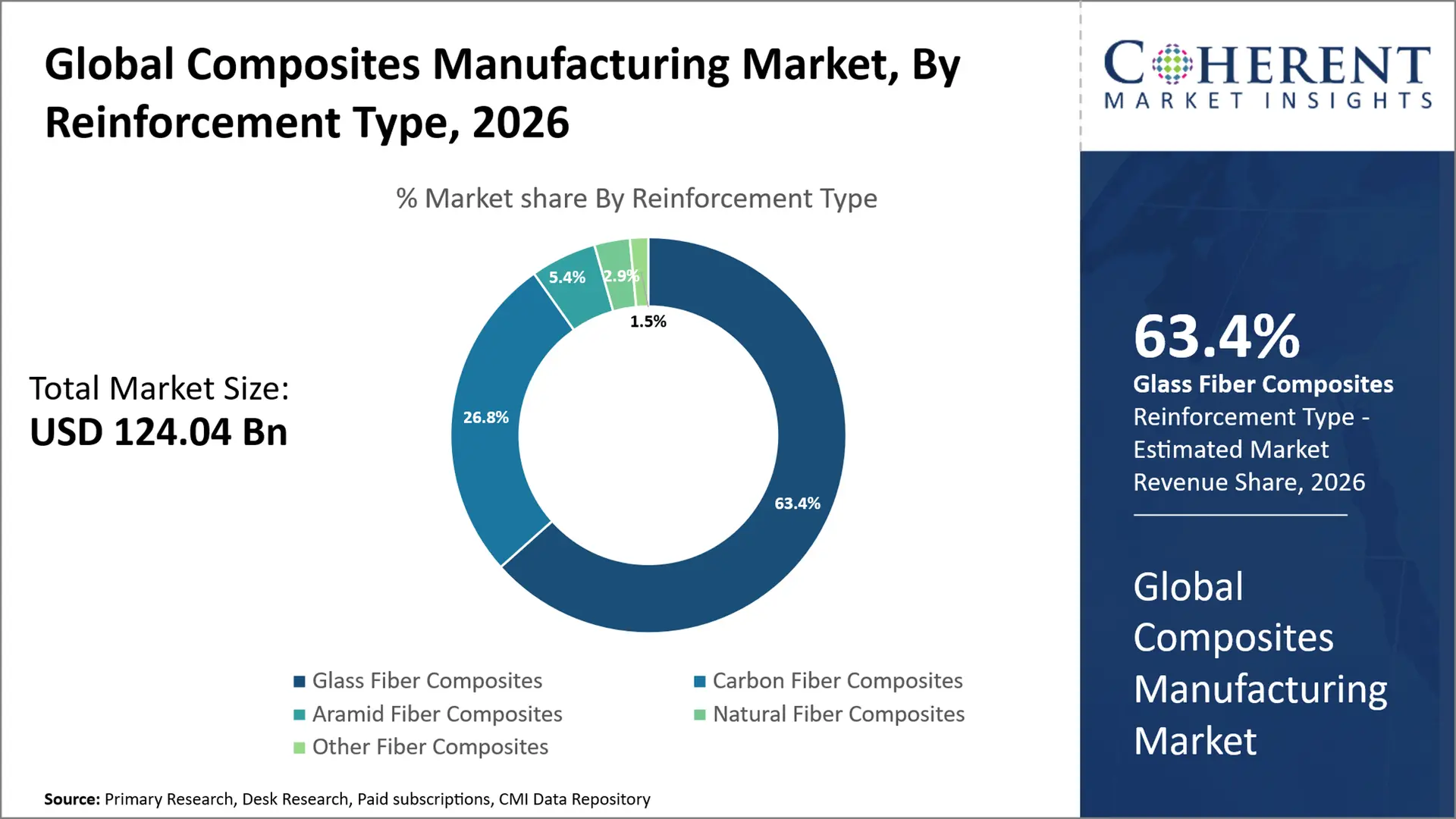
- Glass Fiber Composites are projected to record an estimated CAGR of 7.1% during 2026–2033 and capture 63.4% of the global composites manufacturing market in 2026. Their cost-effective reinforcement and corrosion resistance make them attractive for structural components where carbon fiber offers limited economic benefit. In July 2024, China Jushi commissioned its second fiberglass production line in Huai'an, supporting applications including wind turbine blades.
- Thermoset Composites are expected to expand at an estimated CAGR of 7.0% through 2033, accounting for 69.2% of global composites manufacturing market revenue in 2026. Crosslinked resin systems provide dimensional stability and durable bonding for marine structures, industrial equipment, and chemically exposed components. In October 2025, Sicomin introduced SR GreenPoxy 550, a bio-based epoxy formulated for bonding and laminating timber-and-fiber composites in raceboat construction.
- Lay Up Process is forecast to achieve an estimated CAGR of 6.8% between 2026 and 2033, with a 26.4% global composites manufacturing market share in 2026. Its ability to tailor fiber orientation and part geometry makes it useful for complex aerospace and marine structures. In March 2025, the UK's National Composites Centre reported that its ASCEND program demonstrated automated ply placement for high-rate composite manufacturing.
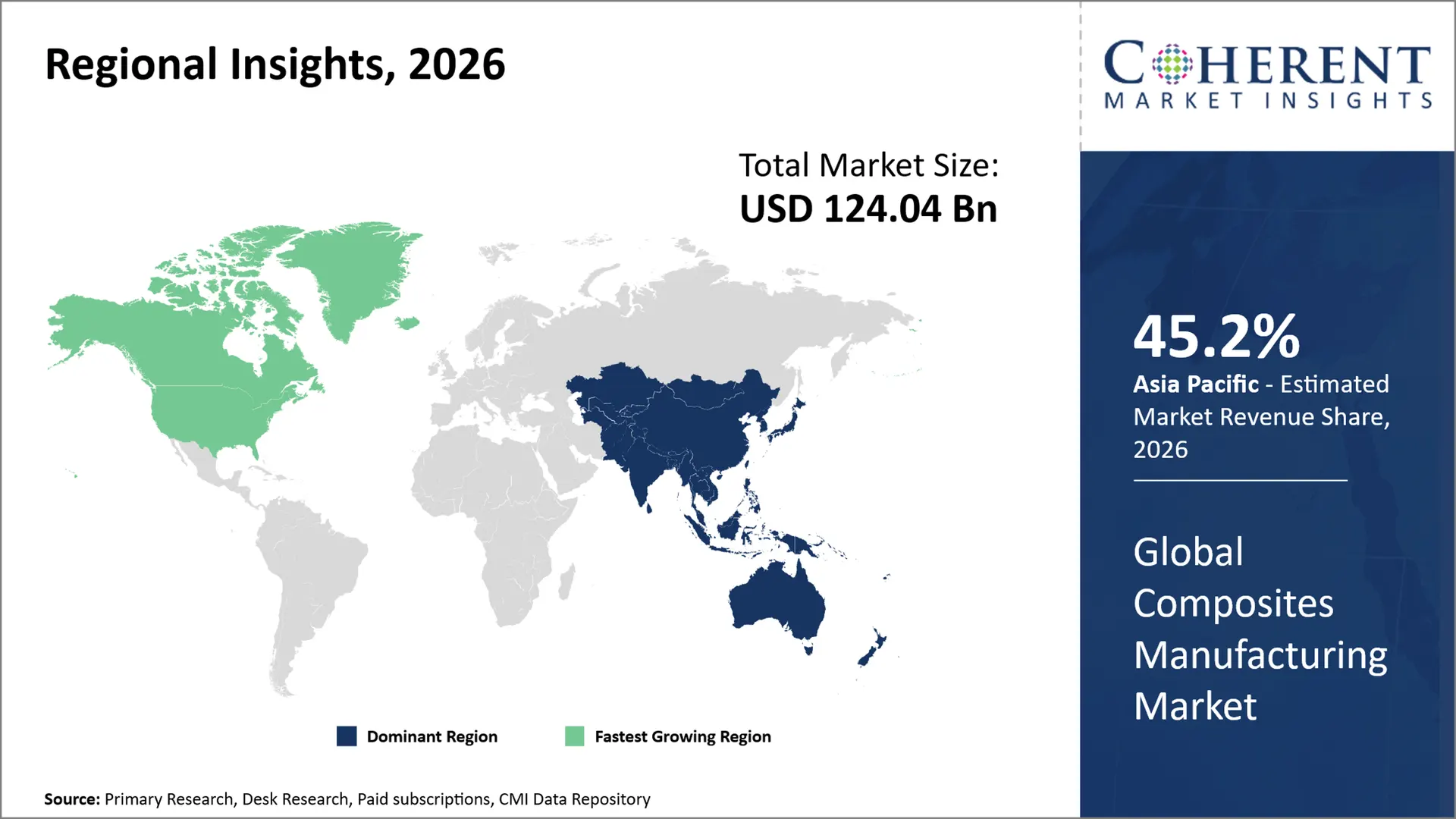
- Asia Pacific, with an estimated CAGR of 7.2% over 2026–2033, is expected to lead the global composites manufacturing market with a 45.2% share in 2026. Its concentration of reinforcement suppliers, processing facilities, and downstream industrial customers supports efficient sourcing and production scale. In June 2026, Toray outlined a planned South Korean carbon-fiber capacity addition of 3,250 tons annually, scheduled for start-up later that year.
- North America is expected to register the fastest estimated regional CAGR of 8.9% through 2033, alongside a 24.2% share in global composites manufacturing market. Aerospace and defense qualification requirements favor locally accessible composite engineering, repeatable production, and close supplier collaboration. In April 2026, Continuous Composites announced its relocation to a larger Idaho facility, more than doubling its manufacturing footprint for advanced aerospace and defense applications.
Segmental Insights
Why Do Glass Fiber Composites Dominate the Global Composites Manufacturing Market?
Glass Fiber Composites are expected to account for 63.4% of the global composites manufacturing market in 2026, leading the reinforcement type category. Their position reflects an established supply chain capable of delivering chopped strands, rovings, and woven reinforcements tailored to different production methods. Construction product makers and industrial equipment manufacturers can specify fiber formats according to molding requirements instead of redesigning components around a single reinforcement grade. This product flexibility helps processors qualify materials across repeat production programs and maintain alternative sourcing options. In February 2025, Owens Corning announced an agreement to sell its glass reinforcements business to Praana Group, describing a network of 18 operations across 12 countries. The proposed transaction illustrates the strategic value of broad manufacturing coverage and customer access. Suppliers with reliable regional conversion and technical service can strengthen long-term contracts.
- Current Industry Events of 2026
- Market Size Estimation
- Regional Breakdown
- Competitive Landscape
- Customer Intelligence
- Segmental Analysis
- Pricing Analysis
- Key Market Drivers, Challenges & Future Trends
- Customized Insights Section
Why Do Thermoset Composites Represent the Largest Resin Type in the Global Composites Manufacturing Market?
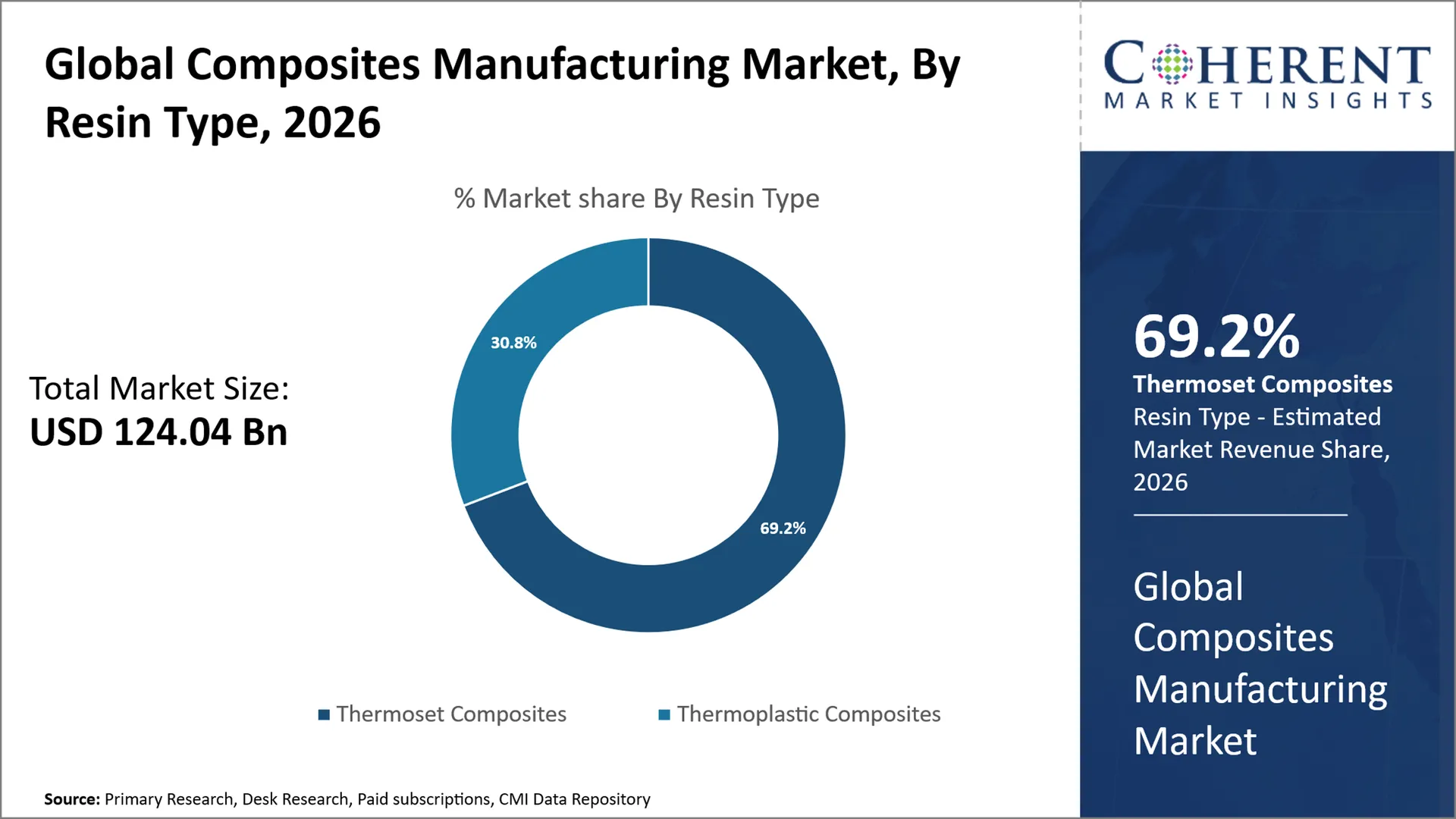
Thermoset Composites are projected to hold 69.2% of the global composites manufacturing market in 2026 within the resin type category. Unsaturated polyester, vinyl ester, and epoxy matrices allow manufacturers to adjust cure behavior, surface finish, and chemical performance for particular components. For electrical enclosures and molded industrial housings, specified resin systems can support dimensional control and insulation requirements in repeatable manufacturing cycles. Their established processing routes also let fabricators select formulations matched to part complexity and order volume. In September 2026, IDI Composites International reported that its third sheet molding compound production line was operational in Noblesville, Indiana, reducing lead times and supporting smaller production runs. This illustrates how adaptable thermoset supply can serve customers needing customized materials without committing to large orders.
Why Does the Lay Up Process Dominate the Manufacturing Process Category of the Global Composites Manufacturing Market?
Lay Up Process is expected to represent 26.4% of the global composites manufacturing market in 2026, leading the manufacturing process category. Its commercial advantage comes from manageable tooling commitments for oversized or frequently redesigned parts, where amortizing dedicated molds across short production runs can be difficult. Fabricators producing industrial ducts, specialist vehicle panels, and replacement shells can adapt production sequences without investing in entirely new molding systems. This preserves access for smaller contractors and firms serving project-based orders. However, manual handling and tool preparation can constrain throughput, creating demand for affordable semi-automated solutions. In February 2025, Fraunhofer IGCV demonstrated three-dimensional printed sand tooling for automated fiber placement on a helicopter fuselage sideshell under the NEUTRON project. The research addresses tooling cost and prototyping lead times, showing how lay-up methods can become more economical for specialized components.
Current Events and their Impact
Current Event | Description and Its Impact |
April 2026 – European Commission imposes anti-dumping duties on glass fiber reinforcements |
|
February 2026 – UK government revokes countervailing duties on Egyptian glass fiber |
|
September 2025 – European Commission updates dual-use export controls |
|
Global Composites Manufacturing Market Dynamics
Key Market Drivers
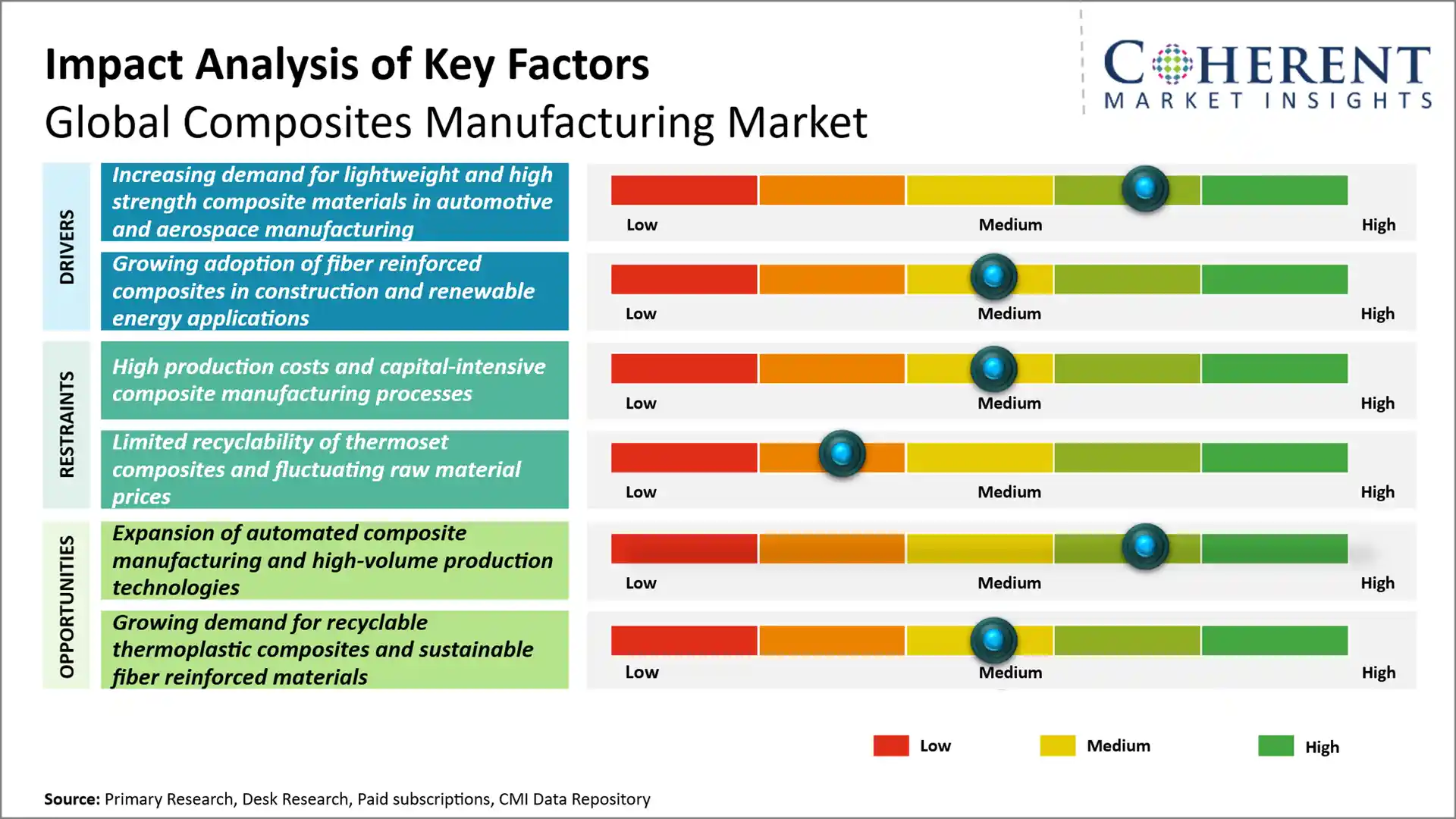
- Increasing demand for lightweight and high strength composite materials in automotive and aerospace manufacturing: Vehicle and aircraft manufacturers are increasingly specifying composites for components that require structural efficiency, fatigue resistance, and thermal stability. Material substitution allows engineers to optimize component performance while managing weight-related operating costs. This benefits advanced reinforcement suppliers, prepreg manufacturers, and specialist composite fabricators. In May 2025, Syensqo and Boeing demonstrated a high-temperature composite exhaust nozzle concept for the MQ-25 aircraft as a potential titanium replacement. Such applications create opportunities for premium composite systems, although broader adoption remains dependent on qualification requirements and production economics.
- Growing adoption of fiber reinforced composites in construction and renewable energy applications: Infrastructure developers and renewable energy equipment manufacturers are evaluating fiber-reinforced composites for structures requiring extended service life and lower maintenance exposure. Composite bridge components, structural profiles, and wind turbine reinforcements create opportunities for specialized fabricators and material suppliers. In September 2025, the UK's Forestry Commission published a preliminary market-engagement notice for fiber-reinforced polymer bridges and decking systems, specifying resin-infusion manufacturing. This illustrates public-sector interest in composite infrastructure and supports investment in structural testing, installation capabilities, and application-specific manufacturing expertise.
Emerging Market Trends
- Increasing Preference for Hybrid Reinforcement Architectures: Composite manufacturers are increasingly exploring hybrid reinforcement systems that combine different fiber types within a single structure. This approach allows engineers to balance mechanical performance, material utilization, and production costs according to specific loading requirements. Reinforcement suppliers offering compatible fiber combinations could benefit, while manufacturers dependent on standardized single-fiber products may face greater customization pressure. During the forecast period, hybrid laminate designs are expected to become more commercially relevant in applications where full carbon-fiber construction is economically difficult to justify.
- Transition Toward Preform and Material Kit-Based Procurement: Composite fabrication is gradually moving toward pre-cut reinforcement kits, engineered preforms, and application-ready material packages. Instead of processing raw reinforcement fabrics entirely in-house, manufacturers can outsource selected preparation stages to specialized suppliers. This changes procurement decisions by placing greater importance on dimensional accuracy, material utilization, handling efficiency, and production scheduling. Preform specialists and integrated material converters are likely to benefit, while conventional material distributors may face pressure to expand their processing capabilities. Wider adoption could improve consistency across complex composite manufacturing operations.
Regional Insights
Why Does Asia Pacific Dominate the Global Composites Manufacturing Market?
Asia Pacific is expected to dominate the global composites manufacturing market with a 45.2% share in 2026. Its advantage comes from large reinforcement production networks, resin processing capacity, and proximity to factories consuming composite materials. China anchors volume manufacturing, while Japan contributes specialized carbon fiber technology and India provides an expanding base of industrial fabricators. This combination reduces procurement lead times and supports applications across electrical equipment, transportation, and renewable energy. Australia also strengthens regional capabilities through advanced materials research. In July 2025, the Australian Research Council approved funding for the University of Queensland's research hub focused on mass manufacturing high-temperature composites. The initiative targets production methods for demanding industrial applications rather than commodity manufacturing. Integrated supply chains remain the region's principal advantage, although energy costs and material quality increasingly influence supplier selection.
Why Is North America Emerging as the Fastest-Growing Region in the Global Composites Manufacturing Market?
North America is projected to be the fastest-growing region in the global composites manufacturing market, holding a 24.2% share in 2026. Growth prospects are supported by manufacturers seeking shorter development cycles, specialized fabrication capabilities, and closer coordination between material developers and component customers. The U.S. provides substantial aircraft and industrial equipment engineering capacity, while Canada contributes polymer processing expertise and applied manufacturing research. These strengths favor higher-value composite components requiring prototype validation before production commitments. In September 2025, Canada's National Research Council recorded a funding agreement with Composites VCI to develop a process combining an inflatable bladder with low-pressure resin infusion for hollow composite parts. This development addresses manufacturing complexity rather than simply expanding reinforcement output. Process commercialization and consistent manufacturing yields will remain important to the region's growth outlook.
Global Composites Manufacturing Market Outlook for Key Countries
Why Is the U.S. a Key Market for the Global Composites Manufacturing Market?
The U.S. is a key composites manufacturing market because aerospace programs require traceable materials, repeatable fabrication, and extensive structural testing. Aircraft producers, specialist tooling firms, and materials laboratories form an ecosystem in which qualified processes can become difficult to replace once incorporated into approved designs. Beyond aerospace, pressure vessel producers and industrial equipment manufacturers create opportunities for automated composite production. However, lengthy qualification procedures increase supplier switching costs, favoring manufacturers with strong engineering support and documented process control. In June 2026, NASA reported that its Hi-Rate Composite Aircraft Manufacturing project had selected technologies for further demonstration and reviewed plans for larger wing and fuselage assemblies. The initiative highlights a distinctly American priority: scaling production without compromising structural performance. Investment opportunities therefore concentrate on validated manufacturing processes and production-ready tooling.
Why Does China Support Growth in the Global Composites Manufacturing Market?
China plays a central role in global composites manufacturing market through concentrated fiber production, downstream conversion capacity, and proximity to wind equipment and industrial component customers. Regional clusters connect precursor manufacturing, carbonization, textile reinforcement, fabrication, and finished assemblies within relatively short supply chains. This is particularly valuable when buyers require changes in fiber specifications or rapid production adjustments. China also has strong commercial incentives to move beyond raw reinforcement toward higher-value fabricated components. In April 2025, the Jilin provincial government reported the inauguration of a carbon fiber and low-altitude economy demonstration base in Jilin City, where carbon fiber components for unmanned aircraft were already being produced at scale. The development connects materials manufacturing with an identifiable downstream product market. Competition will increasingly depend on processing quality and access to specialized industrial customers.
Why Is Germany a Strategic Country in the Global Composites Manufacturing Market?
Germany's importance in composites manufacturing rests on precision reinforcement conversion and demanding industrial specifications rather than the largest production volumes. Automotive engineering firms, machinery manufacturers, and aerospace suppliers require repeatable laminate behavior, controlled fiber orientation, and reliable documentation. German producers can differentiate through non-crimp fabrics, engineered preforms, and technical support that helps customers integrate composites into established assembly systems. In February 2025, SAERTEX announced that it was concentrating German carbon fabric production at its Saerbeck headquarters to improve operational flexibility and respond to customer specifications. This illustrates the importance of aligning manufacturing capacity with technically diverse orders. For German suppliers, production consistency and the ability to satisfy complex requirements carry greater commercial value than competing exclusively on reinforcement prices. Such capabilities also support long-term relationships with export-oriented equipment manufacturers.
Why Is India Important in the Global Composites Manufacturing Market?
India is becoming increasingly important in composites manufacturing market as domestic purchasers seek locally developed reinforcement materials for transport equipment, industrial structures, and strategic applications. Fabricators benefit from a broad engineering workforce, but dependence on imported high-performance fibers can complicate pricing, lead times, and product qualification. A stronger domestic testing and pilot-production ecosystem would allow smaller processors to validate formulations before committing to commercial investment. In July 2026, the Bombay Textile Research Association and Maharashtra Industrial Development Corporation signed an agreement to establish a carbon fiber technology demonstration plant in Amravati, supported by testing and scale-up capabilities. The facility was announced rather than reported as operational. If implemented, it could strengthen local material development and reduce barriers facing Indian composite component manufacturers. Future competitiveness will depend on consistent material grades and certification capabilities.
Why Is Japan an Important Growth Market for the Global Composites Manufacturing Market?
Japan remains strategically important in composites manufacturing market because its material producers and component designers specialize in performance-critical applications where fiber integrity and processing knowledge determine product value. Automotive pressure vessels, precision industrial components, and advanced mobility systems provide opportunities for differentiated reinforced materials. Japanese suppliers also face a commercial challenge: preserving carbon reinforcement value after components reach the end of their useful lives. In September 2025, Asahi Kasei announced technology for recovering continuous carbon fibers from carbon-fiber-reinforced plastic pressure vessels using electrolyzed sulfuric acid. The company described a developed recycling method rather than a fully commercial recycling network. This approach could eventually enable higher-value recovered feedstock than processes producing short fibers. Commercial adoption will depend on material qualification, recovery economics, and reliable collection systems.
Innovation, Production & Manufacturing Landscape in the Global Composites Manufacturing Market
Technology | Manufacturing Application | Commercial Significance | Adoption Considerations |
Automated Fiber Placement (AFP) | Automated placement of composite tapes in complex structural components | Improves fiber positioning accuracy and manufacturing repeatability | High equipment investment and specialized programming |
High-Pressure Resin Transfer Molding (HP-RTM) | Closed-mold production of reinforced composite components | Supports controlled resin distribution and shorter production cycles | Tooling precision and process compatibility |
Thermoplastic Compression Molding | Manufacturing structural components from reinforced thermoplastic sheets and organ sheets | Offers shorter forming cycles and potential remolding capabilities | Heating control and material consolidation requirements |
Multi-Axis Filament Winding | Manufacturing composite pressure vessels and cylindrical structures | Enables controlled reinforcement orientation for pressure-bearing components | Geometry limitations and winding equipment investment |
Continuous Pultrusion | Production of composite rods, profiles, beams, and reinforcement elements | Enables consistent production of long structural sections | Primarily suited to constant cross-sectional geometries |
Inline Cure Monitoring and Process Sensors | Monitoring resin cure, temperature, pressure, and material consolidation | Supports defect prevention, process control, and production consistency | Sensor integration and data interpretation capabilities |
How Are Composite Retrofit and Rehabilitation Systems Creating New Growth Opportunities in the Global Composites Manufacturing Market?
Composite retrofit and rehabilitation systems represent an emerging commercial opportunity for manufacturers seeking applications beyond new component production. Aging industrial infrastructure creates demand for solutions that can restore structural integrity without requiring complete asset replacement.
Fiber-reinforced polymer wraps, engineered laminates, and specialized reinforcement systems could support the rehabilitation of industrial pipelines, storage facilities, and selected civil infrastructure assets. Municipal utilities, chemical processing facilities, industrial asset owners, and engineering contractors represent potential customer groups.
Manufacturers could capture this opportunity by developing application-specific repair systems supported by validated mechanical performance, standardized installation procedures, and technical certification. Partnerships with inspection providers and specialist installation contractors may help establish market access.
Commercial participation would require investment in material testing, field application training, quality assurance, and relevant engineering approvals. Specialized composite manufacturers with strong application engineering capabilities may gain an advantage, although established suppliers could benefit from integrating repair systems into existing industrial material portfolios.
Market Players, Key Development, and Competitive Intelligence
Key Developments
- In November 2025, Exel Composites Plc signed a multiyear agreement with De Angeli Prodotti to supply pultruded composite conductor cores for overhead electricity networks, with deliveries scheduled from 2026. The agreement provides contractual demand visibility and demonstrates how continuous composite manufacturing can serve electricity transmission infrastructure.
- In September 2026, Hexcel Corporation announced expanded U.S. manufacturing capability for its HexPly M901 fast-curing prepreg system at its Salt Lake City facility. The expansion supports shorter composite molding cycles and creates additional domestic supply options for manufacturers scaling unmanned systems, industrial components, and other structural applications.
- In July 2026, Teijin Limited announced the development of a thermosetting carbon fiber-reinforced plastic combining heat-activated self-repair with recyclability. The material remains under development, with samples targeted for 2028. Its successful commercialization could reduce component replacement requirements and improve material recovery economics in demanding industrial applications.
Competitive Landscape
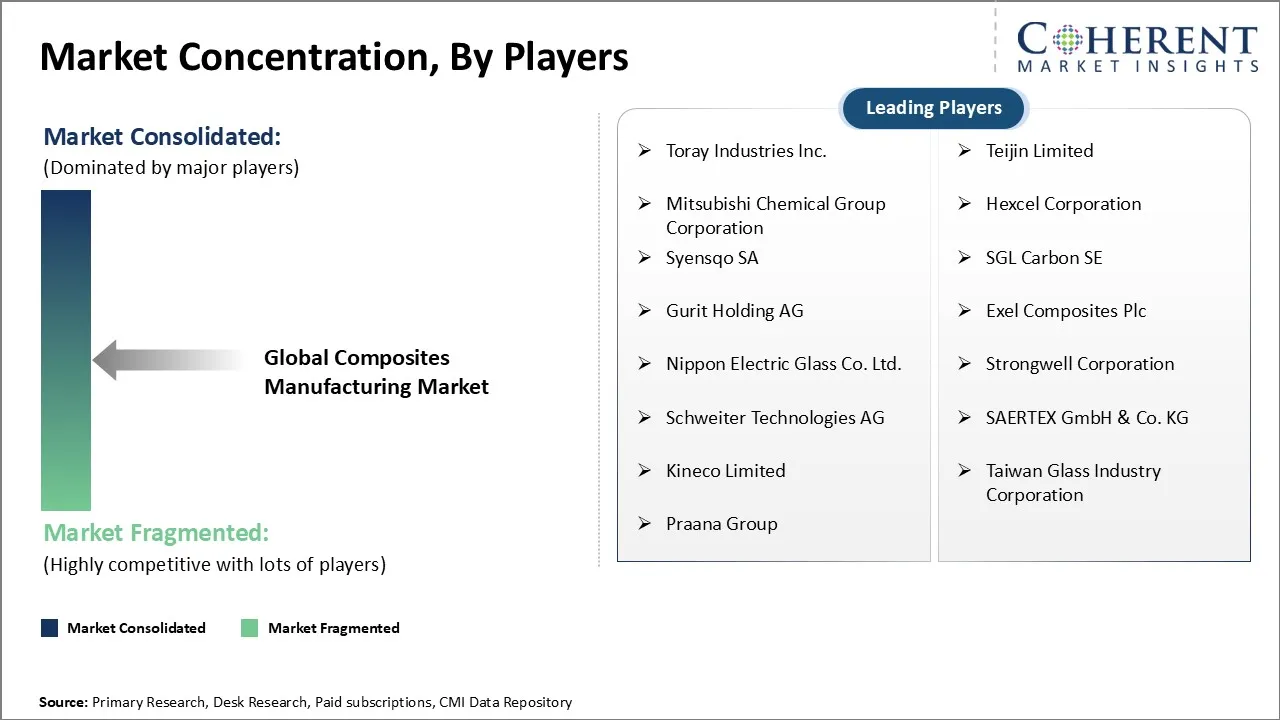
The global composites manufacturing market remains moderately fragmented, with multinational reinforcement and resin manufacturers competing alongside specialized fabricators and regional processors. Competition varies by material specification, manufacturing capability, delivery reliability, and customer qualification requirements. Established suppliers benefit from broader product portfolios, while specialists differentiate through proprietary processing expertise and application engineering. Long-term competitiveness increasingly depends on production efficiency, quality assurance, and customer-specific technical capabilities.
Key competitive factors include
- Material performance: Consistent mechanical, thermal, and chemical properties.
- Manufacturing efficiency: Process optimization to improve yields and reduce scrap.
- Pricing competitiveness: Managing raw material and conversion costs.
- Production scalability: Ability to meet changing customer volume requirements.
- Quality assurance: Material testing, certifications, and production consistency.
- Technical customization: Tailored reinforcement architectures and resin formulations.
- Supply chain reliability: Stable material availability and geographic supply coverage.
Market Report Scope
Global Composites Manufacturing Market Report Coverage | |||
Report Coverage | Details | ||
Base Year | 2025 | Market Size in 2026: | USD 124.04 Bn |
Historical Data For: | 2020 To 2024 | Forecast Period: | 2026 To 2033 |
Forecast Period 2026 To 2033 CAGR: | 7.50% | 2033 Value Projection: | USD 205.8 Bn |
Geographies covered: |
| ||
Segments covered: |
| ||
Companies covered: | Toray Industries Inc., Teijin Limited, Mitsubishi Chemical Group Corporation, Hexcel Corporation, Syensqo SA, SGL Carbon SE, Gurit Holding AG, Exel Composites Plc, Nippon Electric Glass Co. Ltd., Strongwell Corporation, Schweiter Technologies AG, SAERTEX GmbH & Co. KG, Kineco Limited, Taiwan Glass Industry Corporation, Praana Group | ||
Growth Drivers: |
| ||
Restraints & Challenges: |
| ||
Analyst Opinion (Expert Opinion)
- The global composites manufacturing market is likely to move toward integrated material and component engineering offerings. Manufacturers supplying validated design solutions, processing expertise, and application support could establish stronger customer relationships than businesses competing primarily through reinforcement or resin sales. This transition may favor companies capable of participating earlier in product design and supporting customers throughout the component development cycle.
- A potential structural shift involves greater decentralization of composite component manufacturing. Advances in adaptable production equipment and standardized processing systems could enable smaller facilities to manufacture specialized components closer to industrial customers. This would challenge centralized production models for selected applications and create opportunities for regional fabricators capable of maintaining consistent quality across distributed operations.
- Composite manufacturers could prioritize investments in flexible processing equipment, formulation capabilities, and applications with clear performance-based purchasing requirements. Greater attention to industrial infrastructure and specialized electrical applications may offer portfolio diversification. Companies should carefully assess reinforcement price volatility, regulatory obligations, and customer qualification timelines before expanding capacity. Building regional supplier partnerships and avoiding excessive investment in unqualified production technologies may help protect margins and reduce commercialization risks.
Speak to the analyst
Want personalized insights?
Take the findings above to one of our principal consultants, or have the report rebuilt around the segments, geographies and competitors you actually track.
Market Segmentation
- Reinforcement Type Insights (Revenue, USD Bn, 2021 - 2033)
- Glass Fiber Composites
- Carbon Fiber Composites
- Aramid Fiber Composites
- Natural Fiber Composites
- Other Fiber Composites
- Resin Type Insights (Revenue, USD Bn, 2021 - 2033)
- Thermoset Composites
- Thermoplastic Composites
- Manufacturing Process Insights (Revenue, USD Bn, 2021 - 2033)
- Lay Up Process
- Injection Molding
- Compression Molding
- Filament Winding
- Resin Transfer Molding RTM
- Pultrusion
- Other Manufacturing Processes
- End Use Industry Insights (Revenue, USD Bn, 2021 - 2033)
- Automotive and Transportation
- Building and Construction
- Electrical and Electronics
- Aerospace and Defense
- Wind Energy
- Pipes and Tanks
- Marine
- Sports and Other Applications
- Distribution Channel Insights (Revenue, USD Bn, 2021 - 2033)
- Direct Manufacturer Sales
- Industrial Distributors and Specialty Suppliers
- Regional Insights (Revenue, USD Bn, 2021 - 2033)
- North America
- U.S.
- Canada
- Latin America
- Brazil
- Argentina
- Mexico
- Rest of Latin America
- Europe
- Germany
- U.K.
- Spain
- France
- Italy
- Russia
- Rest of Europe
- Asia Pacific
- China
- India
- Japan
- Australia
- South Korea
- ASEAN
- Rest of Asia Pacific
- Middle East
- GCC Countries
- Israel
- Rest of Middle East
- Africa
- South Africa
- North Africa
- Central Africa
- North America
Sources
Primary Research Interviews
- Glass fiber, carbon fiber, and resin manufacturers
- Composite fabricators, automotive and aerospace OEMs, and material engineering experts
- Industrial distributors, procurement managers, and manufacturing specialists
Stakeholders
- Reinforcement fiber, thermoset, and thermoplastic resin suppliers
- Composite component manufacturers and processing equipment providers
- Automotive, aerospace, construction, and renewable energy companies
End-use Sectors
- Automotive and transportation
- Building and construction
- Aerospace and defense
- Electrical and electronics, wind energy, marine, and industrial applications
Regulatory and Industry Bodies
- Federal Aviation Administration (FAA)
- European Union Aviation Safety Agency (EASA)
- European Chemicals Agency (ECHA)
- International Organization for Standardization (ISO)
- ASTM International
Databases
- Company annual reports and investor presentations
- UN Comtrade and Eurostat PRODCOM databases
- U.S. Census Bureau manufacturing statistics
- International Energy Agency (IEA) energy industry statistics
Magazines and Journals
- Composites World
- JEC Composites Magazine
- Composites Part A: Applied Science and Manufacturing
- Journal of Composite Materials
- Composite Structures
Associations
- American Composites Manufacturers Association (ACMA)
- European Composites Industry Association (EuCIA)
- Composites UK
- Society for the Advancement of Material and Process Engineering (SAMPE)
- AVK – German Federation of Reinforced Plastics
Public Domain Sources
- Composite material production, capacity, and trade statistics
- Glass fiber, carbon fiber, and resin pricing trends
- Automotive, aerospace, construction, and wind energy demand data
- Composite manufacturing technologies and recycling developments
Key Standards and Regulations
- ASTM D3039/D3039M – Tensile Properties of Polymer Matrix Composite Materials
- ISO 14125 – Flexural Properties of Fiber-Reinforced Plastic Composites
- FAA AC 20-107B – Composite Aircraft Structure
- EU REACH Regulation (EC) No. 1907/2006
- EU Waste Framework Directive (2008/98/EC)
Proprietary Elements
- CMI Data Analytics Tool
- Proprietary CMI repository containing 10+ years of industry intelligence covering composite material production, reinforcement and resin technologies, manufacturing processes, raw material pricing, end-use demand, regional supply chains, sustainability developments, and competitive intelligence.
Get access to 250+ pages report
Every segment, forecast, competitor profile and data table behind the analysis above — available for instant download.
- ESOMAR Member
- ISO 9001:2015 Certified
- D-U-N-S Registered
- GDPR & CCPA Compliant
Frequently Asked Questions
The CAGR of global composites manufacturing market is projected to be 7.50% from 2026 to 2033.
The global composites manufacturing market is estimated to be valued at USD 124.04 Bn in 2026 and is expected to reach USD 205.8 Bn by 2033.
The report provides insights into manufacturing technologies, production capabilities, supply chain structures, competitive positioning, and regional market performance.
Composite manufacturers, raw material suppliers, automotive and aerospace OEMs, industrial investors, procurement teams, and strategic consulting firms are the primary buyers.
The report helps companies evaluate competitive positioning, identify potential business partners, assess manufacturing investments, and develop geographic expansion strategies.
The report examines leading manufacturers, production capabilities, product portfolios, strategic partnerships, manufacturing investments, and competitive strategies across the global industry.
Increasing demand for lightweight and high strength composite materials in automotive and aerospace manufacturing and Growing adoption of fiber reinforced composites in construction and renewable energy applications are the major factors driving the growth of global composites manufacturing market.