

Global Continuous Bioprocessing Market Size and Forecast – 2026 To 2033
The global continuous bioprocessing market is expected to grow from USD 512.4 Mn in 2026 to USD 1,991.3 Mn by 2033, registering a compound annual growth rate (CAGR) of 21.4% from 2026 to 2033. The market for global continuous bioprocessing is poised for significant expansion, fueled by the surging demand for scalable biologics manufacturing capacity.
According to the World Health Organization (WHO), only 18% of vaccine requirements in low- and middle-income countries are currently met through local production, despite these countries accounting for about 93% of the global burden of infectious diseases. This highlights the significant gap in regional biomanufacturing capacity and the need for scalable, efficient production systems, creating opportunities for advanced bioprocessing technologies to support the expansion of biologics manufacturing.
Key Takeaways of the Global Continuous Bioprocessing Market
- Continuous bioreactors are projected to hold 29.2% of the global continuous bioprocessing market share in 2026, making it dominant product segment across North America due to increasing investment in continuous bioreactor technologies for biologics manufacturing. In FY2023, the U.S. FDA awarded USD 600,000 to the Massachusetts Institute of Technology for research on continuous production of viral vectors using membrane-less perfusion culture of host cells. The project focuses on developing a high-cell-density perfusion bioreactor to enable continuous viral-vector production, demonstrating targeted government funding for advanced continuous bioprocessing technologies.
- Upstream processing is projected to hold 55.6% of the global continuous bioprocessing market share in 2026, making it dominant process segment across Europe due to the region’s established regulatory framework for continuous manufacturing of therapeutic proteins. For instance, the European Medicines Agency (EMA), through ICH Q13, provides specific regulatory considerations for continuous manufacturing of therapeutic proteins and describes an integrated process incorporating a perfusion bioreactor for continuous upstream processing followed by continuous downstream operations. This regulatory framework supports the implementation of continuous upstream processing in biologics manufacturing.
- Large-scale is projected to hold 54.3% of the global continuous bioprocessing market share in 2026, making it dominant scale of operation segment, across Asia Pacific as regulatory frameworks increasingly support continuous manufacturing and expansion of biomanufacturing capacity. For instance, Japan’s Pharmaceuticals and Medical Devices Agency (PMDA) has established regulatory guidance and ongoing regulatory-science activities for continuous manufacturing, including specific consideration of continuous production of biopharmaceuticals and implementation of ICH Q13. This regulatory development provides greater clarity for manufacturers seeking to integrate continuous processes into commercial-scale production.
- North America market maintains dominance with an expected share of 38.6% in 2026, bolstered by strong government initiatives to modernize biopharmaceutical manufacturing and advance continuous production technologies. The U.S. FDA’s CBER Advanced Technologies Program has supported federally funded research into continuous RNA nanoparticle formulation and drying at Princeton University and continuous rAAV production from Sf9/baculovirus culture, demonstrating targeted U.S. regulatory investment in continuous technologies for biologics and advanced therapies.
- Asia Pacific is expected to exhibit the fastest growth in the global continuous bioprocessing market, registering an estimated CAGR of 24.2% during 2026–2033, driven by regulatory reforms supporting more flexible and scalable biologics manufacturing. For instance, in April 2026, China’s National Medical Products Administration (NMPA) issued a notification formalizing requirements for segmented production of biological products, including regulatory review of process integration and whole-process quality control. The policy also allows qualified cross-border segmented production, supporting more flexible manufacturing models and strengthening the region’s biopharmaceutical production infrastructure.
Segmental Insights
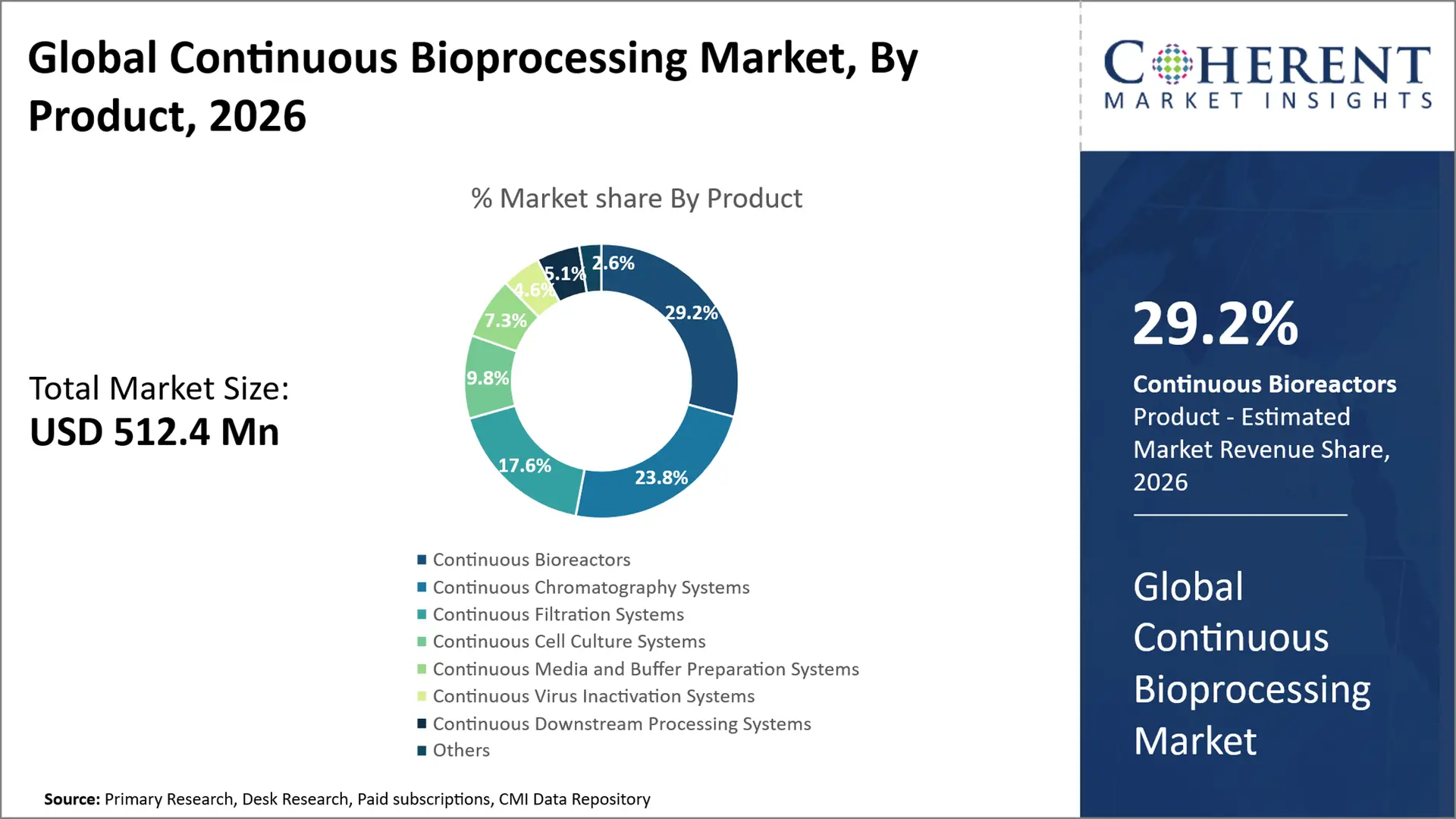
Why Do Continuous Bioreactors Dominate the Global Continuous Bioprocessing Market?
Continuous bioreactors are projected to hold the market share of 29.2% in 2026, as they offer the possibility to maintain cell-growth conditions under control, achieve high cell densities, and prolonging production by continuous feeding of nutrients and extraction of end product. These bioreactors are not only scalable, but they also offer enhanced volumetric productivity combined with reduced down-time of traditional, batch production methods.
For instance, Canada's National Research Council (NRC) has a government cell-culture pilot plant, equipped with dedicated perfusion suites that house bioreactors ranging from 3-20 L and a 200-L single-use bioreactor as well as a 500-L process-scale bioreactor for biologics production. This infrastructure illustrates the use of perfusion and scalable bioreactor technologies for recombinant proteins, viral vectors and vaccines.
- Current Industry Events of 2026
- Market Size Estimation
- Regional Breakdown
- Competitive Landscape
- Customer Intelligence
- Segmental Analysis
- Pricing Analysis
- Key Market Drivers, Challenges & Future Trends
- Customized Insights Section
Why Does Upstream Processing Represent the Largest Process Segment in the Continuous Bioprocessing Market?
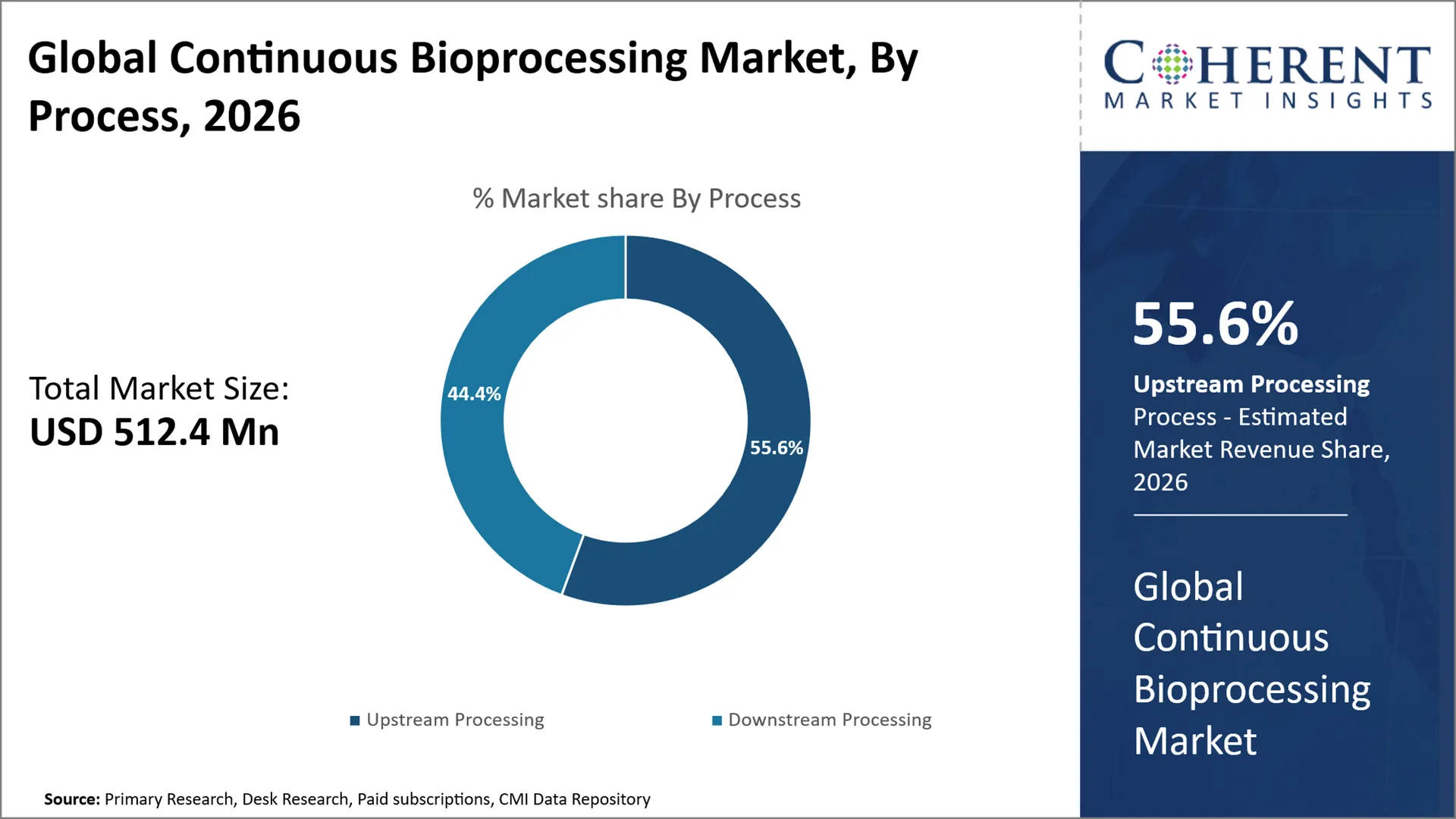
Upstream processing is projected to hold a market share of 55.6% in 2026, owing to the ability of continuous bioprocessing to address challenges related to high cell density cultivation, increased productivity, and uniform product quality. Continuous perfusion offers a means of continuous replacement of nutrients and removal of wastes and therefore allows for sustained cell growth and higher volumetric productivity than other traditional batch methods.
For instance, in August 2024, India’s Department of Biotechnology (DBT) issued the BioE3 Policy, under which the DBT provided a new policy framework to promote a shared infrastructure and facility system for pilot and pre-commercial-scale biomanufacturing for the scale-up of advanced bioprocessing technologies.
Large-Scale Segment Dominates the Global Continuous Bioprocessing Market
The large-scale segment is projected to hold a market share of 54.3% in 2026, as the demand for high-volume biologics manufacturing increases and process productivity needs to be optimized at the commercial scale. Continuous systems support extended run time at a stable process, increased productivity, and less downtime than traditional batch processes. Automation and process intensification has made continuous systems compatible with maximized capacity utilization and guaranteed product quality.
For instance, in February 2026, the Government of India announced Biopharma SHAKTI under Union Budget 2026-27 with an outlay of USD 1.04 billion (INR 10,000 crore) over 5 years to enhance the domestic manufacturing of biologics & biosimilars and create an ecosystem to make India a biopharmaceutical manufacturing hub of the world. (Source: Press Information Bureau)
Current Events and their Impact
Current Events | Description and its Impact |
U.S. FDA Advanced Manufacturing Framework Prioritized End-to-End Continuous Manufacturing (March 2026) |
|
European Medicines Agency (EMA) Continued Regulatory Focus on Continuous Manufacturing of Biologicals (January 2026) |
|
U.S. FDA Advanced Manufacturing Strategy Highlighted Continuous Manufacturing as a Key Innovation (December 2025) |
|
Continuous Bioprocessing Market Dynamics
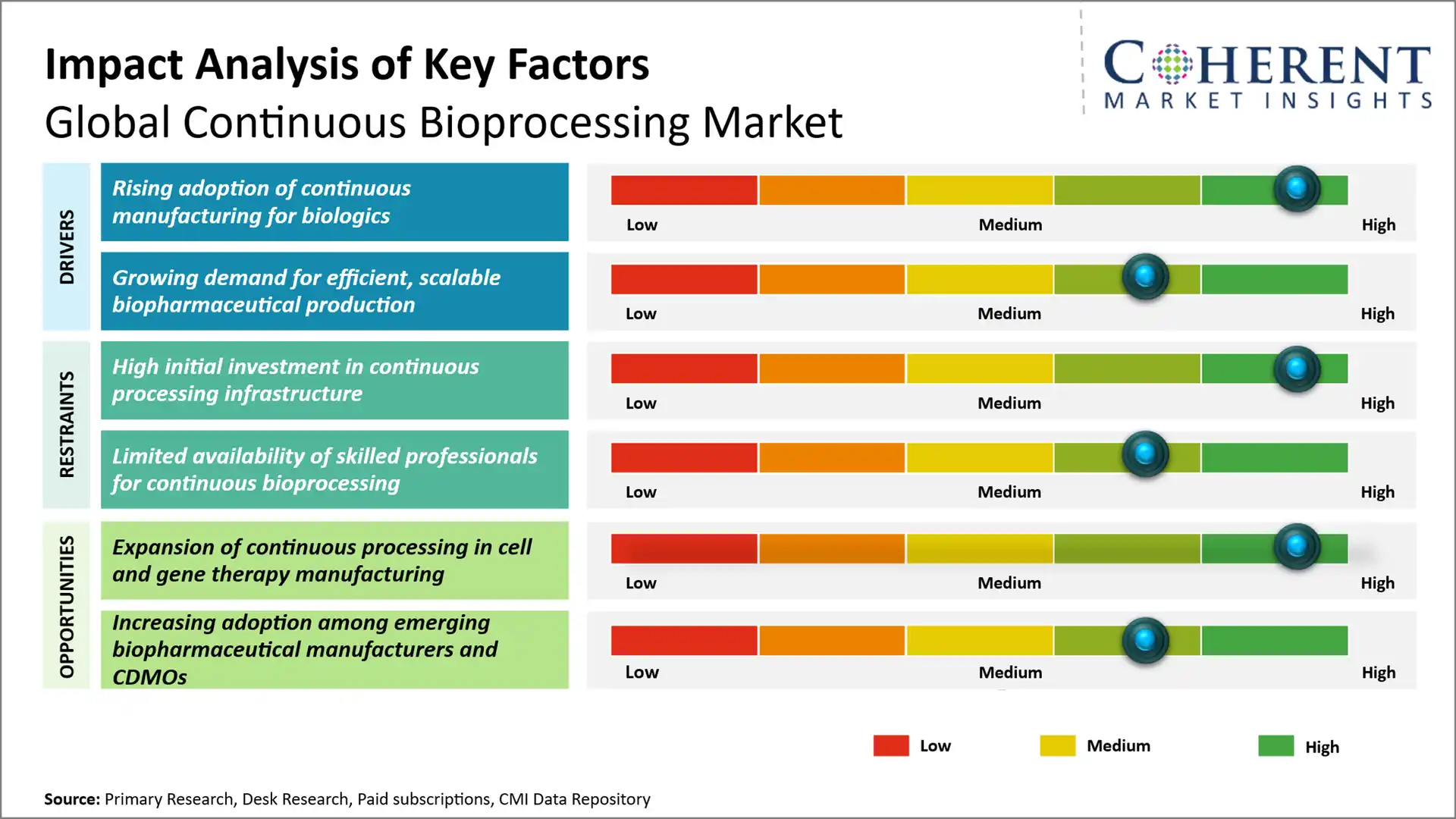
Market Drivers
- Rising adoption of continuous manufacturing for biologics: The growing adoption of continuous manufacturing for biologics is being driven by the need to increase productivity, improve manufacturing flexibility, and reduce facility and operating costs. Continuous platforms enable more efficient use of manufacturing space while supporting integrated process control and scalable biologics production. For instance, in June 2026, Evotec SE launched J.TRAIN, enabling biopharmaceutical companies to deploy its continuous manufacturing platform directly within their own facilities through a turnkey model. The platform combines modular infrastructure, automation, digital validation, and training to accelerate implementation of continuous biologics manufacturing.
- Growing demand for efficient, scalable biopharmaceutical production: Growing demand for biologics is increasing the need for manufacturing platforms that can scale efficiently while maintaining productivity, consistency, and cost control. Continuous and intensified bioprocessing can help manufacturers increase output, optimize facility utilization, and streamline the transition from development to commercial production. For instance, in December 2025, Thermo Fisher Scientific Inc. expanded its bioprocessing capabilities across Asia, including a new Bioprocess Design Center in Hyderabad and expanded centers in Korea and Singapore, to support faster and more scalable biologics development and manufacturing.
- Increasing adoption of single-use technologies: The increasing adoption of single-use technologies is supporting continuous bioprocessing by enabling flexible production, reducing cleaning and sterilization requirements, and shortening manufacturing changeover times. The widespread use of single-use systems across biomanufacturing facilities indicates their growing integration into modern production workflows. For instance, according to BioPlan’s 21st Annual Report and Survey, published in August 2024, about 87% of biomanufacturing facilities used single-use systems in 2024, while 85.2% used single-use bioreactors across all stages of manufacturing, demonstrating the established penetration of single-use technologies in biopharmaceutical production.
Emerging Trends
- Integration of AI and real-time process analytics: AI, machine learning, and advanced PAT tools are increasingly being integrated with continuous bioprocessing to enable real-time monitoring, predictive control, and rapid process optimization.
- Shift toward end-to-end continuous manufacturing: Biopharmaceutical manufacturers are moving beyond individual continuous unit operations toward integrated upstream and downstream platforms, enabling seamless material flow and improved process efficiency.
- Adoption of modular and single-use systems: Single-use and modular bioprocessing systems are gaining traction by enabling flexible production scales, faster facility deployment, and lower infrastructure requirements for biologics manufacturing.
Regional Insights
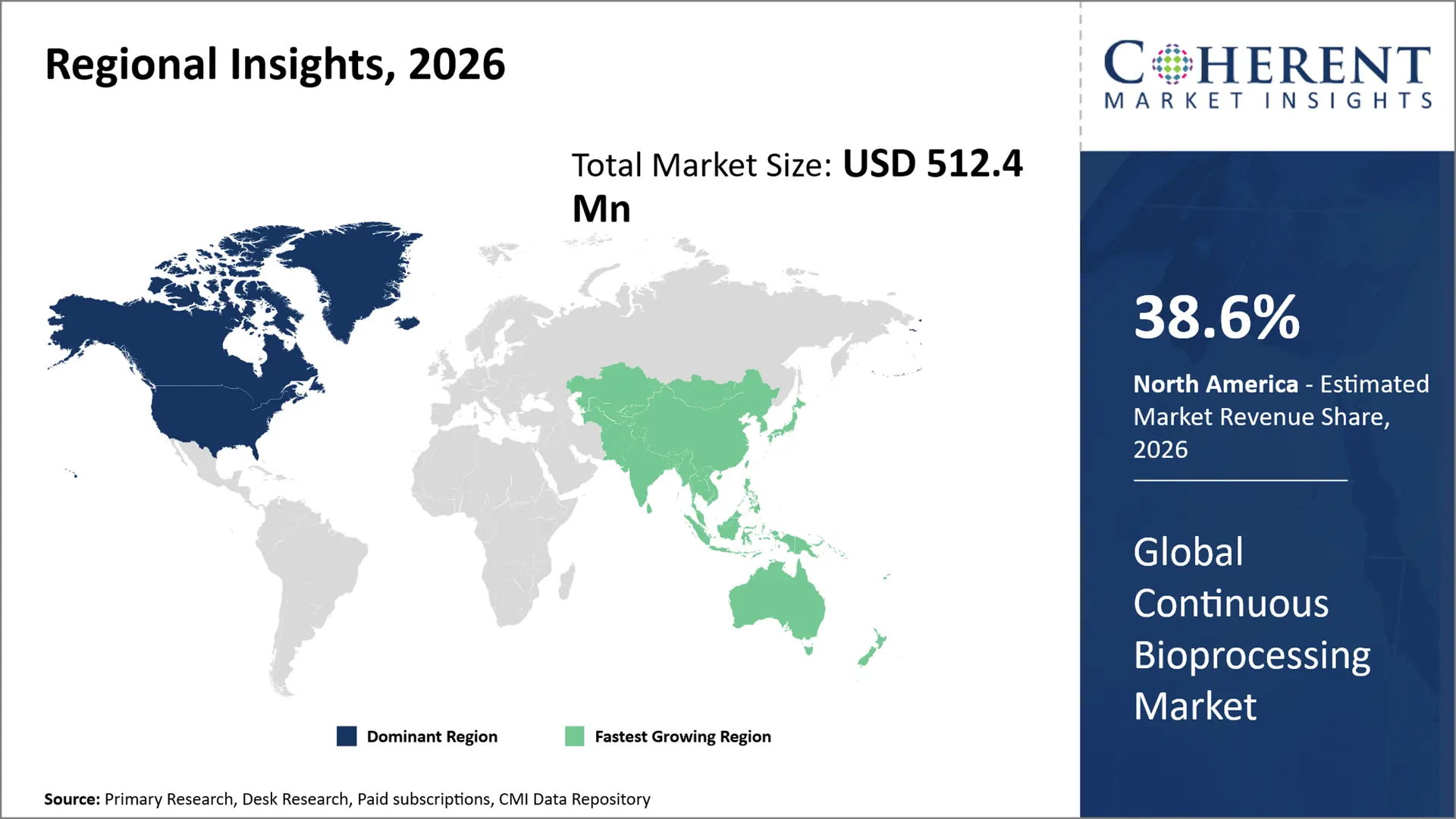
Why is North America a Strong Market for Continuous Bioprocessing?
North America leads the global continuous bioprocessing market, accounting for an estimated 38.6% share in 2026, owing to the regional biopharmaceutical industry, well-developed manufacturing facilities, and well-established R&D initiatives. Favorable policies adopted by the government, such as federal grants for biomanufacturing innovation and U.S. FDA programs enable accelerated research and development (R&D) of advanced manufacturing technologies and streamlines their evaluation and approval process, increasing the penetration of continuous bioprocessing.
For instance, the U.S. Food and Drug Administration (FDA) established the Advanced Manufacturing Technologies Designation Program (AMTDP) under Section 506L of the FD&C Act to speed up the development and review of new manufacturing technologies. As of October 2025, U.S. FDA has received 18 designation requests and granted 3 designations, highlighting active regulatory engagement with advanced manufacturing technologies.
Why Does Asia Pacific Continuous Bioprocessing Market Exhibit High Growth?
Asia Pacific is expected to exhibit the fastest growth in the global continuous bioprocessing market, registering an estimated CAGR of 24.2% during 2026–2033. The region is projected to account for 23.8% of the global market in 2026, attributed to growing biopharmaceutical manufacturing capacity, growing healthcare needs, and growing investments in local production capacity. Government policies encouraging biotechnology breakthroughs and facilitative policies for manufacturing expansion can be witnessed throughout China, India, Japan, and South Korea.
For instance, in June 2025, China’s Ministry of Industry and Information Technology and National Development and Reform Commission launched a program to develop pilot-scale biomanufacturing capacity platforms, supporting the transition of biotech innovations from research into industrial production. Furthermore, rapid increase in investments in biomanufacturing infrastructure, skills, and advanced manufacturing technologies are also fueling the adoption of continuous bioprocessing in the region.
Global Continuous Bioprocessing Market Outlook for Key Countries
Why is the U.S. Leading Innovation and Adoption in the Continuous Bioprocessing Market?
The U.S. drives innovation and adoption with U.S. FDA-supported development of continuous bioprocessing technologies for biologics and advanced therapies. The FDA's CBER Advanced Technologies Program has supported innovations in continuous viral-vector production and the continuous manufacture of mRNA products. Moreover, targeted federal funding is helping to bring continuous-processing innovations from research into biopharmaceutical manufacturing.
Is Japan a Favorable Market for Continuous Bioprocessing Market?
Japan is a good manufacturing base, with domestic pharmaceutical production reaching USD 65.9 billion (¥10.25 trillion) in 2024, up 2.1% year on year, according to Japan’s Ministry of Health, Labor and Welfare (MHLW). In addition, Japan has earmarked USD 246.1 million (¥38.3 billion) over four years in 2025 to boost domestic manufacturing capabilities for regenerative, cell and gene therapies, which will allow for the expansion of advanced biopharmaceutical production infrastructure.
Is China Emerging as a Key Growth Hub for the Continuous Bioprocessing Market?
China is rapidly emerging as a principal growth center driven by an evolving biopharmaceutical manufacturing landscape and impetus around the development of a strategy to allow advanced biologics manufacturing. The biomedicine industry scale of Shanghai reached USD 149.1 billion (RMB 1 trillion) in 2025 and the biomedicine manufacturing output value was nearly USD 31.3 billion (RMB 210 billion), based on data from the Shanghai Municipal Commission of Science and Technology. Additionally, China's NMPA has rolled out segmented biologics (antibody-drug conjugates, biologics and vaccines) manufacturing pilots, providing more access for advanced manufacturing models.
Why Does Germany Top the European Continuous Bioprocessing Market?
Germany has manufacturing advantage and capacity in pharmaceutical industry and government recognition and commitment to keep the manufacturing and innovation activities domestic. The Federal Statistical Office of Germany data reflected the trend that pharmaceuticals production grew by 10.0% in May 2025. Additionally, in November 2025, the German Federal Government placed an emphasis on strengthening country’s pharmaceutical innovation capacity and supply security.
Is Continuous Bioprocessing Market Developing in UK?
The UK is evolving as a continuous bioprocessing market driven by robust government backing for the advanced life-sciences manufacturing and biomanufacturing innovation. The government is helping to bolster manufacturing within the country, stimulate the adoption of the technology, and foster the advancement of adaptable, scalable manufacturing infrastructure. These policies are making the UK a fertile ground for continuous biomanufacturing.
Key Performance Indicators in Continuous Bioprocessing
Performance Indicator | Reported Performance | Market Relevance |
Continuous Operation Duration | 17 days | Demonstrates feasibility of sustained, uninterrupted biologics production |
Perfusion Cell Density | 100 × 10⁶ cells/mL | Supports high-density continuous cell culture and increased productivity |
mAb Productivity | ~1 g/L/day | Highlights the productivity potential of continuous upstream processing |
Overall Process Recovery | ~90% | Indicates efficient product recovery across integrated processing |
Protein A Capture Cycles | 300 cycles | Demonstrates the operational durability of continuous chromatography |
Process Scale Demonstrated | Up to 30 L | Provides evidence of scale-up from development toward pilot-scale manufacturing |
How is the expansion of continuous processing in cell and gene therapy manufacturing creating new growth opportunities in the continuous bioprocessing market?
As the technological complexity and patient-specific nature of cell and gene therapies increases, the demand for manufacturing systems that offer increased throughput, quality and capacity, and that do so in a more affordable way, is also rising. Innovations in continuous and intensified bioprocessing, such as automation, close processing, real-time analysis and increased manufacturing capacity are capable of meeting these needs. This will be especially important as manufacturers look to scalable, commercial production. For instance, in March 2026, Sartorius AG unveiled Eveo Cell Therapy Platform - an automated, multi-parallel and modular device to accelerate autologous cell therapy manufacturing, such as CAR-T manufacturing. The system supports scalable cell therapy manufacturing while increasing yields in established cleanroom space.
Market Players, Key Development, and Competitive Landscape
Key Developments
- On September 16, 2026, Sartorius AG and the National Institute for Bioprocessing Research and Training (NIBRT) announced a partnership to establish a dedicated training center for intensified and continuous bioprocessing in Dublin, Ireland. The center will use Sartorius’ Pionic platform to provide hands-on training in integrated continuous bioprocessing. The initiative is expected to support wider adoption of continuous biomanufacturing technologies.
- On September 15, 2026, Asahi Kasei Corporation introduced the VANTIJ SU-VFC Benchtop, an automated single-use virus filtration system for laboratory-scale and process-development applications. Initially designed for gene therapy manufacturing, the system supports process consistency, automation, and data-driven filtration workflows. The launch strengthens continuous bioprocessing capabilities in downstream filtration and cell and gene therapy applications.
- On September 9, 2026, Transcenta Therapeutics and WuXi Biologics entered into a strategic collaboration under which WuXi Biologics received a non-exclusive license to Transcenta’s Highly Intensified Continuous Bioprocessing (HiCB) platform and ExcelPro cell culture media. The HiCB platform combines continuous perfusion upstream processing with hybrid continuous downstream purification, supporting higher productivity and more flexible biologics manufacturing.
- In August 2026, Enzene Biosciences launched NeX, an end-to-end partnership model combining its continuous manufacturing platform with facility design, technology transfer, workforce training, and operational support. The initiative is designed to help governments, institutions, and biopharma organizations establish cost-efficient local biologics manufacturing capabilities.
Competitive Landscape
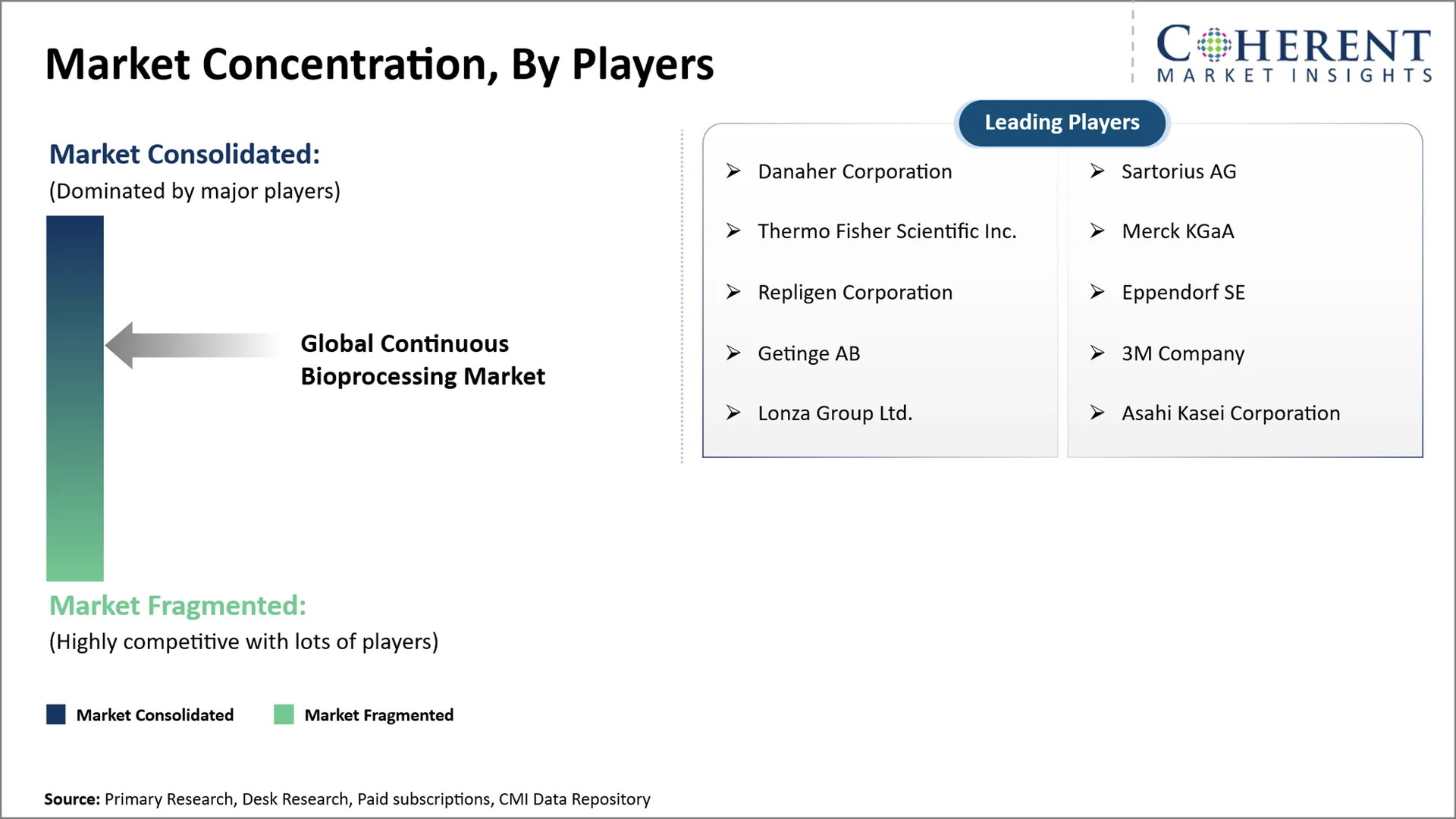
The global continuous bioprocessing market is moderately competitive, with competition centered on continuous process technology innovation, integrated upstream and downstream solutions, process scalability, automation, regulatory compliance, and manufacturing efficiency. Market participants are increasingly focusing on expanding continuous bioprocessing platforms, strengthening single-use technologies, integrating digital process monitoring, and developing solutions that improve productivity and reduce manufacturing costs across biologics production. Key focus areas include:
- Development of integrated continuous upstream and downstream bioprocessing platforms
- Advancement of continuous bioreactors, chromatography, and filtration technologies
- Integration of PAT, automation, AI, and real-time process monitoring capabilities
- Expansion of single-use and modular systems for flexible biopharmaceutical manufacturing
- Strategic collaborations and technology partnerships to accelerate continuous manufacturing adoption
Market Report Scope
Continuous Bioprocessing Market Report Coverage | |||
Report Coverage | Details | ||
Base Year | 2025 | Market Size in 2026: | USD 512.4 Mn |
Historical Data For: | 2020 To 2024 | Forecast Period: | 2026 To 2033 |
Forecast Period 2026 To 2033 CAGR: | 21.4% | 2033 Value Projection: | USD 1,991.3 Mn |
Geographies covered: |
| ||
Segments covered: |
| ||
Companies covered: | Danaher Corporation, Sartorius AG, Thermo Fisher Scientific Inc., Merck KGaA, Repligen Corporation, Eppendorf SE, Getinge AB, 3M Company, Lonza Group Ltd., Asahi Kasei Corporation | ||
Growth Drivers: |
| ||
Restraints & Challenges: |
| ||
Analyst Opinion (Expert Opinion)
- In the coming years, global continuous bioprocessing market is expected to move from selective adoption toward broader integration across end-to-end biopharmaceutical manufacturing. Future growth will increasingly center on fully connected platforms combining continuous upstream and downstream processing, single-use technologies, automation, PAT, and real-time data analytics. The industry is likely to prioritize flexible, smaller-footprint manufacturing models that can improve productivity while reducing production complexity and resource requirements.
- The maximum opportunities are foreseen within continuous bioreactors for monoclonal antibodies in China. The combination offers potential for high-volume biologics manufacturing, process intensification, and scalable production, while China’s expanding biopharmaceutical manufacturing ecosystem creates an attractive environment for deployment of continuous processing technologies.
- In order to gain a competitive advantage market players should focus on developing integrated end-to-end continuous platforms rather than standalone equipment, with interoperability between upstream, downstream, monitoring, and control systems. They should also build strategic partnerships with biopharmaceutical manufacturers and CDMOs, invest in automation and data-driven process control, and provide scalable solutions that can transition efficiently from development to commercial manufacturing.
Speak to the analyst
Want personalized insights?
Take the findings above to one of our principal consultants, or have the report rebuilt around the segments, geographies and competitors you actually track.
Market Segmentation
- Product Insights (Revenue, USD Mn, 2021 - 2033)
- Continuous Bioreactors
- Continuous Chromatography Systems
- Continuous Filtration Systems
- Continuous Cell Culture Systems
- Continuous Media and Buffer Preparation Systems
- Continuous Virus Inactivation Systems
- Continuous Downstream Processing Systems
- Others
- Process Insights (Revenue, USD Mn, 2021 - 2033)
- Upstream Processing
- Downstream Processing
- Scale of Operation Insights (Revenue, USD Mn, 2021 - 2033)
- Small-Scale
- Medium-Scale
- Large-Scale
- Application Insights (Revenue, USD Mn, 2021 - 2033)
- Monoclonal Antibodies
- Recombinant Proteins
- Vaccines
- Cell and Gene Therapies
- Blood and Plasma Products
- Others
- End User Insights (Revenue, USD Mn, 2021 - 2033)
- Biopharmaceutical Companies
- Contract Manufacturing Organizations (CMOs) / Contract Development and Manufacturing Organizations (CDMOs)
- Academic and Research Institutes
- Others
- Regional Insights (Revenue, USD Mn, 2021 - 2033)
- North America
- U.S.
- Canada
- Latin America
- Brazil
- Argentina
- Mexico
- Rest of Latin America
- Europe
- Germany
- U.K.
- Spain
- France
- Italy
- Russia
- Rest of Europe
- Asia Pacific
- China
- India
- Japan
- Australia
- South Korea
- ASEAN
- Rest of Asia Pacific
- Middle East
- GCC Countries
- Israel
- Rest of Middle East
- Africa
- South Africa
- North Africa
- Central Africa
- North America
- Key Players Insights
- Danaher Corporation
- Sartorius AG
- Thermo Fisher Scientific Inc.
- Merck KGaA
- Repligen Corporation
- Eppendorf SE
- Getinge AB
- 3M Company
- Lonza Group Ltd.
- Asahi Kasei Corporation
Sources
Primary Research Interviews
- Bioprocess engineers and manufacturing scientists involved in continuous upstream and downstream bioprocessing
- Process development scientists specializing in perfusion cell culture and continuous bioreactor systems
- Downstream processing specialists working with continuous chromatography, filtration, and virus inactivation
- Biopharmaceutical manufacturing executives responsible for continuous manufacturing implementation and scale-up
- CDMO technical experts involved in continuous bioprocessing development, technology transfer, and commercial manufacturing
Stakeholders
- Continuous bioprocessing equipment and technology providers
- Biopharmaceutical manufacturers and biologics developers
- Contract development and manufacturing organizations (CDMOs)
- Single-use technology and bioprocess consumables suppliers
- Process analytical technology (PAT), automation, and digital bioprocessing providers
- Academic and research institutions involved in continuous biomanufacturing
- End-use Sectors
- Biopharmaceutical Manufacturing Facilities
- Contract Development and Manufacturing Organizations (CDMOs)
- Pharmaceutical and Biotechnology Companies
- Academic and Research Institutions
- Cell and Gene Therapy Manufacturing Facilities
- Bioprocessing and Process Development Centers
- Regulatory & Health Bodies
- U.S. Food and Drug Administration (FDA) – Continuous manufacturing guidance, advanced manufacturing technologies, biologics manufacturing, and regulatory considerations
- European Medicines Agency (EMA) – ICH Q13 guidance and regulatory considerations for continuous manufacturing of therapeutic proteins and other products
- International Council for Harmonisation of Technical Requirements for Pharmaceuticals for Human Use (ICH) – Q13 continuous manufacturing guidance and related quality considerations
- U.S. Pharmacopeia (USP) – Standards, technical resources, and industry initiatives related to continuous bioprocessing
- Medicines and Healthcare products Regulatory Agency (MHRA), U.K. – Pharmaceutical manufacturing quality and regulatory requirements
- National Medical Products Administration (NMPA), China – Biopharmaceutical manufacturing and regulatory requirements
Databases
- ClinicalTrials.gov – Clinical studies involving biologics, vaccines, cell and gene therapies, and other products manufactured using advanced bioprocessing approaches
- FDA Drugs@FDA – U.S. drug approval and regulatory information
- FDA CBER – Regulatory and scientific information relating to biological products and advanced manufacturing technologies
- NIH RePORTER – Federally funded research projects related to bioprocessing, biologics manufacturing, and advanced manufacturing
- WHO Global Health Observatory (GHO) – Global health and pharmaceutical-related data
Associations
- International Society for Pharmaceutical Engineering (ISPE) – Good practices and technical guidance for continuous manufacturing of biological products
- BioPhorum – Industry collaboration and technical initiatives focused on continuous biomanufacturing
- U.S. Pharmacopeia (USP) – Pharmaceutical quality standards and continuous manufacturing initiatives
- Parenteral Drug Association (PDA) – Biopharmaceutical manufacturing, process technology, and quality resources
- National Institute for Innovation and Technology in Biopharmaceutical Manufacturing (NIIMBL) – Biopharmaceutical manufacturing innovation and technology development
Public Domain Sources
- U.S. Food and Drug Administration (FDA) – Advanced manufacturing, continuous manufacturing, biologics, and regulatory guidance
- European Medicines Agency (EMA) – Continuous manufacturing and pharmaceutical quality guidance
- National Institutes of Health (NIH) – Biomedical research and biopharmaceutical manufacturing research information
- National Institute for Innovation and Technology in Biopharmaceutical Manufacturing (NIIMBL) – Biopharmaceutical manufacturing technology and innovation information
- National Institute for Bioprocessing Research and Training (NIBRT) – Bioprocessing research, training, and manufacturing technology information
- U.S. Pharmacopeia (USP) – Pharmaceutical quality and bioprocessing standards and technical resources
- International Society for Pharmaceutical Engineering (ISPE) – Continuous manufacturing technical resources and industry guidance
Proprietary Elements
- CMI Data Analytics Tool, Proprietary CMI Existing Repository of information for last 10 years.
Get access to 250+ pages report
Every segment, forecast, competitor profile and data table behind the analysis above — available for instant download.
- ESOMAR Member
- ISO 9001:2015 Certified
- D-U-N-S Registered
- GDPR & CCPA Compliant
Missing comfort of reading report in your local language? Find your preferred language:
Frequently Asked Questions
The global continuous bioprocessing market is estimated to be valued at USD 512.4 Mn in 2026 and is expected to reach USD 1,991.3 Mn by 2033.
Continuous bioreactors dominate due to their ability to enable uninterrupted cell culture, improve volumetric productivity, and support consistent large-scale biologics production.
Continuous bioprocessing is a biomanufacturing approach in which biological production and processing occur continuously with ongoing input of materials and removal of products.
The CAGR of global continuous bioprocessing market is projected to be 21.4% from 2026 to 2033.
Rising adoption of continuous manufacturing for biologics, and growing demand for efficient, scalable biopharmaceutical production are the major factors driving the growth of the global continuous bioprocessing market.
High initial investment in continuous processing infrastructure, and limited availability of skilled professionals for continuous bioprocessing are the major factors hampering the growth of the global continuous bioprocessing market.
In terms of process, upstream processing is estimated to dominate the market revenue share in 2026.