

Digital Health Monitoring Devices Market Analysis & Forecast- 2026 to 2033
The Global Digital Health Monitoring Devices Market size is estimated to be valued at USD 6.30 Bn in 2026 and is expected to reach USD 21.44 Bn by 2033, exhibiting a compound annual growth rate (CAGR) of 19.2% from 2026 to 2033.
Market Overview
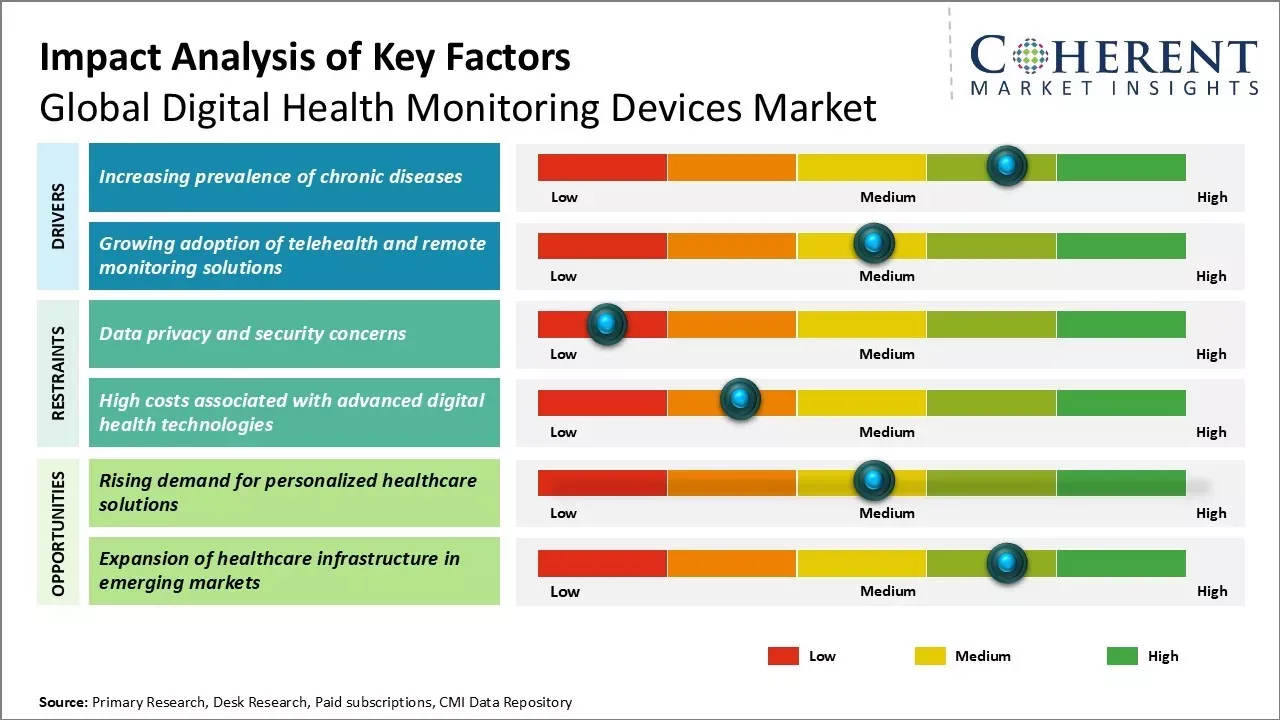
The Digital Health Monitoring Devices Market growth has been witnessing strong rise over the past few years. The growth can be attributed to a rise in chronic diseases owing to sedentary lifestyles and increasing focus on remote patient monitoring. Remote monitoring allows healthcare providers to continuously track patient's vital signs and biometrics outside of conventional clinical settings, thereby improving health outcomes. Furthermore, the increasing adoption of smartphones and wearable technology has enabled the real-time transmission of health data which drives the early detection and prevention of diseases.
Current Events and Its Impact on the Digital Health Monitoring Devices Market
Event | Description and Impact |
Technological Innovation Surges |
|
Reimbursement Framework Expansions |
|
Supply Chain & Geopolitical Pressures |
|
Role of AI (Artificial Intelligence) in Digital Health Monitoring Devices Market
The digital health monitoring devices market is experiencing unprecedented growth, with artificial intelligence serving as the primary catalyst for innovation. As healthcare systems worldwide seek more efficient and personalized solutions, AI integration has become essential for delivering advanced monitoring capabilities that were previously impossible.
For instance, in April 2024, WHO unveiled a digital health promoter harnessing generative AI for public health.
- Current Industry Events of 2026
- Market Size Estimation
- Regional Breakdown
- Competitive Landscape
- Customer Intelligence
- Segmental Analysis
- Pricing Analysis
- Key Market Drivers, Challenges & Future Trends
- Customized Insights Section
Segmental Insights
Digital Health Monitoring Devices Market Insights, By Product Type
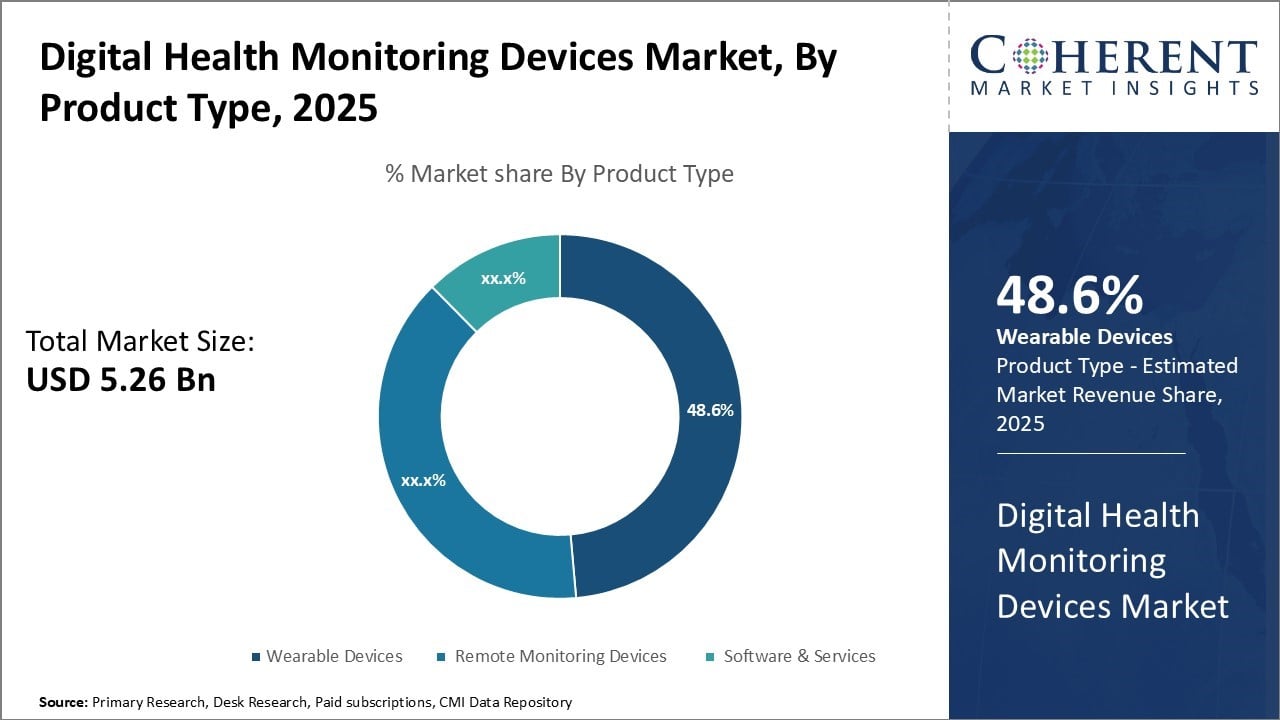
In terms of product type, wearable devices is expected to contribute the highest digital health monitoring devices market share with 49.6% in 2026 owing to their convenience and ability to provide continuous health monitoring. Wearable devices such as fitness trackers and smartwatches have seen tremendous growth in recent years as consumers increasingly seek easy and non-invasive ways to monitor their health and wellness on a daily basis.
Digital Health Monitoring Devices Market Insights, By Technology
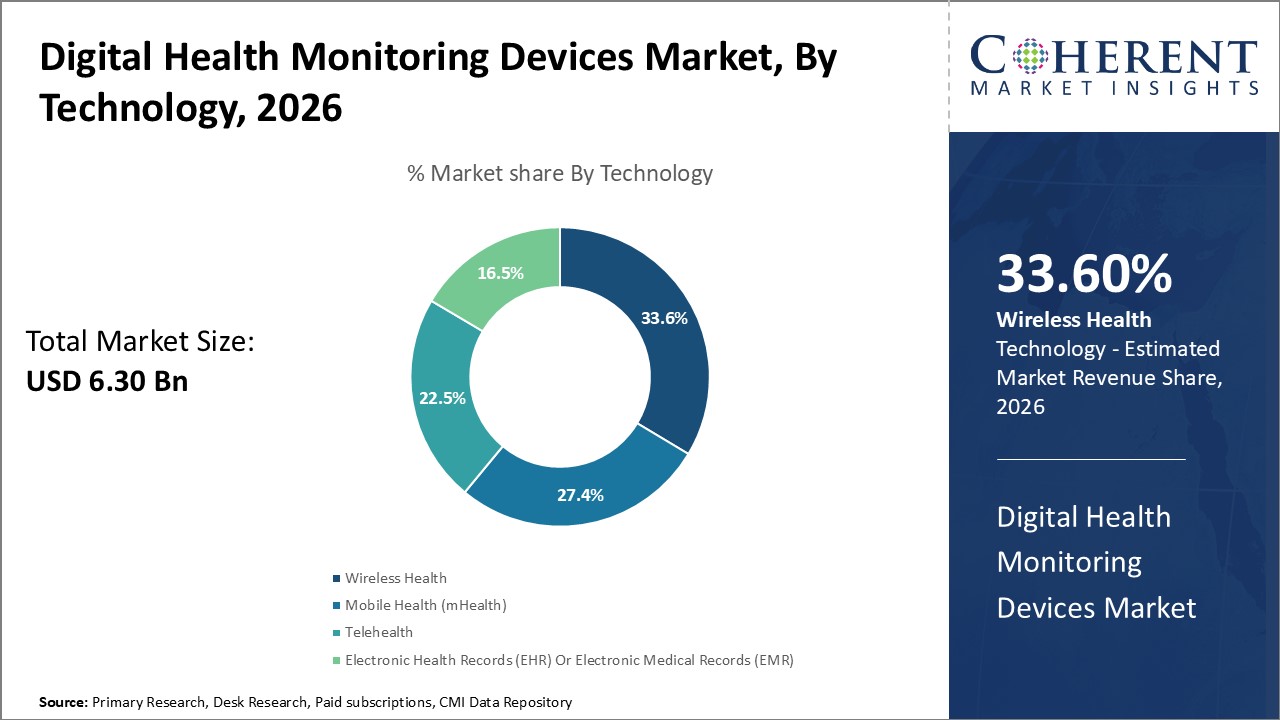
In terms of technology, wireless health is expected to contribute the highest share of the digital health monitoring devices market value with 33.6% in 2026 owing to ongoing advancements and investments in wireless connectivity solutions critical for remote patient monitoring. The ability to monitor patients remotely without physical proximity has been a driving factor for wireless health technologies
Digital Health Monitoring Devices Market Insights, By Application
Based on application, fitness and wellness monitoring is expected to contribute the highest share with 43.62% of digital health monitoring devices market demand in 2026, as this segment focuses on tracking and enhancing physical activity, nutrition, and overall wellness.
With growing awareness about the importance of preventative health and lifestyle management, the demand for fitness trackers, smartwatches, and health apps has surged. In addition, some devices use biofeedback or heart rate variability (HRV) analysis to help individuals manage stress or anxiety, promoting mental health awareness and self-care
Digital Health Monitoring Devices Market - Regional Insights
Dominating Region: North America
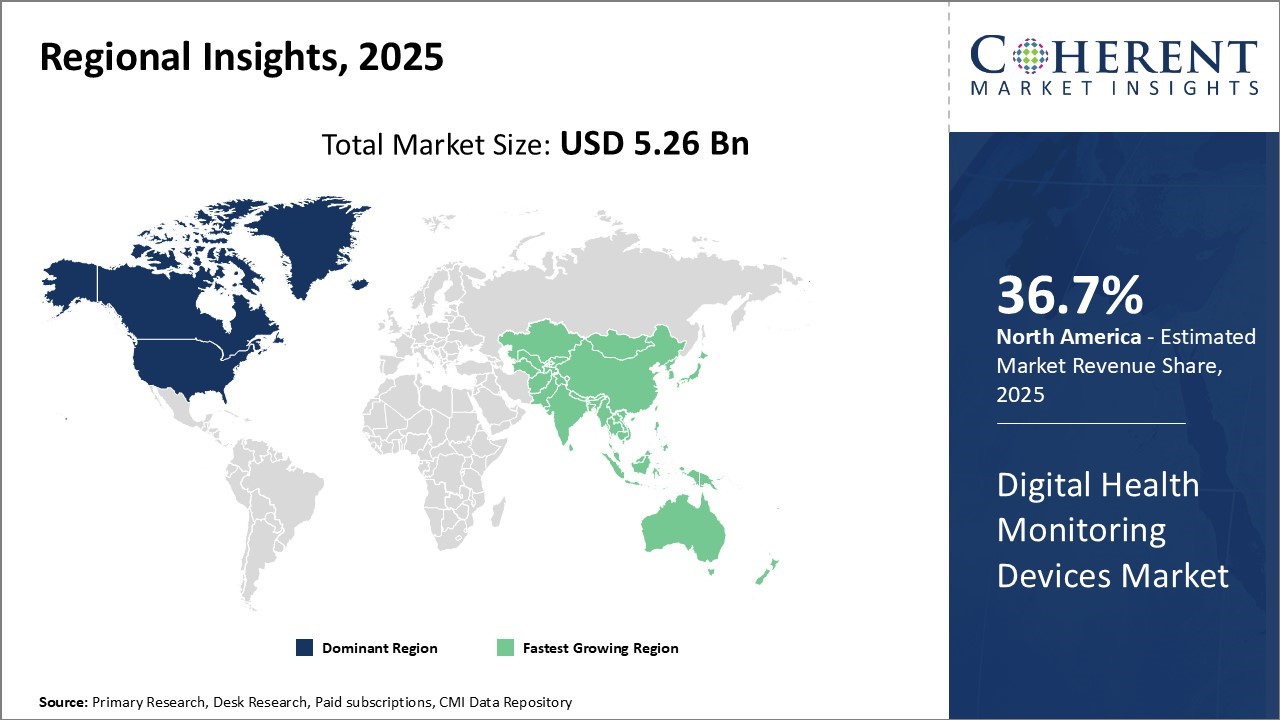
In North America, the dominance in the digital health monitoring devices market trend with a share of 36.7% in 2026 can be attributed to a strong presence of prominent industry players and supportive government initiatives that have led to wider adoption and access to such technologies.
Fastest-Growing Region: Asia Pacific
Meanwhile, the Asia Pacific region exhibits the fastest growth fueled by a large patient population, rising healthcare expenditure, and government plans to improve access to healthcare through telemedicine and home-based solutions in countries like India and China.
Digital Health Monitoring Devices Market Outlook for Key Countries
U.S. Leads in the Digital Health Monitoring Market with Innovative Solutions
The U.S. is expected to hold the largest market share of the digital health monitoring devices market in North America in 2026. The country leads the way in healthcare digitalization, driven by advanced healthcare management systems, innovative software solutions, and the development of cutting-edge devices. For example, in August 2024, ReactDx, a division of React Health, launched NiteWatch, a sleep monitoring device that received clearance from the U.S. FDA. This device is designed to diagnose and treat sleep apnea in the comfort of the home.
Spain’s Digital Health Growth is Boosted by Government Initiatives
The digital health patient monitoring devices market in Spain is expected to experience significant growth, registering a notable CAGR during the forecast period. The Spanish government is actively promoting the adoption of digital health solutions through various initiatives. For instance, in February 2023, EIT Health, a non-profit organization in Spain, launched the F3T project in Barcelona, which stands for Framework for Fast-Track of Digital Health Solutions.
India’s Innovation in Affordable Wireless Monitoring Devices for Rural Areas
India continues to lead with innovation in affordable wireless monitoring devices for rural populations. Companies are engaged in partnership which can drive the growth in the India digital health monitoring devices market. In January 2024, Apollo Hospital Seshadripuram, a leading multi-specialty hospital in Bangalore, partnered with LifeSigns, an AI-powered health-monitoring technology company, to introduce a groundbreaking 24/7 wireless and remote patient monitoring system.
Canada’s Telehealth Adoption Surges Post-Pandemic, Especially in Rural Areas
The rise in the use of telehealth services during the COVID-19 pandemic marked a significant shift in healthcare delivery in Canada. In January 2022, according to a report by Canada Health Infoway, 70.5% of Canadians reported using telehealth services during the COVID-19 pandemic, demonstrating a significant shift towards remote healthcare solutions. This trend has continued post-pandemic, especially in rural areas where access to healthcare is limited.
Market Concentration and Competitive Landscape
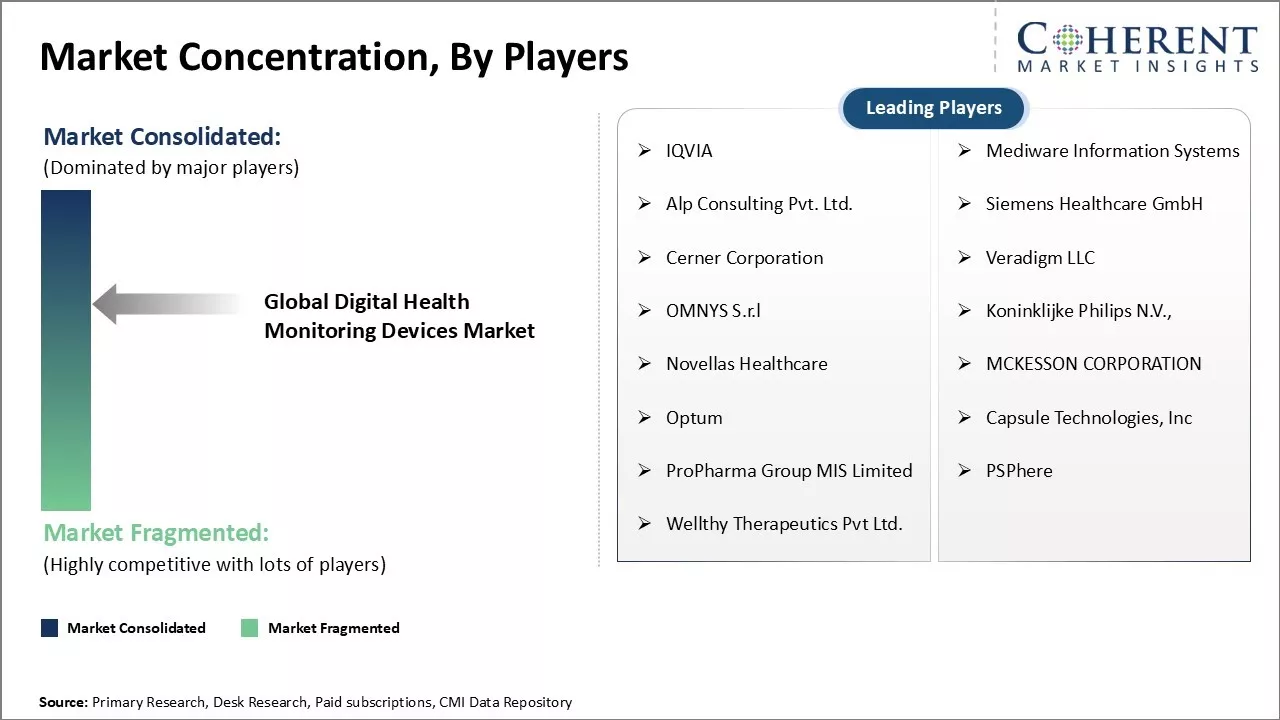
Top Strategies Followed by Global Digital Health Monitoring Devices Market Players
- Established Players: Leading companies in the global digital health monitoring devices market focus extensively on research and development to innovate high-performance products. For example, companies like Medtronic and Philips invest over 5% of their annual revenues in R&D. This helps them develop cutting-edge technologies like AI-enabled remote patient monitoring solutions.
- Mid-Level Players: Mid-sized players in the market focus on delivering quality, affordable products targeting price-sensitive consumers globally. For example, companies like Garmin and Fitbit design devices that offer the same functionalities as premium brands at competitive price points. This has helped them gain significant market share.
- Small-Scale Players: Small players capitalize on niche opportunities by offering specialized products. Some focus on specific ailments or wellness segments that larger brands overlook. This helps them target demand for unique features. Many partner with doctors, physical therapists or startups working on specialized technologies. This brings more refined solutions to smaller customer subsets.
Market Report Scope
Digital Health Monitoring Devices Market Report Coverage
| Report Coverage | Details | ||
|---|---|---|---|
| Base Year: | 2025 | Market Size in 2026: | USD 6.30 Bn |
| Historical Data for: | 2020 To 2024 | Forecast Period: | 2026 To 2033 |
| Forecast Period 2026 to 2033 CAGR: | 19.2% | 2033 Value Projection: | USD 21.44 Bn |
| Geographies covered: |
| ||
| Segments covered: |
| ||
| Companies covered: | IQVIA, Mediware Information Systems, Alp Consulting Pvt. Ltd., Siemens Healthcare GmbH, Cerner Corporation, Veradigm LLC, OMNYS S.r.l, Koninklijke Philips N.V., , Novellas Healthcare , MCKESSON CORPORATION, Optum, Capsule Technologies, Inc, ProPharma Group MIS Limited, PSPhere, and Wellthy Therapeutics Pvt Ltd. | ||
| Growth Drivers: |
| ||
| Restraints & Challenges: |
| ||
Market Dynamics
Market Driver - Increasing prevalence of chronic diseases
The rising number of individuals suffering from chronic illnesses has greatly contributed to the demand for digital health monitoring devices in recent years. Chronic diseases, mainly cardiovascular diseases, cancer, diabetes, and respiratory diseases are among the leading causes of mortality worldwide.
Additionally, the increasing adoption of next-generation technologies like artificial intelligence is expected to fuel market growth. For instance, in June 2023, the Institute for Health Metrics and Evaluation projects that global diabetes cases will rise from 529 million to 1.3 billion by 2050.
Market Opportunity - Rising Demand for Personalized Healthcare Solutions
The increasing demand for personalized healthcare solutions tailored to individuals' health needs presents a major opportunity for the digital health monitoring devices market. As personal devices become more sophisticated in collecting diverse health metrics over time, they provide deeper insights into a person's biomarkers, lifestyle patterns, and risk factors. This vast streaming health data can be analyzed using artificial intelligence and machine learning techniques to deliver tailored wellness programs, diet and exercise recommendations, medication reminders, early disease detection alerts, etc.
Key Takeaways from Analyst
- The global digital health monitoring devices market is set for significant growth, driven by an aging population, rising chronic diseases, and increasing healthcare costs.
- Technological advancements in miniaturization and connectivity are making home health monitoring more feasible. North America leads the market, while
- Asia Pacific is expected to grow rapidly due to rising medical expenditures and a growing middle class.
- However, concerns over data privacy, high device costs, and accessibility challenges may hinder growth.
- Nevertheless, AI integration, cloud computing, and partnerships between manufacturers and digital health platforms are expected to unlock new opportunities, with favorable regulations further boosting adoption.
Digital Health Monitoring Devices Market Key Developments
- On April 4, 2024, Royal Philips, a global leader in health technology, announced a strategic partnership with, smartQare, a healthcare technology company, to integrate smartQare's viQtor solution into Philips' clinical patient monitoring platforms.
- In November 2023, AstraZeneca, a global pharmaceutical leader, launched Evinova, a health-tech business aimed at accelerating innovation in the life sciences sector.
- Technology and innovation, introduced a real-time health monitoring system that captures and records patients' vital signs both in hospital settings and remotely.
- In October 2023, Dozee, an India-based health-tech startup, introduced the 'Dozee Pro Ex,' an ambulatory connected patient monitoring system, equipped with wireless wearable sensors.
- In July 2022, Medtronic plc, a global leader in medical technology, announced the acquisition of Verily Life Sciences, a subsidiary of Alphabet Inc., specializing in digital health technologies. This strategic move aims to enhance Medtronic plc's portfolio in digital health monitoring devices, leveraging Verily Life Sciences' expertise to develop innovative solutions for managing chronic diseases.
Key Stakeholders of Market
What does Growth in the Digital Health Monitoring Devices Industry mean for Different Stakeholders?
The digital health monitoring devices industry has multiple players with varied designations and offers multiple opportunities based on their scope of operations.
Key Medical Devices Stakeholder | Opportunities Due to Digital Health Monitoring Devices Market Growth |
Retail Pharmacies | Offering medical devices for home use, such as blood glucose monitors and digital thermometers, expanding product offerings and customer care services. |
Medical Device Manufacturers | Expansion of product lines to include innovative devices such as wearables, smart implants, and AI-driven diagnostic tools. |
Healthcare Providers | Opportunities to adopt and integrate cutting-edge medical devices into patient care, improving outcomes and expanding service offerings. |
Biotech Firms | Collaborating on the development of combination products, such as drug-device combinations, offering new treatment options and expanding markets. |
Regulatory Affairs Specialists | Growing demand for expertise in navigating the complex regulatory landscape for medical device approvals, ensuring compliance with global standards. |
Supply Chain and Logistics Providers | Managing the distribution of sensitive and high-value medical devices, including ensuring compliance with medical regulations and standards. |
Medical Device Consultants | Providing strategic guidance on product development, regulatory compliance, and market entry for medical device companies. |
Healthcare Training Institutions | Expanding training programs to include the use of advanced medical devices, preparing healthcare professionals for the latest technological advancements |
Market Segmentation
- By Product Type Insights (Revenue, USD Bn, 2021 - 2033)
- Wearable Devices
- Fitness trackers
- Smartwatches
- Remote Monitoring Devices
- Fetal Monitors
- Neuromonitors
- Vital Sign Monitors
- Sleep Monitors
- Insulin Monitors
- Respiratory Monitors
- Multi-Parameter Monitors
- Other Monitors
- Software & Services
- By Technology Insights (Revenue, USD Bn, 2021 - 2033)
- Wireless Health
- Mobile Health (mHealth)
- Telehealth
- Electronic Health Records (EHR) Or Electronic Medical Records (EMR)
- By Application Insights (Revenue, USD Bn, 2021 - 2033)
- Chronic Disease Management
- Fitness and Wellness Monitoring
- Mental Health Monitoring
- By Age Group Insights (Revenue, USD Bn, 2021 - 2033)
- Adult
- Geriatric
- Pediatric
- By End User Insights (Revenue, USD Bn, 2021 - 2033)
- Hospitals & Clinics
- Home Settings
- Nursing Homes
- Ambulatory Surgery Centers
- Rehabilitation centers, etc.
- Others (Assisted Living facilities, etc.)
- Regional Insights (Revenue, USD Bn, 2021 - 2033)
- North America
- U.S.
- Canada
- Latin America
- Brazil
- Argentina
- Mexico
- Rest of Latin America
- Europe
- Germany
- U.K.
- Spain
- France
- Italy
- Russia
- Rest of Europe
- Asia Pacific
- China
- India
- Japan
- Australia
- South Korea
- ASEAN
- Rest of Asia Pacific
- Middle East
- GCC Countries
- Israel
- Rest of Middle East
- Africa
- South Africa
- North Africa
- Central Africa
- Key Players Insights
- IQVIA
- Mediware Information Systems
- Alp Consulting Pvt. Ltd.
- Siemens Healthcare GmbH
- Cerner Corporation
- Veradigm LLC
- OMNYS S.r.l
- Koninklijke Philips N.V.,
- Novellas Healthcare
- MCKESSON CORPORATION
- Optum
- Capsule Technologies, Inc
- ProPharma Group MIS Limited
- PSPhere
- Wellthy Therapeutics Pvt Ltd.
Sources
Primary Research Interviews
- Senior Industry Analysts (Medical Devices)
- Digital Health Solutions Product Managers
- Hospital Procurement Directors
- Remote Patient Monitoring Specialists
- Others
Databases
- IBISWorld (Medical Device Manufacturing Reports)
- Factiva (Global Market Trends)
- Others
Magazines
- Healthcare IT News
- Medical Device and Diagnostic Industry (MD+DI)
- IEEE Pulse (Biomedical Engineering Focus)
- Others
Journals
- Journal of Medical Internet Research
- IEEE Journal of Biomedical and Health Informatics
- NPJ Digital Medicine
- Others
Newspapers
- The Wall Street Journal (Healthcare Tech Section)
- Financial Times (Medical Innovation Columns)
- Modern Healthcare
- Others
Associations
- Healthcare Information and Management Systems Society (HIMSS)
- Association for the Advancement of Medical Instrumentation (AAMI)
- Continua Health Alliance
- Others
Public Domain Sources
- U.S. Department of Health & Human Services (Health IT Data)
- World Health Organization (Digital Health Reports)
- Centers for Disease Control and Prevention (CDC) – Wearable Device Guidelines
- Others
Proprietary Elements
- CMI Data Analytics Tool
- Proprietary CMI Existing Repository of Information (Last 8 Years)
Get access to 250+ pages report
Every segment, forecast, competitor profile and data table behind the analysis above — available for instant download.
- ESOMAR Member
- ISO 9001:2015 Certified
- D-U-N-S Registered
- GDPR & CCPA Compliant
Missing comfort of reading report in your local language? Find your preferred language:
Transform your Strategy with Exclusive Trending Reports
Frequently Asked Questions
The Digital Health Monitoring Devices Market size is estimated to be valued at USD 6.30 Bn in 2026, and is expected to reach USD 21.44 Bn by 2033.
The CAGR of the global Market is projected to be 19.2% from 2026 to 2033
Increasing prevalence of chronic diseases and growing adoption of telehealth and remote monitoring solutions are the major factors driving the growth of the global digital health monitoring devices industry
Data privacy and security concerns and high costs associated with advanced digital health technologies are the major factors hampering the growth of the global market.
In terms of product type, wearable devices is estimated to dominate the market revenue share in 2026
IQVIA, Mediware Information Systems, Alp Consulting Pvt. Ltd., Siemens Healthcare GmbH, Cerner Corporation, Veradigm LLC, OMNYS S.r.l, Koninklijke Philips N.V., , Novellas Healthcare , MCKESSON CORPORATION, Optum, Capsule Technologies, Inc, ProPharma Group MIS Limited, PSPhere, and Wellthy Therapeutics Pvt Ltd. are the major players.
North America is expected to lead the global digital health monitoring devices industry in 2026