

Extracorporeal Membrane Oxygenation System Market Size and Share Analysis: (2026 - 2033)
The global extracorporeal membrane oxygenation system market is estimated to be valued at USD 395 Mn in 2026 and is projected to grow at a CAGR of 5.4% during the forecast period (2026-2033), reaching USD 571 Mn by 2033. This growth can be attributed to increasing incidence of cardiopulmonary disorders such as acute respiratory distress syndrome (ARDS), cardiac arrest, and heart failure and growing demand for advanced life-support systems like ECMO in critical care settings.
Key Takeaways from the Extracorporeal Membrane Oxygenation System Market Report
- Venoarterial ECMO is projected to lead the market with a 48% share in 2026 due to its broad use in cardiac and respiratory failure and strong adoption in cardiogenic shock and post-cardiotomy support. For instance, in a multicenter registry study, 15.3% of patients with cardiogenic shock received VA-ECMO, highlighting its significant role in the management of severe, refractory cardiac failure.
- Respiratory segment is slated to hold the largest share of 44% in 2026, because of rising incidence of ARDS and severe pneumonia and increasing reliance on ECMO as a bridge therapy in cases of critical respiratory failure. For example, acute respiratory distress syndrome (ARDS) affects about ~10% of mechanically ventilated ICU patients, as reported in the multinational LUNG SAFE study, making it a major driver of severe respiratory failure requiring advanced support.
- North America is expected to dominate the global ECMO system market with a share of 40% in 2026, owing to strong presence of advanced healthcare infrastructure, high adoption of cutting-edge life-support technologies, favorable reimbursement policies, and growing prevalence of severe cardiopulmonary diseases requiring extracorporeal membrane oxygenation support. For instance, according to the Extracorporeal Life Support Organization (ELSO) Registry, majority of global ECMO cases are reported from the United States, reflecting its leadership in ECMO adoption and clinical experience.
- Asia Pacific is poised to emerge as the fastest growing market for extracorporeal membrane oxygenation systems, registering a CAGR of 6 %, thanks to expanding ICU capacity, favourable government support, and rising incidence of severe cardiopulmonary and respiratory failure cases. In the United States, cardiac arrest remains a major public health concern, with about 350,000 out-of-hospital and 290,000 in-hospital cases occurring each year.
Extracorporeal Membrane Oxygenation System Market Overview
The global extracorporeal membrane oxygenation system market is projected to grow steadily during the forecast period. This is primarily due to rising incidence of severe respiratory and cardiac failure cases, increasing adoption of extracorporeal life support in intensive care units, and growing prevalence of conditions like acute respiratory distress syndrome (ARDS), sepsis, and cardiac arrest. Technological advancements in ECMO systems, improved portability and safety features, and expanding use in neonatal and pediatric care are also supporting market growth.
Extracorporeal membrane oxygenation (ECMO) is a life-support system that provides respiratory and/or cardiac support to patients with severe respiratory and/or circulatory failure. The ECMO circuit comprises cannulas, a pump, a gas blender, and a membrane oxygenator, which oxygenates the blood and removes carbon dioxide through extracorporeal gas exchange.
Potential indications for ECMO include severe acute respiratory distress syndrome (ARDS), acute hypercapnic respiratory failure, cardiogenic shock or cardiac arrest (ECPR), bridge to lung transplantation, and primary graft dysfunction following lung transplantation. It is also used in pulmonary hypertension with right ventricular failure.
Rising adoption of ECMO systems in critical care ICUs is expected to boost market growth during the assessment period. Similarly, technological advancements in ECMO components are increasing the adoption rate. Innovations such as advanced oxygenators, centrifugal pumps, heparin-coated cannulas, and improved circuit designs are enhancing safety and performance.
Leading companies are developing advanced extracorporeal membrane oxygenation technologies to meet the evolving needs of the healthcare industry. For instance, in April 2025, Eurosets launched two latest-generation extracorporeal cardiopulmonary support devices: Xtreme Rescue and Landing Breathe. The company also launched a new ECMO machine for emergency situations.
Segmental Analysis
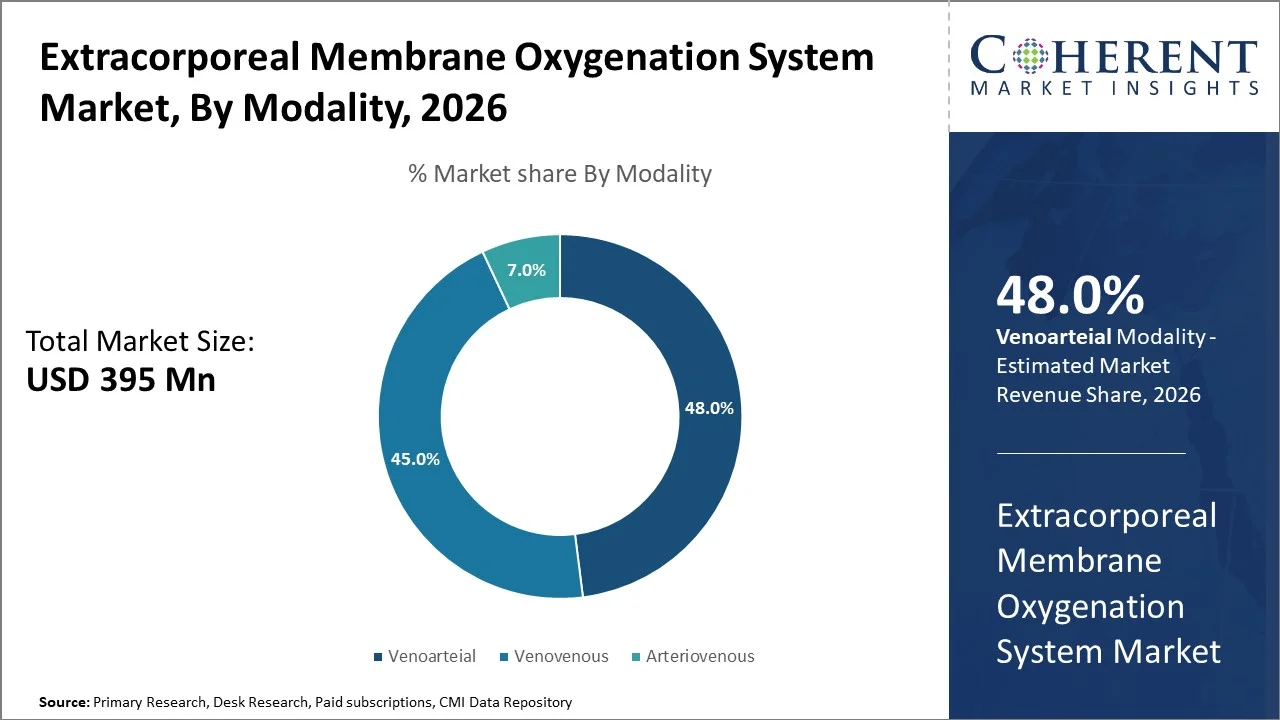
Which Modality Dominates the Extracorporeal Membrane Oxygenation System Market?
Venoarterial ECMO Emerges as the Leading Market Segment
According to Coherent Market Insights’ latest extracorporeal membrane oxygenation system market analysis, venoarterial segment is set to account for the largest market share of 48% in 2026. This dominance can be attributed to its widespread use in managing severe cardiac and cardiopulmonary failure, especially in patients experiencing cardiogenic shock, cardiac arrest, and post-cardiotomy complications. Each year, over 350,000 Americans suffer out-of-hospital sudden cardiac arrest, with nearly 90% resulting in death, while about 290,000 cardiac arrests occur in hospitals.
VA ECMO provides both cardiac and respiratory support, making it the preferred modality for critically ill patients requiring immediate hemodynamic stabilization. Rising prevalence of cardiovascular diseases, increasing adoption of advanced life-support technologies in intensive care units, and rising demand for extracorporeal cardiopulmonary resuscitation (ECPR) are also expected to boost growth of this segment during the forecast period.
- Current Industry Events of 2026
- Market Size Estimation
- Regional Breakdown
- Competitive Landscape
- Customer Intelligence
- Segmental Analysis
- Pricing Analysis
- Key Market Drivers, Challenges & Future Trends
- Customized Insights Section
Which ECMO Application Generates the Highest Revenue?
Respiratory Application to Remain the Largest Revenue-Generating Segment
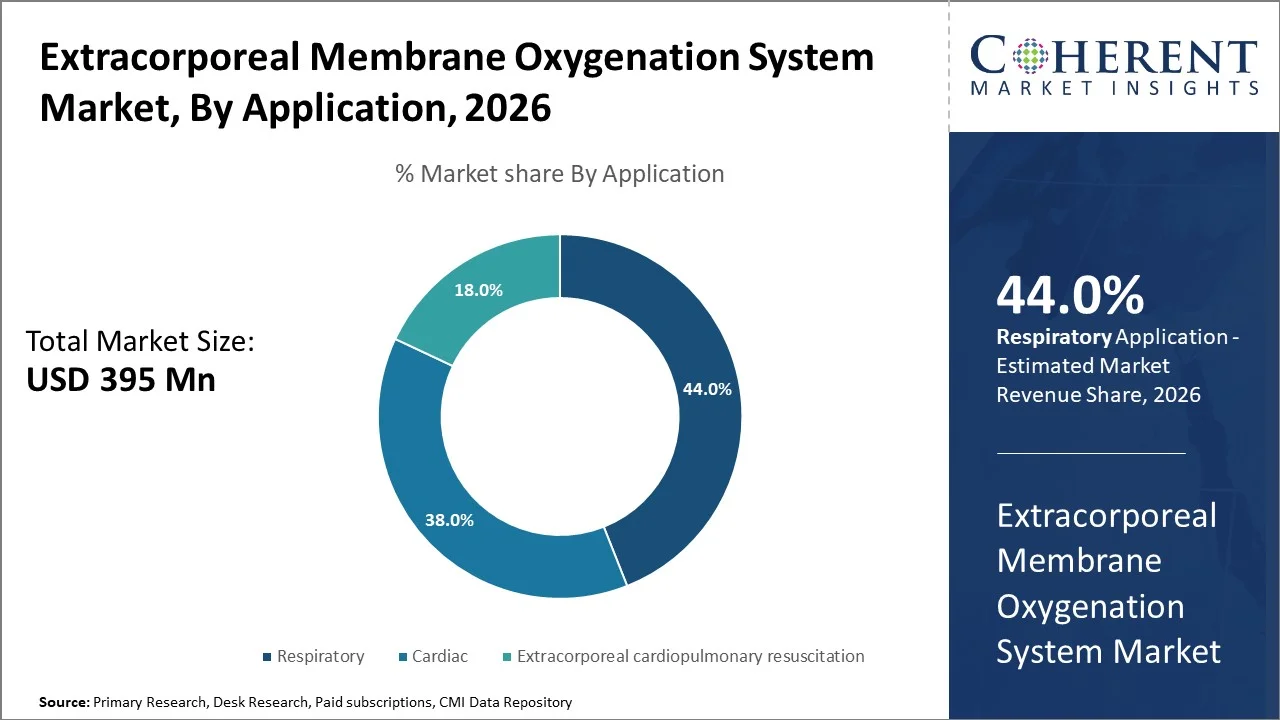
Based on application, respiratory segment is expected to account for the largest market revenue share of 44% in 2026. This is mostly due to increasing prevalence of severe respiratory disorders such as acute respiratory distress syndrome (ARDS), chronic obstructive pulmonary disease (COPD), severe pneumonia, and respiratory failure, which often require advanced life-support interventions. Chronic Obstructive Pulmonary Disease (COPD) affects about 11% of adults worldwide and is characterized by progressive airflow limitation resulting from airway or alveolar abnormalities.
ECMO serves as a critical treatment option for patients whose lungs are unable to provide adequate oxygenation despite conventional mechanical ventilation and other therapies. Growing incidence of respiratory infections, rising air pollution levels, increasing smoking-related lung diseases, and the long-term pulmonary complications associated with viral outbreaks are also fueling demand for respiratory ECMO systems.
Extracorporeal Membrane Oxygenation System Market Growth Drivers
Rising Prevalence of Cardiopulmonary Diseases: Increasing prevalence of cardiopulmonary diseases is providing a strong impetus for the growth of extracorporeal membrane oxygenation system market. There is a spike in the cases of acute respiratory distress syndrome (ARDS), chronic obstructive pulmonary disease (COPD), heart failure, and cardiac arrest. This, in turn, is driving demand for ECMO systems as advanced life-support solutions.
According to the World Health Organization (WHO), chronic respiratory diseases (CRDs) are the sixth leading cause of death in the WHO European Region, accounting for nearly 400,000 deaths annually, with almost 80% of these deaths attributed to COPD. This growing burden of severe respiratory disorders is increasing the need for advanced respiratory support technologies such as ECMO systems, particularly for patients who do not respond adequately to conventional ventilation therapies, thereby supporting market growth.
Extracorporeal Membrane Oxygenation System Market Opportunities
Rising Adoption in Critical Care and Hospitals: Healthcare facilities across the world are expanding ECMO programs and integrating extracorporeal membrane oxygenation (ECMO) systems into intensive care units (ICUs) to improve survival outcomes for patients with severe cardiac and respiratory failure. This increasing adoption is expected to create lucrative growth for the extracorporeal membrane oxygenation system market during the forecast period.
Similarly, expansion of extracorporeal cardiopulmonary resuscitation (ECPR) is supporting market expansion. Increasing use of extracorporeal membrane oxygenation (ECMO) during cardiac arrest and emergency resuscitation procedures is broadening the technology's clinical applications and driving demand for ECMO systems.
Extracorporeal Membrane Oxygenation System Market Trends
Rise of Portable and Compact ECMO Systems: Increasing popularity of portable extracorporeal member oxygenation systems is a key growth-shaping market trend. Leading manufacturers are introducing lightweight, transportable ECMO devices that facilitate patient transfers and emergency care outside traditional hospital settings. One such example is Hemovent’s launch of the MOBYBOX® portable pneumatic ECMO/ECLS system in May 2024.
Current Events and Their Impact on the Extracorporeal Membrane Oxygenation System Market
Current Event | Description and its Impact |
Severe hyperoxia associated with higher mortality in VA-ECMO patients |
|
Expanding ECMO use in cardiogenic shock and ECPR despite high mortality rates |
|
Regional Insights
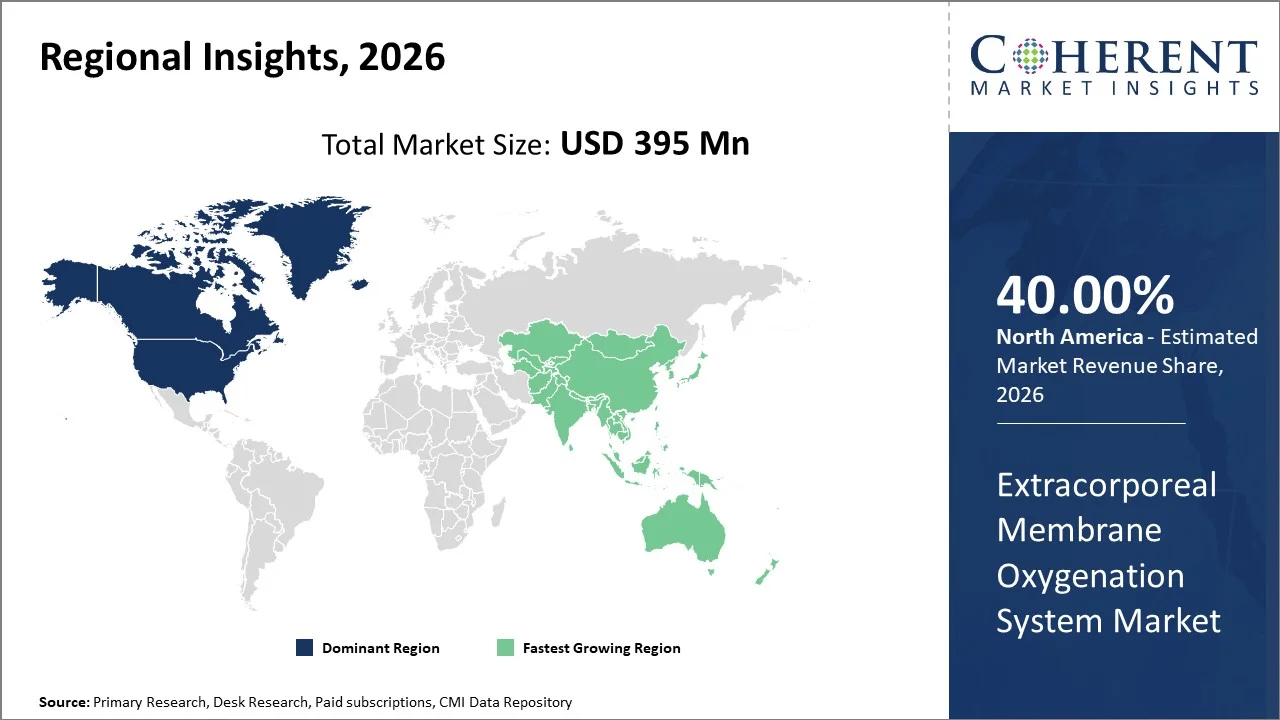
North America Dominates the Extracorporeal Membrane Oxygenation System Market
North America is expected to account for around 40% of the global extracorporeal membrane oxygenation (ECMO) system market share in 2026. This can be attributed to rising prevalence of cardiovascular and respiratory diseases, increasing adoption of advanced life-support technologies, and presence of well-established critical care infrastructure. Growing use of ECMO in intensive care units (ICUs) for managing severe heart and lung failure is also supporting market expansion.
Increasing burden of cardiovascular diseases is playing a key role in boosting North America ECMO market. According to the U.S. Centers for Disease Control and Prevention (CDC), heart disease remains the leading cause of death in the United States, accounting for 683,491 deaths. The growing number of patients requiring advanced cardiac and respiratory support is fueling adoption of ECMO systems across hospitals and specialty care centers.
Asia Pacific Emerges as a Fast-Growing ECMO Market
Asia Pacific is set to emerge as a happy hunting ground for manufacturers of extracorporeal membrane oxygenation systems during the forecast period, registering a CAGR of 6.0%. This is mostly due to rising healthcare investments, increasing incidence of cardiovascular and respiratory disorders, expanding ICU capacity, and growing awareness about advanced life-support therapies.
Rising burden of cardiovascular diseases is providing a major stimulus for the growth of Asia Pacific extracorporeal membrane oxygenation system market. Cardiovascular diseases (CVDs) are the leading cause of death in India, responsible for approximately 25% of all deaths and 45% of NCD-related mortality. Similarly, increasing geriatric population and expansion of neonatal and pediatric ECMO applications are expected to boost sales of extracorporeal membrane oxygenation systems in the region during the projection period.
Extracorporeal Membrane Oxygenation System Market Outlook – Country-wise
U.S. Extracorporeal Membrane Oxygenation System Market Trends
The United States is expected to remain the leading market for Extracorporeal Membrane Oxygenation (ECMO) systems during the forecast period. This is primarily due to its advanced healthcare infrastructure, high adoption of cutting-edge critical care technologies, and increasing prevalence of severe cardiovascular and respiratory disorders. Respiratory diseases impose a major health and economic burden in the United States, affecting over 35 million people with chronic conditions such as asthma and COPD and costing more than $170 billion annually. Rising utilization of ECMO in intensive care units (ICUs), growing availability of specialized ECMO centers, and ongoing investments in life-support technologies are also boosting market growth in the nation.
China Extracorporeal Membrane Oxygenation System Market Forecast
The extracorporeal membrane oxygenation system market in China is anticipated to witness steady growth throughout the assessment period. This is due to rapid healthcare infrastructure development, increasing incidence of cardiovascular and respiratory diseases, and rising investments in critical care services. According to the WHO, China has nearly 100 million people living with COPD, representing about 25% of the global disease burden. Similarly, increasing demand for ECMO in critical care settings, particularly during cardiac surgeries, lung transplantation procedures, and the management of severe respiratory failure, is also supporting market expansion in China.
Who are the Major Companies in the Extracorporeal Membrane Oxygenation System Market?
Some of the major players in extracorporeal membrane oxygenation system market are Medtronic, Getinge AB, LivaNova PLC, Terumo Corporation, XENIOS AG, OriGen Biomedical, EUROSETS, NIPRO, and MicroPort Scientific Corporation.
Key Strategies Adopted by Industry Players
Top extracorporeal membrane oxygenation system companies are adopting various organic and inorganic strategies to boost their revenue as well as gain a competitive edge in the industry. These include new product launches and approvals, mergers, partnerships, acquisitions, and distribution agreements.
Leading manufacturers are also investing heavily in research and development activities to enhance system performance, improve patient safety, and expand the clinical applications of ECMO technology. They are focusing on developing portable and user-friendly ECMO systems to support emergency care, transport, and intensive care settings.
- In October 2025, Medtronic Cardiac Surgery launched the VitalFlow Extracorporeal Membrane Oxygenation (ECMO) system in Europe to advance care for critically ill patients. The system is designed to meet the evolving needs of modern intensive care units.
- In October 2025, BSA Health System launched ECMO services to provide advanced life support for patients with severe heart or lung failure. The new service expands access to specialized critical care for patients in the Texas Panhandle region.
- In May 2024, Hemovent GmbH announced the first commercial deployments of its MOBYBOX portable pneumatic ECMO/ECLS system. The company describes MOBYBOX as the world's first integrated portable pneumatic ECMO system.
Market Report Scope
Extracorporeal Membrane Oxygenation System Market Report Coverage
| Report Coverage | Details | ||
|---|---|---|---|
| Base Year: | 2025 | Market Size in 2026: | USD 395 Mn |
| Historical Data for: | 2020 To 2024 | Forecast Period: | 2026 To 2033 |
| Forecast Period 2026 to 2033 CAGR: | 5.4% | 2033 Value Projection: | USD 571 Mn |
| Geographies covered: |
| ||
| Segments covered: |
| ||
| Companies covered: | Medtronic, Getinge AB, LivaNova PLC, Terumo Corporation, XENIOS AG, OriGen Biomedical, EUROSETS, NIPRO, and MicroPort Scientific Corporation | ||
| Growth Drivers: |
| ||
| Restraints & Challenges: |
| ||
Analyst Opinion (Expert Opinion)
- The extracorporeal membrane oxygenation (ECMO) system market is growing due to the rising number of patients with severe respiratory failure, cardiogenic shock, and other life-threatening conditions that require advanced life support.
- Hospitals are increasingly investing in ECMO programs and specialized critical care units, supporting wider adoption of ECMO systems in both developed and emerging healthcare markets.
- More than 281,000 ECMO cases have been recorded in its global registry, highlighting the growing use of ECMO therapy worldwide.
- Continuous technological improvements, including more efficient oxygenators, compact systems, and enhanced monitoring capabilities, are helping improve clinical outcomes and encouraging greater use of ECMO in critical care settings.
Speak to the analyst
Want personalized insights?
Take the findings above to one of our principal consultants, or have the report rebuilt around the segments, geographies and competitors you actually track.
Market Segmentation
- By Modality Insights ( Revenue, USD Mn, 2021 - 2033)
- Arteriovenous
- Venoarteial
- Venovenous
- By Application Insights ( Revenue, USD Mn, 2021 - 2033)
- Extracorporeal cardiopulmonary resuscitation
- Cardiac
- Respiratory
- By Age Group Insights ( Revenue, USD Mn, 2021 - 2033)
- Neonatal
- Pediatric
- Adults
- By Region Insights ( Revenue, USD Mn, 2021 - 2033)
- North America
- U.S.
- Canada
- Latin America
- Brazil
- Argentina
- Mexico
- Rest of Latin America
- Europe
- Germany
- U.K.
- Spain
- France
- Italy
- Russia
- Rest of Europe
- Asia Pacific
- China
- India
- Japan
- Australia
- South Korea
- ASEAN
- Rest of Asia Pacific
- Middle East
- GCC Countries
- Israel
- Rest of Middle East
- Africa
- South Africa
- North Africa
- Central Africa
- North America
- Key Players
- Medtronic
- Getinge AB
- LivaNova PLC
- Terumo Corporation
- XENIOS AG
- OriGen Biomedical
- EUROSETS
- NIPRO
- MicroPort Scientific Corporation
Sources
Primary Research Interviews
- ECMO specialists and perfusionists
- Cardiothoracic surgeons
- Critical care physicians and intensivists
- Hospital procurement managers
- Biomedical engineers
- Healthcare administrators
- Clinical researchers involved in ECMO studies
- Medical device distributors and suppliers
Databases
- PubMed
- MEDLINE
- Embase
- ClinicalTrials.gov
- U.S. Food and Drug Administration (FDA) Database
- European Medicines Agency (EMA) Database
- World Health Organization (WHO) Global Health Observatory
- Centers for Disease Control and Prevention (CDC) Database
- Organisation for Economic Co-operation and Development (OECD) Health Statistics
- World Bank Data
Magazines
- Medical Device and Diagnostic Industry (MD+DI)
- Medical Product Outsourcing
- Healthcare Business Today
- Hospital Management Magazine
- Medical Economics
- HealthTech Magazine
Journals
- The Journal of ExtraCorporeal Technology
- ASAIO Journal
- Critical Care Medicine
- Intensive Care Medicine
- The Lancet Respiratory Medicine
- American Journal of Respiratory and Critical Care Medicine
- Journal of Thoracic and Cardiovascular Surgery
- Perfusion
- Artificial Organs
- Critical Care
Newspapers
- The Wall Street Journal
- Financial Times
- The New York Times
- USA Today
- The Guardian
- The Economic Times
- Business Standard
- The Hindu BusinessLine
Associations
- Extracorporeal Life Support Organization (ELSO)
- American Association for Thoracic Surgery (AATS)
- Society of Thoracic Surgeons (STS)
- American College of Cardiology (ACC)
- European Society of Intensive Care Medicine (ESICM)
- Society of Critical Care Medicine (SCCM)
- American Society of ExtraCorporeal Technology (AmSECT)
- European Association for Cardio-Thoracic Surgery (EACTS)
Public Domain Sources
- World Health Organization (WHO)
- Centers for Disease Control and Prevention (CDC)
- U.S. Food and Drug Administration (FDA)
- European Medicines Agency (EMA)
- National Institutes of Health (NIH)
- National Center for Biotechnology Information (NCBI)
- Organisation for Economic Co-operation and Development (OECD)
- World Bank
- Eurostat
- United Nations (UN)
- National Health Service (NHS)
- Ministry of Health publications from various countries
Proprietary Elements
- CMI Data Analytics Tool
- Proprietary CMI Existing Repository of Information for Last 10 Years
Get access to 250+ pages report
Every segment, forecast, competitor profile and data table behind the analysis above — available for instant download.
- ESOMAR Member
- ISO 9001:2015 Certified
- D-U-N-S Registered
- GDPR & CCPA Compliant
Missing comfort of reading report in your local language? Find your preferred language:
Transform your Strategy with Exclusive Trending Reports
Frequently Asked Questions
The global Extracorporeal Membrane Oxygenation System Market is estimated to be valued at USD 395 Mn in 2026.
The global Extracorporeal Membrane Oxygenation System Market value is expected to reach US$ 571 Mn by 2033.
The global market is poised to exhibit a CAGR of 5.4% from 2026 to 2033.
Major growth factors include increasing prevalence of cardiovascular and respiratory disorders and industrial collaborations by key players.
Venoarterial ECMO is projected to lead the market with a 48% share in 2026.
Some major companies in the Extracorporeal Membrane Oxygenation System Market include Medtronic, Getinge AB, LivaNova PLC, Terumo Corporation, XENIOS AG, OriGen Biomedical, EUROSETS NIPRO, and MicroPort Scientific Corporation.
North America, with 40% share in 2026, is set to lead the market during the forecast period