

Latin America Smart Insulin Pen Market Size and Forecast – 2026 to 2033
The Latin America Smart Insulin Pen Market is anticipated to grow at a CAGR of 1.8% with USD 1.1 Bn share in 2026 and is expected to reach USD 2.2 Bn in 2033. Rising diabetes prevalence drives the Latin America smart insulin pen market, while patients and healthcare providers increasingly adopt digital health tools. In 2024, an estimated 589 million people worldwide.
Key Takeaways
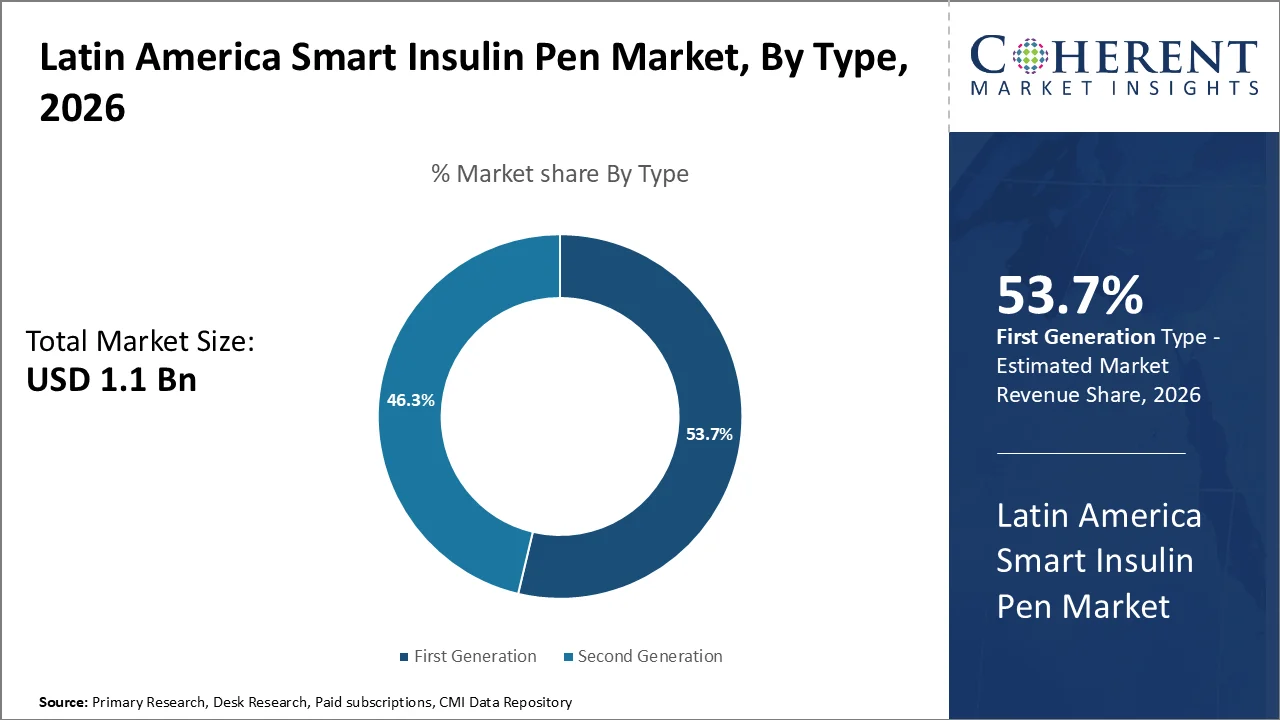
- First Generation hold the largest market share of 53.7% in 2026 owing to its rising diabetes burden and insulin dependence.
- Reusable expected to hold largest market share of 52.8% in 2026 owing to the cost efficiency and long-term affordability.
- Type 1 diabetes acquired the largest market share of 53.6% in 2026 owing to its rising incidence and improved diagnosis of type 1 diabetes. Approximately 123,000 people in Mexico live with type 1 diabetes (T1D), with cases increasing by about 3.8% annually.
- Hospital Pharmacies captures the largest market share of 41.7% in 2026 owing to its central role of hospitals in insulin initiation and management. According to the Brazilian National Database of Healthcare Facilities (CNES), Brazil has approximately 4,790 registered hospitals and their associated hospital pharmacies.
- Mexico is expected to acquire the dominant share of 43.3% in 2026 owing to its high and rising diabetes prevalence. Diabetes affects 16.4% of Mexican adults (approximately 12.8–13.6 million people) and is a leading cause of mortality nationwide.
Current Events and Their Impact on the Latin America Smart Insulin Pen Market
Current Event | Description and its Impact |
Brazil expands SUS reimbursement for insulin analogs (November 2024) |
|
ANVISA's regulatory modernization strategy (2024–2027) |
|
Segmental Insights
- Current Industry Events of 2026
- Market Size Estimation
- Regional Breakdown
- Competitive Landscape
- Customer Intelligence
- Segmental Analysis
- Pricing Analysis
- Key Market Drivers, Challenges & Future Trends
- Customized Insights Section
Why is First Generation Acquiring the Largest Market Share?
First Generation hold the largest market share of 53.7% in 2026. Rising diabetes prevalence and the growing need for basic dose tracking drive the first-generation segment in the Latin America smart insulin pen market. Public healthcare systems face affordability constraints, which push adoption of cost-effective solutions. These devices provide essential functions like memory storage and simple monitoring, helping patients transition smoothly from traditional insulin pens. Limited digital infrastructure and uneven access to advanced connected technologies further encourage their use. Healthcare providers prefer these pens because they are easy to use, require minimal training, and fit well within existing diabetes management practices. Medtronic has launched the MiniMed Go Smart MDI system in Europe with the Simplera sensor. It is the first solution to combine data from the InPen smart insulin pen and Simplera sensor in a single app, helping people using multiple daily insulin injections manage diabetes more effectively.
Reusable expected to hold largest market share
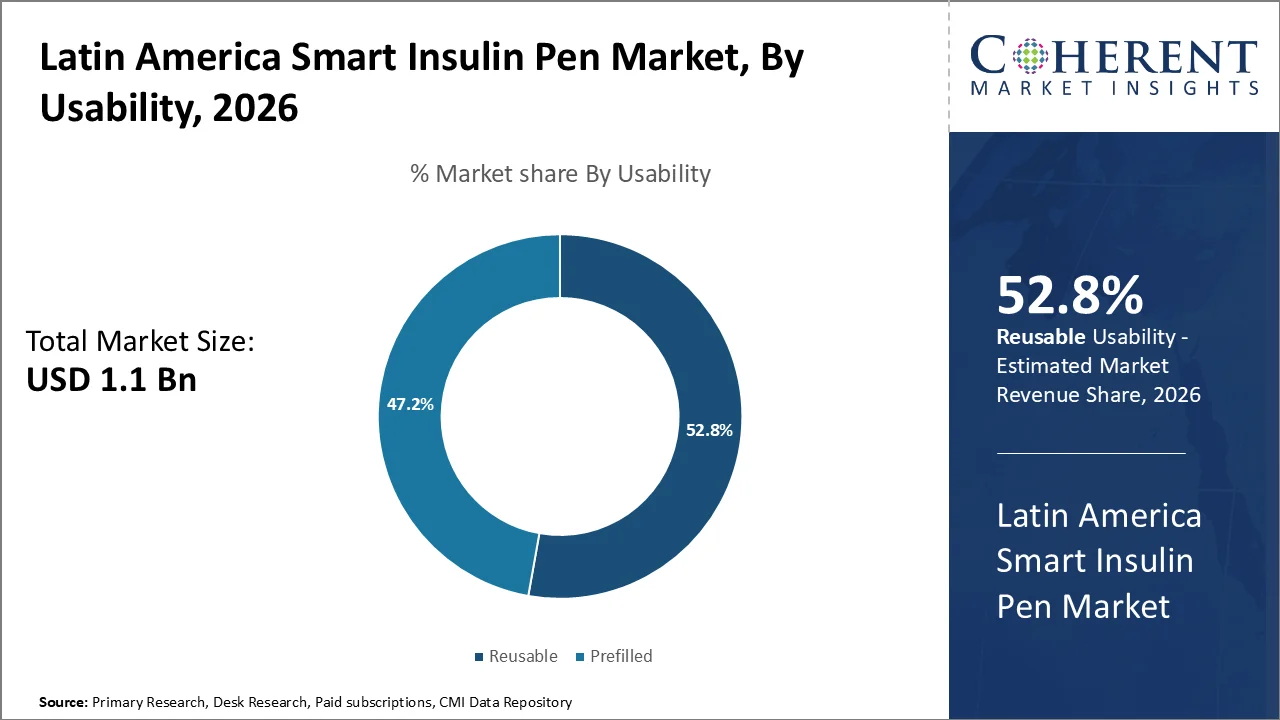
Reusable expected to hold largest market share of 52.8% in 2026 owing to the strong fit with public healthcare procurement systems. Cost-effective long-term diabetes management and strong reliance on public healthcare systems drive the reusable segment in the Latin America smart insulin pen market. These pens lower overall treatment costs by enabling cartridge replacement instead of full device replacement, which makes them suitable for large patient populations. Hospitals and clinics prefer reusable pens because they simplify procurement, offer longer device life, and align well with structured diabetes care programs across the region. Novo Nordisk has announced plans for a connected smart insulin pen that automatically records injected insulin doses. For people on multiple daily injections, it removes the need for manual logging, reduces missed doses and insulin stacking, and enables data-driven reports to improve therapy similar to insulin pump users.
Type 1 diabetes acquired the largest market share
Type 1 diabetes acquired the largest market share of 53.6% in 2026 owing to its environmental triggers increasing autoimmune activity. Rising Type 1 diabetes diagnoses and improved disease detection drive demand in the Latin America smart insulin pen market. Healthcare systems identify more pediatric and adolescent cases, which increases long-term insulin dependence. Genetic diversity across the population influences susceptibility to autoimmune conditions, while environmental factors such as urbanization and viral exposure contribute to disease onset. Improved survival rates and better access to insulin therapy expand the patient base. Together, these factors increase the need for precise insulin delivery and adherence-supporting smart pen technologies.
Which Distribution Channel segment dominates the market?
Hospital Pharmacies captures the largest market share of 41.7% in 2026. Centralized insulin dispensing and hospital-led diabetes management drive the hospital pharmacy segment in the Latin America smart insulin pen market. Hospitals initiate insulin therapy and train patients, which makes them key distribution points for smart pens. Public healthcare systems depend on institutional procurement, which strengthens hospital pharmacy channels. Increasing diabetes-related hospital visits and structured chronic care programs further support demand. Hospitals also control dispensing, improve adherence monitoring, and provide patient education, which makes them the preferred channel for smart insulin pen adoption across the region.
Latin America Smart Insulin Pen Market Trends
- Rising adoption of digital diabetes management tools, including Bluetooth-enabled and memory-based insulin pens, improves dose accuracy, adherence, and overall glycemic control across Latin America. The Pan American Health Organization (PAHO) launched its All-in-ONE Telehealth Platform to support remote monitoring of chronic diseases, including diabetes, across Latin America and the Caribbean, reflecting increasing regional investment in connected diabetes care.
- Supportive expansion of digital health initiatives and telemedicine platforms across Latin America improves access to diabetes management technologies, enabling broader use of connected insulin delivery devices in both urban and semi-urban regions. PAHO has expanded telemedicine infrastructure across Latin America to improve continuity of care for patients with chronic diseases, including diabetes, supporting wider adoption of connected insulin delivery technologies.
Regional Insights
Mexico Smart Insulin Pen Market Trends
Mexico is expected to acquire the dominant share of 43.3% in 2026. Rising diabetes cases drive the smart insulin pen market in Mexico within Latin America, while healthcare providers increasingly adopt digital health solutions and patients demand more precise insulin delivery systems. Healthcare systems modernize and expand telemedicine services, improving patient awareness and encouraging better treatment adherence and self-management. Government initiatives and private investments support growth, while urbanization and an aging population add momentum. For instance, a school-based health promotion program was implemented across 40 schools in the Tlalpan and Xochimilco communities of Mexico City to promote healthy lifestyles, increase diabetes awareness among students, parents, and staff, and prevent future diabetes through education, structural interventions, and community engagement.
Brazil Smart Insulin Pen Market Trends
Rising diabetes prevalence drives Brazil’s smart insulin pen market in Latin America, while expanding digital health adoption and government emphasis on chronic disease management further support growth. Increasing urbanization and improvements in healthcare infrastructure enhance access to connected insulin delivery devices. Patients and physicians increasingly recognize the benefits of dose accuracy and treatment adherence, boosting demand. Technology firms partner with healthcare providers, and Brazil’s large patient population along with better reimbursement systems stimulates innovation and market expansion in smart insulin solutions. In October 2025, Novo Nordisk partnered with Eurofarma to expand the distribution and commercialization of weekly injectable semaglutide across Brazil. Under the agreement, Eurofarma became the exclusive distributor and promoter of two semaglutide brands—Poviztra for obesity and overweight with comorbidities, and Extensior for type 2 diabetes—extending access through specialty clinics, pharmacies, and previously underserved regions.
Who are the Major Companies in Latin America Smart Insulin Pen Industry
Some of the major key players in Latin America Smart Insulin Pen are Medtronic Plc, Sanofi S.A., Novo Nordisk A/S, Eli Lilly and Company, Owen Mumford Ltd., BIOCORP, Jiangsu Delfu medical device Co., Ltd., BERLIN-CHEMIE AG, and F. Hoffmann-La Roche AG.
Market Report Scope
Latin America Smart Insulin Pen Market Report Coverage
| Report Coverage | Details | ||
|---|---|---|---|
| Base Year: | 2025 | Market Size in 2026: | USD 1.1 Bn |
| Historical Data for: | 2020 To 2024 | Forecast Period: | 2026 To 2033 |
| Forecast Period 2026 to 2033 CAGR: | 1.8% | 2033 Value Projection: | USD 2.2 Bn |
| Geographies covered: |
| ||
| Segments covered: |
| ||
| Companies covered: | Medtronic Plc, Sanofi S.A., Novo Nordisk A/S, Eli Lilly and Company, Owen Mumford Ltd., BIOCORP, Jiangsu Delfu medical device Co., Ltd., BERLIN-CHEMIE AG, and F. Hoffmann-La Roche AG | ||
Analyst Opinion
- The Latin America smart insulin pen market is fundamentally driven by disease burden, not optional adoption. Brazil alone accounts for one of the highest diabetes populations in the region, with over 15 million adults living with diabetes, creating sustained clinical dependence on insulin delivery systems rather than discretionary device use. This makes smart pens a therapeutic necessity in long-term glycemic control strategies.
- Insulin-dependent diabetes cases are rising steadily, with studies indicating that nearly 20–25% of Type 2 diabetes patients eventually require insulin therapy. In Latin America, late diagnosis and poor glycemic control accelerate this transition, pushing healthcare systems toward more precise dosing tools such as smart insulin pens to reduce hypoglycemia and dosing errors.
- Real-world clinical evidence strongly supports connected insulin delivery. Studies have shown that smart insulin pens can improve time-in-range glucose levels by up to 1.5–2 hours per day and significantly reduce missed or incorrect doses. This measurable improvement in adherence is a key reason endocrinologist increasingly recommend these devices over conventional pens.
- Adoption is also reinforced by healthcare system inefficiencies. For example, in Brazil’s public healthcare system (SUS), diabetes-related complications account for a major share of avoidable hospital admissions, with diabetic foot and hypoglycemia events contributing heavily to costs. Smart insulin pens are being positioned as preventive tools to reduce these avoidable complications, not just as convenience devices.
Speak to the analyst
Want personalized insights?
Take the findings above to one of our principal consultants, or have the report rebuilt around the segments, geographies and competitors you actually track.
Market Segmentation
- By Type (Revenue, USD Bn, 2021-2033)
- First Generation
- Second Generation
- Bluetooth enabled pens
- USB Connected pens
- By Usability (Revenue, USD Bn, 2021-2033)
- Prefilled
- Reusable
- By Indication (Revenue, USD Bn, 2021-2033)
- Type 1 diabetes
- Type 2 diabetes
- By Distribution Channel (Revenue, USD Bn, 2021-2033)
- Hospital Pharmacies
- Retail Pharmacies
- Online Pharmacies
- By Region (Revenue, USD Bn, 2021-2033)
- Brazil
- Argentina
- Mexico
- Rest of Latin America
Sources
Primary Research interviews
- Endocrinologists and diabetologists across major Latin American healthcare centers
- Hospital procurement managers and pharmacy directors
- Diabetes care specialists and clinical educators
- Medical device distributors and channel partners in Latin America
- Patients and caregivers using insulin delivery devices
Databases
- PubMed (National Library of Medicine)
- Scopus (Elsevier)
- Web of Science
- ClinicalTrials.gov
- Embase biomedical database
- Latin American and Caribbean Health Sciences Literature (LILACS)
Magazines
- Medscape News
- Diabetes Forecast
- Nature Medicine (news & insights sections)
- Scientific American (health section)
- HealthTech-focused medical device magazines
Journals
- Diabetes Care
- The Lancet Diabetes & Endocrinology
- Journal of Diabetes Science and Technology
- Diabetologia
- BMJ (Diabetes & Endocrinology sections)
- Endocrine Reviews
Newspapers
- Reuters Health coverage
- Bloomberg Health
- Financial Times (Health & Pharma sections)
- El Pais (Health section)
- Folha de S.Paulo (Health reporting)
- The Guardian (Global health coverage)
Associations
- International Diabetes Federation (IDF)
- Pan American Health Organization (PAHO)
- American Diabetes Association (ADA)
- Latin American Diabetes Association networks
- National diabetes associations across Brazil, Mexico, Argentina, and Colombia
Public Domain sources
- World Health Organization (WHO) reports and statistics
- World Bank health data
- Ministries of Health across Latin American countries
- United Nations health and non-communicable disease datasets
- Open government health expenditure and epidemiology portals
Proprietary Elements
- CMI Data Analytics Tool
- Proprietary CMI Existing Repository of information for last 10 years
Get access to 250+ pages report
Every segment, forecast, competitor profile and data table behind the analysis above — available for instant download.
- ESOMAR Member
- ISO 9001:2015 Certified
- D-U-N-S Registered
- GDPR & CCPA Compliant
Missing comfort of reading report in your local language? Find your preferred language:
Transform your Strategy with Exclusive Trending Reports
Frequently Asked Questions
The Latin America Smart Insulin Pen Market is anticipated to grow at a CAGR of 1.8% with USD 1.1 Bn share in 2026 and is expected to reach USD 2.2 Bn in 2033.
Factors such as high number of individuals with pre diabetic conditions and increasing prevalence of diabetes and high prevalence of needle stick injuries in Latin America are expected to drive the market growth during the forecast period.
First Generation segment is expected to hold a major market share during the forecast period.
The major factors hampering growth of the Latin America smart insulin pen market include availability of substitute products
Major players operating in the market are Medtronic Plc, Sanofi S.A., Novo Nordisk A/S, Eli Lilly and Company, Owen Mumford Ltd., BIOCORP, Jiangsu Delfu medical device Co., Ltd., BERLIN-CHEMIE AG, and F. Hoffmann-La Roche AG