

Smart Insulin Pen Market Analysis & Forecast: 2026-2033
Smart Insulin Pen Market is estimated to be valued at USD 60.8 Mn in 2026 and is expected to reach USD 130.2 Mn in 2033, exhibiting a compound annual growth rate (CAGR) of 11.5% from 2026 to 2033.
Key Takeaways
- By Indication, the Type 2 Diabetes segment is expected to dominate the global smart insulin pen market, accounting for 68% of the total market share in 2026.
- By Region, North America is projected to maintain a leading position in the global smart insulin pen market, with an estimated market share of 46.4% in 2026.
Market Overview
Smart insulin pen market growth is driven by increasing geriatric population, increasing prevalence of diabetes type 2 disorder and launches of new products by key market players as well as strategies such as mergers and acquisition is expected to drive the global smart insulin pen market over the forecast period.
For instance, on February 23, 2023, Glooko, a U.S.-based software company, announced global collaboration with Sanofi, a France-based pharmaceutical company, for integrating SoloSmart with the Glooko platform. SoloSmart is a single piece add-on connected device intended for use with SoloStar and DoubleStar insulin injection pens, which records the insulin dose, date and time of injection and allows for visualization of the data in the Glooko app, that patients can share with healthcare professionals for connected care in diabetes management.
Current Events and Its Impact on the Smart Insulin Pen Market
Event | Description and Impact |
Rising Global Diabetes Prevalence and Healthcare Digitization |
|
US-China Technology Trade Tensions and Supply Chain Disruptions |
|
European Union Medical Device Regulation (MDR) Implementation |
|
Reimbursement Scenario
The global reimbursement landscape is influenced by healthcare systems, regulations, and healthcare policies, creating a unique challenge for the smart insulin pen market. Coverage is markedly disparate, ranging from 60 to 95% based on region and payer type. In the US, smart insulin pens are classified as durable medical devices and covered by Medicare under Part B, reimbursing up to 80% of the cost. Medicaid programs, on the other hand, differ by state with coverage spread from 45 to 90%.
Commercial coverage also varies based on the plan tier, ranging from 60 to 95%. Reimbursement eligibility is ensured through HCPCS coding, E0784 and E011, with clinical justifications using ICD-10 E11.9 and Z79.4. In the EU, smart insulin pens are CE-marked as Class IIa medical devices under MDR, with health technology assessments from NICE (UK) and G-BA (Germany) supporting reimbursement eligibility.
Coverage in Western Europe averages 70-85%. In the Asia-Pacific, Japan and Australia lead with 70-90% coverage under national insurance, but a lack of structured reimbursement remains a barrier in developing markets.
- Current Industry Events of 2026
- Market Size Estimation
- Regional Breakdown
- Competitive Landscape
- Customer Intelligence
- Segmental Analysis
- Pricing Analysis
- Key Market Drivers, Challenges & Future Trends
- Customized Insights Section
Segmental Insights
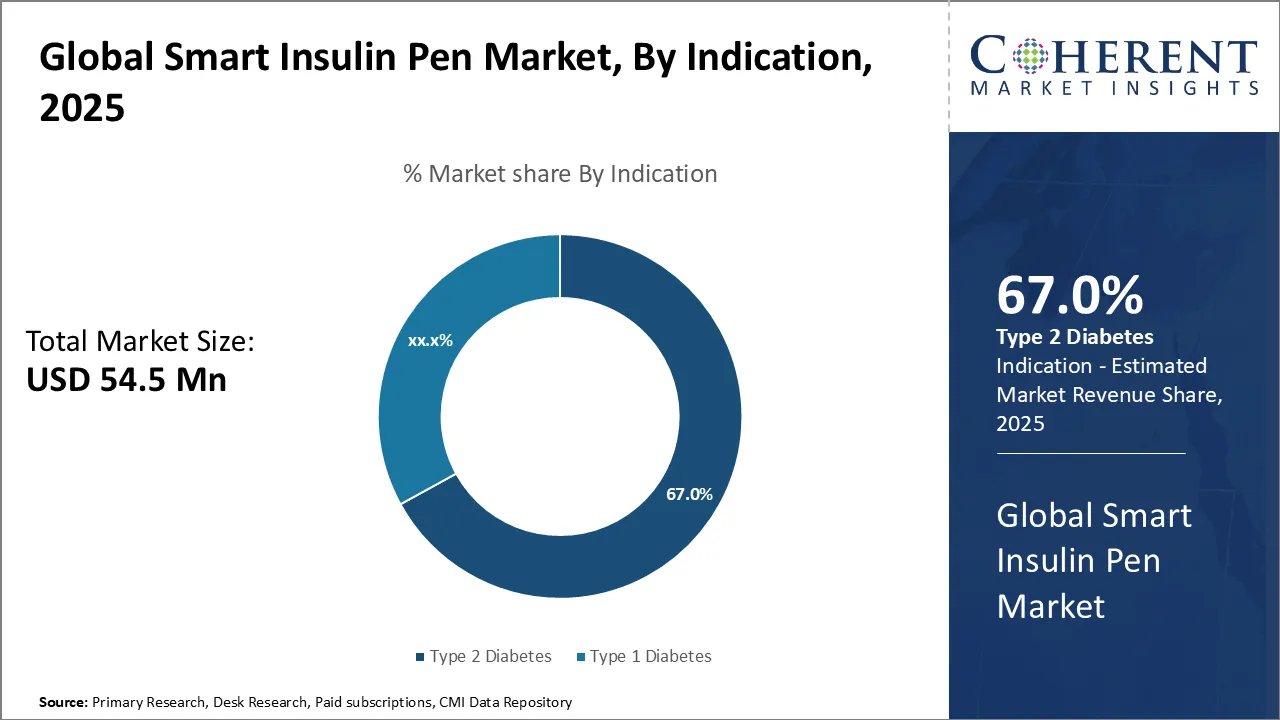
Smart Insulin Pen Market Insights, By Indication
The Type 2 Diabetes segment is expected to dominate the global smart insulin pen market, accounting for 68% of the total market share in 2026. This dominant position is primarily attributed to the rising prevalence of type 2 diabetes, particularly among the aging population. Older adults are more susceptible to developing type 2 diabetes due to age-related physiological changes, sedentary lifestyles, and dietary factors, which in turn drives demand for convenient and efficient insulin delivery systems such as smart insulin pens.
The Type 1 Diabetes segment, while holding a smaller share, is also witnessing gradual growth, fueled by increased awareness and technological advancements in diabetes management. Regulatory approvals supporting expanded use of smart insulin pens among younger patients are also expected to contribute to the segment’s growth.
For instance, in July 2020, the U.S. FDA approved Companion Medical’s InPen system for use in children with type 1 diabetes aged seven and older, highlighting the growing acceptance of smart insulin technologies across all age groups.
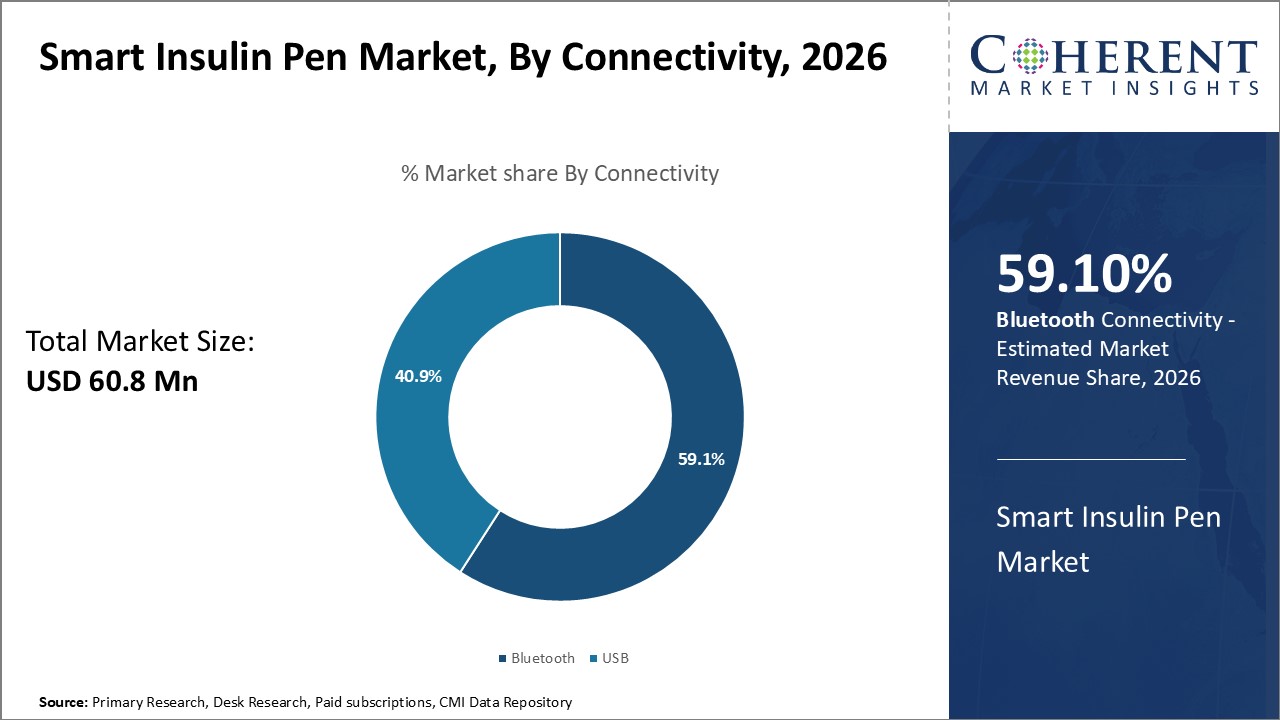
Smart Insulin Pen Market Insights, By Connectivity
The Bluetooth segment is projected to lead the smart insulin pen market during the forecast period, driven by a growing patient preference for seamless data integration and real-time monitoring. Bluetooth-enabled pens offer enhanced usability through smartphone connectivity, allowing users and healthcare providers to track dosage history and glucose trends more efficiently. This feature-rich experience has made Bluetooth the connectivity option of choice for most modern smart insulin pens.
Smart Insulin Pen Market Insights, By Distribution Channel
The Retail Pharmacies segment is anticipated to hold the dominant position in the global smart insulin pen market throughout the forecast period. This is largely due to the accessibility and convenience offered by retail pharmacies, which allow patients to purchase smart insulin pens without the need for hospital visits. The user-friendly nature of these devices also supports a strong retail presence, especially in urban markets where pharmacy chains are well-established.
Clinics and Ambulatory Surgical Centers, along with e-Commerce platforms, represent alternative distribution channels with growing significance. While e-Commerce is expanding due to digital health trends and direct-to-consumer strategies, clinical settings continue to serve patients requiring more personalized guidance and training in device usage.
Regional Insights
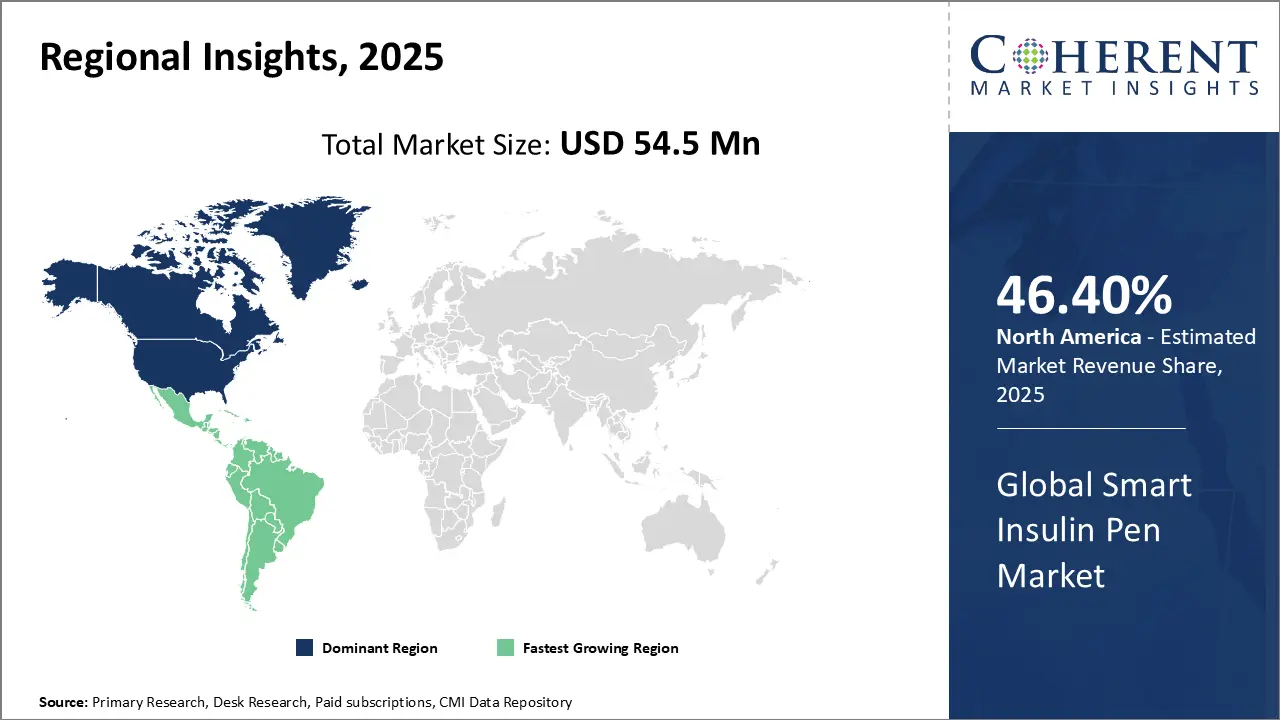
North America Smart Insulin Pen Market Analysis and Trends
North America is projected to maintain a dominant position in the global smart insulin pen market, accounting for an estimated 46.40% market share in 2026. This leadership is largely driven by the United States, where the growing geriatric population and high prevalence of type 2 diabetes contribute significantly to market demand. A well-developed healthcare ecosystem, combined with widespread adoption of digital health technologies, has further accelerated the use of smart insulin pens for efficient diabetes management.
The aging demographic plays a crucial role in this growth trajectory. According to the Endocrine Society, as of January 2026, 54.1 million adults—or 16.3% of the U.S. population—are aged 65 or older, with approximately one-third of this group affected by diabetes.
This population segment is especially vulnerable to complications such as hypoglycemia, kidney disease, and cardiovascular issues, making real-time insulin tracking and dose accuracy critical. The integration of smart insulin pens into routine care is being supported by clinicians, insurers, and public health initiatives focused on managing chronic conditions in aging adults.
Furthermore, the presence of leading medical device companies, advanced R&D facilities, and favorable regulatory support from agencies like the U.S. FDA has created a conducive environment for continuous product innovation and rapid market penetration. These factors collectively ensure that North America remains at the forefront of the global smart insulin pen market.
Dominating Countries in the Global Smart Insulin Pen Market
United States Smart Insulin Pen Market Analysis and Trends
The United States commands a dominant share of the North America smart insulin pen market, driven by a combination of demographic, technological, and healthcare infrastructure factors. A rapidly aging population and a high prevalence of type 2 diabetes—particularly among older adults—create consistent demand for advanced diabetes management tools. Smart insulin pens, with features such as Bluetooth connectivity, dosage tracking, and app-based monitoring, are becoming essential in managing complex medication regimens for patients with comorbidities.
Supportive healthcare policies, insurance coverage for digital diabetes tools, and the proliferation of telehealth services are accelerating adoption rates. Moreover, the U.S. is home to several global leaders in medical device manufacturing and digital health innovation, including firms pioneering AI-powered dose calculators and integrated glucose monitoring systems. Backed by the FDA’s progressive regulatory framework, the country fosters a fertile landscape for continuous product development and swift clinical adoption.
India Smart Insulin Pen Market Analysis and Trends
India is rapidly emerging as a key growth market in the global smart insulin pen landscape, owing to its large diabetic population—second only to China—and expanding access to digital health solutions. Urbanization, lifestyle shifts, and dietary changes have contributed to a steep rise in type 2 diabetes diagnoses across both metropolitan and rural regions. With a growing middle class and increasing smartphone penetration, digital insulin delivery devices are gaining visibility as effective tools for managing glycemic control.
Government initiatives promoting digital healthcare, along with rising awareness of diabetes-related complications, are driving demand for smart insulin technologies. Though still in the early adoption stage, India’s favorable cost environment, skilled medical workforce, and burgeoning med-tech ecosystem position it as a long-term growth engine for global manufacturers.
China Smart Insulin Pen Market Analysis and Trends
China represents one of the most promising emerging markets for smart insulin pens, supported by the country’s massive diabetic population and increasing healthcare digitalization. The Chinese government has rolled out national strategies for chronic disease prevention and is investing in AI, telemedicine, and wearable health devices as part of its broader healthcare reform.
Rising patient awareness, growing urban healthcare infrastructure, and strong domestic manufacturing capabilities are creating an environment ripe for innovation and adoption of connected insulin delivery systems. In parallel, public-private collaborations and partnerships with global med-tech firms are accelerating the development of localized smart insulin solutions tailored to China’s unique healthcare demands.
Market Report Scope
Smart Insulin Pen Market Report Coverage
| Report Coverage | Details | ||
|---|---|---|---|
| Base Year: | 2025 | Market Size in 2026: | USD 60.8 Mn |
| Historical Data for: | 2020 To 2024 | Forecast Period: | 2026 To 2033 |
| Forecast Period 2026 to 2033 CAGR: | 11.5% | 2033 Value Projection: | USD 130.2 Mn |
| Geographies covered: |
| ||
| Segments covered: |
| ||
| Companies covered: | Digital Medics Pty. Ltd., Emperra GmbH E-Health Technologies, Novo Nordisk, Companion Medical Inc., Jiangsu Deflu Medical Device Co. Ltd., Medtronic PLC, Pendiq GmbH, Sanofi, Berlin Chemie Companion Medical Inc., Bigfoot Biomedical, Digital Medics Pty ltd, Eli Lilly and company, Ypsomed Holding AG, Diabnext Diamesco Co. Ltd. | ||
| Growth Drivers: |
| ||
| Restraints & Challenges: |
| ||
Global Smart Insulin Pen Market – Driver
- Launch of awareness programs across the world
The awareness regarding type 1 and type 2 disorder is necessary as the prevalence of diabetes across the population is increasing. The increase in awareness will help to understand the newer available treatments, and this is driving the growth of global smart insulin pen market in the forecast period. Various awareness activities are being conducted by the key market players to increase reach of their products.
For instance, in August 2022, Novo Nordisk, a Denmark-based pharmaceutical company’s Education Foundation, and Roche, a Switzerland-based healthcare company’s foundation Diabetes Care India signed memorandum of understanding (MoU) to improve access to care for underprivileged children living with type 1 diabetes in India.
It will provide free diabetes monitoring and management kits including insulin pens, needles, insulin cartridges, glucometers, strips, and lancets. The program will help in providig education and training to doctors and nurses, and enhance awareness about diabetes and its management among children with type 1 diabetes and their families.
- Prevalence of disease across the world
Diabetes is most common disorder affecting most of the population across the world. This is due to rising geriatric population worldwide. As diabetes type 2 most commonly affects in older aged people its numbers are constantly increasing.
For instance, according to data shared by Australian Institute of Health and welfare on February 9, 2023, in 2020, an estimated 1 in 20 (almost 1.3 million) Australians were living with diabetes (prevalence) and were registered with the National Diabetes Services Scheme (NDSS) and Australasian Pediatric Endocrine Group (APEG) state-based registers. This includes people with type 1 diabetes, type 2 diabetes and other diabetes, but excludes gestational diabetes.
In 2020, the prevalence of diabetes increased with age with almost 1 in 5 Australians aged 80–84 living with diabetes – almost 30 times as high as for those aged under 40 (0.7%). Diabetes was more common in males (4.8%) than females (3.8%), after controlling for age.
Global Smart Insulin Pen Market Cross Sectional Analysis
Rising incidence of diabetes in emerging economies is also expected to boost demand for smart insulin pen technologies in these regions. For instance, according to the data published by International Diabetes Federation (IDF) on December 14, 2021, 90 million adults are living with diabetes in the IDF South-East Asia (SEA) Region in 2021. This figure is estimated to increase to 113 million by 2030 and 152 million by 2045. 46 million adults living with diabetes in the IDF SEA Region are undiagnosed - 51% of the total number of adults living with diabetes in the region.
Global Smart Insulin Pen Market Key Trends
- Initiatives by key market players for affordable products can drive the growth of market
On March 16, 2023, Sanofi, a France-based healthcare company announced that it will cut the list price of Lantus (insulin glargine injection) 100 Units/mL, its most widely prescribed insulin in the U.S., by 78 %. The company also will establish a US$ 35 cap on out-of-pocket costs for Lantus for all patients with commercial insurance, underscoring its longstanding commitment to offer affordable access to medicines.
These moves, will go into effect January 1, 2024, will come in addition to decisions taken in June 2022 to lower diabetes medicines costs. With all those decisions, Sanofi’s ensures that no patient will pay more than US$ 35 for a monthly supply of Lantus. Finally, Sanofi will also cut the list price of its short-acting Apidra (insulin glulisine injection) 100 Units/mL by 70%.
Global Smart Insulin Pen Market Restraint
- Increasing demand for alternative products
Availability of substitute products such as painless smart insulin patches is also expected to hinder growth of the market. Wearable insulin patches allow more discrete insulin dosing throughout the day providing injection-free delivery of insulin whenever needed thus keeping the blood sugar levels in check. The patch works faster compared to an insulin pen, is easy to use, and made up of biocompatible material.
For instance, according to new study published at the Endocrine Society’s annual meeting, on March 31, 2020, a new wearable, patch such as insulin delivery device called V-Go by Valeritas Inc., a U.S.-based pharmaceutical company can achieve good blood sugar control using regular human insulin. It is more affordable, easy and painless method.
To counterbalance the restrain, the people should be made aware about additional features of insulin smart pens such as tracking of the insulin dosage, reminders and alert facilities that may increase the use of smart insulin pens.
- Lack of awareness of smart insulin pen product
Insulin injections are most commonly used methods of administrating insulin. The insulin pen reduces the pain associated with it and is an easy method of self-insulin administration. Smart pens were introduce to keep a track of data easily. However, many people lack knowledge of availability of such products, which is impacting adversely on growth of smart insulin pen market.
For instance, according to article published by journal Clinical Diabetes on September 15, 2022, a survey was conducted to identify barriers and facilitators to successful smart insulin pen (SIP) use. It was found that low provider and care team awareness of the utility of SIPs and a lack of training on SIP use were considered a high-impact barrier. Sixty-three percent of clinics reported that provider preferences or limited training was a significant barrier to using SIPs in their practices.
To counterbalance this restrain, awareness campaigns can be arranged by key market players to let people know about availability of products such as smart insulin pen. It is also important to conduct training on handling of smart insulin pen.
Analyst Viewpoint
- The smart insulin pen market is rapidly evolving as a key component of digital diabetes care. These pens offer superior features like dose tracking, real-time monitoring, and app connectivity, improving treatment accuracy and patient adherence.
- Growth is fueled by the rising global burden of diabetes and increasing demand for user-friendly, tech-enabled insulin delivery systems. Integration of IoT and AI technologies into smart pens enhances their clinical utility and patient engagement.
- Despite strong momentum, the market faces challenges such as high product costs, limited insurance reimbursement in developing regions, and resistance to digital tools among elderly patients. Data security and privacy also remain critical concerns.
- Strategic partnerships between pharmaceutical and tech companies are unlocking new opportunities for innovation. Features like personalized dosing algorithms and predictive analytics will be key differentiators in the coming years.
- While North America dominates the market due to its advanced infrastructure and supportive reimbursement environment, Asia-Pacific is emerging as the fastest-growing region, driven by rising diabetes incidence, healthcare spending, and digital health adoption.
Global Smart Insulin Pen Market: Key Developments
- In November 2022, Novo Nordisk, a Denmark based pharmaceutical company, announced that its smart insulin pens can now be connected to the Abbott FreeStyle LibreLink app.
- In March 2022, Glooko Inc.,a U.S. based provider of remote patient monitoring and data management solutions for diabetes and other chronic diseases, announced the acquisition of DIABNEXT. DIABNEXT is a France-based company offers a telemedicine platform that helps diabetic patients better manage their disease and stay in touch remotely with the health professionals who follow them to improve the balance of their diabetes. The DIABNEXT mobile application completes Glooko's product portfolio.
- In June 2021, Novo Nordisk Pharma, a U.S. based healthcare company, announced that it had obtained Japanese regulatory approval from Pharmaceuticals and Medical Devices Agency for NovoPen 6 and NovoPen Echo Plus as medical devices, the first smart insulin pens to be approved in the country.
Market Segmentation
- Global Smart Insulin Pen Market, By Indication (Revenue, USD Mn, 2021 - 2033)
- Type 1 Diabetes
- Type 2 Diabetes
- Global Smart Insulin Pen Market, By Connectivity (Revenue, USD Mn, 2021 - 2033)
- Bluetooth
- USB
- Global Smart Insulin Pen Market, By Distribution Channel (Revenue, USD Mn, 2021 - 2033)
- Clinics and Ambulatory Surgical Centers
- e-Commerce
- Retail Pharmacies
- Global Smart Insulin Pen Market , By Region
- North America
- U.S.
- Canada
- Latin America
- Brazil
- Mexico
- Argentina
- Rest of Latin America
- Europe
- Germany
- U.K.
- France
- Italy
- Spain
- Russia
- Rest of Europe
- Asia Pacific
- China
- India
- Japan
- Australia
- South Korea
- ASEAN
- Rest of Asia Pacific
- Middle East
- GCC
- Israel
- Rest of Middle East
- Africa
- South Africa
- Central Africa
- North Africa
- North America
- Company Profiles
- Digital Medics Pty. Ltd.
- Emperra GmbH E-Health Technologies
- Novo Nordisk
- Companion Medical Inc.
- Jiangsu Deflu Medical Device Co. Ltd.
- Medtronic PLC
- Pendiq GmbH
- Sanofi
- Berlin Chemie Companion Medical Inc.
- Bigfoot Biomedical
- Digital Medics Pty Ltd.
- Eli Lilly and company
- Ypsomed Holding AG
- Diabnext Diamesco Co. Ltd.
Sources
Primary Research Interviews
- Medical device manufacturers and smart insulin pen developers
- Endocrinologists and diabetes care specialists
- Healthcare technology distributors and suppliers
- Diabetes patients and caregivers
- Others
Databases
- FDA Medical Device Database
- WHO Global Health Observatory Data Repository
- IMS Health Database
- Diabetes Atlas Database
- Others
Magazines
- Diabetes Technology & Therapeutics Magazine
- Medical Device & Diagnostic Industry (MD+DI)
- Healthcare IT News
- Diabetes Care Technology Magazine
- Others
Journals
- Journal of Diabetes Science and Technology
- Diabetes Care Journal
- The Lancet Diabetes & Endocrinology
- Others
Newspapers
- The Wall Street Journal
- Financial Times
- Reuters Health News
- Healthcare Finance News
- Others
Associations
- American Diabetes Association (ADA)
- International Diabetes Federation (IDF)
- European Association for the Study of Diabetes (EASD)
- Juvenile Diabetes Research Foundation (JDRF)
- Others
Public Domain Sources
- Centers for Disease Control and Prevention (CDC)
- National Institute of Diabetes and Digestive and Kidney Diseases (NIDDK)
- World Health Organization (WHO) Diabetes Reports
- U.S. Patent and Trademark Office (USPTO)
- Others
Proprietary Elements
- CMI Data Analytics Tool
- Proprietary CMI Existing Repository of information for last 8 years
*Definition: A smart insulin pen is a reusable injector pen with an intuitive smartphone app that can help people with diabetes better manage insulin delivery. These pens can track critical data such as time, date, and amount of insulin administered by a patient in order to offer efficient diabetes management. They can also provide reminders, alerts and reports. They can come in the form of an add-on to your current insulin pen or a reusable form which uses prefilled cartridges instead of vials or disposable pens.
Get access to 250+ pages report
Every segment, forecast, competitor profile and data table behind the analysis above — available for instant download.
- ESOMAR Member
- ISO 9001:2015 Certified
- D-U-N-S Registered
- GDPR & CCPA Compliant
Missing comfort of reading report in your local language? Find your preferred language:
Transform your Strategy with Exclusive Trending Reports
Frequently Asked Questions
The Smart Insulin Pen Market size is estimated to be valued at USD 60.8 Mn in 2026, and is expected to reach USD 130.2 Mn by 2033.
The CAGR of the global Market is projected to be 11.5% from 2026 to 2033.
Increasing awareness programs for diabetes to expand the product portfolio is expected to drive the growth.
Indication segment is the leading segment in the market.
Increasing popularity of alternative product is expected to hinder the market over the forecast period.
Major players operating in the market include Digital Medics Pty. Ltd., Emperra GmbH E-Health Technologies, Novo Nordisk, Companion Medical Inc., Jiangsu Deflu Medical Device Co. Ltd., Medtronic PLC, Pendiq GmbH, Sanofi, Berlin Chemie Companion Medical Inc., Bigfoot Biomedical, Digital Medics Pty ltd, Eli Lilly and company, Ypsomed Holding AG, Diabnext Diamesco Co. Ltd.
A Smart Insulin Pen includes digital features like dose tracking, reminders, and app connectivity, which enhance diabetes management beyond the manual function of traditional pens.