

Breastfeeding Supplies Market Size and Forecast: 2026-2033
The Breastfeeding Supplies Market is estimated to be valued at USD 21.6 Bn in 2026 and is expected to reach USD 39.3 Bn by 2033, exhibiting a compound annual growth rate (CAGR) of 8.2% from 2026 to 2033.
Key Takeaways:
- By Product Type, Breast Pumps hold the largest market share of 43.3% in 2026 owing to its rising number of working mothers.
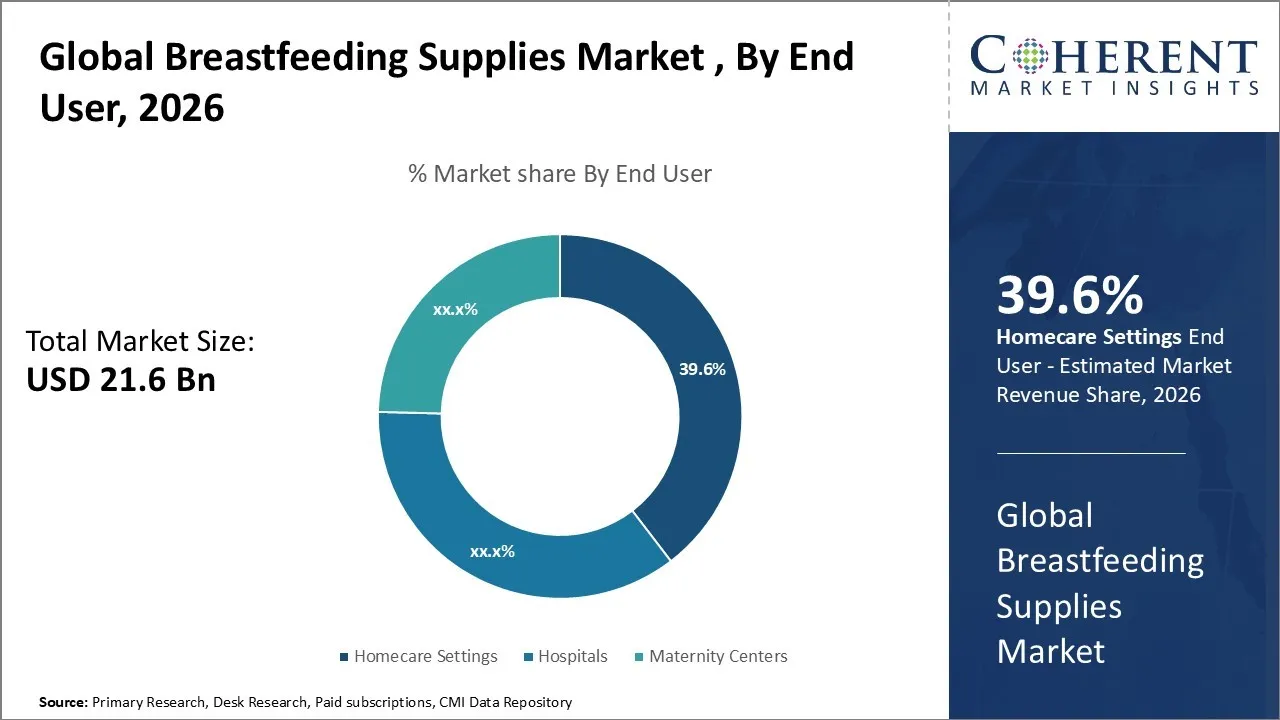
- By End Care Settings, Homecare Settings expected to hold largest market share of 39.6% in 2026 owing to the convenience & comfort of home-based breastfeeding.
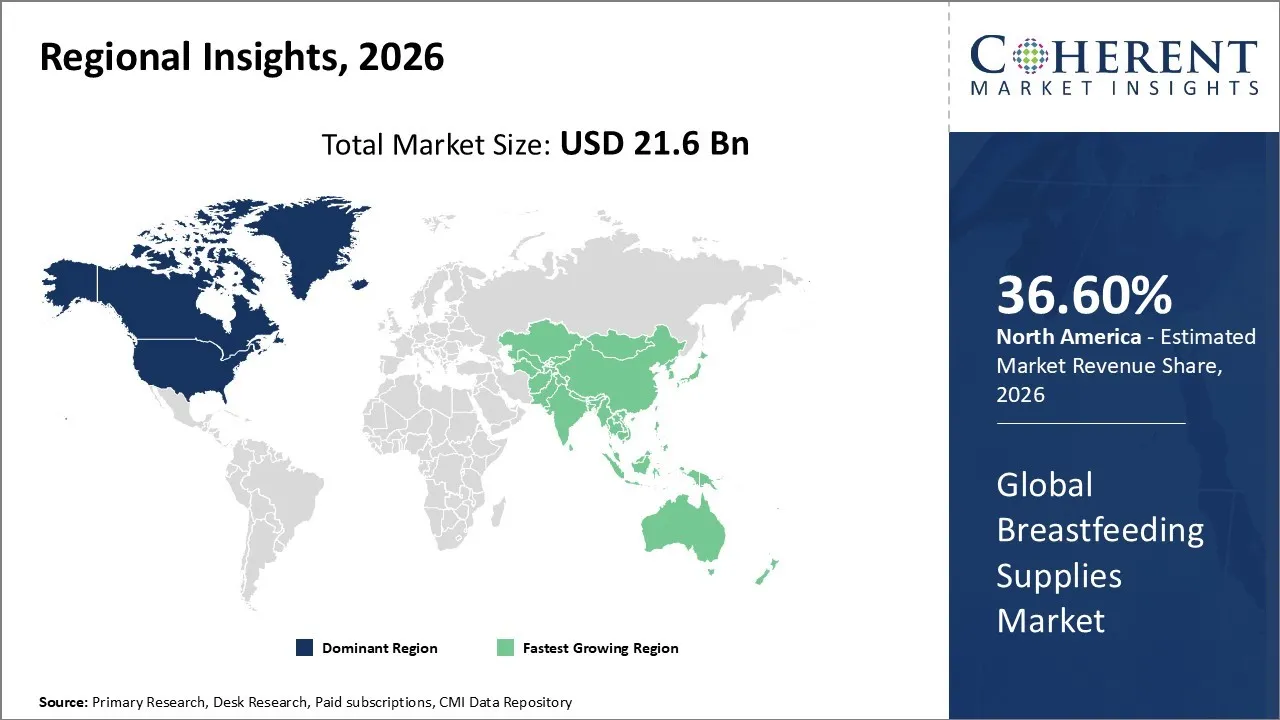
- By Region, North America dominates the overall market with an estimated share of 36.6% in 2026 owing to the high awareness of breastfeeding benefits.
Market Overview
The Breastfeeding Supplies Market includes products such as breast pumps, milk storage bags, nursing pads, nipple care items, and feeding accessories that help mothers support lactation and infant nutrition. Growing awareness of breastfeeding benefits, rising workforce participation among women, supportive healthcare policies, and continuous innovations like wearable and electric pumps drive market growth. Hospitals, pharmacies, and e-commerce platforms actively expand product reach, while North America leads the market and Asia-Pacific experiences rapid expansion.
Current Events and their Impact on the Breastfeeding Supplies Market
Current Events | Description and its impact |
Global Supply Chain Disruptions |
|
Regulatory and Policy Developments |
|
Competitive and Industry Landscape Shifts |
|
Segmental Insights
- Current Industry Events of 2026
- Market Size Estimation
- Regional Breakdown
- Competitive Landscape
- Customer Intelligence
- Segmental Analysis
- Pricing Analysis
- Key Market Drivers, Challenges & Future Trends
- Customized Insights Section
Breastfeeding Supplies Market Insights, By End User - Homecare Settings contribute the highest share of the market owing to its expanded access via e-commerce & retail
Homecare Settings expected to hold largest market share of 39.6% in 2026. Mothers increasingly choose to manage lactation in comfortable, private home environments, which drives growth in the homecare segment of the Breastfeeding Supplies Market. Hospitals discharge patients sooner after childbirth, prompting families to depend more on home-based breastfeeding products. Digital resources, virtual lactation consultations, and online parenting communities equip mothers to use pumps and related supplies confidently. Manufacturers design compact, user-friendly products for personal use, while e-commerce platforms deliver them directly to homes, further accelerating demand in this segment.
Breastfeeding Supplies Market Insights, By Product Type - Breast Pumps contribute the highest share of the market owing to its supportive government policies & workplace initiatives
Breast Pumps hold the largest market share of 43.3% in 2026. Shifting maternal lifestyles and a stronger focus on sustained breastfeeding increase demand for breast pumps in the Breastfeeding Supplies Market. Employed mothers actively use pumps to maintain milk supply after returning to work. Healthcare professionals promote early adoption of pumping solutions through clinical guidance and lactation support. Manufacturers introduce portable, rechargeable, and wearable models to improve convenience and privacy. Broader insurance coverage, better retail access, and greater involvement of partners in childcare continue to accelerate global adoption of breast pumps. For instance, in January 2026, Zomee, a maternity and baby care brand founded by moms, launched its Mother’s Nature line, designed to make pumping more intuitive, efficient, and in tune with a mother’s body and her baby’s natural nursing.
Regional Insights
North America Breastfeeding Supplies Market Trends
North America dominates the overall market with an estimated share of 36.60% in 2026. Consumers in North America actively drive growth in the Breastfeeding Supplies Market by adopting advanced feeding solutions and utilizing supportive care practices. Healthcare providers recommend high-quality supplies, while employers and insurers implement workplace programs and benefits to encourage breastfeeding. Retailers and e-commerce platforms expand access to innovative products, including hands-free and smart pumps. Increasing cultural acceptance of breastfeeding, rising maternal health awareness, and targeted campaigns by leading brands influence purchasing decisions and reinforce the market’s presence throughout the region. In March 2025, New York City Mayor Eric Adams announced the “NYC Baby Boxes” program, which provides new parents with essential supplies and resources to support families and reduce early financial stress.
Asia Pacific Breastfeeding Supplies Market Trends
Rising maternal employment, urban lifestyles, and growing awareness of infant nutrition drive mothers in the Asia Pacific region to seek convenient breastfeeding solutions, fueling growth in the Breastfeeding Supplies Market. Consumers actively choose portable pumps and practical accessories to support on-the-go feeding, while e-commerce platforms expand access to diverse products. Healthcare programs and evolving cultural practices around modern childcare encourage families to adopt high-quality breastfeeding supplies across major markets, including China, India, and Japan. For instance, in August 2025, Imani, South Korea’s top breast pump maker, launched the Imani i2plus Pro Series in Singapore, featuring the world’s first hands-free cup with only two parts.
United States Breastfeeding Supplies Market Trends
Mothers in the United States increasingly drive the Breastfeeding Supplies Market by seeking products that fit modern lifestyles and support continued breastfeeding. They actively adopt electric and wearable breast pumps for convenience and mobility, while e-commerce platforms expand nationwide access to these products. Healthcare providers recommend essential supplies, and insurance plans help cover costs. Consumers also prioritize sustainability, ergonomic designs, and digital features, which influence their purchasing decisions and enhance user experience across major urban areas. For instance, Elvie, a British femtech company, announced the U.S. launch of its latest smart breast pump, now covered by insurance.
India Breastfeeding Supplies Market Trends
Mothers in India actively drive growth in the Breastfeeding Supplies Market as they balance work with traditional childcare responsibilities, increasing demand for convenient products such as portable and electric breast pumps. Rising awareness of breastfeeding benefits and wider availability through online and retail channels make these supplies more accessible. Urbanization, higher disposable incomes, and improved healthcare infrastructure encourage families to adopt modern breastfeeding solutions, while public health campaigns actively promote maternal and infant nutrition throughout the country.
End-user Feedback and Unmet Needs in the Breastfeeding Supplies Market
- Ease of Use and Comfort: Many mothers report that breast pumps and accessories can be cumbersome or uncomfortable during extended use. Users express the need for ergonomic designs, quieter operation, and adjustable settings that replicate natural feeding patterns, ensuring a more comfortable and stress-free experience at home or work.
- Affordability and Accessibility: End-users highlight the high cost of advanced pumps and related supplies as a barrier. Affordable options and wider insurance coverage remain unmet needs, especially in emerging markets. Improved retail distribution, subsidized programs, and accessible e-commerce platforms could bridge the gap for more mothers seeking quality breastfeeding products.
- Portability and Convenience: Mothers often face challenges using bulky or non-portable pumps outside the home. Users demand compact, lightweight, and battery-operated devices that support on-the-go feeding, travel, and work flexibility. Integrating easy storage solutions and simplified cleaning features would significantly enhance daily convenience for busy parents.
Breastfeeding Supplies Market Trend
Rising Adoption of Advanced Breast Pumps
Consumers increasingly prefer electric, portable, and wearable breast pumps that offer convenience, privacy, and efficiency. Brands are focusing on ergonomic designs, quiet operation, and hands-free functionality to suit modern maternal lifestyles. Healthcare providers recommend these devices to working mothers, creating strong demand in both urban and semi-urban markets. Continuous innovation in pump technology, including app connectivity and customizable settings, further strengthens market growth by enhancing the overall breastfeeding experience for mothers.
Growth of E-commerce and Retail Accessibility
The market is benefiting from expanded access to breastfeeding supplies through online platforms and retail chains. E-commerce allows mothers to compare products, read reviews, and order deliveries directly, reducing barriers to purchase. Retailers are stocking diverse product ranges, including starter kits, milk storage solutions, and accessories. This combination of digital and physical availability ensures broader consumer reach and supports adoption, especially in regions where traditional healthcare distribution channels are limited or inconsistent.
Breastfeeding Supplies Market Opportunity
Technological Innovation and Smart Solutions
The market can capitalize on opportunities in developing smart breastfeeding products, including app-integrated pumps, hands-free wearable devices, and digital tracking systems. These innovations cater to tech-savvy parents who value convenience, monitoring, and personalization. Offering products that combine efficiency with user-friendly interfaces can differentiate brands, enhance customer loyalty, and address gaps in real-time milk tracking and lactation management.
Market Report Scope
Breastfeeding Supplies Market Report Coverage
| Report Coverage | Details | ||
|---|---|---|---|
| Base Year: | 2025 | Market Size in 2026: | USD 21.6 Bn |
| Historical Data for: | 2020 To 2024 | Forecast Period: | 2026 To 2033 |
| Forecast Period 2026 to 2033 CAGR: | 8.2% | 2033 Value Projection: | USD 39.3 Bn |
| Geographies covered: |
| ||
| Segments covered: |
| ||
| Companies covered: | Medela LLC, Hygeia, Koninklijke Philips N.V., Spectra Baby USA, Nuby, Magento, Inc, Nestle Gerber, Mayborn USA, Evenflo Feeding, Ardo Medical Ltd, Pigeon, NUK USA, Bailey Medical, Cascade Health Care Inc., and Lansinoh Laboratories, Inc. | ||
| Growth Drivers: |
| ||
| Restraints & Challenges: |
| ||
Breastfeeding Supplies Market News
- In January 2025, Willow Innovations, Inc. strengthened its role as a one-stop destination for breastfeeding mothers by launching a Silicone Wearable Breast Pump, Glass Breast Milk Pitcher, and Breast Milk Storage Bags to enhance maternal support and experience.
- In March 2025, Munchkin Inc., owned by WHY Brands Inc., launched the Flow Nipple Shield +, the world’s first nipple shield that lets moms see milk flow while nursing, kicking off a series of innovative infant feeding products as the brand expands into infant nutrition.
Analyst Opinion (Expert Opinion)
- The structural shifts in women’s labor participation and technology adoption are redefining demand dynamics rather than superficial lifestyle trends. A compelling statistical underpinning is that over 80 % of employed breastfeeding mothers in developed regions rely on breast pumps to sustain feeding once they return to work, underscoring that these devices have transitioned from convenience products to essential tools in contemporary maternal health practice.
- Leading markets, particularly in North America and Europe, show a pronounced preference for advanced and wearable technologies, as evidenced by the 35 % rise in hands‑free pump adoption among urban consumers. This reflects a value shift: convenience and ergonomics increasingly influence purchasing decisions, outpacing traditional price‑driven behavior. Dress‑under wearable pumps selling tens of thousands of units globally further validate this trend towards discreet, lifestyle‑integrated solutions.
- High‑end electric and smart pumps priced several hundred dollars limit uptake in low‑ and middle‑income regions, despite strong awareness about breastfeeding benefits. In South Asia and the Middle East, cultural resistance to public expression of milk restricts operational usage even where devices are available. The intersection of cultural norms and device accessibility is an underserved domain that will shape competitive differentiation in coming years.
Speak to the analyst
Want personalized insights?
Take the findings above to one of our principal consultants, or have the report rebuilt around the segments, geographies and competitors you actually track.
Market Segmentation
- By Product Type
- Breast Pumps
- Manual Pumps
- Battery-Operated Pumps
- Electric Pumps
- Hospital-Grade Pumps
- Breast Milk Storage and Feeding
- Breast milk Containers
- Breast milk Nipples & Lids
- Breast milk Storage Bags & bottles
- Accessories
- Nipple Care Products
- Breast Shells
- Breast Pads
- Nipple Shields
- Soothing Pads
- Others (Phototherapy Accessories and sterilizers)
- Breast Pumps
- By End User
- Homecare Settings
- Hospitals
- Maternity Centers
- By Regional Insights
- North America
- U.S.
- Canada
- Latin America
- Brazil
- Argentina
- Mexico
- Rest of Latin America
- Europe
- Germany
- U.K.
- Spain
- France
- Italy
- Russia
- Rest of Europe
- Asia Pacific
- China
- India
- Japan
- Australia
- South Korea
- ASEAN
- Rest of Asia Pacific
- Middle East
- GCC Countries
- Israel
- Rest of Middle East
- Africa
- South Africa
- North Africa
- Central Africa
- North America
- Key Players Insights
- Medela LLC
- Hygeia
- Koninklijke Philips N.V.
- Spectra Baby USA
- Nuby
- Magento, Inc
- Nestle Gerber
- Mayborn USA
- Evenflo Feeding
- Ardo Medical Ltd
- Pigeon
- NUK USA
- Bailey Medical
- Cascade Health Care Inc.
- Lansinoh Laboratories, Inc.
Sources
Primary Research interviews
- Lactation consultants and breastfeeding specialists
- Pediatricians and obstetricians
- Hospital maternity ward managers
- Nursing mothers across urban and semi-urban regions
- Homecare nurses and community health workers
Databases
- WHO Global Health Observatory
- UNICEF Data on Infant and Young Child Feeding
- U.S. National Library of Medicine – PubMed
- FAO Nutrition and Health Databases
Magazines
- American Journal of Nursing
- Parents magazine
- Pediatric Nursing magazine
- Breastfeeding Today
Journals
- Journal of Human Lactation
- Maternal & Child Nutrition
- International Breastfeeding Journal
- Nutrition Reviews
Newspapers
- The New York Times – Health Section
- The Guardian – Parenthood & Health
- The Times of India – Health & Lifestyle
- The Washington Post – Health & Science
Associations
- La Leche League International
- International Lactation Consultant Association (ILCA)
- American Academy of Pediatrics (AAP)
- World Health Organization (WHO) Breastfeeding Programs
Public Domain sources
- National Institutes of Health (NIH) Reports
- Centers for Disease Control and Prevention (CDC) Breastfeeding Statistics
- Government health ministry publications (e.g., India, Canada, Australia)
- UNICEF and WHO public data portals
Proprietary Elements
- CMI Data Analytics Tool
- Proprietary CMI Existing Repository of information for last 8 years
Get access to 250+ pages report
Every segment, forecast, competitor profile and data table behind the analysis above — available for instant download.
- ESOMAR Member
- ISO 9001:2015 Certified
- D-U-N-S Registered
- GDPR & CCPA Compliant
Missing comfort of reading report in your local language? Find your preferred language:
Transform your Strategy with Exclusive Trending Reports
Frequently Asked Questions
The Breastfeeding Supplies Market is estimated to be valued at USD 21.6 Bn in 2026 and is expected to reach USD 39.3 Bn by 2033.
Increasing launch of breast pumps with new technologies by market players is expected to drive the market growth
Breast pumps is the leading product type segment in the market.
The major factors hampering growth of the market include problems related to breast pump working procedure such as blocked ducts, dryness, exhaustion, and hand pain.
Major players operating in the market include Medela LLC, Hygeia, Koninklijke Philips N.V., Spectra Baby USA, Nuby, Magento, Inc, Nestle Gerber, Mayborn USA, Evenflo Feeding, Ardo Medical Ltd, Pigeon, NUK USA, Bailey Medical, Cascade Health Care Inc., and Lansinoh Laboratories, Inc.