

Electrosurgical Devices Market Analysis & Forecast
The electrosurgical devices market is estimated to be valued at USD 7.48 Bn in 2026 and is expected to reach USD 11.78 Bn by 2033, growing at a compound annual growth rate (CAGR) of 6.7% from 2026 to 2033.
Key Takeaways
- By Product Type, Electrosurgical Generators Segment is poised to capture a commanding 33.3% market share in 2026.
- By Application, Neurology Segment is set to lead the electrosurgical devices market with a 27.1% share in 2026.
- By End-User, Hospitals are expected to dominate the market with a 41.1% share by 2026.
- By Region, North America is projected to retain its dominant position in the global electrosurgical devices market with a 43.4% share in 2026.
Market Overview
The global electrosurgical devices market is experiencing steady growth, driven by increasing demand for minimally invasive surgeries and advancements in surgical technologies. Electrosurgical tools offer precision, reduced blood loss, and faster recovery, making them essential in general surgery, neurology, and gynecology. Hospitals remain the primary end users due to high surgical volumes. North America dominates the market, supported by advanced healthcare infrastructure and major medical device manufacturers, while Asia Pacific shows strong growth potential with expanding healthcare access and rising surgical procedures.
Current Events and its Impact on the electrosurgical devices market
Current Event | Description and its impact |
Rising Surgical Volumes |
|
Healthcare Infrastructure Expansion in Emerging Markets |
|
Stricter Regulatory Oversight on Surgical Equipment |
|
Pipeline Analysis: Electrosurgical Devices Market
The electrosurgical devices market is witnessing an active innovation pipeline, driven by technological advancements and growing demand for minimally invasive procedures. Leading manufacturers such as Medtronic, Olympus Corporation, and Johnson & Johnson are investing heavily in R&D to develop next-generation electrosurgical tools with improved precision, safety, and energy efficiency.
Key innovations in the pipeline include AI-integrated electrosurgical generators, advanced bipolar and ultrasonic instruments, and smart energy delivery systems capable of real-time feedback and adaptive power control. Several products are in clinical trial phases, targeting applications in neurosurgery, oncology, and robotic-assisted surgery. Startups and mid-tier companies are also contributing with niche innovations, such as disposable electrodes and hybrid energy devices.
Regulatory approvals in major markets like the U.S. and EU are anticipated to accelerate commercialization. This dynamic pipeline reflects the industry's shift toward smarter, more versatile surgical solutions, ensuring robust future growth for the global electrosurgical devices market.
- Current Industry Events of 2026
- Market Size Estimation
- Regional Breakdown
- Competitive Landscape
- Customer Intelligence
- Segmental Analysis
- Pricing Analysis
- Key Market Drivers, Challenges & Future Trends
- Customized Insights Section
Patent Landscape: Electrosurgical Devices Market
The electrosurgical devices market has a dynamic and evolving patent landscape, reflecting continuous innovation in energy-based surgical technologies. Major industry players such as Medtronic, Ethicon (Johnson & Johnson), Olympus Corporation, and CONMED are leading in patent filings, focusing on advancements in energy delivery, safety features, and minimally invasive applications.
Patents are increasingly cantered on integrated feedback systems, intelligent generators, and hybrid technologies combining ultrasonic and radiofrequency energy. Additionally, innovations in electrode design, thermal control mechanisms, and disposable components are gaining traction. The U.S., Europe, China, and Japan remain the top jurisdictions for filings, with a growing number of patents also emerging from India and South Korea.
Startups and academic institutions are contributing to the IP pool, particularly in AI-enabled surgical systems and robotic-assisted electro surgery. This competitive patent environment highlights strong barriers to entry and underlines the importance of intellectual property as a strategic asset in driving technological leadership and market growth.
Reimbursement Scenario: Electrosurgical Devices Market
The reimbursement landscape for electrosurgical devices is evolving, significantly influencing market adoption and growth. In developed regions like North America and Europe, favourable reimbursement policies for minimally invasive surgeries have accelerated the integration of advanced electrosurgical systems in hospitals and outpatient centres. These policies support the adoption of high-frequency electrosurgery devices, enhancing procedural efficiency and patient outcomes.
In emerging markets such as India, the reimbursement framework is still developing. While the Indian medical devices sector is experiencing substantial growth, challenges persist due to limited insurance coverage and out-of-pocket payment model. This scenario often restricts access to advanced electrosurgical technologies, particularly in public healthcare settings. Overall, the reimbursement environment remains a critical factor in the adoption of electrosurgical devices.
Regions with supportive reimbursement structures are witnessing higher uptake of these technologies, while areas with less developed frameworks may experience slower integration. As healthcare systems worldwide continue to evolve, aligning reimbursement policies with technological advancements will be essential to ensure broader access and sustained market growth.
Prescribers’ Preference: Electrosurgical Devices Market
Prescribers, including surgeons and medical practitioners, increasingly favour electrosurgical devices due to their precision, efficiency, and ability to minimize blood loss during procedures. These devices are particularly preferred in minimally invasive surgeries across specialties such as gynecology, neurology, urology, and gastroenterology. Surgeons value electrosurgical generators for their ability to offer real-time power adjustments and advanced safety features, which help reduce thermal damage to surrounding tissues.
Monopolar and bipolar electrosurgical systems are widely used, but there is a growing shift toward advanced bipolar and vessel-sealing technologies that enhance surgical outcomes. Moreover, device compatibility with robotic and laparoscopic systems influences prescribers’ choices, as integration with such platforms improves procedural control and patient recovery time.
Ease of use, device reliability, and manufacturer support also play a crucial role in prescriber preferences. Ultimately, clinical efficacy, safety profiles, and training availability significantly guide the decision-making process when adopting electrosurgical technologies in routine practice.
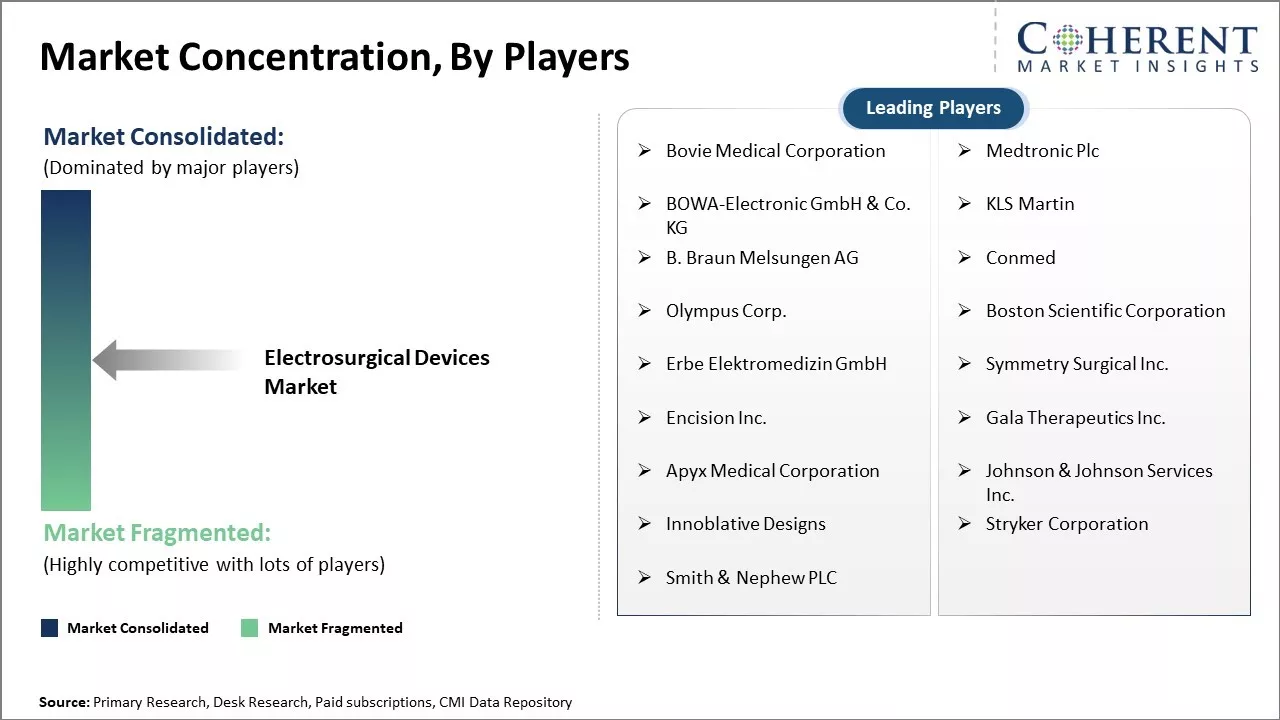
Market Concentration and Competitive Landscape
Electrosurgical Devices Market Trends
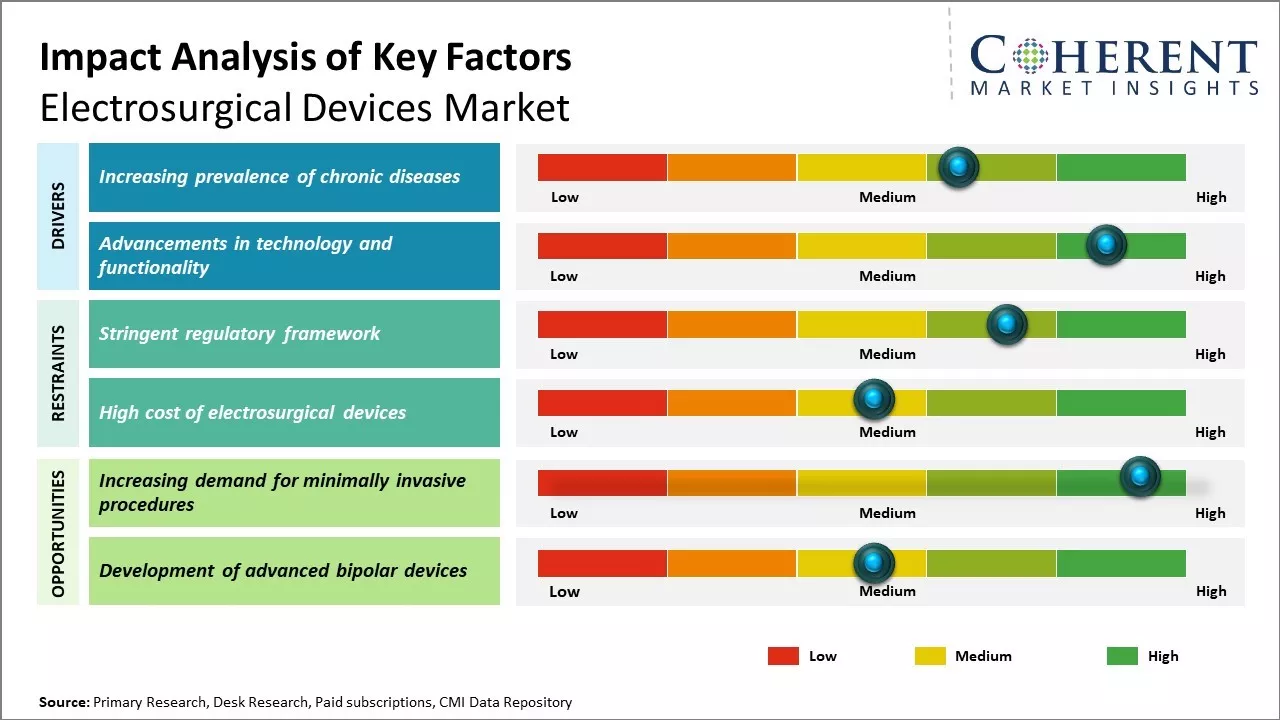
- Increasing prevalence of chronic diseases
With the rising prevalence of chronic diseases globally, the number of surgical procedures has significantly increased over the past couple of decades. Chronic conditions such as cancer, cardiovascular diseases, and neurological disorders are some of the major public health issues contributing to the growing disease burden. According to the World Health Organization (WHO), cancer is the second leading cause of deaths worldwide with nearly 10 million deaths in 2020.
Rising geriatric population is another key factor influencing the cancer statistics as older adults are more prone to develop cancer. Similarly, heart diseases also pose a huge economic and health burden on economies. Improved diagnostic capabilities and lifestyle changes have led to a surge in the number of open-heart surgeries and other cardiac procedures performed annually.
In June 2013, doctors at Sterling Hospital in Ahmedabad successfully removed 44 cancerous nodules from a patient's lung using an electrosurgical device. The procedure involved the use of an electrosurgical tool that cuts and coagulates tissue, allowing for the removal of multiple nodules without causing significant damage to the surrounding healthy lung tissue. This case demonstrated the precision and effectiveness of electrosurgical techniques in complex oncological surgeries.
- Advancements in technology and functionality
Over the past few decades, remarkable innovations have been witnessed in electrosurgical technologies aimed at making procedures safer, minimally-invasive, and more effective. Gradually moving from traditional monopolar and bipolar devices, advanced energy platforms such as Argon plasma coagulation, ultrasound, and vessel sealing systems are gaining momentum.
These new age devices provide enhanced visibility, precision cutting, and hemostasis with reduced risk of collateral tissue damage. Manufacturers are constantly striving to develop intelligent systems with advanced bipolar and monopolar modes, automatic control of energy delivery and improved ergonomics. The integration of robotics, 3D imaging, tissue analytics, and newer energy modalities in electrosurgery intends for maximizing clinical outcomes.
In January 2012, medical experts in Pune discussed alternatives to traditional hysterectomy procedures, highlighting the use of electrosurgical techniques like the Loop Electrosurgical Excision Procedure (LEEP) for treating precancerous lesions of the cervix. These minimally invasive procedures offer patients options that are less invasive than full hysterectomy, leading to quicker recovery times and preservation of reproductive health.
Opportunities In the Electrosurgical Devices Market
- Increasing demand for minimally invasive procedures
The rapidly aging global population susceptible to various medical conditions will drive surgical volumes. Moreover, the demand for minimally invasive procedures is growing with advancing technology. This is increasing the acceptance of electrosurgical equipment. There is also scope to expand in emerging markets as their healthcare infrastructure and accessibility improves.
Adoption of distribution partnerships and strategic mergers by key market players is further anticipated to create lucrative opportunities for market development over the projected period.
Segmental Insights
Electrosurgical Devices Market Insights, By Product Type
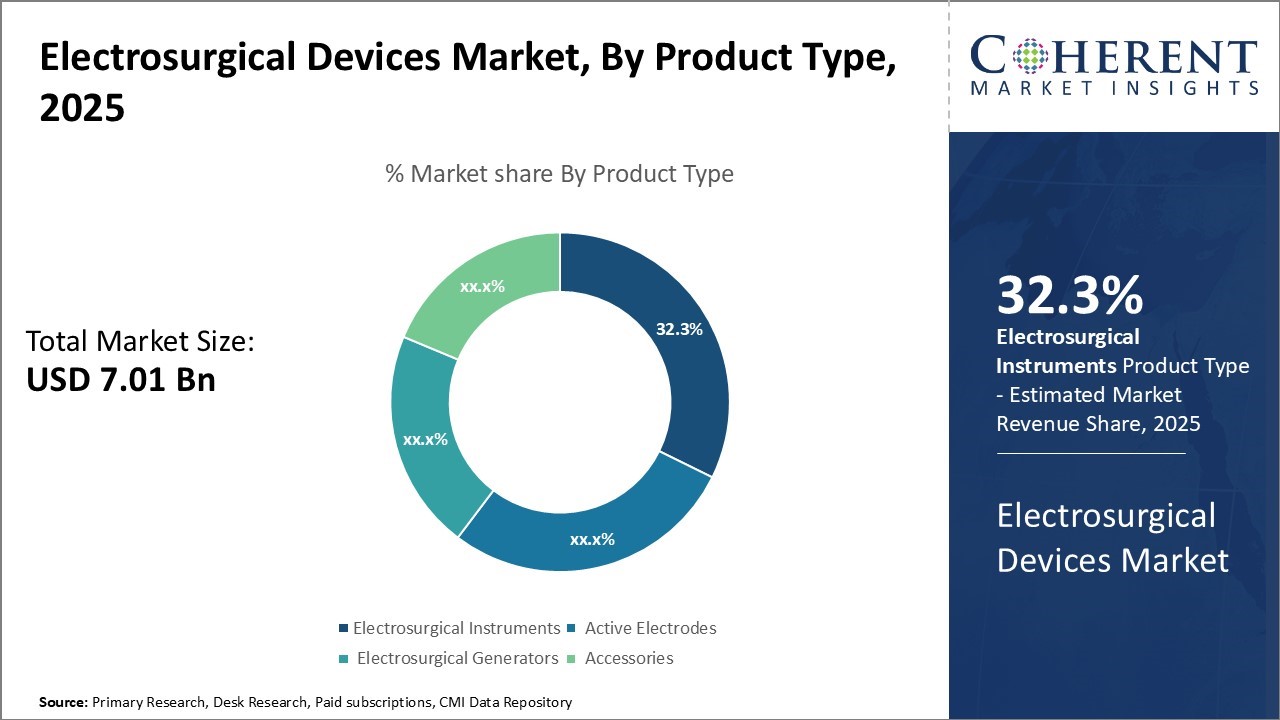
The electrosurgical generators segment is projected to dominate the global electrosurgical devices market, accounting for 33.3% of the total share in 2026. This dominance can be attributed to continuous product innovation, enhanced safety features, and improved energy delivery mechanisms.
Electrosurgical generators are essential in a wide range of surgical procedures due to their ability to control heat and minimize tissue damage, which is particularly crucial in minimally invasive surgeries. Advancements in smart generators that offer real-time feedback, automated power adjustments, and compatibility with various electrode types further reinforce their market leadership.
Electrosurgical Devices Market Insights, By Application
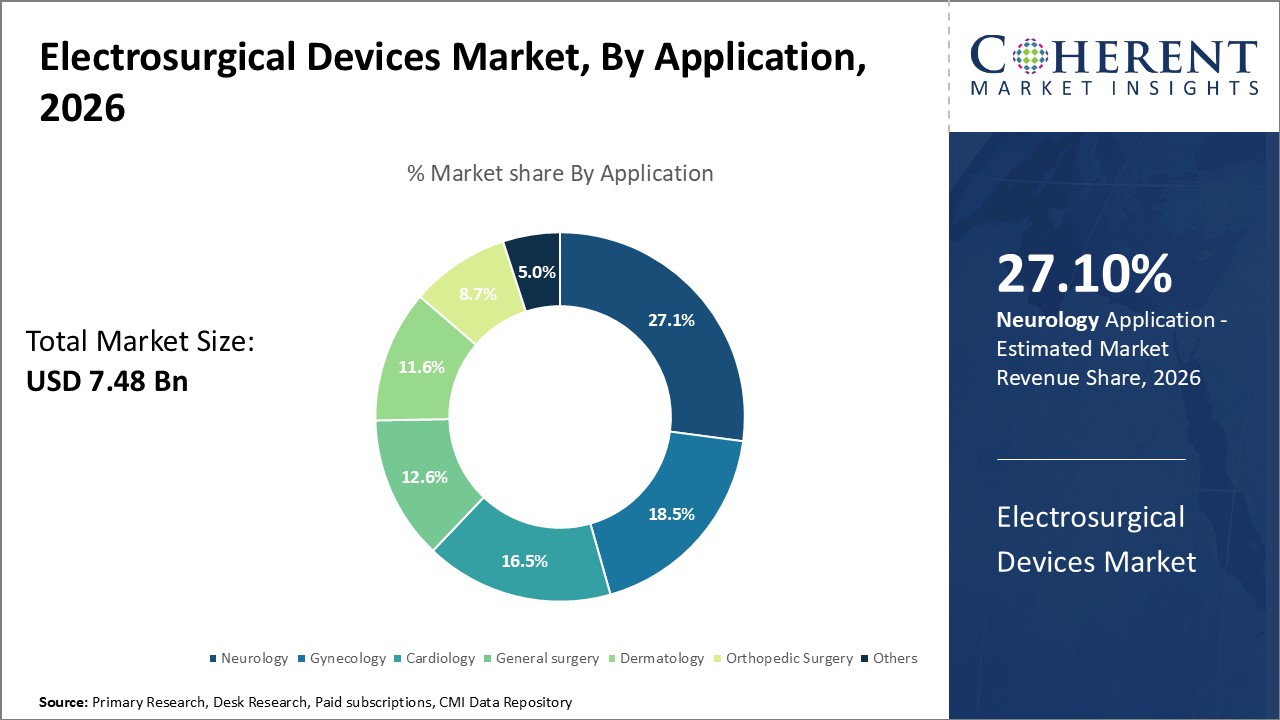
The neurology application segment is expected to hold a 27.1% share of the electrosurgical devices market in 2026, emerging as the leading contributor. This growth is primarily driven by the increasing prevalence of neurological disorders and the growing demand for precision-based surgical interventions.
Electrosurgical tools play a critical role in delicate neurosurgical procedures, offering enhanced precision, reduced bleeding, and minimized recovery time. The rising geriatric population, along with technological advancements in neuro-electrosurgical techniques, continues to accelerate demand in this segment.
Electrosurgical Devices Market Insights, By End User
Hospitals are projected to account for the largest share of the electrosurgical devices market at 41.1% in 2026. The high patient volume, availability of advanced infrastructure, and increased adoption of minimally invasive surgical equipment are key factors supporting this dominance.
Hospitals also benefit from the presence of skilled professionals and access to comprehensive post-surgical care, making them the preferred setting for complex electrosurgical procedures. Additionally, favourable reimbursement policies and increased healthcare investments are expected to further solidify the role of hospitals as the leading end user.
Regional Insights
North America Electrosurgical Devices Market Trends and Analysis
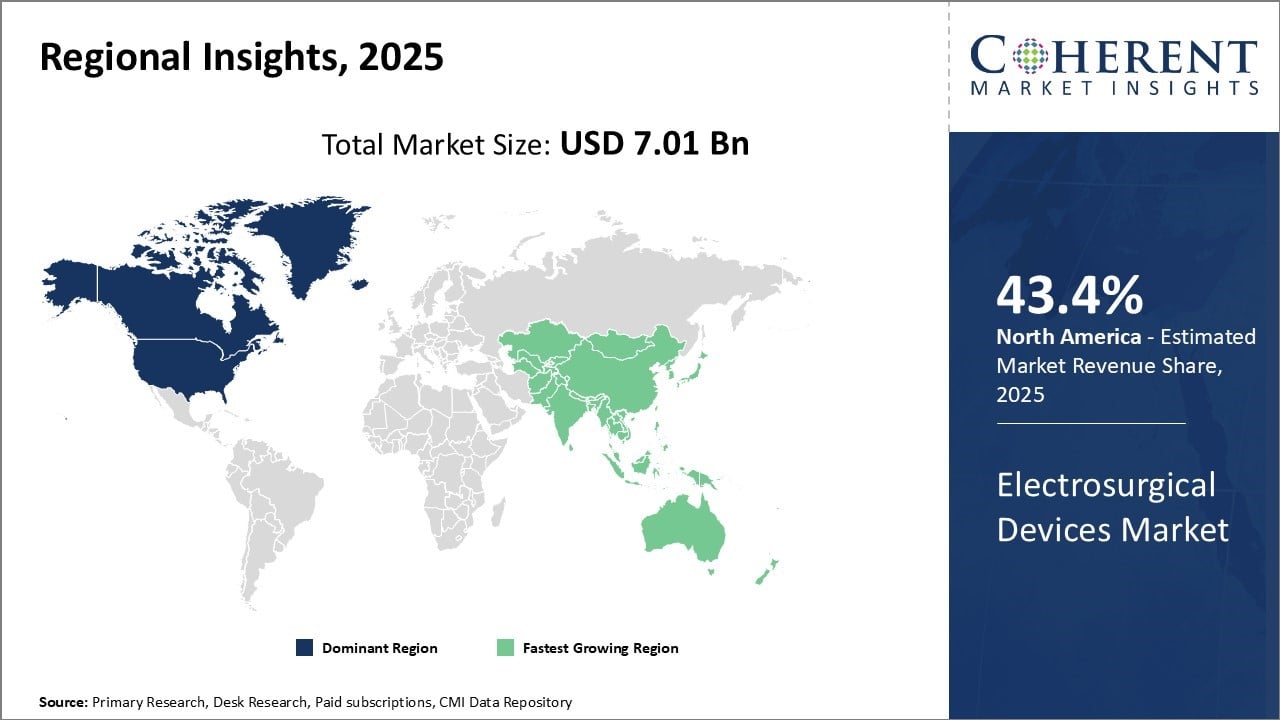
North America is projected to maintain its dominance in the global electrosurgical devices market with a 43.4% share in 2026. This regional leadership is primarily fuelled by robust healthcare infrastructure, early adoption of advanced surgical technologies, and the presence of major medical device manufacturers.
The United States, in particular, has witnessed a surge in minimally invasive surgeries, increasing the demand for electrosurgical equipment. Moreover, strong regulatory support, high healthcare spending, and a growing elderly population with chronic conditions further reinforce North America's leading position in the market.
Europe Electrosurgical Devices Market Trends and Analysis
Europe is expected to remain a significant contributor to the electrosurgical devices market, driven by an aging population, rising prevalence of chronic diseases, and a focus on improving surgical outcomes. Countries such as Germany, France, and the UK are experiencing increasing demand for advanced surgical tools that enhance precision and minimize patient recovery time.
Stringent medical device regulations and consistent investments in healthcare infrastructure support the adoption of high-performance electrosurgical systems. Additionally, government-led initiatives to reduce surgical complications and enhance patient safety further boost market growth in the region.
Electrosurgical Devices Market Dominating Countries
United States and Canada
The United States and Canada lead the electrosurgical devices market in North America, which is expected to maintain a 43.4% global share in 2026. The U.S. dominates with its advanced healthcare infrastructure, high volume of surgical procedures, and strong presence of key medical device manufacturers. Widespread adoption of minimally invasive and robotic-assisted surgeries continues to drive demand.
Canada complements this leadership through growing investment in surgical innovations, favorable government healthcare policies, and increasing demand for safe and efficient surgical technologies.
Market Report Scope
Electrosurgical Devices Market Report Coverage
| Report Coverage | Details | ||
|---|---|---|---|
| Base Year: | 2025 | Market Size in 2026: | USD 7.48 Bn |
| Historical Data for: | 2020 To 2024 | Forecast Period: | 2026 To 2033 |
| Forecast Period 2026 to 2033 CAGR: | 6.7% | 2033 Value Projection: | USD 11.78 Bn |
| Geographies covered: |
| ||
| Segments covered: |
| ||
| Companies covered: | Bovie Medical Corporation, Medtronic Plc, BOWA-Electronic GmbH & Co. KG, KLS Martin, B. Braun Melsungen AG, Conmed, Olympus Corp., Boston Scientific Corporation, Erbe Elektromedizin GmbH, Symmetry Surgical Inc., Encision Inc., Gala Therapeutics Inc., Apyx Medical Corporation, Johnson & Johnson Services Inc., Innoblative Designs, Stryker Corporation, and Smith & Nephew PLC | ||
| Growth Drivers: |
| ||
| Restraints & Challenges: |
| ||
Analyst Viewpoint Electrosurgical Devices Market
- The global electrosurgical devices market is witnessing steady growth, driven by the rising adoption of minimally invasive surgical techniques and increasing demand for precision-based surgical tools across various specialties, including neurology, gynecology, and oncology. Analysts emphasize that electrosurgical generators lead the market due to their advanced energy delivery systems, real-time power adjustments, and widespread application in complex surgical procedures.
- Technological advancements such as integration with robotic-assisted surgeries, smart energy feedback systems, and hybrid electrosurgical instruments are enabling improved surgical efficiency, reduced operating times, and enhanced patient outcomes. Experts note that these innovations, coupled with favorable reimbursement frameworks and the shift toward outpatient surgical centers, are transforming the procedural landscape.
- North America dominates the market, supported by a robust healthcare system, high procedure volumes, and early adoption of cutting-edge surgical tools. Simultaneously, Asia Pacific presents high-growth potential driven by expanding healthcare infrastructure, rising medical tourism, and growing awareness of advanced surgical options. Analysts predict sustained innovation and strategic expansion will define the market trajectory.
Electrosurgical Devices Market: Key Development
- In April 2025, Medtronic unveiled its next-generation Valleylab™ FT10 Energy Platform with improved energy delivery algorithms and tissue sensing technology. This upgrade enhances precision and safety in complex electrosurgical procedures, supporting the company’s innovation-driven strategy in minimally invasive surgery.
- In March 2025, Olympus Corporation launched the ESG-410 electrosurgical generator system, designed to provide optimal performance in endoscopic surgeries. The system features advanced cutting and coagulation modes, enabling greater control and reduced procedural risks in gastrointestinal and respiratory applications.
- In February 2025, Bovie Medical (now Apyx Medical) entered into a strategic agreement with a major hospital network in the U.S. to supply its Helium Plasma Technology devices, aiming to expand its market share in cosmetic and soft tissue surgery.
- In January 2025, ERBE Elektromedizin GmbH introduced a compact, multi-function electrosurgical unit tailored for outpatient clinics and ambulatory surgical centers. The system offers intuitive interfaces and safety-centric automation, supporting its growing adoption in emerging markets.
- In December 2024, CONMED Corporation expanded its electrosurgical device production facilities in Asia Pacific, targeting the region’s rising demand for advanced surgical technologies, particularly in neurology and oncology.
Market Segmentation
- Product Type (Revenue, USD Bn, 2021 - 2033)
- Electrosurgical Instruments
- Active Electrodes
- Electrosurgical Generators
- Accessories
- Application (Revenue, USD Bn, 2021 - 2033)
- General surgery
- Gynecology
- Cardiology
- Neurology
- Dermatology
- Orthopedic Surgery
- Others
- End User
- Hospitals
- Specialty Clinics
- Ambulatory Surgical Centers
- Others
- Region
- North America
- U.S.
- Canada
- Latin America
- Brazil
- Argentina
- Mexico
- Rest of Latin America
- Europe
- Germany
- U.K.
- Spain
- France
- Italy
- Russia
- Rest of Europe
- Asia Pacific
- China
- India
- Japan
- Australia
- South Korea
- ASEAN
- Rest of Asia Pacific
- Middle East
- GCC Countries
- Israel
- Rest of Middle East
- Africa
- South Africa
- North Africa
- Central Africa
- North America
- Company Profiles
- Bovie Medical Corporation
- Medtronic Plc
- BOWA-Electronic GmbH & Co. KG
- KLS Martin
- B. Braun Melsungen AG
- Conmed
- Olympus Corp.
- Boston Scientific Corporation
- Erbe Elektromedizin GmbH
- Symmetry Surgical Inc.
- Encision Inc.
- Gala Therapeutics Inc.
- Apyx Medical Corporation
- Johnson & Johnson Services Inc.
- Innoblative Designs
- Stryker Corporation
- Smith & Nephew PLC
Sources
The Stakeholders Consulted
- Biomedical engineers and hospital procurement managers
- Surgeons and clinicians across specialties (neurology, general surgery, gynecology, etc.)
- Manufacturers and suppliers of electrosurgical generators, electrodes, and accessories
- Regulatory and reimbursement consultants
- Medical device distributors and group purchasing organizations (GPOs)
- Healthcare technology assessment (HTA) experts
- Healthcare institutions (private hospitals, public hospitals, ASCs)
- Medical research institutes and surgical innovation centers
Databases Opened
- U.S. Food and Drug Administration (FDA) – MAUDE & 510(k) Databases
- European Medicines Agency (EMA) – Medical Device Reports
- World Health Organization (WHO) – Global Health Observatory
- Centers for Medicare & Medicaid Services (CMS) – Reimbursement Data
- Ministry of Health and Family Welfare (India) – Device Import/Export Statistics
Magazines & Trade Publications
- MedTech Insight
- Medical Device and Diagnostic Industry (MD+DI)
- Surgical Products Magazine
- Healthcare Business News
- DeviceTalks
- MedTech Dive
Scientific and Industry Journals
- Journal of Minimally Invasive Surgery
- Journal of Clinical Medicine
- Surgical Endoscopy
- IEEE Transactions on Biomedical Engineering
- Journal of Medical Devices
- Annals of Surgery
Newspapers & Media Outlets:
- The Wall Street Journal – Health & Technology
- Bloomberg – Healthcare Technology & M&A
- Reuters – Medical Devices & Innovation
- The Economic Times – Health & Pharma
- Business Standard – Medical Technology Developments
Associations and Regulatory Bodies
- U.S. Food and Drug Administration (FDA)
- European Commission – Medical Device Regulation (MDR) Unit
- International Medical Device Regulators Forum (IMDRF)
- Medical Device Innovation Consortium (MDIC)
- Association for the Advancement of Medical Instrumentation (AAMI)
- World Health Organization (WHO)
Public Domain Sources
- U.S. Centers for Medicare & Medicaid Services (CMS) – Hospital and ASC Payment Data
- European Commission – Medical Device Reimbursement Reports
- National Institutes of Health (NIH) – Clinical Trials and Research Funding
- Indian Council of Medical Research (ICMR) – Surgical Technology Reports
- OECD Health Statistics
- Global Health Data Exchange (GHDx)
Proprietary Research Elements
- CMI Data Analytics Tool
- Proprietary CMI Repository of Market Data (covering past 8 years)
- CMI Expert Interviews and Transcripts (focused on surgical practices, device adoption, and hospital purchasing patterns)
Get access to 250+ pages report
Every segment, forecast, competitor profile and data table behind the analysis above — available for instant download.
- ESOMAR Member
- ISO 9001:2015 Certified
- D-U-N-S Registered
- GDPR & CCPA Compliant
Missing comfort of reading report in your local language? Find your preferred language:
Transform your Strategy with Exclusive Trending Reports
Frequently Asked Questions
The Electrosurgical Devices Market size is estimated to be valued at USD 7.48 Bn in 2026, and is expected to reach USD 11.78 Bn by 2033.
The CAGR of the global Market is projected to be 6.7% from 2026 to 2033.
Increasing prevalence of chronic diseases and advancements in technology and functionality are the major factors driving the growth of the market.
Stringent regulatory framework and high cost of electrosurgical devices are the major factors hampering the growth of the market.
In terms of product type, electrosurgical generators is estimated to dominate the market revenue share in 2026.
Bovie Medical Corporation, Medtronic Plc, BOWA-Electronic GmbH & Co. KG, KLS Martin, B. Braun Melsungen AG, Conmed, Olympus Corp., Boston Scientific Corporation, Erbe Elektromedizin GmbH, Symmetry Surgical Inc., Encision Inc., Gala Therapeutics Inc., Apyx Medical Corporation, Johnson & Johnson Services Inc., Innoblative Designs, Stryker Corporation, and Smith & Nephew PLC are the major players.
North America is expected to lead the market.