

Global Endoscopy Device Market Size and Forecast 2026 - 2033
Global endoscopy device market is estimated to be valued at USD 44.39 Bn in 2026 and is expected to reach USD 76.07 Bn by 2033, exhibiting a compound annual growth rate (CAGR) of 8.0% from 2026 to 2033.
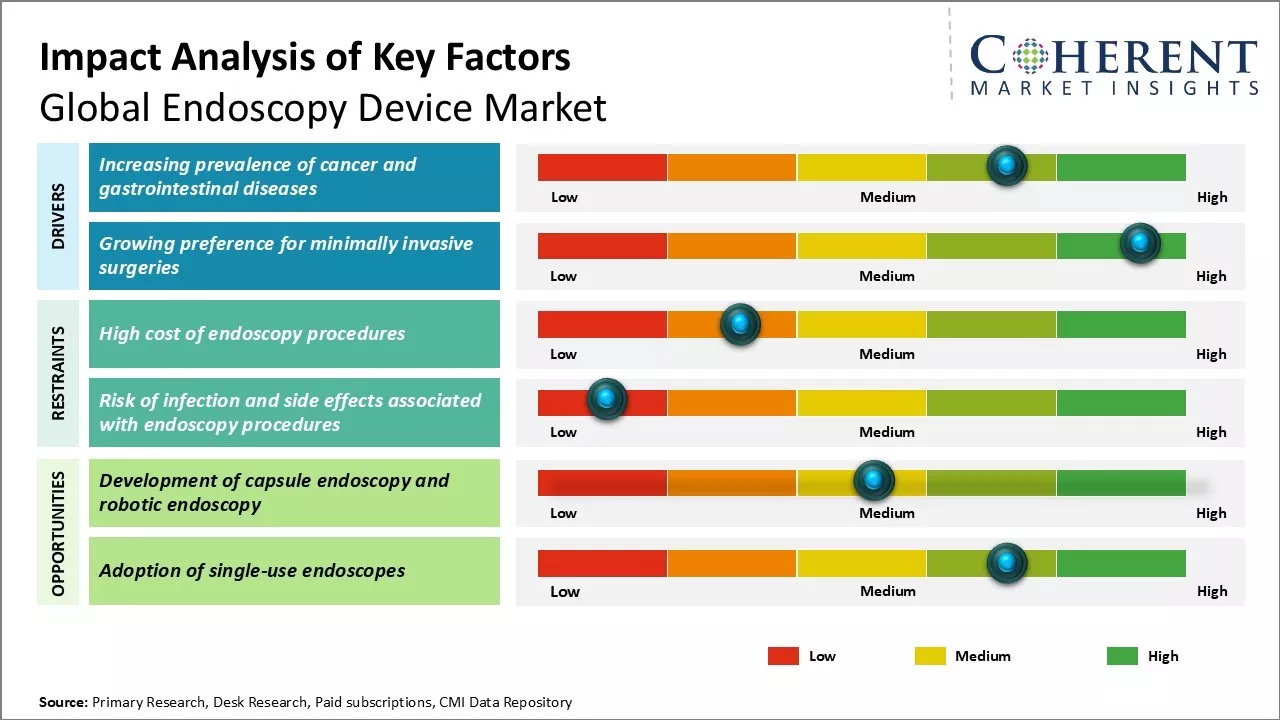
Key Takeaways of the Global Endoscopy Device Market
- In terms of product type, the rigid endoscopes segment is estimated to contribute the highest market share of 41.5 % in 2026.
- In terms of application, the gastrointestinal endoscopy segment is estimated to contribute the highest market share of 53.5 % in 2026.
- In terms of end user, the hospitals & clinics segment is estimated to contribute the highest market share of 61.5 % in 2026.
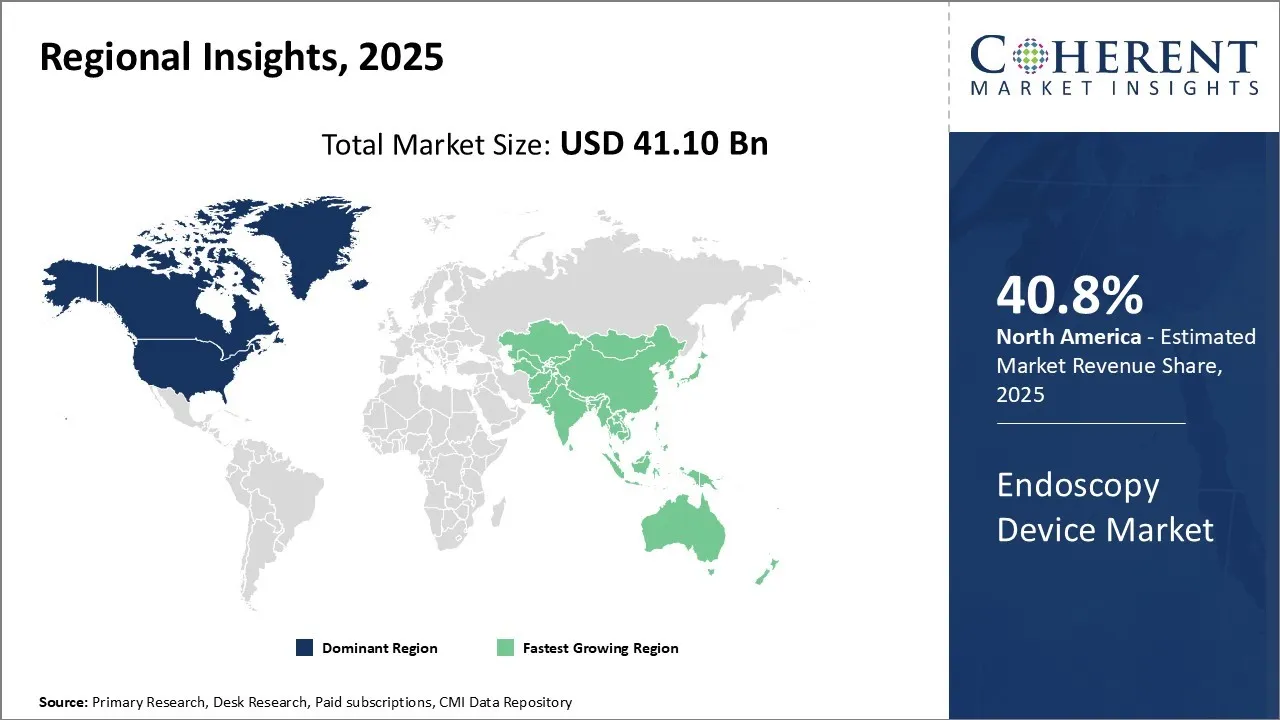
- North America dominates the global endoscopy device market with an estimated market share of 40.8 % in 2026.
Market Overview
The global endoscopy device market is witnessing strong growth, due to increasing demand for minimally invasive procedures and a rising aging population prone to chronic illnesses. Advancements in imaging technologies, such as HD and AI-integrated systems, are enhancing diagnostic accuracy and driving adoption. Growing healthcare expenditure, especially in emerging economies, is improving access to endoscopic care.
The market also benefits from rising awareness about early disease detection, particularly for gastrointestinal and cancer screenings. However, challenges such as a shortage of skilled professionals and risks of post-procedural complications persist. High device costs and maintenance needs can also hinder adoption in low-resource settings. Despite these hurdles, ongoing innovation and investments by key players continue to propel market expansion.
Current Events and Its Impact
Current Events | Description and its impact |
U.S. Tariff Policies and Medical Device Trade |
|
EU Regulatory Shifts and Market Access Barriers |
|
Market Trends
Increasing Prevalence of Cancer and Gastrointestinal Diseases
The global rise in cancer and gastrointestinal (GI) diseases is a key driver for the endoscopy device market. Cancer, a leading cause of death with an estimated 19 million new cases and 10 million deaths in 2025, necessitates early detection. Endoscopy, through procedures like colonoscopy and upper GI endoscopy, is crucial for examining the digestive tract to find abnormalities at curable stages, thereby increasing demand for diagnostic and therapeutic endoscopes.
Similarly, growing rates of gastrointestinal disorders such as Crohn's disease, ulcerative colitis, and irritable bowel syndrome require regular endoscopic monitoring and evaluation. Endoscopy allows for internal inspection, biopsies, and treatment of conditions affecting the esophagus, stomach, and intestines. This rising disease burden, coupled with increased health awareness and a shift towards preventive endoscopies, is prompting greater investment in advanced endoscopy equipment by governments and healthcare systems.
Growing Preference for Minimally Invasive Surgeries
The endoscopy device market is significantly boosted by the increasing preference for minimally invasive surgical techniques. Unlike open surgeries, which involve large incisions and longer recovery, endoscopic procedures use small or no incisions, leading to less scarring, reduced trauma, shorter hospital stays, and quicker recovery.
Endoscopy is also expanding beyond diagnostics into therapeutic applications. Advanced devices allow for treatment of GI bleeding, polyp removal, stricture dilation, stent placement, and even bariatric procedures. Innovations like 3D imaging, flexible scopes, and robot-assisted platforms further support complex surgeries via minimal access routes. With strong clinical evidence demonstrating the superiority of endoscopy over open surgeries, patients are increasingly opting for these procedures, driving growth in the endoscopy device market.
- Current Industry Events of 2026
- Market Size Estimation
- Regional Breakdown
- Competitive Landscape
- Customer Intelligence
- Segmental Analysis
- Pricing Analysis
- Key Market Drivers, Challenges & Future Trends
- Customized Insights Section
Market Concentration and Competitive Landscape
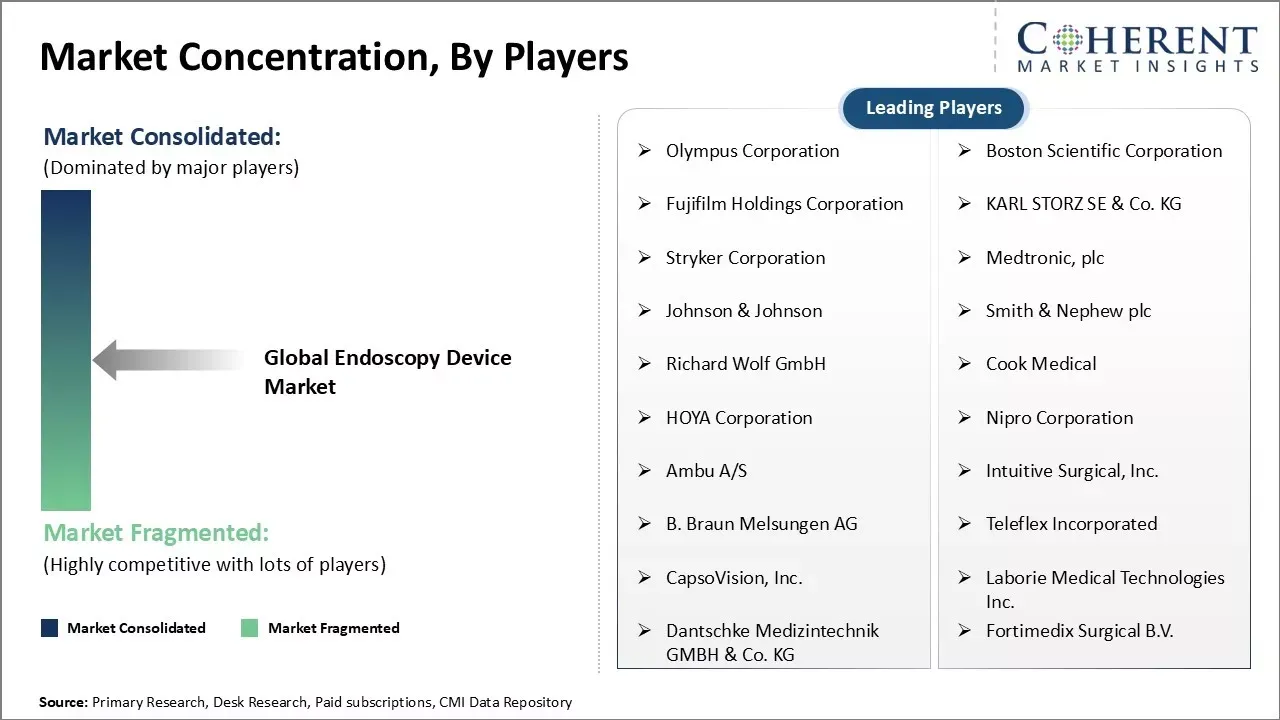
Analyst View
- The global endoscopy market is entering a precision-driven phase where AI-assisted visualization is quickly becoming a clinical expectation rather than a competitive edge. Olympus’ 2024 launch of its AI-powered EVIS X1 platform with features like real-time lesion detection and anatomical landmark identification has set a new standard. Early clinical trials show a 14% improvement in adenoma detection rates, pressuring lagging players to either innovate or exit.
- Disposable endoscopes are no longer niche they're a strategic necessity in infection-prone and resource-limited settings. Ambu, for instance, reported that over 2.5 million of its single-use scopes were sold globally by Q4 2023, with major uptake in urology and bronchoscopy. Reusable systems face mounting scrutiny due to hospital-acquired infection risks, especially following high-profile contamination incidents in the U.S. and Japan, making regulatory compliance a serious risk factor.
- Despite technological strides, integration bottlenecks within hospital IT ecosystems continue to throttle adoption, especially in public health systems. In Europe, nearly 40% of hospitals cited interoperability with existing EMRs and imaging systems as a primary barrier to adopting advanced endoscopic platforms in a 2023 EIT Health report. Without vendor-neutral data standards and seamless connectivity, even the most advanced systems risk being underutilized in clinical workflows.
Speak to the analyst
Want personalized insights?
Take the findings above to one of our principal consultants, or have the report rebuilt around the segments, geographies and competitors you actually track.
Market Opportunity: Development of Capsule Endoscopy and Robotic Endoscopy
The ongoing development of novel technologies like capsule endoscopy and robotic endoscopy can offer growth opportunities for the global endoscopy device market. Capsule endoscopy involves ingesting a small pill-sized camera to non-invasively examine the whole gastrointestinal tract. This method avoids painful procedures and has potential to drastically lower costs. Robotic endoscopy utilizes futuristic robot-assisted systems controlled by physicians to perform minimally invasive endoscopies. Such technologies promise to make endoscopy procedures safer, more accurate and accessible to widespread global populations. Significant industry investments are being made to commercialize promising prototypes. If successfully introduced, capsule and robotic endoscopy could revolutionize endoscopy practices worldwide and usher in a new phase of high growth for the overall endoscopy device market. For instance, in May 2024, the Food and Drug Administration granted 510(k) clearance to Medtronic’s PillCam Genius SB capsule endoscopy kit, which allows patients to ingest the capsule either in-clinic or at home using a streamlined single-use link device eliminating bulky external recorders and enhancing convenience and accessibility.
Segmental Insights
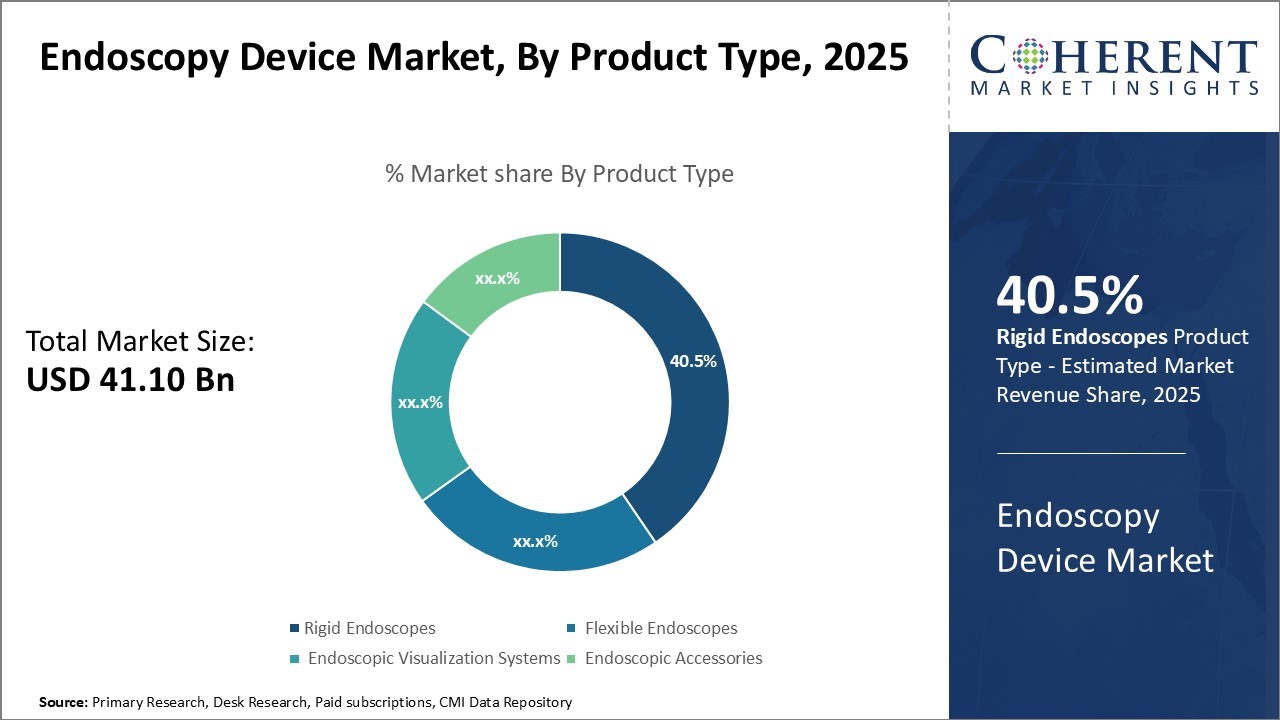
Global Endoscopy Device Market Insights, by Product Type - Advancements in rigid endoscope technologies
In terms of product type, the rigid endoscopes segment is estimated to contribute the highest market share of 41.5% in 2026, as continuous technological advancements have made rigid endoscopy a preferred option for various diagnostic and therapeutic applications. Rigid endoscopes offer superior optical clarity and more robust functionality due to their rigid structure as compared to flexible endoscopes. Recent innovations such as the development of ultrathin rigid endoscopes have increased their adoption for procedures such as arthroscopy, laparoscopy, hysteroscopy and others.
High-definition cameras and advanced illumination techniques are further enhancing the image quality provided by rigid endoscopes. The integration of robotic technologies with rigid endoscopes is another key area of ongoing research. Augmented reality and 3D imaging solutions are also being incorporated to provide surgeons with advanced visualization during procedures. With continued technology advances addressing current limitations, rigid endoscopes are poised to capture an even higher share of the global endoscopy market.
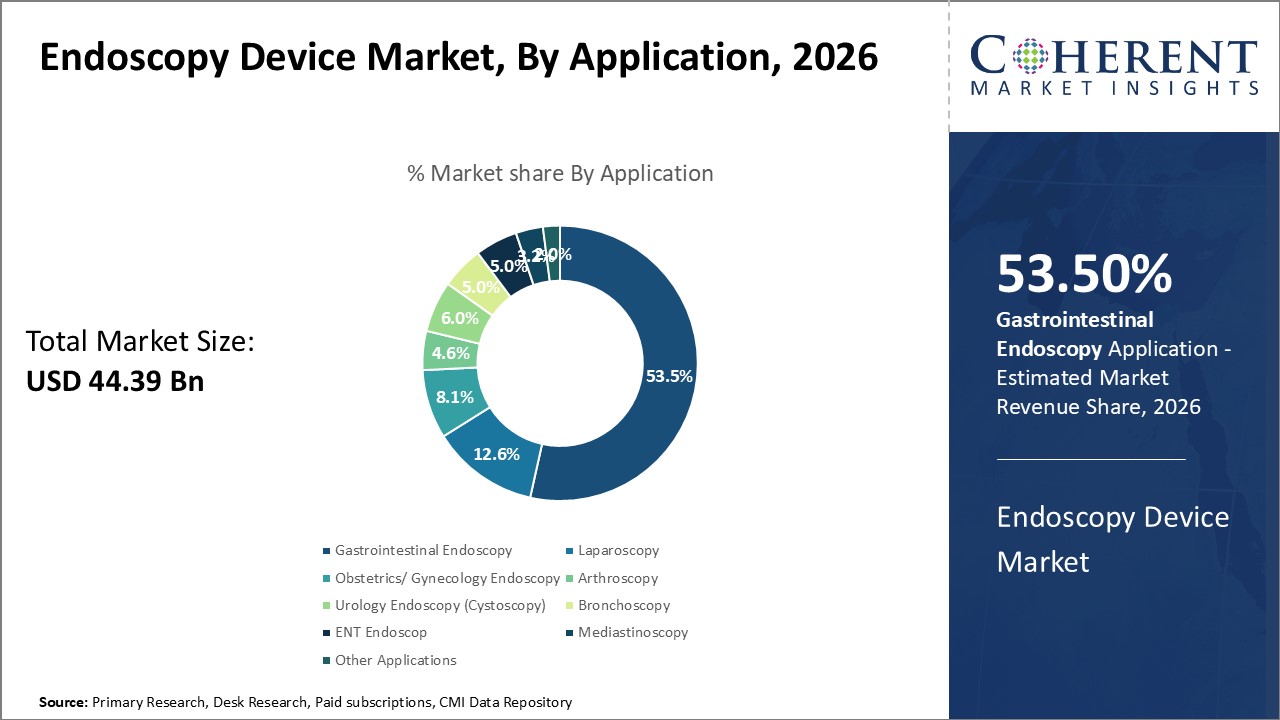
Global Endoscopy Device Market Insights, by Application - Prevalence of Gastro Intestinal Disorders
In terms of application, gastrointestinal endoscopy segment is estimated to contribute the highest market share of 53.5% in 2026, due to rising incidence of gastrointestinal disorders globally. Peptic ulcers, inflammation, cancer and other digestive diseases have significant public health impact and economic burden. Gastrointestinal endoscopy allows for direct internal examination of the esophagus, stomach and intestines.
Procedures such as esophagogastroduodenoscopy and colonoscopy are indispensable for diagnostic evaluation and management of a range of GI conditions. Population aging and adoption of western lifestyles in developing nations have majorly contributed to rising GI disease prevalence. Obesity, smoking, excessive alcohol intake can also contribute to the disease. Early detection through endoscopic screening programs has additionally boosted demand for endoscopy in gastrointestinal applications. With limited non-invasive alternatives, gastrointestinal endoscopy will continue to be the standard of care for GI disorders globally. The segment growth is driven by increasing health awareness and access to endoscopy services worldwide.
Global Endoscopy Device Market Insights, by End User - Growth In Hospital-Based Endoscopy Facilities
In terms of end user, hospitals & clinics segment is estimated to contribute the highest market share of 61.5% in 2026, owing to large in-house endoscopy facilities established in major hospitals. Hospitals provide dedicated endoscopy suites, trained staff and multidisciplinary teams required for complicated endoscopic procedures. These also serve a large patient volume through both outpatient and inpatient gastrointestinal, urology, pulmonary and other endoscopy facilities. Availability of advanced endotherapy options alongside quality peri-procedural care attracts more complex cases to hospitals.
Rising healthcare investments and government policies focusing on tertiary and quaternary care have enabled many hospitals to significantly scale up their endoscopy services. This has not only led to greater hospitalization rates but also increased the adoption of high-end capital equipment such as visualization systems, therapy devices, and robotic platforms. Growing medical tourism in regions like Asia Pacific can boost demand from hospital. The trend towards centralized endoscopy procedures performed in fully-equipped hospitals by specialized gastroenterologists rather than alternate settings can drive the segment growth.
Regional Insights
North America Endoscopy Device Market Trends and Analysis
North America dominates the global endoscopy device market with an estimated market share of 40.8% in 2026, owing to the strong presence of key industry players in the region. The U.S. accounts for the largest share of the market due to the advanced healthcare infrastructure and higher adoption rates of minimally invasive surgeries. Several leading OEMs such as Olympus, Boston Scientific, Johnson & Johnson, and Medtronic have their corporate headquarters located in the U.S., allowing for greater R&D investments and new product launches.
For instance, in September 2024, Olympus’s affiliate Odin Medical secured FDA 510(k) clearance for CADDIE, the first cloud‑based AI computer-aided detection system for colonoscopy, enabling real-time polyp detection and remote AI updates helping boost adenoma detection without extending procedure time.
Asia Pacific Endoscopy Device Market Trends and Analysis
Asia Pacific region is poised to emerge as the fastest growing market for endoscopy devices. Rapid infrastructure development and government initiatives aimed at modernizing healthcare systems across developing nations can drive the market growth. Countries such as China, India, Japan, and South Korea have become major manufacturing hubs, attracting global medical device giants to set up manufacturing facilities. Unlike developed markets, the Asia Pacific region offers comparatively lower operation costs for OEMs, allowing them to price their products competitively. The strengthening economic conditions alongside rising disposable income levels of consumers have also contributed to market expansion.
For instance, in April 2024, Fujifilm unveiled its Tracmotion device an advanced tool for Endoscopic Submucosal Dissection (ESD) at EndoCon 2024 in Delhi, India enhancing treatment precision for gastrointestinal lesions.
U.S. Endoscopy Device Market Trends and Analysis
The U.S. remains the largest market globally, driven by advanced healthcare infrastructure, high adoption of minimally invasive procedures, and a strong reimbursement framework. Increasing colorectal cancer screenings, rising preference for outpatient endoscopic procedures, and adoption of AI-enhanced imaging systems are key trends. The country also leads in robotic endoscopy innovation and clinical trials. Growing investment in ambulatory surgical centers (ASCs) is expanding procedural capacity. Regulatory support and faster FDA approvals further boost innovation and product launches.
For instance, in January 2024, AnX Robotica secured FDA clearance via the De Novo pathway for its NaviCam ProScan, the first AI-assisted reading tool for small‑bowel capsule endoscopy. This innovation significantly boosts diagnostic efficiency for gastrointestinal bleeding by helping physicians interpret capsule images faster and more accurately.
India Endoscopy Device Market Trends and Analysis
India’s endoscopy device market is witnessing rapid growth due to increasing prevalence of GI and liver disorders, rising medical tourism, and expanding access to healthcare. Government initiatives to upgrade public hospitals and growing private sector investments are boosting demand for endoscopic procedures. There's increasing awareness about early diagnosis and adoption of HD endoscopic systems in tier 1 and tier 2 cities. However, affordability and lack of trained professionals in rural areas remain challenges. International collaborations and local manufacturing are helping reduce costs and improve penetration.
For instance, in April 2026, FUJIFILM India launched its high-end ELUXEO 8000 Therapeutic Endoscopy System at the Mumbai LIVE event, bringing 4K imaging and advanced capabilities like ACI and tripler noise reduction to Indian clinicians. Additionally, domestic company, Pridex Medtech, has installed HD ENT and surgical endoscopy systems achieving a user base in over 6,000 hospitals nationwide making high-quality devices more accessible and serviceable locally.
Japan Endoscopy Device Market Trends and Analysis
Japan endoscopy device market is experiencing robust expansion, driven by the nation's aging population and the associated rise in chronic diseases, particularly gastrointestinal disorders and various cancers. This fuels demand for early and precise diagnosis and treatment. Significant advancements in technology, including the integration of AI for real-time image analysis and the development of sophisticated visualization systems, are improving diagnostic accuracy and procedural efficiency. The growing preference for minimally invasive surgical procedures further contributes to the market's dynamism. However, high costs associated with advanced endoscopic devices and the ongoing need for skilled technicians present challenges to widespread adoption.
Germany Endoscopy Device Market Trends and Analysis
Germany endoscopy device market is experiencing significant growth, driven by a high prevalence of chronic diseases, a strong emphasis on minimally invasive procedures, and an aging population. Leading manufacturers like Karl Storz, Richard Wolf, Olympus, and Fujifilm are innovating with AI-assisted diagnosis and advanced imaging technologies. However, the market faces challenges from stringent EU regulations, high costs of advanced devices, and the continuous need for training skilled professionals. There's also an increasing focus on disposable endoscopes to enhance infection control.
Market Report Scope
Endoscopy Device Market Report Coverage
| Report Coverage | Details | ||
|---|---|---|---|
| Base Year: | 2025 | Market Size in 2026: | USD 44.39 Bn |
| Historical Data for: | 2020 To 2024 | Forecast Period: | 2026 To 2033 |
| Forecast Period 2026 to 2033 CAGR: | 8.0% | 2033 Value Projection: | USD 76.07 Bn |
| Geographies covered: |
| ||
| Segments covered: |
| ||
| Companies covered: | Olympus Corporation, Boston Scientific Corporation, Fujifilm Holdings Corporation, KARL STORZ SE & Co. KG, Stryker Corporation, Medtronic, plc, Johnson & Johnson, Smith & Nephew plc, Richard Wolf GmbH, Cook Medical, HOYA Corporation, Nipro Corporation, Ambu A/S, Intuitive Surgical, Inc., B. Braun Melsungen AG, Teleflex Incorporated, CapsoVision, Inc., Laborie Medical Technologies Inc., DantschkeMedizintechnik GMBH & Co. KG, and Fortimedix Surgical B.V. | ||
| Growth Drivers: |
| ||
| Restraints & Challenges: |
| ||
Global Endoscopy Device Industry News
- In May 2025, Olympus unveiled the OLYSENSE Platform with the CADDIE AI-driven polyp detection module at Digestive Disease Week. The cloud-enabled system flags suspected lesions in real time, potentially standardizing detection performance across varying operator skill levels.
- In April 2025, Fujifilm Healthcare Europe introduced ELUXEO 8000, an advanced endoscopy platform that integrates workflow management and high-resolution imaging. The system’s modular upgrades signal a competitive pivot toward lifecycle-extension models in which firmware updates prolong device relevance without full hardware replacement.
- In April 2025, BVI Medical gained FDA clearance for a laser endoscopic glaucoma system that incorporates enhanced visualization of ocular anatomy, suggesting that the ophthalmology segment may increasingly adopt cross-platform endoscopic designs.
- In January 2024, the U.S. FDA approved EndoSound’s Vision System, a novel endoscopic ultrasound device that attaches to upper GI endoscopes. This device, which received FDA breakthrough designation in July 2021, includes an ultrasound beamformer, a reusable transducer, and a disposable mounting kit, transforming standard endoscopes into endoscopic ultrasound systems.
- In November 2023, Olympus Corporation launched EVIS X1, a cutting-edge endoscopy system tailored for the Chinese market. The system was showcased at the 6th annual China International Import Expo in Shanghai from November 5 to November 10, 2025.
Top Manufacturers and Production Footprint
Olympus Corporation (Japan)
- Manufacturing Hubs:
- Primary Facilities: Japan (Tokyo)
- Additional Sites: U.S. (Pennsylvania), Germany (Hamburg), China
- Production Focus:
- High-definition and 4K endoscopes (e.g., VISERA 4K UHD system)
- Gastroscopes, colonoscopes
- Surgical imaging systems
- Capacity Optimization: Modular assembly, supporting approximately 40% of the global endoscope supply.
Stryker Corporation (U.S.)
- Manufacturing Hubs:
- Core Operations: Michigan (U.S.)
- Additional Facilities: Ireland (Cork), Germany, India
- Production Focus:
- 4K endoscopic camera systems (e.g., 1688IM Platform)
- Arthroscopes
- Information management systems (SDC3)
KARL STORZ SE & Co. KG (Germany)
- Manufacturing Hubs:
- Headquarter: Tuttlingen (Germany)
- Additional Plants: U.S. (California), Brazil, South Korea
- Production Focus:
- Rigid and flexible endoscopes
- 3D imaging systems
- Insufflation devices
- Tuttlingen Site Role: Functions as a "center of excellence" for precision optics, producing approximately 25% of global rigid endoscopes.
Johnson & Johnson (U.S.)
- Manufacturing Hubs:
- Key Sites: New Jersey (U.S.), Belgium, Japan
- Production Focus:
- Advanced energy devices (e.g., Harmonic scalpel)
- Laparoscopes
- Biopsy forceps
- Capacity Prioritization: Minimally invasive surgical tools, with robotic endoscopy R&D co-located in production facilities.
Boston Scientific Corporation (U.S.)
- Manufacturing Hubs:
- Primary Base: Massachusetts (U.S.)
- Supplemented By: Mexico, Ireland
- Production Focus:
- Urological endoscopes
- Biliary stents
- Endoscopic ultrasound (EUS) devices
- Facility Emphasis: Catheter-based systems, with approximately 60% of output targeting GI interventions.
Market Segmentation
- Product Type Insights (Revenue, USD Bn, 2021 - 2033)
- Rigid Endoscopes
- Flexible Endoscopes
- Endoscopic Visualization Systems
- Endoscopic Accessories
- Application Insights (Revenue, USD Bn, 2021 - 2033)
- Gastrointestinal Endoscopy
- Laparoscopy
- Obstetrics/ Gynecology Endoscopy
- Arthroscopy
- Urology Endoscopy (Cystoscopy)
- Bronchoscopy
- Ent Endoscopy
- Mediastinoscopy
- Other Applications
- End User Insights (Revenue, USD Bn, 2021 - 2033)
- Hospitals & Clinics
- Ambulatory Surgical Centers
- Research Laboratories
- Others
- Regional Insights (Revenue, USD Bn, 2021 - 2033)
- North America
- U.S.
- Canada
- Latin America
- Brazil
- Argentina
- Mexico
- Rest of Latin America
- Europe
- Germany
- U.K.
- Spain
- France
- Italy
- Russia
- Rest of Europe
- Asia Pacific
- China
- India
- Japan
- Australia
- South Korea
- ASEAN
- Rest of Asia Pacific
- Middle East
- GCC Countries
- Israel
- Rest of Middle East
- Africa
- South Africa
- North Africa
- Central Africa
- Key Players Insights
- Olympus Corporation
- Boston Scientific Corporation
- Fujifilm Holdings Corporation
- KARL STORZ SE & Co. KG
- Stryker Corporation
- Medtronic, plc
- Johnson & Johnson
- Smith & Nephew plc
- Richard Wolf GmbH
- Cook Medical
- HOYA Corporation
- Nipro Corporation
- Ambu A/S
- Intuitive Surgical, Inc.
- Braun Melsungen AG
- Teleflex Incorporated
- CapsoVision, Inc.
- Laborie Medical Technologies Inc.
- DantschkeMedizintechnik GMBH & Co. KG
- Fortimedix Surgical B.V.
Sources
Stakeholders
- Endoscopy device manufacturers
- Healthcare professionals (Gastroenterologists, Surgeons)
- Key Opinion Leaders (KOLs) in medical device industry
- Distributors and Suppliers of endoscopy devices
- Others
Magazines
- Endoscopy Today
- Medical Device News Magazine
- Gastroenterology & Endoscopy News
- Others
Journals
- Journal of Gastroenterology and Hepatology
- Surgical Endoscopy
- Gastrointestinal Endoscopy
- Others
Newspapers
- The Wall Street Journal
- The Financial Times
- The New York Times (Health Section)
- Others
Associations
- American Society for Gastrointestinal Endoscopy (ASGE)
- European Society of Gastrointestinal Endoscopy (ESGE)
- Society of American Gastrointestinal and Endoscopic Surgeons (SAGES)
- Others
Public Domain sources
- World Health Organization (WHO)
- U.S. Food and Drug Administration (FDA)
- Centers for Disease Control and Prevention (CDC)
- Others
Proprietary Elements
- CMI Data Analytics Tool
- Proprietary CMI Existing Repository of information for last 8 years
*Definition: Global endoscopy device market consists of companies that manufacture and sell endoscopy equipment and accessories used for minimally invasive diagnostic and surgical procedures inside the body. Some key products in this market include endoscopes, visualization systems, surgical instruments, accessories like biopsy valves and brushes, and other auxiliary equipment used in endoscopic examinations and surgeries across various medical specialty areas like gastroenterology, pulmonary, ENT, and urology. The devices aid in early disease diagnosis and less invasive.
Get access to 250+ pages report
Every segment, forecast, competitor profile and data table behind the analysis above — available for instant download.
- ESOMAR Member
- ISO 9001:2015 Certified
- D-U-N-S Registered
- GDPR & CCPA Compliant
Missing comfort of reading report in your local language? Find your preferred language:
Transform your Strategy with Exclusive Trending Reports
Frequently Asked Questions
The endoscopy device market is estimated to be valued at USD 44.39 Bn in 2026, and is expected to reach USD 76.07 Bn by 2033.
The CAGR of the endoscopy device market is projected to be 8.0% from 2026 to 2033.
Increasing prevalence of cancer and gastrointestinal diseases and growing preference for minimally invasive surgeries are the major factors driving the growth of the global endoscopy device market.
High cost of endoscopy procedures and risk of infection and side effects associated with endoscopy procedures are the major factors hampering the growth of the global endoscopy device market.
In terms of product type, the rigid endoscopes segment is estimated to dominate the market in 2026.
Olympus Corporation, Boston Scientific Corporation, Fujifilm Holdings Corporation, KARL STORZ SE & Co. KG, Stryker Corporation, Medtronic, plc, Johnson & Johnson, Smith & Nephew plc, Richard Wolf GmbH, Cook Medical, HOYA Corporation, Nipro Corporation, Ambu A/S, Intuitive Surgical, Inc., B. Braun Melsungen AG, Teleflex Incorporated, CapsoVision, Inc., Laborie Medical Technologies Inc., DantschkeMedizintechnik GMBH & Co. KG, and Fortimedix Surgical B.V. are the major players in the global endoscopy device market.
North America is expected to lead the global endoscopy device market in 2026.