

Ultrasound Devices Market Analysis & Forecast: 2026-2033
Ultrasound Devices Market is estimated to be valued at USD 9.25 Bn in 2026 and is expected to reach USD 13.72 Bn in 2033, exhibiting a compound annual growth rate (CAGR) of 5.8% from 2026 to 2033.
Key Takeaways
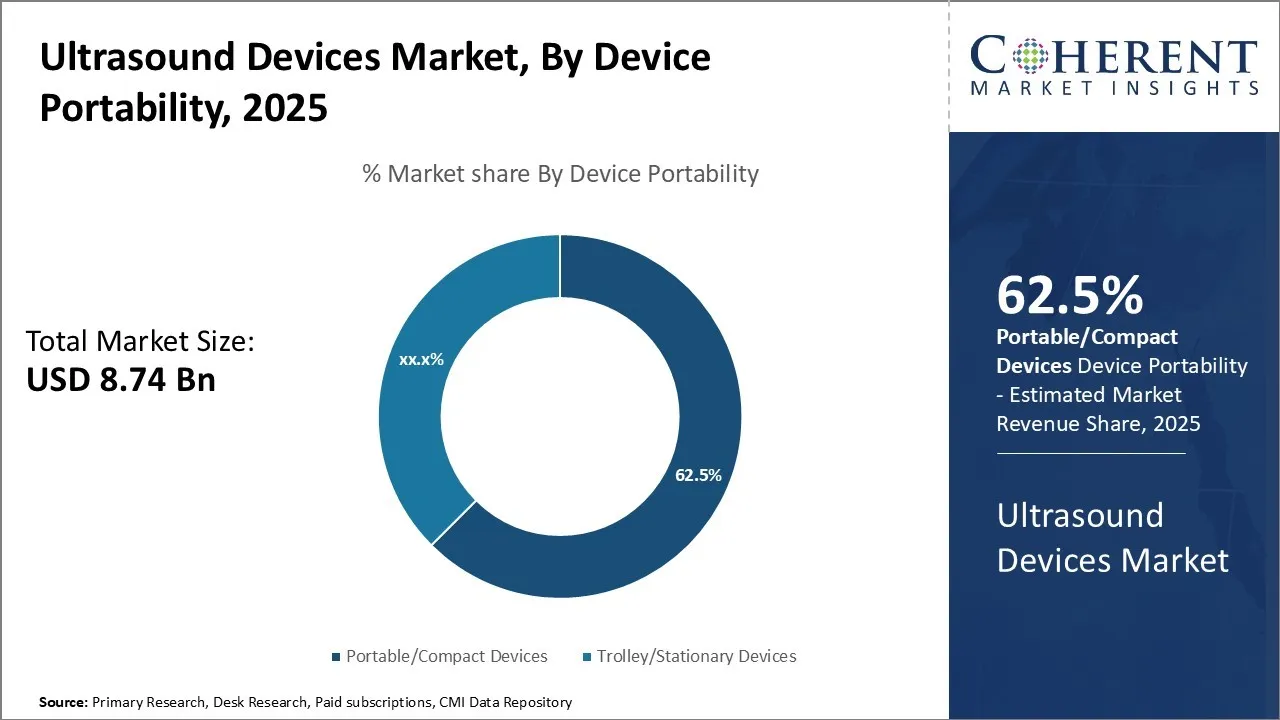
- According to Device Type, The Portable/Compact devices Category is anticipated to account for the largest share of 63.5% for the Ultrasound Devices market in 2026. Portable systems are being used more often in home care, ambulatory clinics, and smaller hospitals as a result of the growing trend toward outpatient and decentralized treatment.
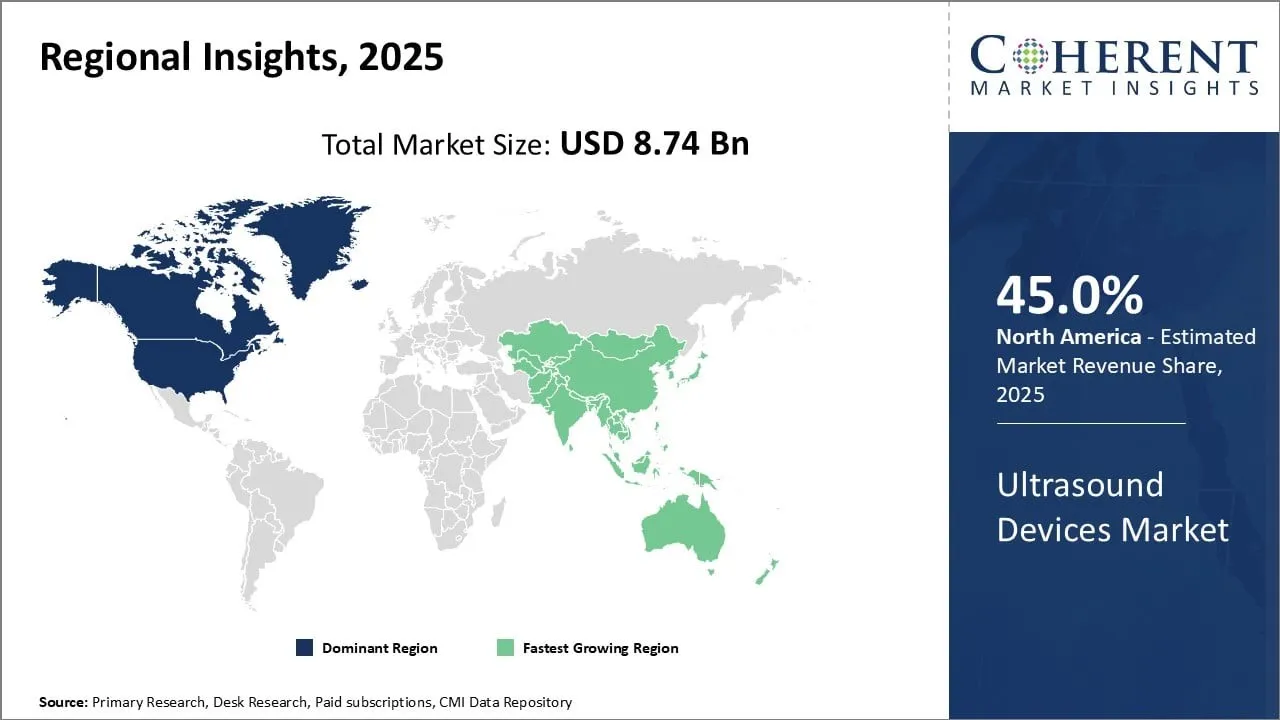
- According to region, North America holds the largest market share of 45.0% for Ultrasound Devices market growth by 2026, due to artificial intelligence (AI) integration.
- Asia Pacific is considered to be the most largest region with 20.4% shares by 2026, due to increasing government investments.
- Europe is considered to be the second largest dominating region for Ultrasound Devices market with 30.3% shares by 2026, because of rising geriatric populatio.
Market Overview
The Ultrasound Devices Market Size is expanding rapidly due to a number of factors which includes growing applications across medical disciplines, the prevalence of chronic diseases, the need for point of care and minimally invasive diagnostics, and technology improvements. The global ultrasound devices market has witnessed significant growth over the past few years owing to the rising geriatric population and the growing prevalence of chronic diseases worldwide. Ultrasound imaging has gained prominence in diagnosis and treatment monitoring applications across various healthcare domains due to advantages such as being non-invasive, non-ionizing, and enabling real-time evaluation of the internal structures of the body.
Current Events and Its Impact
Event | Description and Impact |
Integration of Industry 4.0 |
|
Expansion of Telemedicine and Remote Ultrasound |
|
Pipeline Analysis
Germany stands out as a leader in the adoption and development of advanced ultrasound technologies, including a robust pipeline of AI-integrated and 3D/4D imaging devices. Major global players, such as Siemens Healthineers and Philips, routinely launch pilot projects and collaborate with local research institutions to test next-generation ultrasound equipment. Pipeline activities also reflect Germany’s strong focus on diagnostic innovation, especially in cardiology and women’s health.
- Current Industry Events of 2026
- Market Size Estimation
- Regional Breakdown
- Competitive Landscape
- Customer Intelligence
- Segmental Analysis
- Pricing Analysis
- Key Market Drivers, Challenges & Future Trends
- Customized Insights Section
Patent Landscape
Germany’s established medical device sector contributes significantly to the European ultrasound patent portfolio. The country’s emphasis on R&D, particularly in large companies and technical universities, leads to a high output of patents concerning improved transducer technology, workflow optimization, and AI-based automation in ultrasound devices.
Reimbursement Scenario
- Reimbursement is generous due to comprehensive state-funded healthcare systems, supporting widespread use of ultrasound for diagnostics and preventive care.
- There is increasing recognition and funding for innovation-driven upgrades, from portable units to advanced imaging modalities.
Prescribers’ Preference
- Prescribers in the Nordics strongly favor devices that are adaptable to a broad range of clinical settings, with emphasis on remote use, high integration with EHR systems, and minimal training requirements.
- Ultrasound devices with diagnostic centers have become particularly popular for their versatility and seamless integration into existing healthcare workflows, allowing clinicians to deliver accurate and timely diagnostics across multiple care environments.
- Advanced, AI-driven interpretation is particularly valued in rural and telehealth settings.
Segmental Insights
Ultrasound Devices Market Insights, by Product Type
In terms of product type, the 3D Ultrasound segment is expected to contribute largest share of the Ultrasound Devices market trends in 2026. Due to its widespread accessibility and crucial clinical utility, the 3D ultrasound segment is expected to continue to lead the ultrasound devices market in terms of both revenue and volume through 2030.
Ultrasound Devices Market Insights, by Application
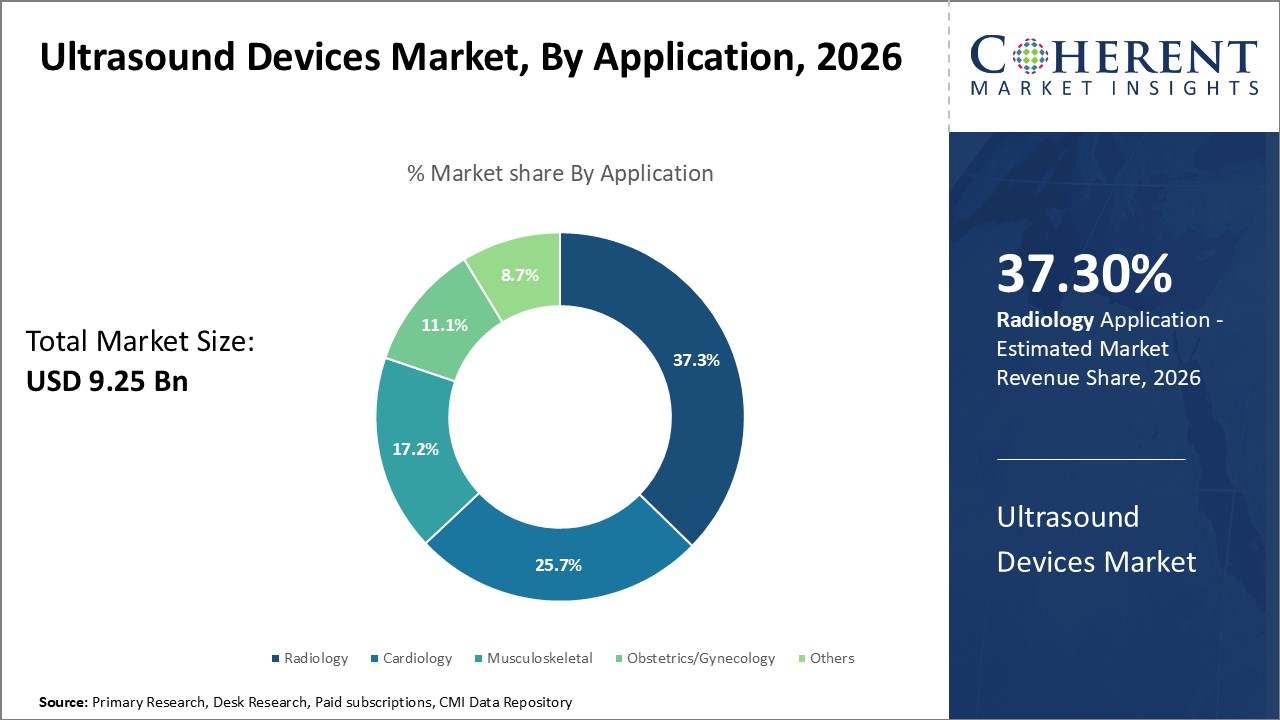
In terms of application, the radiology segment is expected to contribute largest share of the Ultrasound Devices market trends in 2026. The use of artificial intelligence (AI) in ultrasound systems, which enhances diagnostic accuracy, aids in early disease detection (e.g., with AI modules that can detect ovarian cancers), and motivates clinics and hospitals to modernize their radiology equipment, further solidifies radiology's dominance.
The revenue contribution of the radiology/general imaging category is higher than that of other important segments, including cardiology, urology, and obstetrics/gynecology. A wide range of clinical applications are made possible by the general imaging component, which includes disease identification, injury assessment, therapy monitoring, and more.
Ultrasound Devices Market Insights, by Device Portability
In terms of device portability, the portable/compact devices segment is expected to contribute largest share of the Ultrasound Devices market trends in 2026. As healthcare providers place a higher priority on accessibility, flexibility, and real-time imaging across a variety of clinical settings, the portable/compact devices segment is anticipated to continue to be one of the most dynamic and fastest-growing segments of the worldwide ultrasound market.
Regional Insights
North America Ultrasound Devices Market
North America has historically been the dominant region as it drives major Ultrasound Devices Market Trends. Ultrasound use has increased in a number of medical specialties, including obstetrics, cardiology, oncology, and emergency care, as a result of the broad adoption of cutting-edge technology, such as point-of-care, portable, and AI-integrated ultrasound machines.
Leading companies in the market, such as GE Healthcare, Philips, Siemens Healthineers, and Butterfly Network, keep launching cutting-edge goods and forming strategic alliances, which increases competition and advances technology.
Asia Pacific Ultrasound Devices Market
Revenue from diagnostic ultrasound equipment is now the greatest, but over the coming years, the therapeutic ultrasound market is expected to increase at the quickest rate due in large part to new clinical applications and growing demand for least invasive therapies.
Due to their expanding use in primary care, emergency medicine, and point-of-care settings—particularly in rural or resource-constrained settings—compact and handheld ultrasound devices are rapidly becoming the most popular type of device portability, accounting for around 20.4% of the market in 2024.
Ultrasound Devices Market In Europe
The main factors driving this expansion include the growing need for minimally invasive diagnostic procedures, improvements in portable and 3D/4D ultrasound technology, and the rise in chronic illnesses including cancer and cardiovascular disorders. Ultrasound is crucial for a variety of clinical applications, such as cardiology, gynecology, urology, and musculoskeletal imaging, due to its non-invasive, radiation-free nature and affordability.
Ultrasound Devices Market Dominating Countries
U.S Ultrasound Devices Market
The wide reimbursement policies, high healthcare costs, and widespread use of portable and small ultrasound devices in the US healthcare system all contribute to the market's rapid expansion. To keep the nation's technological edge, major domestic and foreign companies like GE Healthcare, Siemens Healthineers, and Canon Medical Systems promote constant innovation and regular gadget launches.
India Ultrasound Devices Market
India’s ultrasound devices market is rapidly expanding, propelled by increasing healthcare infrastructure development, a rising burden of chronic diseases, and greater governmental and private sector investment in medical imaging. The country sees strong adoption in urban hospitals and diagnostic centers, while portable and affordable systems are increasingly reaching semi-urban and rural clinics to support broader healthcare access.
Ultrasound Devices Market In China
A burgeoning middle class, a large patient base, and aggressive healthcare modernization have made China one of the most active and rapidly expanding ultrasound marketplaces in the world. Advanced ultrasound technology have become widely used as a result of the government's "Healthy China 2030" policy and significant investments in healthcare, with a focus on cardiology, oncology, maternal-child health, and rural healthcare initiatives.
Market Report Scope
Ultrasound Devices Market Report Coverage
| Report Coverage | Details | ||
|---|---|---|---|
| Base Year: | 2025 | Market Size in 2026: | USD 9.25 Bn |
| Historical Data for: | 2020 To 2024 | Forecast Period: | 2026 To 2033 |
| Forecast Period 2026 to 2033 CAGR: | 5.8% | 2033 Value Projection: | USD 13.72 Bn |
| Geographies covered: |
| ||
| Segments covered: |
| ||
| Companies covered: | GE Healthcare, Koninklijke Philips N.V., Toshiba Medical Corporation, Hitachi Medical Corporation, Analogic Corporation, Fujifilm Corporation, Siemens Healthcare, Samsung Medison Co. Ltd., and Esaote S.p.A. | ||
| Growth Drivers: |
| ||
| Restraints & Challenges: |
| ||
Ultrasound Devices Market: Growth Drivers
- Increasing prevalence of chronic diseases: The increasing prevalence of chronic diseases across the globe is one of the major factors driving the growth of the global ultrasound devices market. For instance, according to the Centers for Disease Control and Prevention (CDC), in 2021, around 18.2 million adults aged 20 and older had coronary artery disease (CAD) in the U.S. Heart disease is the leading cause of death among people in the U.S. The high incidence of chronic diseases increases the demand for huge diagnostic procedures, which, in turn, drives the market.
- Technological advancements in ultrasound devices: Technological advancements in ultrasound devices have opened various new avenues for use across diverse industries from healthcare to industrial production. Traditionally limited to obstetrics and gynecology for imaging soft tissues, ultrasounds are now being utilized for an array of diagnostic and therapeutic purposes due to development of high frequency transducers, 3D/4D imaging, compound imaging and more sophisticated software.
- Increasing applications of ultrasound devices: The application of ultrasound devices has widened significantly over the past decade across various sectors of healthcare. Ultrasound imaging is now routinely used not just in diagnostics but also in image-guided procedures and treatments. This has helped ultrasound technology to penetrate deeper into the overall patient management process. For instance, on July 13, 2023, Konica Minolta Healthcare Americas, Inc., a world-class provider and market leader in diagnostic imaging solutions, announced the introduction of PocketPro H2, a new wireless handheld ultrasound device for general imaging in point-of-care applications.
Ultrasound Devices Market: Restraints
- High cost of advanced ultrasound devices: The high cost of advanced ultrasound devices is presenting a major challenge for the growth of the global ultrasound devices market. Ultrasound technology has vastly improved in recent years with the development of new high-end models that offer better imaging capabilities and features compared to traditional systems.
However, these state-of-the-art ultrasound machines come with a very steep price tag, which is prohibitive for many healthcare organizations and diagnostic centers, especially in developing regions with limited resources.
- Shortage of skilled Sonographers: The shortage of skilled sonographers is proving to be a major hurdle for the global ultrasound devices market to grow to its full potential. Sonographers play a vital role in performing ultrasound tests prescribed by physicians and radiologists. They are specially trained medical professionals who acquire and interpret ultrasound images. However, many countries are facing an acute shortage of qualified sonographers.
- Stringent regulations for approval and commercialization: Stringent regulations for approval and commercialization of ultrasound devices are one of the major factors restraining the growth of the global ultrasound devices market. Ultrasound Devices with Cardiology represent a vital application area; however, these specialized devices must comply with rigorous standards to ensure accurate and safe imaging for cardiac assessments. The ultrasound device industry operates in a highly regulated environment with strict rules laid down by government and regulatory bodies overseeing product approval and safety standards.
Ultrasound Devices Market: Trends
- Adoption of artificial intelligence and robotics in ultrasound devices: The integration of artificial intelligence and robotics capabilities into ultrasound devices is having a significant impact on the global ultrasound devices market. By enabling automation, these advanced technologies are enhancing the efficiency and functionality of ultrasound exams.
- For instance, on November 7, 2023, Royal Philips announced it had received a second round of funding from the Bill & Melinda Gates Foundation to accelerate global adoption of AI algorithms on philips lumify handheld ultrasound. The ultrasound system's training period can be shortened from weeks to just a few hours by utilizing artificial intelligence to streamline critical measures that are necessary to detect anomalies during pregnancy.
- Increased adoption of 3D and 4D ultrasound imaging: The increased adoption of 3D and 4D ultrasound imaging technologies is significantly influencing the global ultrasound devices market. These advanced imaging modalities provide excellent visualization of anatomical structures in three dimensions and in real-time motion known as 4D. This allows doctors to gain deeper clinical insights into the organ functionality, tissue characteristics, blood flow, etc. that may not be apparent through regular 2D ultrasound scans.
- 3D/4D ultrasounds are especially useful in fetal imaging during pregnancy, where it facilitates detecting any abnormalities in the stages. Expecting mothers also find the realistic moving 3D/4D images of the growing fetus to be a wonderful experience.
- Product launches and partnerships among market players: The way product launches and partnerships among market players are shaping the global ultrasound devices market is quite significant. Over the past few years, there has been a noticeable increase in the number of companies introducing new and innovative ultrasound products through strategic partnerships and collaborations. This allows them to expand their portfolio of offerings and enter new market segments.
Ultrasound Devices Market: Opportunities
- Portable/compact ultrasound devices: Portable and compact ultrasound devices have huge potential in the global ultrasound devices market. With advancements in technology, ultrasound devices are becoming smaller, more affordable and more accessible. These portable ultrasound machines are revolutionizing point-of-care diagnostics across various clinical settings.
- For instance, in November 2022, Royal Philips, a global leader in health technology, announced the global launch of a next-generation compact portable ultrasound solution at the Radiological Society of North America (RSNA). Philips’ new Compact 5000 Series aims to bring the diagnostic quality associated with premium cart-based ultrasound systems to more patients.
- Multi-specialty ultrasound applications: Multi-specialty ultrasound applications have a vast potential to drive growth in the global ultrasound devices market. Traditionally, ultrasound devices have been used majorly for diagnostic imaging purposes in obstetrics and gynecology. However, with advancements in technology their applications have vastly expanded beyond imaging to areas such as treatment, monitoring, and surgery.
Ultrasound Devices Market: Key Developments
- December 2024, In addition to revealing an even more varied product selection, Samsung Electronics Health and Medical Equipment Business and Samsung Medison attended the 2024 Radiological Society of North America (RSNA) conference in Chicago, Illinois, from December 1–5 (local time). Through this RSNA, Samsung offered a "pediatric integrated solution" that would include all of its medical diagnostic instruments in order to increase its competitiveness across medical specialties following the introduction of the new OB & GYN ultrasound diagnostic system, HERA Z20.
- June 2025, Philips has launched a new point-of-care (POC) ultrasound system designed to broaden the accessibility of ultrasound for diagnostic and therapeutic interventions. Use cases for the Flash 5100 POC system include musculoskeletal imaging, emergency medicine, critical care, and anesthesia. The system is based on Philips' current ultrasound technology for general imaging and cardiology.
- December 2024, French-based SuperSonic Imagine has launched PocketVu, a fleet of handheld ultrasound devices for diagnostic medical ultrasound imaging. PocketVu features lightweight, multiple scanning modes, AI-powered auto image quality adjustment, compatibility with DICOM 3.0 systems, and long battery life, the company said, adding that PocketVu supports a range of applications, including abdominal, cardiac, musculoskeletal, vascular, and obstetric imaging.
Analyst Opinion
- The global ultrasound devices market is expected to witness steady growth over the forecast period. The rising prevalence of chronic diseases would drive the demand for ultrasound devices across the world.
- The development of portable ultrasound scanners and device miniaturization due to technological improvements is facilitating the widespread acceptance of these products in emerging markets.
- Increased application areas such as cardiac, gynecological, and vascular ultrasound procedures will provide opportunities for ultrasound original equipment manufacturer (OEMs).
- However, the high cost of advanced ultrasound devices could hinder market growth to some extent. Stringent regulations would also impact entry of new players.
Speak to the analyst
Want personalized insights?
Take the findings above to one of our principal consultants, or have the report rebuilt around the segments, geographies and competitors you actually track.
Market Segmentation
- By Product Type (Revenue, USD Bn, 2021 - 2033)
- 2D Ultrasound
- 3D Ultrasound
- 4D Ultrasound
- Doppler Ultrasound
- High Frequency Focused Ultrasound
- By Application (Revenue, USD Bn, 2021 - 2033)
- Cardiology
- Radiology
- Musculoskeletal
- Obstetrics/Gynecology
- Others
- By Device Portability (Revenue, USD Bn, 2021 - 2033)
- Trolley/Stationary Devices
- Portable/Compact Devices
- By End User (Revenue, USD Bn, 2021 - 2033)
- Hospitals
- Diagnostic Centers
- Ambulatory Surgery Centers
- By Region (Revenue, USD Bn, 2021 - 2033)
- North America
- U.S.
- Canada
- Latin America
- Brazil
- Argentina
- Mexico
- Rest of Latin America
- Europe
- Germany
- U.K.
- Spain
- France
- Italy
- Russia
- Rest of Europe
- Asia Pacific
- China
- India
- Japan
- Australia
- South Korea
- ASEAN
- Rest of Asia Pacific
- Middle East
- GCC Countries
- Israel
- Rest of Middle East
- Africa
- South Africa
- North Africa
- Central Africa
- North America
- Company Profile
- GE Healthcare
- Koninklijke Philips N.V.
- Toshiba Medical Corporation
- Hitachi Medical Corporation
- Analogic Corporation
- Fujifilm Corporation
- Siemens Healthcare
- Samsung Medison Co. Ltd.
- Esaote S.p.A.
Sources
Primary Research interviews
- Cardiologists
- Imaging Department Heads
- Public Health Officials
- Medical Device Distributors
- Regulatory Affairs Managers (Hospitals)
Databases
- WHO Global Health Observatory
- OECD Health Statistics
- FDA Medical Device Database
- EMBASE
Magazines
- DOTmed Healthcare Business News
- Applied Radiology
- HealthCare Business News
- Medical Device News Magazine
Journals
- Journal of Clinical Ultrasound
- Medical Physics
- Journal of Diagnostic Medical Sonography
- Ultrasonic Imaging
Newspapers
- Business Standard – Health
- Economic Times – Healthcare
- Financial Times – Life Sciences
- The Telegraph – Health
- USA Today – Health
Associations
- Society of Diagnostic Medical Sonography (SDMS)
- American College of Radiology (ACR)
- Medical Imaging & Technology Alliance (MITA)
- Indian Radiological and Imaging Association (IRIA)
- British Medical Ultrasound Society (BMUS)
Proprietary Elements
- CMI Data Analytics Tool, Proprietary CMI Existing Repository of information for last 8 years
*Definition: Ultrasound devices are medical equipment that use high-frequency sound waves to create images of the inside of the body. This non-invasive diagnostic method is used to visualize muscles, tendons, vessels, and internal organs, to capture their size, structure, and any pathological lesions. The images produced by ultrasound devices can help in diagnosing a variety of diseases and conditions. These devices are commonly used in various medical fields such as obstetrics, cardiology, radiology, and more.
Get access to 250+ pages report
Every segment, forecast, competitor profile and data table behind the analysis above — available for instant download.
- ESOMAR Member
- ISO 9001:2015 Certified
- D-U-N-S Registered
- GDPR & CCPA Compliant
Missing comfort of reading report in your local language? Find your preferred language:
Transform your Strategy with Exclusive Trending Reports
Frequently Asked Questions
The Ultrasound Devices Market size is estimated to be valued at USD 9.25 Bn in 2026, and is expected to reach USD 13.72 Bn by 2033.
High cost of advanced ultrasound device, the shortage of skilled sonographers, and stringent regulations for approval and commercialization are key factors that can hamper the growth of the global market.
The major factors driving the market growth include the increasing prevalence of chronic diseases, technological advancements in ultrasound devices, and increasing applications of ultrasound devices.
The leading device portability segment is portable/compact devices in the market.
The CAGR of the Ultrasound Devices Market is projected to be 5.8% from 2026 to 2033.
Yes, the high cost of advanced ultrasound systems is a major barrier to adoption, limiting access particularly for smaller healthcare providers in developing regions.
Major players operating in the market are GE Healthcare, Koninklijke Philips N.V., Toshiba Medical Corporation, Hitachi Medical Corporation, Analogic Corporation, Fujifilm Corporation, Siemens Healthcare, Samsung Medison Co. Ltd., and Esaote S.p.A.