

Petri Dish Market Size and Trends Forecast – 2026 - 2033
The petri dish market is estimated to be valued at USD 539.4 Mn in 2026 and is expected to reach USD 753.9 Mn by 2033, exhibiting a compound annual growth rate (CAGR) of 4.9% from 2026 to 2033.
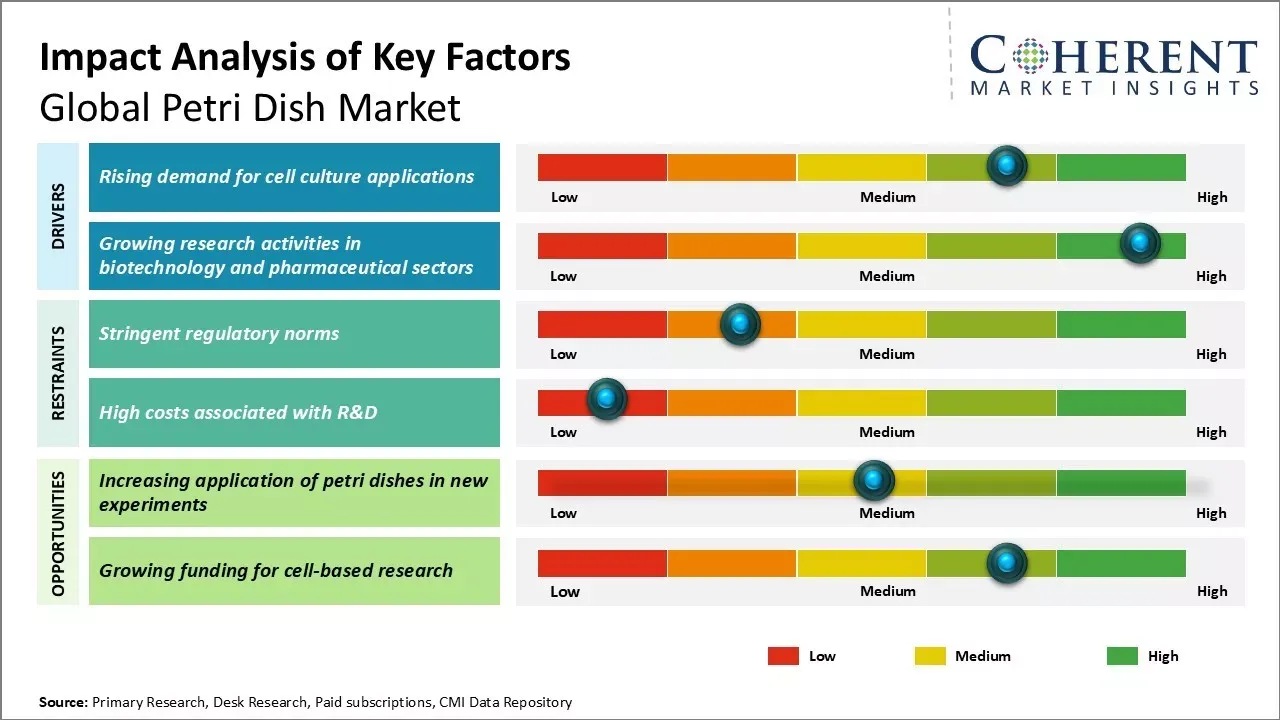
Key Takeaways of the Petri Dish Market
- Based on product type, the glass petri dish segment is expected to contribute the highest share of the market with 41.6 % in 2026.
- Based on application, microbiology and bacteriology segment is expected to contribute the highest share of the market with 43.5 % in 2026.
- Based on end user, academic and research institutions segment is expected to contribute the highest share of the global petri dish market with 44.7 % in 2026.
- North America is expected to top the global market with 35.0 % share in 2026.
Market Overview
Global petri dish market growth is driven by the rising demand for pre-sterilized and disposable petri dishes from research laboratories and pharmaceutical companies. Rising research into new drug development along with increased diagnostics testing for various diseases prompt more end users to opt for single-use petri dishes. Growing biotechnology sector worldwide can boost the consumption of petri dish for cell and microbiological research activities.
However, stringent regulations pertaining to the production and packaging of these labware products can hamper the market growth.
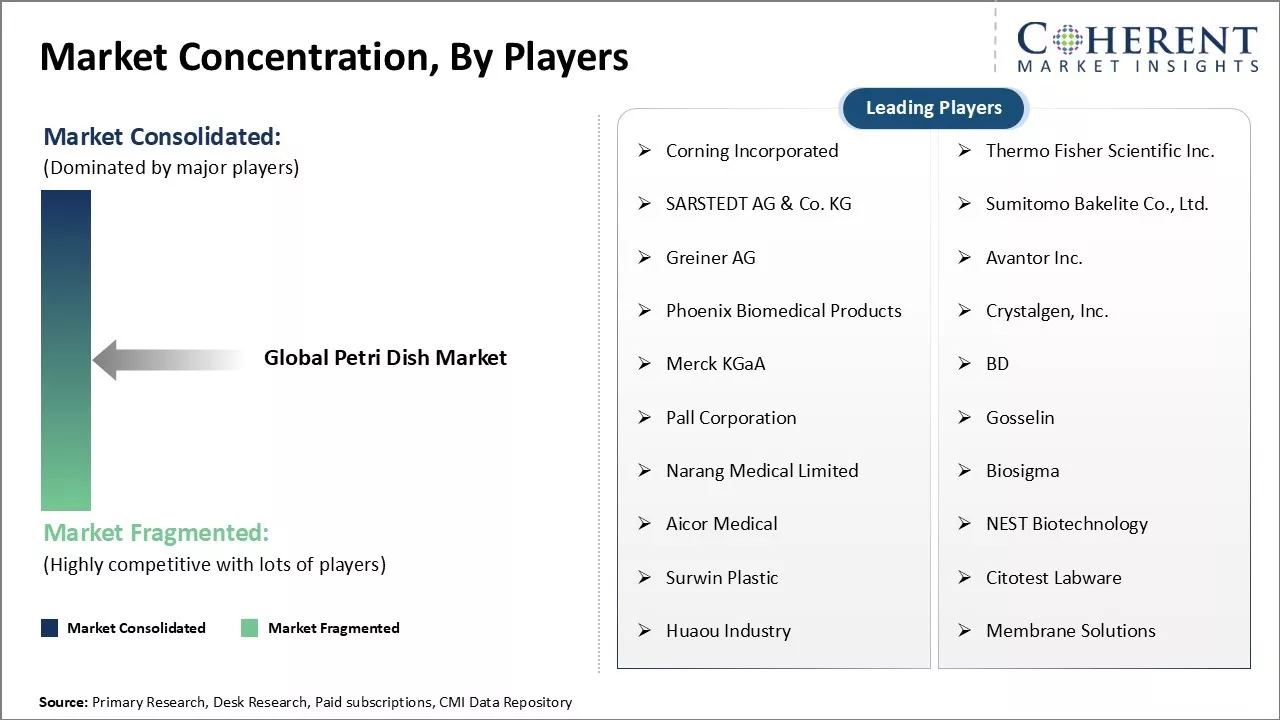
Market Concentration and Competitive Landscape
Current Events and Its Impact
Current Events | Description and its impact |
Escalating Trade Tariffs on Laboratory Equipment |
|
Microfluidic Technology Disruption |
|
- Current Industry Events of 2026
- Market Size Estimation
- Regional Breakdown
- Competitive Landscape
- Customer Intelligence
- Segmental Analysis
- Pricing Analysis
- Key Market Drivers, Challenges & Future Trends
- Customized Insights Section
Market Trends
Increasing Demand from Pharmaceutical and Clinical Diagnostics
Pharmaceutical companies rely heavily on petri dishes for cultivating microorganisms, testing drug efficacy, and ensuring sterility during drug development. As the global pharmaceutical industry expands with the rising prevalence of chronic diseases such as diabetes, cancer, and infectious diseases, the need for precise and reliable microbial culture platforms is intensifying.
For instance, pharma companies are investing heavily in data and AI to foster innovation and reduce drug development costs and timelines, with 85% of executives saying they plan to invest in data, digital and AI in R&D for 2025. In addition to this, according Atradius Group, pharmaceutical exports to the U.S. account for only 2% of nominal gross output, which means that any U.S. import tariffs on pharmaceuticals would have limited impact on industry performance.
Segmental Insights
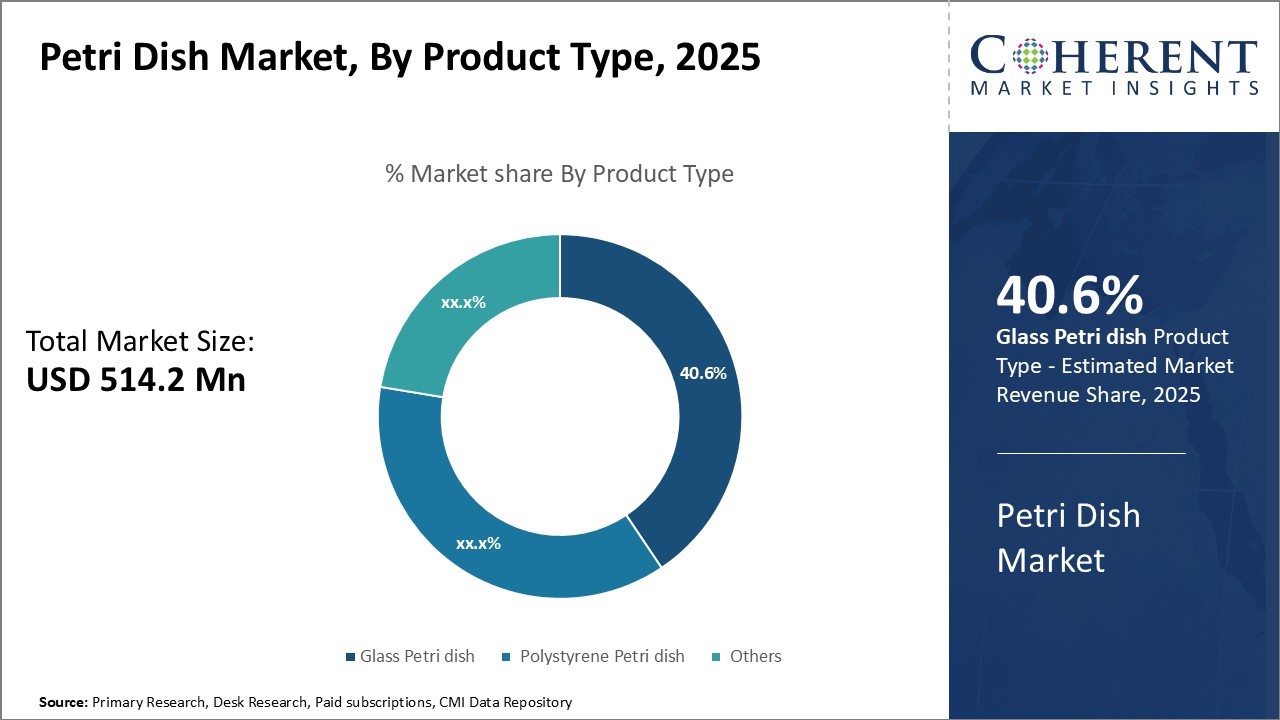
Petri Dish Market Insights, by Product Type: Growing Need for Higher Accuracy and Durability
In terms of product type, glass petri dish segment is estimated to contribute the highest market share of 41.6% in 2026, owing to its ability to offer higher accuracy and durability as compared to other types of petri dishes.
Glass petri dishes are highly non-reactive in nature, and thus, do not interfere with the chemical or biological reactions occurring inside. Their non-porous nature prevents inaccurate results caused by contamination or leakage. Glass also offers exceptional heat resistance, thus, allowing petri dishes to withstand autoclaving or dry heat sterilization procedures without risk of melting or warping.
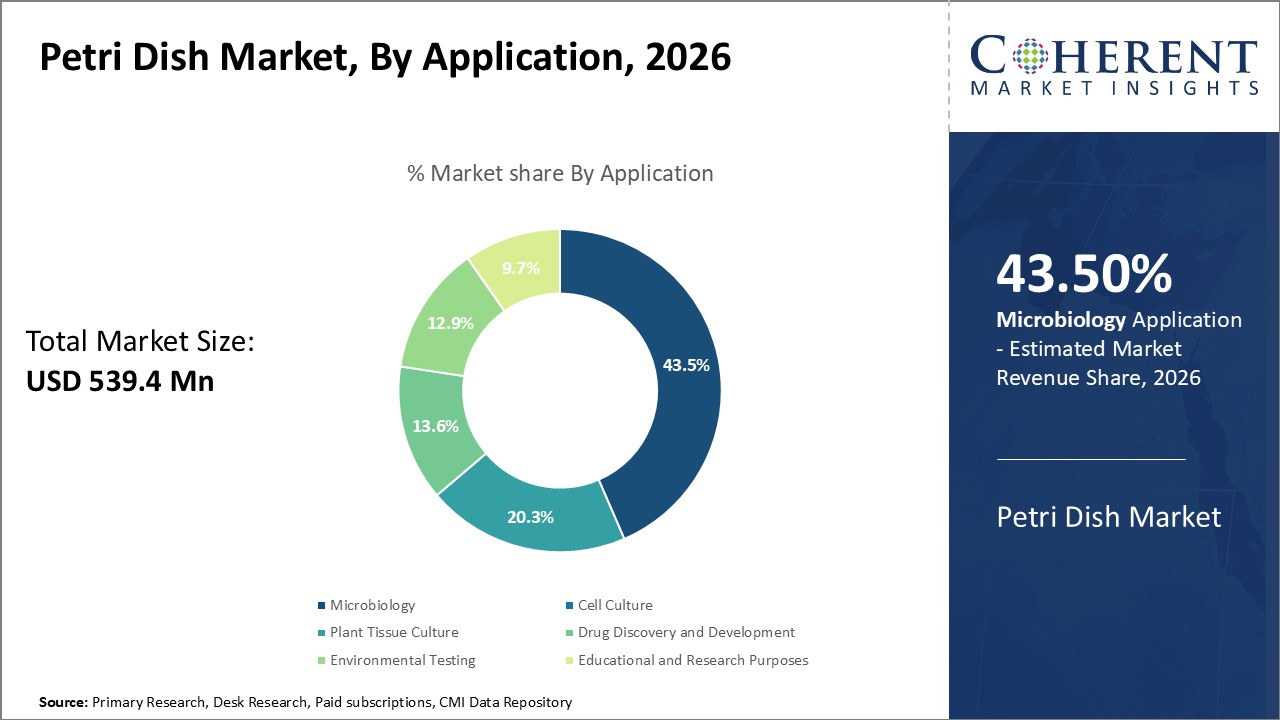
Petri Dish Market Insights, by Application: Increasing Role in Disease Diagnosis and Treatment
In terms of application, microbiology and bacteriology segment is estimated to contribute the highest market share of 43.5% in 2026, owing to rising need for bacteria identification and antibiotic sensitivity testing in disease diagnosis and treatment.
Petri dishes play a crucial role in microbiology labs to culture bacteria from clinical samples and examine their morphological features. This help isolate pathogenic bacteria from mixed cultures and test antibiotic effectiveness through different plating techniques. With rising prevalence of infectious illnesses, there will be huge demand for confirmatory diagnostic procedures using petri dishes from hospitals, diagnostic centers as well as public health organizations.
Petri Dish Market Insights, by End User: Strong Foothold in Academia and R&D Boosts the Segment
In terms of end user, academic and research institutions segment is estimated to contribute the highest market share of 44.7% in 2026, owing to the widespread use of petri dishes in life sciences education and laboratory research.
At academic level, petri dishes are extensively used by students to perform a variety of microbiology experiments hands-on as part of their curriculum. This help demonstrate fundamental techniques involved in bacterial staining, isolation, culture and identification. On the research front, petri dishes serve as an essential tool for plating microorganisms, extracting bacterial DNA and developing novel growth media.
Emerging Innovations in the Petri Dish Market
- Petri Dishes with Integrated Sensors
- Companies have introduced Petri dishes with integrated sensors capable of monitoring pH, oxygen levels, and other vital parameters without disturbing the culture. This kind of real-time data acquisition is a leap forward because it provides continuous insight into cell health and environmental conditions, enabling better experimental control and reproducibility.
- Transparent Graphene-based Petri Dish
- Transparent graphene-based Petri dishes have emerged, leveraging graphene’s electrical conductivity and biocompatibility for enhanced cell signaling studies and electronic interfacing with cultured cells. These dishes enable researchers to study cellular responses to electrical stimuli or monitor bioelectrical signals, opening new frontiers in neurobiology and tissue engineering.
- Automated Colony Counters and Digital Imaging Systems
- The launch of automated colony counters and digital imaging systems that complement advanced Petri dishes has enhanced data analysis substantially. These systems use artificial intelligence (AI) and machine learning algorithms to analyze colony morphology, count microorganisms automatically, and identify contamination, improving efficiency and reducing human error.
Impact of AI on the Petri Dish Market
Artificial Intelligence (AI) is increasingly transforming traditional markets, and the petri dish industry is no exception. As a fundamental tool in microbiology, biotechnology, and pharmaceuticals, petri dishes are now benefiting from AI-driven innovations that enhance production, application, and user experience.
- Thermo Fisher Scientific has integrated AI into its digital imaging systems linked to petri dish cultures. Their automated microbial colony counter leverages AI algorithms to count and classify colonies on petri dishes with precision. This AI-enhanced product reduces the manual labor associated with traditional counting methods and produces highly reproducible data.
- The biotech startup PathoAI employs AI-driven computer vision to scan petri dishes and identify bacterial growth patterns automatically. This application drastically reduces human error and accelerates data processing times, allowing researchers and clinicians to obtain faster and more accurate results. By using AI to analyze petri dish cultures, labs enhance their operational efficiency and improve diagnostic reliability.
Regional Insights
North America Petri Dish Market Analysis and Trends
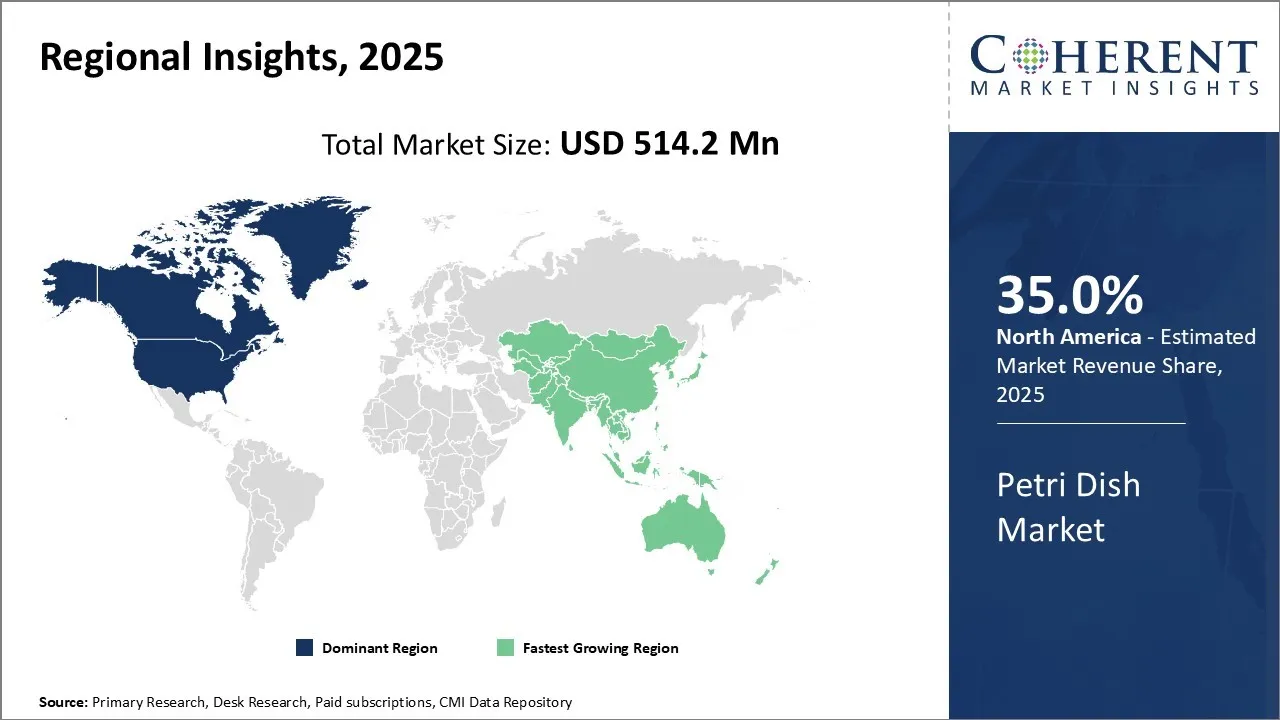
North America dominates the global petri dish market with an estimated market share of 35.0% in 2026, owing to the strong presence of leading life sciences research institutes and pharmaceutical companies in the region. Countries like the U.S. and Canada have a large number of research universities and labs that are constantly engaged in cell culture experiments and other related research activities.
For instance, according to Information Technology and Innovation Foundation (ITIF), America is home to 85 percent of the world's small, research-intensive biopharma firms. These start-ups are critical to drug development and U.S. competitiveness.
Asia Pacific Petri Dish Market Analysis and Trends
Asia Pacific region, especially China and India, witnesses the fastest growth in the petri dish market in the upcoming years. There has been rapid expansion of the healthcare and pharmaceutical industries in these countries due to strong government support through initiatives aimed at boosting medical research capacities. Countries like China are aggressively promoting indigenous drug discovery projects that involve the extensive use of petri dishes.
For instance, in 2024, Asian Development Bank (ADB) reported there were 23 million people benefiting from improved health services, education services, or social protection in Asia with 13 health services established or improve.
U.S Petri Dish Market Analysis and Trends
The U.S. is a leading market for petri dishes due to its massive biotechnology and pharmaceutical sectors, robust research & development investments, and extensive laboratory infrastructure. The U.S. also leads in utilization of automated lab systems, further bolstering uptake of single-use petri dishes.
China Petri Dish Market Analysis and Trends
China petri dish market is fueled by substantial government investment in biotech infrastructure and a steep rise in microbiological testing and drug discovery initiatives. Local manufacturers are also supplying competitively priced products to both domestic and international markets.
India Petri Dish Market Analysis and Trends
The expansion of the market in India is fueled by a growing pharmaceutical and biotech industry, boosted by government funding for healthcare infrastructure and educational research. Increasing public health initiatives—such as outbreak surveillance and antibacterial testing—are augmenting demand for microbiological labware.
Brazil Petri Dish Market Analysis and Trends
Growth in Brazil is tied to rising public and private investment in healthcare and diagnostics infrastructure, coupled with stronger partnerships between academic labs and local pharma entities. As Brazil expands its capacity for disease surveillance and drug testing, the need for reliable and affordable petri dishes continues to grow.
Pricing Analysis of the Petri Dish Market
- Academic & Research Institutions
- Type of Petri Dishes: Predominantly plastic disposable sterile dishes for routine use; glass dishes are less common due to cleaning overhead.
- Typical Sizes: 90 mm standard.
- Buying Patterns: Bulk orders; high demand for sterile, reliable brands.
- Pricing Influence: Economies of scale due to large orders often lead to a discount on unit prices.
- Brand Preferences: Thermo Fisher Scientific (Nunc), Corning, Greiner Bio-One dominate.
- Price Range: Plastic sterile petri dish: USD 0.20 – USD 0.70 per piece (bulk price).
- Glass dishes (rare): USD 5 – USD 8 per piece.
Market Report Scope
Petri Dish Market Report Coverage
| Report Coverage | Details | ||
|---|---|---|---|
| Base Year: | 2025 | Market Size in 2026: | USD 539.4 Mn |
| Historical Data for: | 2020 To 2024 | Forecast Period: | 2026 To 2033 |
| Forecast Period 2026 to 2033 CAGR: | 4.9% | 2033 Value Projection: | USD 753.9 Mn |
| Geographies covered: |
| ||
| Segments covered: |
| ||
| Companies covered: | Corning Incorporated, Thermo Fisher Scientific Inc., SARSTEDT AG & Co. KG, Sumitomo Bakelite Co., Ltd., Greiner AG, Avantor Inc., Phoenix Biomedical Products, Crystalgen, Inc., Merck KGaA, BD, Pall Corporation, Gosselin, Narang Medical Limited, Biosigma, Aicor Medical, NEST Biotechnology, Surwin Plastic, Citotest Labware, Huaou Industry, and Membrane Solutions | ||
| Growth Drivers: |
| ||
| Restraints & Challenges: |
| ||
Petri Dish Industry News
- In May 2025, Corning Incorporated, a world leader in glass science and optical physics, today announced a collaboration with Broadcom Incorporated, a leading supplier in the semiconductor field, on a co-packaged optics (CPO) infrastructure that will significantly increase processing capacity within data centers.
- In June 2025, Sumitomo Chemical launched a new digital transformation (DX) management structure. The Company will reform its organization and systems for DX strategy planning and execution and accelerate initiatives under the new policy of DX NEXT empowered by AI set out in its Corporate Business Plan for fiscal 2025 to 2027.
- In December 2024, Merck, a leading science and technology company, signed a definitive agreement with the intention to acquire HUB Organoids Holding B.V. (HUB). Organoids are cell culture models that functionally resemble an organ.
- In January 2024, EchoStar Corporation completed its acquisition of DISH Network Corporation on December 31, 2023. As part of the merger, DISH Network became a wholly owned subsidiary of EchoStar. Each share of DISH Network Class A and C Common Stock was converted into 0.350877 shares of EchoStar Class A Common Stock, and each share of DISH Network Class B Common Stock was converted into 0.350877 shares of EchoStar Class B Common Stock.
Analyst View
- The petri dish market is witnessing steady growth driven primarily by the expanding biotechnology, pharmaceutical, and clinical research sectors. Increasing demand for rapid and accurate microbial analysis in clinical diagnostics and drug development serves as a key driver. Additionally, the surge in infectious diseases and growing emphasis on quality control in food and beverages further contribute to the rising need for petri dishes.
- However, challenges such as the high cost of advanced petri dishes made from specialized materials and growing adoption of alternative microbial detection technologies could restrain market expansion to some extent.
- Innovation in eco-friendly and reusable petri dishes opens new avenues for sustainable market offerings, aligning with the global shift toward environmentally conscious laboratory practices. Moreover, advancements in automation and integration with laboratory information systems enhance the utility and efficiency of petri dishes, creating lucrative opportunities for manufacturers.
- Regionally, North America dominates the market due to the presence of key pharmaceutical companies, robust R&D infrastructure, and supportive regulatory environment. Meanwhile, the Asia-Pacific region stands out as the fastest-growing market, attributed to increasing investments in healthcare infrastructure, rising awareness about infectious diseases, and expanding life sciences research activities.
Speak to the analyst
Want personalized insights?
Take the findings above to one of our principal consultants, or have the report rebuilt around the segments, geographies and competitors you actually track.
Market Segmentation
- By Product Type Insights (Revenue, USD Mn, 2021 - 2033)
- Glass Petri dish
- Polystyrene Petri dish
- Others
- By Application Insights (Revenue, USD Mn, 2021 - 2033)
- Microbiology and Bacteriology
- Cell Culture
- Plant Tissue Culture
- Drug Discovery and Development
- Environmental Testing
- Educational and Research Purposes
- By End User Insights (Revenue, USD Mn, 2021 - 2033)
- Hospitals and Diagnostic Laboratories
- Pharmaceutical and Biotechnology Companies
- Academic and Research Institutions
- Environmental Testing Agencies
- Food and Beverage Industry
- Others
- By Regional Insights (Revenue, USD Mn 2021 - 2033)
- North America
- U.S.
- Canada
- Latin America
- Brazil
- Argentina
- Mexico
- Rest of Latin America
- Europe
- Germany
- U.K.
- Spain
- France
- Italy
- Russia
- Rest of Europe
- Asia Pacific
- China
- India
- Japan
- Australia
- South Korea
- ASEAN
- Rest of Asia Pacific
- Middle East
- GCC Countries
- Israel
- Rest of Middle East
- Africa
- South Africa
- North Africa
- Central Africa
- Key Players Insights
- Corning Incorporated
- Thermo Fisher Scientific Inc.
- SARSTEDT AG & Co. KG
- Sumitomo Bakelite Co., Ltd.
- Greiner AG
- Avantor Inc.
- Phoenix Biomedical Products
- Crystalgen, Inc.
- Merck KGaA
- BD
- Pall Corporation
- Gosselin
- Narang Medical Limited
- Biosigma
- Aicor Medical
- NEST Biotechnology
- Surwin Plastic
- Citotest Labware
- Huaou Industry
- Membrane Solutions
Sources
Primary Research Interviews
- Manufacturers & Suppliers of Petri Dishes
- Laboratory Equipment Distributors
- Research & Development Heads in Biotech Firms
- Quality Control Managers in Pharmaceutical Companies
- Others
Magazines
- Lab Manager Magazine
- Genetic Engineering & Biotechnology News
- American Laboratory
- Others
Journals
- Journal of Microbiological Methods
- International Journal of Medical Microbiology
- Journal of Clinical Microbiology
- Others
Newspapers
- The Wall Street Journal (Health & Science section)
- Financial Times (Healthcare section)
- The New York Times (Science section)
- Reuters Health
- Others
Associations
- American Society for Microbiology (ASM)
- International Microbiology Association
- Association for Laboratory Automation
- Others
Public Domain Sources
- World Health Organization (WHO) Publications
- U.S. Food & Drug Administration (FDA)
- Centers for Disease Control and Prevention (CDC)
- National Institutes of Health (NIH)
- Others
Proprietary Elements
- CMI Data Analytics Tool – Petri Dish Market
- CMI Existing Repository of Information for the Last 8 Years
*Definition: global petri dish market consists of companies that manufacture and distribute petri dishes for microbiological and cell culture applications. Petri dishes are shallow circular dishes made of glass or plastic used to hold agar or other solid growth medium and allow for the cultivation and analysis of microorganisms and cells. The global petri dish market caters to end users like healthcare, pharmaceutical research, food testing labs, and academic institutions involved in microbiological research.
Get access to 250+ pages report
Every segment, forecast, competitor profile and data table behind the analysis above — available for instant download.
- ESOMAR Member
- ISO 9001:2015 Certified
- D-U-N-S Registered
- GDPR & CCPA Compliant
Missing comfort of reading report in your local language? Find your preferred language:
Transform your Strategy with Exclusive Trending Reports
Frequently Asked Questions
The petri dish market is estimated to be valued at USD 539.4 Mn in 2026 and is expected to reach USD 753.9 Mn by 2033.
The CAGR of the petri dish market is projected to be 4.9% from 2026 to 2033.
Rising demand for cell culture applications and growing research activities in biotechnology and pharmaceutical sectors are the major factors driving the growth of the global petri dish market.
Stringent regulatory norms and high costs associated with R&D are the major factors hampering the growth of the global petri dish market.
In terms of product type, glass petri dish segment is estimated to dominate the market in 2026.
Corning Incorporated, Thermo Fisher Scientific Inc., SARSTEDT AG & Co. KG, Sumitomo Bakelite Co., Ltd., Greiner AG, Avantor Inc., Phoenix Biomedical Products, Crystalgen, Inc., Merck KGaA, BD, Pall Corporation, Gosselin, Narang Medical Limited, Biosigma, Aicor Medical, NEST Biotechnology, Surwin Plastic, Citotest Labware, Huaou Industry, and Membrane Solutions are the major players in the petri dish market.
North America is expected to lead the global petri dish market in 2026.