

Global Digital Pathology Workflow Solutions Market Size and Forecast – 2026 To 2033
The global digital pathology workflow solutions market is expected to grow from USD 1,280.0 Mn in 2026 to USD 2,750.0 Mn by 2033, registering a compound annual growth rate (CAGR) of 11.5 % from 2026 to 2033. The global digital pathology workflow solutions market is expected to grow substantially during the forecast period ascribed to the rising global burden of cancer which demands improved, rapid, accurate and scalable solutions for histopathological diagnosis.
The International Agency for Research on Cancer (IARC), reported that 20.6 million new cancer cases had been recorded globally in 2024 while 9.8 million people died from cancer in 2024, reinforcing the greater demand for an optimized workflow in diagnostics, and the application of digital pathology.
Key Takeaways of the Global Digital Pathology Workflow Solutions Market
- Scanners are projected to hold 46.8% of the global digital pathology workflow solutions market share in 2026, making it dominant product type segment, across North America attributed to advanced digital pathology infrastructure, and rising whole-slide imaging system adoption in hospital networks. For instance, in March 2026, Lancaster General Hospital and Chester County Hospital reported the installation of a digital pathology platform for digitization of slides and sharing of cases between hospitals.
- Oncology is projected to hold 48.7% of the global digital pathology workflow solutions market share in 2026, making it dominant therapeutic area segment, across Asia Pacific owing to the rising collaborations in the field of artificial intelligence in cancer diagnostics and precision oncology research. For instance, in March 2026, A*STAR Bioinformatics Institute from Singapore partnered with China-based Zhejiang Cancer Hospital to boost the AI-based digital pathology and oncology drug discovery.
- Immunohistochemistry (IHC) is projected to hold 31.8% of the global digital pathology workflow solutions market share in 2026, making it dominant technology segment. Europe is aiding adoption via its mature tissue-based diagnostics market, and progress in digital image analysis across local pathology labs. For instance, a pathology laboratory in Antwerp, Belgium has integrated digital slide scanning into its routine practice and studied the potential of artificial intelligence systems such as Mindpeak PD-L1 for the assessment of biomarkers.
- North America market holds its dominant position with a projected share of 38.7% in 2026, due to the existence of advanced diagnostic infrastructure, availability of digital imaging tools and increasing adoption of AI-powered pathology systems in hospital and laboratory networks. For instance, in February 2026, Labcorp renewed its partnership with PathAI to scale its National Dx enterprise platform AISight Dx to its end-to-end anatomic pathology facilities across its network of hospitals and labs.
- Asia Pacific is expected to exhibit the fastest growth in the global digital pathology workflow solutions market, registering an estimated CAGR of 12.8% during 2026–2033, owing to the healthcare investments in digital infrastructure, need for cancer diagnosis and growing demand for AI-enabled pathology solutions. For instance, in January 2026, Hong Kong's Kwong Wah Hospital stated the project to develop a digital pathology centre with four scanners and AI image analysis for cancer screening and diagnosis.
Segmental Insights
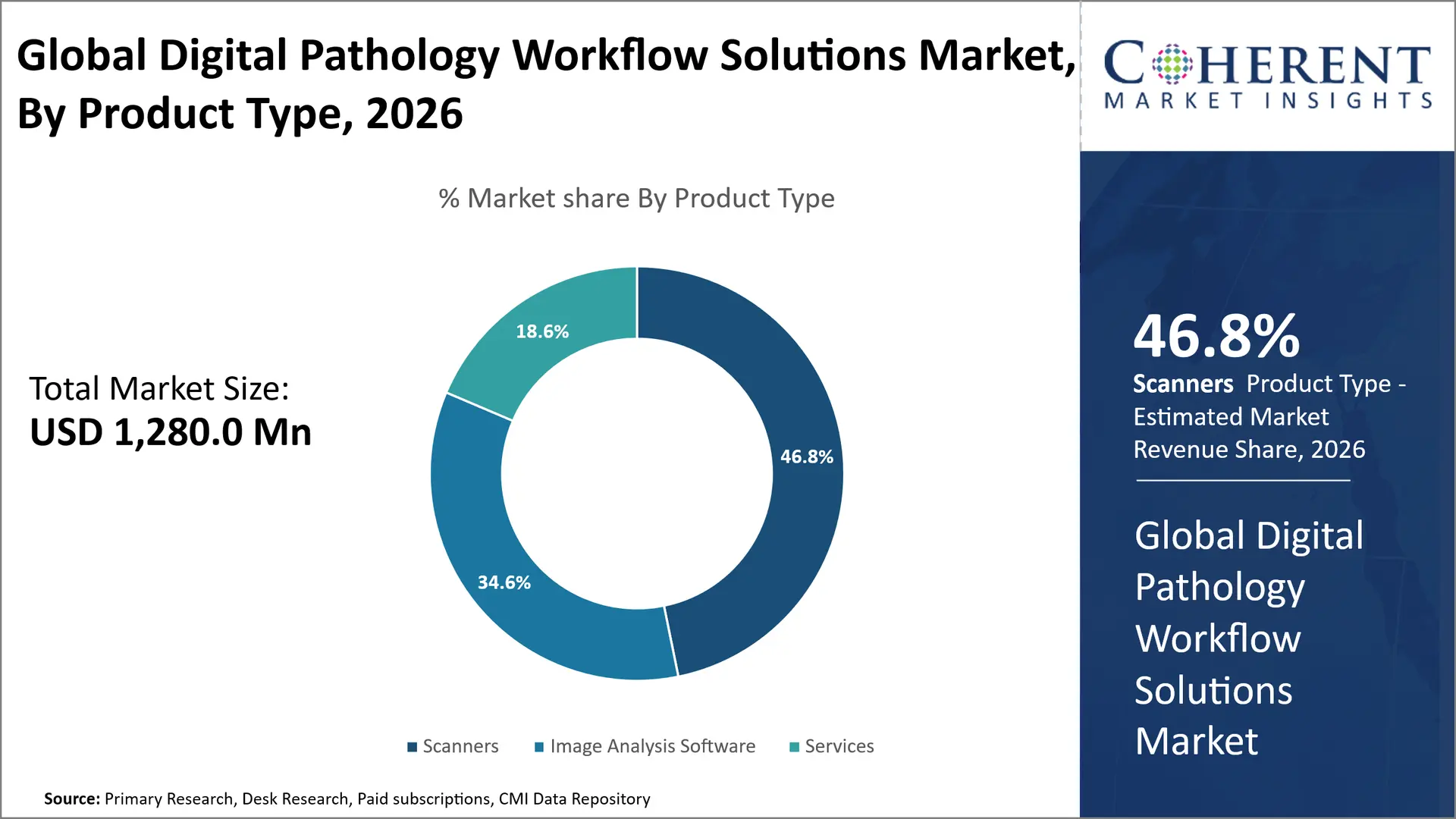
Why Do Scanners Dominate the Global Digital Pathology Workflow Solutions Market?
Scanners are projected to hold the market share of 46.8% in 2026, owing to their crucial role in converting the glass slides into digital images at the high resolution, which are used for diagnosis, for teleconsultation, and for image analysis. Additionally, increasing demand for whole-slide imaging and high-throughput scanning is expected to drive the growth of the segment. For instance, in May 2026, Institute of Medical Sciences (IMS) and SUM Hospital, India bought a Philips Pathology Scanner SG 300 that can scan 60 slides per hour. The purpose of installing is to make the diagnosis faster, save digital slides, and access as well as distribute the diagnosis remotely. (Source: Siksha ‘O’ Anusandhan (SOA))
- Current Industry Events of 2026
- Market Size Estimation
- Regional Breakdown
- Competitive Landscape
- Customer Intelligence
- Segmental Analysis
- Pricing Analysis
- Key Market Drivers, Challenges & Future Trends
- Customized Insights Section
Why Do Oncology Represent the Largest Therapeutic Area Segment in the Digital Pathology Workflow Solutions Market?
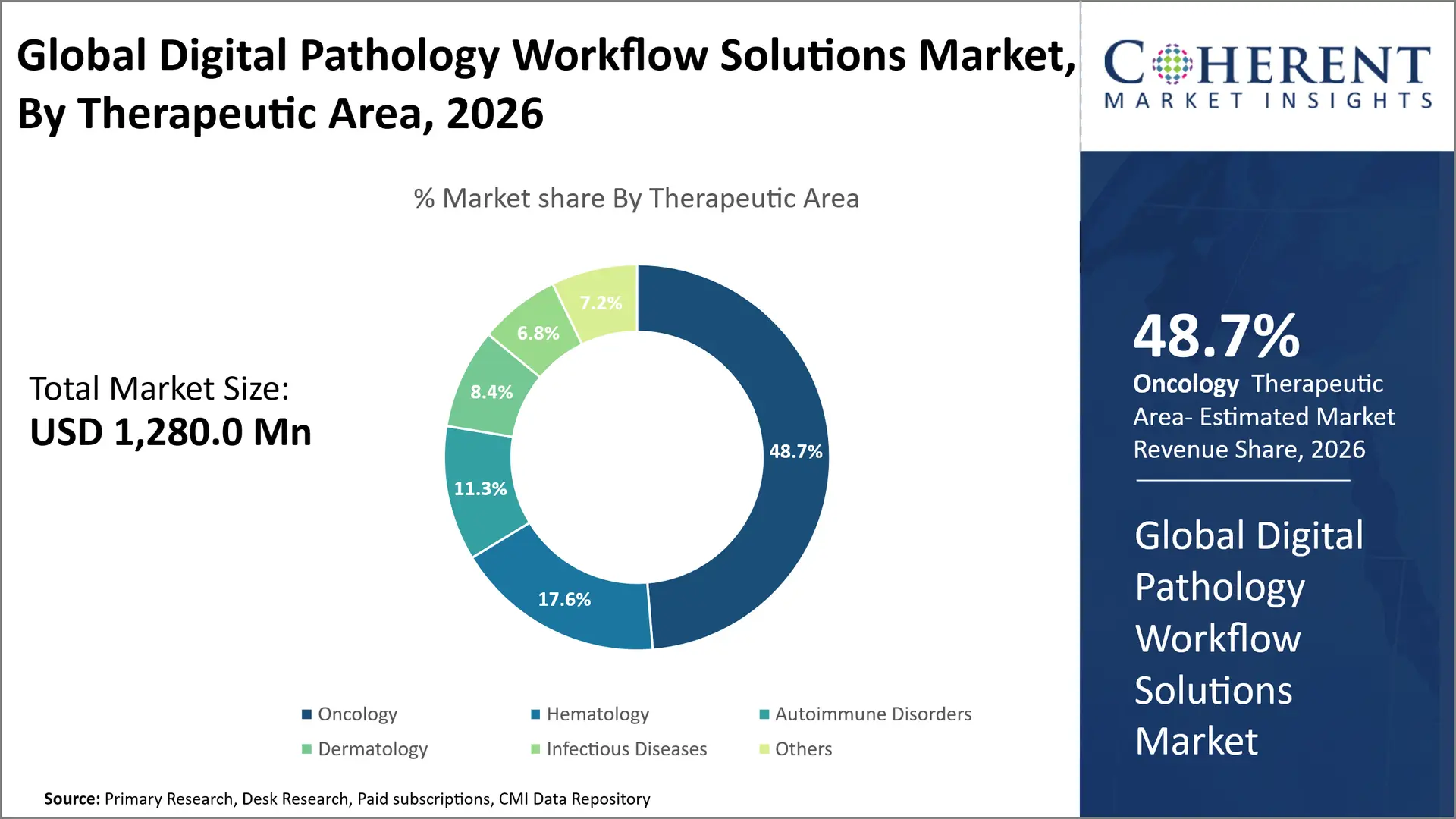
Oncology is projected to hold a market share of 48.7% in 2026, owing to its rising need for accurate cancer detection, grading of tumors, and biomarker evaluation. Digital pathology aids in accurate tissue analysis along with artificial intelligence aiding interpretability for cancer diagnosis and treatment. For instance, in July 2026, the University of Oxford presented results from the Articulate Pro study at three NHS trusts which tested artificial intelligence (AI) aided prostate cancer diagnosis on more than 1,000 prostate biopsies, showing AI could be embedded into digital pathology workflows.
Immunohistochemistry (IHC) Segment Dominates the Global Digital Pathology Workflow Solutions Market
The Immunohistochemistry (IHC) segment is projected to hold a market share of 31.8% in 2026, owing to its major application in tissue biomarker identification, tumor typing and treatment decision. In addition, digital image analysis aids in objective measurement of IHC staining patterns, which is expected to improve reproducibility of digital pathology system and aiding in biomarker evaluation. For instance, in April 2025, the Memorial Sloan Kettering Cancer Center teamed up with Path Presenter to deploy the DeepLIIF AI algorithm in a digital pathology platform that enables automated cell segmentation and quantification of immunohistochemistry images for oncology.
Current Events and their Impact
Current Events | Description and its Impact |
NHS England Advances Interoperable Pathology Information Systems (June 2026) |
|
UK Government Issues Digital Histopathology Implementation Guidance (February 2025) |
|
Digital Pathology Workflow Solutions Market Dynamics
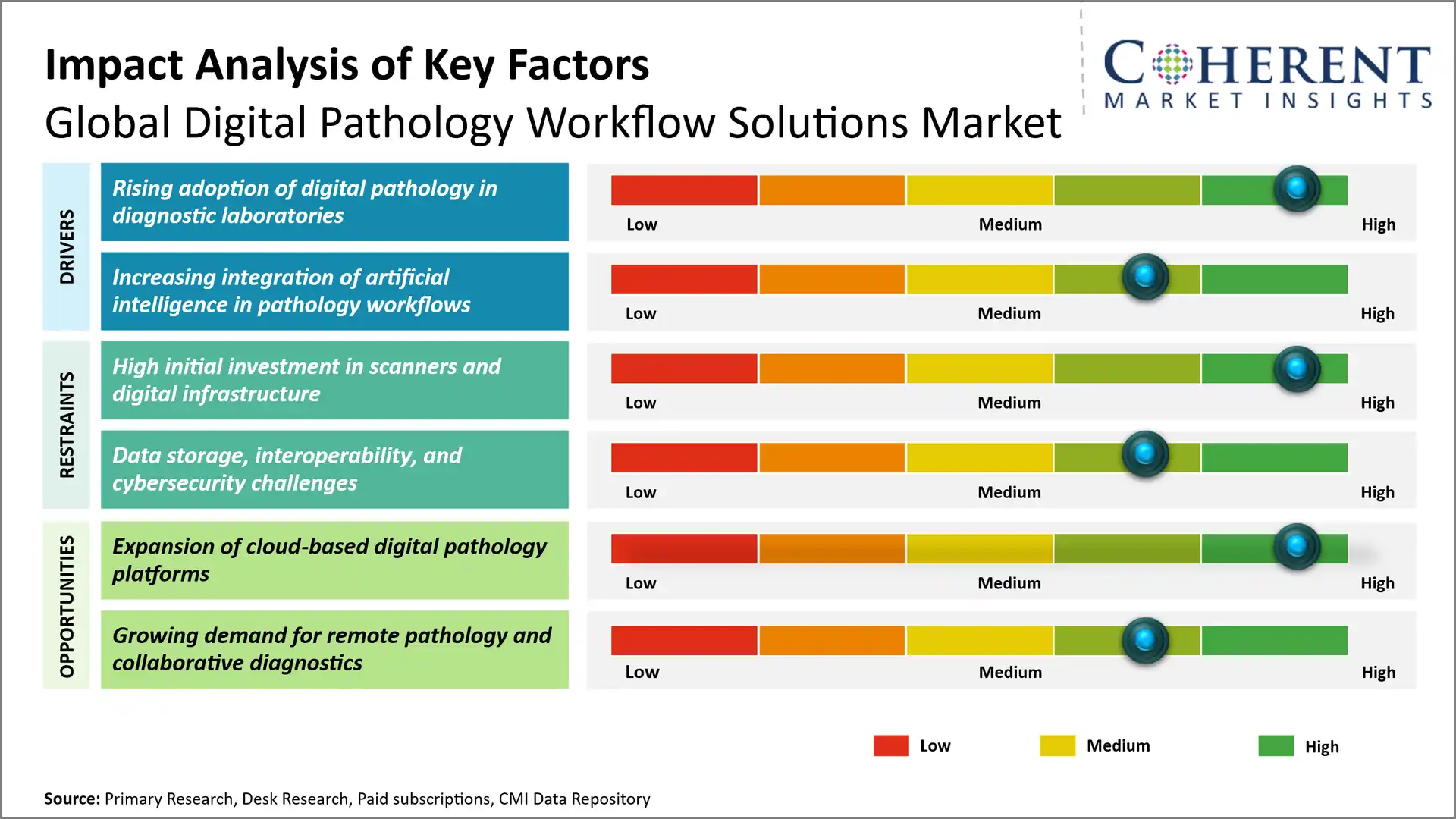
Market Drivers
- Rising adoption of digital pathology in diagnostic laboratories: As pathology laboratories become more digitized, digital slides have started to replace the conventional process of examining glass slides, allowing for digital review of slides from anywhere in the world, and speeding up the work-streams of the diagnostic pathway. For instance, in September 2025, University College London Hospitals (UCLH) began piloting digital pathology as part of a national NHS plan of roll-out of digital pathology. During its first few weeks, images have been used for around 70% of histopathology reports.
- Increasing integration of artificial intelligence in pathology workflows: AI platforms can help in automated classification of tissue samples, identification of tumors and quantification of complex pathology tissue images to improve the diagnostic accuracy and reduce the workload of manual review. For instance, in August 2026, Leeds Teaching Hospitals NHS Trust announced an international licensing deal for its TANGO technology to standardize slide staining and encourage AI implementation into cancer diagnosis workflows.
- Growing demand for remote pathology and telepathology services: With a paucity and uneven distribution of the specialized pathologists, demand is increasing for digital platforms that offer remote sharing of slides, consultations, and interinstitutional diagnosis support. For instance, the telepathology network at PGIMER Chandigarh catered to 492 cases from six states and regions, during the period of November 2023 to January 2025, demonstrating the importance of digital workflow.
Emerging Trends
- Increasing integration of artificial intelligence in digital pathology: Automated tissue analysis, tumor classification, and biomarker quantification is being increasingly integrated into digital pathology software platforms with artificial intelligence (AI) algorithms.
- Impact: They improve diagnostic consistency, reduce work load and increase the speed of analysis of complex pathology images.
- Market Relevance: The growth of integration of artificial intelligence is driving the market for image analysis software and digital pathology workflow software solutions.
- Growing adoption of cloud-based digital pathology platforms: Healthcare organizations are using cloud services for storing, accessing, managing, and sharing high resolution whole-slide images.
- Impact: Cloud technology implementation enables virtual consultations, supports collaboration across locations and provides the flexibility of scalable image storage, all reducing the impact on on-site IT systems.
- Market Relevance: Customer demand for cloud-enabled image management, workflow, and telepathology solutions is fueling the demand for this trend.
Regional Insights
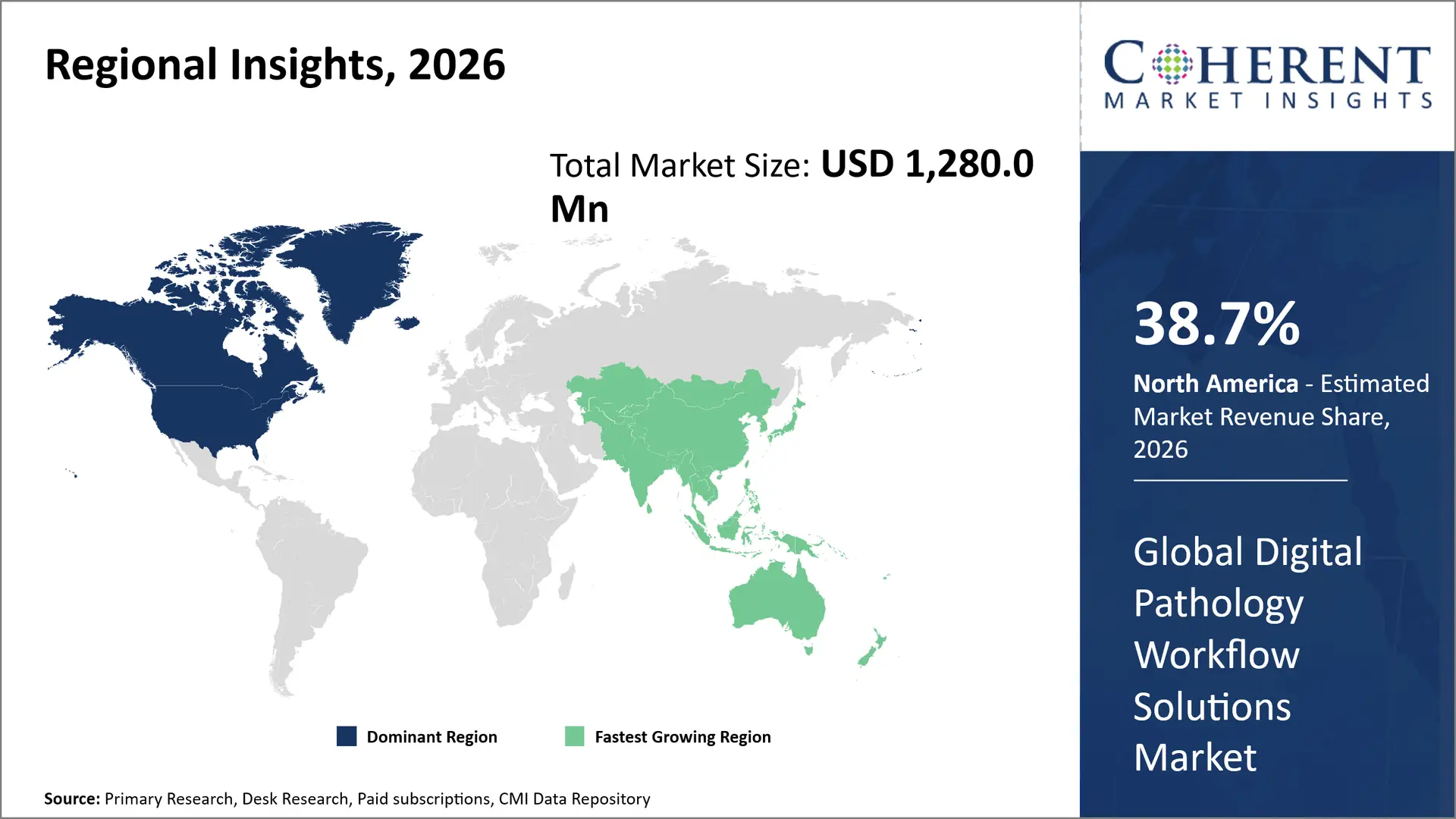
Why is North America a Strong Market for Digital Pathology Workflow Solutions?
North America leads the global digital pathology workflow solutions market, accounting for an estimated 38.7% share in 2026, due to the presence of well-established healthcare infrastructure, a high adoption rate for digital diagnostic solutions, as well as increased and well-regulated adoption of emerging digital solutions. The U.S. primarily capitalizes on the presence of a well-established ecosystem of research hospitals, academic centres, and clinical technology developers, supported by the regulatory framework with increased investments in the development of digital pathology solutions.
For instance, in May 2026, U.S. Food and Drug Administration (FDA) released a digital pathology validation data set comprising whole-slide images and pathologist annotations to enable research and validation of algorithms used in pathology image analysis. It improves the research and validation foundation for digital pathology enabled by AI.
Why Does Asia Pacific Digital Pathology Workflow Solutions Market Exhibit High Growth?
Asia Pacific is expected to exhibit the fastest growth in the global digital pathology workflow solutions market, registering an estimated CAGR of 12.8% during 2026–2033. The region is projected to account for 24.1% of the global market in 2026, owing to developing healthcare infrastructure, rising need for diagnostics, and increased adoption of imaging techniques. Increasing government initiatives to increase healthcare digitization in countries including China, Japan, and India drive modernization of pathology laboratories and diagnostic services.
For instance, in November 2025, the National Health Commission of China and four other state bodies jointly issued the Implementation Opinions on Promoting and Regulating the Application of Artificial Intelligence Technology in Healthcare. The guidance intends to promote the universal use of AI-aided medical imaging and clinical decision support within hospitals before 2030. The program is expected to promote the use of AI-based image analysis and digital diagnosis procedures in pathology and other medical disciplines.
Global Digital Pathology Workflow Solutions Market Outlook for Key Countries
Why is the U.S. Leading Innovation and Adoption in the Digital Pathology Workflow Solutions Market?
The U.S. dominates innovation and adoption in the digital pathology workflow solutions market attributed to its robust regulations pertaining to whole-slide imaging, the continuous studies by Food & Drug Administration (FDA) on digital pathology devices, and incorporating AI in clinical pathology workflow. The U.S. FDA has established the digital pathology program for digital pathology image quality, interoperability, and AI-based image interpretation validation to develop clinically reliable digital pathology solutions.
Is Japan a Favorable Market for Digital Pathology Workflow Solutions Market?
Japan is an attractive market for digital pathology workflow solutions owing to its mature Medical Imaging Industry and rising interest on AI-assist pathology diagnosis. Digital slide image bank, Pathology AI Diagnostics Project in Japan, has accumulated about 200,000 whole-slide images to support research on AI-based pathology diagnosis. In addition, government efforts to encourage use of medical data, AI-based image diagnosis, and clinical study are opening up areas for digital scanners, image analysis software and integrated pathology solution.
Is China Emerging as a Key Growth Hub for the Digital Pathology Workflow Solutions Market?
China is projected to be a major growth region for digital pathology workflow solutions market owing to the rise in digital healthcare infrastructure and adoption of whole slide imaging solutions. Several factors including the widespread adoption of whole slide imaging systems, increased use of image analysis using artificial intelligence, growing prevalence of cancer and government focus on intelligent healthcare are driving the adoption of digital pathology workflow solutions in the country.
Why Does Germany Top the European Digital Pathology Workflow Solutions Market?
The high adoption of advanced laboratory diagnostics, mature pathology infrastructure, and special medical technology capacities make Germany dominate the Europe’s digital pathology workflow solutions market. The country’s focuses on the adoption of whole-slide imaging, AI-enabled image analysis and laboratory information systems that support a rapid transition to a digitized histopathology workflow. Furthermore, the presence of diagnostic laboratories and university hospitals in the country further ensures the uptake of digital pathology solutions across clinical and research applications.
Is Digital Pathology Workflow Solutions Market Developing in UK?
The UK digital pathology workflow solutions market is evolving rapidly as the nation's National Health Service builds out its more digitized approach to histopathology and its integrated pathology networks. As broader implementations of whole-slide imaging, central image repositories and image analysis based on artificial intelligence open the door for transitioning from glass-slide reporting to digital diagnostic workflows, interoperability requirements between digital pathology and LIS systems are growing as well, providing added opportunities for digital pathology hardware, software and image management providers.
Digital Pathology Workflow Adoption and Infrastructure by Laboratory Type (2026)
Laboratory Type | Scanner Adoption | AI Image Analysis Adoption | Primary Workflow Application |
Hospital Laboratories | Whole-slide imaging | Tumor detection and grading | Routine clinical diagnosis |
Independent Diagnostic Laboratories | High-throughput scanners | Automated biomarker analysis | High-volume slide processing |
Reference Laboratories | Multi-scanner infrastructure | Quantitative tissue analysis | Remote consultation and second opinions |
Academic and Research Laboratories | Research-grade scanners | Computational pathology | Clinical research and biomarker discovery |
Pharmaceutical and Biotechnology Laboratories | High-resolution slide imaging | AI-assisted tissue assessment | Drug discovery and clinical trials |
How is the expansion of cloud-based digital pathology platforms creating new growth opportunities in the digital pathology workflow solutions market?
Cloud-based solutions offer scalable storage, centrally managed system with remote access of high-resolution whole-slide images and reduces dependence on costly infrastructure in hospitals. For instance, Ontario Health announced operational guidelines to hospital digital pathology in February 2026. It emphasized on the need of interoperability standards and coordinated implementation across hospitals for connected digital pathology workflows.
Market Players, Key Development, and Competitive Intelligence
Key Developments
- In October 2026, FUJIFILM Healthcare Americas Corporation launched Synapse Pathology v3.0 with more than 50 new features, along with improved AI capabilities for digital pathology workflows. The platform features an AI Orchestrator enabling third-party AI applications and Synapse Pathology AI Foundry, a pathology-specific foundation model which has been trained using millions of pathology images. This will advance AI integration, image analysis, and workflow automation for digital pathology workflows.
- In September 2026, Novo Path released a new, integrated digital pathology workflow in a next-generation laboratory information system (LIS). The new Novo Path digital pathology LIS integrates case management, whole-slide images, laboratory work and diagnostic reporting into a single system. It also links slide images to patients, provides the choice of cloud- or on-premises storage, and enables labs to tailor their pathology workflows without upgrading their scanners.
- In June 2026, Leica Biosystems expanded the EMEA availability of its ultra-high throughput Aperio GT Elite digital scanner. The scanner features AI quality control built into its Aperio iQC software to check for imaging artifacts during scanning. This helps labs streamline workflows and reduce rescanning.
Competitive Landscape
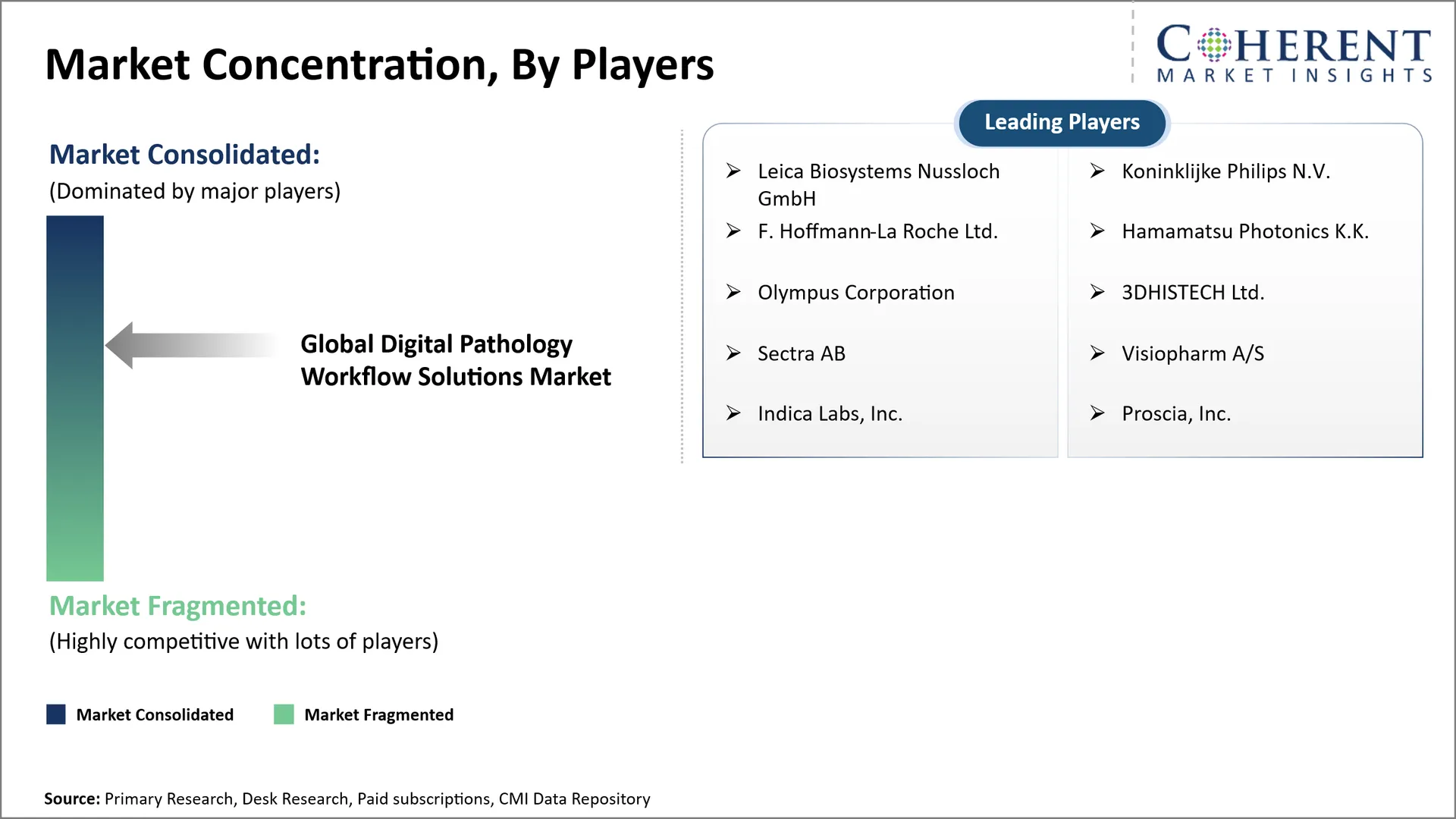
The global digital pathology workflow solutions market is moderately fragmented with the presence of leading players in the medical imaging, niche players in digital pathology software, and the new entrants to artificial intelligence technology. Competition in the market is defined by technology innovation, software integration, scanning performance, and end-to-end digital pathology platform. Players in the market are focusing on expanding their product portfolios and leveraging collaborations to drive workflow efficiency and clinical adoption. Key focus areas include:
- Evolution of high-throughput whole-slide imaging scanners with improved image resolution and higher scan speeds, and multi-slide capability.
- AI and ML algorithms to enable automated tissue analysis, tumor detection, grading and quantification of biomarkers.
- Develop integrated digital pathology workflow platforms that unify image acquisition, management, analysis, storage, and diagnostic reporting.
- Expansion of cloud-based pathology offerings that will allow remote slide access, telepathology, sharing with other institutions, and scalable storage of pathology images.
Market Report Scope
Global Digital Pathology Workflow Solutions Market Report Coverage | |||
Report Coverage | Details | ||
Base Year | 2025 | Market Size in 2026: | USD 1,280.0 Mn |
Historical Data For: | 2020 To 2024 | Forecast Period: | 2026 To 2033 |
Forecast Period 2026 To 2033 CAGR: | 11.5 % | 2033 Value Projection: | USD 2,750.0 Mn |
Geographies covered: |
| ||
Segments covered: |
| ||
Companies covered: | Leica Biosystems Nussloch GmbH, Koninklijke Philips N.V., F. Hoffmann-La Roche Ltd., Hamamatsu Photonics K.K., Olympus Corporation, 3DHISTECH Ltd., Sectra AB, Visiopharm A/S, Indica Labs, Inc., and Proscia, Inc. | ||
Growth Drivers: |
| ||
Restraints & Challenges: |
| ||
Analyst Opinion (Expert Opinion)
- In the coming years, the global digital pathology workflow solutions market will evolve from slide digitization to fully integrated diagnostic workflows powered by artificial intelligence. Increasing adoption of computational pathology, automation, biomarker algorithms and cloud storage and digital image management will improve diagnostic workflows and accelerate precision medicine. Digital pathology solutions will gradually become an essential part of every routine histopathology, oncology diagnostics and clinical research setting.
- The largest opportunity can be seen in the AI-enabled image analysis software for oncology division in China. With the rising demand for cancer diagnosis capabilities and the requirement for tumor measurement, grading and biomarker quantification, the market for AI enabled pathology in China represents a lucrative opportunity. Oncology algorithm companies and local digital pathology players may be able to capitalize on the increasing diagnostic capacity and demand for artificial intelligence in the country.
- In order to gain a competitive advantage market players should focus on integrated offerings, as opposed to solutions that are not currently connected, but ideally would be with high-resolution whole-slide imaging, image analysis (artificial intelligence) and connectivity with hospital information systems. The incorporation of cloud-enabled storage and interoperability with digitally validated algorithms for onco-logy and biomarker testing will help differentiate products. Building strategic partnerships with hospitals, diagnostic laboratories and research entities will contribute to successful clinical adoption and customer retention.
Speak to the analyst
Want personalized insights?
Take the findings above to one of our principal consultants, or have the report rebuilt around the segments, geographies and competitors you actually track.
Market Segmentation
- Product Type Insights (Revenue, USD Mn, 2021 - 2033)
- Image Analysis Software
- Scanners
- Services
- Therapeutic Area Insights (Revenue, USD Mn, 2021 - 2033)
- Oncology
- Hematology
- Autoimmune Disorders
- Dermatology
- Infectious Diseases
- Others
- Technology Insights (Revenue, USD Mn, 2021 - 2033)
- Immunohistochemistry (IHC)
- In Situ Hybridization (ISH) and Fluorescence In Situ Hybridization (FISH)
- Immunofluorescence ·
- Hematoxylin and Eosin (H&E)
- Others
- End User Insights (Revenue, USD Mn, 2021 - 2033)
- Pharmaceutical and Biotechnology Companies
- Diagnostic Laboratories
- Hospital Laboratories
- Academic and Research Institutes
- Others
- Regional Insights (Revenue, USD Mn, 2021 - 2033)
- North America
- U.S.
- Canada
- Latin America
- Brazil
- Argentina
- Mexico
- Rest of Latin America
- Europe
- Germany
- U.K.
- Spain
- France
- Italy
- Russia
- Rest of Europe
- Asia Pacific
- China
- India
- Japan
- Australia
- South Korea
- ASEAN
- Rest of Asia Pacific
- Middle East
- GCC Countries
- Israel
- Rest of Middle East
- Africa
- South Africa
- North Africa
- Central Africa
- North America
- Key Players Insights
- Leica Biosystems Nussloch GmbH
- Koninklijke Philips N.V.
- F. Hoffmann-La Roche Ltd.
- Hamamatsu Photonics K.K.
- Olympus Corporation
- 3DHISTECH Ltd.
- Sectra AB
- Visiopharm A/S
- Indica Labs, Inc.
- Proscia, Inc.
Sources
Primary Research Interviews
- Anatomical Pathologists and Histopathologists
- Pathology Informatics Specialists
- Digital Pathology and AI Researchers
- Laboratory Directors and Diagnostic Imaging Specialists
Stakeholders
- Digital Pathology Scanner Manufacturers
- Digital Pathology Software and Workflow Solution Providers
- AI-Based Computational Pathology Developers
- Cloud-Based Medical Imaging and Data Management Providers
- End-use Sectors
- Hospitals and Multispecialty Healthcare Systems
- Diagnostic and Reference Laboratories
- Pharmaceutical and Biotechnology Companies
- Academic Medical Centers and Research Institutes
- Regulatory & Health Bodies
- U.S. Food and Drug Administration (FDA)
- European Medicines Agency (EMA)
- Medicines and Healthcare products Regulatory Agency (MHRA), UK
- Central Drugs Standard Control Organization (CDSCO), India
Databases
- ClinicalTrials.gov
- WHO International Clinical Trials Registry Platform (ICTRP)
- FDA Medical Device 510(K) Database
Associations
- Digital Pathology Association (DPA)
- Association for Pathology Informatics (API)
- College of American Pathologists (CAP)
- European Society of Digital and Integrative Pathology (ESDIP)
Public Domain Sources
- U.S. Food and Drug Administration (FDA)
- National Institutes of Health (NIH)
- National Cancer Institute (NCI)
- World Health Organization (WHO)
Proprietary Elements
- CMI Data Analytics Tool
- Proprietary CMI Existing Repository of information for last 10 years.
Get access to 250+ pages report
Every segment, forecast, competitor profile and data table behind the analysis above — available for instant download.
- ESOMAR Member
- ISO 9001:2015 Certified
- D-U-N-S Registered
- GDPR & CCPA Compliant
Frequently Asked Questions
The global digital pathology workflow solutions market is estimated to be valued at USD 1,280.0 Mn in 2026 and is expected to reach USD 2,750.0 Mn by 2033.
Scanners dominate the market due to their vital role in transforming traditional glass slides into digital images that can be viewed and analyzed for diagnosis and remotely.
Digital pathology workflow solutions involve technologies that enable imaging, management, analysis, sharing and storage of pathology images and other clinical data to streamline the diagnostic workflows.
The CAGR of global digital pathology workflow solutions market is projected to be 11.5 % from 2026 to 2033.
Rising adoption of digital pathology in diagnostic laboratories, and increasing integration of artificial intelligence in pathology workflows are the major factors driving the growth of the global digital pathology workflow solutions market.
High initial investment in scanners and digital infrastructure, and data storage, interoperability, and cybersecurity challenges are the major factors hampering the growth of the global digital pathology workflow solutions market.
In terms of therapeutic area, oncology is estimated to dominate the market revenue share in 2026.