

Endometrial Biopsy Cannulae Market Size and Forecast – 2026 to 2033
The Endometrial Biopsy Cannulae Market is anticipated to grow at a CAGR of 20.8% with USD 27.4 Mn in 2026 and is expected to reach USD 116.4 Mn in 2033. Healthcare providers increasingly use endometrial biopsy cannulae as they detect more endometrial abnormalities, perform more gynecological evaluations, and adopt minimally invasive diagnostic procedures.
Key Takeaways
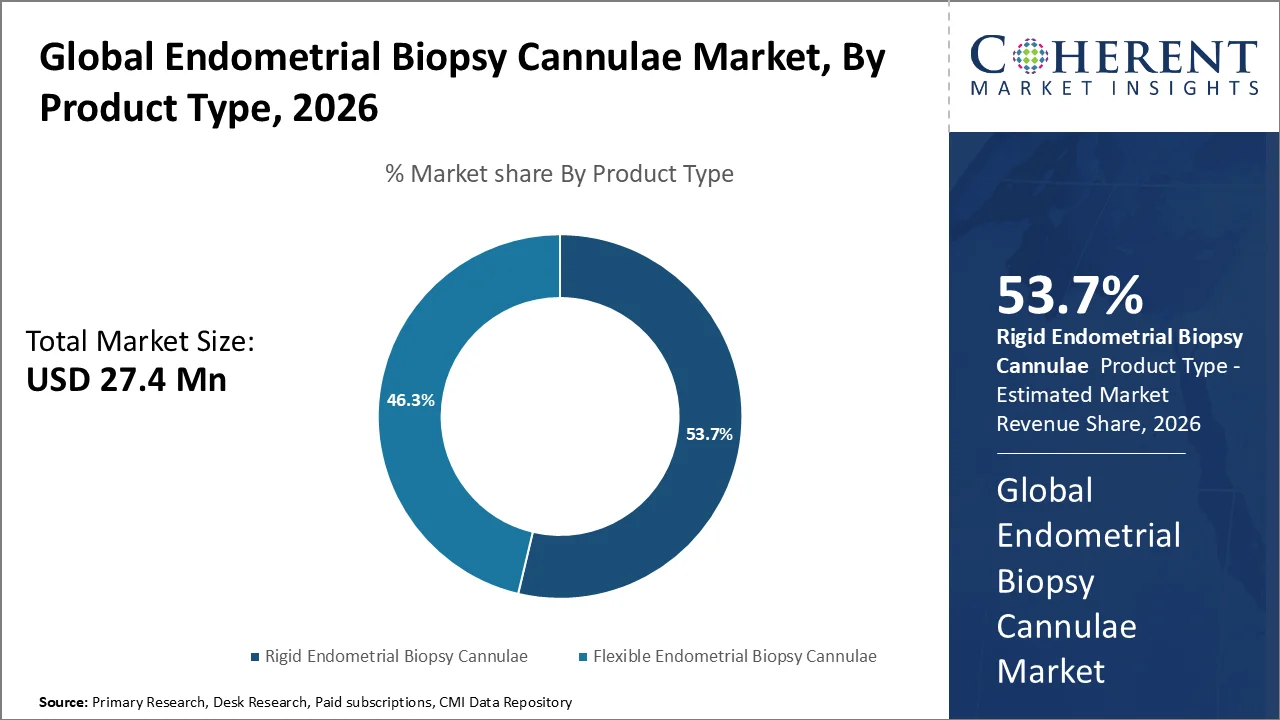
- Rigid Endometrial Biopsy Cannulae hold the largest market share of 53.7% in 2026 owing to the need for controlled tissue sampling.
- Hospitals expected to hold largest market share of 38.9% in 2026 owing to its rising incidence of endometrial cancer. The American Cancer Society estimates 68,270 new endometrial cancer cases in the U.S. in 2026.
- North America is expected to acquire the dominant share of 41.1% in 2026 owing to the advanced healthcare infrastructure. In April 2026, ACOG updated its guidance to recommend transvaginal ultrasonography combined with endometrial tissue sampling as part of the initial evaluation for most patients with postmenopausal bleeding.
Current Events and Their Impact on the Endometrial Biopsy Cannulae Market
Current Event | Description and its Impact |
Updated ACOG Guidance on Postmenopausal Bleeding – April 2026 |
|
2026 ACOG Update Strengthens Role of Tissue Sampling in Postmenopausal Bleeding |
|
Segmental Insights
- Current Industry Events of 2026
- Market Size Estimation
- Regional Breakdown
- Competitive Landscape
- Customer Intelligence
- Segmental Analysis
- Pricing Analysis
- Key Market Drivers, Challenges & Future Trends
- Customized Insights Section
Why is Rigid Endometrial Biopsy Cannulae Acquiring the Largest Market Share?
Rigid Endometrial Biopsy Cannulae hold the largest market share of 53.7% in 2026. The Rigid Endometrial Biopsy Cannulae Market benefits from growing demand for accurate endometrial tissue sampling to diagnose endometrial cancer, abnormal uterine bleeding, hyperplasia, and other gynecological disorders. Healthcare professionals use rigid cannulae because they provide greater structural stability, procedural control, and targeted tissue collection, particularly in hospitals and specialized gynecological settings. Increasing diagnostic procedures, greater awareness of early disease detection, expanding gynecological oncology services, and clinicians’ familiarity with rigid devices further drive demand. Manufacturers also improve cannula designs and specimen collection technologies, supporting market growth.
Which End User segment dominates the market?
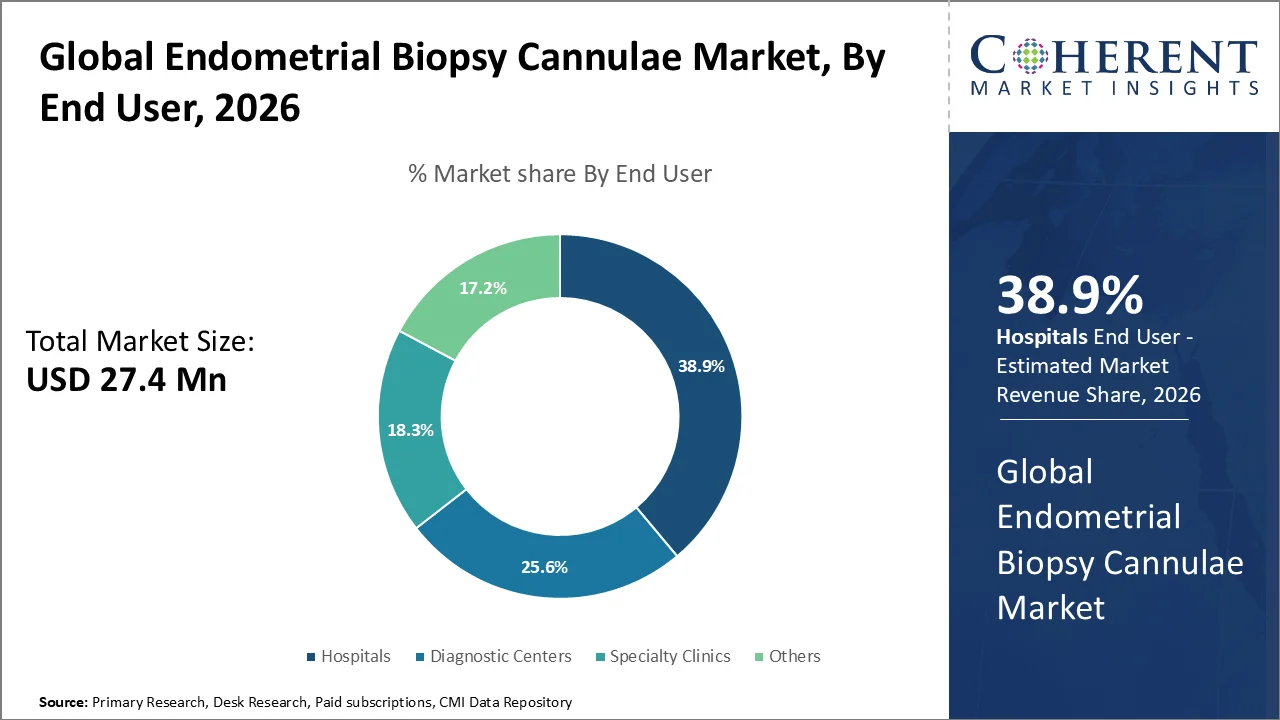
Hospitals expected to hold largest market share of 38.9% in 2026. The hospitals segment in the Endometrial Biopsy Cannulae Market gains momentum from the growing diagnosis of endometrial cancer, abnormal uterine bleeding, infertility, and other uterine conditions that require tissue sampling. Approximately 30% of women of reproductive age experience abnormal uterine bleeding (AUB), making it a common reason for gynecological consultations. Hospitals use specialized gynecology departments, skilled medical professionals, advanced diagnostic equipment, and integrated pathology services to support biopsy procedures. Increasing patient referrals and stronger emphasis on early disease detection encourage more biopsies. Hospitals also adopt minimally invasive diagnostic methods and standardized biopsy protocols, driving steady demand for reliable, efficient, and clinically effective endometrial biopsy cannulae.
Endometrial Biopsy Cannulae Market Trends
- Increasing integration of ultrasound and hysteroscopy in endometrial evaluation: ACOG recommends transvaginal ultrasonography and/or endometrial sampling in the evaluation of postmenopausal bleeding, while hysteroscopy can be used for further evaluation when sampling is inadequate or bleeding persists. Importantly, an endometrial thickness of ≤4 mm has a greater than 99% negative predictive value for endometrial cancer in the relevant postmenopausal bleeding population.
- Growing burden of endometrial and uterine cancers: The American Cancer Society estimates that 68,270 new cases of cancer of the uterine corpus will be diagnosed in the U.S. in 2026, with more than 90% of these cancers occurring in the endometrium. The ACS also estimates 14,450 deaths from uterine corpus cancer in 2026. The increasing diagnostic burden supports continued demand for tissue-sampling procedures and associated biopsy devices.
- Increasing focus on early evaluation of postmenopausal bleeding: ACOG states that more than 90% of postmenopausal women with endometrial carcinoma present with vaginal bleeding. In April 2026, ACOG updated its guidance to recommend transvaginal ultrasonography combined with endometrial tissue sampling as part of the initial evaluation for most patients with postmenopausal bleeding. This recent clinical update directly supports the use of endometrial sampling devices when malignancy is suspected.
Endometrial Biopsy Cannulae Market Trends
- Increasing integration of ultrasound and hysteroscopy in endometrial evaluation: ACOG recommends transvaginal ultrasonography and/or endometrial sampling in the evaluation of postmenopausal bleeding, while hysteroscopy can be used for further evaluation when sampling is inadequate or bleeding persists. Importantly, an endometrial thickness of ≤4 mm has a greater than 99% negative predictive value for endometrial cancer in the relevant postmenopausal bleeding population.
- Growing burden of endometrial and uterine cancers: The American Cancer Society estimates that 68,270 new cases of cancer of the uterine corpus will be diagnosed in the U.S. in 2026, with more than 90% of these cancers occurring in the endometrium. The ACS also estimates 14,450 deaths from uterine corpus cancer in 2026. The increasing diagnostic burden supports continued demand for tissue-sampling procedures and associated biopsy devices.
- Increasing focus on early evaluation of postmenopausal bleeding: ACOG states that more than 90% of postmenopausal women with endometrial carcinoma present with vaginal bleeding. In April 2026, ACOG updated its guidance to recommend transvaginal ultrasonography combined with endometrial tissue sampling as part of the initial evaluation for most patients with postmenopausal bleeding. This recent clinical update directly supports the use of endometrial sampling devices when malignancy is suspected.
Regional Insights
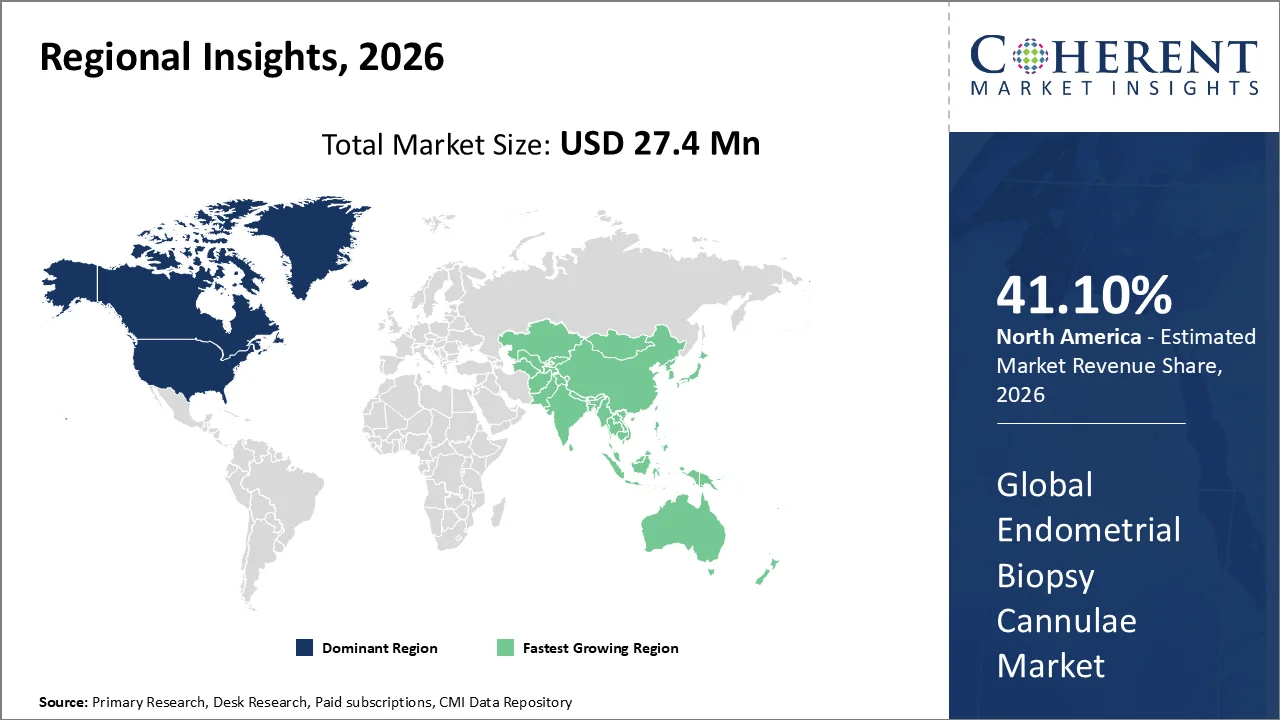
North America dominates owing to increasing emphasis on early diagnosis
North America is expected to acquire the dominant share of 41.10% in 2026. North American healthcare providers drive the Endometrial Biopsy Cannulae Market through advanced healthcare infrastructure, widespread adoption of minimally invasive gynecological procedures, and increasing demand for early diagnosis of endometrial disorders. Physicians increasingly perform timely tissue sampling as awareness of abnormal uterine bleeding and endometrial cancer grows. Specialized gynecology centers, outpatient facilities, and pathology laboratories support higher biopsy volumes. Healthcare providers also adopt innovative biopsy technologies, while established reimbursement systems and continued investment in women’s healthcare further strengthen demand for endometrial biopsy cannulae. In January 2026, Olympus Corp. of the Americas launched its most advanced single-use fine-needle biopsy device in the U.S. for ultrasound-guided tissue sampling and disease diagnosis, including pancreatic cancer.
Asia Pacific Endometrial Biopsy Cannulae Market Trends
The Asia-Pacific Endometrial Biopsy Cannulae Market benefits from stronger healthcare infrastructure, growing awareness of women’s health, and rising diagnosis of endometrial cancer and other gynecological conditions. Increased healthcare spending and improved access to specialized gynecological services in China, India, Japan, and South Korea are driving procedure volumes. India's age-standardized incidence rate of endometrial cancer is estimated at approximately 2.3–3.2 cases per 100,000 women, with incidence increasing alongside urbanization and lifestyle-related risk factors. Government women’s health programs, hospital modernization, private clinic expansion, and wider adoption of minimally invasive, office-based diagnostic procedures are also boosting demand for endometrial biopsy cannulae across the region.
United States Endometrial Biopsy Cannulae Market Trends
The United States endometrial biopsy cannulae market gains momentum from the rising incidence of endometrial cancer, obesity, metabolic disorders, and abnormal uterine bleeding, especially among postmenopausal women. In 2024, adult obesity prevalence reached at least 25% in every U.S. state and territory, meaning at least 1 in 4 adults were affected. Healthcare providers increasingly emphasize early diagnosis and symptom-based evaluation, which drives biopsy procedures. Clinicians also favor minimally invasive, office-based diagnostic methods. In addition, the country’s well-developed gynecological healthcare infrastructure, supportive reimbursement environment, and growing awareness of uterine health encourage hospitals, clinics, and ambulatory care centers to adopt endometrial biopsy cannulae.
China Endometrial Biopsy Cannulae Market Trends
China’s Endometrial Biopsy Cannulae Market benefits from the rising prevalence of gynecological disorders, growing awareness of early diagnosis, and increasing demand for minimally invasive diagnostic procedures. An aging female population and the growing occurrence of abnormal uterine bleeding, endometrial hyperplasia, and related conditions are driving biopsy demand. Women aged 50 years and older represent approximately 27% of the global female population, and this share is expected to increase as population aging accelerates worldwide. Healthcare providers are expanding hospital and specialty-clinic infrastructure, improving access to gynecological diagnostics. Healthcare modernization and the adoption of disposable, user-friendly biopsy devices are also encouraging procurement, while greater cancer awareness promotes timely endometrial sampling.
Who are the Major Companies in Endometrial Biopsy Cannulae Industry
Some of the major key players in Endometrial Biopsy Cannulae are Medline Industries, Inc., CooperSurgical, Inc., MedGyn Products, Inc., Gyneas, Andemed, Nuode, Saipu, Micromed, and Panpac Medical & RI.MOS.
Key News
- In February 2026, Mammotome, a Danaher company, launched the Mammotome Prima MR Dual Vacuum-Assisted Breast Biopsy System, enabling clinicians to perform MRI-guided breast biopsies directly beside the patient and improving workflow and communication.
Market Report Scope
Endometrial Biopsy Cannulae Market Report Coverage
| Report Coverage | Details | ||
|---|---|---|---|
| Base Year: | 2025 | Market Size in 2026: | USD 27.4 Mn |
| Historical Data for: | 2020 To 2024 | Forecast Period: | 2026 To 2033 |
| Forecast Period 2026 to 2033 CAGR: | 20.8% | 2033 Value Projection: | USD 116.4 Mn |
| Geographies covered: |
| ||
| Segments covered: |
| ||
| Companies covered: | Medline Industries, Inc., CooperSurgical, Inc., MedGyn Products, Inc., Gyneas, Andemed, Nuode, Saipu, Micromed, and Panpac Medical & RI.MOS. | ||
Analyst Opinion
- Endometrial biopsy cannulae are becoming a diagnostic necessity, not simply a convenience. Demand is increasingly tied to the need to investigate abnormal uterine bleeding and suspected endometrial malignancy, where clinicians need rapid tissue confirmation before escalating to more invasive procedures. A meta-analysis covering 12 studies and 1,607 patients found that Pipelle sampling achieved pooled sensitivity of 77.4% and specificity of 98.5% for endometrial cancer, demonstrating why office-based sampling remains clinically relevant.
- The strongest commercial opportunity lies in replacing resource-intensive diagnostic pathways with reliable outpatient sampling. Pipelle-type cannulae can obtain tissue without general anesthesia, making them particularly attractive where clinicians want a faster diagnostic decision. In a prospective study of 466 patients at Fudan University’s Obstetrics and Gynecology Hospital, Pipelle biopsy failed in only 10 cases, while the study detected all endometrial cancer cases. However, its limitations are equally important: it detected only 26.5% of endometrial polyps, reinforcing my view that future demand will favor cannulae that improve tissue acquisition rather than merely replicate conventional designs.
- Device performance will increasingly determine purchasing decisions. A study involving 104 women with abnormal uterine bleeding reported 100% specificity and 100% positive predictive value for Pipelle in detecting endometrial carcinoma, while sensitivity reached 75%. Yet the same study reported substantially weaker performance for endometrial hyperplasia, highlighting the central product challenge: clinicians do not simply need a cannula that collects tissue—they need representative tissue.
Speak to the analyst
Want personalized insights?
Take the findings above to one of our principal consultants, or have the report rebuilt around the segments, geographies and competitors you actually track.
Market Segmentation
- By Product Type (Revenue, USD Bn, 2021-2033)
- Rigid Endometrial Biopsy Cannulae
- Flexible Endometrial Biopsy Cannulae
- By End User (Revenue, USD Bn, 2021-2033)
- Hospitals
- Diagnostic Centers
- Specialty Clinics
- Others
- By Region (Revenue, USD Bn, 2021-2033)
- North America
- U.S.
- Canada
- Latin America
- Brazil
- Mexico
- Argentina
- Rest of Latin America
- Europe
- Germany
- U.K.
- France
- Italy
- Spain
- Russia
- Rest of Europe
- Asia Pacific
- China
- India
- Japan
- Australia
- South Korea
- ASEAN
- Rest of Asia Pacific
- Middle East
- GCC
- Israel
- Rest of Middle East
- Africa
- South Africa
- Central Africa
- North Africa
- North America
Sources
Primary Research interviews
- Gynecologists and obstetricians
- Gynecologic oncologists
- Pathologists involved in endometrial tissue evaluation
- Hospital procurement and purchasing professionals
- Medical-device distributors and suppliers
- Diagnostic-center and specialty-clinic professionals
- Healthcare professionals experienced in outpatient endometrial biopsy procedures
Databases
- PubMed / MEDLINE
- U.S. FDA medical device databases
- ClinicalTrials.gov
- World Health Organization (WHO) databases
- National Cancer Institute (NCI) databases
- Centers for Disease Control and Prevention (CDC) databases
- National Center for Biotechnology Information (NCBI)
- World Bank health databases
- OECD health statistics
Magazines
- Contemporary OB/GYN
- OBG Management
- Medical Device Network
- MedTech Dive
- Diagnostic Imaging
- MDDI (Medical Device and Diagnostic Industry)
Journals
- Obstetrics & Gynecology
- American Journal of Obstetrics & Gynecology
- Journal of Mid-life Health
- Journal of Gynecology Obstetrics and Human Reproduction
- European Journal of Obstetrics & Gynecology and Reproductive Biology
- Gynecologic and Obstetric Investigation
- Journal of Reproductive Medicine
- International Journal of Gynecological Pathology
- PubMed-indexed peer-reviewed publications
Newspapers
- The New York Times
- The Washington Post
- The Guardian
- The Wall Street Journal
- Reuters
- Associated Press
- Financial Times
Associations
- American College of Obstetricians and Gynecologists (ACOG)
- American Society for Colposcopy and Cervical Pathology (ASCCP)
- Society of Gynecologic Oncology (SGO)
- International Federation of Gynecology and Obstetrics (FIGO)
- American Society of Clinical Oncology (ASCO)
- European Society of Gynaecological Oncology (ESGO)
- Royal College of Obstetricians and Gynaecologists (RCOG)
Public Domain sources
- U.S. Food and Drug Administration (FDA)
- National Institutes of Health (NIH)
- National Cancer Institute (NCI)
- Centers for Disease Control and Prevention (CDC)
- World Health Organization (WHO)
- U.S. National Library of Medicine (NLM)
- National Center for Biotechnology Information (NCBI)
- European Medicines Agency (EMA)
- Government health ministries and statistical agencies
- Clinical practice guidelines and publicly available regulatory documents
Proprietary Elements
- CMI Data Analytics Tool
- Proprietary CMI Existing Repository of information for last 10 years
Get access to 250+ pages report
Every segment, forecast, competitor profile and data table behind the analysis above — available for instant download.
- ESOMAR Member
- ISO 9001:2015 Certified
- D-U-N-S Registered
- GDPR & CCPA Compliant
Missing comfort of reading report in your local language? Find your preferred language:
Transform your Strategy with Exclusive Trending Reports
Frequently Asked Questions
The Endometrial Biopsy Cannulae Market is anticipated to grow at a CAGR of 20.8% with USD 27.4 Mn in 2026 and is expected to reach USD 116.4 Mn in 2033.
The Endometrial Biopsy Cannulae Market is projected to expand significantly during the forecast period from 2026 to 2033, supported by increasing demand for minimally invasive diagnostic procedures, and rising adoption of office-based biopsy techniques.
Rigid Endometrial Biopsy Cannulae dominate the product-type segment, accounting for a 53.7% market share in 2026.
Healthcare professionals favor rigid cannulae because they provide greater structural stability and control during tissue collection. Their established use in hospitals and specialized gynecological settings also supports continued demand.
Hospitals represent the leading end-user segment, with a 38.9% market share in 2026.
North America holds the dominant regional position, with a 41.1% market share in 2026.