

Global Endoscopic Vessel Harvesting System Market Size and Share Analysis- 2026 To 2033
The global endoscopic vessel harvesting system market is estimated to reach USD 171.2 Mn in 2026 and is projected to attain a USD 225.3 Mn value by 2033, growing at a CAGR of 4.0% during 2026-2033. The sector’s expansion is primarily attributed to the enlarging patient pool of cardiovascular diseases (CVD), increasing volume of coronary artery bypass grafting (CABG) procedures, rising preference for minimally invasive conduit harvesting, and growing emphasis on reducing postoperative wound complications.
Testifying to the incremental consumer base of this sector, a study published by the U.S. National Library of Medicine (NKM) estimated the worldwide CVD prevalence to grow by a staggering 90.0% between 2025 and 2050, with crude mortality and crude disability-adjusted life years (DALYs) registering a jump of 73.4% and 54.7%, respectively. The results further concluded that the death count due to CVD will also escalate from 20.5 Mn to 35.6 Mn during the same timeline, leading cause being ischaemic heart disease (IHD).
Furthermore, technological improvements in vessel visualization, endoscopic dissection, and integrated vessel sealing are collectively promoting wider adoption of advanced endoscopic vessel harvesting systems across cardiac surgery centers.
Key Takeaways of the Global Endoscopic Vessel Harvesting System Market
- By Product, disposable endoscopic vessel harvesting systems are estimated to account for 66% of global market revenue in 2026, supported by heavy use of single-procedure instruments, strict infection-control requirements, and simplified operating-room preparation. Testifying to the same, a 2025 NLM study described single-use instruments as commonly employed in EVH and identified multiple established manufacturers of single-use harvesting systems.
- By Application, coronary artery disease is expected to represent approximately 92% of the market in 2026, as CABG remains the principal surgical application for harvested vascular conduits. This is also confirmed by an NLM article, which found CABG to be accounting for almost 60% of all cardiac surgeries performed in the U.S. every year till 2025.
- North America is estimated to account for 40% of global revenue in 2026, supported by established cardiac surgery infrastructure and the presence of major EVH technology suppliers. Demonstrating the region’s extensive cardiac surgery network and institutional infrastructure, the Society of Thoracic Surgeons (STS) currently (2026) maintains nearly 10 Mn adult cardiac surgery procedure records, contributed by more than 4,300 U.S.-based surgeons.
- Asia Pacific is estimated to emerge as the fastest-growing region during 2026-2033, with increasing CVD burden, CABG activity, hospital modernization efforts, and availability of advanced cardiac surgery technologies. In this regard, a 2026 NLM article predicted stroke and IHD-induced DALY rate to be 1255.0 and 1148.7 per 100,000 population in APAC by 2050.
Segmental Insights
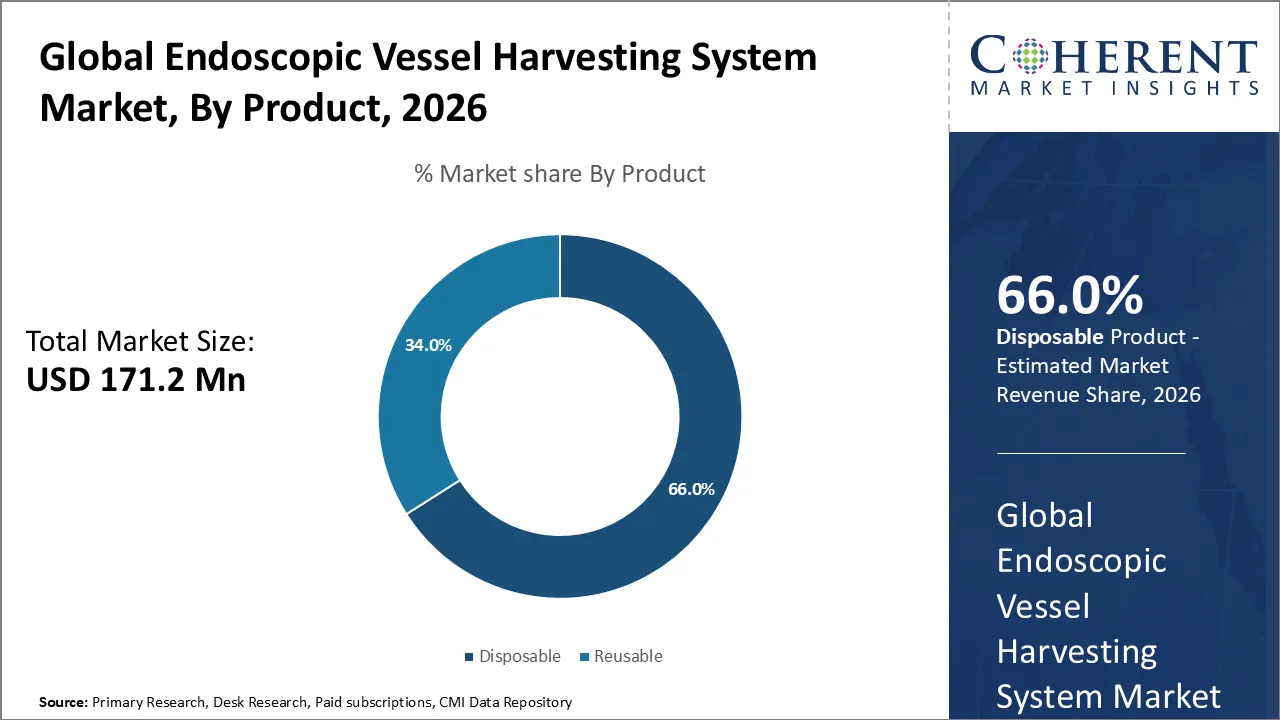
Why is the Disposable Segment Acquiring the Largest Share?
The disposable endoscopic vessel harvesting system segment is expected to account for approximately 66% of the revenue generated from the global endoscopic vessel harvesting system market in 2026. The growing preference for sterile, single-use surgical instruments can be justified by the increasing healthcare-related infection-control requirements and the environmental advantages associated with eliminating instrument reprocessing between procedures.
Exemplifying the superiority of disposable tools, in September 2025, the NLM published results from an expert review on EVH device industry specifications and white papers, conducted by 18-28 years experienced 10 international EVH specialists from the UK, U.S., and Serbia. The results marked the potential of reusable laryngoscopes in emitting 3 times more CO2 and consuming 10-fold more water compared to single use equivalents.
- Current Industry Events of 2026
- Market Size Estimation
- Regional Breakdown
- Competitive Landscape
- Customer Intelligence
- Segmental Analysis
- Pricing Analysis
- Key Market Drivers, Challenges & Future Trends
- Customized Insights Section
Why Coronary Artery Disease (CAD) Dominates the Global Endoscopic Vessel Harvesting System Market?
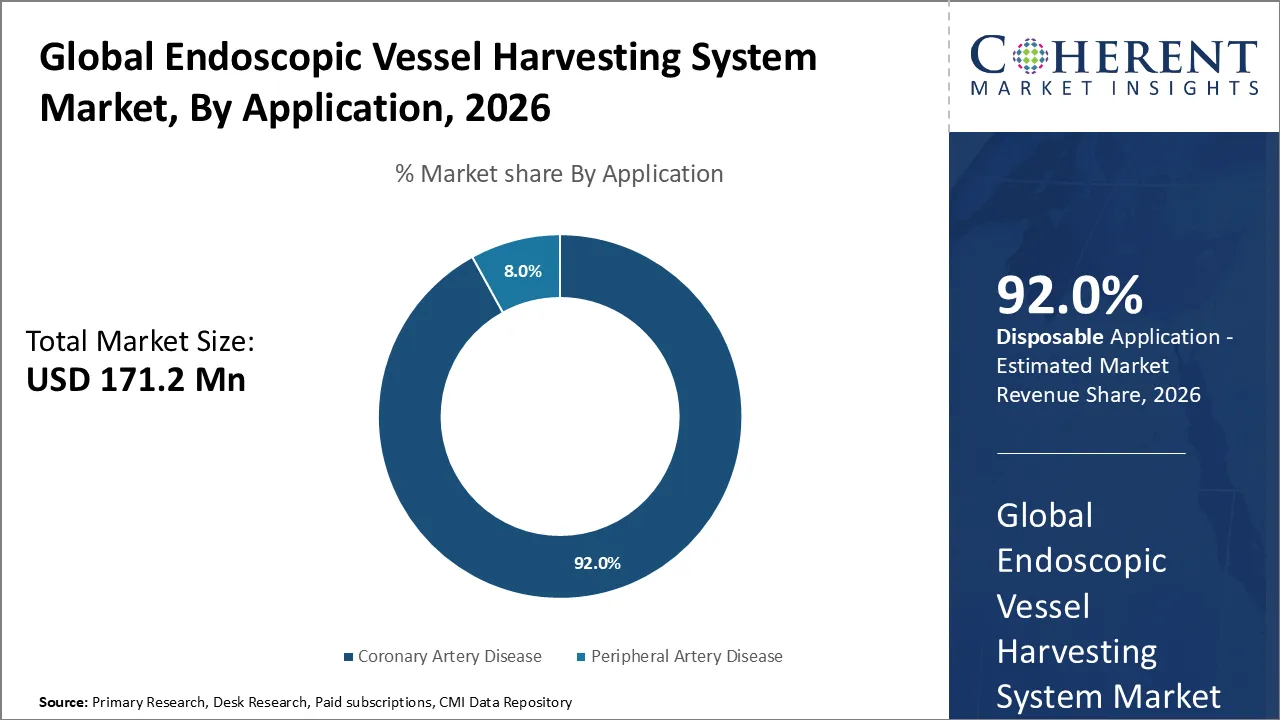
The coronary artery disease segment is poised to hold approximately 92% of the global endoscopic vessel harvesting system market revenue in 2026. Its dominance is primarily attributed to the extensive use of endoscopic vessel harvesting (EVH) in coronary artery bypass grafting (CABG) procedures, where the saphenous vein or radial artery is harvested to create bypass conduits around blocked or narrowed coronary arteries.
Furthermore, the preference for minimally invasive harvesting techniques, which can reduce incision-related complications and postoperative wound infections, is encouraging cardiac surgeons to adopt EVH technologies. Testifying to this clinical advantage, in a 2024 NLM analysis on a retrospective study on over a cohort of 1884 individuals undergoing EVH and open vessel harvesting (OVH). Here, EVH was found causing less frequent leg wound infections (5.3%) that OVH (8.2%), along with underlying benefits, including shorter hospital stay, quicker recovery, and cost reduction in long-term care.
Current Events and Their Impact on the Endoscopic Vessel Harvesting System Market
Current Event | Description and its Impact |
FDA Class II recall involving VasoView HemoPro 2 – July 2026 |
|
India Extends Production Linked Incentive (PLI) Scheme for Medical Devices – November 2026 |
|
Endoscopic Vessel Harvesting System Market Dynamics
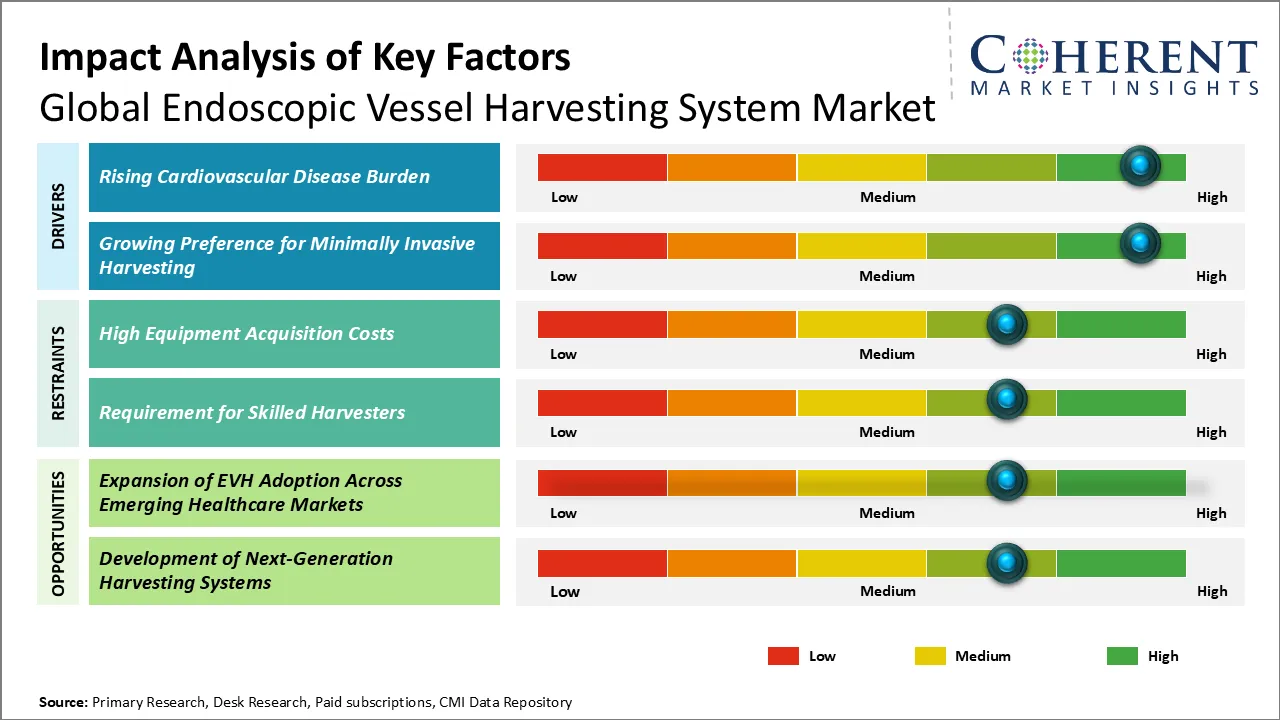
Market Drivers
- Increasing Prevalence of Cardiovascular Diseases: The rising global burden of CVD acts as a major demand driving factor for the global endoscopic vessel harvesting system market. Specifically, coronary artery disease (CAD) being a significant cause of morbidity and mortality escalates the surge in coronary revascularization procedures, including CABG.
- UThis is due to over 90% CABG procedures involving the use of long saphenous vein (LSV) grafts in creating bypass conduits, as per 2024 NLM findings.
- As a result, the growing incidences of cardiovascular conditions, particularly among aging populations and individuals with diabetes, hypertension, and obesity, is expected to generate sustained demand for specialized vessel harvesting equipment.
- As evidence, a 2026 NLM study involving 105,729 U.S. Medicare CABG patients reported that 48.4% had diabetes and 29.7% had obesity, with their mean age being 71 years.
- Growing Preference for Minimally Invasive Surgical Procedures: EVH allows surgeons to obtain blood vessels through smaller incisions using specialized endoscopic instruments, while reducing trauma to surrounding tissues and improving postoperative recovery. Thus, the shifting preference towards minimally invasive surgeries (MIS) is prompting greater adoption of EVH systems over conventional open harvesting methods. MIS techniques are also associated with lesser postoperative pain, improved patient mobility, and better cosmetic outcomes. These benefits are therefore encouraging hospitals to incorporate EVH into their cardiac surgery practices, particularly for patients at increased risk of wound complications.
- A 2024 European Society of Cardiology and European Association for Cardio-Thoracic Surgery (EACTS) consensus statement cited pooled evidence from 29 studies involving 11,919 patients. It reported a 71% reduction in the odds of harvesting-site wound complications (including abscess, necrosis, dehiscence, drainage, seroma, oedema, and haematoma) with EVH, in comparison with OVH.
Endoscopic Vessel Harvesting System Market Trends
- Technological improvements in energy delivery and visualization: Manufacturers are focusing on improved endoscopic visibility, controlled cauterization, ergonomic harvesting tools, and integrated power systems. Demonstrating the sector's emphasis on improving instrument usability and procedural workflow, in April 2025, KARL STORZ announced the commercial availability of its ENDOFLATOR+ insufflation system, incorporating integrated smoke evacuation, heated & humidified CO₂ delivery, and advanced pressure regulation. Its filtration system removes up to 99.9% of particles from evacuated surgical smoke, while heated gas delivery helps minimize camera fogging and maintain endoscopic visibility.
- Increasing emphasis on conduit quality and graft preservation: Surgeons and device manufacturers are focusing on minimizing mechanical and thermal damage during vessel harvesting by Improving dissection techniques, controlling energy delivery, and careful handling of harvested conduits. Marking such activities, in April 2024, Marizyme entered into a co-development agreement with Qualigen Therapeutics to advance U.S. commercialization of DuraGraft, which is a vascular conduit preservation solution for flushing and storing saphenous vein grafts during CABG surgery. The collaboration concluded upon Qualigen committing up to USD 1.5 million worth of fund in commercialization and post-clearance clinical studies.
- Expanding opportunities in emerging cardiac surgery markets: APAC being the fastest-growing regional territory, is attracting new investments and participation from globally recognized research cohorts and manufacturing companies associated with this sector. For instance, from March 2026, Medistim started direct sales operations in Japan, with its transit-time flow measurement (TTFM) technology already supporting approximately 90% of the country’s estimated 17,000 annual CABG procedures. The company’s expansion strategy further includes upgradation of its existing systems to platforms integrating TTFM with high-frequency ultrasound imaging.
Regional Insights
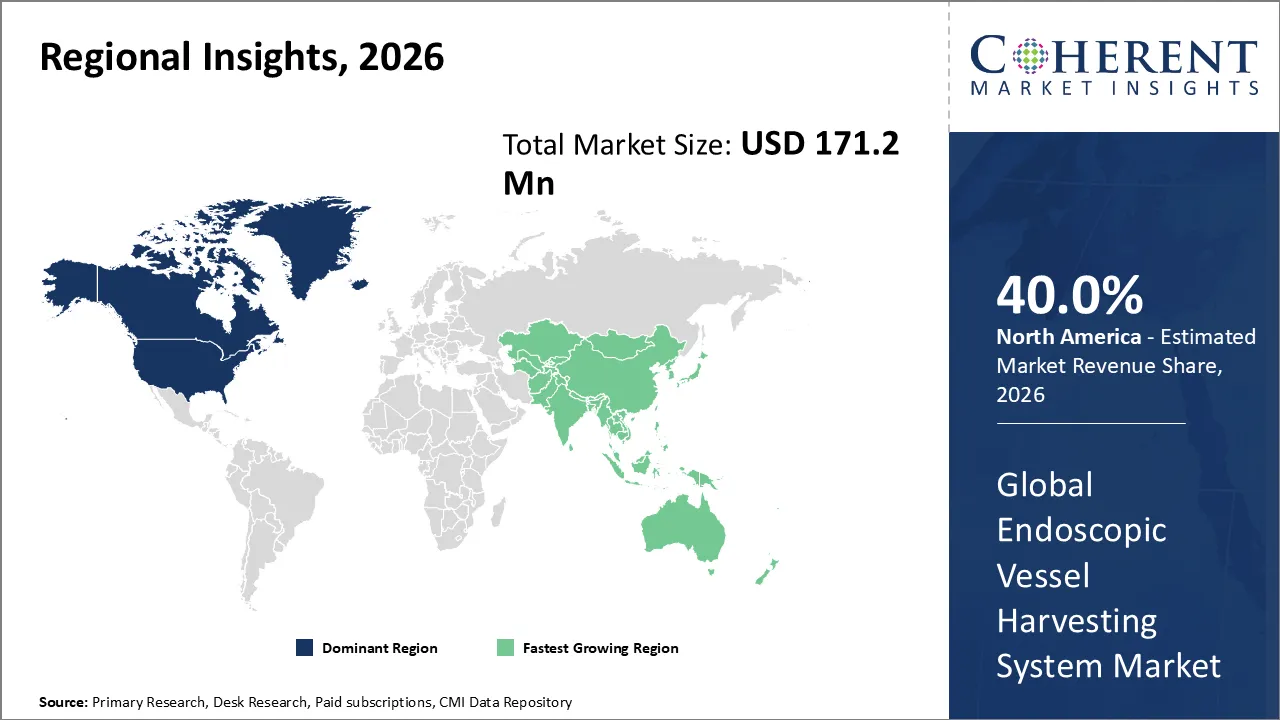
North America Dominates Owing to Established Cardiac Surgery Infrastructure
North America is estimated to account for approximately 40% of global endoscopic vessel harvesting system market revenue in 2026. The established cardiovascular surgery infrastructure, advanced hospital facilities, and the presence of leading EVH equipment manufacturers largely contribute to the region’s dominance in this sector. Highlighting this extensive network of specialized cardiac surgery centers, a 2025 Society of Thoracic Surgeons (STS) database update recorded more than 8.3 million cardiac surgical procedures from across over 1,000 participating institutions, representing more than 97% of U.S. cardiac surgery activity.
Within the region, the U.S. represents the principal demand center, fueled by its large cardiac patient population, established CABG treatment pathways, and relatively high availability of specialized cardiovascular surgeons. According to the Centers for Disease Control and Prevention (CDC)'s National Health Interview Survey, 4.9% of U.S. adults had been diagnosed with coronary heart disease in 2025. In addition, the same statistical update identified heart disease as the leading cause of deaths across the country.
The region also benefits from its established medical device procurement systems and the widening availability of technologically advanced harvesting platforms. Capitalizing on the same, local manufacturers are focusing more on the development of dedicated EVH product portfolios for cardiac surgery applications. Their commercial presence and clinician training activities further support improved awareness and adoption of EVH techniques in cardiac surgery centers.
Asia Pacific Endoscopic Vessel Harvesting System Market Trends
APAC is anticipated to emerge as the fastest-growing regional territory within the global endoscopic vessel harvesting market during 2026-2033. Such accelerated growth is induced by the enlarging CVD population, rising investments in healthcare infrastructure expansion, improving access to advanced cardiac surgery, and increasing availability of MIS technologies. In this regard, the Asia-Pacific Cardiovascular Disease Alliance (APAC CVD Alliance) identified almost 32 million heart failure (HF)-afflicted people across the region till October 2025 and estimated the figure to continue amplifying.
This burden highlights the urgent need to improve early diagnosis, treatment infrastructure, and access to advanced surgical interventions. However, EVH adoption across Asia Pacific remains dependent on healthcare expenditure, specialist availability, hospital procurement budgets, and surgeon training. To bridge the remaining gaps, in May 2024, Getinge launched its inaugural Asia-Pacific Endoscopic Vessel Harvesting Summit in Singapore, bringing together cardiovascular surgeons and harvesting specialists from Singapore, Japan, China, Hong Kong, and other markets.
Currently, the APAC presents new innovation and investment opportunities for EVH manufacturers, as several countries are putting efforts to strengthen their CVD treatment infrastructure. Presenting a dependable testimony to the robust capital influx providing financial assistance for broader adoption, in September 2026, the Australian government confirmed AUD 120 million in funding for the Northern Heart Centre in Tasmania. The investment was intended to reinforce 24 beds and two cardiac catheterization laboratories into the facility.
Global Endoscopic Vessel Harvesting System Market Outlook for Key Countries
U.S. Endoscopic Vessel Harvesting System Market Trends
The U.S. is expected to remain the largest national marketplace within North America for endoscopic vessel harvesting systems due to its established cardiac surgery infrastructure, high cardiovascular disease burden, and early adoption of advanced surgical technologies. This can be evidenced by the sustained procedural volume all around the country, where more than 200 thousand CABG procedures, including approximately 160,000 isolated cases, were being performed every year till, as per 2025 STS database.
These factors display the sustained need for procuring related surgical instruments at a large-scale. The FDA's medical device regulatory framework also plays an important role in the development and commercialization of EVH systems. In order to utilize this scope, manufacturers must obtain applicable marketing authorization and comply with requirements governing device safety, performance, manufacturing quality, and post-market surveillance.
China Endoscopic Vessel Harvesting System Market Trends
China represents an important APAC landscape for the global endoscopic vessel harvesting system market, owing to its large population, increasing cardiovascular disease burden, and continued modernization of healthcare infrastructure. For instance, in 2024 alone, the crude incidence rate of CVD among the nation’s residents, aged 18 years and above, reached 639.46 per 100,000 population. In this regard, the Healthy China Action Plan set a target of push the mortality rate of CVD and cerebrovascular diseases below 190.7 per 100,000 population by 2030, as per an NLM finding.
Expanding access to specialized cardiac hospitals and tertiary-care facilities is therefore expected to enable greater demand for coronary artery bypass procedures and associated vessel harvesting technologies. Utilizing this opportunity, in August 2025, LivaNova announced the commercial launch of its Essenz Perfusion System in China, following approval from the National Medical Products Administration (NMPA). Alongside, the company recognized the country as its 2nd largest marketplace of its heart-lung machines, after America.
Japan Endoscopic Vessel Harvesting System Market Analysis and Trends
Japan represents a technologically advanced marketplace for the regional territory involved in developing next-generation cardiovascular surgical equipment. Such a progressive business atmosphere of the nation is backed by its established hospital infrastructure, specialist surgical capabilities, and a mature medical device ecosystem. This can be testified by its commendable CABG surgical capabilities, with the Japanese Association for Thoracic Surgery recording 9,840 isolated CABG procedures in 2024, of which 5,612 procedures (57.0%) were performed off-pump.
The country's aging population and continuing cardiovascular disease management requirements also contributed to a substantial demand base for cardiac surgery technologies. According to the World Population Prospects, published by the United Nations (UN) Population Division, the epidemiology of individuals aged 65 years and older accounted for 30% of the total number of people residing across Japan in 2025.
India Endoscopic Vessel Harvesting System Market Analysis and Trends
India is emerging as an attractive regional marketplace for endoscopic vessel harvesting systems through continuous expansion of tertiary-care hospitals, patient access to specialized cardiac surgery, and growing demand for advanced cardiovascular treatment. Indicating recent improvements in nationwide cardiovascular diagnosis, management, and referral infrastructure, till July 2026, the Ministry of Health and Family Welfare established 233 Cardiac Care Units and 770 District NCD Clinics under its national noncommunicable disease program.
The country continues to strengthen its medical device regulatory framework, establishing strict requirements for medical device manufacturing, importation, licensing, and quality compliance. Thus, manufacturers seeking expansion in India are focusing on distributor partnerships, clinician education, competitive pricing, and access to specialized cardiac surgery centers. Following this trail of market penetration, in March 2026, Terumo Corporation, in partnership with Tata Group, inaugurated the Terumo-Tata Elxsi Offshore Development Center in Pune to empower its R&D network for cardiac and vascular solutions in India.
Canada Endoscopic Vessel Harvesting System Market Analysis and Trends
Canada represents an established North American endoscopic vessel harvesting system market on account of its publicly funded healthcare infrastructure, specialized cardiovascular treatment facilities, and continued demand for coronary artery bypass grafting procedures. National procedural volume justifies the same, where OECD Health Statistics for 2024 indicate approximately 19,329 CABG procedures in Canada, compared with 19,230 in 2023, representing an increase of approximately 0.5%.
This established procedural demand supports the need for specialized vessel harvesting instruments and related cardiovascular surgical equipment. The marketplace also benefits from Canada’s broad network of cardiac surgery centers and medical device procurement, with hospitals evaluating EVH equipment based on clinical performance, product reliability, operating-room efficiency, and total procurement costs.
How Expansion of EVH Adoption Across Emerging Healthcare Landscapes is Creating New Growth Opportunities in the Endoscopic Vessel Harvesting System Market?
Emerging economies across Asia Pacific, Latin America, and the Middle East & Africa represent significant opportunities for EVH system manufacturers. Specifically, countries such as China, India, Brazil, Indonesia, and Saudi Arabia, who are rapidly expanding their healthcare infrastructure, developing specialized cardiac hospitals, and increasing investments in advanced surgical technologies.
Evidencing the such potential of these countries as an incremental customer base for EVH equipment, Indonesia's Ministry of Health reported an increase in the number of hospitals capable of performing open-heart surgery from 10 in 2012 to 36 in 2026 after the Soeradji Tirtonegoro Hospital (RSST) officially started providing services in this category in January 2026. Simultaneously, in November 2026, the government of India inaugurated a cardiac catheterization laboratory complex worth approximately Rs. 60 crores at JIPMER, Puducherry.
Manufacturers can capitalize on these opportunities through regional distributor partnerships, localized product availability, competitive pricing strategies, and surgeon education initiatives. Establishing relationships with leading cardiac hospitals and training centers can further support awareness and adoption of endoscopic harvesting procedures.
Market Players, Key Development, and Competitive Intelligence
Key Developments
- In June 2026, Getinge introduced its next-generation EVH system, VasoView HemoPro 3, featuring ergonomic improvements, integrated power connectivity, enhanced energy control, and workflow optimization. The new EVH system comprises Hemopro 3 Harvesting Tool and dedicated Hemopro 3 Power Supply, which is designed to serve clinicians performing CABG procedures.
- In September 2026, KARL STORZ gained FDA clearance for expanded indications of its TIPCAM1 Rubina video endoscope, covering selected cardiac surgical procedures. The system integrates 4K visualization, stereoscopic 3D imaging, and near-infrared fluorescence imaging within a single platform. It also incorporates Horizon Control technology, which automatically maintains image orientation during endoscope rotation, supporting consistent visualization and surgical workflow.
Competitive Landscape
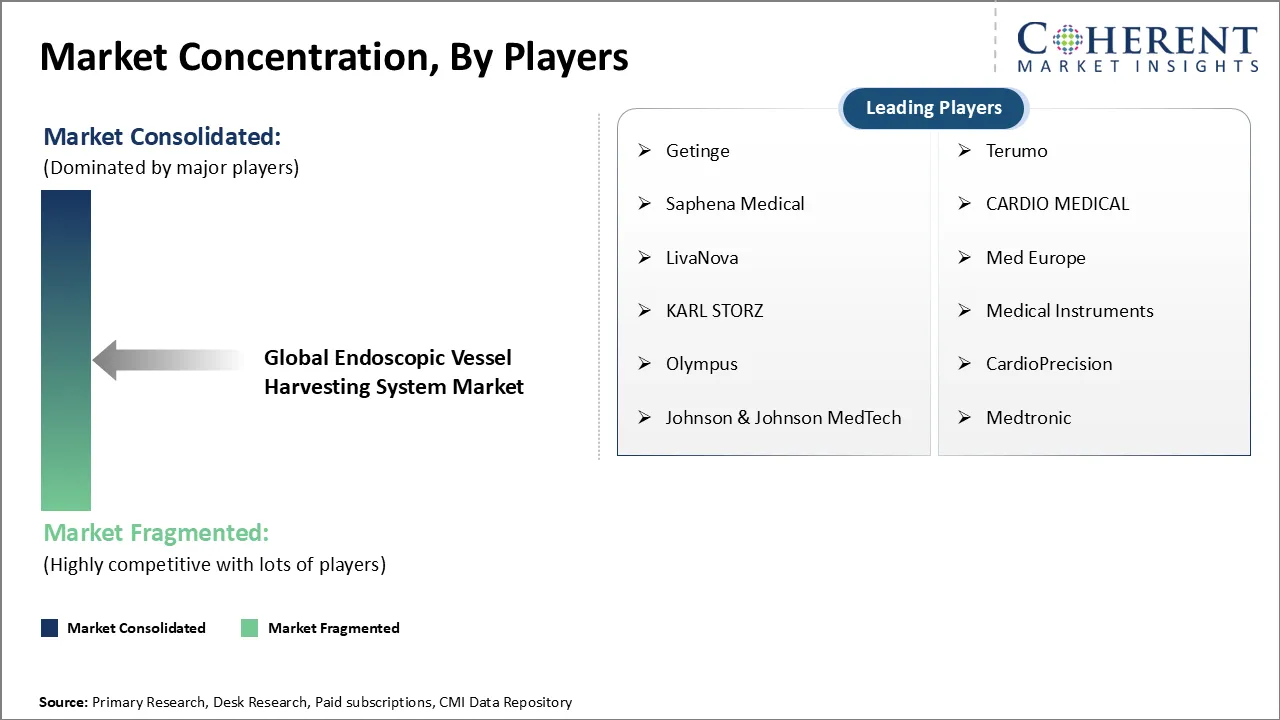
The global endoscopic vessel harvesting system market is commercially shaped by a relatively specialized competitive environment, led by established cardiovascular medical device manufacturers and dedicated EVH technology providers. These pioneers are competing through product innovation, clinical usability, surgeon training, and distribution capabilities.
Competition is majorly concentrated around disposable harvesting platforms, specialized harvesting instruments, visualization technologies, and reusable endoscopic components. Thus, companies are focusing on preserving conduit quality, reducing procedural complexity, improving instrument ergonomics, and strengthening relationships with cardiovascular surgery departments.
Top Manufacturers and Notable Products/Solutions in the Endoscopic Vessel Harvesting System Market
Company | Key Product / Technology | Competitive Positioning | Key Differentiation |
Getinge AB | VasoView HemoPro 2; VasoView HemoPro 3 | Dedicated EVH system manufacturer | Advanced harvesting instruments, controlled energy delivery, visualization and procedural workflow |
Terumo Corporation | VirtuoSaph Plus | Dedicated cardiovascular and EVH technology provider | Integrated vessel harvesting, insufflation, cutting and coagulation capabilities |
Saphena Medical, Inc. | Venapax EVH System | Specialized EVH technology developer | Dedicated vessel harvesting platform and minimally invasive surgical approach |
CARDIO MEDICAL GmbH | Sterling Device; specialized surgical instruments | Specialized cardiovascular and surgical instrument supplier | Tissue retraction and surgical instrument capabilities |
LivaNova PLC | Historical Sorin cardiovascular and vessel harvesting portfolio | Cardiovascular medical technology participant | Established cardiac surgery and cardiopulmonary technology expertise |
Med Europe S.r.l. (Elite Life Care) | EVH-related surgical equipment portfolio | Specialized medical device supplier | Surgical equipment distribution and cardiovascular device market participation |
KARL STORZ SE & Co. KG | Bisleri endoscopic vessel harvesting system; endoscopic instruments | Reusable EVH and endoscopic equipment provider | Endoscopic visualization, reusable instruments and surgical precision |
Medical Instruments S.p.A. | Endoscopic vessel harvesting instruments and systems | Specialized EVH equipment manufacturer | Surgical instrument engineering and vessel harvesting equipment |
Olympus Corporation | Endoscopic visualization systems and surgical technologies | Adjacent endoscopic technology participant | Imaging, visualization and minimally invasive surgical technology |
CardioPrecision Ltd. | CoreVista technology | Specialized minimally invasive cardiovascular technology developer | Cardiovascular procedural instrumentation and minimally invasive surgical technologies |
Johnson & Johnson MedTech | Historical Ethicon VasoView-related EVH portfolio | Historical EVH technology participant | Surgical instrumentation, energy technologies and cardiovascular surgical expertise |
Medtronic plc | Cardiovascular surgical technologies and historical EVH portfolio | Cardiovascular medical technology participant | Broad cardiovascular surgery portfolio and global hospital relationships |
Market Report Scope
Endoscopic Vessel Harvesting System Market Report Coverage
Report Coverage | Details | ||
Base Year: | 2025 | Market Size in 2026: | USD 171.2 Mn |
Historical Data for: | 2020 to 2024 | Forecast Period: | 2026 to 2033 |
CAGR: | 4.0% | 2033 Value Projection: | USD 225.3 Mn |
Geographies covered: |
| ||
Segments covered: |
| ||
Companies covered: | Getinge, Terumo, Saphena Medical, CARDIO MEDICAL, LivaNova, Med Europe, KARL STORZ, Medical Instruments, Olympus, CardioPrecision, Johnson & Johnson MedTech, and Medtronic. | ||
Growth Drivers: |
| ||
Restraints & Challenges: |
| ||
Analyst Opinion (Expert Opinion)
- The EVH market is expected to benefit from increasing clinical preference for procedures that reduce harvesting-site complications and improve postoperative recovery. This supports continued demand for advanced harvesting systems, particularly in hospitals performing high volumes of CABG procedures.
- Disposable systems are expected to maintain their leading position, owing to their sterile single-use configurations, reduced reprocessing requirements, and standardized instrument availability. However, healthcare providers will continue comparing disposable procurement costs against reusable equipment ownership and sterilization expenditure.
- The 2026 FDA recall involving a specific VasoView HemoPro 2 lot highlights the importance of manufacturing quality and sterilization validation. At the same time, Getinge's HemoPro 3 launch demonstrates the importance of clinician-led product development. To align with this trend, manufacturers should invest in quality systems, clinical education, and product usability, which will strengthen their position in the global EVH market.
Speak to the analyst
Want personalized insights?
Take the findings above to one of our principal consultants, or have the report rebuilt around the segments, geographies and competitors you actually track.
Market Segmentation
- By Products (Revenue, USD Mn, 2021-2033)
- Disposable
- Reusable
- By Application (Revenue, USD Mn, 2021-2033)
- Coronary Artery Disease
- Peripheral Artery Disease
- By Region (Revenue, USD Mn, 2021-2033)
- North America
- U.S.
- Canada
- Latin America
- Brazil
- Mexico
- Argentina
- Rest of Latin America
- Europe
- Germany
- U.K.
- France
- Italy
- Spain
- Russia
- Rest of Europe
- Asia Pacific
- China
- India
- Japan
- Australia
- South Korea
- ASEAN
- Rest of Asia Pacific
- Middle East
- GCC
- Israel
- Rest of Middle East
- Africa
- South Africa
- Central Africa
- North Africa
- North America
- Key Players
- Getinge
- Terumo
- Saphena Medical
- CARDIO MEDICAL
- LivaNova
- Med Europe
- KARL STORZ
- Medical Instruments
- Olympus
- CardioPrecision
- Johnson & Johnson MedTech
- Medtronic
Sources
Primary Research Interviews
- Cardiothoracic Surgeons and Coronary Artery Bypass Grafting (CABG) Specialists
- Endoscopic Vessel Harvesting Specialists and Physician Assistants
- Cardiovascular Operating Room Managers and Surgical Nursing Professionals
- Hospital Procurement Managers and Medical Device Purchasing Specialists
- Medical Device Manufacturers and Product Development Professionals
- Cardiovascular Surgical Equipment Distributors and Regional Sales Representatives
- Clinical Training Specialists and Cardiac Surgery Department Administrators
Databases
- U.S. National Library of Medicine – PubMed and PubMed Central (PMC)
- Society of Thoracic Surgeons (STS) – Adult Cardiac Surgery Database
- Centers for Disease Control and Prevention (CDC) – National Health Interview Survey
- Organisation for Economic Co-operation and Development (OECD) – Health Statistics
- World Health Organization (WHO) – Global Health Observatory
- United Nations – World Population Prospects
- U.S. Food and Drug Administration (FDA) – Medical Device Recall Database
- FDA – 510(k) Premarket Notification Database
- Japanese Association for Thoracic Surgery – Annual Surgical Statistics
- ClinicalTrials.gov – Cardiovascular Surgery and Medical Device Clinical Studies
Magazines
- Medical Design & Outsourcing
- Medical Product Outsourcing
- Cardiovascular Business
- Cardiovascular News
- Cardiovascular Business & Technology Publications
Journals
- European Heart Journal
- European Journal of Cardio-Thoracic Surgery
- The Annals of Thoracic Surgery
- The Journal of Thoracic and Cardiovascular Surgery
- Interdisciplinary CardioVascular and Thoracic Surgery
- General Thoracic and Cardiovascular Surgery
- Journal of Cardiothoracic Surgery
- Circulation
- Journal of the American Heart Association
- BMC Cardiovascular Disorders
Newspapers
- The Economic Times
- Business Standard
- The Hindu
- The Indian Express
- The Japan Times
Associations
- Society of Thoracic Surgeons (STS)
- American Heart Association (AHA)
- American College of Cardiology (ACC)
- European Society of Cardiology (ESC)
- European Association for Cardio-Thoracic Surgery (EACTS)
- Japanese Association for Thoracic Surgery (JATS)
- International Society of Endoscopic Vessel Harvesting (ISEVH)
- Asia-Pacific Cardiovascular Disease Alliance (APAC CVD Alliance)
- Canadian Institute for Health Information (CIHI)
Public Domain Sources
Government and Regulatory Sources
- U.S. Food and Drug Administration (FDA) – Medical Device Recalls, Safety Communications, and Regulatory Databases
- Centers for Disease Control and Prevention (CDC) – U.S. Coronary Heart Disease Statistics
- World Health Organization (WHO) – Global Cardiovascular Disease Burden
- U.S. National Library of Medicine – Clinical and Epidemiological Research Publications
- National Medical Products Administration (NMPA), China – Medical Device Regulatory Information
- Ministry of Health and Family Welfare, Government of India – Cardiovascular Healthcare Programmes
- Department of Pharmaceuticals, Government of India – Medical Device Production Linked Incentive Scheme
- Press Information Bureau (PIB), Government of India – Healthcare Investments and Policy Announcements
- Australian Government Department of Health, Disability and Ageing – Cardiac Infrastructure Investments
- Ministry of Health, Labour and Welfare, Japan – Healthcare Statistics
- Health Canada – Medical Device Regulatory Framework
- Ministry of Health, Republic of Indonesia – Cardiac Surgery Infrastructure Developments
Official Company Publications and Product Information
- Getinge AB – VasoView HemoPro Product Portfolio and June 2026 Product Launch
- Terumo Corporation – VirtuoSaph Plus and Cardiovascular Device Portfolio
- KARL STORZ – ENDOFLATOR+ Technology and Endoscopic Imaging Developments
- Medistim ASA – Japan Direct Sales Expansion and CABG Flow Measurement Technologies
- LivaNova PLC – Essenz Perfusion System and China Market Developments
- Terumo Corporation and Tata Elxsi – India Research and Development Collaboration
- Saphena Medical – Endoscopic Vessel Harvesting Technology
- CARDIO MEDICAL GmbH – Cardiovascular Surgical Instruments
- Med Europe S.r.l. – Medical and Surgical Equipment Portfolio
- Medical Instruments S.p.A. – Surgical Instrument Product Information
- Olympus Corporation – Endoscopic Visualization Technologies
- CardioPrecision Ltd. – Minimally Invasive Cardiovascular Technologies
- Johnson & Johnson MedTech – Surgical Technology Portfolio
- Medtronic plc – Cardiovascular Surgical Technologies
Proprietary Elements
- CMI Data Analytics Tool
- Proprietary CMI Existing Repository of Information for the Last 10 Years
Get access to 250+ pages report
Every segment, forecast, competitor profile and data table behind the analysis above — available for instant download.
- ESOMAR Member
- ISO 9001:2015 Certified
- D-U-N-S Registered
- GDPR & CCPA Compliant
Frequently Asked Questions
The global Endoscopic Vessel Harvesting System Market is projected to grow from USD 171.2 Mn in 2026 to USD 225.3 Mn by 2033, registering a CAGR of 4.0% during the forecast period.
Major companies include Getinge AB, Terumo Corporation, Saphena Medical, CARDIO MEDICAL GmbH, LivaNova PLC, Med Europe, KARL STORZ, Medical Instruments, and other cardiovascular medical device manufacturers.
Major challenges include high equipment acquisition costs, the need for trained harvesting specialists, concerns regarding conduit quality, regulatory compliance requirements, and manufacturing or sterilization-related product safety issues.
Increasing cardiovascular disease prevalence, demand for CABG procedures, preference for minimally invasive harvesting, growing awareness of postoperative wound complications, and improvements in harvesting instrument design are the major growth drivers.
The market is expected to register a CAGR of approximately 4.0% between 2026 and 2033.
North America is estimated to dominate the global market, accounting for approximately 40% of market revenue in 2026, supported by established cardiac surgery infrastructure and the presence of major EVH manufacturers.
EVH enables surgeons to harvest vessels through smaller incisions compared with conventional open techniques. This can reduce harvesting-site wound complications, postoperative pain, and recovery time. A pooled analysis cited by the ESC/EACTS found approximately 71% lower wound complications compared with open harvesting.