

Europe Adrenoleukodystrophy Drugs Market Size and Forecast – 2026 To 2033
The Europe adrenoleukodystrophy drugs market is expected to grow from USD 883.8 Mn in 2026 to USD 1,883.0 Mn by 2033, registering a compound annual growth rate (CAGR) of 11.3% from 2026 to 2033. The Europe adrenoleukodystrophy drugs market is poised for significant expansion, fueled by the expansion of newborn screening programs that enable earlier identification of affected infants and timely treatment.
In September 2025, France expanded its national newborn screening program to include three additional rare diseases, bringing the total number of screened conditions to 16, strengthening early detection of inherited disorders and supporting timely clinical intervention. (Source: French Ministry of Health, Families, Autonomy and Persons with Disabilities)
Key Takeaways of the Europe Adrenoleukodystrophy Drugs Market
- Cerebral adrenoleukodystrophy (cALD) is projected to hold 56.8 % of the Europe adrenoleukodystrophy drugs market share in 2026, making it the dominant indication segment, supported by the increasing development of therapies specifically targeting cerebral disease progression. For instance, in July 2026, the European Medicines Agency (EMA) recommended marketing authorization for Nezglyal (leriglitazone) for the treatment of cALD, highlighting regulatory progress in targeted ALD therapy.
- Hematopoietic stem cell transplantation is projected to hold 61.7 % of the Europe adrenoleukodystrophy drugs market share in 2026, making it the dominant treatment segment, supported by its established role in managing cerebral ALD. For instance, in November 2023, NHS England established allogeneic HSCT as a routinely commissioned treatment option for adult patients with X-linked cerebral ALD, supporting continued access to this treatment across England.
- Pediatrics are projected to hold 62.9 % of the Europe adrenoleukodystrophy drugs market share in 2026, making it the dominant patient type segment, supported by the early onset and rapid progression of cerebral ALD in children. For instance, the EMA's regulatory assessment of Skysona specifically covered children under 18 years with early cALD, demonstrating the focus of advanced ALD therapies on pediatric patients.
Segmental Insights
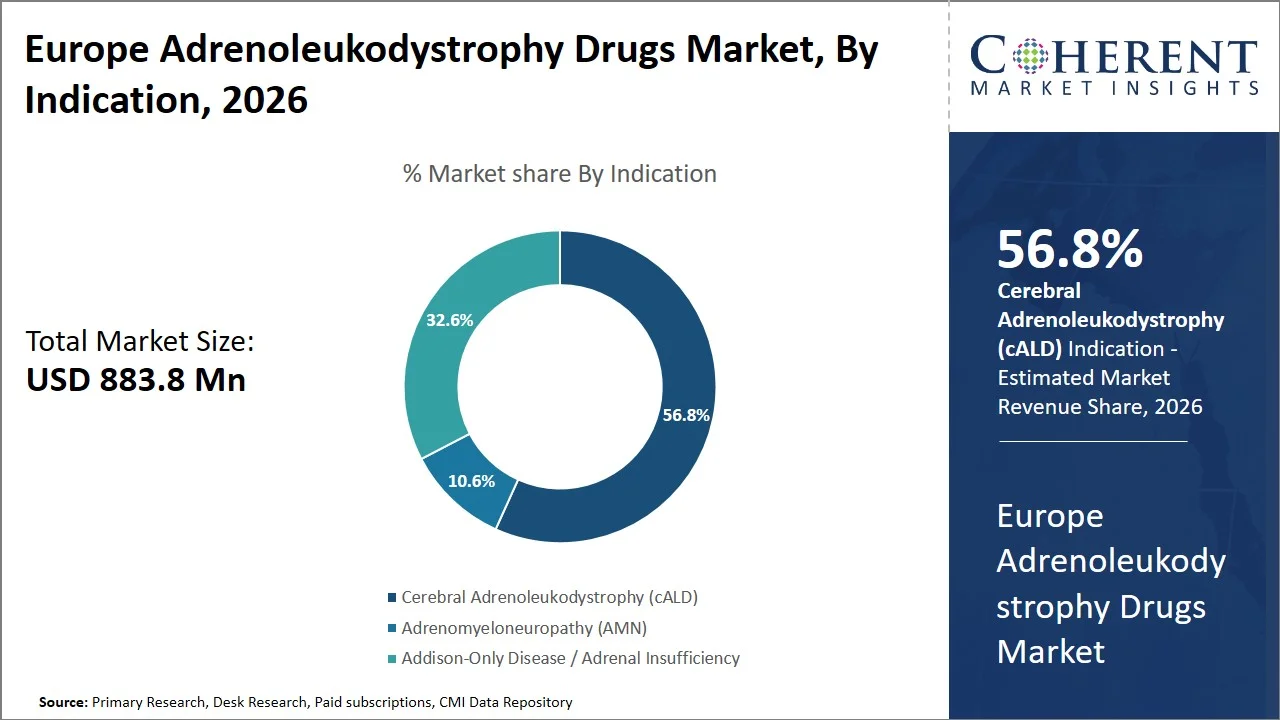
Why Do Cerebral Adrenoleukodystrophy (cALD) Dominate the Europe Adrenoleukodystrophy Drugs Market?
Cerebral adrenoleukodystrophy (cALD) is projected to hold a market share of 56.8% in 2026, owing to the quickly progressive nature of the diseases and highest unmet medical need for intervention on early stage. The accumulation of very long-chain fatty acids (VLCFAs) in brain could damage the nervous system through irreversible demyelination and hence effective on-time treatment is crucial. Growing focus of new therapies on this indication will further boost segment’s share in the market. For instance, in September 2024, the European Medicines Agency (EMA) has approved an amendment to the pediatric investigation plan for leriglitazone that includes a trial to assess whether treatment is able to halt the progression of cALD prior to stem cell transplant (HSCT).
- Current Industry Events of 2026
- Market Size Estimation
- Regional Breakdown
- Competitive Landscape
- Customer Intelligence
- Segmental Analysis
- Pricing Analysis
- Key Market Drivers, Challenges & Future Trends
- Customized Insights Section
Why Does Hematopoietic Stem Cell Transplantation Represent the Largest Treatment Segment in the Europe Adrenoleukodystrophy Drugs Market?
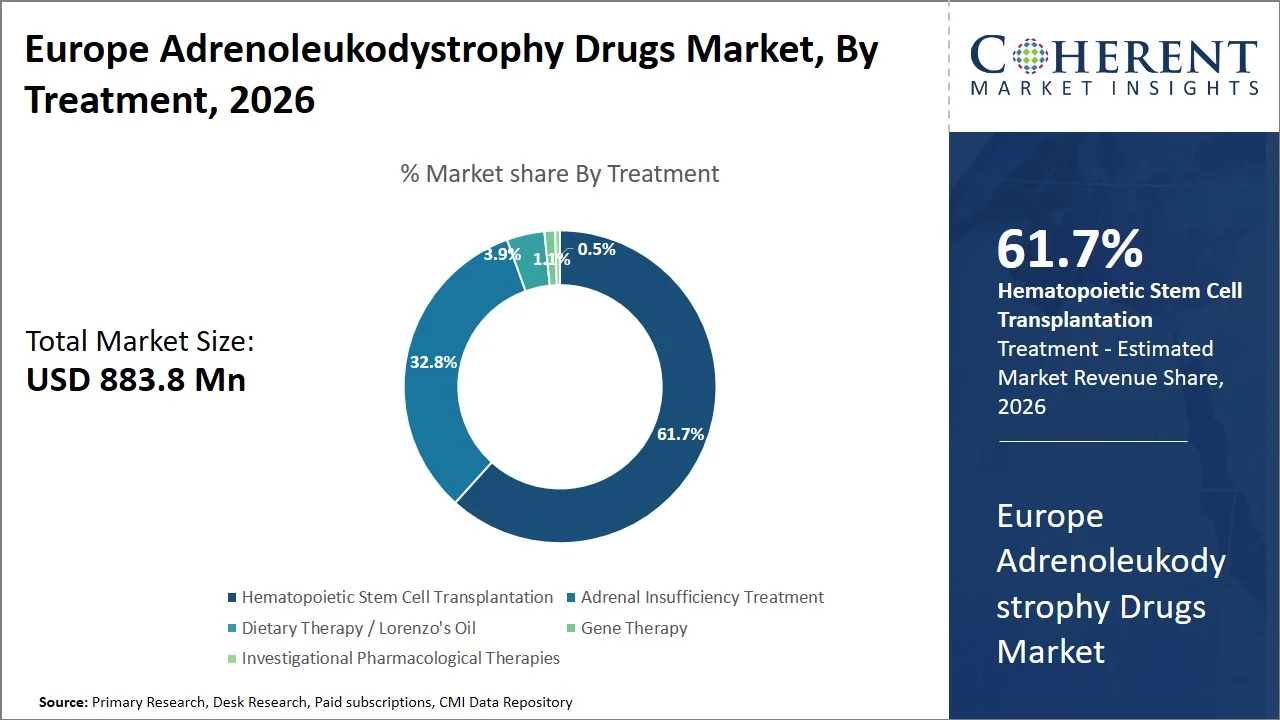
Hematopoietic stem cell transplantation is projected to hold 61.7% of the market share in 2026, as it is the only established therapy that can completely arrest the disease in some eligible, early-stage cerebral ALD patients. Its clinical significance in being an effective tool that has been reinforced with European transplant guidelines suggesting early treatment of X-linked ALD prior to development of severe neurologic disease. For instance, in September 2025, European Society for Blood and Marrow Transplantation (EBMT) released its 2025 clinical practice recommendations indicating that allogeneic hematopoietic cell transplantation can be used in the treatment of childhood X-linked adrenoleukodystrophy (X-ALD) as prevention of disease progression of X-ALD, particularly when performed early. (Source: National Library of Medicine)
Pediatrics Segment Dominates the Europe Adrenoleukodystrophy Drugs Market
The pediatrics segment is expected to hold 62.9% of the Europe adrenoleukodystrophy drugs market share in 2026, as X-linked adrenoleukodystrophy is capable of converting into quickly advancing cerebral disease during childhood, making diagnosis and treatment urgent among patients at early childhood. There are available treatments that may alter the course of the disease at the early cerebral ALD stage, thus the demand for treatment increases in pediatrics population. For instance, in December 2025, as part of its evidence-review framework, the U.K. National Screening Committee (NSC) designated infants and children with ALD as a priority group for testing the use of early hematopoietic stem cell transplantation (HSCT) and other interventions.
Current Events and their Impact
Current Events | Description and its Impact |
NICE Prioritized Leriglitazone Evaluation for Cerebral ALD (May 2026) |
|
European Medicines Agency Continued Assessment of Leriglitazone for ALD (April 2026) |
|
European Medicines Agency Withdrew Orphan Designation for an Investigational AAV9-Based ALD Therapy (September 2025) |
|
Europe Adrenoleukodystrophy Drugs Market Dynamics
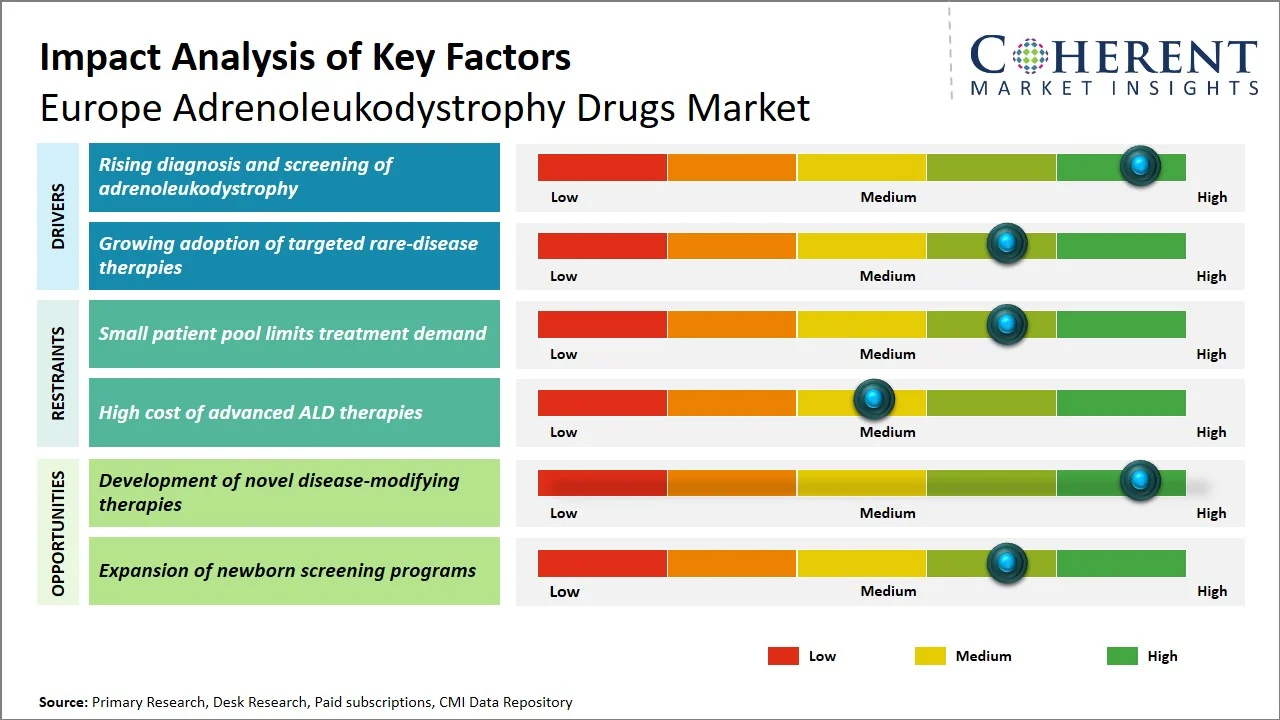
Market Drivers
- Rising diagnosis and screening of adrenoleukodystrophy: The Europe adrenoleukodystrophy drugs market is significantly driven by increasing diagnosis and screening, supported by advances in genetic testing, improved clinical awareness, and the expansion of newborn screening programs. Earlier identification of ALD enables closer neurological monitoring and timely intervention before irreversible disease progression, thereby expanding the pool of patients eligible for treatment. For instance, Italy’s Lombardy region screened 138,116 newborns for X-linked ALD between September 2021 and June 2025 as part of its pilot newborn screening program, demonstrating the growing adoption of systematic early-detection approaches in Europe.
- Growing adoption of targeted rare-disease therapies: The Europe adrenoleukodystrophy drugs market is benefiting from the growing development of targeted and disease-specific therapies, as treatment research increasingly moves beyond symptomatic management toward approaches aimed at slowing neurological disease Advances in pharmacological and gene-based approaches are expanding the therapeutic pipeline and creating opportunities for more targeted management of this rare disorder. For instance, in July 2026, the European Medicines Agency (EMA) recommended marketing authorization under exceptional circumstances for Nezglyal (leriglitazone) for the treatment of cerebral adrenoleukodystrophy, highlighting continued regulatory progress toward targeted ALD therapies.
- Increasing Regulatory Momentum for ALD Drug Development: The Europe adrenoleukodystrophy drugs market is supported by increasing regulatory engagement in the development of therapies for this ultra-rare disorder, helping developers advance treatments through specialized scientific and regulatory pathways. For instance, in September 2024, the European Medicines Agency (EMA) accepted a modification to the pediatric investigation plan for leriglitazone, including clinical development in boys aged 2 to <18 years with ALD, supporting continued pediatric drug development.
Emerging Trends
- Expansion of Multidisciplinary ALD Care Pathways: European ALD management is increasingly shifting toward coordinated care involving neurology, endocrinology, genetics, radiology, and transplantation specialists. This integrated approach is supporting earlier identification of disease progression and more timely treatment decisions.
- Growing Use of Biomarker-Based Disease Monitoring: Research are increasingly focusing on biomarkers such as plasma neurofilament light and other molecular markers to improve monitoring of cerebral ALD and distinguish active from non-progressive disease. Although several biomarkers remain investigational, their development could complement MRI-based surveillance in the future.
- Increasing Focus on Long-Term Outcomes and Survivorship: As earlier diagnosis and advanced treatments improve survival, attention is shifting toward long-term neurological, endocrine, developmental, and quality-of-life outcomes. This is creating greater emphasis on sustained monitoring and post-treatment care for patients living longer with ALD.
Country-wise ALD Screening and Treatment Landscape
Country | ALD Newborn Screening Status | Key ALD Treatment / Clinical Infrastructure | Market Relevance |
U.K. | Not currently recommended nationally | Specialized metabolic, neurology, and transplant centers | High |
Germany | Not identified as part of national NBS | Established rare-disease and metabolic treatment infrastructure | High |
Italy | Pilot ALD screening has been conducted | Established pediatric metabolic and neurological centers | High |
France | ALD screening not currently implemented nationally | Specialized rare-disease and leukodystrophy centers | High |
The Netherlands | Implemented nationally from October 2023 | Amsterdam UMC serves as a dedicated ALD expertise center | Very High |
Belgium | Not nationally implemented | Specialized rare-disease and metabolic-care infrastructure | Medium |
Switzerland | Not nationally implemented | University-based specialist rare-disease care | Medium-High |
Poland | Not nationally implemented | Developing rare-disease diagnostic and specialist-care infrastructure | Medium |
Spain | Not nationally implemented nationally | Active rare-disease research and specialist clinical infrastructure | Medium–High |
Russia | Limited ALD-specific screening infrastructure | Specialized neurological and metabolic-care centers | Medium |
Rest of Europe | Varies by country | Availability of specialized ALD and rare-disease services varies significantly | Medium |
How is the development of novel disease-modifying therapies creating new growth opportunities in the Europe adrenoleukodystrophy drugs market?
The Europe adrenoleukodystrophy drugs market offers substantial opportunities in novel disease-modifying therapeutics, especially in the realms of gene-based and targeted pharmacotherapies, targeting and ultimately slowing down the disease progression in the nervous system. Increasing investment in rare-disease innovation and an encouraging European orphan drugs landscape are driving the development of treatments to cater for this high unmet medical need indication. For instance, in July 2025, European Medicines Agency approves a marketing authorization application of Minoryx Therapeutics, leriglitazone (NEZGLYAL) for the treatment of the childhood and adult male cerebral adrenoleukodystrophy (cALD), reinforcing the development of new disease-modifying treatment options in Europe.
Market Players, Key Development, and Competitive Landscape
Key Developments
- In September 2025, ALD Connect launched its Breakthrough Research Fund, aiming to raise USD 5 million to accelerate ALD research and clinical care, with funding focused on areas including biomarker discovery, gene therapy and novel treatment strategies. The initiative is expected to support scientific advancement and the development of new therapeutic approaches for ALD.
- In November 2023, Minoryx Therapeutics announced the enrollment of the first patients with cerebral adrenoleukodystrophy (cALD) in its Phase 3 CALYX clinical trial evaluating leriglitazone. The development reflects continued clinical advancement of potential disease-modifying treatments for ALD and supports the expansion of therapeutic options for patients with cALD
Competitive Landscape
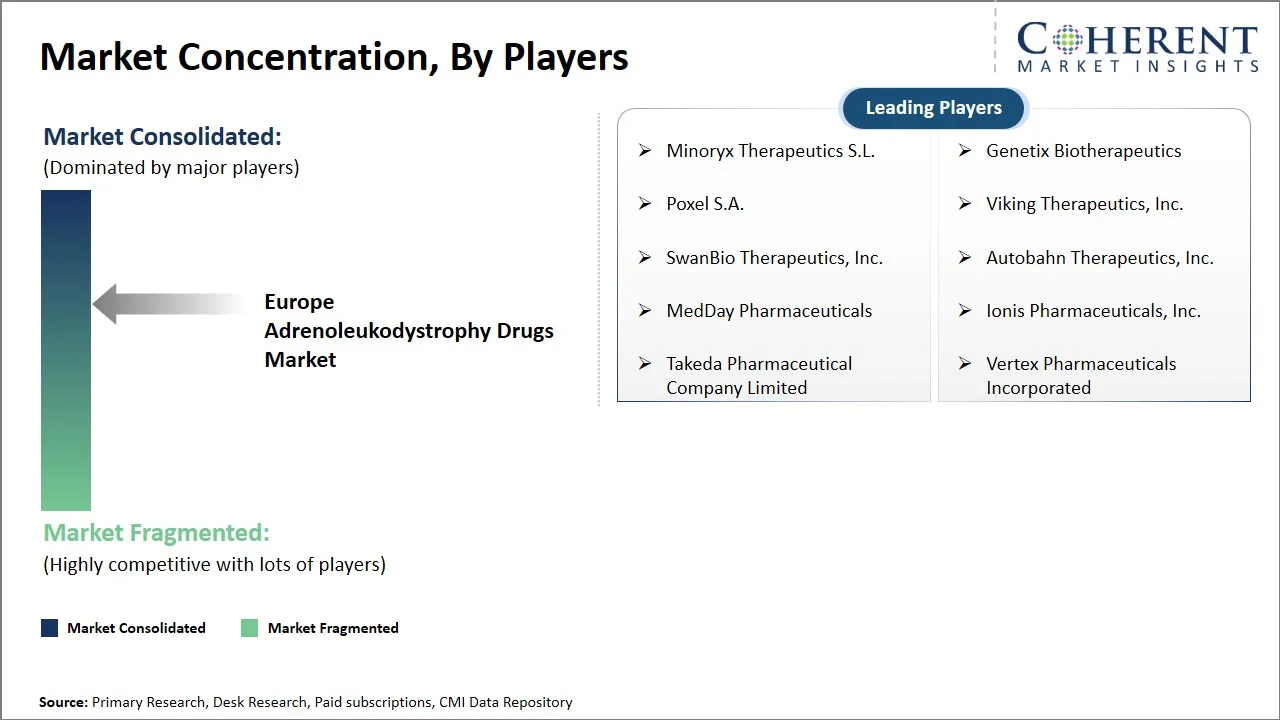
The Europe adrenoleukodystrophy drugs market is moderately concentrated, with competition evolving toward disease-modifying and targeted therapies. The market remains centered on established treatment approaches such as hematopoietic stem cell transplantation and adrenal insufficiency management, while emerging pharmacological and gene therapy approaches are expanding the competitive landscape. Recent regulatory activity surrounding leriglitazone further indicates increasing competition for therapies targeting cerebral ALD. Key focus areas include:
- Development of disease-modifying therapies targeting cerebral ALD progression
- Advancement of gene and cell-based therapies for long-term disease control
- Expansion of treatment options for pediatric and early-stage cALD patients
- Improvement of clinical efficacy, safety, and long-term treatment durability
- Strengthening regulatory pathways and orphan-drug development strategies
- Development of pharmacological therapies that can complement or delay invasive transplantation
- Expansion of treatment access through specialized rare-disease centers across Europe
Market Report Scope
Europe Adrenoleukodystrophy Drugs Market Report Coverage
| Report Coverage | Details | ||
|---|---|---|---|
| Base Year: | 2025 | Market Size in 2026: | USD 883.8 Mn |
| Historical Data for: | 2020 To 2024 | Forecast Period: | 2026 To 2033 |
| Forecast Period 2026 to 2033 CAGR: | 11.3% | 2033 Value Projection: | USD 1,883.0 Mn |
| Segments covered: |
| ||
| Companies covered: | Minoryx Therapeutics S.L., Genetix Biotherapeutics, Poxel S.A., Viking Therapeutics, Inc., SwanBio Therapeutics, Inc., Autobahn Therapeutics, Inc., MedDay Pharmaceuticals, Ionis Pharmaceuticals, Inc., Takeda Pharmaceutical Company Limited, Vertex Pharmaceuticals Incorporated | ||
| Growth Drivers: |
| ||
| Restraints & Challenges: |
| ||
Analyst Opinion (Expert Opinion)
- In the coming years, Europe adrenoleukodystrophy drugs market is expected to be shaped by the transition toward earlier diagnosis and disease-modifying therapies, particularly treatments capable of slowing or preventing neurological progression in cerebral adrenoleukodystrophy (cALD). The increasing focus on gene therapy and novel pharmacological approaches is expected to gradually diversify the treatment landscape beyond conventional supportive and transplantation-based approaches.
- The maximum growth opportunity lies within pediatric cALD therapies, particularly in countries such as Germany, France, the U.K., and Italy, where established rare-disease treatment infrastructure and greater adoption of advanced therapies can support earlier intervention. Players should focus on developing durable, safer, and less invasive disease-modifying treatments, strengthening clinical evidence for early-stage patients, and establishing partnerships with specialized treatment centers to improve patient identification, treatment access, and market penetration.
- In order to create an advantage for themselves, the competitors should prioritize early-stage disease intervention, differentiate therapeutic mechanisms, long-term safety and efficacy, and streamline patient pathways. Developing therapies that can reduce dependence on invasive procedures while addressing both neurological progression and broader ALD manifestations could provide significant competitive advantages over the forecast period.
Speak to the analyst
Want personalized insights?
Take the findings above to one of our principal consultants, or have the report rebuilt around the segments, geographies and competitors you actually track.
Market Segmentation
- Indication Insights (Revenue, USD Mn, 2021 - 2033)
- Cerebral Adrenoleukodystrophy (cALD)
- Adrenomyeloneuropathy (AMN)
- Addison-Only Disease / Adrenal Insufficiency
- Treatment Insights (Revenue, USD Mn, 2021 - 2033)
- Hematopoietic Stem Cell Transplantation
- Adrenal Insufficiency Treatment
- Dietary Therapy / Lorenzo's Oil
- Gene Therapy
- Investigational Pharmacological Therapies
- Patient Type Insights (Revenue, USD Mn, 2021 - 2033)
- Adults
- Pediatrics
- Distribution Channel Insights (Revenue, USD Mn, 2021 - 2033)
- Hospital Pharmacies
- Retail Pharmacies
- Online Pharmacies
- Key Players Insights
- Minoryx Therapeutics S.L.
- Genetix Biotherapeutics
- Poxel S.A.
- Viking Therapeutics, Inc.
- SwanBio Therapeutics, Inc.
- Autobahn Therapeutics, Inc.
- MedDay Pharmaceuticals
- Ionis Pharmaceuticals, Inc.
- Takeda Pharmaceutical Company Limited
- Vertex Pharmaceuticals Incorporated
Sources
Primary Research Interviews
- Neurologists / Pediatric Neurologists – diagnosis, disease progression, and adoption of ALD therapies.
- Endocrinologists / Metabolic Disease Specialists – adrenal insufficiency management and treatment practices.
- Hematopoietic Stem Cell Transplant Specialists – patient selection and utilization of HSCT for cerebral ALD.
- Geneticists / Genetic Counselors – genetic diagnosis, newborn screening, and patient identification.
- Rare-Disease Treatment Center Specialists – treatment pathways, access barriers, and adoption of emerging therapies.
Stakeholders
- ALD Drug Developers – development and commercialization of disease-modifying therapies and gene therapies.
- Specialized ALD Treatment Centers – diagnosis, monitoring, HSCT, and advanced therapy administration.
- Hospitals & Transplant Centers – delivery of HSCT and multidisciplinary ALD care.
- Diagnostic Laboratories – VLCFA testing, ABCD1 genetic testing, and molecular diagnosis.
- Patient Advocacy Organizations – disease awareness, patient support, clinical-trial participation, and access initiatives.
- End-use Sectors
- Specialty Hospitals & ALD Centers – diagnosis, disease monitoring, HSCT, and advanced treatment.
- Pediatric Neurology Centers – early detection and management of childhood cerebral ALD.
- Transplant Centers – hematopoietic stem cell transplantation for eligible cALD patients.
- Endocrinology & Metabolic Clinics – adrenal insufficiency management and long-term monitoring.
- Specialty Pharmacies – dispensing and patient support for rare-disease therapies.
- Regulatory & Health Bodies
- European Medicines Agency (EMA) – ALD orphan-drug designations, marketing-authorization assessments, safety information, and therapeutic developments.
- European Commission – EU-level orphan medicinal product and rare-disease regulatory framework.
- National Competent Authorities of EU Member States – national approval, reimbursement, and access information for ALD therapies.
Databases
- EU Clinical Trials Information System (CTIS) – clinical-trial information for investigational ALD therapies in the EU.
- European Commission Union Register of Orphan Medicinal Products – orphan designations and regulatory status of ALD therapies.
- EMA European Public Assessment Reports (EPARs) – regulatory assessment, indication, efficacy, and safety information for ALD medicines such as Skysona and Nezglyal.
Journals
- Journal of Inherited Metabolic Disease – clinical research on inherited metabolic disorders, including ALD.
- Neurology – neurological disease progression, diagnosis, and treatment research relevant to ALD.
- Molecular Genetics and Metabolism – metabolic, genetic, and therapeutic research related to ALD.
Associations
- European Reference Network for Hereditary Metabolic Diseases (MetabERN) – European collaboration and clinical expertise for inherited metabolic disorders.
- European Organisation for Rare Diseases (EURORDIS) – European rare-disease policy, patient advocacy, and access initiatives.
- European Society for Blood and Marrow Transplantation (EBMT) – hematopoietic stem cell transplantation research and clinical guidance relevant to ALD.
Public Domain Sources
- European Medicines Agency (EMA) – ALD medicines, orphan designations, clinical development, and regulatory decisions.
- European Commission – Public Health – EU rare-disease policies, screening initiatives, and healthcare programs.
- Eurostat – European population and demographic statistics used for epidemiological and market assessment.
Proprietary Elements
- CMI Data Analytics Tool, Proprietary CMI Existing Repository of information for last 10 years.
Get access to 250+ pages report
Every segment, forecast, competitor profile and data table behind the analysis above — available for instant download.
- ESOMAR Member
- ISO 9001:2015 Certified
- D-U-N-S Registered
- GDPR & CCPA Compliant
Missing comfort of reading report in your local language? Find your preferred language:
Transform your Strategy with Exclusive Trending Reports
Frequently Asked Questions
The Europe adrenoleukodystrophy drugs market is estimated to be valued at USD 883.8 Mn in 2026 and is expected to reach USD 1,883.0 Mn by 2033.
Cerebral adrenoleukodystrophy (cALD) dominates due to its rapid neurological progression and the availability of disease-modifying treatment options requiring early intervention.
Adrenoleukodystrophy drugs are therapies used to manage ALD manifestations, including adrenal insufficiency and cerebral disease progression, through hormonal replacement and disease-modifying approaches.
There is currently no universal cure for ALD, but early intervention with transplantation or disease-modifying therapies can help manage or slow disease progression.
Adrenal hormone replacement therapy manages cortisol deficiency and helps prevent potentially life-threatening adrenal crises in affected patients.
Emerging approaches include gene therapies and novel pharmacological treatments designed to slow neurological progression and address the underlying disease mechanisms.
cALD primarily causes progressive neurological deterioration, while adrenomyeloneuropathy (AMN) mainly affects the spinal cord and peripheral nervous system.