

Prurigo Nodularis Therapeutics Market Size and Share Analysis - 2026 To 2033
The Prurigo Nodularis Therapeutics Market size is anticipated to grow at a CAGR of 4.1% with USD 1,550 Mn in 2026 and is expected to reach USD 2,050 Mn in 2033. The primary drivers are defined by rising diagnosis of chronic pruritic skin disorders, increasing adoption of biologics, expanding regulatory approvals for targeted therapies, and higher dermatology treatment access. According to the American Academy of Dermatology, 84.5 Mn Americans, about one in four were affected by skin disease, supporting sustained demand for dermatology therapeutics. This is strengthening demand for biologics, injectable therapies, systemic antipruritic agents, and specialty dermatology care across hospitals, clinics, and specialty pharmacies.
Key Takeaways
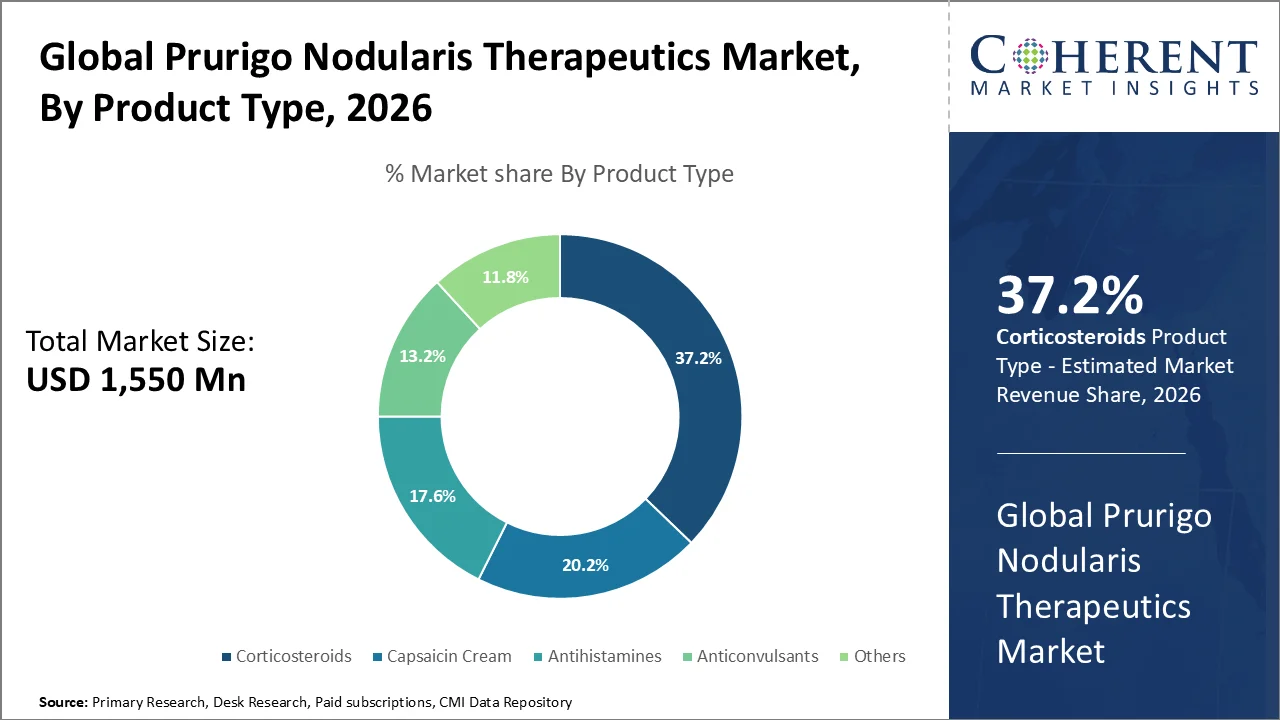
- The corticosteroids segment is likely to dominate the market with 37.2% in 2026. The segment’s growth is owing to their continued use as first-line anti-inflammatory therapy for localized nodules and itch control. The American Academy of Dermatology notes that corticosteroids help reduce inflammation and itching in prurigo nodularis.
- The retail pharmacies segment is set to lead with 42.1% in 2026. The segment’s growth is owing to the frequent dispensing of topical corticosteroids, anti-itch medications, and refill-based therapies for chronic symptom management. PBZ OTC Pyribenzamine Antihistamine Cream, the first new topical antihistamine, launched at Target stores across the U.S. in April 2025.
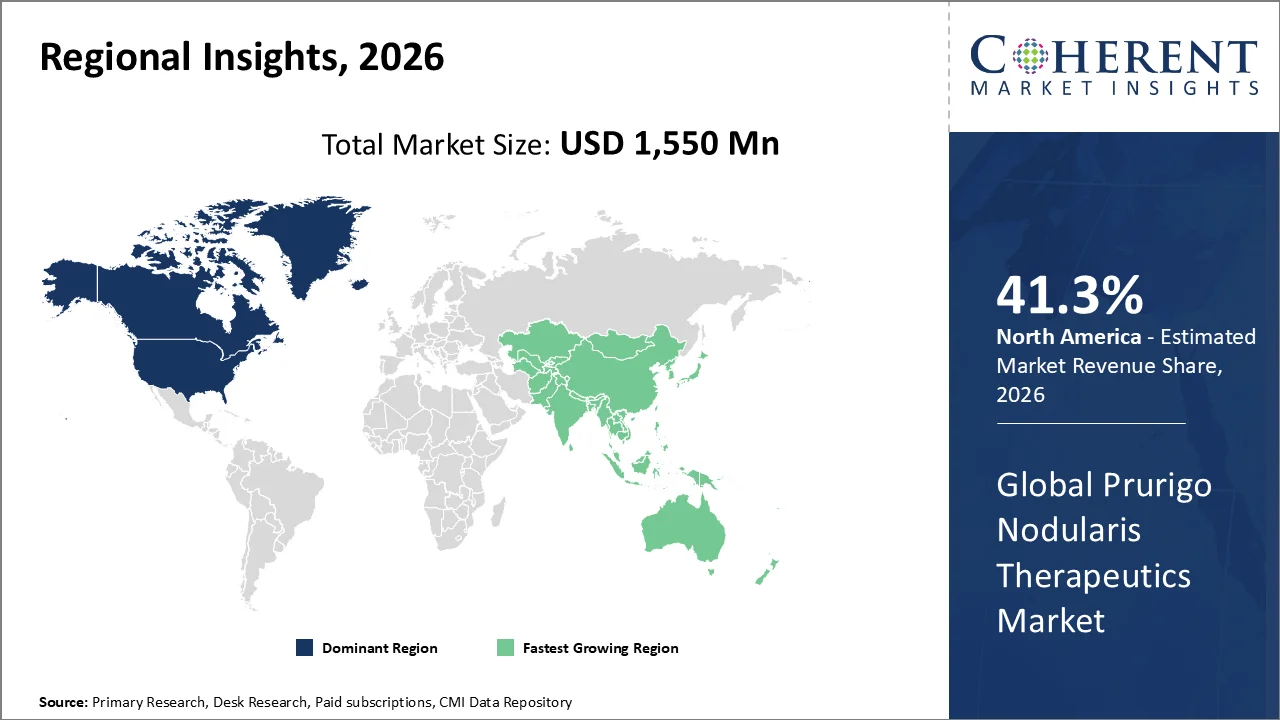
- North America is expected to acquire the prominent share of 41.3% in 2026. The region’s growth is owing to the higher diagnosis rates, strong dermatology access, and early adoption of approved biologics.
Segmental Insights
Why is Corticosteroids Segment Acquiring the Largest Share?
On the basis of product type, the corticosteroids segment is projected to account for the largest Prurigo Nodularis Therapeutics Market share of 37.2% in 2026. The segment’s growth is owing to the its entrenched role as first-line topical and intralesional therapy for reducing inflammation, flattening nodules, and interrupting the itch-scratch cycle before patients move to biologics, especially in mild-to-moderate or localized disease managed by dermatologists.
NIH’s NCBI Bookshelf lists class I topical corticosteroids as suggested first-line therapy, with clobetasol 0.05% used under occlusion for 2–4 weeks, while intralesional triamcinolone 10–20 mg/mL is reported to flatten lesions and relieve pruritus. In FDA-reviewed OLYMPIA studies, enrolled PN patients had at least 20 nodular lesions and severe itch score ≥7/10, showing the high symptom burden that sustains prescription topical use.
- Current Industry Events of 2026
- Market Size Estimation
- Regional Breakdown
- Competitive Landscape
- Customer Intelligence
- Segmental Analysis
- Pricing Analysis
- Key Market Drivers, Challenges & Future Trends
- Customized Insights Section
Retail Pharmacies hold the Largest Market Share
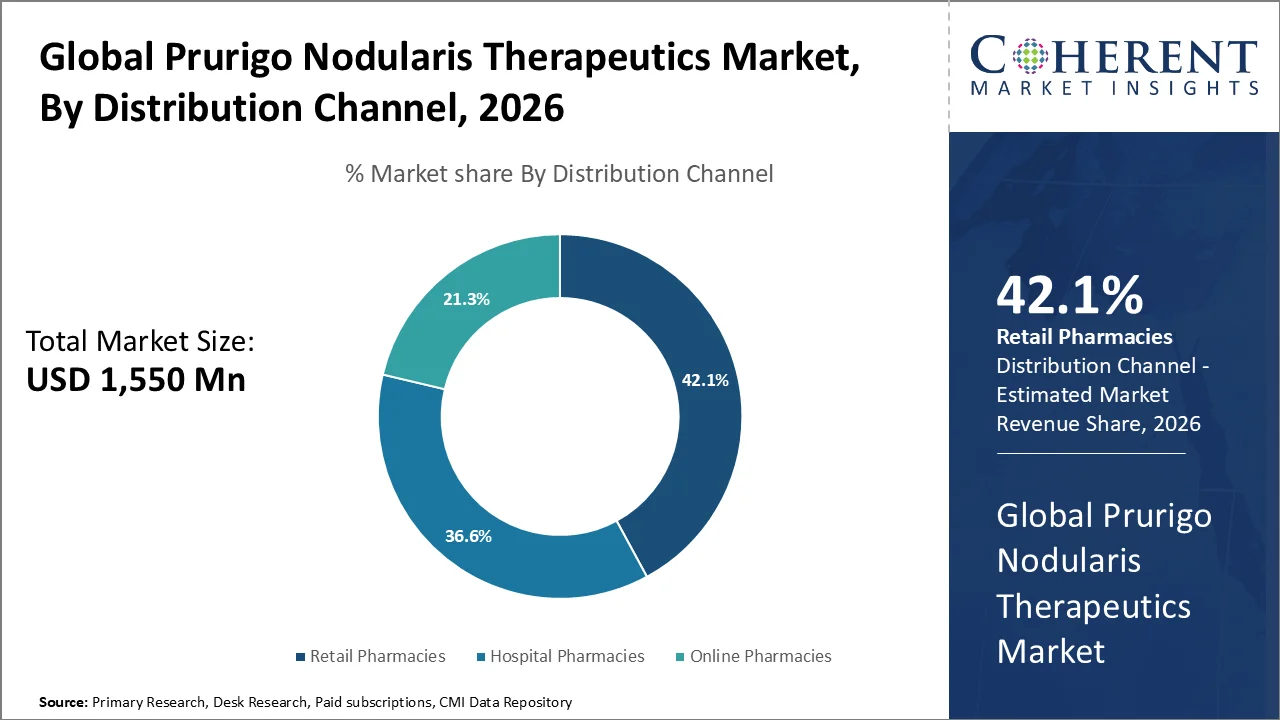
On the basis of Distribution Channel, the retail pharmacies segment lead with a major 42.1% share in 2026. The growth is owing to the prurigo nodularis being treated mainly through outpatient dermatology prescriptions, repeat refills for topical corticosteroids, antihistamines, neuromodulators, and newer injectable biologics that patients continue after diagnosis.
FDA notes PN is a rare disease causing intensely itchy nodules and affecting approximately 87,000 U.S. adults per year, creating a steady chronic-prescription base rather than one-time hospital use. FDA also states Dupixent, the first FDA-approved PN therapy, is supplied as a single-dose supporting pharmacy-led dispensing and refill management.
Market Drivers
Rising Innovations in Targeted Biologics are Transforming the Prurigo Nodularis Therapeutics Industry in the U.S.
The U.S. prurigo nodularis therapeutics industry is shifting from symptomatic management toward targeted biologic therapies. Historically, the treatment relied on corticosteroids, antihistamines, capsaicin, phototherapy, and off-label immunomodulators. However, the FDA-approved biologics are changing treatment standards by directly targeting immune pathways involved in itch, inflammation, as well as nodule formation.
In August 2024, Galderma received the U.S. FDA approval for Nemluvio (nemolizumab), a pre-filled pen for adults with prurigo nodularis. The IL-31-targeting monoclonal antibody showed substantial improvements in itch, skin nodules, and sleep disturbance in Phase III OLYMPIA trials versus placebo. This development is expected to strengthen the adoption of targeted injectable biologics in dermatology specialists, hospital outpatient departments, specialty pharmacies, and long-term PN care pathways.
IL-31 Receptor Blockade: A Major Breakthrough in Prurigo Nodularis Therapeutics Market
IL-31 receptor blockade is a major breakthrough in the Prurigo Nodularis Therapeutics Market. It targets one of the central biologic pathways involved in chronic itch. Traditional PN therapy has relied heavily on topical corticosteroids, antihistamines, phototherapy, immunosuppressants, and off-label systemic agents. However, many patients with moderate-to-severe disease remain uncontrolled because PN is driven by complex neuroimmune signaling. IL-31 receptor inhibition addresses this unmet need by directly reducing itch signaling and helping reduce scratching, lesion worsening, and sleep disruption.
Nemolizumab is one of the most important recent advances in this area. According to Galderma, in the OLYMPIA 1 and OLYMPIA 2 trials, 56% and 49% of Nemluvio-treated patients achieved at least a four-point reduction in itch intensity at Week 16, compared with 16% in placebo groups. Galderma also reported that around 41% of Nemluvio-treated patients achieved this itch reduction by Week 4, thereby demonstrating the rapid clinical benefit. These results position IL-31 receptor blockade as a differentiated approach within targeted PN therapy.
In February 2025, Galderma received the European Commission approval for Nemluvio (nemolizumab) to treat adults with moderate-to-severe prurigo nodularis. The IL-31 receptor alpha-targeting biologic showed significant improvements in itch, skin lesions, and sleep disturbance in Phase III OLYMPIA trials.
Current Events and Their Impact on the Prurigo Nodularis Therapeutics Market
Current Event | Description and its Impact |
Rocatinlimab Clinical Trial Discontinuation in 2026
|
|
2025 Medicare Part D Redesign and Patient Cost-Sharing Changes in the U.S. |
|
Prurigo Nodularis Therapeutics Market Trends
- Rising adoption of targeted biologics like dupilumab and nemolizumab is shifting treatment from symptomatic steroid use toward immune-pathway control.
- Growing focus on IL-31, IL-4, and IL-13 mediated itch pathways is improving itch reduction, lesion clearance, and sleep outcomes in moderate-to-severe patients.
- High disease burden, severe itching, and sleep disruption are strengthening the demand for advanced therapies. The recent evidence shows sleep disturbances may affect up to 100% of chronic nodular prurigo patients, thereby supporting the greater use of systemic therapies.
- Pipeline activity is shifting toward OX40, OSMRβ, and other neuroimmune targets. ClinicalTrials.gov lists a Phase 3 placebo-controlled study evaluating rocatinlimab in PN, with efficacy assessed at Week 24. This is expected to support the future competition and therapeutic diversification.
- The market is benefiting from broader geographic approvals. According to Galderma, Nemluvio was approved by the European Commission in February 2025 for moderate-to-severe atopic dermatitis and PN. This expands biologic availability beyond the U.S. and strengthens the European adoption.
Regional Insights
North America Dominates Owing to the Strong FDA Approval Pathway
The North America region accounts for 41.3% of the market share in 2026. The region’s growth is owing to the early FDA approvals, large specialty pharmacy infrastructure, higher biologic penetration, and strong dermatologist awareness of chronic inflammatory skin diseases.
According to a U.S. prevalence analysis, PN prevalence estimates ranged from 36.7 to 148.3 per 100,000 population, depending on the dataset and case definition. A U.S. estimate reported 52.9 PN patients per 100,000 people in the combined commercially insured and Medicare-insured population. These figures support a meaningful treatment-eligible population, especially among moderate-to-severe diagnosed cases.
In April 2025, Attovia Therapeutics raised US$90 million in Series C financing to advance its ATTOBODY-based immune-mediated disease pipeline. The funding will support ATTO-3712, an anti-IL13 x IL31 bispecific therapy with potential application in prurigo nodularis and other inflammatory skin conditions.
Asia Pacific Prurigo Nodularis Therapeutics Market Trends
Asia Pacificis expected to witness strong growth in market over the forecast period. The region’s growth is owing to the improving dermatology diagnosis, expanding biologic access, rising healthcare expenditure, and increasing awareness of chronic itch disorders. Japan is leading early biologic use through Mitchga availability. China is building real-world experience with dupilumab in PN. And India is expected to benefit from rising specialist care demand as its elderly population expands.
In June 2024, Maruho launched Mitchga Subcutaneous Injection 30 mg Vials in Japan for PN in adults and children aged 13 years and older when existing treatment is insufficiently effective. This gives Japan a differentiated position in IL-31 pathway-based itch management.
FDA Approvals and Commercial Execution are Accelerating the Prurigo Nodularis Therapeutics Market in United States
In the United States, the Prurigo Nodularis Therapeutics Market is influenced by the early FDA approvals, high biologic utilization, and a large specialty pharmacy network. The country’s dominance is also supported by commercial execution. Regeneron reported that full-year 2025 Dupixent global net sales increased 26% to USD 17.8 billion, recorded by Sanofi, across approved indications including PN.
In May 2024, Celldex Therapeutics, Inc. dosed the first patient in its Phase 2 barzolvolimab study for prurigo nodularis. The trial evaluates two subcutaneous doses versus placebo for itch reduction, lesion improvement, quality-of-life outcomes, and safety across worldwide clinical centers.
China Prurigo Nodularis Therapeutics Market Trends
China’s Prurigo Nodularis Therapeutics Market is moving from symptomatic topical care toward biologic and targeted injectable pipelines, supported by hospital-led evidence generation. The Chinese Clinical Trial Register lists a post-marketing, real-world dupilumab study in PN with a planned sample size of 550 patients, indicating structured tracking of biologic use across tertiary hospitals.
In June 2026, Daewoong Pharmaceutical partnered with Chime Biologics to develop, manufacture, and commercialize a Dupixent biosimilar. This development supports the prurigo nodularis therapeutics market by expanding future biologic competition and improving access to targeted type 2 inflammation treatments.
Who are the Major Companies in Prurigo Nodularis Therapeutics Industry
Some of the major key players in Prurigo Nodularis Therapeutics Market are Bayer AG, GlaxoSmithKline Plc., Johnson & Johnson Services, Inc., Sanofi SA, Takeda Pharmaceutical Company Limited, Novartis AG, Celgene Corporation, VYNE Therapeutics Inc., Trevi Therapeutics Inc., Galderma SA, Pfizer Inc. and Teva Pharmaceutical Industries Ltd., and Merck & Co. Inc.
Key News
- In January 2026, Galderma Canada announced Health Canada authorization of NEMLUVIO (nemolizumab) for moderate-to-severe atopic dermatitis and prurigo nodularis. The IL-31 receptor alpha-targeting biologic showed notable improvements in itch, skin lesions, and sleep disturbance across ARCADIA as well as OLYMPIA trial programs.
- In December 2025, Kymera Therapeutics highlighted KT-621, an oral STAT6 degrader, as a potential treatment for Type 2 inflammatory diseases including prurigo nodularis. Although FDA Fast Track designation was granted for atopic dermatitis, KT-621 may support future itch-related dermatology development.
Market Report Scope
Prurigo Nodularis Therapeutics Market Report Coverage
| Report Coverage | Details | ||
|---|---|---|---|
| Base Year: | 2025 | Market Size in 2026: | USD 1,550 Mn |
| Historical Data for: | 2020 To 2024 | Forecast Period: | 2026 To 2033 |
| Forecast Period 2026 to 2033 CAGR: | 4.1% | 2033 Value Projection: | USD 2,050 Mn |
| Geographies covered: |
| ||
| Segments covered: |
| ||
| Companies covered: | Bayer AG, GlaxoSmithKline Plc., Johnson & Johnson Services, Inc., Sanofi SA, Takeda Pharmaceutical Company Limited, Novartis AG, Celgene Corporation, VYNE Therapeutics Inc., Trevi Therapeutics Inc., Galderma SA, Pfizer Inc. and Teva Pharmaceutical Industries Ltd., and Merck & Co. Inc. | ||
| Growth Drivers: |
| ||
| Restraints & Challenges: |
| ||
Analyst Opinion
- The Prurigo Nodularis Therapeutics Market growth is not only supported by new drug launches but by structural unmet need in chronic itch management. According to Regeneron and Sanofi, about 75,000 adults in the U.S. with PN were most in need of new treatment options when Dupixent was approved. This indicates that demand will remain resilient because moderate-to-severe PN patients often require long-term specialist care.
- Targeted biologics are expected to redefine the treatment algorithm. According to Galderma, Nemluvio delivered clinically meaningful itch reduction in 56% and 49% of treated patients at Week 16 across OLYMPIA 1 and 2, compared with 16% in placebo groups. This matters because therapies that reduce itch and sleep disturbance can support better adherence as well as premium pricing.
- North America will remain the revenue anchor, but Asia Pacific will offer faster volume expansion. According to WHO, the population aged 60 years and above is expected to rise to 1.4 billion by 2030 and 2.1 billion by 2050 globally. This demographic shift will support demand in Japan, China, India, and South Korea as diagnosis improves and biologic access expands.
Speak to the analyst
Want personalized insights?
Take the findings above to one of our principal consultants, or have the report rebuilt around the segments, geographies and competitors you actually track.
Market Segmentation
- By Product Type (Revenue, USD Mn, 2021-2033)
- Corticosteroids
- Capsaicin Cream
- Antihistamines
- Anticonvulsants
- Others
- By Distribution Channel (Revenue, USD Mn, 2021-2033)
- Hospital Pharmacies
- Retail Pharmacies
- Online Pharmacies
- B y Region (Revenue, USD Mn, 2021-2033)
- North America
- U.S.
- Canada
- Latin America
- Brazil
- Mexico
- Argentina
- Rest of Latin America
- Europe
- Germany
- U.K.
- France
- Italy
- Spain
- Russia
- Rest of Europe
- Asia Pacific
- China
- India
- Japan
- Australia
- South Korea
- ASEAN
- Rest of Asia Pacific
- Middle East
- GCC
- Israel
- Rest of Middle East
- Africa
- South Africa
- Central Africa
- North Africa
- North America
Sources
Primary Research Interviews
- Dermatologists
- Immunologists and allergists
- Clinical researchers in prurigo nodularis and atopic dermatitis
- Hospital dermatology department heads
- Specialty clinic physicians
- Biologic therapy prescribers
- Specialty pharmacy managers
- Pharmaceutical distributors
- Payers and reimbursement specialists
- Key opinion leaders (KOLs) in dermatology and immunology
Databases
- World Health Organization (WHO)
- Centers for Disease Control and Prevention (CDC)
- National Institutes of Health (NIH)
- National Institute of Arthritis and Musculoskeletal and Skin Diseases (NIAMS)
- U.S. Food and Drug Administration (FDA)
- European Medicines Agency (EMA)
- ClinicalTrials.gov
- PubMed
- Global Burden of Disease (GBD) Database
Magazines
- Dermatology Times
- Practical Dermatology
- Dermatology Advisor
- Healio Dermatology
- MDedge Dermatology
Journals
- Journal of the American Academy of Dermatology
- JAMA Dermatology
- British Journal of Dermatology
- The Lancet Dermatology
- Acta Dermato-Venereologica
- Dermatology and Therapy
- Clinical and Experimental Dermatology
Newspapers
- The New York Times
- The Guardian
- The Wall Street Journal
- Reuters
- Bloomberg
Associations
- American Academy of Dermatology
- European Academy of Dermatology and Venereology
- International League of Dermatological Societies
- British Association of Dermatologists
- National Eczema Association
- International Forum for the Study of Itch
Public Domain Sources
- Company Annual Reports and Investor Presentations
- Government Health Ministry Publications
- Regulatory Approval Databases
- Clinical Trial Registries such as ClinicalTrials.gov
- FDA Drug Approval Documents
- EMA Public Assessment Reports
- Published Peer-reviewed Research Articles
- Disease Awareness and Patient Advocacy Publications
Proprietary Elements
- CMI Data Analytics Tool
- Proprietary CMI Existing Repository of Information for Last 10 Years
Get access to 250+ pages report
Every segment, forecast, competitor profile and data table behind the analysis above — available for instant download.
- ESOMAR Member
- ISO 9001:2015 Certified
- D-U-N-S Registered
- GDPR & CCPA Compliant
Missing comfort of reading report in your local language? Find your preferred language:
Transform your Strategy with Exclusive Trending Reports
Frequently Asked Questions
The Prurigo Nodularis Therapeutics Market is expected to reach USD 2,050 Mn in 2033.
Major players operating in the global Prurigo Nodularis Therapeutics Market include Bayer AG, GlaxoSmithKline Plc., Johnson & Johnson Services, Inc., Sanofi SA, Takeda Pharmaceutical Company Limited, Novartis AG, Celgene Corporation, VYNE Therapeutics Inc., Trevi Therapeutics Inc., Galderma SA, Pfizer Inc. and Teva Pharmaceutical Industries Ltd., and Merck & Co. Inc.
The xorbitant cost of biologic therapies and lack of insurance reimbursement are the key factors hampering growth of the market.
The recent FDA approvals of targeted biologic therapies (such as Dupixent), increased disease awareness, improved diagnostic coding is boosting the demand for Prurigo Nodularis Therapeutics.
The Prurigo Nodularis Therapeutics Market is anticipated to grow at a CAGR of 4.1% between 2026 and 2033.
Among regions, North America is expected to account for a largest market share in the global Prurigo Nodularis Therapeutics Market over the forecast period.
The market outlook remains positive due to strong shift from conventional treatments (like topical steroids) to targeted biologics and JAK inhibitors that address the underlying mechanisms of the disease.