

Europe Hyaluronic Acid Products Market Size and Forecast – 2026 To 2033
The Europe hyaluronic acid products market is expected to grow from USD 1,845.6 Mn in 2026 to USD 3,477.9 Mn by 2033, registering a compound annual growth rate (CAGR) of 9.5% from 2026 to 2033. The Europe hyaluronic acid products market is poised for significant expansion, fueled by the rapidly aging population and rising demand for hyaluronic acid -based orthopedic, ophthalmic, and aesthetic products.
Eurostat reported that people aged 65 years and over accounted for 22.0% of the EU population in 2025, up from 19.1% in 2015, strengthening the underlying demand base for age-related healthcare and aesthetic applications.
Key Takeaways of the Europe Hyaluronic Acid Products Market
- Injection is projected to hold 40.3 % of the Europe hyaluronic acid products market share in 2026, making it the dominant product type segment, supported by the expanding use of HA-based dermal fillers and injectable therapies. For instance, in 2025, the European Commission conducted EU-wide testing of 17 hyaluronic acid -based dermal fillers across nine countries under its Joint Actions on Compliance of Products (JACOP), reinforcing regulatory oversight of injectable hyaluronic acid products.
- Parenteral is projected to hold 67.8 % of the Europe hyaluronic acid products market share in 2026, making it the dominant route of administration segment, supported by hyaluronic acid use in injectable aesthetic, orthopedic, and ophthalmic products. For instance, the European Commission made the EUDAMED Notified Bodies & Certificates module mandatory from May 28, 2026, strengthening certification transparency and regulatory oversight for medical devices placed on the EU market
- Cosmetics are projected to hold 63.5 % of the Europe hyaluronic acid products market share in 2026, making it the dominant application segment, supported by widespread use of hyaluronic acid in skincare and anti-aging formulations. For instance, the European Commission amended the EU Cosmetics Regulation in 2024 to introduce specific restrictions concerning nanomaterials, including Gold Thioethylamino Hyaluronic Acid, demonstrating increasing regulatory scrutiny of hyaluronic acid -related cosmetic ingredients.
Segmental Insights
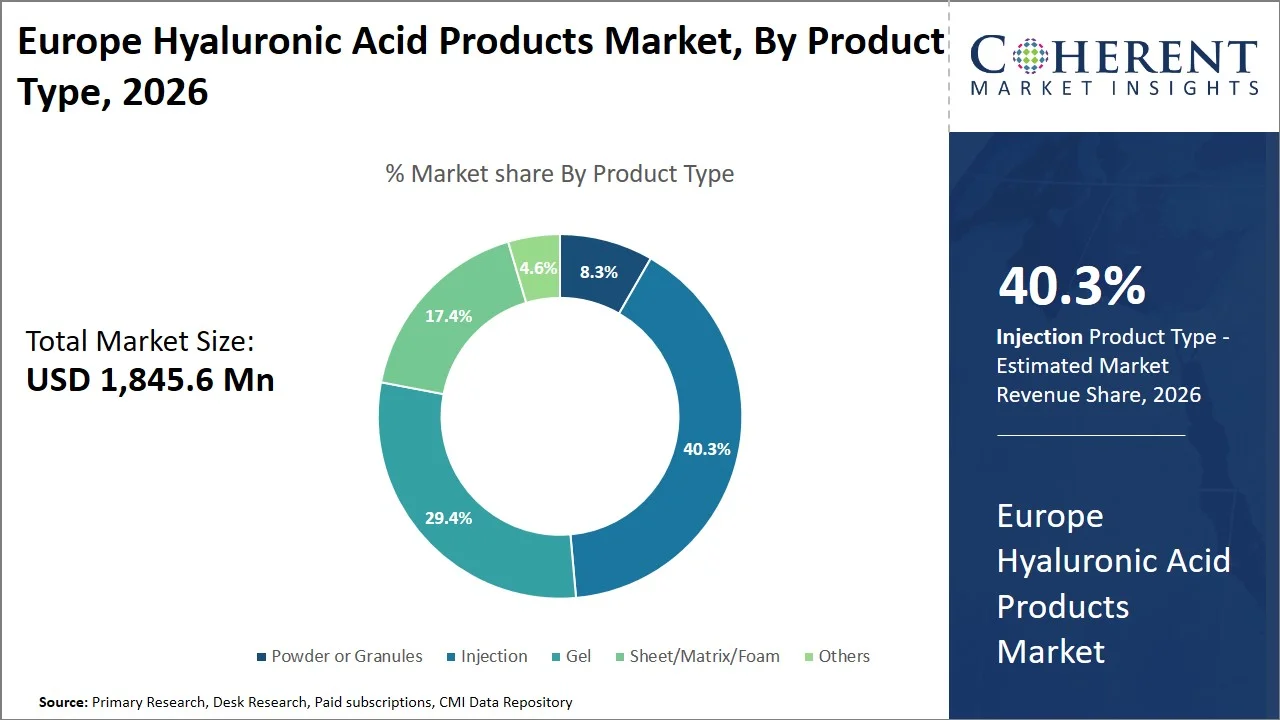
Why Do Injection Dominate the Europe Hyaluronic Acid Products Market?
Injection is projected to hold a market share of 40.3% in 2026, due to the well-established practice of the use of hyaluronic acid injections in aesthetic dermal filler procedures and various medical conditions requiring the direct and local impact. Furthermore, innovation in formulation and cross-linking has made the performance of injectable hyaluronic acid formulations better in long term applications. For instance, CINGAL is a one-time intra-articular hyaluronic acid (HA) viscosupplementation formulation injected into the knee joint for osteoarthritis pain management, illustrating its potential for injectable hyaluronic acid.
- Current Industry Events of 2026
- Market Size Estimation
- Regional Breakdown
- Competitive Landscape
- Customer Intelligence
- Segmental Analysis
- Pricing Analysis
- Key Market Drivers, Challenges & Future Trends
- Customized Insights Section
Why Does Parenteral Represent the Largest Route of Administration Segment in the Europe Hyaluronic Acid Products Market?
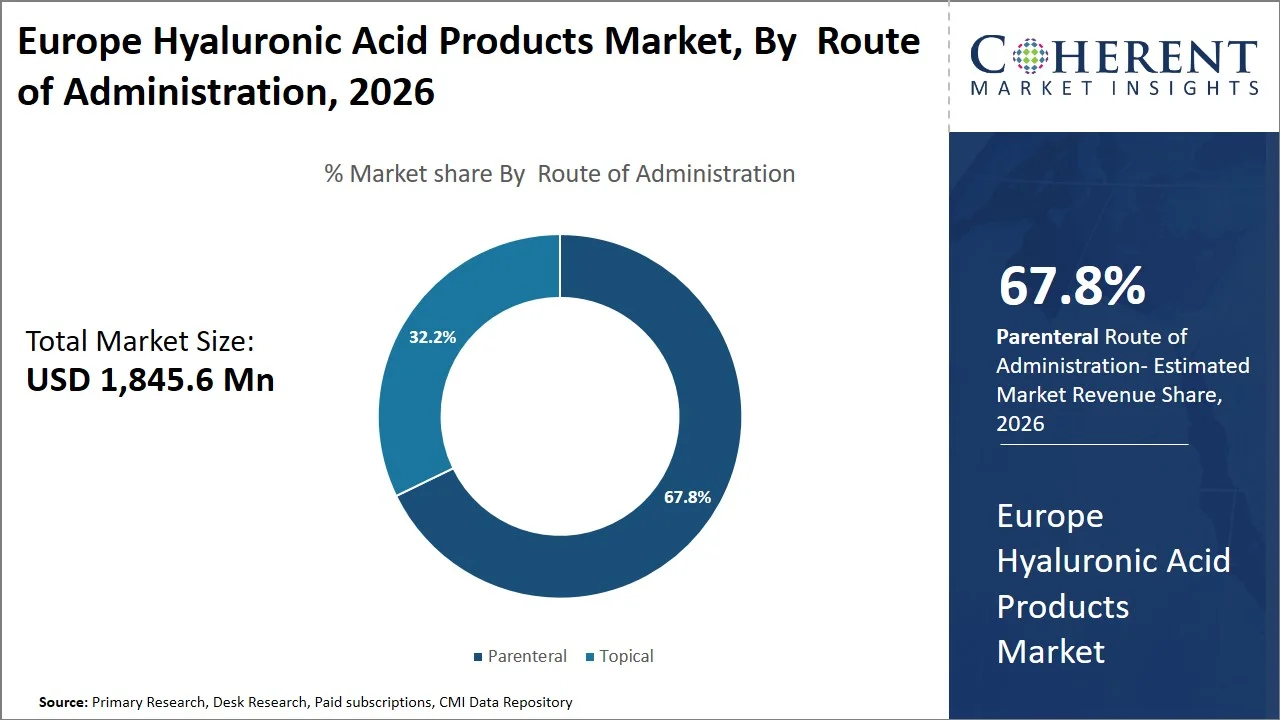
Parenteral is projected to hold 67.8% of the market share in 2026, due to ease of administration at localized treatment and use as intra-articular treatment therapy, ophthalmic treatment and aesthetic treatments. Injectable formulations deliver precise drug dosage with high bioavailability that is suitable for specialized therapeutic purposes. For instance, Suplasyn 1- Shot, a sodium salt of hyaluronic acid given as a single intra- articular 6 mL injection into the knee joint is an example of parenteral administration of hyaluronic acid for the treatment of osteo -arthritis, highlighting the relevance of the parenteral route of administration for providing localized and controlled therapeutic delivery. (Source: European Medicine Agency)
Cosmetics Segment Dominates the Europe Hyaluronic Acid Products Market
The cosmetics segment is expected to hold 63.5% of the Europe hyaluronic acid products market share in 2026, fueled by the continued growth of hydrating ingredients, as well as a sustained focus on healthy-aging, and non-invasive cosmetic procedures. Many product developers are embedding hyaluronic acid into serums, moisturizers, creams and in dermal fillers due to its water-retention and skin-conditioning properties. For instance, Hyaluronic acid and its derivatives are included in the CosIng database of cosmetic ingredients as skin-conditioning agents and humectants (European Commission), validating their continued use in European skincare preparations.
Current Events and their Impact
Current Events | Description and its Impact |
European Commission Updated EU Cosmetic Ingredient Labelling Requirements (September 2025) |
|
EU Scientific Committee Continued Safety Evaluation of Cosmetic Ingredients (April 2025) |
|
European Commission Strengthened EU Product Market-Surveillance Framework (November 2025) |
|
Europe Hyaluronic Acid Products Market Dynamics
Market Drivers
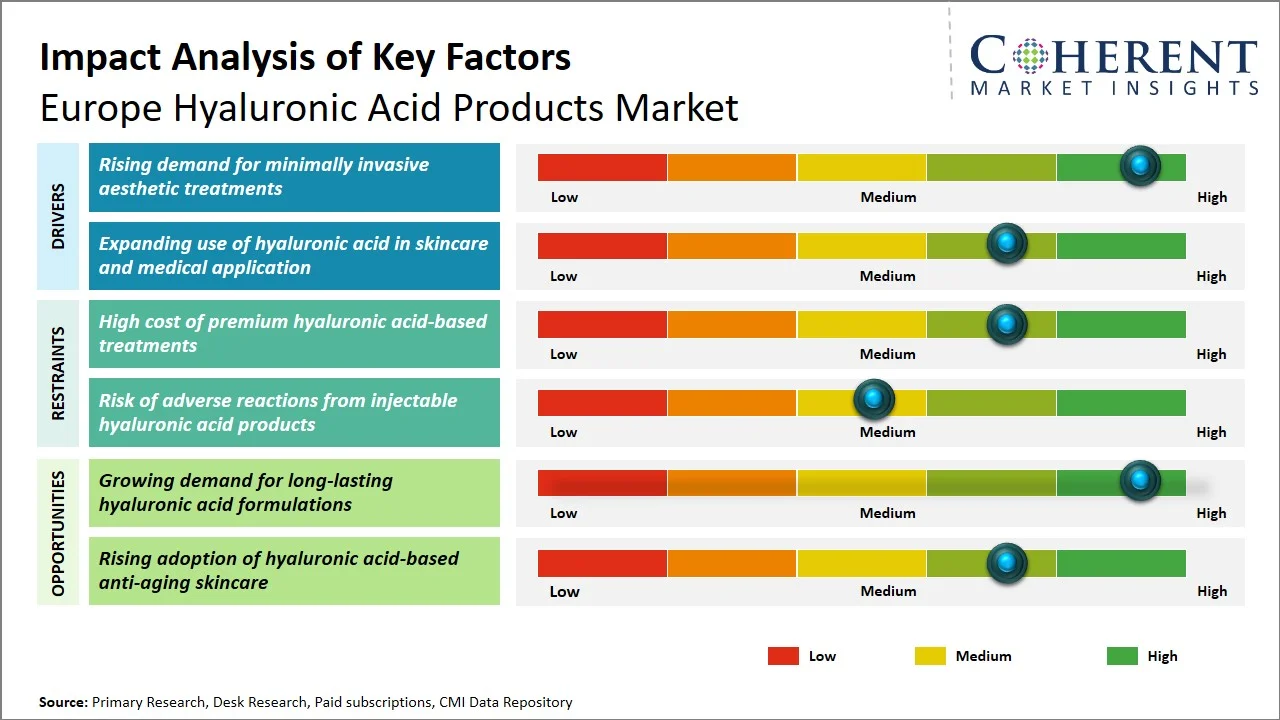
- Rising demand for minimally invasive aesthetic treatments: The Europe hyaluronic acid products market is being supported by the growing preference for minimally invasive aesthetic procedures, as consumers increasingly favor treatments offering shorter recovery times and less disruption than surgery. Hyaluronic acid-based fillers benefit from their ability to restore facial volume and smooth wrinkles through outpatient procedures. For instance, the European Commission’s 2025 Eurobarometer on the use of cosmetic products examined European consumer attitudes toward cosmetic and aesthetic products, highlighting the growing importance of safety and informed consumer choice in the sector.
- Expanding use of hyaluronic acid in skincare and medical application: The Europe hyaluronic acid products market is benefiting from the expanding use of hyaluronic acid across skincare and medical applications, including topical cosmetics, dermal fillers, and specialized medical products. The European Commission recognizes that products containing hyaluronic acid can fall under different EU regulatory frameworks depending on their intended use, reflecting its broad application across healthcare and personal care. For instance, Commission Regulation (EU) 2024/858 specifically addresses the use of Gold Thioethylamino Hyaluronic Acid in cosmetic products, demonstrating continued regulatory attention to advanced formulations containing hyaluronic-acid derivatives.
- Expanding adoption of hyaluronic acid in orthopedic treatments: The Europe hyaluronic acid products market is supported by the established use of hyaluronic acid-based visco supplementation for osteoarthritis and other joint conditions, creating demand beyond aesthetic and skincare applications. For instance, a European Medicines Agency (EMA) expert decision document published in April 2025 described intra-articular hyaluronic acid visco supplementation as routinely used in clinical practice for osteoarthritis and joint diseases, highlighting the compound’s established medical application.
Emerging Trends
- Growing focus on healthy-aging skincare: European consumers are increasingly shifting from conventional anti-aging toward preventive skincare and long-term skin well-being, emphasizing hydration, skin quality, and healthy aging. A Kantar study commissioned by Kenvue in May 2025, covering 10,145 consumers across 10 countries including the UK, Germany, and France, found that 38% of European consumers perceived their personal-care routines as having a high or very high impact on overall health.
- Rise of personalized skincare solutions: Skincare is increasingly shifting toward personalized routines based on individual skin conditions and needs, supported by digital diagnostics and data-driven product recommendations. This trend encourages manufacturers to develop more targeted formulations rather than one-size-fits-all products.
- Increasing demand for sustainable and transparent beauty products: European consumers are placing greater emphasis on ingredient transparency, responsible sourcing, and environmentally conscious formulations and packaging. Sustainability initiatives are increasingly focusing on measurable improvements in packaging, water use, climate impact, and nature across the cosmetics value chain.
Europe Hyaluronic Acid Products Market – Application-wise Product Analysis
Application | Key Product Types | Primary Use | Major Demand Factors |
Dermal Fillers | Injectable gels, cross-linked formulations | Facial volume restoration, wrinkle reduction | Minimally invasive aesthetics, healthy aging |
Osteoarthritis | Intra-articular injections, visco supplements | Joint lubrication and pain management | Aging population, joint disorders |
Ophthalmology | Ophthalmic solutions, viscoelastic preparations | Dry-eye management and ophthalmic surgery | Aging population, rising eye-care needs |
Skincare & Cosmetics | Serums, creams, moisturizers, masks | Hydration and skin conditioning | Preventive skincare, consumer interest in skin health |
Wound Care | Gels, dressings, topical formulations | Moisture management and tissue repair | Advanced wound-care adoption |
Drug Delivery & Tissue Engineering | Hyaluronic Acid -based matrices, scaffolds, delivery systems | Controlled drug release and regenerative medicine | Biomedical R&D and biomaterial innovation |
How is the growing demand for long-lasting hyaluronic acid formulations creating new growth opportunities in the Europe hyaluronic acid products market?
Hyaluronic Acid Products Market in Europe offers a considerable growth opportunity by introducing longer-sustaining formulations with decreased treatment frequency but consistent hydration, skin quality and aesthetic results. The development in cross-linking and controlled-release technologies allows manufacturers to enhance both the persistence and stability of formulations in cosmetics and injectables. For instance, in February 2025, the European Commission/European Medicines Agency (EMA) started a scientific evaluation of a novel viscoelastic gel, based on a sodium hyaluronate and synthetic phospholipid combination, reinforcing continued developments of high-technology hyaluronic-acid based formulations.
Market Players, Key Development, and Competitive Landscape
Key Developments
- On August 11, 2026, Galderma received European Union approval for Restylane Shaype, a bone-mimicking hyaluronic acid injectable designed for temporary chin augmentation and facial shaping. The approval expands hyaluronic acid-based aesthetic applications toward structural facial contouring, supporting continued innovation in premium injectable hyaluronic acid products.
- In May 2026, Evolus, Inc. announced the commercial launch of its Estyme injectable hyaluronic acid (HA) gel collection in Europe, comprising four products for aesthetic applications. The launch followed CE Mark certification under the European Medical Device Regulation (MDR), supporting the company’s entry into the European dermal filler market.
- In February 2026, Nordic Pharma launched Lacrifill Canalicular Gel, a cross-linked hyaluronic acid gel, across European markets following its CE Mark approval in 2025. The launch expands the use of hyaluronic acid into specialized ophthalmic treatment, particularly dry-eye management, beyond its established aesthetic applications.
Competitive Landscape
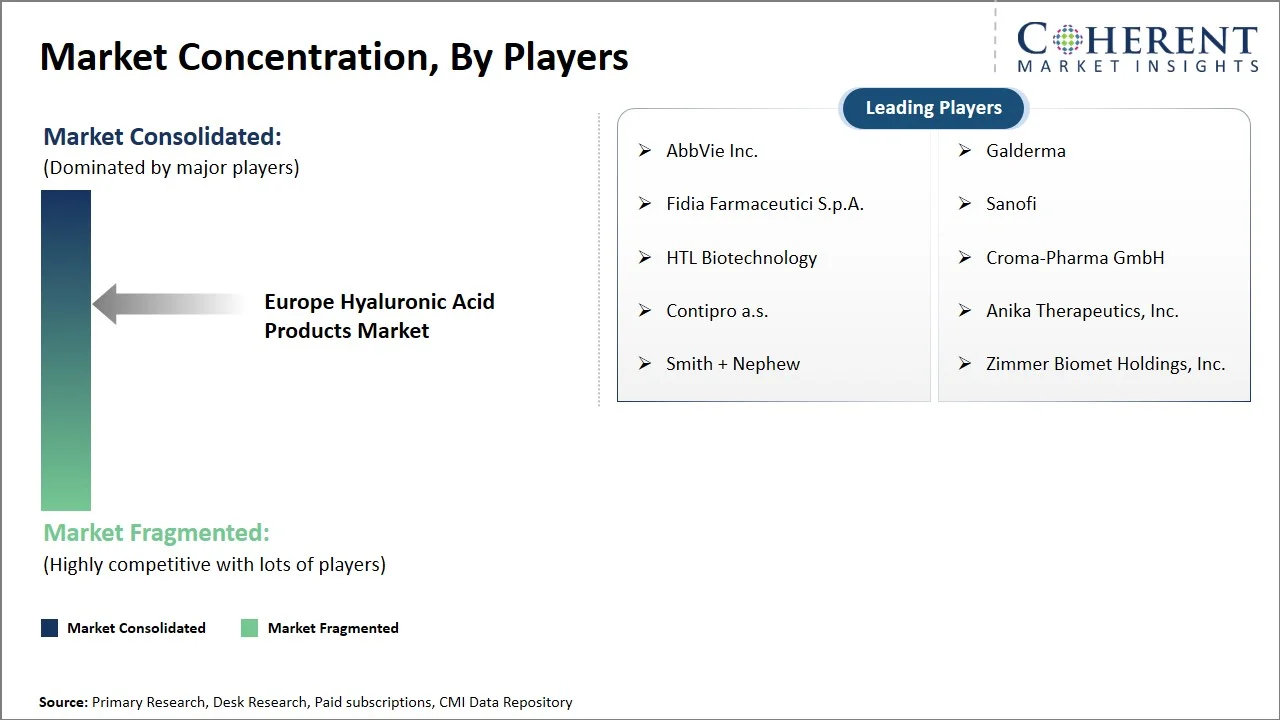
The Europe hyaluronic acid products market is highly competitive, with players focusing on advanced injectable formulations, longer-lasting products, skin-hydration solutions, and expanding medical applications. Key focus areas include improving formulation stability and treatment durability, developing products for diverse aesthetic and therapeutic indications, strengthening regulatory compliance under the European Medical Device Regulation (MDR), and expanding distribution across dermatology, aesthetic, ophthalmology, and orthopedic care settings. EU market-surveillance activity is also increasing attention on product safety, sterility, labelling, and conformity, making regulatory quality and traceability important competitive priorities. Key focus areas include:
- Development of long-lasting and cross-linked formulations for improved treatment durability
- Expansion of hyaluronic acid products across aesthetic, orthopedic, ophthalmic, and skincare applications
- Strengthening MDR compliance, product safety, labelling, and traceability for regulated products
- Increasing focus on product quality, sterility, and clinical performance to meet European market-surveillance requirements
- Development of patient-focused formulations offering improved usability, hydration, comfort, and treatment outcomes
Market Report Scope
Europe Hyaluronic Acid Products Market Report Coverage
| Report Coverage | Details | ||
|---|---|---|---|
| Base Year: | 2025 | Market Size in 2026: | USD 1,845.6 Mn |
| Historical Data for: | 2020 To 2024 | Forecast Period: | 2026 To 2033 |
| Forecast Period 2026 to 2033 CAGR: | 9.5% | 2033 Value Projection: | USD 3,477.9 Mn |
| Segments covered: |
| ||
| Companies covered: | AbbVie Inc., Galderma, Fidia Farmaceutici S.p.A., Sanofi, HTL Biotechnology, Croma-Pharma GmbH, Contipro a.s., Anika Therapeutics, Inc., Smith + Nephew, Zimmer Biomet Holdings, Inc. | ||
| Growth Drivers: |
| ||
| Restraints & Challenges: |
| ||
Analyst Opinion (Expert Opinion)
- In the coming years, Europe hyaluronic acid products market is expected to evolve toward higher-performance, longer-lasting, and application-specific formulations, with innovation extending beyond conventional skincare and aesthetics into ophthalmology, orthopaedics, wound care, and regenerative applications. Product differentiation will increasingly depend on formulation performance, clinical evidence, safety, and treatment longevity.
- The maximum growth opportunity lies within injectable products for aesthetic applications, particularly in Germany, where established aesthetic-care infrastructure and demand for minimally invasive treatments can support premium, clinically differentiated products. Manufacturers can also target adjacent medical applications to diversify beyond aesthetics.
- In order to create an advantage for themselves, the competitors should prioritize longer-lasting formulations, application-specific product development, robust clinical evidence, and regulatory readiness while strengthening practitioner education and patient-focused product positioning. Building reliable quality and traceability systems can further differentiate products in Europe’s increasingly compliance-driven market.
Speak to the analyst
Want personalized insights?
Take the findings above to one of our principal consultants, or have the report rebuilt around the segments, geographies and competitors you actually track.
Market Segmentation
- Product Type Insights (Revenue, USD Mn, 2021 - 2033)
- Powder or Granules
- Injection
- Gel
- Sheet/Matrix/Foam
- Others
- Route of Administration Insights (Revenue, USD Mn, 2021 - 2033)
- Parenteral
- Topical
- Application Insights (Revenue, USD Mn, 2021 - 2033)
- Cosmetics
- Dentistry
- Oral Radiation Wounds
- Burns
- Tissue Engineering
- Others
- End User Insights (Revenue, USD Mn, 2021 - 2033)
- Hospitals
- Dermatology Clinics
- Burn Care Centers
- Radiation Therapy Centers
- Dental Clinics
- Home Care Setting
- Others
- Key Players Insights
- AbbVie Inc.
- Galderma
- Fidia Farmaceutici S.p.A.
- Sanofi
- HTL Biotechnology
- Croma-Pharma GmbH
- Contipro a.s.
- Anika Therapeutics, Inc.
- Smith + Nephew
- Zimmer Biomet Holdings, Inc.
Sources
Primary Research Interviews
- Dermatologists / Aesthetic Physicians – hyaluronic acid injectable adoption, treatment preferences, and minimally invasive aesthetic procedures
- Orthopedic Specialists / Rheumatologists – use of hyaluronic acid viscosupplementation for osteoarthritis and joint-care applications
- Ophthalmologists – utilization of hyaluronic acid products in dry-eye management and ophthalmic procedures
- Plastic Surgeons / Cosmetic Practitioners – demand for dermal fillers, facial rejuvenation, and long-lasting formulations
- Pharmacists / Skincare Specialists – consumer preferences and purchasing trends for topical hyaluronic acid products
- Hospital Procurement Managers – purchasing patterns for medical-grade hyaluronic acid products
- Medical Device Regulatory Specialists – European Medical Device Regulation (MDR), CE-marking, and compliance requirements for injectable products
Stakeholders
- Hyaluronic Acid Product Manufacturers – medical, aesthetic, ophthalmic, orthopedic, and skincare applications
- End-use Sectors
- Hospitals
- Dermatology & Aesthetic Clinics
- Orthopedic Clinics
- Ophthalmology Clinics
- Pharmacies & Retail Healthcare
- Specialty Skincare Channels
- Regulatory & Health Bodies
- European Commission – Medical Devices / MDR
- European Medicines Agency (EMA)
- European Directorate for the Quality of Medicines & HealthCare (EDQM)
- National Competent Authorities of EU Member States
Databases
- EUDAMED – European medical-device registration, vigilance, and market-surveillance information
- EU Clinical Trials Information System (CTIS) – clinical-trial information relevant to medical and therapeutic applications
- European Pharmacopoeia Database – quality standards and monographs relevant to pharmaceutical substances
- Eurostat Database – European demographic, healthcare, and population-aging statistics
Journals
- Journal of Drugs in Dermatology – dermatological and aesthetic applications of hyaluronic acid
- Journal of Cosmetic Dermatology – cosmetic and injectable applications of hyaluronic acid
- Osteoarthritis and Cartilage – hyaluronic acid viscosupplementation and osteoarthritis research
- European Journal of Ophthalmology – ophthalmic applications and dry-eye treatment research
- International Journal of Biological Macromolecules – hyaluronic acid biomaterials and formulation research
- Journal of Biomaterials Applications – biomaterial and medical applications of hyaluronic acid
Newspapers
- The Guardian (Health) – European healthcare, aging, and consumer health trends
- The Telegraph (Health) – European medical and aesthetic-treatment developments
- Euronews (Health) – European healthcare policy and health-technology developments
Associations
- European Academy of Dermatology and Venereology (EADV) – European dermatology and aesthetic medicine research
- European Society for Aesthetic and Plastic Surgery (ESAPS) – aesthetic and plastic-surgery developments
- European Society of Cataract and Refractive Surgeons (ESCRS) – ophthalmic and surgical applications
- European Society for Clinical and Economic Aspects of Osteoporosis and Osteoarthritis (ESCEO) – osteoarthritis management and viscosupplementation
- European Alliance of Associations for Rheumatology (EULAR) – rheumatology and musculoskeletal-care guidance
- Cosmetics Europe – European cosmetics industry and regulatory developments
Public Domain Sources
- European Commission – Medical Devices – MDR requirements, CE marking, clinical evidence, and post-market surveillance for medical devices
- European Commission – Dermal Fillers Guidance – classification and regulatory requirements for dermal fillers containing hyaluronic acid
- European Medicines Agency (EMA) – medicines regulation, safety, and scientific information
- European Directorate for the Quality of Medicines & HealthCare (EDQM) – European Pharmacopoeia quality standards
- Eurostat – population aging, demographic trends, and healthcare statistics relevant to market demand
Proprietary Elements
- CMI Data Analytics Tool, Proprietary CMI Existing Repository of information for last 10 years.
Get access to 250+ pages report
Every segment, forecast, competitor profile and data table behind the analysis above — available for instant download.
- ESOMAR Member
- ISO 9001:2015 Certified
- D-U-N-S Registered
- GDPR & CCPA Compliant
Missing comfort of reading report in your local language? Find your preferred language:
Transform your Strategy with Exclusive Trending Reports
Frequently Asked Questions
Product efficacy, safety, regulatory compliance, treatment outcomes, and increasing consumer awareness are key adoption factors.
Molecular weight influences hydration, viscosity, skin interaction, and the functional performance of formulations.
Consumers should consider formulation, intended use, product quality, safety, and suitability for their specific needs.
Growing demand for minimally invasive aesthetic procedures and non-surgical facial rejuvenation is increasing the adoption of injectable products.
Key benefits include hydration, improved skin elasticity, tissue lubrication, and volume restoration.
The growing elderly population is increasing demand for anti-aging skincare, joint-care, ophthalmic, and aesthetic solutions.
Research and development are supporting improved formulation stability, product longevity, safety, and application-specific performance.