

Healthcare Digital Twins Market Size And Share Analysis - (2026-2033)
The global healthcare digital twins market is estimated to be valued at USD 1.70 Bn in 2026 and is expected to reach USD 8.65 Bn by 2033, exhibiting a compound annual growth rate (CAGR) of 25.9% from 2026 to 2033.
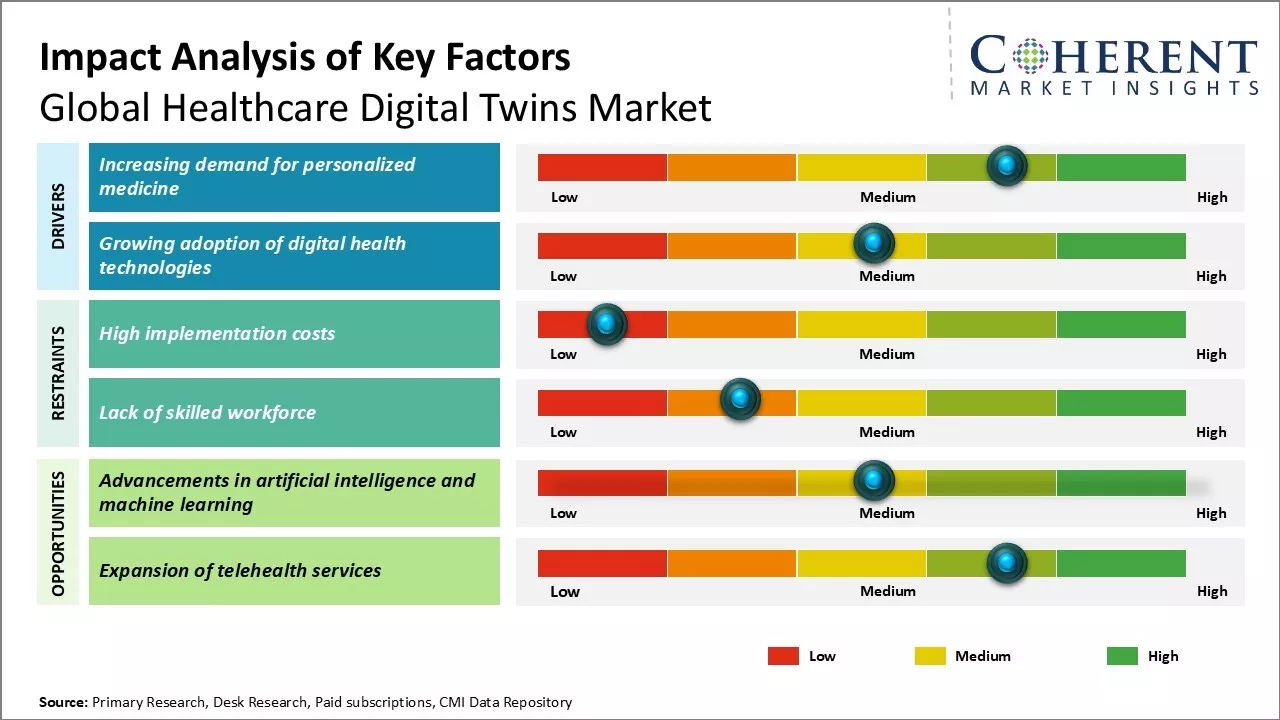
Key Takeaways
- By Component, the software segment is projected to dominate the global healthcare digital twins market with a commanding 53.6% share in 2026. This dominance is attributed to the growing need for advanced simulation, modelling, and predictive analytics capabilities that support experimentation in clinical settings.
- By Application, the personalized medicine segment is expected to hold the largest share of 33.62% in the healthcare digital twins market in 2026. This growth is driven by the rising demand for customized treatment approaches based on individual genetic, clinical, and lifestyle data.
- By End User, Healthcare providers are projected to lead the market with a 33.6% share in 2026, leveraging digital twin technology to enhance care delivery and operational efficiency.
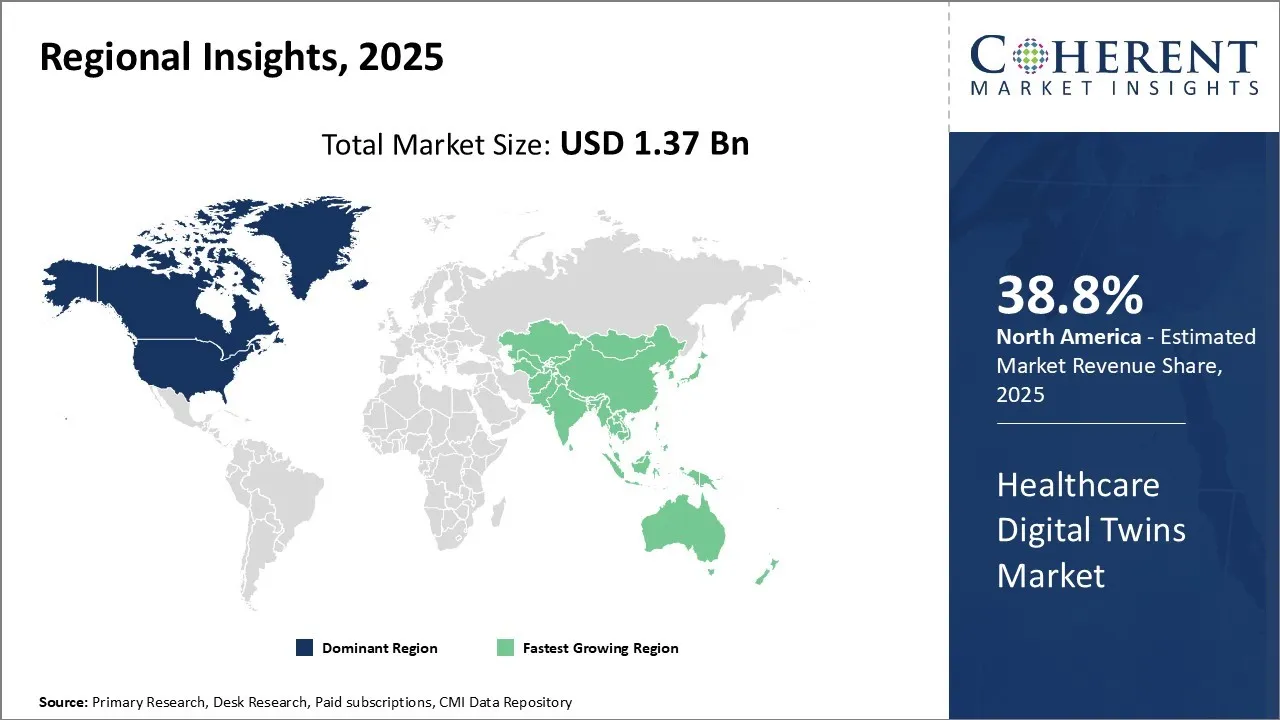
- North America is expected to dominate the global healthcare digital twins market with a 38.8% share in 2026.
Market Overview
The global Healthcare Digital Twins Market is experiencing strong growth, driven by increasing demand for personalized medicine, rising healthcare digitization, and advancements in AI and simulation technologies. Digital twins enable real-time modelling of patient data, improving diagnosis accuracy, treatment planning, and care delivery. Software solutions dominate the market, supporting experimentation and predictive analytics.
In May 2024, The Times (UK) covered an NHS-backed pilot in collaboration with Imperial College London to create digital twins of patients’ hearts. These virtual models, built from sensor data, imaging, and wearable devices, are designed to help predict disease progression and optimize treatment timing marking a new era of personalized cardiac care.
Current Events and its Impact on the Healthcare Digital Twins Market
Current Event | Description and its impact |
Healthcare Digitization Accelerates |
|
Growing Industry-Healthcare Collaborations for Digital Twin Integration |
|
Surge in Government-Led Digital Health Infrastructure Programs |
|
Market Players, Key Development, and Competitive Intelligence
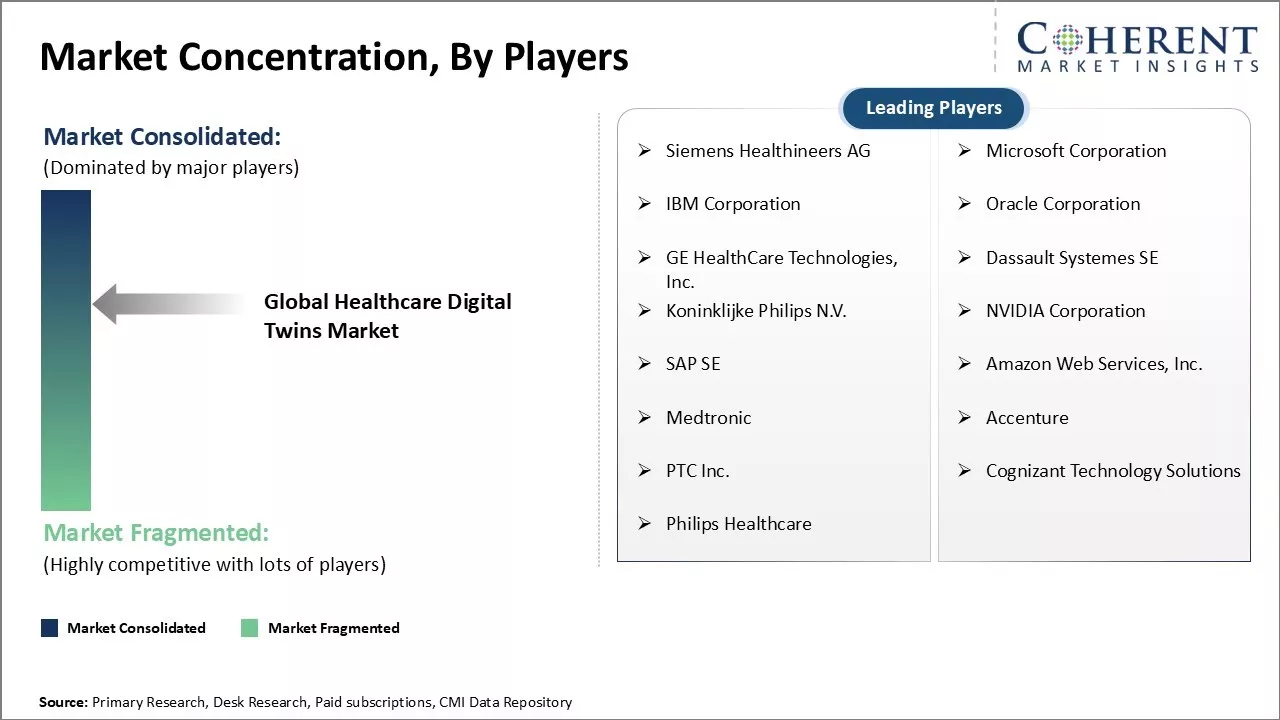
Healthcare Digital Twins Market: Key Development
- In June, 2025, NeuralCure AI introduced the first Diagnostic & Digital Twin Operating System designed for preventative care clinics. The platform combines patient lab data, imaging, wearables, and AI to simulate and predict health outcomes. Empowers clinicians and patients to make informed health decisions via real-time models, paving the way for scalable, preventive care in cash-pay and patient-led clinic settings.
- In May 2025, The U.S. agencies jointly awarded over US $6 million under the FDT‑BioTech initiative to seven projects developing AI- and simulation-based digital twins for clinical trials and biomedical research. Accelerates foundational research in healthcare digital twins, strengthens regulatory acceptance, and encourages industry adoption in drug development and medical device validation.
- In February, 2025, HEALWELL AI’s VeroSource platform unveiled a digital twin tailored for healthcare facility management, integrating HL7, ERP data, population demographics, and disease trends. Enhances operational efficiency through virtual modelling of hospital layouts, staff workflows, and resource utilization supporting smarter facility planning and cost reduction.
- In June 2024, Discussions at major conferences and publications highlighted emerging regulatory frameworks allowing digital twins to support or replace control arms in clinical trials. Sets the stage for digital twin-controlled trials, offering sponsors cost-effective, efficient study designs, improving diversity in recruitment, and reducing protocol amendments.
- In May 2024, The NHS, alongside Imperial College London and partners, initiated a five-year pilot to create digital twin hearts for pulmonary arterial hypertension (PAH) patients, combining wearable, imaging, and sensor data. Opens a new frontier in organ-specific digital twins, enabling early intervention and personalized care scheduling setting a precedent for widespread adoption in cardiology.
- Current Industry Events of 2026
- Market Size Estimation
- Regional Breakdown
- Competitive Landscape
- Customer Intelligence
- Segmental Analysis
- Pricing Analysis
- Key Market Drivers, Challenges & Future Trends
- Customized Insights Section
Healthcare Digital Twins Market Trends
- Increasing demand for personalized medicine
The healthcare industry has come a long way over the years due to remarkable advancements in science and technology. Treatments are becoming more personalized to suit individual patients and their specific medical conditions. However, achieving truly personalized care comes with its own set of challenges.
For instance, in January 2022, Indiana University led a project using digital twins to develop a self-learning system for personalized melanoma treatment. The global shift towards precision medicine drives demand for digital twins, which creates dynamic patient-specific models to predict disease progression, and optimize treatments, enhancing healthcare outcomes.
Healthcare Digital Twins Market Opportuities
- Role of AI in healthcare digital twins
One key opportunity for the global healthcare digital twins market is the advancements happening in the fields of artificial intelligence and machine learning. AI and ML are foundational technologies that are enabling more dynamic, data-driven digital twins.
Using AI, digital twins can be trained on vast amounts of real-time and historical patient data to gain insights, optimize outcomes and augment decision making. For example, AI power digital twins can help simulate various treatment scenarios, predict disease progression and aid clinicians in delivering more personalized care plans.
Segmental Insights
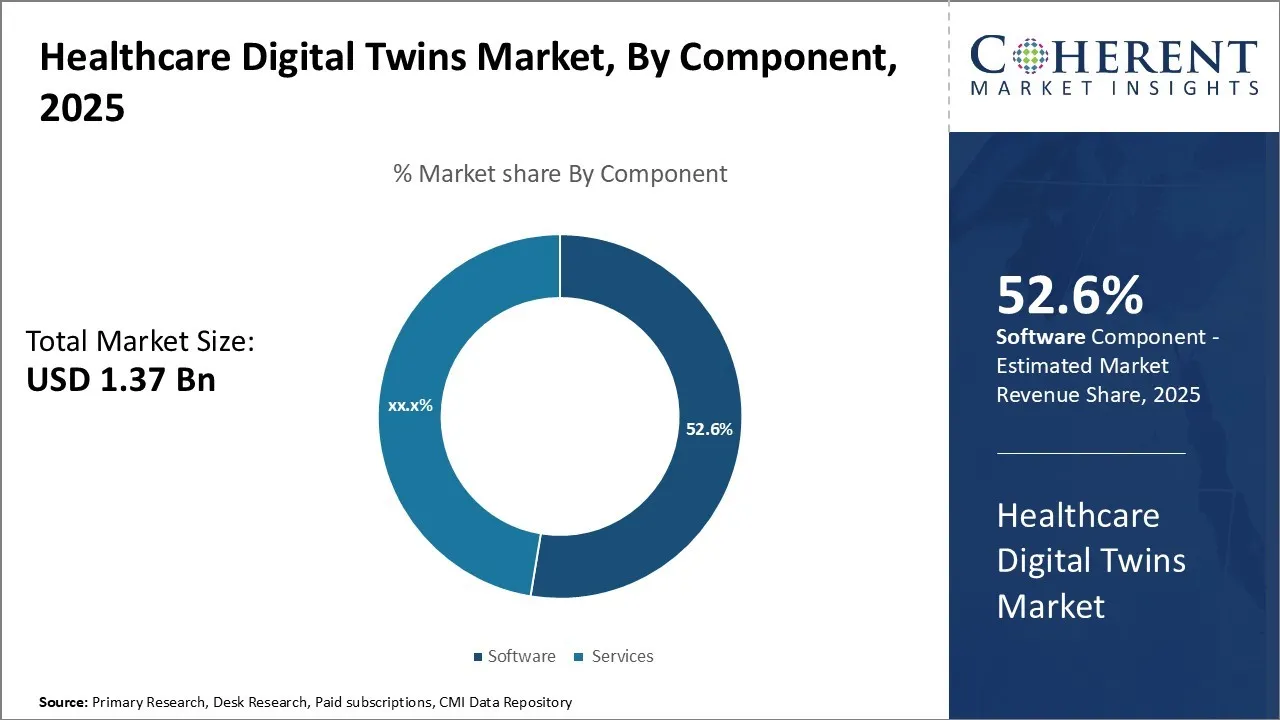
Global Healthcare Digital Twins Market Insights, By Component
The software segment is projected to dominate the global healthcare digital twins market with a commanding 53.6% share in 2026. This leadership is driven by the increasing need for sophisticated simulation tools that enable experimentation, real-time data modelling, and predictive analytics in healthcare settings.
Digital twin platforms are being extensively adopted to create personalized virtual representations of patients, aiding in diagnosis, treatment planning, and monitoring disease progression. As healthcare moves toward precision medicine and preventive care, scalable and AI-integrated software solutions are proving critical in clinical decision-making.
The demand for interoperability, cloud-based deployment, and continuous updates further reinforces software’s pivotal role in digital twin ecosystems.
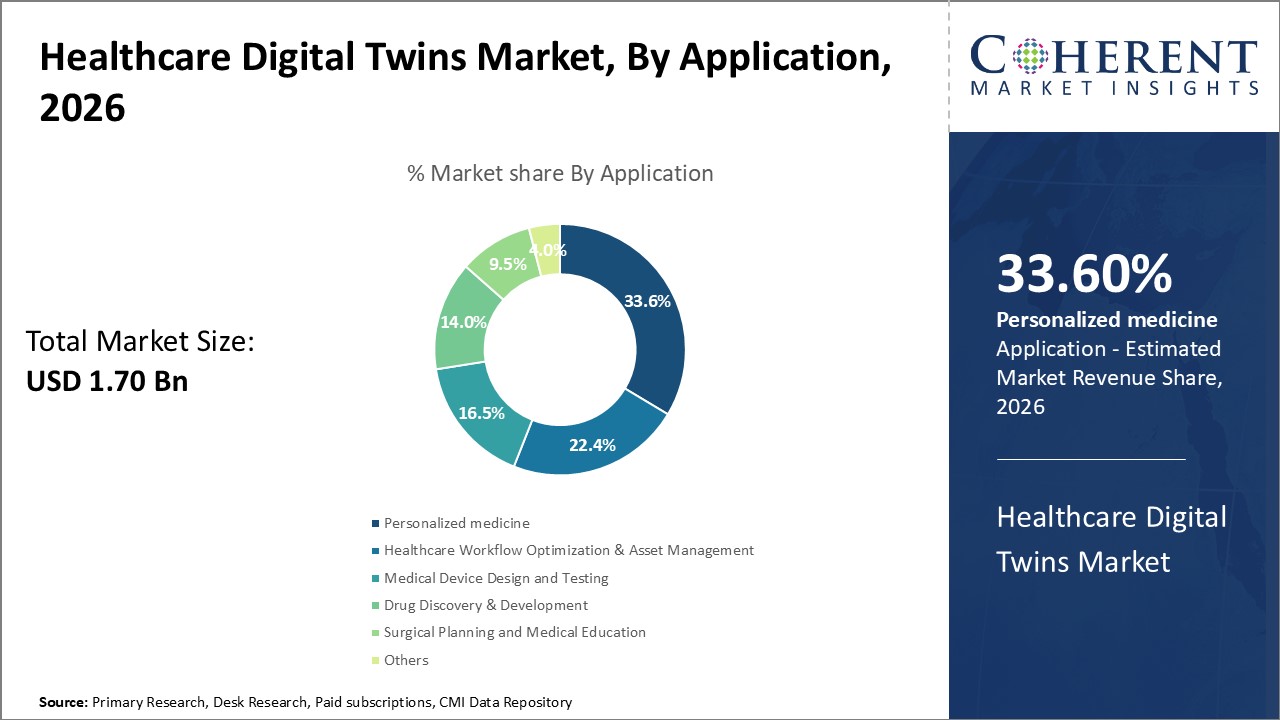
Global Healthcare Digital Twins Market Insights, By Application
The personalized medicine segment is expected to hold the largest share of 33.62% in the healthcare digital twins market by 2026, as the need for tailored therapeutic strategies becomes more prominent. Digital twins are revolutionizing personalized medicine by enabling the simulation of individual patient responses to various treatments based on genetic, clinical, and lifestyle data.
This capability enhances treatment precision, reduces adverse reactions, and improves overall patient outcomes. With the rising prevalence of chronic diseases and growing adoption of genomic data in clinical workflows, digital twins are becoming vital in developing individualized care plans and advancing the future of data-driven healthcare.
Global Healthcare Digital Twins Market Insights, By End User
Healthcare providers are projected to lead the global healthcare digital twins market with a 33.6% share in 2026. Hospitals, clinics, and integrated health systems are increasingly adopting digital twin technology to optimize patient care pathways, streamline operations, and support real-time decision-making.
These virtual models enable clinicians to forecast health risks, simulate interventions, and personalize treatments, thereby improving care quality and operational efficiency. With the growing emphasis on value-based care, reduced hospital readmissions, and outcome-driven performance metrics, digital twins are emerging as a key enabler of advanced, patient-centric healthcare across provider networks.
Regional Insights
North America Healthcare Digital Twins Market Trends and Analysis
North America is expected to dominate the global healthcare digital twins market, accounting for an estimated 38.8% share in 2026. The region’s leadership is driven by its advanced healthcare infrastructure, strong focus on personalized medicine, and early adoption of innovative technologies such as AI, IoT, and predictive analytics.
Countries like the United States and Canada are witnessing rapid integration of digital twin technology across hospital systems, research institutions, and pharmaceutical companies. These tools are being utilized for real-time patient monitoring, virtual diagnostics, and treatment simulations, significantly improving healthcare delivery and operational efficiency.
In addition, robust government support for digital health initiatives, favourable reimbursement policies, and collaboration between tech firms and healthcare providers are accelerating adoption. With a growing emphasis on precision health, data-driven care models, and clinical efficiency, North America continues to lead the global market in both innovation and implementation of digital twin solutions in healthcare.
Healthcare Digital Twins Market Dominating Countries
United States and Canada
The United States stands at the forefront of the global healthcare digital twins market, driven by its robust healthcare ecosystem, high investment in AI-driven health technologies, and a strong focus on personalized medicine. Leading healthcare systems, research universities, and tech companies in the U.S. are actively deploying digital twin platforms for simulating patient-specific models, optimizing clinical workflows, and enhancing preventive care strategies.
Federal initiatives like the “Cancer Moonshot” and support from agencies such as the NIH and FDA further stimulate R&D and integration of digital twins in clinical trials, diagnostics, and chronic disease management. With advanced interoperability frameworks and growing interest in precision health, the U.S. is shaping global innovation standards for healthcare digital twins.
Canada complements this leadership through its collaborative approach to digital health and healthcare innovation. Canadian hospitals and academic research centres are increasingly leveraging digital twins to improve patient outcomes and operational efficiency. National programs such as Canada Health Infoway and investments in AI-driven health projects are enhancing the adoption of simulation technologies in both public and private healthcare sectors.
Supportive regulatory environments, a focus on virtual care, and initiatives to modernize health IT infrastructure are positioning Canada as a rising hub for digital twin development, particularly in chronic disease modelling, predictive care, and virtual clinical trials.
Market Report Scope
Healthcare Digital Twins Market Report Coverage
| Report Coverage | Details | ||
|---|---|---|---|
| Base Year: | 2025 | Market Size in 2026: | USD 1.70 Bn |
| Historical Data for: | 2020 To 2024 | Forecast Period: | 2026 To 2033 |
| Forecast Period 2026 to 2033 CAGR: | 25.9% | 2033 Value Projection: | USD 8.65 Bn |
| Geographies covered: |
| ||
| Segments covered: |
| ||
| Companies covered: | Siemens Healthineers AG, Microsoft Corporation, IBM Corporation, Oracle Corporation, GE HealthCare Technologies, Inc., Dassault Systemes SE, Koninklijke Philips N.V., NVIDIA Corporation, SAP SE, Amazon Web Services, Inc., Medtronic, Accenture, PTC Inc., Cognizant Technology Solutions, and Philips Healthcare | ||
| Growth Drivers: |
| ||
| Restraints & Challenges: |
| ||
Analyst Viewpoint – Healthcare Digital Twins Market
- The global healthcare digital twins market, fueled by growing demand for personalized medicine, advancements in AI and simulation technologies, and the shift toward data-driven healthcare delivery. Digital twins are viewed as transformative tools that improve patient outcomes while enhancing operational efficiency across hospitals, clinics, and research institutions.
- Experts highlight strong adoption in personalized medicine and Digital twin technology in chronic disease management, where digital twins enable patient-specific modelling, predictive analytics, and treatment simulations. These capabilities are helping clinicians reduce trial-and-error in therapies and improve diagnostic precision, particularly in cardiology, oncology, and neurology.
- North America continues to lead the market, supported by robust health IT infrastructure, innovation funding, and early-stage implementation in hospital systems. Meanwhile, Europe and Asia Pacific are accelerating adoption through national digital health initiatives and public-private partnerships.
Key Stakeholders of Market
What does Growth in Healthcare Digital Twins Market mean for Different Stakeholders?
The healthcare digital twins market has multiple players with varied designations and offers multiple opportunities based on their scope of operations.
Key Healthcare IT Stakeholder | Opportunities Due to Healthcare Digital Twins Industry Growth |
Software Developers | Increased demand for developing healthcare applications, EHR systems, telemedicine platforms, and AI-driven diagnostics tools. |
Healthcare Providers | Opportunities to implement and optimize EHR systems, telemedicine solutions, and patient portals, enhancing patient care and operational efficiency. |
Healthcare IT Consultants | Providing expertise in the implementation and optimization of healthcare IT systems, compliance with health regulations, and digital transformation. |
Data Analytics Firms | Growth in demand for advanced analytics solutions, including predictive analytics, population health management, and personalized medicine. |
Cybersecurity Firms | Rising need for robust security solutions to protect sensitive health data, ensuring compliance with regulations like HIPAA and GDPR. |
Hospital Administrators | Implementing and managing health IT infrastructure to streamline operations, reduce costs, and improve patient outcomes. |
Medical Device Companies | Collaborating with healthcare IT firms to integrate devices with EHR systems, telemedicine platforms, and health monitoring applications. |
Telemedicine Providers | Expansion of telemedicine services, enabling remote consultations, monitoring, and patient management, especially in underserved areas. |
Market Segmentation
- Component Insights (Revenue, USD Bn, 2021 - 2033)
- Software
- Services
- Application Insights (Revenue, USD Bn, 2021 - 2033)
- Personalized medicine
- Healthcare workflow optimization & asset management
- Medical device design and testing
- Drug discovery & development
- Surgical planning and medical education
- Others
- End User Insights (Revenue, USD Bn, 2021 - 2033)
- Providers
- Biopharmaceutical Companies
- Medical Device Companies
- Academic & Research Institutes
- Regional Insights (Revenue, USD Bn, 2021 - 2033)
- North America
- U.S.
- Canada
- Latin America
- Brazil
- Argentina
- Mexico
- Rest of Latin America
- Europe
- Germany
- U.K.
- Spain
- France
- Italy
- Russia
- Rest of Europe
- Asia Pacific
- China
- India
- Japan
- Australia
- South Korea
- ASEAN
- Rest of Asia Pacific
- Middle East
- GCC Countries
- Israel
- Rest of Middle East
- Africa
- South Africa
- North Africa
- Central Africa
- Key Players Insights
- Siemens Healthineers AG
- Microsoft Corporation
- IBM Corporation
- Oracle Corporation
- GE HealthCare Technologies, Inc.
- Dassault Systemes SE
- Koninklijke Philips N.V.
- NVIDIA Corporation
- SAP SE
- Amazon Web Services, Inc.
- Medtronic
- Accenture
- PTC Inc.
- Cognizant Technology Solutions
- Philips Healthcare
Sources
The Stakeholders Consulted
- Hospital administrators and clinical operations managers
- Healthcare IT leaders and digital transformation officers
- Physicians, medical researchers, and geneticists
- Developers and providers of digital twin platforms and health analytics tools
- Regulatory bodies and compliance advisors in health technology
- Research institutions and universities focused on biomedical modeling and simulation
- Government health departments and public health planners
- End-users across sectors such as hospitals, specialty clinics, diagnostics centers, pharmaceutical companies, and academic medical centers
Databases Opened
- U.S. National Institutes of Health (NIH) – Biomedical Data Repositories
- European Commission – Digital Health and eHealth Datasets
- World Health Organization (WHO) – Global Health Observatory Data Repository
- U.S. Food and Drug Administration (FDA) – Digital Health Resources
Magazines & Trade Publications
- Healthcare IT News
- MedTech Dive
- Digital Health Business & Technology
- Health Management.org
- Fierce Healthcare – Technology Section
Scientific and Industry Journals
- Journal of Translational Medicine
- Nature Digital Medicine
- IEEE Journal of Biomedical and Health Informatics
- The Lancet Digital Health
- Journal of Medical Internet Research (JMIR)
Newspapers & Media Outlets
- The Wall Street Journal – Health & Technology
- Bloomberg – Digital Health & Innovation
- Reuters – Healthcare & Life Sciences
- The Economic Times – Health Tech & Diagnostics
- Business Standard – Medical Innovation & IT
Associations and Regulatory Bodies
- U.S. Food and Drug Administration (FDA) – Digital Health Center of Excellence
- Health Level Seven International (HL7)
- European Medicines Agency (EMA) – Digital Health Working Group
- American Medical Informatics Association (AMIA)
- Ministry of Health and Family Welfare (India) – National Digital Health Mission
Public Domain Sources
- U.S. Department of Health and Human Services (HHS) – Health Technology Reports
- World Bank – Health Expenditure and Digital Infrastructure Metrics
- OECD – Health Innovation and Medical Technology Statistics
- International Telecommunication Union (ITU) – AI for Health Reports
Proprietary Research Elements
- CMI Data Analytics Tool
- Proprietary CMI Repository of Market Data (covering past 8 years)
- CMI Expert Interviews and Transcripts (focused on digital health, simulation modeling, and clinical decision support systems)
Get access to 250+ pages report
Every segment, forecast, competitor profile and data table behind the analysis above — available for instant download.
- ESOMAR Member
- ISO 9001:2015 Certified
- D-U-N-S Registered
- GDPR & CCPA Compliant
Missing comfort of reading report in your local language? Find your preferred language:
Transform your Strategy with Exclusive Trending Reports
Frequently Asked Questions
The Healthcare Digital Twins Market size is estimated to be valued at USD 1.70 Bn in 2026, and is expected to reach USD 8.65 Bn by 2033.
The CAGR of the Healthcare Digital Twins Market is projected to be 25.9% from 2026 to 2033.
Increasing demand for personalized medicine and growing adoption of digital health technologies are the major factors driving the growth of the global market.
High implementation costs and lack of skilled workforce are the major factors hampering the growth of the global market.
In terms of component, software segment is estimated to dominate the market revenue share in 2026.
Siemens Healthineers AG, Microsoft Corporation, IBM Corporation, Oracle Corporation, GE HealthCare Technologies, Inc., Dassault Systemes SE, Koninklijke Philips N.V., NVIDIA Corporation, SAP SE, Amazon Web Services, Inc., Medtronic, Accenture, PTC Inc., Cognizant Technology Solutions, and Philips Healthcare are the major players.
North America is expected to lead the global healthcare digital twins industry in 2026.