

Global Hemodialysis Catheters Market Size and Forecast – 2026 To 2033
The global hemodialysis catheters market is expected to grow from USD 1.72 Bn in 2026 to USD 2.78 Bn by 2033, registering a compound annual growth rate (CAGR) of 7.1% from 2026 to 2033. The market for global hemodialysis catheters is poised for significant expansion, fueled by the rising global burden of chronic kidney disease and increasing demand for renal replacement therapy.
The International Society of Nephrology reported that 2.6 million people received dialysis globally in 2010, with the number projected to reach 5.4 million by 2030, supporting continued demand for dialysis vascular access.
Key Takeaways of the Global Hemodialysis Catheters Market
- Tunneled catheters are projected to hold 61.4% of the global hemodialysis catheters market share in 2026, making it dominant product type segment, across North America due to established regulatory recognition of long-term hemodialysis vascular access. The U.S. FDA classifies implanted hemodialysis catheters intended for long-term central vascular access as Class II devices under 21 CFR 876.5540, with 510(k) as the applicable premarket pathway. This established regulatory pathway supports the availability and continued clinical use of tunneled long-term access devices in the U.S.
- Double lumen is projected to hold 87.6% of the global hemodialysis catheters market share in 2026, making it dominant lumen type segment, across Asia Pacific due to expanding medical-device registration and regulatory oversight for dialysis access technologies. For instance, China’s National Medical Products Administration (NMPA) requires Class II and Class III medical devices to undergo registration, with safety, effectiveness, and quality evaluated as part of the regulatory process. This framework supports the regulated introduction of advanced hemodialysis catheter configurations across the region.
- Polyurethane is projected to hold 51.8% of the global hemodialysis catheters market share in 2026, making it dominant material segment, across Europe due to the region’s stringent medical-device regulatory framework. The European Commission’s Medical Device Regulation (EU MDR) establishes requirements governing the safety, performance, conformity assessment, and market surveillance of medical devices in the European market. This regulatory environment supports the adoption of established catheter materials such as polyurethane in hemodialysis vascular-access devices.
- North America market maintains dominance with an expected share of 39.8% in 2026, bolstered by the established end stage renal disease (ESRD) treatment infrastructure and sustained demand for hemodialysis vascular access. The U.S. National Institute of Diabetes and Digestive and Kidney Diseases (NIDDK) reports more than 808,000 people living with end stage kidney disease (ESKD), with 68% receiving dialysis, sustaining demand for vascular-access devices used in hemodialysis.
- Asia Pacific is expected to exhibit the fastest growth in the global hemodialysis catheters market, registering an estimated CAGR of 8.6% during 2026–2033, driven by expanding government-supported dialysis infrastructure and improving access to treatment. For instance, China’s National Medical Products Administration (NMPA) revised its Good Manufacturing Practice for Medical Devices in November 2025, with the updated requirements taking effect from November 1, 2026. The revised framework strengthens quality-management requirements for medical-device manufacturing, which is expected to support higher production and quality standards for locally manufactured vascular-access devices, including hemodialysis catheters, as the Asia Pacific market expands.
Segmental Insights
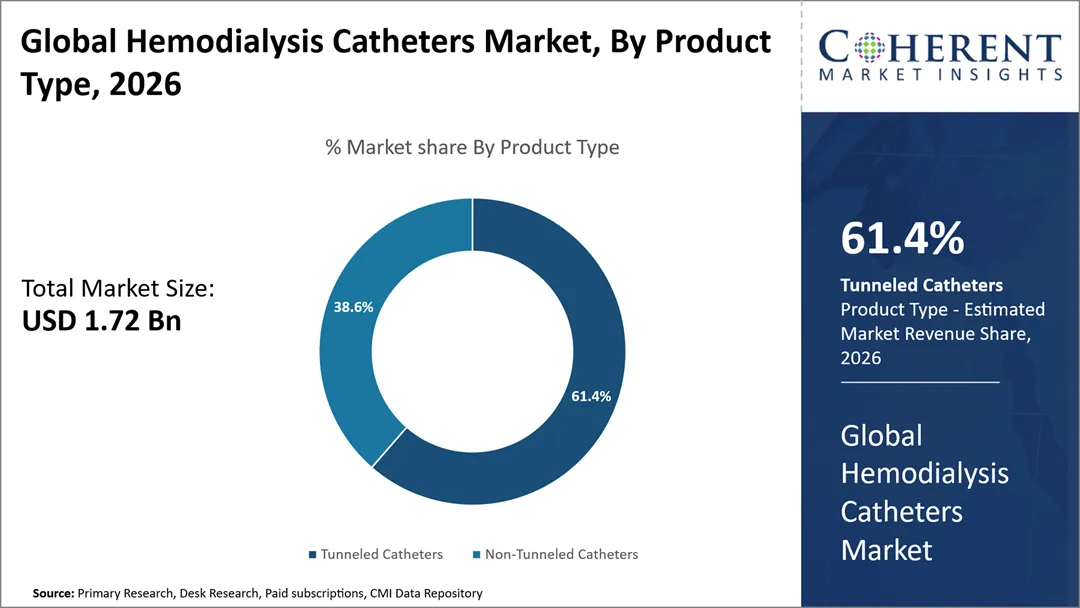
Why Do Tunneled Catheters Dominate the Global Hemodialysis Catheters Market?
Tunneled catheters are projected to hold a market share of 61.4% in 2026, as they ensure adequate venous access to patients requiring ongoing haemodialysis and are to be preferred to standard tunneled catheters where increased stability is needed or a permanent AV access site is unavailable/immature. The catheter itself lies in a subcutaneous channel, helping to provide additional catheter stability and continuing use over repeated haemodialysis. For instance, in May 2025, a study of 6,515 tunneled hemodialysis catheters published by National Library of Medicine, reported that the rate of external component breakage in only 0.7% of catheters used for less than one year, supporting their strong mechanical durability.
- Current Industry Events of 2026
- Market Size Estimation
- Regional Breakdown
- Competitive Landscape
- Customer Intelligence
- Segmental Analysis
- Pricing Analysis
- Key Market Drivers, Challenges & Future Trends
- Customized Insights Section
Why Does Double Lumen Represent the Largest Lumen Type Segment in the Hemodialysis Catheters Market?
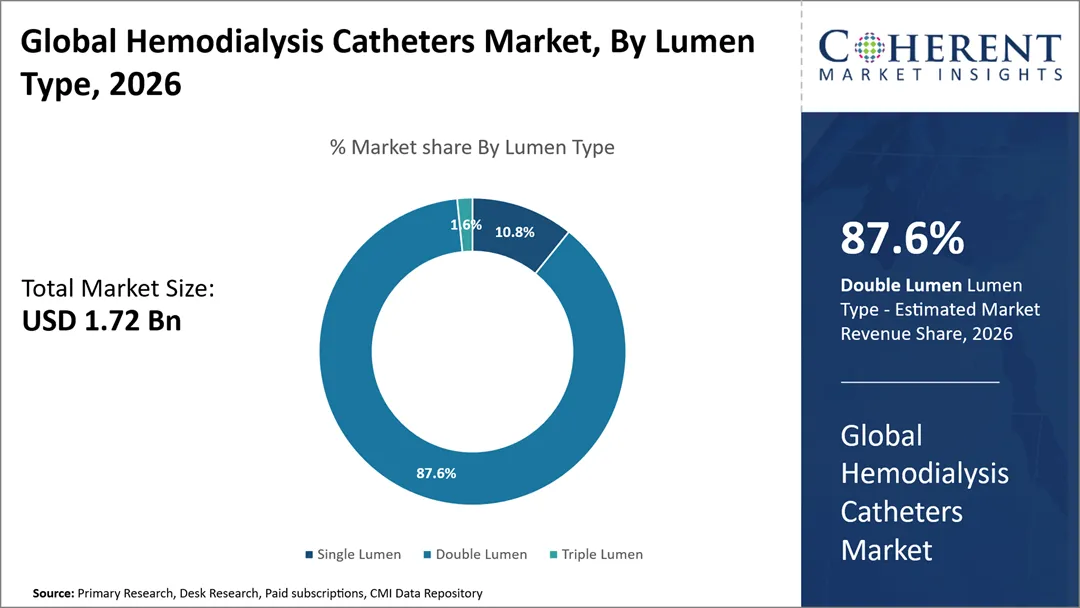
Double lumen is projected to hold a market share of 87.6% in 2026, due to the two dedicated lumens which facilitate withdrawal and return of blood together to maintain effective EC Circulation through hemodialysis. Extensive use of these catheters in both chronic and acute hemodialysis further strengthens their adoption. For instance, in August 2025, the U.S. Food and Drug Administration (FDA) approved Medical Components, Inc. 14F Duo-Flow Side X Side Double Lumen Catheter (K250836) for hemodialysis, highlighting continued development and regulatory adoption of double-lumen catheter designs.
Polyurethane Segment Dominates the Global Hemodialysis Catheters Market
The polyurethane segment is projected to hold a market share of 51.8% in 2026, due to combination of flexibility, tensile strength, kink-resistance and coating compatibility in vascular access. Manufacturers can therefore produce a structural integrity catheter for the movement within vasculature and repeated dialysis use. For instance, in March 2024, a study based on comparison of six brands of polyurethane CVCs published by Springer Nature Limited, reported significant variability in their surface roughness, associated with greater friction against the venous intima. This demonstrated the importance of polyurethane catheter surface characteristics in avoiding mechanically mediated vascular injury.
Current Events and their Impact
Current Events | Description and its Impact |
India Expanded National Hemodialysis Infrastructure under Pradhan Mantri National Dialysis Programme (PMNDP) (August 2026) |
|
EU Made EUDAMED Device Registration and Market Surveillance Modules Mandatory (May 2026) |
|
U.S. FDA Issued Early Alert on Dialysis Catheter Kit Safety (April 2026) |
|
Hemodialysis Catheters Market Dynamics
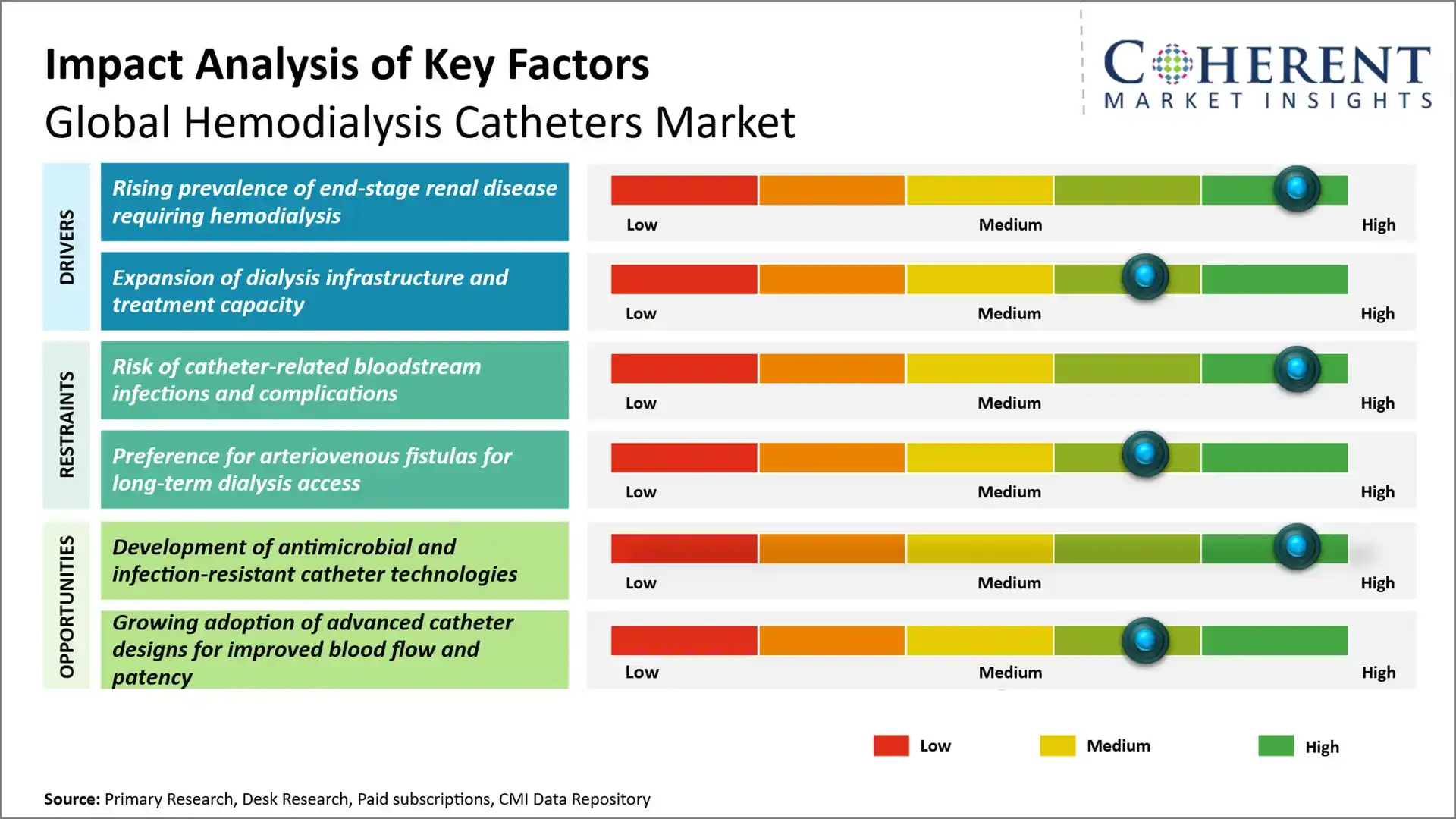
Market Drivers
Rising prevalence of end-stage renal disease requiring hemodialysis
The expanding end-stage renal disease population is increasing the number of patients requiring long-term hemodialysis and dependable vascular access. The growing treatment burden also creates recurring requirements for catheter placement, replacement, and management as part of ongoing dialysis care. For instance, the 2025 United States Renal Data System Annual Data Report recorded 933,078 people with end-stage kidney disease in 2023, including 588,613 receiving hemodialysis. This sizeable treatment population continues to support demand for hemodialysis catheters.
Expansion of dialysis infrastructure and treatment capacity
The expansion of dialysis facilities is increasing the number of treatment sites requiring reliable vascular-access solutions and supporting broader utilization of hemodialysis catheters. The trend is particularly evident in emerging markets, where governments are extending dialysis services beyond major urban hospitals. For instance, in February 2026, China’s National Health Commission announced that all counties with populations exceeding 60,000 should have access to hemodialysis services, with 350 additional township health centers and community health service centers planned to provide dialysis. This expansion is expected to increase demand for hemodialysis access devices across lower-tier healthcare facilities.
Rising demand for infection-resistant hemodialysis catheters
The high infection risk associated with catheter-based vascular access is increasing the need for safer catheter technologies and improved infection-prevention measures. For instance, the U.S. Centers for Disease Control and Prevention (CDC) reported that in 2025, 12,718 bloodstream infections were recorded among patients receiving dialysis, while central venous catheter access continues to have the highest bloodstream-infection risk among vascular-access types. This infection burden is encouraging greater emphasis on antimicrobial and infection-resistant catheter technologies
Emerging Trends
Increasing adoption of antimicrobial and antithrombotic catheter technologies
Manufacturers are increasingly developing catheter coatings and hub technologies designed to reduce infection, thrombosis, and biofilm formation. The U.S. FDA specifically recognizes coated hemodialysis catheters and antimicrobial catheter components within its Class II device framework.
Shift toward advanced catheter tip and flow designs
Newer hemodialysis catheters are increasingly incorporating symmetric-tip configurations and optimized lumen designs to improve blood flow and reduce catheter dysfunction. Recent clinical literature identifies symmetric-tip designs as an important direction for improving catheter performance.
Development of multifunctional and non-leaching surface technologies
Research is moving toward catheter surfaces that combine antimicrobial, antibiofilm, and antithrombotic properties without relying solely on drug release. These technologies aim to improve long-term catheter safety while addressing infection and thrombosis simultaneously.
Regional Insights
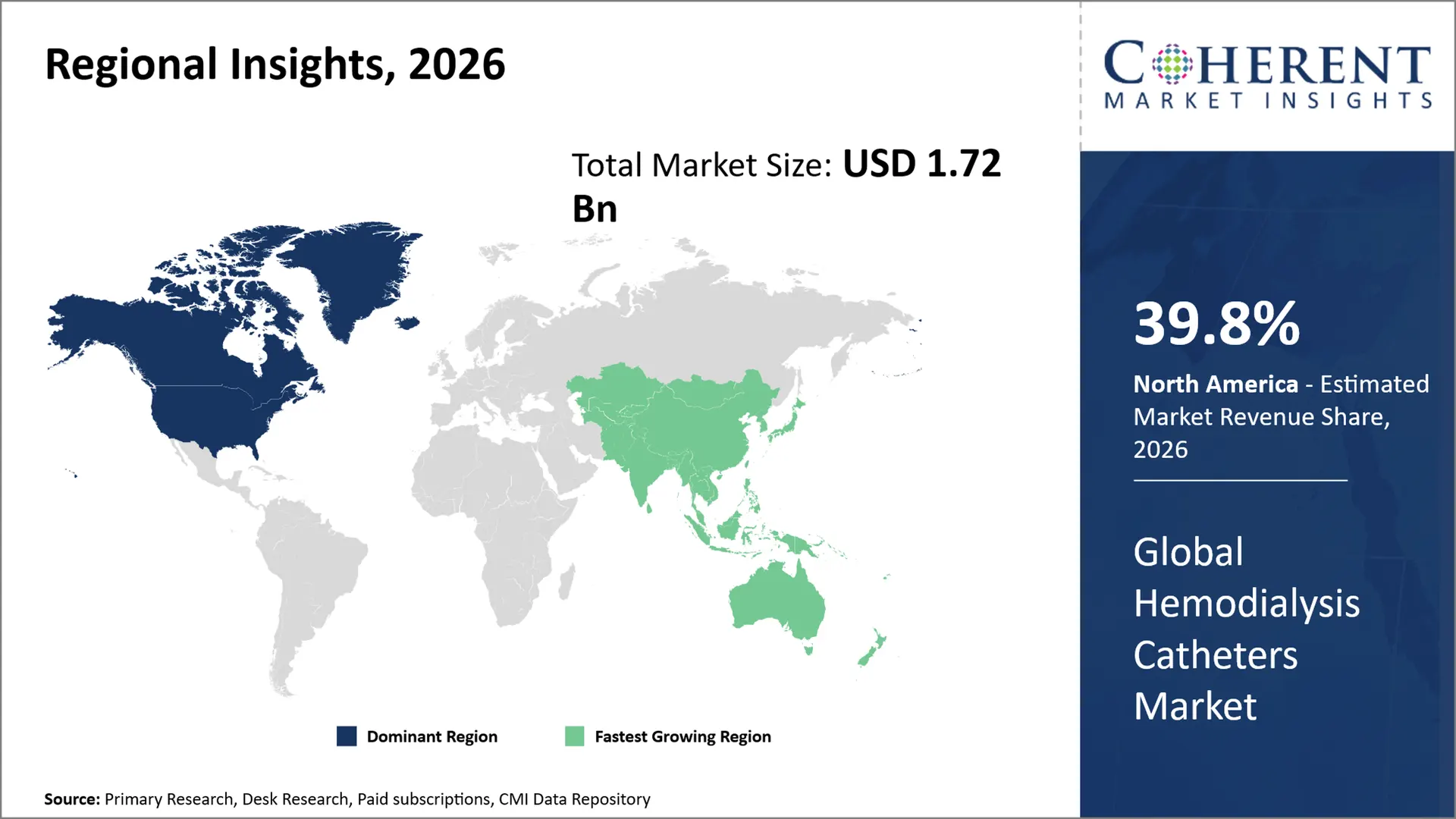
Why is North America a Strong Market for Hemodialysis Catheters?
North America leads the global hemodialysis catheters market, accounting for an estimated 39.8% share in 2026, driven by attributed to an extensive dialysis infrastructure with an advanced treatment capacity, robust healthcare system, and increasing demand for vascular access. In addition, the government policies aimed to help kidney and chronic disease patients along with regulatory enforcement within the dialysis devices market supports its dominant presence in global market.
For instance, the End-stage renal disease (ESRD) Quality Incentive Program, created by the U.S. Centers for Medicare & Medicaid Services (CMS), applies payment incentives to quality measures which in turn aims to improve end stage renal disease quality of care for ESRD Medicare beneficiaries, encouraging a uniform and quality-based approach to dialysis in the U.S. Furthermore, the region has high volume specialty dialysis centers and increased acceptance of contemporary vascular access devices which further drives its demand.
Why Does Asia Pacific Hemodialysis Catheters Market Exhibit High Growth?
Asia Pacific is expected to exhibit the fastest growth in the global hemodialysis catheters market, registering an estimated CAGR of 8.6% during 2026–2033. The region is projected to account for 25.7% of the global market in 2026, owing to the increasing prevalence of kidney diseases and increasing use of renal replacement therapy. Improvement in healthcare infrastructure coupled with growth in government initiatives towards expanding access to renal therapies, and escalating per capita health expenditure support the growth of the global hemodialysis catheters market.
For instance, in March 2026, the Malaysian Ministry of Health announced 33 Community Dialysis Units, 28 of which will be functioning within rural health clinics and five more planned. This effort will work to broaden patient access to dialysis within rural areas and increase comfort through limiting traveling. (Source: BERNAMA) Furthermore, increases in dialysis capability in China and India, and the development of access in previously underserved populations, are contributing to increased numbers of patients in addressable markets and expanded uptake of the catheter.
Global Hemodialysis Catheters Market Outlook for Key Countries
Why is the U.S. Leading Innovation and Adoption in the Hemodialysis Catheters Market?
The U.S. has been in the forefront of innovation and adoption in the hemodialysis catheters market driven by well-developed regulatory pathway with specific regulatory pathways that exist for all implantable blood access devices, including both the classification for Class II implantable blood access devices and for pathways through the 510 (k). This allows innovative new catheter technology to reach the marketplace while ensuring certain established safety parameters and device performance levels are met. The U.S. FDA has also developed specific regulatory pathways for more modern catheter-based methods of gaining hemodialysis access.
Is Japan a Favorable Market for Hemodialysis Catheters Market?
Japan is an attractive market opportunity for hemodialysis catheters due to its large established base of patients and facilities and its high level of specialization in renal-care. The country possessed 337,414 dialysis patients and 4,512 dialysis facilities at the end-of-2024, establishing a significant installed base of vascular-access devices. Furthermore, government support from Japanese Ministry of Health, Labour & Welfare continues in encouraging kidney disease policies with focus on regionally centered renal-care and services delivery system, improvements in the delivery system's clinical quality, and development of health care workers and R&D.
Is China Emerging as a Key Growth Hub for the Hemodialysis Catheters Market?
China is one of the areas with rapid market growth for the hemodialysis catheters, fueled by significant growth in dialysis capacity beyond the tertiary hospital facilities in major cities. Government initiatives to reinforce county level dialysis service further improve patient access to treatment and thus generate more market demand for these vascular-access devices. Extensive presence of dialysis facilities at region level will further expand patient potential base in the country.
Why Does Germany Top the European Hemodialysis Catheters Market?
Germany is the largest market within the European hemodialysis catheter industry, benefiting from a large dialysis population as well as comprehensive in-center dialysis infrastructure. As of February 2026, the country has 55,129 individuals on dialysis, which is the highest dialysis-patient count in any of the EU nations thereby sustaining a large, and non-diminishing demand for vascular-access devices. Additionally, the country provides complete public financed chronic hemodialysis along a national database of chronic dialysis patients which guarantee a wider coverage and formal organization of the delivery of renal care.
Is Hemodialysis Catheters Market Developing in India?
With expanding public dialysis capacity and access to renal replacement therapy, India is evolving into an emergent market for hemodialysis catheters. The market demand is driven by increasing number of people on dialysis, expanded public dialysis care extending out to all major hospital and increased number of treatment centres making the demand for vascular access devices broader, particularly bolstered by expansion of the Pradhan Mantri National Dialysis Programme (to 751 districts).
Hemodialysis Treatment and Infrastructure by Region, 2024
Region | Hemodialysis Prevalence (per million) | Hemodialysis Facility Density (per million) | Treated Kidney Failure Prevalence (per million) |
North America | 515.4 | 18.4 | 682.5 |
Europe | ~500 | ~8.5 | ~700 |
Asia Pacific | ~900 | ~7.0 | ~1,100 |
Latin America | 501.5 | 4.7 | 651.0 |
Middle East & Africa | ~95 | ~2.0 | ~400 |
How is the development of antimicrobial and infection-resistant catheter technologies creating new growth opportunities in the hemodialysis catheters market?
A considerable opportunity exists within cutting-edge hemodialysis catheter technologies which can lower the risk of catheter related bloodstream infections and contribute to safer long-term vascular access. Increased demand for antimicrobial coatings, anti-infective surfaces and compatible catheter locking solutions are emerging as facilities become increasingly focused on prevention. For instance, in November 2003, the U.S Food and Drug administration (FDA) had approved the Defencath central venous catheter lock solution for adult kidney failure patients treated with chronic haemodialysis via a central venous catheter after a 71% risk reduction in catheter related blood stream infection compared to heparin, was confirmed in a clinical trial. This regulatory approval supports ongoing research and implementation of devices which promote increased safety of catheter-based dialysis access.
Market Players, Key Development, and Competitive Intelligence
Key Developments
- In June 2026, Access Vascular, Inc. and Medline entered a multi-year agreement to commercialize HydroMID and HydroPICC next-generation vascular access catheters in the U.S., with rollout expected in late 2026. The catheters feature anti-thrombogenic properties designed to address catheter-related thrombosis and occlusion.
- In May 2026, Rockwell Medical signed a three-year product purchase agreement with Heritage Dialysis, covering the supply of its hemodialysis product portfolio. The agreement supports Heritage Dialysis’ home dialysis services across skilled nursing, assisted living, senior living communities, and patients’ homes.
- In September 2024, CorMedix entered a commercial supply agreement with a U.S. dialysis operator for DefenCath, a taurolidine and heparin catheter-lock solution. The agreement expanded access to DefenCath for chronic hemodialysis patients using central venous catheters across more than 250 outpatient dialysis clinics.
Competitive Landscape
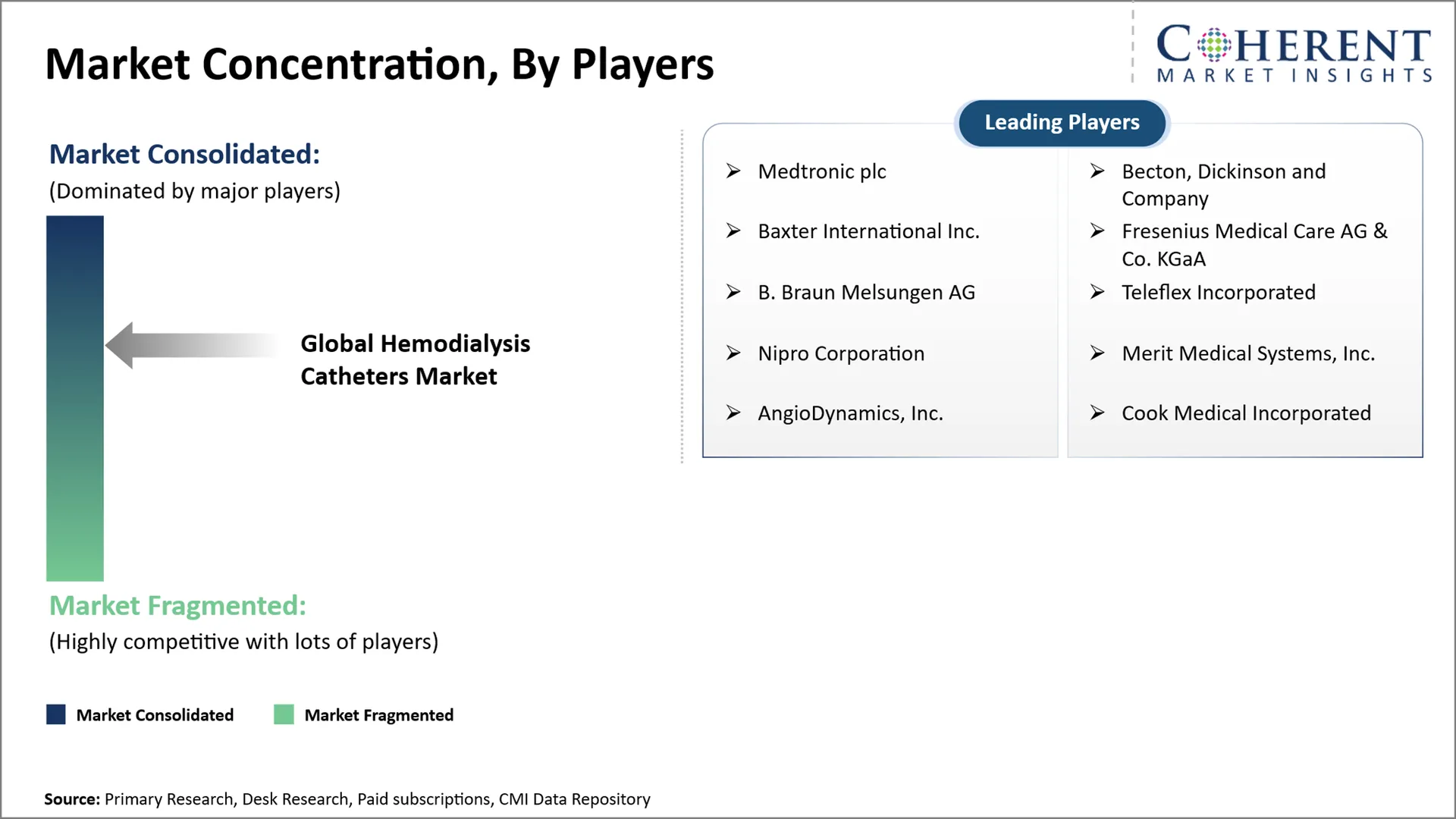
The global hemodialysis catheters market is moderately competitive, with competition centered on catheter performance, blood-flow efficiency, infection prevention, material properties, tip configuration, and long-term vascular-access reliability. Market participants are increasingly focusing on catheter designs that improve flow performance, reduce catheter-related complications, and support prolonged dialysis access. Key focus areas include:
- Development of tunneled and cuffed catheter designs
- Advancement of double-lumen catheter configurations
- Integration of antimicrobial and infection-resistant technologies
- Innovation in catheter materials, particularly polyurethane and silicone formulations
- Development of advanced tip configurations
Market Report Scope
Global Hemodialysis Catheters Market Report Coverage | |||
Report Coverage | Details | ||
Base Year | 2025 | Market Size in 2026: | USD 1.72 Bn |
Historical Data For: | 2020 To 2024 | Forecast Period: | 2026 To 2033 |
Forecast Period 2026 To 2033 CAGR: | 7.1% | 2033 Value Projection: | USD 2.78 Bn |
Geographies covered: |
| ||
Segments covered: |
| ||
Companies covered: | Medtronic plc, Becton, Dickinson and Company, Baxter International Inc., Fresenius Medical Care AG & Co. KGaA, B. Braun Melsungen AG, Teleflex Incorporated, Nipro Corporation, Merit Medical Systems, Inc., AngioDynamics, Inc., Cook Medical Incorporated | ||
Growth Drivers: |
| ||
Restraints & Challenges: |
| ||
Analyst Opinion (Expert Opinion)
- In the coming years, global hemodialysis catheters market is expected to shift from conventional access devices toward higher-performance, infection-resistant, and longer-lasting catheter systems. Future product development will increasingly focus on optimizing blood-flow performance, minimizing catheter-related infections and thrombosis, and improving tip configuration and material properties to extend functional life.
- The maximum opportunities are foreseen within tunneled catheters for chronic hemodialysis in India, where the expansion of dialysis services, increasing patient access to treatment, and growing healthcare infrastructure create a large requirement for dependable long-term vascular access. Products combining infection prevention, efficient blood flow, and cost-efficient designs are likely to have the strongest commercial potential.
- In order to gain a competitive advantage, market players should compete beyond basic catheter availability by developing differentiated catheter designs with measurable advantages in infection control, flow efficiency, longevity, and ease of placement. Building localized manufacturing and distribution capabilities in high-growth Asian markets, while maintaining a portfolio across tunneled, non-tunneled, and specialized catheter configurations, can further strengthen competitive positioning.
Speak to the analyst
Want personalized insights?
Take the findings above to one of our principal consultants, or have the report rebuilt around the segments, geographies and competitors you actually track.
Market Segmentation
- Product Type Insights (Revenue, USD Bn, 2021 - 2033)
- Tunneled Catheters
- Non-Tunneled Catheters
- Lumen Type Insights (Revenue, USD Bn, 2021 - 2033)
- Single Lumen
- Double Lumen
- Triple Lumen
- Material Insights (Revenue, USD Bn, 2021 - 2033)
- Polyurethane
- Silicone
- Carbothane
- Tip Configuration Insights (Revenue, USD Bn, 2021 - 2033)
- Step-Tip
- Split-Tip
- Symmetric
- End User Insights (Revenue, USD Bn, 2021 - 2033)
- Hospitals
- Dialysis Centers
- Ambulatory Surgical Centers
- Home Healthcare
- Others
- Regional Insights (Revenue, USD Bn, 2021 - 2033)
- North America
- U.S.
- Canada
- Latin America
- Brazil
- Argentina
- Mexico
- Rest of Latin America
- Europe
- Germany
- U.K.
- Spain
- France
- Italy
- Russia
- Rest of Europe
- Asia Pacific
- China
- India
- Japan
- Australia
- South Korea
- ASEAN
- Rest of Asia Pacific
- Middle East
- GCC Countries
- Israel
- Rest of Middle East
- Africa
- South Africa
- North Africa
- Central Africa
- North America
Sources
Primary Research Interviews
- Nephrologists and vascular-access specialists involved in hemodialysis catheter selection, placement, and management
- Dialysis-center medical directors, nephrology department heads, and dialysis nursing specialists
- Interventional radiologists and vascular surgeons performing hemodialysis catheter placement
- Hospital and dialysis-center procurement professionals responsible for vascular-access devices
- Vascular-access coordinators and dialysis infection-prevention specialists
- Medical-device distributors and specialty renal-care equipment suppliers
Stakeholders
- Hemodialysis catheter and vascular-access device manufacturers
- Hospitals, outpatient dialysis centers, and specialized renal-care facilities
- Nephrology, vascular surgery, and interventional radiology departments
- Dialysis service providers and renal-care networks
- Medical-device distributors and healthcare equipment suppliers
- Vascular-access management and infection-control service providers
- Academic medical centers and clinical research institutions
- End-use Sectors
- Hospitals and Health Systems
- Dialysis Centers
- Ambulatory Surgical Centers
- Specialty Renal Clinics
- Home Healthcare and Home Dialysis Providers
- Academic and Research Institutions
- Emergency and Acute Care Facilities
- Regulatory & Health Bodies
- U.S. Food and Drug Administration – Center for Devices and Radiological Health
- European Commission – Medical Device Coordination Group
- Medicines and Healthcare products Regulatory Agency, United Kingdom
- Pharmaceuticals and Medical Devices Agency, Japan
- National Medical Products Administration, China
- Health Canada
- Therapeutic Goods Administration, Australia
- Ministry of Health, Labour and Welfare, Japan
Databases
- ClinicalTrials.gov – Clinical trials involving hemodialysis, vascular access, and catheter technologies
- World Health Organization International Clinical Trials Registry Platform – Global clinical-trial records
- U.S. Food and Drug Administration Medical Device Databases – Device classifications, 510(k) clearances, recalls, and safety information
- U.S. Food and Drug Administration Manufacturer and User Facility Device Experience Database – Medical-device adverse-event records
- EUDAMED – European medical-device registration, certification, and market-surveillance information
- World Health Organization Global Health Observatory – Global kidney disease, dialysis, and healthcare-system statistics
- United States Renal Data System – End-stage kidney disease, dialysis treatment, and vascular-access statistics
Associations
- International Society of Nephrology
- National Kidney Foundation
- European Renal Association
- American Society of Nephrology
- Vascular Access Society
- Society of Interventional Radiology
- Association for the Advancement of Medical Instrumentation
Public Domain Sources
- World Health Organization – kidney disease, dialysis, and healthcare-system data
- U.S. Food and Drug Administration – Hemodialysis catheter regulatory, classification, safety, and guidance information
- Centers for Disease Control and Prevention – Dialysis-associated infection and infection-prevention data
- Centers for Medicare & Medicaid Services – Dialysis facility, reimbursement, and utilization information
- National Institute of Diabetes and Digestive and Kidney Diseases – kidney disease and end-stage kidney disease statistics
- European Commission – Medical-device regulations and European market requirements
- International Society of Nephrology – Global kidney health and dialysis-access data
- United States Renal Data System – End-stage kidney disease and dialysis treatment statistics
- National Health Commission of the People's Republic of China – Dialysis infrastructure and healthcare-system information
- Ministry of Health and Family Welfare, India – National dialysis programme and dialysis infrastructure data
Proprietary Elements
- CMI Data Analytics Tool
- Proprietary CMI Existing Repository of information for last 10 years.
Get access to 250+ pages report
Every segment, forecast, competitor profile and data table behind the analysis above — available for instant download.
- ESOMAR Member
- ISO 9001:2015 Certified
- D-U-N-S Registered
- GDPR & CCPA Compliant
Missing comfort of reading report in your local language? Find your preferred language:
Frequently Asked Questions
The global hemodialysis catheters market is estimated to be valued at USD 1.72 Bn in 2026 and is expected to reach USD 2.78 Bn by 2033.
Tunneled catheters dominate due to their suitability for long-term hemodialysis, greater catheter stability, and established use when arteriovenous fistula or graft access is unavailable or unsuitable.
Hemodialysis catheters are vascular access devices inserted into a large central vein to remove and return blood during hemodialysis treatment.
The CAGR of global hemodialysis catheters market is projected to be 7.1% from 2026 to 2033.
Rising prevalence of end-stage renal disease requiring hemodialysis, and expansion of dialysis infrastructure and treatment capacity are the major factors driving the growth of the global hemodialysis catheters market.
Risk of catheter-related bloodstream infections and complications, and preference for arteriovenous fistulas for long-term dialysis access are the major factors hampering the growth of the global hemodialysis catheters market.
In terms of lumen type, double lumen is estimated to dominate the market revenue share in 2026.