

Hemodialysis Access Graft Market Size and Forecast — 2026 - 2033
The Global Hemodialysis Access Graft Market size is estimated to be valued at USD 850 million in 2026 and is expected to reach USD 1450 million by 2033, exhibiting a compound annual growth rate (CAGR) of 7.2% from 2026 to 2033.
Overview
The Hemodialysis Access Graft market is primarily driven by the rising prevalence of chronic kidney disease (CKD) and end-stage renal disease (ESRD) worldwide, increasing the need for long-term dialysis access solutions. Growing rates of diabetes, hypertension, and obesity—major risk factors for kidney failure—are expanding the patient population requiring hemodialysis. Additionally, the aging global population is contributing to higher incidences of renal disorders and vascular complications. Technological advancements in synthetic and biologic graft materials are improving graft patency rates and reducing infection risks, encouraging adoption. Increased healthcare expenditure, expanded dialysis infrastructure, and improved access to renal care services further support market growth.
Key Takeaways
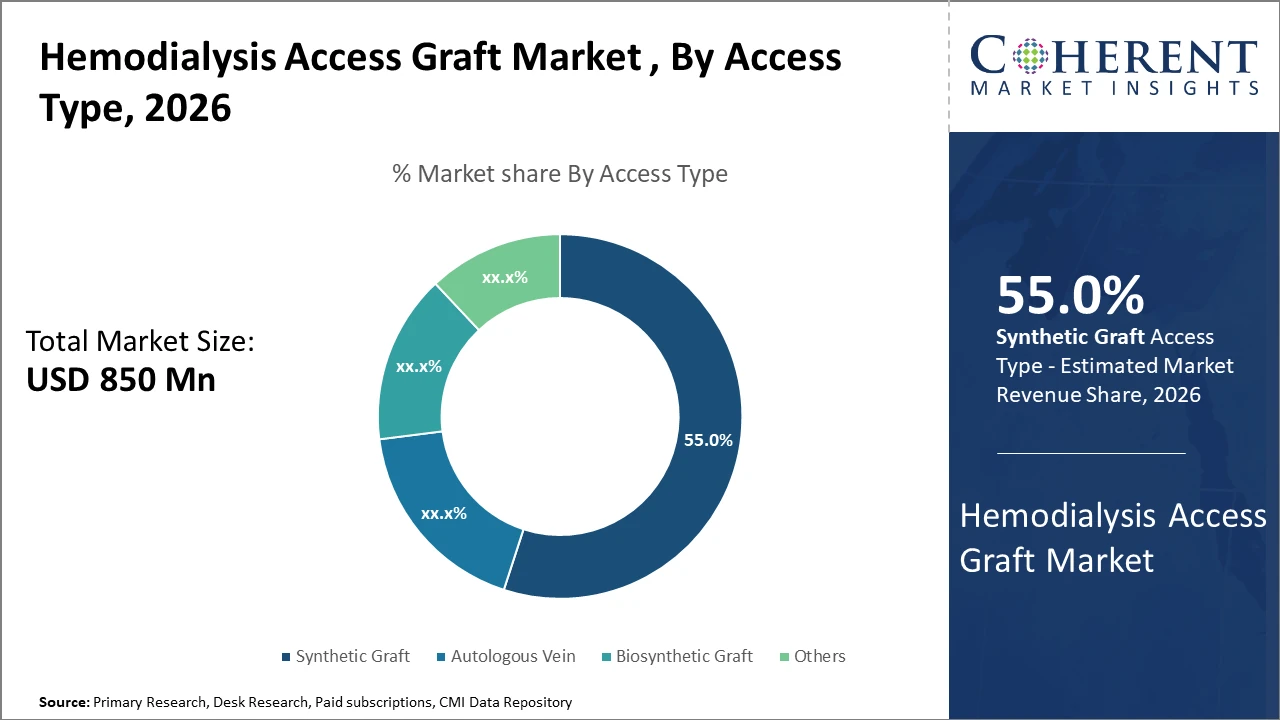
The synthetic graft segment leads the Hemodialysis Access Graft market with around 55% share, driven by consistent performance, wide availability, and strong clinical preference in vascular access procedures.
Maintenance hemodialysis is the fastest-growing application segment, supported by rising demand for long-term and repeat dialysis treatments in patients with end-stage renal disease.
Hospitals remain the dominant end-user segment due to high patient inflow, advanced infrastructure, and the ability to manage complex vascular access procedures, while dialysis centers are expanding rapidly worldwide.
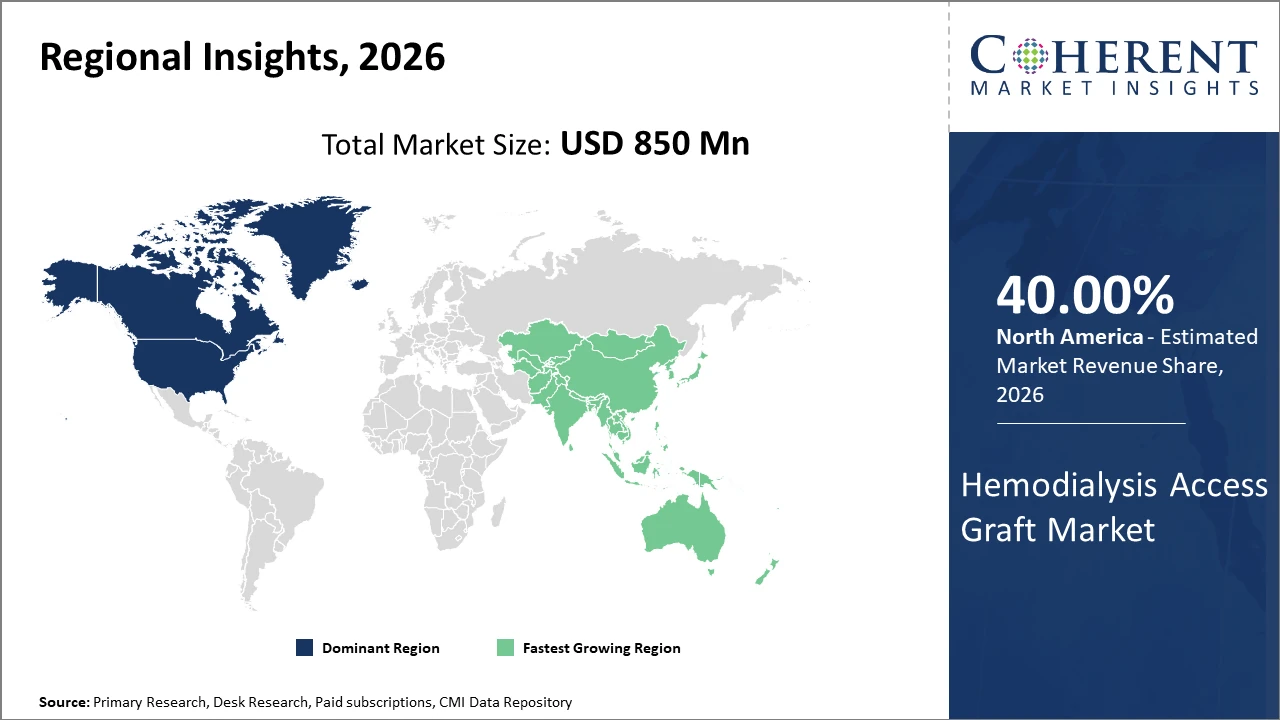
North America holds approximately 40% of the market share, supported by advanced healthcare systems, strong reimbursement frameworks, and government initiatives focused on chronic kidney disease management.
Asia Pacific is the fastest-growing region with a CAGR above 8%, driven by increasing diabetes prevalence, rising healthcare expenditure, and improving access to dialysis services across emerging economies.
Hemodialysis Access Graft Market Segmentation Analysis
Hemodialysis Access Graft Market Insights, By Access Type
Synthetic grafts dominate the hemodialysis access graft market with a 55% share, supported by their durability, wide availability, and cost-effectiveness. These grafts demonstrate reliable clinical performance and consistent patency rates, making them the preferred choice for vascular access in dialysis patients. Autologous vein grafts continue to be used due to their superior biocompatibility and lower infection risk, although their adoption is limited by patient suitability and surgical constraints. Biosynthetic grafts represent the fastest-growing subsegment, driven by advancements in tissue engineering that enhance graft longevity and reduce thrombosis risk.
Hemodialysis Access Graft Market Insights, By Application
Maintenance hemodialysis dominates the hemodialysis access graft market due to the growing population of chronic kidney disease patients requiring long-term, repeated dialysis sessions and reliable vascular access. Standardized treatment protocols and frequent graft maintenance procedures further sustain consistent demand in this segment. Emergency hemodialysis is the fastest-growing subsegment, driven by rising cases of acute kidney injury that require immediate vascular access and rapid intervention using specialized grafts.
Hemodialysis Access Graft Market Insights, By End User
Hospitals dominate the hemodialysis access graft market due to their extensive patient base, advanced surgical infrastructure, and well-established nephrology departments capable of managing complex vascular access procedures. They account for the highest graft utilization in both inpatient and outpatient dialysis care. Dialysis centers represent the fastest-growing end-user segment, driven by the global shift toward outpatient treatment models and cost-efficient, decentralized care delivery. Specialty clinics contribute a smaller but important share by focusing on complex vascular access management and specialized procedures. Ambulatory surgical centers are steadily expanding their role by offering outpatient graft implantation services, reducing hospital burden.
Hemodialysis Access Graft Market Trends
Hemodialysis access graft technology is advancing toward improved biocompatibility and durability, with tissue-engineered grafts gaining broader clinical approvals across Europe and North America since 2025, enhancing long-term patient outcomes.
AI-assisted diagnostic systems are increasingly being integrated into vascular access management, enabling earlier detection of graft complications and reducing failure risks through timely clinical intervention.
Pilot programs conducted in select U.S. hospitals in 2026 demonstrated that AI-based monitoring of graft performance improved treatment efficiency and strengthened proactive patient care strategies in dialysis management.
Hemodialysis Access Graft Market Insights, By Geography
North America Hemodialysis Access Graft Market Analysis and Trends
North America dominates the hemodialysis access graft market with a share of 40% due to its advanced healthcare infrastructure, well-established nephrology care networks, and high prevalence of chronic kidney disease. Government initiatives aimed at improving chronic kidney disease management and expanding dialysis coverage further strengthen market demand. Leading companies such as Medtronic and Fresenius Medical Care are driving regional growth through advanced graft technologies and expansion of outpatient dialysis centers, enhancing treatment accessibility and improving patient outcomes.
Asia Pacific Hemodialysis Access Graft Market Analysis and Trends
The Asia Pacific region is the fastest-growing market for hemodialysis access grafts, registering a CAGR exceeding 8% due to the rising prevalence of chronic kidney disease, increasing healthcare expenditure, and improving awareness of dialysis treatment options. Countries such as China and India are key contributors, supported by expanding dialysis infrastructure and government initiatives aimed at improving renal care access. The presence of regional manufacturers and global players such as Terumo Corporation further accelerates product availability and adoption. Growing clinical research activities, supportive reimbursement developments, and increasing investments in healthcare systems collectively strengthen market expansion across the region, positioning Asia Pacific as a major growth hub in the global hemodialysis access graft market.
Hemodialysis Access Graft Market Outlook for Key Countries
USA Hemodialysis Access Graft Market Analysis and Trends
The United States hemodialysis access graft market is driven by a large and growing patient base, with more than 500,000 individuals undergoing dialysis as of 2026, creating sustained demand for reliable vascular access solutions. Strong reimbursement systems and supportive regulatory frameworks facilitate widespread adoption of advanced graft technologies. Leading companies such as Medtronic and Baxter International continue to strengthen their market position through robust clinical trial pipelines and product innovation. The introduction of advanced expanded PTFE (ePTFE) grafts in late 2025 has improved clinical outcomes, reduced complications, and contributed to an estimated 7% annual revenue growth in 2026, reinforcing the country’s leadership in vascular access solutions.
Germany Hemodialysis Access Graft Market Analysis and Trends
Germany represents a mature and highly advanced market for hemodialysis access grafts, driven by a strong healthcare infrastructure and a high prevalence of chronic kidney disease among its aging population. The country emphasizes the use of high-quality vascular access solutions, particularly ePTFE grafts, due to their durability and improved patency rates. Market trends include a growing preference for minimally invasive dialysis procedures and increased adoption of bioengineered grafts designed to reduce infection and thrombosis risks. Strong reimbursement policies and well-established dialysis centers support steady demand. Ongoing clinical research and innovation in vascular surgery techniques continue to enhance treatment outcomes across Germany’s nephrology care landscape.
Analyst Opinion
Rising CKD prevalence is a key growth driver, with a 13% increase in diagnosed cases in the U.S. between 2024 and 2025, significantly boosting demand for hemodialysis access grafts and supporting capacity expansion.
Competitive procurement and reimbursement policies led to a 5% decline in average graft pricing in 2026, improving affordability and encouraging wider adoption of synthetic graft solutions.
Expanding clinical applications, including off-label use in oncology and critical care, increased in 2025, with a 15% rise in stent-graft integration for arterial reconstruction procedures.
Global trade strengthened, with export volumes from major hubs in North America and Asia Pacific rising by 12% between 2024 and 2026, reflecting expanding international demand and market reach.
- Current Industry Events of 2026
- Market Size Estimation
- Regional Breakdown
- Competitive Landscape
- Customer Intelligence
- Segmental Analysis
- Pricing Analysis
- Key Market Drivers, Challenges & Future Trends
- Customized Insights Section
Market Scope
| Report Coverage | Details | ||
|---|---|---|---|
| Base Year: | 2025 | Market Size in 2026: | USD 850 million |
| Historical Data for: | 2020 To 2024 | Forecast Period: | 2026 To 2033 |
| Forecast Period 2026 to 2033 CAGR: | 7.2% | 2033 Value Projection: | USD 1450 million |
| Geographies covered: |
| ||
| Segments covered: |
| ||
| Companies covered: | Medtronic plc, Nipro Corporation, Terumo Corporation, Cook Medical Inc., C.R. Bard Inc., Lifeline Scientific, Johnson & Johnson, CRT Medical Systems | ||
| Growth Drivers: |
| ||
Hemodialysis Access Graft Market Growth Factors
The hemodialysis access graft market is primarily driven by the rising incidence of end-stage renal disease (ESRD), with the global patient population exceeding 850,000 in 2025, according to the National Kidney Foundation. Increasing prevalence of diabetes and hypertension, the leading causes of ESRD, continues to expand the patient pool requiring long-term dialysis access solutions. Advancements in graft biomaterials have improved durability, reduced thrombosis rates, and enhanced clinical outcomes, supporting wider adoption. Growing healthcare expenditure and improved reimbursement systems in emerging economies such as India and Brazil are further accelerating market penetration. Additionally, the rising preference for minimally invasive graft implantation techniques is improving patient recovery times and increasing procedural efficiency.
Hemodialysis Access Graft Market Development
In May 2026, Amplifi Vascular launched the AMPLIFI-1 pivotal trial, a major clinical milestone aimed at expanding forearm fistula treatment options for patients undergoing hemodialysis.
Key Players
Leading Companies of the Market
Medtronic plc
Terumo Corporation
Nipro Corporation
Cook Medical Inc.
Johnson & Johnson
C.R. Bard Inc.
Lifeline Scientific
CTR Medical Systems
Several leading medical device companies in the hemodialysis access graft market are strengthening their competitive position through innovation and geographic expansion strategies. For instance, Medtronic introduced next-generation ePTFE grafts in 2025 that demonstrated a 20% improvement in primary patency rates, leading to increased adoption and higher sales volumes across North America and Europe. This advancement reflects growing demand for more durable and reliable vascular access solutions. Similarly, Terumo Corporation has focused on expanding its footprint in the Asia Pacific region by investing in localized manufacturing capabilities, which enhanced market penetration by approximately 18% in 2026. These strategies highlight the industry's shift toward innovation-driven growth and regional expansion.
Hemodialysis Access Graft Market Future Outlook
The hemodialysis access graft market is expected to witness steady growth driven by the rising prevalence of end-stage renal disease and increasing global demand for dialysis treatments. Advancements in biomaterials and graft design, including antimicrobial coatings and bioengineered vascular grafts, are anticipated to improve patient outcomes by reducing infection and thrombosis rates. Early-cannulation and long-lasting graft technologies will further enhance clinical efficiency and reduce dependence on temporary access methods. Growing investments in dialysis infrastructure, particularly in emerging economies, will expand market reach. Additionally, an aging population and higher incidence of diabetes and hypertension will continue to support long-term market expansion.
Hemodialysis Access Graft Market Historical Analysis
The hemodialysis access graft market has evolved significantly over the past decades alongside the rising burden of chronic kidney disease and advancements in dialysis care. Initially, autologous arteriovenous fistulas were preferred, but limitations in patient suitability led to increased adoption of synthetic grafts such as ePTFE. Over time, improvements in biomaterials enhanced graft patency, biocompatibility, and reduced infection risks. The introduction of advanced surgical techniques and better postoperative management further improved clinical outcomes. In recent years, the growing prevalence of diabetes and hypertension has accelerated demand for reliable vascular access solutions. Continuous innovation in graft design and increasing dialysis infrastructure have supported steady market expansion globally.
Sources
Primary Research Interviews:
Vascular surgeons, nephrologists, dialysis specialists, hospital administrators, biomedical device manufacturers, medical implant suppliers, and supply chain managers involved in hemodialysis access graft production, distribution, and clinical application.
Clinical researchers, medical device engineers, biomaterials scientists, regulatory consultants, healthcare quality assurance professionals, and R&D directors specializing in vascular access devices, synthetic graft materials, bioengineered grafts, and dialysis treatment technologies.
Magazines:
Medical Device & Diagnostic Industry (MD+DI) – Coverage of medical device innovation, vascular access technologies, and dialysis equipment advancements.
MedTech Outlook – Insights into healthcare device innovations, nephrology solutions, and vascular graft technologies.
BioWorld MedTech – Updates on medical device pipelines, clinical innovations, and regulatory developments in implantable devices.
Journals:
Kidney International – Research on kidney disease management, dialysis technologies, and vascular access outcomes.
Journal of Vascular Surgery – Studies on graft performance, surgical techniques, and vascular access innovations.
Nephrology Dialysis Transplantation – Research covering hemodialysis access, graft durability, and clinical outcomes.
Newspapers:
Financial Times – Coverage of medical device industry investments, healthcare infrastructure, and market expansion trends.
Reuters – Reporting on healthcare innovations, medical device approvals, and pharmaceutical-medtech partnerships.
Bloomberg – Insights into medical device companies, dialysis market growth, and healthcare sector strategies.
Associations:
National Kidney Foundation – Clinical guidelines, awareness programs, and research on kidney disease and dialysis care.
American Society of Nephrology – Research publications, clinical standards, and advancements in kidney disease treatment.
Society for Vascular Surgery – Standards, clinical research, and guidelines on vascular access procedures and graft technologies.
Get access to 250+ pages report
Every segment, forecast, competitor profile and data table behind the analysis above — available for instant download.
- ESOMAR Member
- ISO 9001:2015 Certified
- D-U-N-S Registered
- GDPR & CCPA Compliant
Missing comfort of reading report in your local language? Find your preferred language:
Transform your Strategy with Exclusive Trending Reports
Frequently Asked Questions
The market is led by key medical device companies such as Medtronic, Nipro Corporation, Terumo Corporation, and C.R. Bard Inc., which dominate through strong product portfolios, innovation in vascular access technologies, and extensive global distribution networks.
The market is projected to grow from USD 850 million in 2026 to approximately USD 1450 million by 2033, driven by rising dialysis prevalence, increasing chronic kidney disease cases, and continuous advancements in graft materials and design.
Hospitals currently represent the largest end-user segment due to high patient inflow, advanced surgical infrastructure, and integrated nephrology services, while dialysis centers are witnessing the fastest growth due to the expansion of outpatient care models.
Future developments will focus on bioengineered grafts, AI-assisted monitoring systems, and minimally invasive implantation techniques, all aimed at improving graft performance, reducing complications, and enhancing patient outcomes.
The market is highly competitive and innovation-driven, with companies focusing on product differentiation and geographic expansion. Key challenges include stringent regulatory requirements, reimbursement variability, and difficulties in penetrating emerging healthcare markets.
Common strategies include strategic partnerships with hospitals and dialysis providers, expansion of local manufacturing facilities, investment in R&D for advanced graft technologies, and improving reimbursement access to accelerate product adoption.