

Genomics and Proteomics Reagents, Research Kits, & Analytical Instrumentation Market Analysis & Forecast (2026-2033)
The genomics and proteomics reagents, research kits, & analytical instrumentation market size is anticipated to grow at a CAGR of 12.7% with USD 15.2 Bn in 2026 and is expected to reach USD 39.3 Bn in 2033. The rise of personalized medicine, massive R&D investments in pharmaceutical research (~USD 198 billion worldwide), and technological breakthroughs are propelling growth in the market over the forecast period.
Key Takeaways
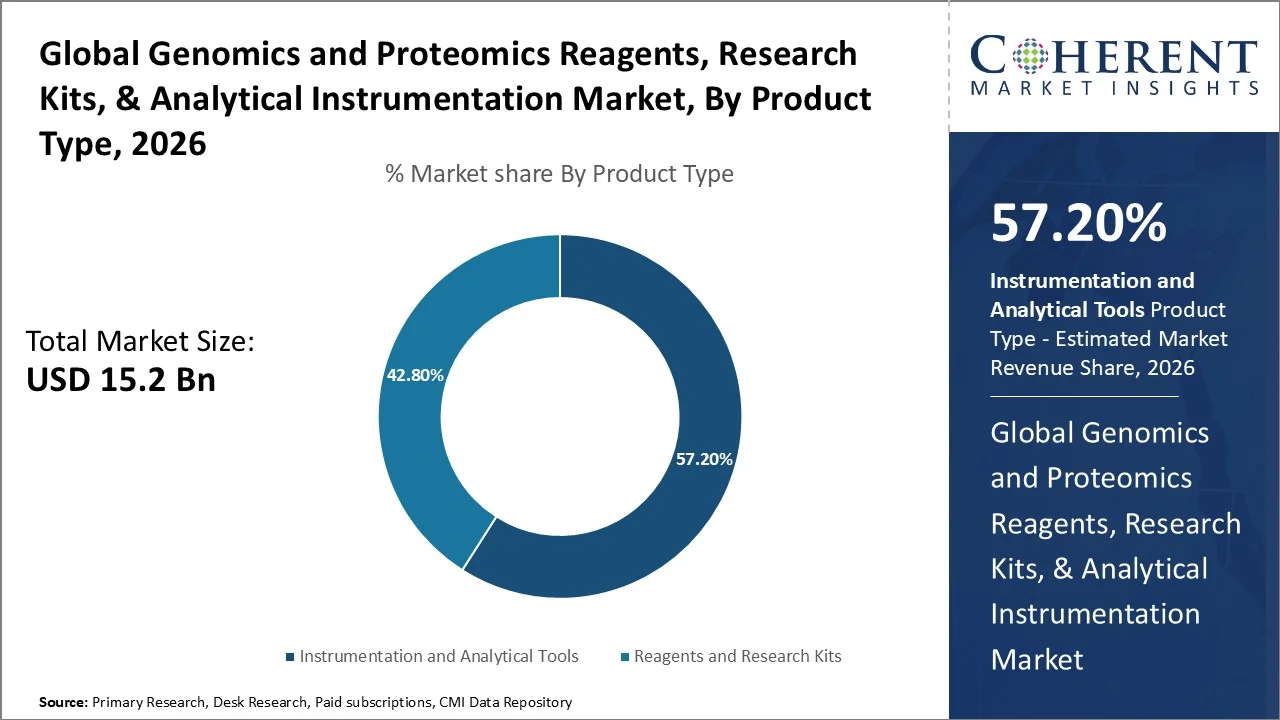
- Instrumentation and analytical tools are expected to account for the largest share of 57.2% in 2026, mainly owing to advancements in high‑throughput sequencing technologies and the increasing demand for precision medicine such as the U.S. All of Us Research Program, which collects data from over 1 million volunteers.
- On the basis of end user, pharmaceutical and biotechnology organizations hold the dominant share of 39.7% in 2026. The growth is due to their role in drug discovery and clinical trials. In 2024, the FDA approved 60 new molecular entities (NMEs), thereby propelling the demand for cutting-edge reagents as well as for analytical instruments.
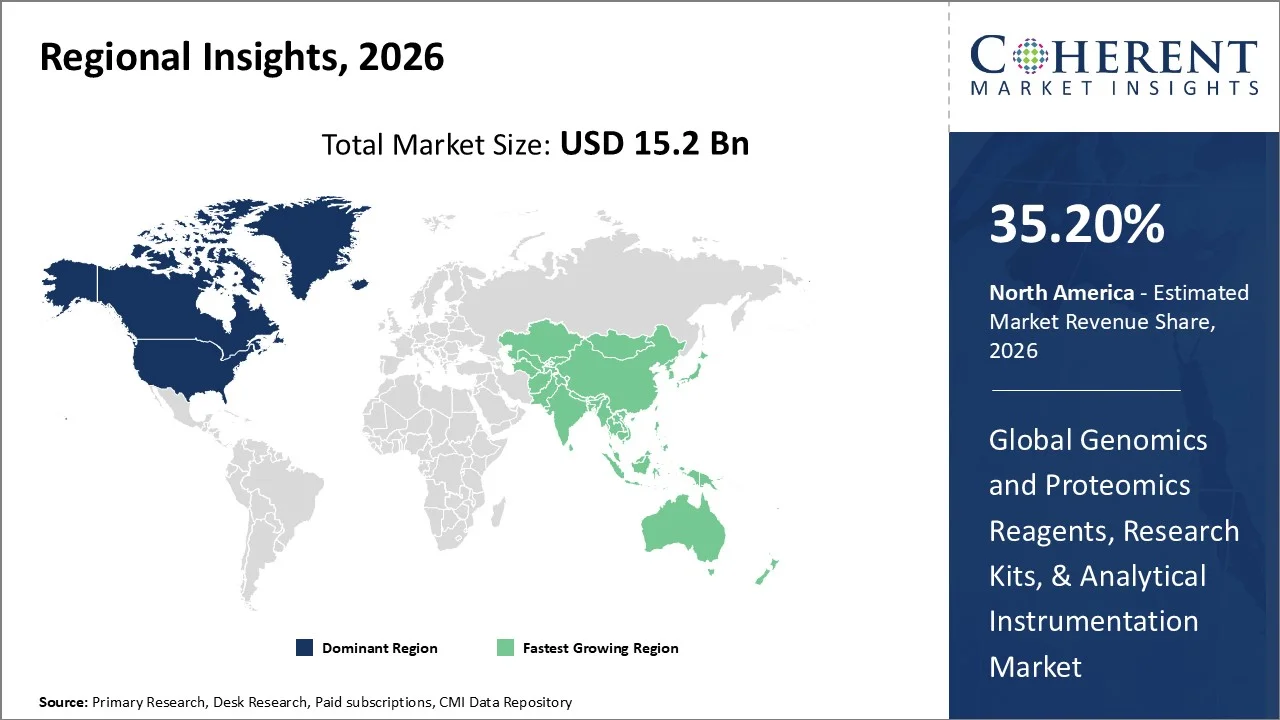
- North America is expected to acquire the leading share of 35.2% in 2026, primarily attributable to substantial investment in biomedical research along with early adoption of next-generation sequencing technologies. In 2025, the U.S. spending on medical research was anticipated to surpass USD 60 billion.
Segmental Insights
Why is Instrumentation and Analytical Tools Acquiring the Largest Market Share?
The instrumentation and analytical tools is projected to account for the largest genomics and proteomics reagents, research kits, & analytical instrumentation market share of 57.20% in 2026. The growth is attributable to capital-intensive nature of sequencing systems, mass spectrometers, and integrated analytical platforms used in large-scale omics research. The demand is being backed by the rise in genomics programs and installed capacity across the world. For instance, the NIH All of Us Research Program has made whole-genome sequences from more than 414,000 participants available, UK Biobank says its resource includes whole-genome sequencing data for 500,000 participants, and Illumina reports an active installed base of about 21,000 systems as of 2025.
In September 2025, Illumina launched Illumina Protein Prep, an NGS-based proteomics assay capable of measuring 9,500 unique human protein targets, and in November 2025 the company said the platform had already been adopted by more than 40 customers with over 40,000 samples processed. This kind of integrated instrument-plus-workflow development is accelerating adoption of advanced analytical systems and strengthening the leadership of instrumentation within the broader omics market.
- Current Industry Events of 2026
- Market Size Estimation
- Regional Breakdown
- Competitive Landscape
- Customer Intelligence
- Segmental Analysis
- Pricing Analysis
- Key Market Drivers, Challenges & Future Trends
- Customized Insights Section
Which End User segment dominates the market?
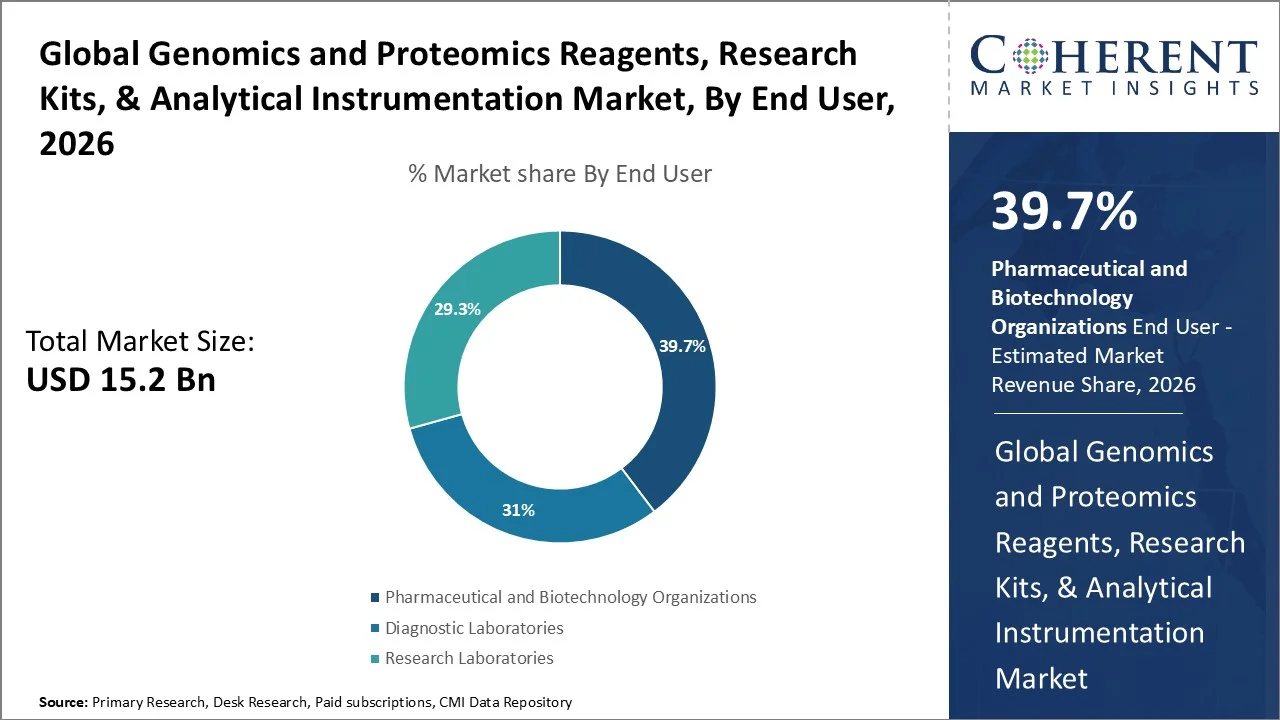
The pharmaceutical and biotechnology organizations account for the largest share of 39.7% in 2026. The segment’s growth is owing to their advanced research infrastructure, access to skilled molecular scientists, and ability to run large biomarker and drug-development programs. A 2025 PhRMA analysis reported global biopharmaceutical R&D investment of USD 276 billion across 4,191 companies in 2021. Similarly, the NIH All of Us Research Program provides data from more than 633,000 participants which includes whole genome sequences from over 414,000 participants. They are equipped with next-generation sequencing, mass spectrometry, PCR, and bioinformatics platforms for target discovery, biomarker validation, and translational studies.
In addition, these organizations manage end-to-end discovery pipelines, from early screening to companion diagnostic development, allowing them to purchase high volumes of reagents, sample-preparation kits, sequencing consumables, antibodies, and analytical instruments on a recurring basis.
The growing use of precision medicine and biomarker-guided therapies further drives segment growth. As of March 2026, the FDA maintained an updated Table of Pharmacogenomic Biomarkers in Drug Labeling, while ProteomeXchange had received 64,330 proteomics datasets through June 2025. This rising omics evidence base is further accelerating demand for genomics and proteomics reagents, research kits, and analytical instrumentation in pharmaceutical and biotechnology organizations.
Expansion of Precision Medicine Programs is set to revolutionize the Genomics and Proteomics Reagents Industry
The genomics and proteomics reagents, research kits, & analytical instrumentation industry in the United States is being transformed by the expansion of population-scale precision medicine programs. The NIH’s All of Us platform in today's date includes data from over more than 535,000 whole genome sequences. Also, there are more than 20,800 researchers utilizing its Researcher Workbench in early 2026.
Additionally, the NIH’s TOPMed program funds initiatives spanning whole-genome sequencing, tissue-level omics, single-cell multi-omics, and AI/ML. This increasing focus on comprehensive genomic and proteomic data is driving demand for reagents, prep kits, sequencing workflows, data storage, and instrumentation ready for high-scale, multi-omics research.
These advancements are changing the field, showing the need for modern analytical tools that support personalized medicine, helping to create better treatment plans and better clinical results.
Advancement of Single-Cell Multi-Omics Technologies: A major breakthrough in Genomics and Proteomics Reagents, Research Kits, & Analytical Instrumentation
The innovations in single‑cell multi‑omics technologies are transforming the genomics and proteomics reagents, research kits, & analytical instrumentation industry by enabling highly detailed profiling of individual cells in multiple molecular layers. Modern multi‑omics workflows can simultaneously measure genomic, transcriptomic, and proteomic features within the same cell, providing insights into cellular heterogeneity that bulk analyses cannot capture.
Key benchmarks demonstrating this shift are as follow. The Human Cell Atlas (HCA) has aggregated data from nearly 100 million cells across human tissues to map cell types and states. The Cancer Genome Atlas (TCGA) has generated >2.5 petabytes of multi
These breakthroughs are increasing demand for specialized reagents, validated research kits, and advanced analytical instruments capable of handling complex, high‑throughput multi‑omics workflows, thereby accelerating discovery and application across basic and translational research.
Current Events and Their Impact on the Genomics and Proteomics Reagents, Research Kits, & Analytical Instrumentation Market
Current Event | Description and its Impact |
2026 Clinical Laboratory Fee Schedule and PLA Code Updates in the U.S. |
|
NIH Controlled-Access Genomic Data Security Tightening and 2026 Draft Policy Revisions |
|
FDA Reversion of the U.S. Laboratory Developed Tests Rule |
|
Genomics and Proteomics Reagents, Research Kits, & Analytical Instrumentation Market Trends
- Falling DNA sequencing costs are accelerating the adoption of next-generation sequencing across translational research, clinical genomics, and public health laboratories. NHGRI notes that sequencing costs fell from about USD 95.3 million per human genome in 2001 to about USD 562 per human genome by 2021, which has materially improved the accessibility of sequencing consumables, library-prep kits, extraction reagents, and benchtop analytical systems.
- Large-scale national precision medicine programs are expanding routine demand for genomic reagents, sample-preparation kits, and sequencing platforms. NIH’s All of Us Researcher Workbench now features over 535,000 whole genome sequences, and its February 2025 data expansion increased available long-read sequences to more than 2,700, reinforcing demand for high-throughput workflows and integrated analytical instrumentation.
- Proteogenomics and multi-omics oncology research are increasing the use of proteomics reagents, assay kits, antibodies, labeling chemistries, and mass spectrometry-based analytical platforms. The U.S. National Cancer Institute states that CPTAC has released standardized genomic and proteomic data from more than 1,000 tumors across 10 cancer types, while TCGA molecularly characterized over 20,000 primary cancer and matched normal samples across 33 cancer types, supporting sustained research demand for integrated omics workflows.
- The rapid expansion of public genomic databases is increasing the need for faster sample processing, scalable data-generation workflows, and robust analytical systems. NIH’s GenBank release 269.0 in December 2025 contained 49.73 trillion bases and 6.03 billion records, up from 41.96 trillion bases and 5.56 billion records in March 2025, reflecting the growing intensity of genomics workflows that depend on recurring reagent and kit consumption.
- Continued federal support for genomics innovation is strengthening the long-term demand environment for reagents, kits, and instrumentation. NHGRI’s FY2025 Congressional Justification requested USD 663.7 million and stated that the funding would support advances in technology development, biological insights, and clinical applications, which continues to reinforce the market for genomics and proteomics research tools.
Regional Insights
North America Dominates Owing to Rapid Adoption of Cutting-Edge Technologies
North America account 35.20% market share in 2026. The segment’s growth is attributable to the rapid adoption of cutting-edge technologies and the region's established infrastructure in the life sciences sector. The growing demand for precision medicine and innovations in molecular diagnostics are continually constituting to the genomics and proteomics reagents, research kits, & analytical instrumentation market growth. The U.S., in particular, leads in genomics research and applications owing to high funding availability and a strong presence of pharmaceutical as well as biotechnology companies.
In 2025, the National Institutes of Health (NIH) set aside over USD 48 billion to support genomic research projects, building a stronger foundation for further growth. Additionally, biotechnology companies in the region are investing heavily in next-generation sequencing (NGS) technologies and proteomics-based tools, which are expected to boost the demand for reagents and research kits.
Important tech progress is driving this growth. For example, in June 2025, Thermo Fisher Scientific launched a revolutionary proteomics platform that quickens biomarker discovery, which is likely to strengthen proteomics research in different treatment fields. These innovations are poised to drive the Genomics and Proteomics Reagents, Research Kits, & Analytical Instrumentation Market forward, establishing North America as the primary growth engine for this sector.
Asia Pacific Genomics and Proteomics Reagents, Research Kits, & Analytical Instrumentation Market Trends
The Asia Pacific region is poised to be as the fastest-growing region through 2026-2033. The region’s growth is closely linked by increased demand for precision medicine and substantial investments in biotechnology research. Countries like China, India, as well as Japan are seeing a swift growth in genomic studies, aided by the region's improving research infrastructure.
In India, the National Institute of Biomedical Genomics has recently reported a notable surge in genomic sequencing projects, with more than 100,000 genomes sequenced per year. In China, the government has pledged over USD 1.2 billion in funding for genomic research as part of its 14th Five-Year Plan, thus improving capabilities for both genomics as well as proteomics. The precision medicine efforts in Japan are also increasing, with major institutions like RIKEN using proteomics to find cancer biomarkers.
Moreover, innovations in analytical instrumentation, like the advancement of mass spectrometry technology by researchers at the Chinese Academy of Sciences, are expected to minimize the errors in protein analysis by a major proportion, thereby streamlining research along with boosting the market share. These factors together foster market expansion, particularly in clinical and research settings in the region.
Increasing Demand for Precision Medicine is accelerating the Market Demand in United States
The United States Genomics and Proteomics Reagents, Research Kits, & Analytical Instrumentation Market is undergoing a period of robust expansion. The growth is propelled by several factors which includes rapid advancement of technology and the increasing demand for precision medicine. The adoption of advanced genomic technologies in both clinical diagnostics as well as research applications is also speeding up the market’s growth.
In April 2026, Thermo Fisher Scientific Inc joined forces with Precision Health Research, Singapore (PRECISE) to boost the PRECISE-SG100K study, one of the region’s most ambitious and diverse population-scale biobank projects. The partnership reflects increased investments from national population studies aiming to use proteomics to gain insights into real-time disease biology for earlier detection, prevention, and personalized care (customized treatment).
In addition, in early 2025, the FDA approved a new NGS-based diagnostic tool for the detection of various types of cancer, which is expected to have a substantial impact on the market. This approval demonstrates the growing incorporation of genomics technologies into mainstream healthcare, thereby boosting clinical adoption as well as the demand for related research kits and reagents.
China Genomics and Proteomics Reagents, Research Kits, & Analytical Instrumentation Market Trends
The Japan Genomics and Proteomics Reagents, Research Kits, & Analytical Instrumentation projected to grow significantly during the upcoming years. With China’s rapidly aging population, over 18% of the population will be over 60 by 2026, driving increasing demand for advanced diagnostics and treatments in genomics and proteomics.
The Chinese government’s 14th Five-Year Plan has placed a greater emphasis on biotechnology and omics technologies as critical areas for healthcare innovation, thus speeding up demand for genomic research tools and systems. The China National Genebank, a key player in generating and storing genomic data, is fostering demand for sequencing reagents and instruments.
Who are the Major Companies in Genomics and Proteomics Reagents, Research Kits, & Analytical Instrumentation Industry
Some of the major key players in Genomics and Proteomics Reagents, Research Kits, & Analytical Instrumentation Industry are Thermo Fisher Scientific, Agilent Technologies, Becton Dickinson & Company, Bio-Rad Laboratories, Inc., Bruker Corporation, Danaher Corporation, Illumina, Inc., Life Technologies Corporation, and Merck Millipore.
Key News
- In June 2025, Bruker Corporation announced it bought biocrates life sciences ag, based in Innsbruck, Austria. biocrates is a global leader in mass spectrometry (MS)-based kits, tests, software, and services for measuring metabolites and lipids, making metabolomics easier for labs worldwide.
- In January 2025, Thermo Fisher Scientific, the global leader in serving science, introduced Olink Reveal, setting a new standard for affordable, high-plex proteomics. This tool helps researchers identify circulating biomarkers for various applications at a lower cost and with fewer setup requirements.
Market Report Scope
Genomics and Proteomics Reagents, Research Kits, & Analytical Instrumentation Market Report Coverage
| Report Coverage | Details | ||
|---|---|---|---|
| Base Year: | 2025 | Market Size in 2026: | USD 15.2 Bn |
| Historical Data for: | 2020 To 2024 | Forecast Period: | 2026 To 2033 |
| Forecast Period 2026 to 2033 CAGR: | 12.7% | 2033 Value Projection: | USD 39.3 Bn |
| Geographies covered: |
| ||
| Segments covered: |
| ||
| Companies covered: | Thermo Fisher Scientific, Agilent Technologies, Becton Dickinson & Company, Bio-Rad Laboratories, Inc., Bruker Corporation, Danaher Corporation, Illumina, Inc., Life Technologies Corporation, and Merck Millipore. | ||
| Growth Drivers: |
| ||
| Restraints & Challenges: |
| ||
Analyst Opinion
- The genomics and proteomics markets are witnessing rapid growth due to the expansion of personalized medicine and clinical genomics. The use of multi-omics technologies in diagnostics, fueled by large-scale public health initiatives like the NIH All of Us program, is advancing precision medicine globally. As these tools become more integral to healthcare systems, the demand for high-throughput sequencing kits and proteomics assays continues to rise, particularly in emerging markets.
- Looking forward, government funding initiatives like the U.S. NIH and EU Horizon 2020 programs will continue to drive market growth. These programs are dedicated to advancing personalized medicine and public health genomics, which require cutting-edge genomics and proteomics tools. As precision medicine and molecular diagnostics become central to healthcare systems, the market for these tools is expected to grow significantly.
- The future of the Genomics and Proteomics Reagents, Research Kits, & Analytical Instrumentation Market looks promising, driven by the need for advanced sequencing technologies, CRISPR-based diagnostics, and mass spectrometry. Increased funding for personalized medicine, coupled with expanding global healthcare infrastructure, positions the market for strong, sustained growth. Advances in genomic tools, along with rising health awareness, make this market primed for future expansion.
Speak to the analyst
Want personalized insights?
Take the findings above to one of our principal consultants, or have the report rebuilt around the segments, geographies and competitors you actually track.
Genomics and Proteomics Reagents, Research Kits, & Analytical Instrumentation Market Segmentation
- By Product Type (Revenue, USD Bn, 2021-2033)
- Instrumentation and Analytical Tools
- Chromatography
- Mass Spectrometry
- Thermal Cyclers
- Next Gen Sequencing
- Reagents and Research Kits
- Sample Prep Kits
- Electrophoresis Kits
- Purification Kits
- BioChips
- Instrumentation and Analytical Tools
- By End User (Revenue, USD Bn, 2021-2033)
- Diagnostic Laboratories
- Pharmaceutical and Biotechnology Organizations
- Research Laboratories
- Global Genomics and Proteomics Reagents, Research Kits, & Analytical Instrumentation Market, By Region (Revenue, USD Bn, 2021-2033)
- North America
- U.S.
- Canada
- Latin America
- Brazil
- Mexico
- Argentina
- Rest of Latin America
- Europe
- Germany
- U.K.
- France
- Italy
- Spain
- Russia
- Rest of Europe
- Asia Pacific
- China
- India
- Japan
- Australia
- South Korea
- ASEAN
- Rest of Asia Pacific
- Middle East
- GCC
- Israel
- Rest of Middle East
- Africa
- South Africa
- Central Africa
- North Africa
- North America
Sources
Primary Research Interviews
- Genomics Reagents Manufacturers
- Proteomics Reagents and Research Kits Manufacturers
- Analytical Instrumentation Manufacturers
- Laboratory Automation and Workflow Solution Providers
- Research Scientists and Molecular Biology Experts
- Biotechnology and Pharmaceutical R&D Professionals
- Clinical and Diagnostic Laboratory Experts
- Academic and Research Institute Professionals
- CRO and Contract Research Service Providers
- Others
Databases
- Bloomberg Terminal
- Thomson Reuters Eikon
- Factiva
- PubMed
- ClinicalTrials.gov
- OECD Data
- World Bank Open Data
- Others
Magazines
- Genetic Engineering & Biotechnology News
- The Scientist
- BioTechniques
- Lab Manager Magazine
- SelectScience
- Drug Discovery World
- Others
Journals
- Nature Biotechnology
- Nature Genetics
- Proteomics
- Journal of Proteome Research
- Genomics
- Analytical Chemistry
- Bioinformatics
- Journal of Molecular Diagnostics
- Others
Newspapers
- Financial Times
- The Wall Street Journal
- Reuters
- Bloomberg News
- Business Standard
- The Economic Times
- Others
Associations
- Human Proteome Organization (HUPO)
- American Society for Biochemistry and Molecular Biology (ASBMB)
- American Association for Clinical Chemistry (AACC)
- Association of Biomolecular Resource Facilities (ABRF)
- International Society for Computational Biology (ISCB)
- European Proteomics Association (EuPA)
- Others
Public Domain Sources:
- U.S. Food and Drug Administration (FDA)
- U.S. National Institutes of Health (NIH)
- National Center for Biotechnology Information (NCBI)
- Centers for Disease Control and Prevention (CDC)
- European Medicines Agency (EMA)
- World Health Organization (WHO)
- National Human Genome Research Institute (NHGRI)
- Genome.gov
- Others
Proprietary Elements
- CMI Data Analytics Tool
- Proprietary CMI Existing Repository of Information for the Last 8 Years
Get access to 250+ pages report
Every segment, forecast, competitor profile and data table behind the analysis above — available for instant download.
- ESOMAR Member
- ISO 9001:2015 Certified
- D-U-N-S Registered
- GDPR & CCPA Compliant
Missing comfort of reading report in your local language? Find your preferred language:
Transform your Strategy with Exclusive Trending Reports
Frequently Asked Questions
The Genomics and Proteomics Reagents, Research Kits, & Analytical Instrumentation Market is expected to reach USD 39.3 Bn in 2033.
Major players operating in the global Genomics and Proteomics Reagents, Research Kits, & Analytical Instrumentation Market include Thermo Fisher Scientific, Agilent Technologies, Becton Dickinson & Company, Bio-Rad Laboratories, Inc., Bruker Corporation, Danaher Corporation, Illumina, Inc., Life Technologies Corporation, and Merck Millipore.
The high costs of advanced instruments and reagents, which limit adoption by smaller research labs are the key factors hampering growth of the market.
Expansion of precision medicine and large‑scale genomic initiatives like All of Us and TCGA, alongside the adoption of single‑cell and spatial multi‑omics technologies for in‑depth cellular profiling are the key factors driving growth of the market.
The Genomics and Proteomics Reagents, Research Kits, & Analytical Instrumentation Market is anticipated to grow at a CAGR of 12.7% between 2026 and 2033.
Among regions, North America is expected to account for a largest market share in the global Genomics and Proteomics Reagents, Research Kits, & Analytical Instrumentation Market over the forecast period.