

Humira Biosimilar Market Analysis & Forecast: 2026-2033
Humira Biosimilar Market is estimated to be valued at USD 1,942.6 Mn in 2026 and is expected to reach USD 9,848.8 Mn in 2033, exhibiting a compound annual growth rate (CAGR) of 26.1% from 2026 to 2033.
Key Takeaways
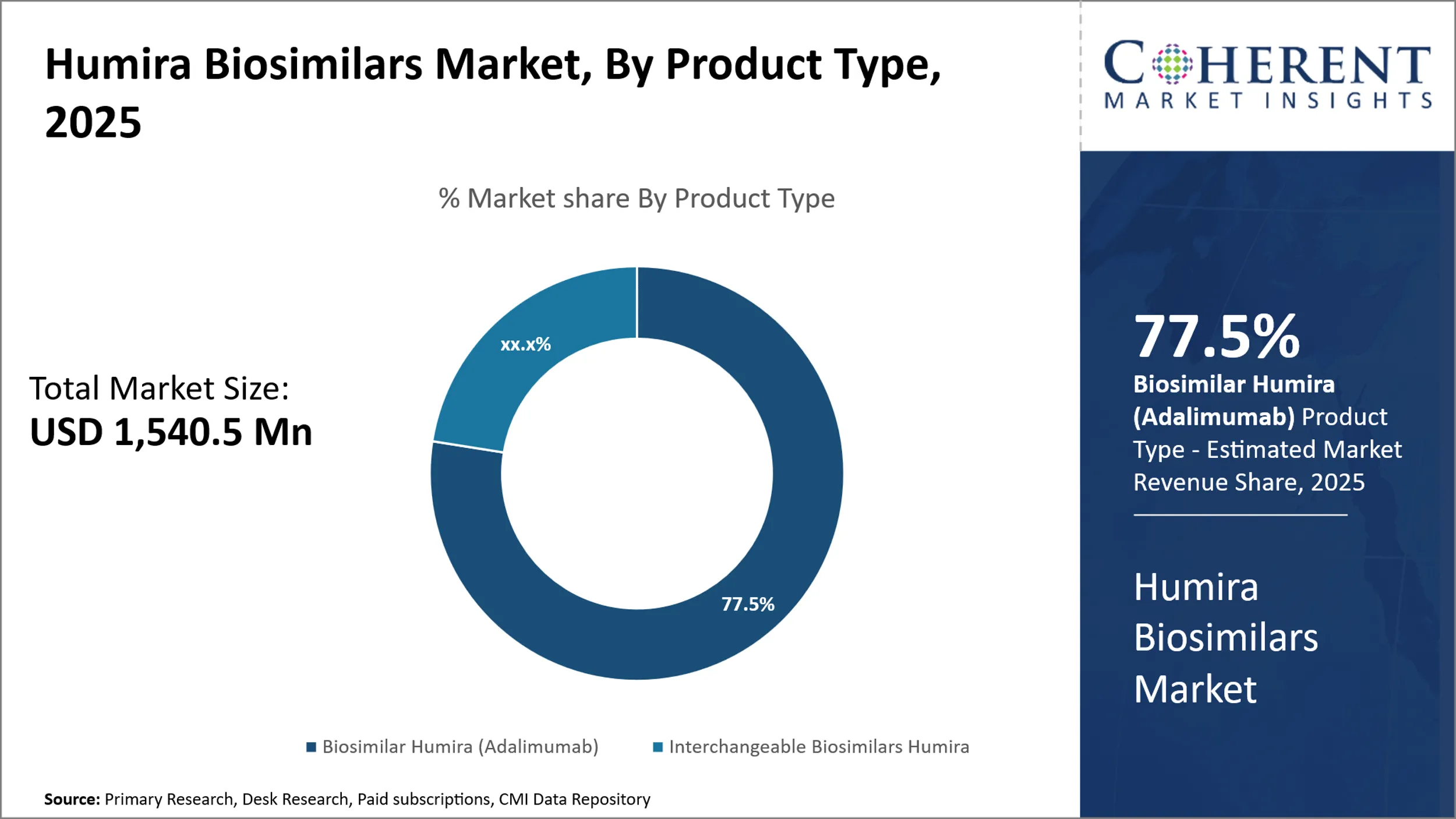
- By Product Type, the Biosimilar Humira segment is projected to lead the global Humira biosimilar market with a significant 78.5% market share by 2026.
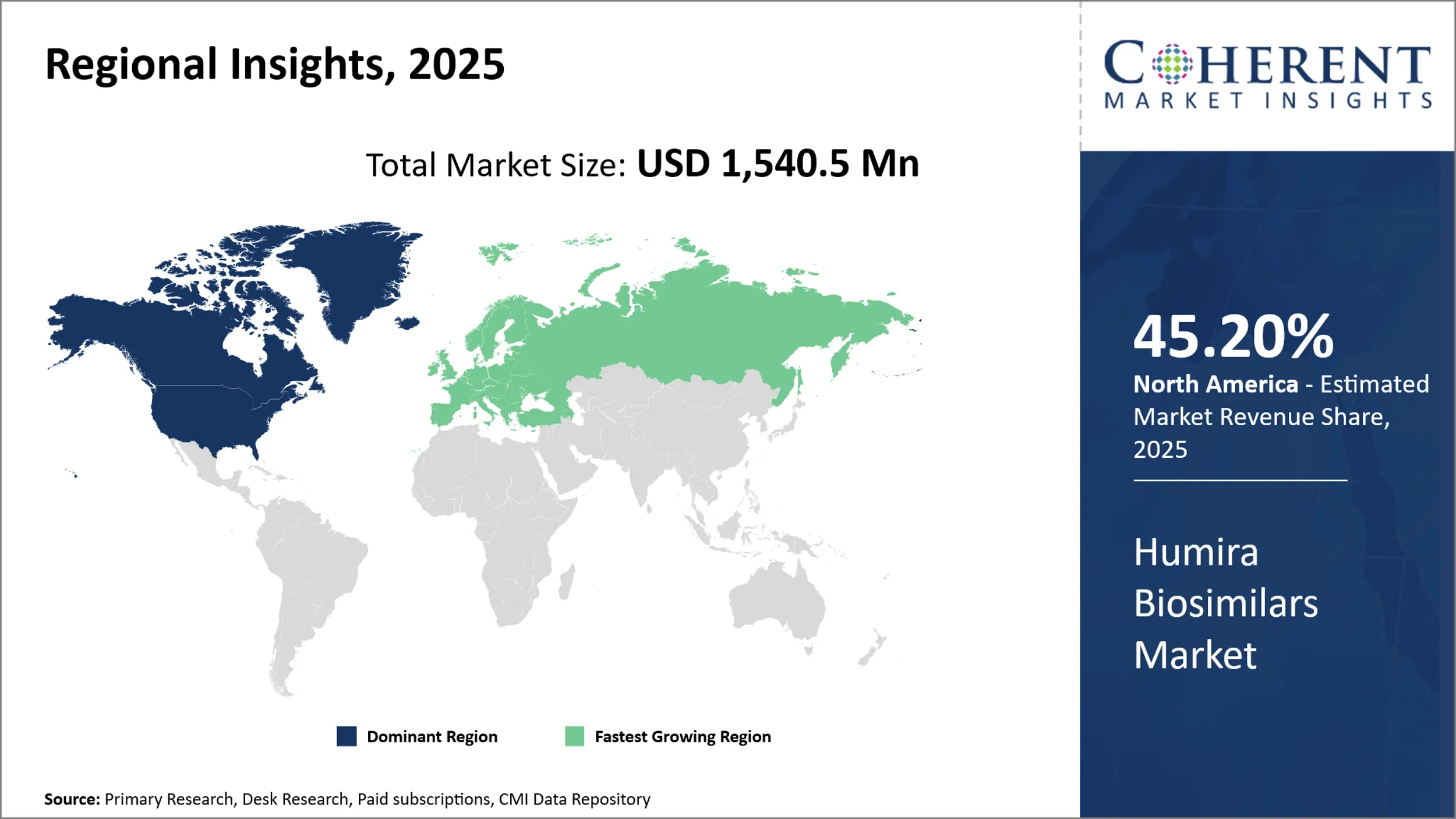
- North America, spearheaded by the U.S., is expected to hold the largest regional share of 45.2% in 2026.
- Europe remains a global pioneer in biosimilar adoption, anticipated to capture approximately 30.7% of the global market share in 2026.
- The Asia Pacific region is poised for rapid expansion, projected to account for around 16.8% of the market share in 2026.
Market Overview
The surge in demand for low-cost substitutes to the original Humira medication on the market for treating autoimmune diseases has spike the fill of Amgen which launched its Amjevita biosimilar worldwide in 2024. Increased biosimilar awareness and the expiration of numerous patents are propelling market growth. However, regulatory obstacles and physician acceptance may slow down the rate of adoption.
Humira is a biologic drug used to treat various autoimmune diseases, including rheumatoid arthritis and psoriasis, holds the distinction of being the top-selling biologic drug globally, generating annual sales exceeding USD 20 billion.
Current Events and Its Impact on the Humira Biosimilar Market
Event | Description and Impact |
U.S. Patent Cliff and Market Entry Timeline |
|
European Biosimilar Market Maturation and Pricing Dynamics |
|
China's Biosimilar Regulatory Reforms and Market Access |
|
Segmental Insights
- Current Industry Events of 2026
- Market Size Estimation
- Regional Breakdown
- Competitive Landscape
- Customer Intelligence
- Segmental Analysis
- Pricing Analysis
- Key Market Drivers, Challenges & Future Trends
- Customized Insights Section
Global Humira Biosimilar Market Insights, By Product Type
By product type, the Biosimilar Humira segment is expected to lead the global Humira biosimilar market with a commanding share of 78.5% in 2026. This leading position is driven by increasing adoption of cost-effective alternatives to the original Humira biologic, especially in regions with strong regulatory support for biosimilars.
The biosimilar segment benefits from growing awareness among healthcare providers and patients about biosimilars’ comparable efficacy and safety profiles, making it a preferred choice for chronic conditions such as rheumatoid arthritis and psoriasis.
The Original Humira segment, while still significant, faces challenges from patent expirations and competitive pricing pressures, which accelerate the uptake of biosimilars. However, its established brand presence and extensive clinical data continue to support steady demand in some markets.
Emerging New Formulations or Next-Generation Products are also contributing to the market, driven by innovations aiming to improve patient convenience through alternative delivery methods or enhanced efficacy. These new products, although currently holding a smaller share, are expected to gain traction over the forecast period.
The Others category includes various ancillary products and off-label biosimilar uses, catering to niche therapeutic applications or regional preferences.
Regional Insights
North America Humira Biosimilar Market Analysis and Trends
North America, led predominantly by the U.S., holds a commanding 45.20% share of the global Humira biosimilar market in 2026. Although the introduction of biosimilars in this region faced initial challenges due to patent protections and complex regulatory frameworks, the expiration of Humira’s patents has unlocked significant growth opportunities.
The region’s well-established pharmaceutical industry, strong healthcare infrastructure, and rising demand for cost-effective autoimmune treatments underpin the increasing adoption of biosimilars. Ongoing efforts by regulatory agencies to streamline biosimilar approvals are further accelerating market expansion.
Europe Humira Biosimilar Market Analysis and Trends
Europe stands as a pioneer in biosimilar adoption, capturing approximately 30.7% of the global market share in 2026. The region’s early establishment of clear regulatory pathways and supportive policies has fostered a competitive market landscape with multiple approved and launched Humira biosimilars.
European countries benefit from heightened biosimilar uptake driven by healthcare cost containment initiatives and growing physician acceptance. Germany, the U.K., and France lead the regional market, reflecting strong pharmaceutical innovation and robust healthcare systems.
Asia Pacific Humira Biosimilar Market Analysis and Trends
Asia Pacific is poised for significant growth in the Humira biosimilar market, accounting for around 16.8% share in 2026. Countries such as Japan, South Korea, and Australia are witnessing increasing biosimilar penetration, propelled by the rising prevalence of autoimmune diseases and the pressing need for affordable treatment options.
While regulatory environments and market access vary across the region, ongoing improvements in approval processes and expanding healthcare infrastructure support growth. Emerging markets within Asia Pacific also present untapped potential for biosimilar adoption.
Dominating Countries in the Humira Biosimilar Market
United States
The U.S. is the largest market in North America, driven by high healthcare expenditure, increasing patient awareness, and expanding biosimilar acceptance following patent expirations. The U.S. regulatory framework is evolving to facilitate biosimilar market entry.
Canada
Canada’s growing biosimilar market benefits from government initiatives promoting cost-effective healthcare and increasing access to biosimilar therapies.
Germany
Germany leads Europe’s Humira biosimilar market, supported by early biosimilar adoption, favorable reimbursement policies, and a strong pharmaceutical industry.
United Kingdom
The U.K. exhibits rapid biosimilar uptake driven by NHS cost-saving programs and progressive regulatory guidance.
France
France remains a key European market with expanding biosimilar penetration fueled by healthcare reforms and increasing patient access.
Japan
Japan’s expanding pharmaceutical market and rising autoimmune disease prevalence underpin growth in the Humira biosimilar segment, despite cautious regulatory pathways.
South Korea
South Korea’s biosimilar market is growing due to government support, increasing healthcare expenditure, and improving regulatory frameworks.
Market Report Scope
Humira Biosimilar Market Report Coverage
| Report Coverage | Details | ||
|---|---|---|---|
| Base Year: | 2025 | Market Size in 2026: | USD 1,942.6 Mn |
| Historical Data for: | 2020 To 2024 | Forecast Period: | 2026 To 2033 |
| Forecast Period 2026 to 2033 CAGR: | 26.1% | 2033 Value Projection: | USD 9,848.8 Mn |
| Geographies covered: |
| ||
| Segments covered: |
| ||
| Companies covered: | Amgen Inc., Samsung Bioepis Co., Ltd., Sandoz International GmbH (Novartis AG), Mylan N.V., Boehringer Ingelheim International GmbH, Pfizer Inc., Fresenius Kabi AG, Coherus BioSciences, Inc., Biogen Inc., AbbVie Inc., Celltrion Inc., Rani Therapeutics Holdings, Inc., Teva Pharmaceutical Industries Ltd, Merck & Co., Inc., Viatris Inc., and Alvotech | ||
| Growth Drivers: |
| ||
| Restraints & Challenges: |
| ||
Global Humira Biosimilar Market Drivers
- Patent expiration
The expiration of the patents protecting humira paved the way for the entry of biosimilars. Once the patents expire, it allows other pharmaceutical companies to develop and market biosimilar versions of humira, creating competition in the market.
- Cost savings
Biosimilars offer a more cost-effective alternative to the reference biologic drug. With the increasing demand for affordable healthcare, biosimilars provide an opportunity to reduce treatment costs for patients, healthcare systems, and payers. This cost-saving potential is a significant driver for the adoption of humira biosimilars. For instance, in October 2023, Celltrion USA, Inc., a biopharmaceutical company, announced its FDA-approved biosimilar, YUFLYMA (adalimumab-aaty), has been added to CarePartners Specialty Pharmacy Cost Savings Programs.
YUFLYMA is a high-concentration (100mg/mL) and citrate-free formulation of the Humira (adalimumab) biosimilar. CarePartners and its strategic partners will offer and distribute YUFLYMA as the lowest net cost high-concentration Humira (adalimumab) biosimilar to over 10 million plan members.
- Increasing prevalence of autoimmune diseases
Autoimmune diseases, such as rheumatoid arthritis, psoriasis, and crohn's disease, are on the rise globally. The growing prevalence of these conditions drives the demand for effective and accessible treatments, including biosimilars of humira, which are proven therapies for autoimmune diseases.
- Favorable regulatory environment
Regulatory agencies in various regions had established guidelines and pathways for the approval and market access of biosimilars. These frameworks provide clarity and facilitate the development, evaluation, and commercialization of humira biosimilars. Favorable regulatory environments encourage pharmaceutical companies to invest in the development of biosimilars.
Global Humira Biosimilar Market Opportunities
- Increased access to treatment
The availability of humira biosimilars offers an opportunity to improve access to treatment for patients with autoimmune diseases. Biosimilars provide a more affordable alternative to the reference biologic drug, allowing a broader population to benefit from effective therapies.
- Market expansion and competitiveness
The introduction of humira biosimilars creates competition in the market, thereby driving innovation and cost optimization. This competition encourages pharmaceutical companies to develop and launch biosimilars, thus leading to a more competitive landscape. It also promotes market growth and the development of a diverse range of treatment options for patients.
- Enhanced treatment choices
The availability of humira biosimilars expands the range of treatment choices for physicians and patients. Physicians can select from multiple biosimilar options based on factors such as patient needs, pricing, and clinical evidence. Patients can benefit from a wider selection of therapies which are tailored for their specific conditions and preferences.
- Global market expansion
The humira biosimilar market presents opportunities for global expansion. As regulatory pathways and guidelines for biosimilars continue to evolve and improve worldwide, pharmaceutical companies can seek approvals in various regions, thus tapping into new markets and reaching a larger patient population.
Global Humira Biosimilar Market Trends
- Regulatory approvals and market entry
Regulatory agencies worldwide have established pathways and guidelines for the approval and market entry of biosimilars, including those for humira. The number of regulatory approvals for humira biosimilars has been growing, allowing for expanded market availability and adoption.
- Market expansion and regional variations
The humira biosimilar market is expanding globally, with biosimilars becoming available in various regions. Europe has been at the forefront of biosimilar adoption, with a relatively higher number of approved humira biosimilars. However, other regions, including North America, Asia Pacific, and Latin America, are also witnessing the entry and growth of humira biosimilars.
- Physician and patient acceptance
As physicians gain more experience and confidence in prescribing biosimilars, biosimilar acceptance and adoption are increasing. Patient acceptance of biosimilars is also growing, driven by factors such as positive clinical outcomes, cost savings, and improved access to treatment options.
- Collaborations and partnerships
Collaborative partnerships between pharmaceutical companies, healthcare providers, and payers are emerging to drive the development, market access, and adoption of humira biosimilars. Such collaborations aim to improve patient access, education, and awareness about biosimilars, as well as address potential barriers to their uptake.
Analyst Viewpoint
- The Humira biosimilar market signifies a transformative shift in the global biologics landscape, primarily driven by the expiration of adalimumab patents across key regions. A major market driver is the healthcare sector’s urgent need to curb pharmaceutical spending, as biosimilars deliver substantial cost savings while maintaining therapeutic efficacy comparable to the original Humira. The rising prevalence of autoimmune disorders like rheumatoid arthritis, Crohn’s disease, and psoriasis continues to expand the demand for adalimumab therapies.
- Nevertheless, the market faces notable challenges. Complex regulatory pathways require extensive clinical trials to demonstrate biosimilarity, while physician hesitancy to switch patients from established biologics limits uptake. Additionally, patent litigation strategies and manufacturing complexities inherent in monoclonal antibodies pose barriers to new entrants.
- Despite these restraints, significant opportunities arise through strategic collaborations between biosimilar developers and healthcare payers aiming to expand formulary options. Increasing biosimilar acceptance among healthcare professionals and supportive government policies foster favorable conditions for growth.
Recent Developments
- In July 2023, Biocon Biologics Ltd (BBL), a Biocon Ltd subsidiary, announced that HULIO® (adalimumab-fkjp), its biosimilar to Humira®, is available to U.S. patients, following five years of use in Europe and two years in Canada.
Acquisition and Partnerships
- In July 2023, Teva Pharmaceuticals, Inc., a global leader in generic and innovative medicines and Alvotech, a global biotech company specializing in the development and manufacture of biosimilar medicines for patients worldwide, announced that they have agreed to expand their existing strategic partnership agreement. Teva Pharmaceuticals, Inc. will also acquire subordinated convertible bonds to be issued by Alvotech. The partners continue working closely on matters concerning pending approval in the U.S. for AVT02, an interchangeable high-concentration biosimilar candidate for humira (adalimumab). The existing strategic partnership agreement also includes four other biosimilar candidates, one of which is AVT04, a proposed biosimilar for Stelara (ustekinumab), which is pending U.S. Food and Drug Administration (FDA) approval.
- In June 2023, Rani Therapeutics Holdings, Inc., a clinical-stage biotherapeutics company focused on the oral delivery of biologics and drugs, announced that the company has expanded its partnership with Celltrion, Inc., a biopharmaceutical company, by entering into an agreement for the development of RT-105, an orally administered adalimumab biosimilar.
- In June 2023, Mark Cuban Cost Plus Drug Company, a public benefit corporation, and Coherus BioSciences, Inc., a global biosimilar company, announced plans to offer Mark Cuban Cost Plus Drug Company customers YUSIMRY (adalimumab-aqvh), a biosimilar of HUMIRA (adalimumab injection), in July 2023. Mark Cuban Cost Plus Drug Company plans to offer YUSIMRY to its customers at a price of US$ 569.27 plus dispensing and shipping fees starting in July 2025.
Market Segmentation
- By Product Type (Revenue, USD Mn, 2021 - 2033)
- Biosimilar Humira (Adalimumab)
- Interchangeable Biosimilar Humira
- By Indication (Revenue, USD Mn, 2021 - 2033)
- Rheumatoid Arthritis
- Psoriasis
- Crohn's Disease
- Ulcerative Colitis
- Ankylosing Spondylitis
- Juvenile Idiopathic Arthritis
- Other Autoimmune Conditions
- By Patient Age (Revenue, USD Mn, 2021 - 2033)
- Adult Patients
- Pediatric Patients
- Geriatric Patients
- By Distribution Channel (Revenue, USD Mn, 2021 - 2033)
- Hospital Pharmacies
- Retail Pharmacies
- Online Pharmacies
- By Region (Revenue, USD Mn, 2021 - 2033)
- North America
- U.S.
- Canada
- Latin America
- Brazil
- Argentina
- Mexico
- Rest of Latin America
- Europe
- Germany
- U.K.
- Spain
- France
- Italy
- Russia
- Rest of Europe
- Asia Pacific
- China
- India
- Japan
- Australia
- South Korea
- ASEAN
- Rest of Asia Pacific
- Middle East
- GCC Countries
- Israel
- Rest of Middle East
- Africa
- South Africa
- North Africa
- Central Africa
- Top companies in Global Humira Biosimilar Market
- Amgen
- Samsung Bioepis Co., Ltd.
- Sandoz International GmbH (Novartis AG)
- Mylan N.V.
- Boehringer Ingelheim International GmbH
- Pfizer Inc.
- Fresenius Kabi AG
- Coherus BioSciences, Inc.
- Biogen Inc.
- AbbVie Inc.
- Celltrion Inc.
- Rani Therapeutics Holdings, Inc.
- Teva Pharmaceutical Industries Ltd.
- Merck & Co., Inc.
- Viatris Inc.
- Alvotech
Sources
Primary Research Interviews
- Pharmaceutical Industry Executives
- Regulatory Affairs Specialists
- Healthcare Providers and Physicians
- Biosimilar Manufacturers
- Others
Databases
- FDA Orange Book Database
- EMA European Public Assessment Reports (EPAR)
- WHO Global Health Observatory
- IQVIA Healthcare Database
- Others
Magazines
- BioPharma Dive
- Pharmaceutical Executive
- BioWorld Intelligence
- Biosimilar Development
- Others
Journals
- Nature Biotechnology
- BioDrugs Journal
- Journal of Pharmaceutical Sciences
- Others
Newspapers
- The Wall Street Journal
- Financial Times
- Reuters Health News
- Bloomberg Pharmaceutical News
- Others
Associations
- Association for Accessible Medicines (AAM)
- European Medicines Agency (EMA)
- Biosimilars Council
- International Generic and Biosimilar Medicines Association (IGBA)
- Others
Public Domain Sources
- FDA Drug Approvals and Databases
- Clinical Trials Registry (ClinicalTrials.gov)
- Patent and Trademark Office Records
- SEC Filing Reports
- Others
Proprietary Elements
- CMI Data Analytics Tool
- Proprietary CMI Existing Repository of information for last 8 years
*Definition: Humira biosimilars are highly similar versions of the biologic drug humira (adalimumab) that have been developed and approved following the expiration of humira's patents. These biosimilars are designed to have comparable efficacy, safety, and quality to humira and provide more affordable treatment options for patients with autoimmune diseases such as rheumatoid arthritis, psoriasis, and crohn's disease.
Get access to 250+ pages report
Every segment, forecast, competitor profile and data table behind the analysis above — available for instant download.
- ESOMAR Member
- ISO 9001:2015 Certified
- D-U-N-S Registered
- GDPR & CCPA Compliant
Missing comfort of reading report in your local language? Find your preferred language:
Transform your Strategy with Exclusive Trending Reports
Frequently Asked Questions
The Humira Biosimilar Market size is estimated to be valued at USD 1,942.6 Mn in 2026, and is expected to reach USD 9,848.8 Mn by 2033.
The CAGR of the global Market is projected to be 26.1% from 2026 to 2033.
The major factors driving the growth of the market are patent expiration, cost savings, increasing prevalence of autoimmune diseases, and favorable regulatory environment.
The leading product type segment in the market is biosimilar humira (adalimumab).
The major players operating in the market include Amgen Inc., Samsung Bioepis Co., Ltd., Sandoz International GmbH (Novartis AG), Mylan N.V., Boehringer Ingelheim International GmbH, Pfizer Inc., Fresenius Kabi AG, Coherus BioSciences, Inc., Biogen Inc., AbbVie Inc., Celltrion Inc., Rani Therapeutics Holdings, Inc., Teva Pharmaceutical Industries Ltd, Merck & Co., Inc., Viatris Inc., and Alvotech.
North America is expected to lead the market.
There are over a dozen biosimilars approved for Humira globally.