

Europe Allogeneic Human Chondrocyte Market Size and Share Analysis - 2026 To 2033
The Europe allogenic human chondrocyte market is anticipated to grow at a CAGR of 10.4% with USD 3,122.1 Mn in 2026 and is expected to reach USD 6,161.9 Mn in 2033. The Europe allogeneic human chondrocyte market is driven by the high burden of osteoarthritis (OA) and musculoskeletal disorders among aging populations, particularly knee and hip OA, where prevalence reaches about 10% for knee and 6% for hip in Europe, as reported in a systematic review published in January 2026. In July 2022, according to the data published by the WHO, musculoskeletal conditions constitute a leading cause of disability and rehabilitation need across the Europe region. Increasing demand for regenerative therapies reflects unmet clinical needs and growing orthopedic interventions.
Source: Springer Nature; WHO
Key Takeaways
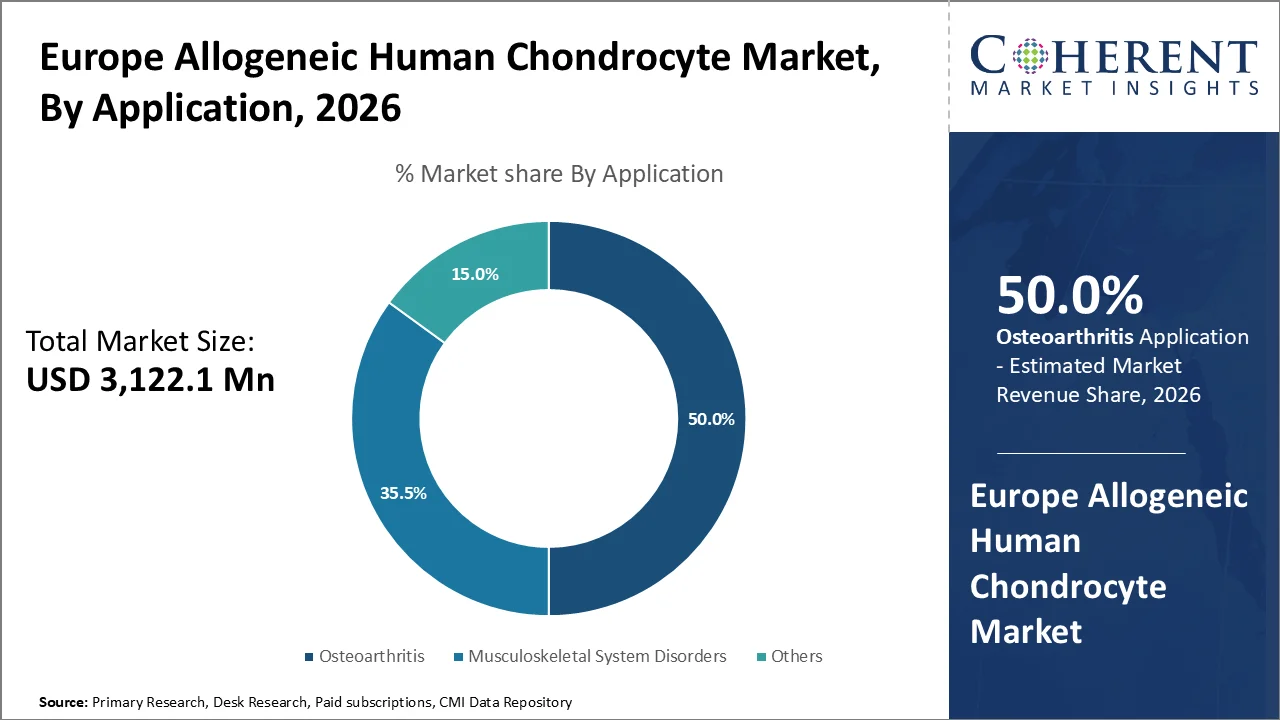
- Osteoarthritis is expected to account the largest share of 50.0% in 2026. The osteoarthritis (OA) segment dominates the allogeneic human chondrocyte market due to the high disease burden of OA. For instance, in January 2026, according to the data published by the National Center for Biotechnology Information (PMC/NCBI), a systematic review of more than 6.7 Mn people published showed that hip OA impacts approximately 6% of adults in Europe and knee OA impacts over 10%. This disease explains the high number of hip and knee replacements in EU countries and, thus, is representative of a significant demand for regenerative treatments.
Source: NCBI
- Based on end user, hospitals will dominate with 50.0% in 2026, because most osteoarthritis and musculoskeletal treatments occur in hospital settings and high rates of joint replacement surgeries performed in hospitals for severe OA cases in 2026, reflecting greater clinical capacity and comprehensive care. For instance, according to Eurostat surgical statistics, in 2022 (the most recent detailed EU data available), hip replacements were performed at a rate of about 326.2 per 100 000 inhabitants in Germany, with similarly high frequencies (282–302 per 100 000) in Austria, Denmark, and Belgium reflecting the high hospital procedural volume for osteoarthritis‑related joint surgery that continued into 2024 trends.
- Germany is expected to acquire the dominant share of 30.0% in 2026, attributed to high healthcare investment, prevalence of osteoarthritis, advanced medical infrastructure, regulatory support and research and clinical trial. In March 2026, the European Medicines Agency- EMA Committee for Advanced Therapies (CAT) granted ATMP designation to a new regenerative therapy, enabling accelerated reviews and conditional marketing authorization, supporting quicker patient access to advanced cell‑based treatments.
Segmental Insights
Why is Osteoarthritis Acquiring the Largest Market Share?
Osteoarthritis is projected to account for the largest share of cognitive systems spending in 2026, representing approximately 50.0% of the total volume. The osteoarthritis (OA) segment is the dominant application segment in the Europe Allogeneic Human Chondrocyte Market due to the increasing prevalence of Osteoarthritis among the aging population and the high demand for effective, long-term solutions for joint pain and mobility. OA, particularly in the knee, is a leading cause of disability in Europe, with millions of people affected annually. The limitations of traditional treatments, such as pain management and invasive surgeries, have driven interest in allogeneic human chondrocyte therapies. These therapies offer the potential for regenerative healing, addressing cartilage degeneration and restoring joint function, making them a highly sought-after treatment option for Osteoarthritis patients. The growing focus on minimally invasive, cost-effective regenerative therapies also enhances the segment's dominance. A 2026 systematic review estimated that the pooled prevalence of knee osteoarthritis in Europe is approximately 10% (95% CI: 7–14%), making it one of the most common joint disorders across the continent. Knee Osteoarthritis prevalence varied by region, reaching up to 19% in Eastern Europe, highlighting its significant burden among adults. Hip Osteoarthritis affected around 6% of the European population in the same analysis. Furthermore, in 2025, according to the data published by the Oxford University Press, population‑level data show that older adults in Germany (aged over 60) have a hip and knee OA prevalence of roughly 21.8%, with higher rates in women at 23.9%.
Moreover, in 2026, according to the data published by the National Institute for Health and Care Excellence, in the UK, it is estimated that 10 million people are affected by Osteoarthritis, with 6 million women and 4 million men experiencing the condition. Of these, 5.4 million people are impacted by knee Osteoarthritis specifically, making it one of the most common joint diseases. Additionally, 3.2 million people suffer from Osteoarthritis in other joints, such as the hip and hand.
- Current Industry Events of 2026
- Market Size Estimation
- Regional Breakdown
- Competitive Landscape
- Customer Intelligence
- Segmental Analysis
- Pricing Analysis
- Key Market Drivers, Challenges & Future Trends
- Customized Insights Section
Hospitals hold the Largest Market Share
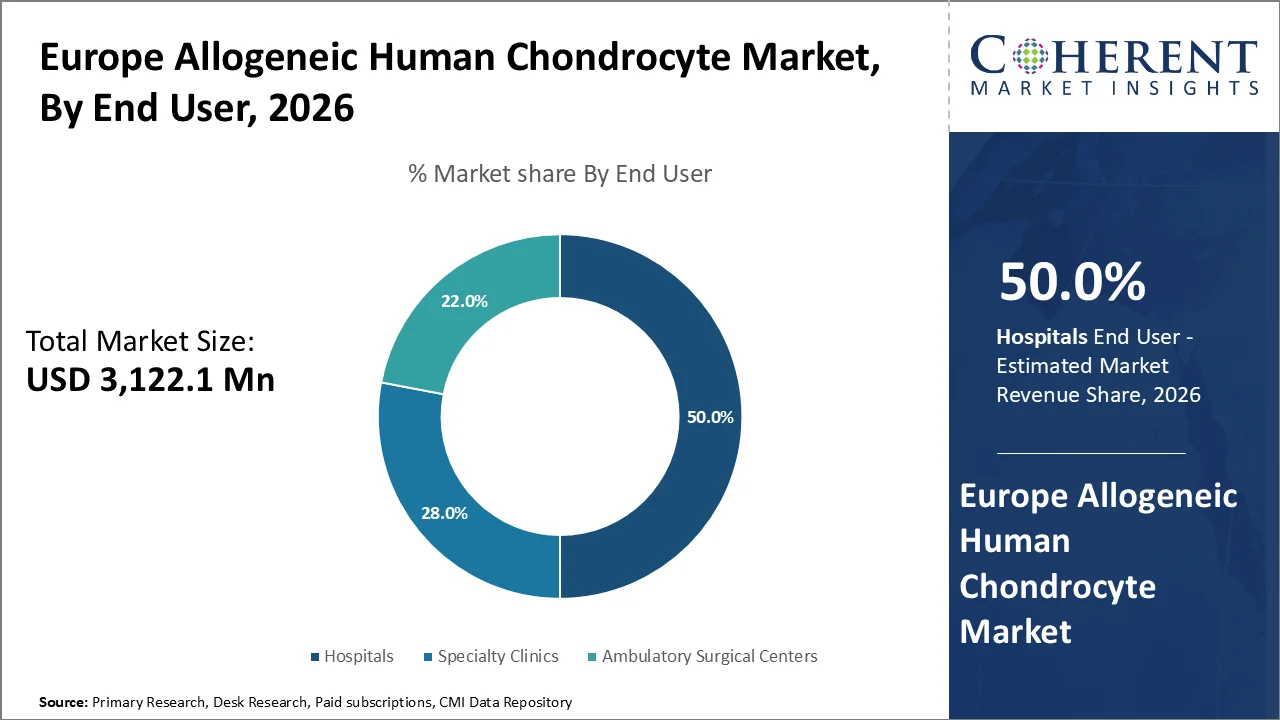
Based on end user, hospitals dominate the market, accounting for a significant 50.0% share in 2026. Hospitals are equipped with advanced infrastructure and skilled personnel to perform complex, high-risk procedures like allogeneic chondrocyte implantation, which requires specialized facilities for cell-based therapies. They also provide a comprehensive care pathway, from diagnosis and surgery to post-operative rehabilitation, making them the preferred setting for regenerative therapies. Additionally, hospitals often benefit from government reimbursement models that cover the costs of innovative treatments, further driving patient access. The high volume of patients with musculoskeletal disorders, particularly osteoarthritis, in hospital settings strengthens this segment’s position as the main driver for the adoption of chondrocyte-based therapies.
A 2026 Annals of the Rheumatic Diseases analysis highlights that workers with rheumatic and musculoskeletal disorders (which include osteoarthritis) have significantly reduced healthy working life expectancy compared to those without, illustrating the ongoing and increasing clinical impact of these conditions on populations across Europe. For instance, in 2024, according to the data published by the Organisation for Economic Co-operation and Development, on average across EU countries in 2022, there were 202 hip replacements per 100 000 population and 134 knee replacements per 100 000 population performed as elective surgical procedures. According to a NOCA report from April 2026, OA is the main cause of thousands of hip and knee replacements performed in Ireland each year, with 94% of hip replacement patients and 97% of knee replacement patients citing OA as the reason for surgery.
The Increasing Prevalence of Musculoskeletal System Disorder
The increasing prevalence of musculoskeletal system disorders, especially osteoarthritis, is a major driver of the Europe allogeneic human chondrocyte market growth. With over 22% of the European population affected by musculoskeletal disorders, the demand for effective treatments is surging. In particular, osteoarthritis, which affects 10% of the adult population, leads to significant joint degeneration, creating a large patient pool in need of regenerative therapies like allogeneic chondrocyte implantation. With early intervention becoming key, the rising incidence of joint-related issues is accelerating the adoption of cutting-edge therapies across Europe. A 2026 WHO report highlights musculoskeletal disorders as a leading cause of disability in the region. For instance, in 2024, the prevalence of people aged 16 and over self‑reporting a long‑term MSK condition in England was 17.9% (~almost 1 in 5 adults).
Furthermore, according to the data published by the Carrothers Orthopaedics, Orthopedic clinic in Cambridge, England an Osteoarthritis update reported that in 2025, about 4.6 million people in England had knee osteoarthritis and 2.76 million had hip osteoarthritis showing strong need for regenerative therapies.
Increasing Incidence of Falls and Knee Cartilage Injuries
Increasing falls and knee cartilage injuries are expected to drive the Europe Allogeneic Human Chondrocyte Market by expanding the patient pool needing cartilage repair and regenerative therapies. For instance, in 2026, according to the data published by the European Association for Injury Prevention and Safety Promotion, in Europe, falls remain a major injury burden among older adults; around one-third of people aged over 65 fall every year, rising to 50% among those aged 80+, while nearly 3.8 million older Europeans receive hospital treatment after falls annually. Knee trauma from falls, sports, and accidents often damages articular cartilage, which has limited natural healing capacity. Furthermore, in March 2026, according to the data published by the National Center for Biotechnology Information, clinical evidence shows cartilage defects are common during knee arthroscopy, with studies reporting cartilage lesions in nearly 60% of arthroscopy patients. This increases demand for chondrocyte-based repair solutions across Europe.
Innovation-Led Cartilage Repair: Transforming the Europe Allogeneic Human Chondrocyte Market
Innovation is transforming the Europe Allogeneic Human Chondrocyte Market by shifting cartilage repair from complex, patient-specific procedures toward scalable and ready-to-use regenerative platforms. Allogeneic chondrocyte progenitor therapy is being studied in Europe to simplify adoption, improve patient access, and reduce treatment burden compared with conventional autologous chondrocyte implantation. Cell banking, donor screening, GMP-based expansion, and controlled manufacturing are helping companies create more consistent chondrocyte batches for wider orthopedic use. Scaffold-based constructs, injectable cell carriers, and 3D tissue-engineered matrices are also improving cell retention, cartilage integration, and surgeon handling during knee repair. EMA’s ATMP framework supports structured evaluation of cell- and tissue-based cartilage therapies, while earlier EU cartilage repair approvals validated the regulatory pathway for advanced chondrocyte products. These innovations are improving standardization, reducing procedure complexity, and strengthening adoption across European orthopedic centers.
For instance, as of April 2026, University of Birmingham is leading a Phase II clinical trial initiated in 2021, focused on allogeneic chondrocyte progenitor therapy for knee cartilage repair. This research, funded by the UK Medical Research Council, aims to streamline cartilage repair treatments, bypassing the traditional autologous two-stage process. The trial could improve accessibility and treatment outcomes for knee cartilage injuries across the NHS and European healthcare systems.
Furthermore, for instance, Synartro AB, a Swedish clinical‑stage life science company, is advancing its lead investigational therapy SYN321 a locally administered intra‑articular injection designed to provide sustained release of diclofenac directly into the knee joint for treatment of symptomatic knee osteoarthritis (OA). The first‑in‑human Phase 1/2a clinical trial of SYN321 was initiated in August 2025 following regulatory and ethical approvals by Swedish authorities, with patient dosing completed and study follow‑up finishing in early 2026. In April 2026, Synartro announced positive preliminary data from the Phase 1/2a study, showing that SYN321 was generally well tolerated across evaluated dose levels, with low systemic exposure and early signals of clinical benefit.
Current Events and Their Impact on the Europe allogenic human chondrocyte market
Current Event | Description and its Impact |
EU HTA Regulation Supporting Faster Market Access for ATMPs |
|
SoHO Regulation Strengthening Cell and Tissue Safety Standards |
|
Rising Funding Activity in Europe |
|
Increasing Government Initiative |
|
Europe Allogenic Human Chondrocyte Market Trends
- High Regional Burden of Osteoarthritis Drives Demand for Regenerative Therapies
The prevalence of osteoarthritis (OA) in Europe is substantial, with an estimated 10% prevalence of knee OA and 6% for hip OA across European populations, based on pooled data from studies involving millions of individuals. This high disease burden underlines the need for advanced cartilage repair solutions like allogeneic human chondrocyte therapies.
- Significant Regional Variability in OA Prevalence
Osteoarthritis prevalence shows strong regional differences within Europe: knee OA ranges from about 7% in Northern Europe up to 19% in Eastern Europe, while hip OA ranges from approximately 2% to 7% depending on the region. These variations highlight uneven clinical demand and adoption rates for therapies across the continent.
- Rising Awareness of osteoarthritis’s Growing Impact Across Europe
Across Western Europe alone, around 57 million people live with OA, a figure that has risen significantly over the past decades, showing increasing clinical awareness and need for regenerative solutions to manage pain and disability in aging populations.
- Shift Toward Off-the-Shelf Cell Therapies
Europe is moving toward allogeneic “off-the-shelf” chondrocyte therapies because they avoid patient-specific cell harvesting and may reduce the burden of two-stage autologous chondrocyte implantation. For instance, in 2026, the UKRI-funded ACT2 Phase II project states that it will “manufacture and implant an allogeneic chondrocyte progenitor ATMP” for cartilage repair and aims to improve NHS adoption and patient access compared with ACI. This supports the trend toward ready-to-use cartilage repair products in Europe.
- Rising Adoption of Minimally Invasive / Day-Case Procedures
Cartilage repair is increasingly linked with arthroscopic and shorter-stay procedures because hospitals are trying to reduce inpatient pressure. Eurostat reported around 46.9 million day-case discharges in the EU in 2023, compared with 68.2 million inpatient hospital discharges, showing the strong role of same-day care models in Europe. This supports future adoption of minimally invasive chondrocyte-based procedures where clinically suitable.
- Stronger Role of Ambulatory and Day-Surgery Settings
Europe’s healthcare systems are shifting appropriate surgical activity from inpatient hospitals to day-care settings. Eurostat defines surgical procedures as being performed as inpatient cases, day cases, or outpatient cases, confirming that Europe already tracks and supports these care models. This is important for allogeneic human chondrocyte therapies because standardized, ready-to-use products can fit better into shorter orthopedic workflows than complex autologous cell procedures.
- Integration of Advanced Tissue Engineering
Advanced tissue engineering is becoming central to cartilage repair innovation. In 2025, researchers working on allogeneic chondrocyte scale-up highlighted that allogeneic chondrocyte therapies are being developed as an alternative to autologous therapies for cartilage defects. The research focuses on juvenile and adult donor-derived chondrocytes, culture expansion, and scalable manufacturing, supporting the shift toward engineered cartilage repair platforms.
- Increasing Clinical Trials and R&D Investment
Clinical research activity is increasing because ATMPs require strong clinical evidence before market adoption. EMA’s updated ATMP clinical trial guideline, published in January 2025, states that ATMPs include somatic cell therapy and tissue-engineered products, and that well-conducted clinical trials are essential to determine their benefit-risk profile. This directly supports continued R&D investment in chondrocyte-based cartilage repair therapies across Europe.
- Manufacturing Scale-Up and Cost Optimization
Manufacturing scale-up is a key trend because allogeneic products need consistent donor-cell sourcing, expansion, and potency control. The UKRI MICA project focuses on identifying optimal healthy allogeneic chondrocyte sources and optimizing GMP chondrocyte expansion protocols using the Quantum system. This shows how European research is targeting scalable, reproducible, and lower-burden manufacturing for future allogeneic cartilage therapies.
Regional Insights
Germany dominates owing to Regulatory Support & Advanced Healthcare Infrastructure
Germany account 30.0% market share in 2026, supported by advanced healthcare infrastructure and regulatory support. Germany is home to one of the most advanced healthcare systems in Europe, with a strong presence of specialized orthopedic centers and hospital networks that support the clinical adoption of cutting-edge regenerative therapies, including allogeneic human chondrocyte therapies. Osteoarthritis (OA) is highly prevalent in Germany, with over 6.5 million people suffering from OA, particularly knee OA, which leads to a growing demand for cartilage repair solutions. The country’s aging population further increases the prevalence of OA, driving the demand for more effective treatments.
Germany shows a high burden of osteoarthritis (OA) relative to its population, which drives demand for cartilage repair and regenerative therapies including allogeneic human chondrocyte approaches. A 2025 clinical study reported that hip and knee OA prevalence in Germany’s population aged over 60 was about 21.8%, with hip and knee joint OA particularly common among women (23.9%). This elevated prevalence contributes to frequent clinical consultations, increased orthopedic interventions, and a greater need for advanced cartilage‑preserving treatments such as allogeneic chondrocyte therapies. According to the data published by the European Federation of Salaried Doctors (FEMS), 85% of healthcare spending is covered by compulsory (statutory) and government schemes, higher than the EU average of 81%, meaning most services are publicly financed.
U.K. Europe allogenic human chondrocyte market Trends
The U.K. is poised to be as the fastest-growing region through 2026-2033, due to its high knee osteoarthritis burden and strong clinical focus on regenerative care. The high prevalence of osteoarthritis (OA) in the population, with over 10 million people affected, creates a large patient pool demanding regenerative therapies. Strong research and clinical trial activity in collaboration with the NHS and biotech companies accelerates the development and adoption of allogeneic chondrocyte products. Additionally, the supportive regulatory environment and increasing healthcare investment further fuel growth and early market adoption. According to the NICE Clinical Knowledge Summary on osteoarthritis (2026), an estimated 5.4 million people in the U.K. are affected by knee osteoarthritis a key driver of clinical demand for cartilage repair therapies such as allogeneic chondrocyte approaches. Knee OA is the most common site of symptomatic OA in the U.K., occurring in roughly 1 in 10 adults, which supports faster adoption of innovative treatments. This substantial patient population and emphasis on research propel the U.K.’s growth in advanced chondrocyte applications.
Who are the Major Companies in Europe Allogenic Human Chondrocyte Market
Some of the major key players in Europe Allogenic Human Chondrocyte Market are Kolon TissueGene, Inc., and ISTO Technologies Inc.
Key News
- In 2026, Kolon TissueGene, Inc., Biotechnology company advanced its TG‑C knee osteoarthritis therapy, presenting at the J.P. Morgan Healthcare Conference and engaging 30+ global partners for commercialization. The company is preparing for phase 3 trial results, focusing on expanding its reach, including Europe. At the 2026 AAOS conference, Kolon highlighted positive clinical outcomes showing TG‑C’s ability to delay joint replacement, boosting its credibility. These developments pave the way for European distribution and potential licensing agreements over the forecast period.
- In September 2025, ISTO Biologics was acquired by Keensight Capital, a European growth investor, signaling a strategic shift to expand its regenerative orthobiologics product line globally. This acquisition aims to accelerate the European market entry of ISTO’s regenerative therapies, including advanced cell-based cartilage repair platforms. The financial backing from Keensight Capital will enable ISTO to scale its operations in Europe, fostering growth opportunities for its biologic-based treatments and providing key support for clinical adoption and distribution.
Market Report Scope
Europe allogenic human chondrocyte market Report Coverage
| Report Coverage | Details | ||
|---|---|---|---|
| Base Year: | 2025 | Market Size in 2026: | USD 3,122.1 Mn |
| Historical Data for: | 2020 To 2024 | Forecast Period: | 2026 To 2033 |
| Forecast Period 2026 to 2033 CAGR: | 10.4% | 2033 Value Projection: | USD 6,161.9 Mn |
| Geographies covered: |
| ||
| Segments covered: |
| ||
| Companies covered: | Kolon TissueGene, Inc., and ISTO Technologies Inc. | ||
Analyst Opinion
- The Europe Allogeneic Human Chondrocyte Market is experiencing a significant shift from experimental therapies to mainstream treatments for cartilage repair and regenerative medicine. With increasing support for advanced biological therapies, the market is moving from early-stage clinical trials to widespread therapeutic applications. This growth reflects rising clinical confidence and greater patient demand for innovative solutions in orthopedics.
- The healthcare sector, especially orthopedics and regenerative medicine, is driving the adoption of allogeneic human chondrocyte therapies. With rising patient demand for non-invasive treatment options and improved clinical outcomes, healthcare providers are increasingly utilizing these therapies to enhance patient care.
- Leading industry stakeholders are allocating significant portions of their research and development budgets to advance allogeneic therapies beyond experimental phases. A report by the European Medicines Agency (EMA) indicates that over 40% of healthcare providers in Europe plan to integrate advanced cartilage repair technologies by 2026, reflecting a strong commitment to biologic treatments.
- Europe is emerging as a critical player in the global allogeneic human chondrocyte market, due to well-established healthcare infrastructures, supportive regulatory frameworks, and high demand for innovative orthopedic treatments. While the U.S. remains the dominant market, Europe’s spending on cell therapies is forecasted to grow by 25% by 2028, with key contributors including Germany, France, and the UK. This growth is attributed to increasing government support for regenerative medicine and higher patient acceptance of biologic therapies. Europe is emerging as a key region in the global allogeneic human chondrocyte market, with countries such as Germany, France, and the UK leading the charge in both research and clinical adoption. The European region is projected to see a 25% increase in spending on cell-based therapies by 2028, with governments supporting regenerative medicine initiatives through policy and funding. As a result, Europe is poised to become a significant contributor to the growth of the global market for allogeneic therapies.
Speak to the analyst
Want personalized insights?
Take the findings above to one of our principal consultants, or have the report rebuilt around the segments, geographies and competitors you actually track.
Market Segmentation
- By Application
- Osteoarthritis
- Musculoskeletal System Disorders
- Others
- By End User
- Hospitals
- Specialty Clinics
- Ambulatory Surgical Centers
- By Region
- Germany
- U.K.
- France
- Italy
- Spain
- Russia
- Rest of Europe
Sources
Primary Research Interviews
- Discussions with orthopedic surgeons and clinical practitioners to assess the adoption and clinical outcomes of allogeneic human chondrocyte therapies in Europe.
- Insights from biotechnology providers and cell therapy developers on advancements in human chondrocyte-based treatments, regulatory approvals, and market dynamics.
- Interviews with healthcare consultants and industry analysts to evaluate the competitive landscape, market trends, and the role of allogeneic therapies in regenerative medicine.
- Conversations with decision-makers in hospitals and healthcare organizations to understand investment drivers, treatment integration challenges, and patient acceptance of biologic therapies.
Databases
- European Medicines Agency (EMA) Clinical Trials Database
- European Commission Health Research Database
- PubMed Central (Europe)
- European Bioinformatics Institute (EBI)
- EU Horizon 2020 Database on Regenerative Medicine
Magazines
- BioTechniques (European editions)
- The European Journal of Orthopedics & Traumatology
- The European Biopharmaceutical Review
- European Biotechnology Magazine (Focus on Cell Therapy)
- Regenerative Medicine Journal (Published by Elsevier)
Journals
- Tissue Engineering and Regenerative Medicine (MDPI)
- Cell Stem Cell (Cell Press)
- Journal of Orthopaedic Research (Wiley)
- European Cells and Materials (Elsevier)
- Journal of Regenerative Medicine (Springer)
Newspapers
- The Financial Times (Healthcare and Biotechnology Section)
- The Telegraph (Medical Research News)
- The Times (Health and Medicine Section)
- The Guardian (Science and Health Section)
- Le Monde (Health and Biotech Section)
Associations
- International Society for Stem Cell Research (ISSCR)
- European Biotech and Pharma Association (EuropaBio)
- European Society of Clinical Cell Therapy (ESCT)
- European Association for Biomaterials (EAB)
- European Union of Medical Specialists (UEMS)
Public Domain Sources
- WHO Europe Health Policies and Biotechnologies Reports
- European Medicines Agency (EMA) Public Consultation Documents
- National Institutes of Health (NIH) - Cell Therapy and Regenerative Medicine Reports
- European Commission Health and Bioeconomy Reports
- EU Regulatory Documents on Cell Therapy and Biotechnology
Proprietary Elements
- CMI Data Analytics Tool
- Proprietary CMI Existing Repository of information for last 10 years
Get access to 250+ pages report
Every segment, forecast, competitor profile and data table behind the analysis above — available for instant download.
- ESOMAR Member
- ISO 9001:2015 Certified
- D-U-N-S Registered
- GDPR & CCPA Compliant
Missing comfort of reading report in your local language? Find your preferred language:
Transform your Strategy with Exclusive Trending Reports
Frequently Asked Questions
The Europe allogenic human chondrocyte market is expected to reach USD 6,161.9 Mn in 2033.
Major players operating in the global Europe allogenic human chondrocyte market include Kolon TissueGene, Inc., and ISTO Technologies Inc.
High cost of research and development activities and disadvantages of allogeneic transplantation are the major factors hampering the growth of the cognitive systems spending market.
The increasing prevalence of musculoskeletal system disorder and the increasing incidence of falls and knee cartilage injuries are the major factors driving the growth of the Europe allogenic human chondrocyte market.
The Europe allogenic human chondrocyte market is anticipated to grow at a CAGR of 10.4% between 2026 and 2033.
Among regions, Germany is expected to account for a largest market share in the global Europe allogenic human chondrocyte market over the forecast period.
Allogeneic human chondrocytes are cartilage cells derived from a donor, used in regenerative treatments for joint damage, particularly in osteoarthritis. These cells are cultured and implanted into the patient's damaged joint to promote healing and cartilage regeneration.