
Global Hepcidin Mimetic Therapeutics Market Size and Forecast – 2026 To 2033
The global hepcidin mimetic therapeutics market is expected to grow from USD 38.6 Mn in 2026 to USD 172.0 Mn by 2033, registering a compound annual growth rate (CAGR) of 23.8% from 2026 to 2033. The global hepcidin mimetic therapeutics market is expected to grow owing to the increasing prevalence of thalassemia, especially transfusion-dependent type associated with iron overload and organ damage.
According to India’s Ministry of Health and Family Welfare, nearly 1.59 million (15,87,903) people were screened by March 2025 and found 5,037 with thalassemia, highlighting the need for better management of the disease and iron-regulatory treatment strategies. (Source: Press Information Bureau)
Key Takeaways of the Global Hepcidin Mimetic Therapeutics Market
- Peptide-based hepcidin mimetics is projected to hold 88.6% of the global hepcidin mimetic therapeutics market share in 2026, making it dominant drug type segment, across North America attributed to region’s diversified biotech ecosystem and global leadership in peptide-based drug development. For instance, Protagonist Therapeutics, Inc. conducted phase III VERIFY clinical trial (NCT05210790) assessing rusfertide in 293 hepcidin deficient polycythemia vera patients, highlighting region's pivotal role in progressing clinical development.
- Injectable is projected to hold 91.8% of the global hepcidin mimetic therapeutics market share in 2026, making it dominant route of administration segment, across Europe due to the large multicounty clinical research network and active participation in advanced hematology clinical trials. For instance, The Phase III VERIFY study of rusfertide included clinical trial sites in Germany, France, Italy, Spain, Poland and the Netherlands.
- Polycythemia vera is projected to hold 91.5% of the global hepcidin mimetic therapeutics market share in 2026, making it dominant indication segment, across Asia Pacific owing to emerging clinical investigation of hepcidin mimetics in polycythemia vera among large patient population. For instance, in June 2026, Japan announced the registration of Phase II trial of rusfertide in Japanese adults with polycythemia vera, with patient recruitment commencing in July 2026.
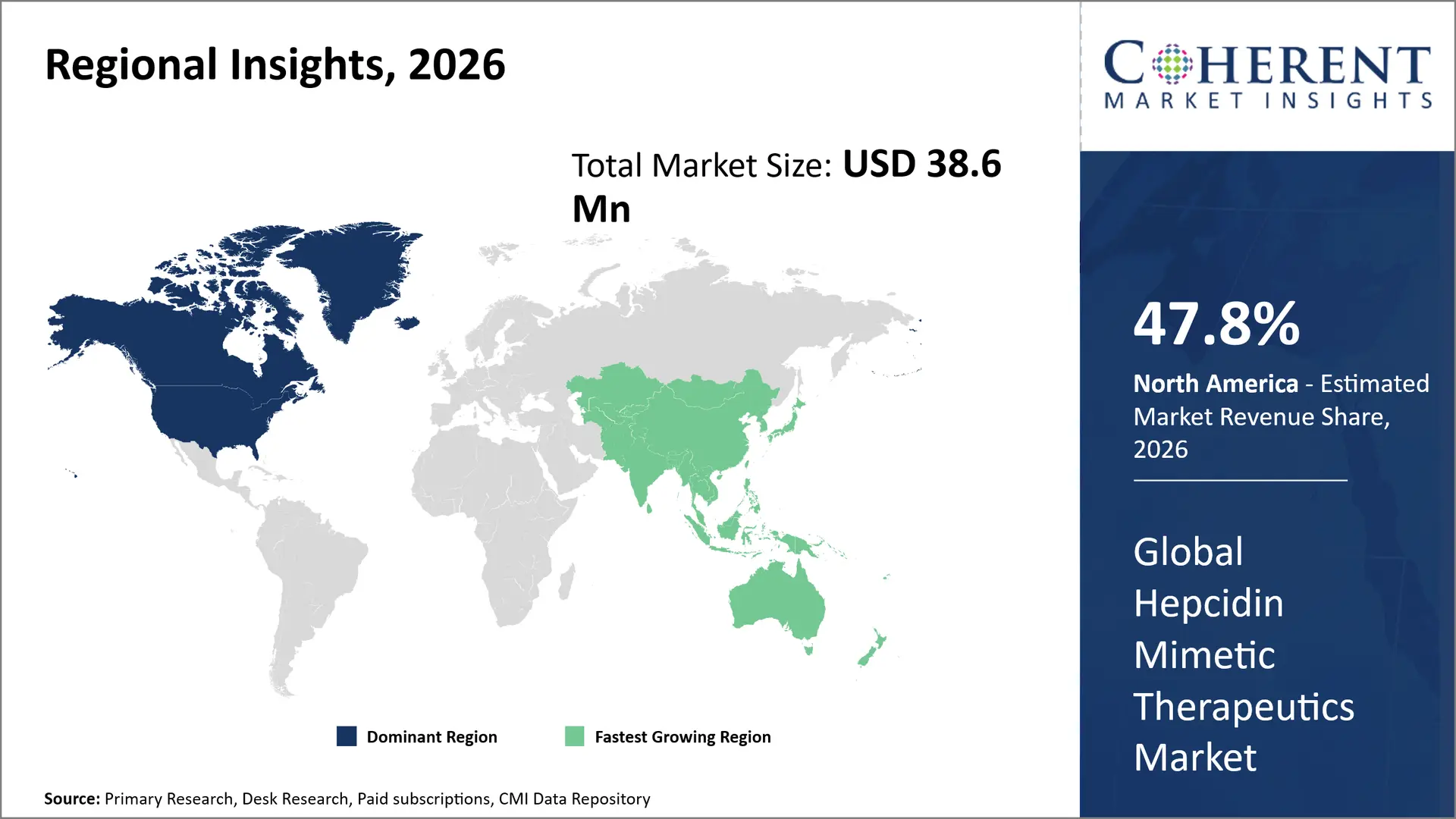
- North America market maintains dominance with an expected share of 47.8% in 2026. This is attributed to the high presence of the well-established biopharmaceutical industry, high healthcare expenditure, improved standards of care infrastructure, and strong reimbursement policies for using next-generation peptide products that are expected to have a wide usage of therapeutic indications in the region.
- Asia Pacific is expected to exhibit the fastest growth in the global hepcidin mimetic therapeutics market, registering an estimated CAGR of 21.8% during 2026–2033. The regional growth is driven by high regional burden of inherited blood disorder, growth in the diagnostics market, improved access to specialist hematology centers, and rise in funding for novel therapeutic infrastructure.
Segmental Insights
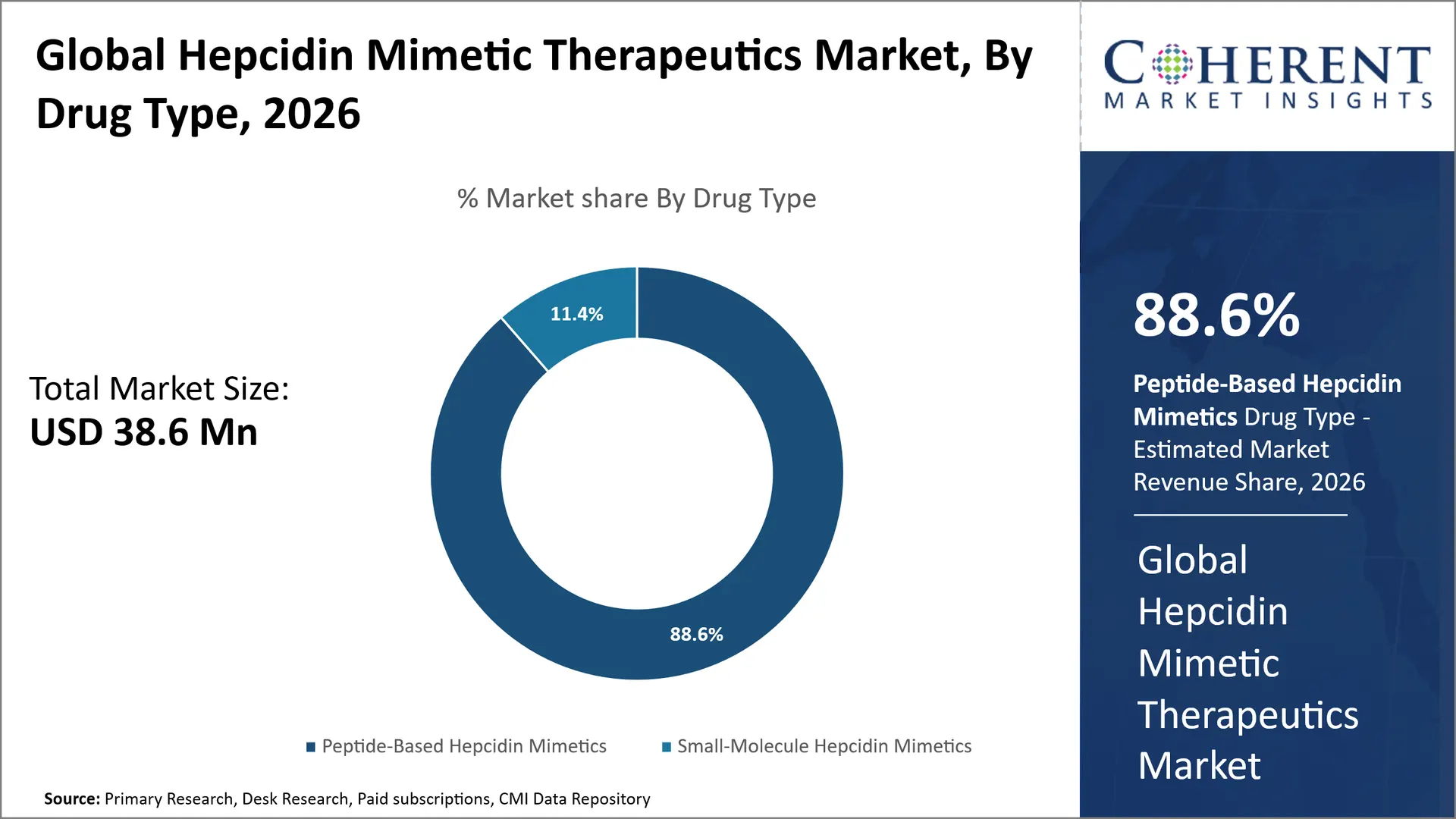
Why Do Peptide-Based Hepcidin Mimetics Dominate the Global Hepcidin Mimetic Therapeutics Market?
Peptide-based hepcidin mimetics are projected to hold the market share of 88.6% in 2026, because they are structurally similar to hepcidin, which mimics a natural liver hormone to control iron levels by selectively interacting with ferroportin. In addition, improvements in peptide engineering can result in greater stability and efficacy, which encourages their use over lesser-known small molecules.
- Current Industry Events of 2026
- Market Size Estimation
- Regional Breakdown
- Competitive Landscape
- Customer Intelligence
- Segmental Analysis
- Pricing Analysis
- Key Market Drivers, Challenges & Future Trends
- Customized Insights Section
Why Do Injectable Represent the Largest Route of Administration Segment in the Hepcidin Mimetic Therapeutics Market?
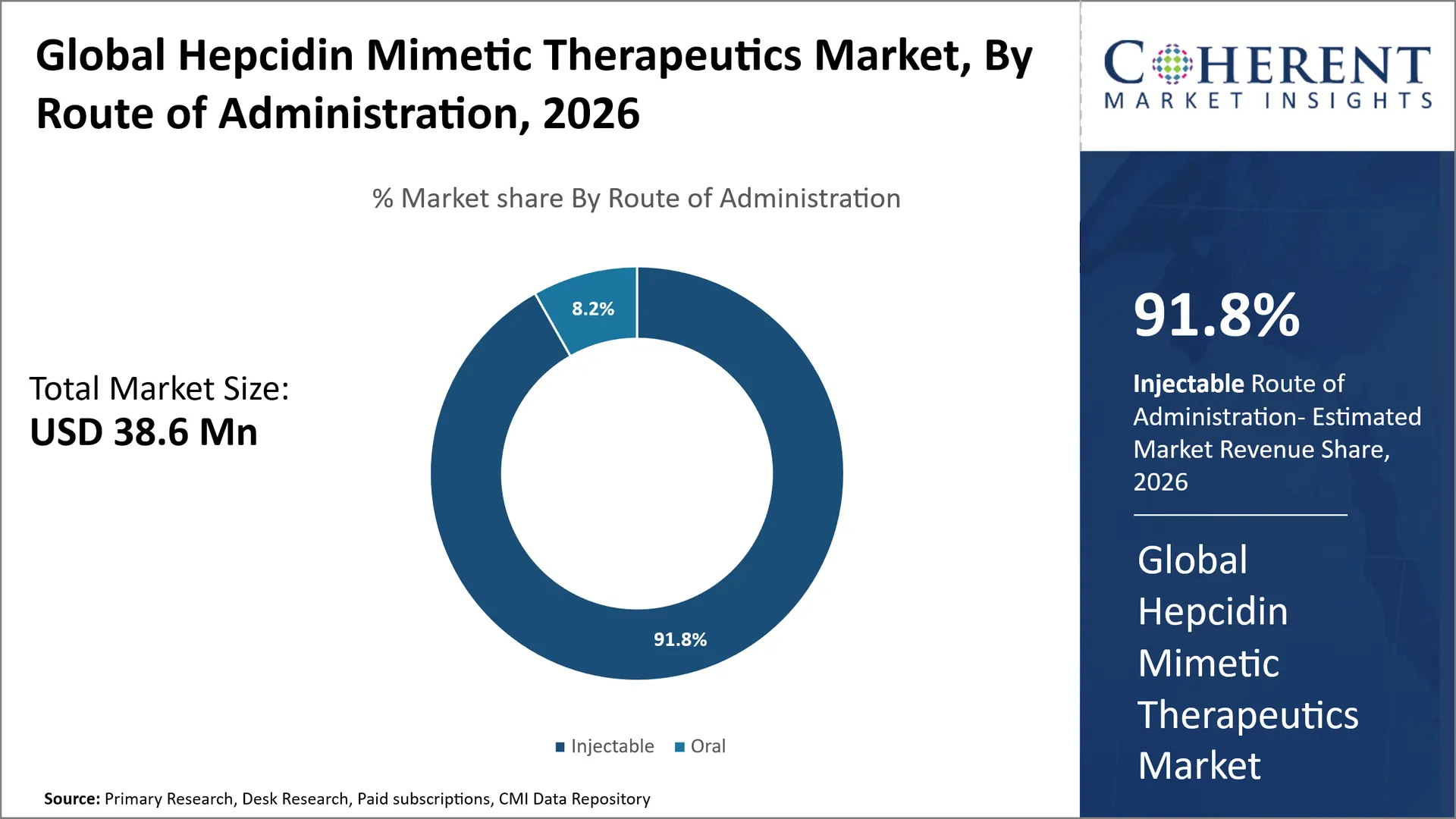
Injectable are projected to hold a market share of 91.8% in 2026, as a peptide-based drug requires parenteral delivery to avoid stomach fermentation. In addition, subcutaneous injection helps maintain the same dosage and allows a steady correction of iron amount, which makes it suitable for long-term use in blood diseases. For instance, the prescribing information for MIMRYLO (rusfertide) authorized by the U.S. FDA indicates weekly subcutaneous dosing for hepcidin mimetic therapy, with dose titration for efficacy and safety
Polycythemia Vera Segment Dominates the Global Hepcidin Mimetic Therapeutics Market
The polycythemia vera segment is projected to hold a market share of 91.5% in 2026, as the dysregulated erythrocyte production is expected to be linked to iron availability, offering a clear indication for hepcidin targeted therapies. These treatments could be specifically designed to target iron availability for erythropoiesis, overcoming the constraints of using phlebotomies as a management approach.
Current Events and their Impact
Current Events | Description and its Impact |
China Amends Good Clinical Practice Guidelines for Drug Testing (June 2026) |
|
India Strengthens National Thalassemia Screening and Management Programme (March 2025) |
|
Hepcidin Mimetic Therapeutics Market Dynamics
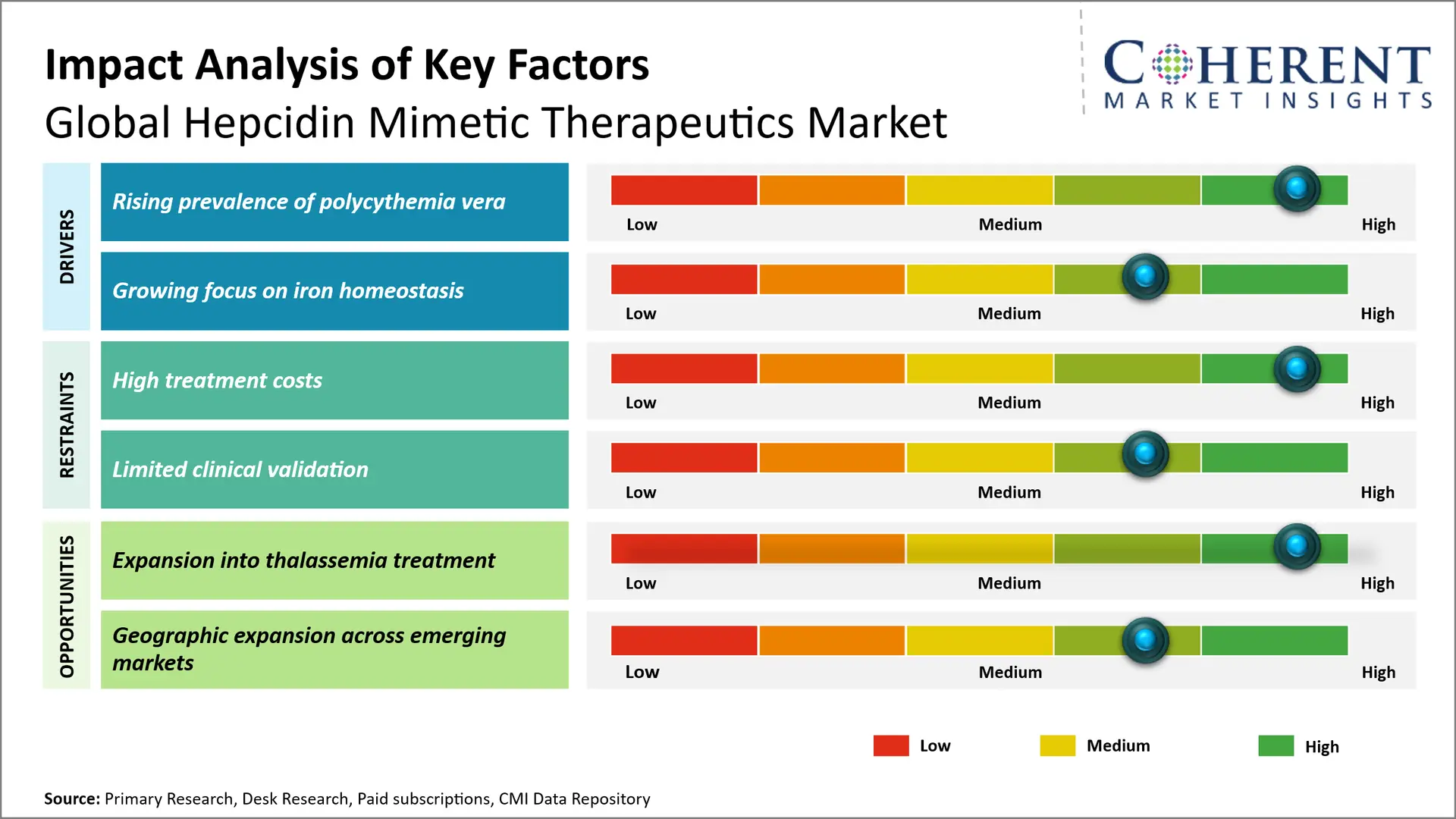
Market Drivers
- Rising prevalence of polycythemia vera: The rising patient population with polycythemia vera is expected to propel the growth of targeted therapies that can maintain long-term hematocrit control and reduce the treatment dependence. For instance, according to the model-based 2026 data using SEER (USA) the number of patients with polycythemia vera is projected to be 90,522 in the U.S. in 2026, which presents a significant number of patients who may be suitable for hepcidin mimetic therapies.
- Growing focus on iron homeostasis: Growing scientific insight into the hepcidin-ferroportin pathway is helping to advance novel therapies designed to treat iron-overloaded and iron-restricted diseases. For instance, in January 2019, a study published in the National Library of Medicine, by researchers from Harvard Medical School, elucidates the role of hepcidin in the absorption of iron and its recirculation via ferroportin, providing a basis for development of therapies targeting this pathway.
- Increasing investment in peptide-based drug development: Progress of hepcidin mimetics candidates with better stability, potency and efficacy is fueled by increased spending on biopharmaceuticals for peptide engineering and synthetic drug discovery and development. For instance, the U.S. National Institutes of Health funds research in peptides through their National Institute of General Medical Sciences, strengthening the basic scientific expertise to create new peptide-based therapeutics.
Emerging Trends
- Development of oral hepcidin mimetic therapies: Currently, oral delivery of hepcidin mimetics is under development to mitigate the limitations of drug administration associated with peptide therapeutics.
- Impact: The oral dosage form may increase dosing flexibility, mitigate treatment burden and facilitate adherence to long-term treatment protocols
- Market Relevance: In terms of market, this trend may increase the patient base and create opportunities for niche drug candidates addressing diseases linked to iron-regulation.
- Expansion of hepcidin mimetic applications beyond polycythemia vera: Research is progressing into the use of hepcidin for the treatment of iron overload in thalassemia and other iron-overload related blood disorders.
- Impact: These extra-indications would address an unmet need and expand the clinical development pipeline.
- Market Relevance: From a market perspective, further indications could reduce the dependence on polycythyma vera, potentially making the market more attractive to investors.
Regional Insights
Why is North America a Strong Market for Hepcidin Mimetic Therapeutics?
North America leads the global hepcidin mimetic therapeutics market, accounting for an estimated 47.8% share in 2026, due to the presence of mature healthcare ecosystem, pharmaceutical infrastructure, and a high level of biomedical research activities in this region. The regulatory environment is favorable and government agencies like Food and Drug Administration (FDA), National Institute of Health (NIH) are aiding in rapid drug development and early clinical trials.
For instance, the U.S. Food and Drug Administration (FDA) has designated rusfertide as Breakthrough Therapy, Fast Track and Orphan Drug. The FDA also initiated a Priority Review in March 2026 of its New Drug Application, which may give an expedited review pathway to this first-in-class hepcidin mimetic therapy. (Source: Takeda Pharmaceutical Company Limited) Additionally, high healthcare spending, high intellectual property protections, and collaboration with biotech researchers support the region's dominance.
Why Does Asia Pacific Hepcidin Mimetic Therapeutics Market Exhibit High Growth?
Asia Pacific is expected to exhibit the fastest growth in the global hepcidin mimetic therapeutics market, registering an estimated CAGR of 21.8% during 2026–2033. The region is projected to account for 17.2% of the global market in 2026, increasing incidence and prevalence of disorders related to iron metabolism, rise in awareness about and adoption of advanced hematology care, continuous development of healthcare infrastructure, and improving healthcare facilities in this region. Furthermore, government initiatives aimed at fostering innovation and low-cost benefits, rising clinical trials, and swelling patient population will create growth opportunities for the market in the region. For instance, China's National Medical Products Administration (NMPA) reformed the review process for innovative drugs with the aim of increasing review speed for innovative drug clinical trials by providing a 30-working-day review process pathway for qualified clinical trial applications and an improved incentive for rare disease treatments.
Global Hepcidin Mimetic Therapeutics Market Outlook for Key Countries
Why is the U.S. Leading Innovation and Adoption in the Hepcidin Mimetic Therapeutics Market?
The US leads the innovation and adoption in the hepcidin mimetic therapeutics market, driven by its presence of capabilities for peptide drug development and cutting-edge clinical research in rare diseases. The country has significantly contributed to the development of rusfertide from discovery to Phase III clinical trials with the valuable support from Breakthrough Therapy, Fast Track and Orphan Drug designations from the FDA. Furthermore, the development of orally bioavailable hepcidin functional mimetics like PN-8047, represents innovation for alternate delivery and increased patient convenience.
Is Japan a Favorable Market for Hepcidin Mimetic Therapeutics Market?
Japan is potentially attractive emerging market for hepcidin mimetics therapeutics supported by Japan's mature community of hematology researchers as well as its mature pharmaceutical sector. The ongoing clinical trials of rusfertide in Japan for polycythemia vera open up prospects of future commercialization of the drug in Japan. Furthermore, the market can potentially expand based on clinical, regulatory and specialist hematology market developments.
Is China Emerging as a Key Growth Hub for the Hepcidin Mimetic Therapeutics Market?
China ranks to be a potential growth market for hepcidin mimetic therapeutics due to the progress in clinical development and capacity to treat polycythemia vera by controlling iron effectively. However, the global increasing attention for novel medicines in hematology is creating opportunities for entering China market.
Why Does Germany Top the European Hepcidin Mimetic Therapeutics Market?
Germany has a strong presence in the European market of hepcidin mimetics therapeutics, with its extensive research network in the field of hematology, dedicated centers and the existing clinical trial pipeline for polycythemia vera. Additionally, its focus on iron metabolism as a treatment target, as well as the progressively higher participation of hematology specialists in testing of novel therapies make it a key market for early adoption of hepcidin therapies.
Is Hepcidin Mimetic Therapeutics Market Developing in UK?
UK is a nascent market for hepcidin mimetic therapeutics with a vibrant clinical research network for hematological diseases and participation in international trials of rusfertide (ruxfertide), a hepcidin mimetic, including at University College London Hospitals on Phase III trials for polycyphpemia vera. Future market growth will depend upon regulatory access, market implantation and reimbursements.
Clinical Development Pipeline by Drug Candidate
Drug candidate | Developer | Drug type / approach | Primary indication | Development stage |
Rusfertide (PTG-300) | Protagonist Therapeutics / Takeda | Injectable peptide mimetic | Polycythemia Vera | Approved |
PN-8047 | Protagonist Therapeutics | Oral small-molecule functional mimetic | Polycythemia Vera | IND-enabling / Phase I planned |
LJPC-401 | La Jolla Pharmaceutical Company | Synthetic hepcidin peptide | Iron overload disorders | Historical clinical development |
Minihepcidins (PR65, PR73) | UCLA Research Program | Synthetic peptide mimetics | Iron overload disorders | Preclinical research |
How is the expansion into thalassemia treatment creating new growth opportunities in the hepcidin mimetic therapeutics market?
The global hepcidin mimetic therapeutics market presents promising prospects of bringing in new therapies for thalassaemia associated iron overload, among other conditions, using a targeted approach. For instance, a Phase II clinical trial (NCT03381833) has evaluated LJPC-401, a synthetic form of hepcidin for the treatment of myocardial iron overload in transfusion-dependent beta-thalassaemia adults, highlighting multiple opportunities to extend these therapeutics into other indications of hematology. (Source: Australian New Zealand Clinical Trials Registry)
Market Players, Key Development, and Competitive Intelligence
Key Developments
- In August 2026, the U.S. Food and Drug Administration approved MIMRYLO (rusfertide), the first hepcidin mimetic therapy for the treatment of polycythemia vera for adult patients, developed by Protagonist Therapeutics, Inc. and marketed by Takeda. The drug was approved based on data from the Phase III VERIFY trial in which 76.9% of patients achieved a clinical response in Weeks 20 to 32.
- In August 2026, Zealand Pharma sold all of its economic interest in rusfertide (PTG-300), a hepcidin mimetic for the treatment of polycyimic vera, to Royalty Pharma for USD 100 million. The sale included a 1% royalty on all future potential global net sales as well as regulatory and commercial milestones.
Competitive Landscape
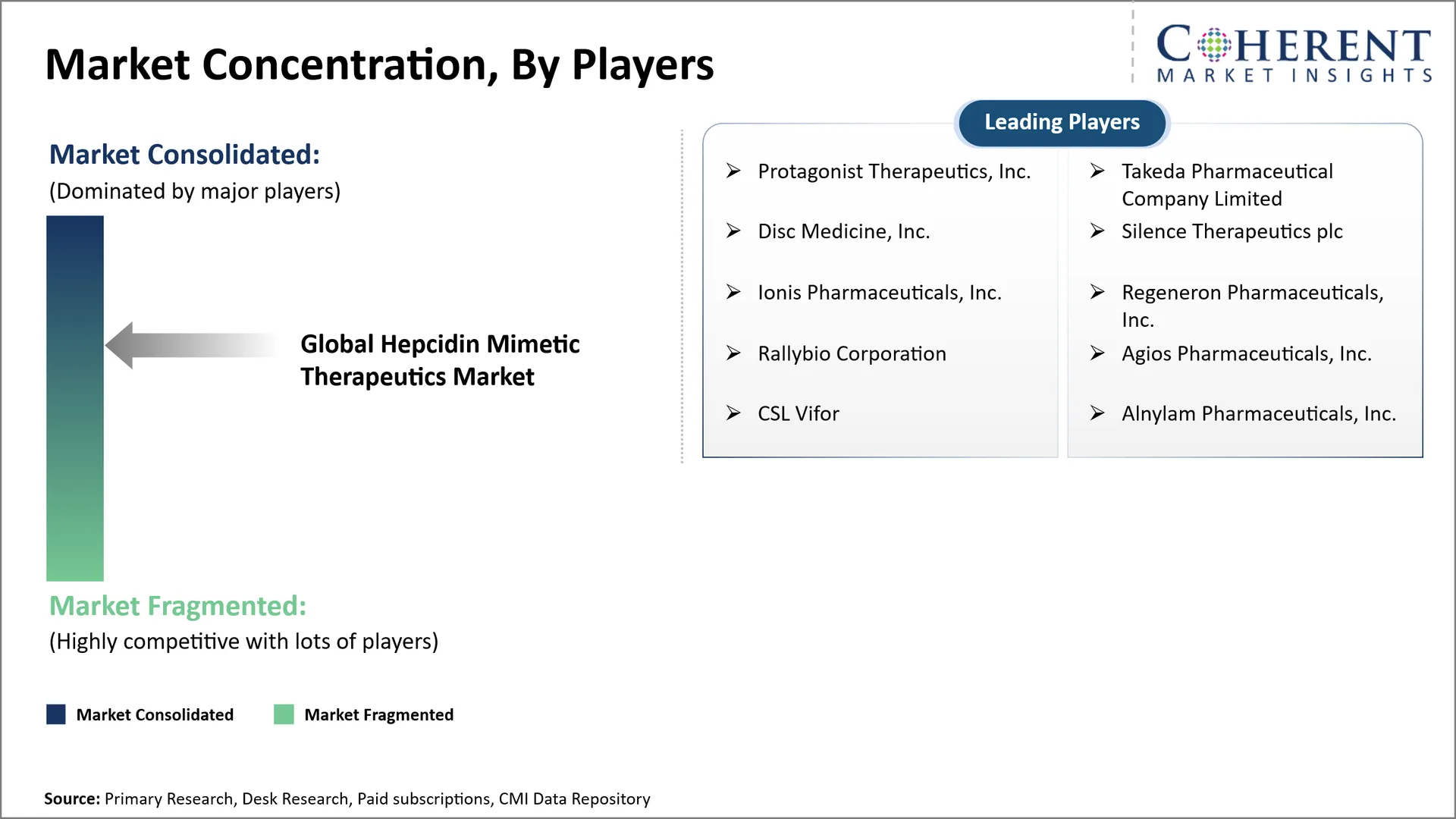
The competitive environment in the global hepcidin mimetics therapeutics market is underdeveloped and very specialized, with less direct participation and a higher degree of innovation-focused competition among certain peptide-based drug manufacturers. Unlike well-established hematology therapeutics markets, competition in the hepcidin mimetics therapeutics market is primarily focused on the development of synthetic hepcidin analogs, oral hepcidin functional mimetics and iron regulation by ferroportin.
Key focus areas include
- Development of orally available hepcidin mimetics for ease of dosing and patient compliance.
- Development of second generation hepcidin mimetics with greater efficacy, stability and improved pharmacokinetic properties.
- Expand therapeutic indications to include polycythemia vera, hereditary hemochromatosis and other conditions of iron control.
- Generation of clinical evidence to support sustained regulation of iron, proving treatment efficacy and long-term safety.
- Progression of clinical-stage candidates into submission and manufacturing at the commercial scale.
Market Report Scope
Global Hepcidin Mimetic Therapeutics Market Report Coverage | |||
Report Coverage | Details | ||
Base Year | 2025 | Market Size in 2026: | USD 38.6 Mn |
Historical Data For: | 2020 To 2024 | Forecast Period: | 2026 To 2033 |
Forecast Period 2026 To 2033 CAGR: | 23.8% | 2033 Value Projection: | USD 172.0 Mn |
Geographies covered: |
| ||
Segments covered: |
| ||
Companies covered: | Protagonist Therapeutics, Inc., Takeda Pharmaceutical Company Limited, Disc Medicine, Inc., Silence Therapeutics plc, Ionis Pharmaceuticals, Inc., Regeneron Pharmaceuticals, Inc., Rallybio Corporation, Agios Pharmaceuticals, Inc., CSL Vifor, Alnylam Pharmaceuticals, Inc. | ||
Growth Drivers: |
| ||
Restraints & Challenges: |
| ||
Analyst Opinion (Expert Opinion)
- The global hepcidin mimetic therapeutics market is expected to evolve as a niche segment of hematology to a broader iron-regulation therapeutics market. Key drivers for the future growth of the hepcidin mimetics therapeutics industry could be driven by development of next-generation peptide mimetics, improvements in dosing formulation, and application beyond polycythemia vera. Increasing clinical focus for targeted iron regulation is also expected to increase the long-term commercial potential of this industry.
- The best opportunities are expected to be in injectable and oral hepcidin mimetics for polycythemia vera and beta-thalassemia, especially in the U.S., China and India. Opportunities in the U.S. include access to innovative drugs and a long-established infrastructure for specialty care. Large patient populations and emerging capabilities in hematology care in China and India are key factors.
- In order to gain a competitive advantage market players should focus on improving peptide stability, therapeutic efficacy, dosing ease of use and tolerability during long term treatment to establish differentiation. Expanding into other indications of iron-related diseases can help alleviating dependence on one flagship indication and diversify the sources of revenue. Close collaborations with strategic partners, robust clinical data, and proactive communication with regulatory agencies are crucial to push forward the development and strengthen the commercial standing.
Speak to the analyst
Want personalized insights?
Take the findings above to one of our principal consultants, or have the report rebuilt around the segments, geographies and competitors you actually track.
Market Segmentation
- Drug Type Insights (Revenue, USD Mn, 2021 - 2033)
- Peptide-Based Hepcidin Mimetics
- Small-Molecule Hepcidin Mimetics
- Route of Administration Insights (Revenue, USD Mn, 2021 - 2033)
- Injectable
- Oral
- Indication Insights (Revenue, USD Mn, 2021 - 2033)
- Polycythemia Vera
- Thalassemia
- Other Iron-Related Hematological Disorders
- Distribution Channel Insights (Revenue, USD Mn, 2021 - 2033)
- Hospital Pharmacies
- Specialty Pharmacies
- Online Pharmacies
- Regional Insights (Revenue, USD Mn, 2021 - 2033)
- North America
- U.S.
- Canada
- Latin America
- Brazil
- Argentina
- Mexico
- Rest of Latin America
- Europe
- Germany
- U.K.
- Spain
- France
- Italy
- Russia
- Rest of Europe
- Asia Pacific
- China
- India
- Japan
- Australia
- South Korea
- ASEAN
- Rest of Asia Pacific
- Middle East
- GCC Countries
- Israel
- Rest of Middle East
- Africa
- South Africa
- North Africa
- Central Africa
- North America
- Key Players Insights
- Protagonist Therapeutics, Inc.
- Takeda Pharmaceutical Company Limited
- Disc Medicine, Inc.
- Silence Therapeutics plc
- Ionis pharmaceuticals, Inc.
- Regeneron Pharmaceuticals, Inc.
- Rallybio Corporation
- Agios Pharmaceuticals, Inc.
- CSL Vifor
- Alnylam Pharmaceuticals, Inc.
Sources
Primary Research Interviews
- Hematologists specializing in polycythemia vera and iron metabolism disorders
- Clinical investigators involved in hepcidin mimetic therapeutic trials
- Pharmaceutical researchers specializing in peptide therapeutics and iron regulation
- Drug development and regulatory affairs experts in hematology
Stakeholders
- Hepcidin mimetic therapeutics developers
- Pharmaceutical and biotechnology companies
- Peptide synthesis and contract development and manufacturing organizations (CDMOs)
- Academic institutions and hematology research organizations
- End-use Sectors
- Hospitals and specialized hematology centers
- Specialty oncology and hematology clinics
- Academic medical centers and clinical research institutions
- Specialty pharmacies and hospital pharmacy networks
- Regulatory & Health Bodies
- U.S. Food and Drug Administration (FDA)
- European Medicines Agency (EMA)
- Central Drugs Standard Control Organisation (CDSCO), India
- Pharmaceuticals and Medical Devices Agency (PMDA), Japan
Databases
- ClinicalTrials.gov
- Clinical Trials Information System (CTIS)
- WHO International Clinical Trials Registry Platform (ICTRP)
Associations
- American Society of Hematology (ASH)
- European Hematology Association (EHA)
- International Society of Blood Transfusion (ISBT)
- Thalassaemia International Federation (TIF)
Public Domain Sources
- U.S. Food and Drug Administration (FDA)
- National Institutes of Health (NIH)
- National Center for Biotechnology Information (NCBI)
- World Health Organization (WHO)
Proprietary Elements
- CMI Data Analytics Tool
- Proprietary CMI Existing Repository of information for last 10 years.
Get access to 250+ pages report
Every segment, forecast, competitor profile and data table behind the analysis above — available for instant download.
- ESOMAR Member
- ISO 9001:2015 Certified
- D-U-N-S Registered
- GDPR & CCPA Compliant
Frequently Asked Questions
The global hepcidin mimetic therapeutics market is estimated to be valued at USD 38.6 Mn in 2026 and is expected to reach USD 172.0 Mn by 2033.
Peptide-based hepcidin mimetics dominates the market due to longstanding clinical development, specific iron-regulatory activity, and move toward commercialization.
Hepcidin mimetics are peptide or synthetic drugs that are mimetics or imitate the action of hepcidin to control the total amount of systemic iron via modulation of ferroportin.
The CAGR of global hepcidin mimetic therapeutics market is projected to be 23.8% from 2026 to 2033.
Rising prevalence of polycythemia vera, and growing focus on iron homeostasis are the major factors driving the growth of the global hepcidin mimetic therapeutics market.
High treatment costs, and limited clinical validation are the major factors hampering the growth of the global hepcidin mimetic therapeutics market.
In terms of indication, polycythemia vera is estimated to dominate the market revenue share in 2026.