

Global Hospital Infection Control Market Size and Forecast – 2026 To 2033
The global hospital infection control market is expected to grow from USD 24.68 Bn in 2026 to USD 40.55 Bn by 2033, registering a compound annual growth rate (CAGR) of 7.4% from 2026 to 2033. The market for global hospital infection control is poised for significant expansion, fueled by the high burden of healthcare-associated infections (HAIs) and the resulting need for stronger infection prevention and control (IPC) measures.
According to the World Health Organization (WHO) Global Report on IPC 2024, an average of 7 in 100 patients in high-income countries and 15 in 100 patients in low- and middle-income countries acquire at least one HAI during an acute-care hospital stay, reinforcing demand for effective infection-control solutions.
Key Takeaways of the Global Hospital Infection Control Market
- Disinfection and sterilization products are projected to hold 38.4% of the global hospital infection control market share in 2026, making it dominant product and service segment, with the Middle East offering an important adoption market as healthcare regulators intensify compliance with infection-prevention requirements. For instance, in April 2026, Saudi Arabia’s Ministry of Health inspected more than 1,500 healthcare facilities and specifically assessed compliance with infection prevention and control standards, with non-compliant facilities subject to regulatory action. This regulatory enforcement supports continued demand for compliant disinfection, sterilization, and infection-control products.
- Healthcare-Associated Infections (HAIs) is projected to hold 54.8% of the global hospital infection control market share in 2026, making it dominant infection type segment across North America because of established national HAI surveillance infrastructure. For instance, in May 2026, the Public Health Agency of Canada published national surveillance covering device- and surgical-procedure-related HAIs across 68 acute-care hospitals for 2020–2024, including CLABSI and surgical-site infections. Such systematic surveillance provides hospitals with benchmark data for strengthening targeted HAI prevention programmes.
- Heat and steam sterilization is projected to hold 39.2% of the global hospital infection control market share in 2026, making it dominant disinfection and sterilization method segment across Asia Pacific specifically Japan representing a strong market due to continued government-led standardization of hospital disinfection and sterilization practices. For instance, on September 14, 2026, Japan’s Ministry of Health, Labour and Welfare (MHLW) revised its guidance on disinfection and sterilization under the Infectious Diseases Control Law, reinforcing pathogen-specific requirements for appropriate disinfection and sterilization practices.
- North America market maintains dominance with an expected share of 39.2% in 2026, bolstered by strict hospital infection-prevention requirements, established HAI reporting systems, and regulatory oversight of infection-control practices. For instance, in January 2026, the U.S. Centers for Medicare & Medicaid Services (CMS) updated its hospital infection-control requirements, requiring hospitals to maintain hospital-wide infection-prevention programs and active surveillance mechanisms appropriate to their services.
- Asia Pacific is expected to exhibit the fastest growth in the global hospital infection control market, registering an estimated CAGR of 8.6% during 2026–2033, driven by the expansion of national IPC standards and facility-specific infection-control requirements. For instance, in March 2026, Singapore’s Ministry of Health released its 2026 National Infection Prevention and Control Guidelines on Water Management in Acute Healthcare Facilities, adding a dedicated framework for managing water-related infection risks in hospitals.
Segmental Insights
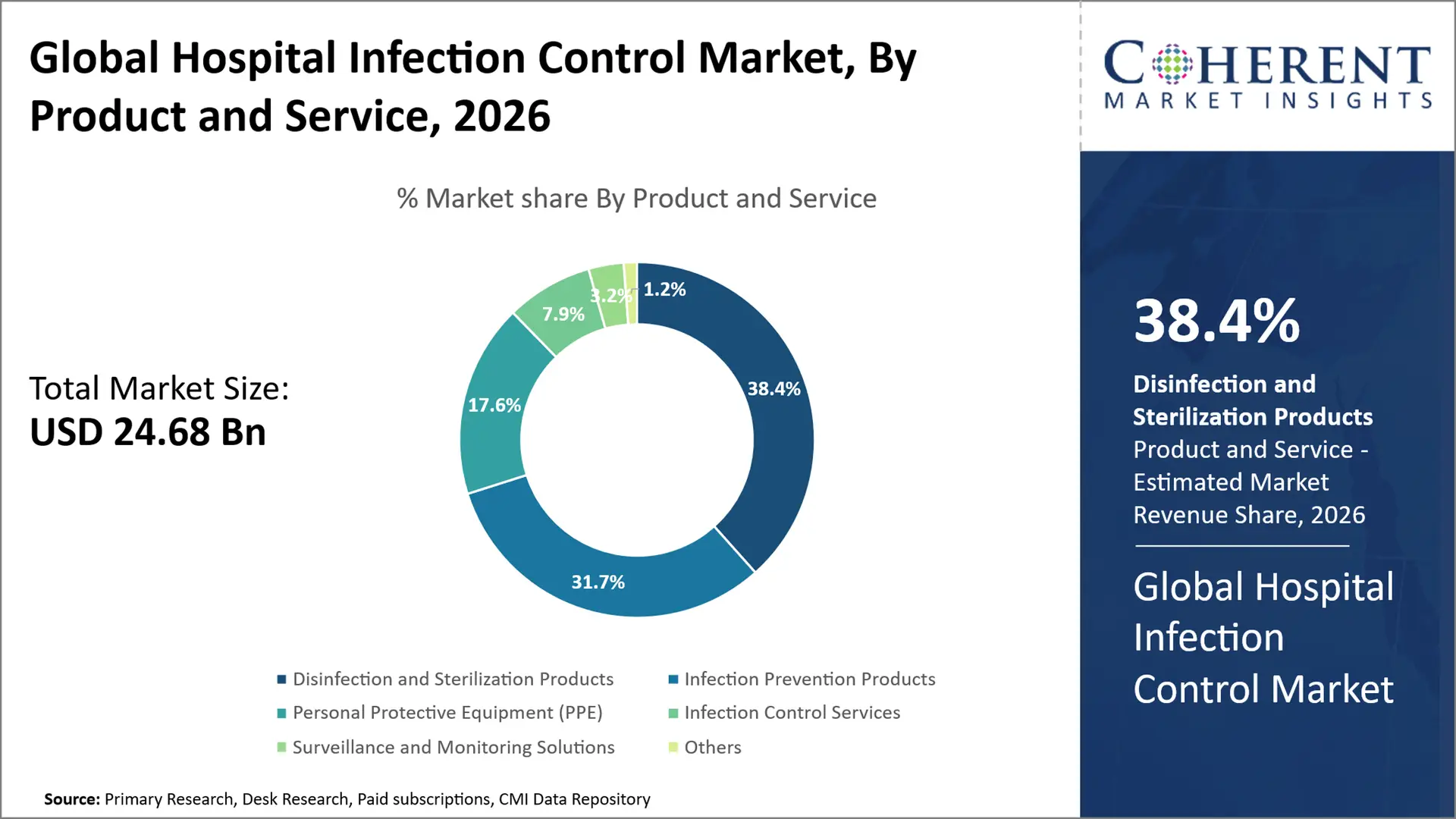
Why Do Disinfection and Sterilization Products Dominate the Global Hospital Infection Control Market?
Disinfection and sterilization products are projected to hold the market share of 38.4% in 2026, due to its essential role in preventing the cross-transmission of infections in the healthcare setting. Additionally, their wide use in medical device reprocessing and environmental cleaning reinforces segment growth. For instance, in August 2025, the UK Health Security Agency (UKHSA) updated its guidance on the prevention of Candidozyma auris cases. The guidelines stated that all patient equipment and environment should be cleaned and disinfected using 1,000 parts per million available chlorine, or other disinfectant effective against C. auris. The guidance additionally strengthened surveillance and reporting requirements for cases.
- Current Industry Events of 2026
- Market Size Estimation
- Regional Breakdown
- Competitive Landscape
- Customer Intelligence
- Segmental Analysis
- Pricing Analysis
- Key Market Drivers, Challenges & Future Trends
- Customized Insights Section
Why Do Healthcare-Associated Infections (HAIs) Represent the Largest Infection Type Segment in the Hospital Infection Control Market?
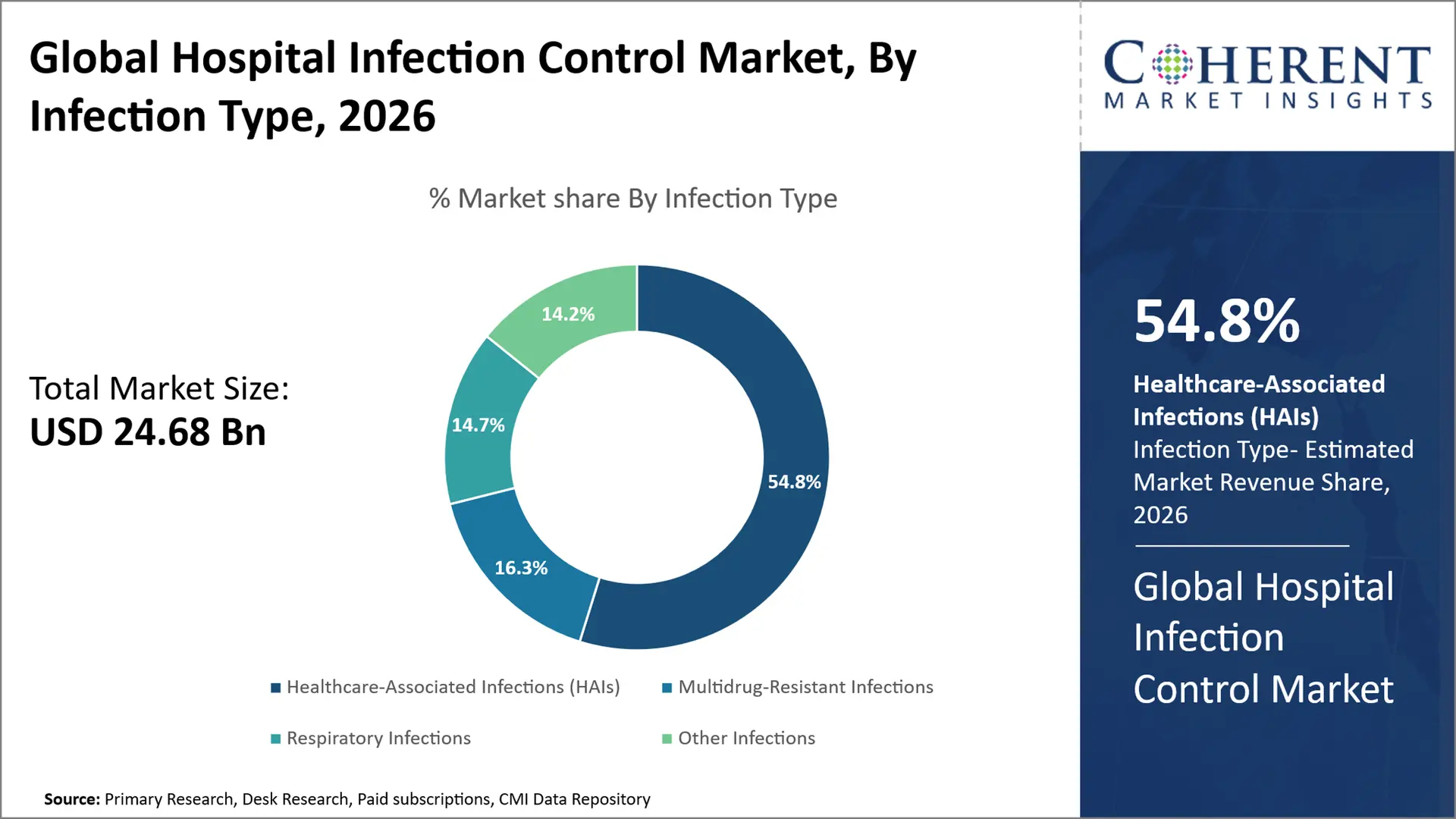
Healthcare-Associated Infections (HAIs) are projected to hold a market share of 54.8% in 2026, mainly because they are represented constantly as part of healthcare provision, which requires continuous surveillance, prevention and intervention. In addition, the clinical and operational management of HAIs probably sustain their position as a central agenda item in hospital IPC programs. For instance, in 2024-25 Australian Institute of Health and Welfare (AIHW), reported 12,300 private-hospital hospitalizations and 50,700 public-hospital involved healthcare-associated infections. This measurable burden reinforces the need for systematic HAI prevention and infection-control solutions across healthcare facilities.
Heat and Steam Sterilization Segment Dominates the Global Hospital Infection Control Market
The heat and steam sterilization segment is projected to hold a market share of 39.2% in 2026, due to its proven efficacy, wide applicability and compatibility with reusable heat-resistant medical equipment. Additionally, it has an existing infrastructure, namely the hospitals' scald sterilizer, to be incorporated into routine procedures. For instance, in November 2025, NSW Health require that all reusable skin-penetrating instruments are sterilized using the steam-under-pressure sterilizer that uses a bench-top autoclave in accordance with AS 5369:2023. Validation and sterilization logs are mandated. This regulatory requirement will help to ensure the continued use of steam sterilization in healthcare facilities.
Current Events and their Impact
Current Events | Description and its Impact |
Nepal Launches Hospital-Level HAI Surveillance Programme at Bharatpur Hospital (June 2026) |
|
European Centre for Disease Prevention and Control (ECDC) Proposes EU Guidance for Infection Prevention and Control Programmes (May 2026) |
|
WHO Releases Guidelines for Prevention of Central Venous Catheter-Associated Infections (May 2026) |
|
Hospital Infection Control Market Dynamics
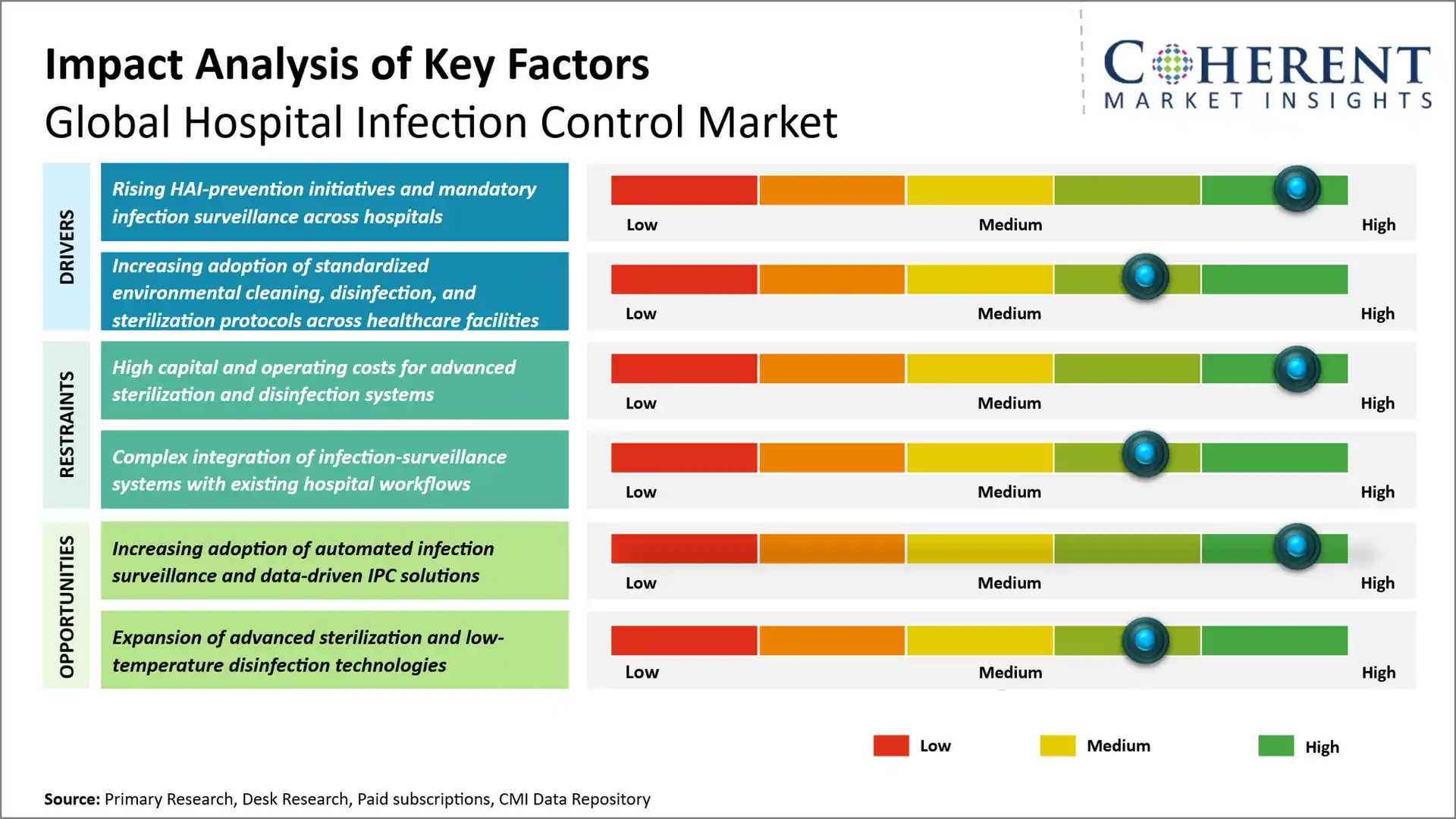
Market Drivers
- Rising HAI-prevention initiatives and mandatory infection surveillance across hospitals: Rising hospital acquired infection (HAI) prevention initiatives and structured infection surveillance requirements are encouraging hospitals to strengthen standardized monitoring, reporting, and IPC practices. This is increasing demand for solutions that support consistent HAI tracking and data-driven infection-prevention decisions. For instance, in January 2024, India’s NCDC conducted an HAI-surveillance sensitization workshop for 15 sites under the National Programme on AMR Containment, supporting wider implementation of standardized HAI surveillance.
- Increasing adoption of standardized environmental cleaning, disinfection, and sterilization protocols across healthcare facilities: The increasing standardization of environmental cleaning and medical-device reprocessing protocols is strengthening demand for validated disinfection and sterilization solutions. Healthcare facilities are increasingly emphasizing consistent procedures, documented compliance, and quality assurance to reduce variation in infection-control practices. For instance, in 2024, WHO published its first global guidelines on hand hygiene in community settings and continued implementation of its standardized IPC approach, reinforcing the use of structured infection-prevention practices across healthcare systems.
- Growing focus on preventing multidrug-resistant infections: The rising need to contain multidrug-resistant organisms is increasing hospitals’ focus on rigorous environmental decontamination, isolation practices, and surveillance. This is supporting demand for infection-control solutions that can reduce pathogen transmission and strengthen antimicrobial-resistance prevention programs. For instance, in 2024, WHO launched the Global Antimicrobial Resistance Surveillance System (GLASS) report, highlighting the need for stronger surveillance and infection-prevention measures to address the growing burden of antimicrobial resistance.
Emerging Trends
- AI-enabled infection surveillance and predictive analytics: Hospitals are increasingly adopting AI and analytics to integrate laboratory, patient, and clinical workflow data for earlier identification of infection risks. Predictive models are expected to support targeted interventions and improve the speed and accuracy of outbreak detection.
- Rise of automated and robotic disinfection: Automated UV-C, hydrogen peroxide, and robotic disinfection systems are gaining attention as hospitals seek more consistent environmental decontamination. These technologies can complement manual cleaning by improving coverage and reducing dependence on labor-intensive processes.
- Integration of antimicrobial and smart infection-control technologies: The market is moving toward antimicrobial surfaces, infection-resistant materials, and connected monitoring technologies that provide continuous visibility into environmental hygiene. Integration of these technologies with hospital workflows can enable more proactive infection prevention and compliance management.
Regional Insights
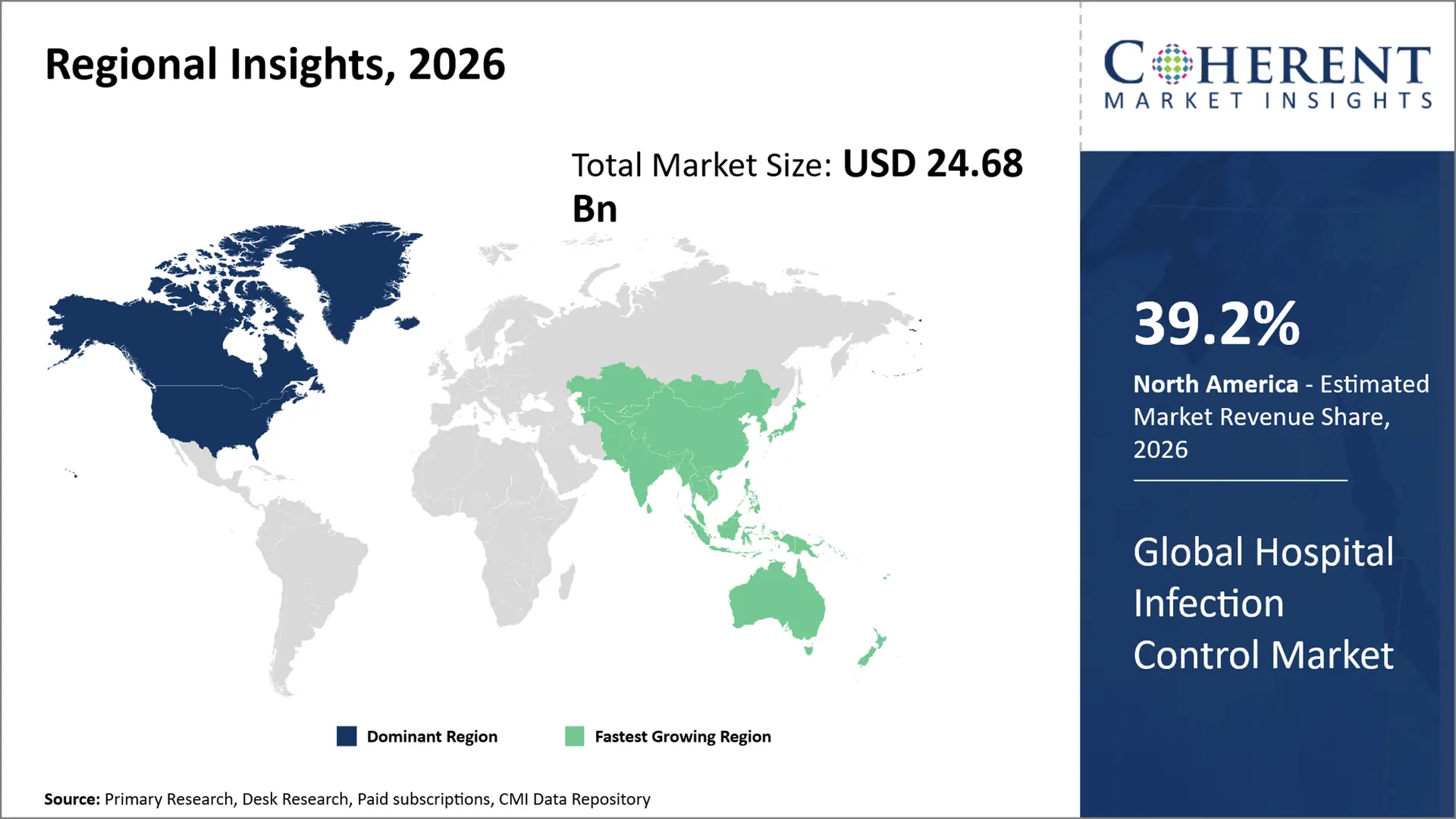
Why is North America a Strong Market for Hospital Infection Control?
North America leads the global hospital infection control market, accounting for an estimated 39.2% share in 2026, owing to the presence of highly developed healthcare infrastructure, strict regulations, and growing adoption of sophisticated infection-control devices in the region. Growing government-led efforts to improve infection-prevention and healthcare-acquired infection (HAI) surveillance, and the strict validation process by the Food and Drug Administration (FDA) which demands high standards of safety & efficacy, are expected to drive the adoption of new products.
For instance, under the CMS FY 2025 IPPS Final Rule, two additional HAI quality measures—oncology-stratified CAUTI and CLABSI standardized infection ratios were adopted, with reporting beginning in the CY 2026 reporting period. This expansion of mandatory HAI measurement is expected to strengthen hospital infection surveillance and support adoption of infection-control solutions.
Why Does Asia Pacific Hospital Infection Control Market Exhibit High Growth?
Asia Pacific is expected to exhibit the fastest growth in the global hospital infection control market, registering an estimated CAGR of 8.6% during 2026–2033. The region is projected to account for 24.8% of the global market in 2026, owing to growing healthcare infrastructure, surging need for HAI prevention, and rising infection control needs. The healthcare policies of the countries like China, India, Japan and South Korea focus on strengthening hospital safety benchmarks & minimizing HAIs using funding, awareness campaigns, surveillance and guidelines.
For instance, India’s National Action Plan on Antimicrobial Resistance (NAP-AMR) specifically prioritizes strengthening infection-prevention practices and AMR surveillance in healthcare facilities, alongside antimicrobial stewardship and awareness measures. The policy framework allows for the roll out of structured IPC practices and surveillance across the country. (Source: Government of India) Moreover, expanding healthcare capacity and rising acceptance of standardized infection prevention and control (IPC) measures in Asia Pacific is likely to propel the demand for infection control solutions.
Global Hospital Infection Control Market Outlook for Key Countries
Why is the U.S. Leading Innovation and Adoption in the Hospital Infection Control Market?
The U.S. leads innovation and adoption in the hospital infection control market due to its highly evolved hospital infection-prevention ecosystem and the seamless adoption of automated surveillance, autoclaves and environmental disinfectants. The hospitals in the country are becoming more receptive to solutions that support real-time infection monitoring, automated workflows and quantifiable infection prevention and control performance. This innovation environment make U.S. an ideal location for technology-based infection-control solutions.
Is Japan a Favorable Market for Hospital Infection Control Market?
Japan represents a promising market for hospital infection control due to well-developed hospital infrastructure, the prominence of reprocessing and sterilization of medical devices, and the increasing need to address infection risks associated with an aging patient population. In addition, the market offer opportunities for high-efficiency sterilization, automized disinfection and infection-surveillance equipment, which lead to increased hospital workflow and infection-prevention efficiency.
Is China Emerging as a Key Growth Hub for the Hospital Infection Control Market?
China is poised to emerge as one of the fastest-growing markets for hospital infection control, owing to the continuous upgradation and growth of hospitals. Infection control hospital hygiene and infection-prevention protocols are further gaining importance. The country’s cutting-edge sterilization, environmental disinfection and HAI surveillance systems are likely to offer maximum opportunities for growth as the hospitals' infection-control infrastructure ramps up.
Why Does Germany Top the European Hospital Infection Control Market?
Germany leads the European hospital infection control market owing to its well-developed hospital infection control infrastructure, established hospital hygiene system, strict requirements for infection prevention and patient care and its efficient infection-surveillance infrastructure. Also, the high demand for sterilization, environmental disinfection, and HAI monitoring solutions is expanding the market in the country.
Is Hospital Infection Control Market Developing in India?
The growth of India's hospital infection control market is expected to be driven by the rising hospital capacity and growing standardization of infection-prevention protocol. Growth opportunities are seen to be most robust for sterilization systems, environmental disinfection, HAI surveillance and infection-control solutions as hospitals build their infection prevention and control (IPC) infrastructure.
Key Infection-Control Priorities By Infection Type
Infection Type | Key Infection-Control Priorities |
Healthcare-Associated Infections (HAIs) | Environmental disinfection, sterilization, hand hygiene, infection surveillance, and device-associated infection prevention |
Multidrug-Resistant Infections | Antimicrobial-resistance surveillance, isolation practices, environmental decontamination, and antimicrobial stewardship |
Respiratory Infections | Respiratory hygiene, ventilation and air-quality management, surface disinfection, and appropriate personal protective equipment |
Other Infections | Targeted disinfection, sterilization, hygiene protocols, and pathogen-specific infection prevention |
How is the increasing adoption of automated infection surveillance and data-driven IPC solutions creating new growth opportunities in the hospital infection control market?
The adoption of automated infection surveillance and data-driven IPC solutions offers opportunities for hospitals to flag risks for infections earlier and to deliver more targeted interventions. In addition, the ability to aggregate EHR, laboratory, and workflow data allow for real-time monitoring, predictive risk calculations, and a more standardized approach to decision-making. For instance, the U.S. Centers for Disease Control and Prevention (CDC) National Healthcare Safety Network is improving digital quality measures that support automated extraction of patient level data from electronic health records for improved automated surveillance and reporting of healthcare-associated infections.
Market Players, Key Development, and Competitive Landscape
Key Developments
- In June 2026, Getinge AB launched the Aquadis Endo 110, a next-generation automated endoscope reprocessor for cleaning and high-level disinfection of flexible endoscopes. The system provides a 20-minute standard cycle and can increase processing throughput by up to 36% versus previous models. It also incorporates RFID-enabled traceability and automated channel monitoring, strengthening infection-control workflows in hospitals.
- In April 2026, Getinge AB expanded the validated load capacity of its GSS67N steam sterilizer platform, enabling processing of up to 24 trays and 600 lbs per cycle within the same installed footprint. The enhancement is designed to increase sterile-processing throughput without requiring additional chamber space or infrastructure, supporting more efficient hospital sterilization and infection-control workflows.
Competitive Landscape
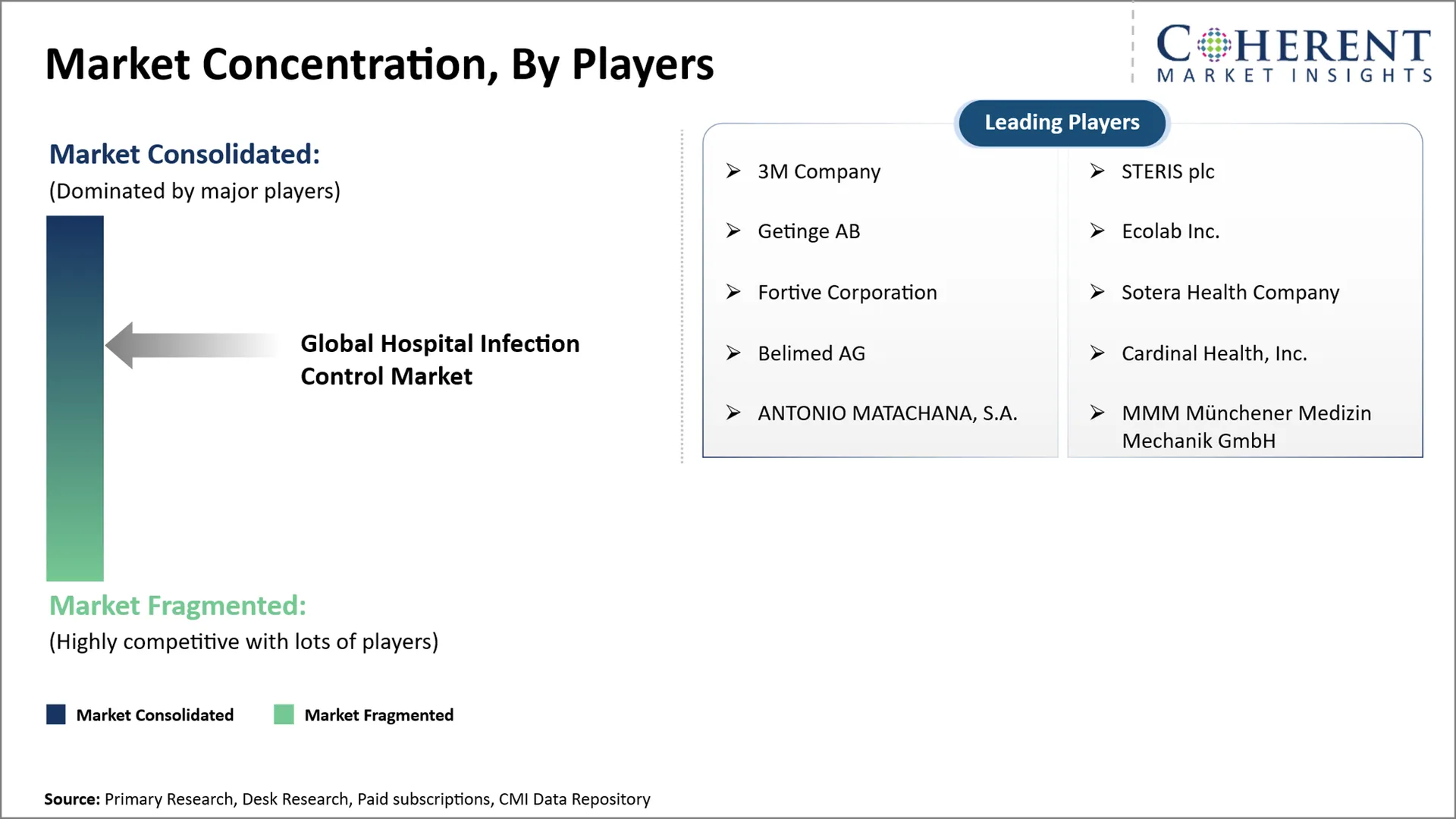
The global hospital infection control market is moderately competitive, with market dynamics shaped by advancements in disinfection and sterilization technologies, antimicrobial surfaces, infection surveillance systems, and healthcare-associated infection (HAI) prevention solutions. Market participants are increasingly focusing on improving infection prevention efficacy, strengthening compliance with infection-control protocols, and developing automated and technology-enabled solutions across hospitals and healthcare facilities. Key focus areas include:
- Development of advanced disinfection and sterilization technologies
- Expansion of antimicrobial and infection-resistant products
- Advancement of automated environmental disinfection solutions
- Integration of digital infection surveillance and monitoring platforms
- Enhancement of infection-control efficacy, regulatory compliance, and standardized hospital protocols
Market Report Scope
Hospital Infection Control Market Report Coverage | |||
Report Coverage | Details | ||
Base Year | 2025 | Market Size in 2026: | USD 24.68 Bn |
Historical Data For: | 2020 To 2024 | Forecast Period: | 2026 To 2033 |
Forecast Period 2026 To 2033 CAGR: | 7.4% | 2033 Value Projection: | USD 40.55 Bn |
Geographies covered: |
| ||
Segments covered: |
| ||
Companies covered: | 3M Company, STERIS plc, Getinge AB, Ecolab Inc., Fortive Corporation, Sotera Health Company, Belimed AG, Cardinal Health, Inc., ANTONIO MATACHANA, S.A., MMM Münchener Medizin Mechanik GmbH | ||
Growth Drivers: |
| ||
Restraints & Challenges: |
| ||
Analyst Opinion (Expert Opinion)
- In the coming years, global hospital infection control market will increasingly shift from conventional, labor-intensive infection prevention practices toward integrated, automated, and continuously monitored infection-control systems. Growth is expected to be driven by the convergence of automated disinfection, antimicrobial technologies, infection surveillance, and data-based monitoring, with hospitals increasingly prioritizing solutions that can demonstrate measurable reductions in contamination and improve operational consistency.
- The maximum opportunities are foreseen within automated environmental disinfection systems for acute-care hospitals in the U.S., where the need to improve infection-control consistency and reduce dependence on manual processes can support adoption of UV-C, hydrogen peroxide, and other automated technologies. Players that combine disinfection hardware with monitoring, workflow integration, and service-based models could capture higher-value opportunities rather than competing primarily on equipment pricing.
- In order to gain a competitive advantage market players should differentiate through measurable infection-control outcomes, interoperability, automation, and ease of deployment rather than expanding product portfolios alone. Developing solutions that integrate with hospital workflows, provide actionable performance data, simplify compliance documentation, and offer recurring validation or service support can strengthen customer retention and create a more defensible market position.
Speak to the analyst
Want personalized insights?
Take the findings above to one of our principal consultants, or have the report rebuilt around the segments, geographies and competitors you actually track.
Market Segmentation
- Product and Service Insights (Revenue, USD Bn, 2021 - 2033)
- Disinfection and Sterilization Products
- Infection Prevention Products
- Personal Protective Equipment (PPE)
- Infection Control Services
- Surveillance and Monitoring Solutions
- Others
- Infection Type Insights (Revenue, USD Bn, 2021 - 2033)
- Healthcare-Associated Infections (HAIs)
- Multidrug-Resistant Infections
- Respiratory Infections
- Other Infections
- Disinfection and Sterilization Method Insights (Revenue, USD Bn, 2021 - 2033)
- Chemical Disinfection
- Heat and Steam Sterilization
- Low-Temperature Sterilization
- Radiation and UV Disinfection
- Others
- End User Insights (Revenue, USD Bn, 2021 - 2033)
- Hospitals and Health Systems
- Ambulatory Surgical Centers
- Specialty Clinics
- Long-Term Care Facilities
- Others
- Regional Insights (Revenue, USD Bn, 2021 - 2033)
- North America
- U.S.
- Canada
- Latin America
- Brazil
- Argentina
- Mexico
- Rest of Latin America
- Europe
- Germany
- U.K.
- Spain
- France
- Italy
- Russia
- Rest of Europe
- Asia Pacific
- China
- India
- Japan
- Australia
- South Korea
- ASEAN
- Rest of Asia Pacific
- Middle East
- GCC Countries
- Israel
- Rest of Middle East
- Africa
- South Africa
- North Africa
- Central Africa
- North America
- Key Players Insights
- 3M Company
- STERIS plc
- Getinge AB
- Ecolab Inc.
- Fortive Corporation
- Sotera Health Company
- Belimed AG
- Cardinal Health, Inc.
- ANTONIO MATACHANA, S.A.
- MMM Münchener Medizin Mechanik GmbH
Sources
Primary Research Interviews
- Hospital infection prevention and control (IPC) directors and healthcare epidemiologists
- Sterile processing department (SPD) managers and sterilization specialists
- Environmental services and hospital hygiene managers
- Clinical microbiologists and infectious-disease specialists
- Hospital procurement and clinical engineering decision-makers
- Infection-control technology specialists
- Medical-device reprocessing and sterilization technology developers
Stakeholders
- Hospital infection prevention and control departments
- Sterile processing and central sterile services departments (CSSDs)
- Environmental services and healthcare hygiene providers
- Medical-device reprocessing, sterilization, and disinfection technology developers
- Infection-surveillance and healthcare analytics technology providers
- Clinical microbiology and infectious-disease laboratories
- Healthcare facility management and hospital procurement organizations
- End-use Sectors
- Hospitals and medical centers
- Ambulatory surgical centers
- Clinics and outpatient healthcare facilities
- Long-term care and nursing facilities
- Diagnostic and medical laboratories
- Dental healthcare facilities
- Dialysis centers
- Other healthcare facilities
- Regulatory & Health Bodies
- U.S. Food and Drug Administration (FDA) – medical-device sterilization, reprocessing, disinfection, and infection-control products
- U.S. Environmental Protection Agency (EPA) – registration and regulation of antimicrobial pesticides and disinfectant products used in healthcare settings
- Centers for Disease Control and Prevention (CDC) – healthcare infection prevention, disinfection and sterilization guidance, and HAI surveillance
- World Health Organization (WHO) – global infection prevention and control policies, standards, and healthcare-facility IPC programs
- European Centre for Disease Prevention and Control (ECDC) – healthcare-associated infection surveillance and infection prevention and control across Europe
- Medicines and Healthcare products Regulatory Agency (MHRA), UK – regulation of medical devices and healthcare products relevant to infection control
Databases
- CDC National Healthcare Safety Network (NHSN) – HAI surveillance, infection-control adherence, and healthcare safety data
- WHO Global Antimicrobial Resistance and Use Surveillance System (GLASS) – global antimicrobial resistance and antimicrobial-use surveillance data
- CDC HAI Data and Prevention Resources – healthcare-associated infection data and infection-prevention measures
- FDA Medical Device Databases – regulatory and safety information for medical devices used in healthcare settings
- EPA Antimicrobial Pesticide Products Database – registered antimicrobial and disinfectant products
Journals
- American Journal of Infection Control (AJIC)
- Infection Control & Hospital Epidemiology (ICHE)
- Journal of Hospital Infection
- Antimicrobial Resistance & Infection Control
- Clinical Infectious Diseases
- American Journal of Infection Control and Prevention
- BMC Infectious Diseases
- Journal of Clinical Microbiology
- Infection and Drug Resistance
- International Journal of Infectious Diseases
Associations
- Association for Professionals in Infection Control and Epidemiology (APIC)
- Society for Healthcare Epidemiology of America (SHEA)
- Association for the Advancement of Medical Instrumentation (AAMI)
- International Federation of Infection Control (IFIC)
- European Society of Clinical Microbiology and Infectious Diseases (ESCMID)
- Association of periOperative Registered Nurses (AORN)
- International Society for Infectious Diseases (ISID)
Public Domain Sources
- Centers for Disease Control and Prevention (CDC) – infection prevention and control guidance, HAI surveillance, environmental cleaning, disinfection, and sterilization information CDC
- World Health Organization (WHO) – infection prevention and control guidance, IPC program requirements, and global infection-control resources World Health Organization
- U.S. Food and Drug Administration (FDA) – medical-device safety, sterilization, reprocessing, and regulatory information
- U.S. Environmental Protection Agency (EPA) – healthcare disinfectants and antimicrobial product information
- European Centre for Disease Prevention and Control (ECDC) – HAI surveillance and European IPC resources
- National Healthcare Safety Network (NHSN) – HAI and healthcare infection-prevention surveillance data CDC
- WHO Global Antimicrobial Resistance and Use Surveillance System (GLASS) – standardized global AMR and antimicrobial-use surveillance data World Health Organization
- Association for the Advancement of Medical Instrumentation (AAMI) – publicly available information on healthcare sterilization standards and medical-device processing
Proprietary Elements
- CMI Data Analytics Tool, Proprietary CMI Existing Repository of information for last 10 years.
Get access to 250+ pages report
Every segment, forecast, competitor profile and data table behind the analysis above — available for instant download.
- ESOMAR Member
- ISO 9001:2015 Certified
- D-U-N-S Registered
- GDPR & CCPA Compliant
Frequently Asked Questions
The global hospital infection control market is estimated to be valued at USD 24.68 Bn in 2026 and is expected to reach USD 40.55 Bn by 2033.
Disinfection and sterilization products dominate due to their essential role in preventing healthcare-associated infections (HAIs) by eliminating pathogens from medical instruments, surfaces, and healthcare environments.
Hospital infection control refers to the policies, practices, and technologies used to prevent and control the spread of infections within healthcare facilities.
The CAGR of global hospital infection control market is projected to be 7.4% from 2026 to 2033.
Rising HAI-prevention initiatives and mandatory infection surveillance across hospitals, and increasing adoption of standardized environmental cleaning, disinfection, and sterilization protocols across healthcare facilities are the major factors driving the growth of the global hospital infection control market.
High capital and operating costs for advanced sterilization and disinfection systems, and complex integration of infection-surveillance systems with existing hospital workflows are the major factors hampering the growth of the global hospital infection control market.
In terms of infection type, healthcare-associated infections (HAIs) are estimated to dominate the market revenue share in 2026.