

Clinical Workflow Solutions Market Size And Share Analysis - Growth Trends And Forecasts (2026-2033)
Clinical Workflow Solutions Market is estimated to be valued at USD 13.21 Bn in 2026 and is expected to reach USD 21.63 Bn in 2033, exhibiting a compound annual growth rate (CAGR) of 7.3% from 2026 to 2033.
Key Takeaways
- Based on Type, the Data Integration Solutions segment is expected to hold the largest share of the global clinical workflow solutions market in 2026, due to the rising need for interoperability and seamless patient information exchange across healthcare systems.
- Based on End User, the Hospitals segment leads the market holding an estimated share of 45% in 2026, due to their growing need for streamlined operations, better patient outcomes, and optimized resource utilization.
- Based on Region, North America is estimated to lead the market with a share of 38. 30% in 2026. While, Asia Pacific is projected to be the fastest growing region during the forecast period.
Market Overview
The global clinical workflow solutions market is witnessing robust growth, driven by a growing patient population and the widespread adoption of healthcare IT (HCIT) systems. As healthcare providers aim to improve efficiency and patient outcomes, the clinical workflow solutions market demand continues to rise. Additionally, the increasing need to reduce operational costs and streamline care delivery is boosting adoption across hospitals and clinics.
Current Events and their Impact on the Clinical Workflow Solutions Market
Current Event | Description: |
Geopolitical and Regulatory Dynamics |
|
Economic and Healthcare Infrastructure Trends |
|
Role of Artificial Intelligence (AI) in Clinical Workflow Solutions Market
Artificial Intelligence (AI) is playing a transformative role in the Clinical Workflow Solutions Market, driving efficiency, accuracy, and decision-making in healthcare systems. AI-powered tools are increasingly being integrated into clinical workflows to automate routine tasks such as patient data entry, diagnostics, and scheduling, thereby reducing the administrative burden on healthcare providers.
For instance, in June 2025, Commure launched Commure Agents, AI-powered assistants purpose-built to fully automate physician workflows within clinical environments. Seamlessly integrated with electronic health records (EHRs), these intelligent agents are embedded throughout the clinical workflow, tackling routine tasks including patient calls, appointment scheduling, care coordination, referral and prior authorization handling, pre‑operative planning, discharge follow‑up, and billing.
- Current Industry Events of 2026
- Market Size Estimation
- Regional Breakdown
- Competitive Landscape
- Customer Intelligence
- Segmental Analysis
- Pricing Analysis
- Key Market Drivers, Challenges & Future Trends
- Customized Insights Section
Segmental Insights
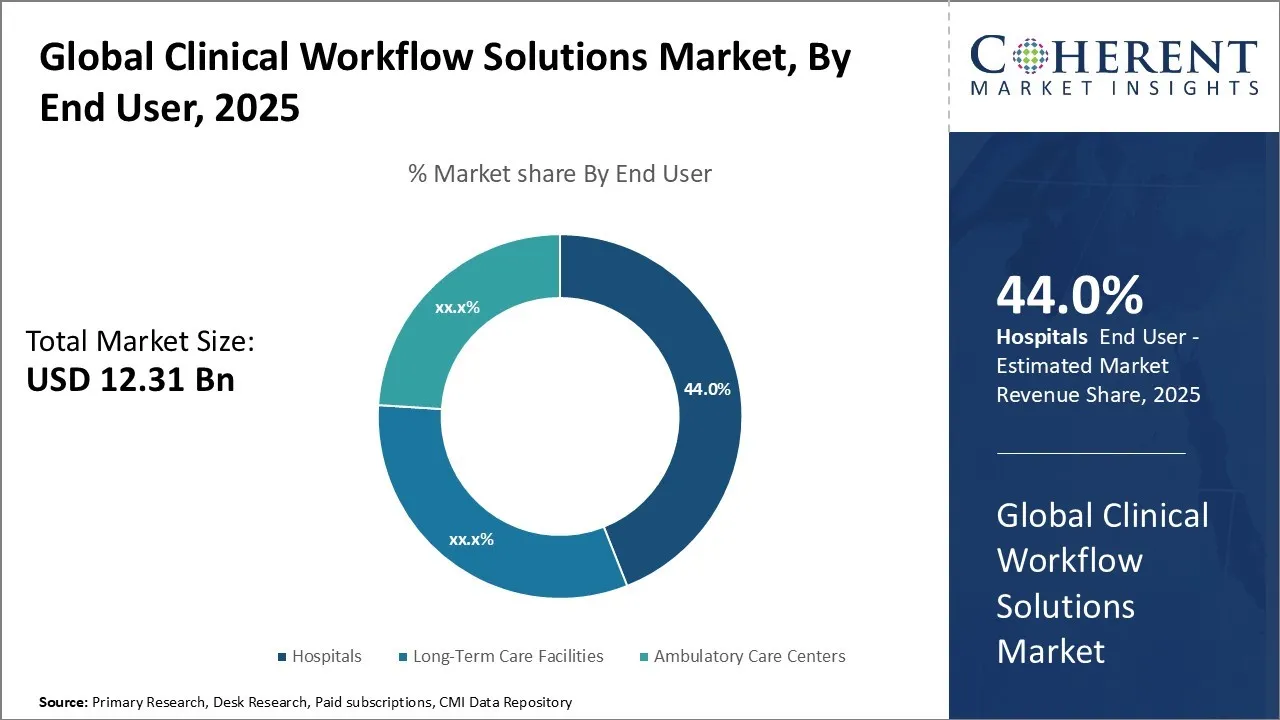
Clinical Workflow Solutions Market Insight, By End User - Hospital Segment Dominates the market on account of the Rising Need to Streamline Operation and Better Patient Outcome
In terms of end user, the hospitals segment is expected to dominate the clinical workflow solutions market with 45% share in 2026, due to their growing need for streamlined operations, better patient outcomes, and optimized resource utilization. With rising patient loads and increasing complexity of healthcare delivery, hospitals rely on clinical workflow solutions to enhance coordination between departments, reduce administrative burden, and minimize medical errors.
In March 2025, Microsoft introduced Dragon Copilot, a new AI assistant tailored for clinical workflows in hospital settings. Combining natural-language voice dictation, ambient listening, and generative AI, it streamlines documentation by capturing patient–clinician conversations and converting them into high‑quality specialty‑specific notes.
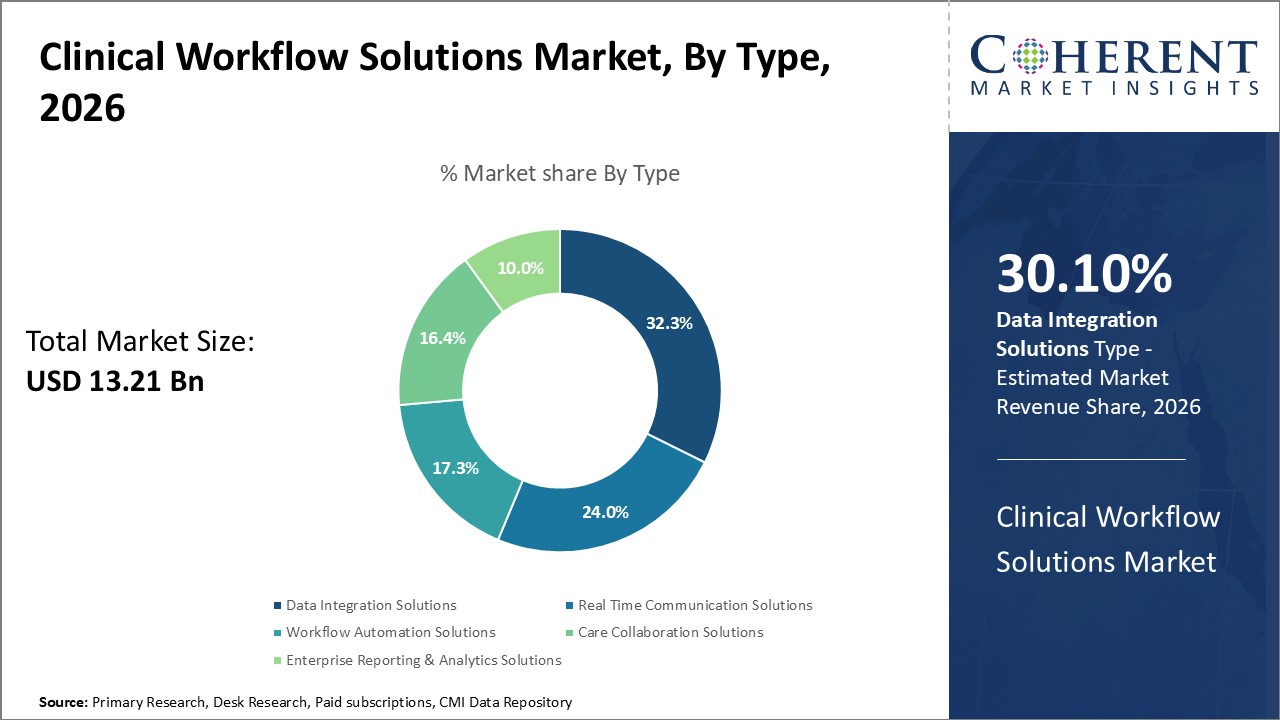
Clinical Workflow Solutions Market Insight, By Type - Data Integration Holds the larges share owing to the Rising Need for Interoperability and Seamless Patient Information
In term of type, the data integration solutions segment is expected to contribute the highest share of the market in 2026, due to the rising need for interoperability and seamless patient information exchange across healthcare systems. As hospitals and clinics adopt diverse electronic health records (EHRs), lab systems, and imaging tools, integrating these data sources into a unified workflow becomes essential to improve care coordination, reduce errors, and support real-time decision-making.
For instance, in August 2025, Nimkee Memorial Wellness Center and MyMichigan Health announced a new partnership to integrate Electronic Medical Records (EMR) at Nimkee using MyMichigan’s Epic system through the Epic Community Connect program. This collaboration will streamline provider communication, enhance access to patient records, reduce redundancy, lower costs, and elevate care coordination, further propelling the clinical workflow solution market share.
Regional Insights
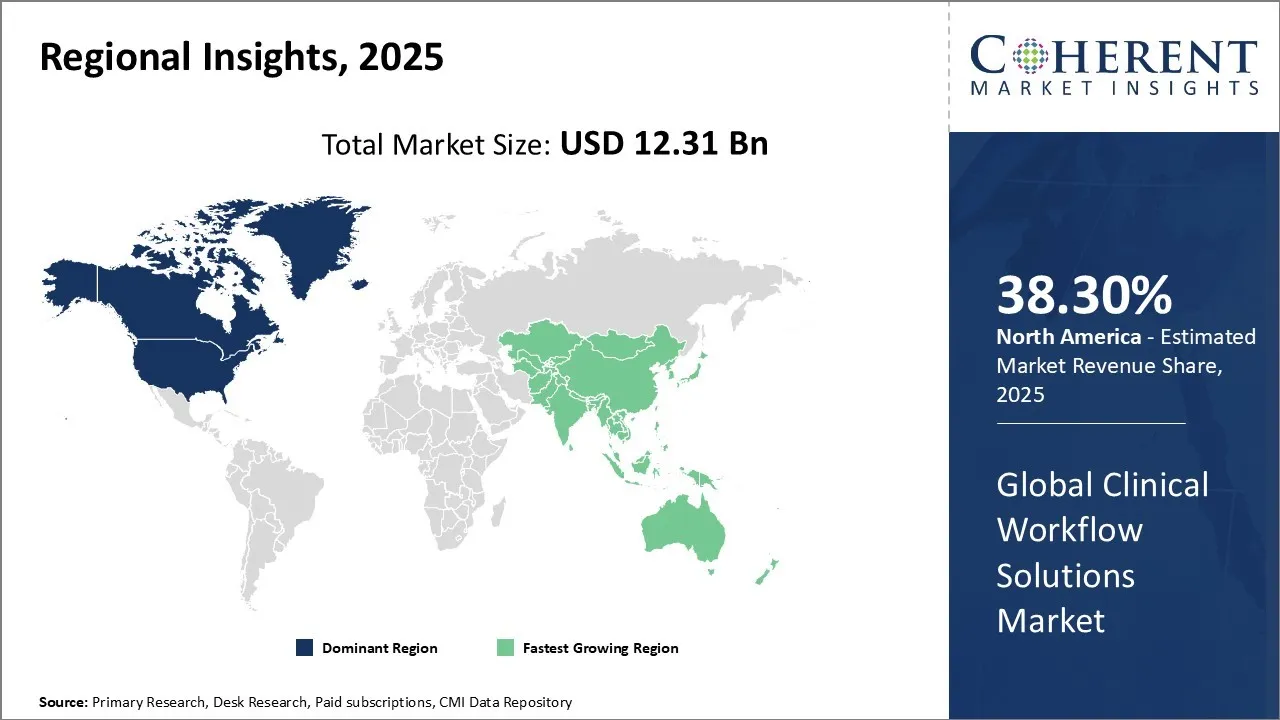
North America Clinical Workflow Solutions Market Analysis & Trends
North America is expected to gain highest share of 38.30% in the market in 2026, due to the increasing patient volume, growing geriatric population, increasing adoption of Healthcare IT solutions, and increasing adoption of clinical workflow solutions in the region. For instance, according to the Food and Drug Administration (FDA), digital health technologies (such as healthcare IT solutions) help providers reduce inefficiencies, improve access and quality, reduce costs, and make medicine more personalized. Moreover, these technologies enable consumers and patients to manage and track health and wellness-related activities more efficiently.
For instance, in December 2024, Philips introduced its AI‑enabled CT 5300 system in North America at RSNA 2024, featuring its CT Smart Workflow with ‘Precise’ software. The NanoPanel Precise detector and ultra‑low‑noise reconstruction deliver an 80 percent reduction in radiation dose, 85 percent lower image noise, and 60 percent improved low‑contrast detectability.
Asia Pacific Clinical Workflow Solutions Market Analysis & Trends
Asia Pacific region is expected to exhibit the fastest growing in the clinical workflow solutions market share during the forecast period, due to rising patient volumes, government digital health initiatives, and increased adoption of healthcare IT. Countries like China and India are investing in smart hospitals to boost efficiency, address staff shortages, and improve patient care quality.
For instance, in July 2026, Medow Health AI, an Australian health‑technology provider, launched its AI‑powered medical scribe platform in Singapore. The tool captures and structures clinical notes, referral letters, and reports automatically during patient consultations, helping to alleviate administrative burdens and improve documentation accuracy.
Clinical Workflow Solutions Market Outlook Country-Wise
The U.S. Clinical Workflow Solutions Market Trends
The United States leads the clinical workflow solutions market revenue due to widespread HCIT adoption, a mature EHR infrastructure, and a strong focus on workflow efficiency. Healthcare providers are investing in digital tools to enhance care coordination, reduce errors, and meet regulatory standards, making the U.S. a key demand center in the global market.
For Instance, in March 2026, Royal Philips formed a strategic partnership with Ibex Medical Analytics, unveiling the Philips IntelliSite Pathology Solution (PIPS 6.0) to bolster AI‑driven digital pathology workflows. The enhanced integration with AI‑powered diagnostics for prostate, breast, and gastric cancers has demonstrated up to 37% productivity gains and faster reporting.
China Clinical Workflow Solutions Market Trends
China is a key driver in the clinical workflow solutions market due to rapid healthcare digitization, strong government support, and a large, aging population. Initiatives like Healthy China 2030 promote e-health adoption across hospitals and clinics. With rising demand for efficient care delivery, hospitals are investing in EHRs, AI-powered tools, and smart hospital infrastructure, accelerating market growth.
For instance, in March 2024, The Pattern Recognition Lab (PRL) at Friedrich‑Alexander‑Universität (FAU) has launched a pioneering international collaboration with West China Hospital in Chengdu. Their mission: to integrate AI into the clinical workflow, enhancing breast cancer diagnosis via MR imaging and boosting the quality and efficiency of spine surgery using intraoperative cone‑beam CT. The program aims to streamline patient care and set new standards in medical imaging and surgical practices.
Market Report Scope
Clinical Workflow Solutions Market Report Coverage
| Report Coverage | Details | ||
|---|---|---|---|
| Base Year: | 2025 | Market Size in 2026: | USD 13.21 Bn |
| Historical Data for: | 2020 To 2024 | Forecast Period: | 2026 To 2033 |
| Forecast Period 2026 to 2033 CAGR: | 7.3% | 2033 Value Projection: | USD 21.63 Bn |
| Geographies covered: |
| ||
| Segments covered: |
| ||
| Companies covered: | Allscripts Healthcare LLC, Cerner Corporation, NXGN Management, LLC, Mckesson Corporation, Koninklijke Philips N.V., Hill-Rom Services, Inc., Cisco Systems, Inc., GE Healthcare, Stanley Healthcare, and Vocera Communications, among others. | ||
| Growth Drivers: |
| ||
| Restraints & Challenges: |
| ||
Global Clinical Workflow Solutions Market Drivers
- Increasing Patient Volume to Augment Market Growth
One of the key factors expected to propel growth of the global clinical workflow solutions market over the forecast period is the rise in patient pool across the globe due to increasing prevalence of chronic diseases. With the rise in patient pool worldwide, the demand for safe and effective clinical solutions to manage the increasing patient population and their medical records is also increasing rapidly. According to the Centers for Disease Control & Prevention (CDC), chronic diseases, such as heart disease, cancer, and diabetes, are the leading causes of death and disability in the U.S., with heart disease and cancer alone accounting for around 38% of all deaths.
- Increasing Adoption HCIT Solutions to Underpin Market Growth
Another major factor driving the global clinical workflow solutions market share is the increasing adoption of Healthcare IT (HCIT) solutions worldwide. As healthcare systems become more digitized, there is a growing need for integrated technologies that streamline clinical operations, improve patient care, and enhance decision-making. HCIT solutions such as electronic health records (EHR), computerized physician order entry (CPOE), and clinical decision support systems (CDSS) are being rapidly adopted to reduce administrative burden, minimize errors, and improve care coordination. This digital transformation is especially prominent in hospitals and large healthcare networks, where workflow automation significantly boosts efficiency, data accuracy, and patient outcomes. As a result, the integration of HCIT continues to accelerate the demand for clinical workflow solutions across both developed and emerging markets.
For instance, November 2024, Konica Minolta Healthcare Americas introduced EXa Enterprise, a cloud‑based image management solution built on AWS HealthImaging, integrating its PACS/RIS core with third‑party tools. Designed for hospitals (up to 500 beds) and large imaging centers, the platform enhances Clinical Workflow through AI‑powered orchestration, vendor‑neutral archiving, universal viewing, advanced visualization, image sharing and business intelligence. Backed by Konica Minolta’s Healthcare IT (HCIT) expertise, EXa Enterprise delivers scalable, secure access and faster data retrieval, empowering clinicians and administrators to optimize efficiency and decision‑making across imaging specialties.
- Global Clinical Workflow Solutions Market Opportunities
Increasing demand or adoption of clinical workflow solutions around the world is expected to offer significant growth opportunities for players in the global clinical workflow solutions market. For instance, in January 2023, CenTrak announced the launch of WorkflowRT, a scalable, cloud-based platform that automates workflow and communications to ease burden of manual documentation required throughout each phase of clinical care. Through the platform’s built-in reporting, teams can keep tabs on key patient flow metrics to help identify anomalies/bottlenecks. The cloud-based workflow software is launched for efficient healthcare operations.
Increasing need to curtail healthcare costs is expected to provide significant growth opportunities for players in the global clinical workflow solutions market. For instance, healthcare organizations worldwide are using clinical workflow solutions to enhance productivity, reduce cost, and improve patient outcomes.
Global Clinical Workflow Solutions Market Trends
- Increasing focus on patient care is a recent trend
By improving clinical workflow hospitals can improve efficiency, increase patient throughput, and deliver high quality of care to patients at a lower cost. Moreover, clinical workflow solutions help enhance quality of care, care coordination, and the overall patient experience while lowering the rate of medication errors and adverse drug events. Implementation of clinical workflow solutions enhances patient care and safety, and this trend is expected to continue during the forecast period, driving the growth of the global clinical workflow solutions market.
- Improving healthcare infrastructure is another trend
With the improving healthcare infrastructure around the world, the adoption of clinical workflow solutions is also increasing rapidly. Clinic workflow software helps keep regular processes flowing smoothly in healthcare settings. Moreover, implementation of favorable government initiatives to digitize healthcare IT infrastructure and growing awareness about the benefits of clinical workflow solutions, the use or adoption of clinical workflow solutions is also increasing rapidly. This trend is also expected to continue over the forecast period.
Analyst Opinion (Expert Opinion)
The Clinical Workflow Solutions Market value is entering a pivotal phase of transformation, driven not by the operational necessity to restructure fragmented, multi-platform healthcare ecosystems.
One of the most compelling shifts is the move from siloed EHR systems to workflow-centric platforms that integrate real-time data across imaging, diagnostics, EMR, and patient engagement tools. In our assessment, workflow orchestration is becoming a key ROI lever for health systems, particularly in mature markets like the U.S., Germany, and Japan. A notable example is Northwell Health’s integration of AI-based clinical decision support tools with its Epic platform, which resulted in a 26% reduction in sepsis-related mortality due to real-time clinician alerts triggered through structured workflows.
Equally important is the rising deployment of contextual automation. Solutions are evolving beyond passive data repositories to proactive workflow managers. Philips' IntelliSpace Oncology platform, for instance, exemplifies this direction, it automates longitudinal cancer care coordination, reducing clinician data-entry time by nearly 40%, while maintaining compliance with clinical guidelines. These gains are increasingly quantifiable in labor cost savings and care standardization.
On the nursing side, automation of medication administration workflows has shown measurable impact. A case study at Karolinska University Hospital in Sweden revealed that integrating barcoded medication administration (BCMA) with mobile clinical communication platforms led to a 32% reduction in medication errors and improved handoff communication.
Another critical dynamic is the increasing penetration of workflow solutions into outpatient and home health environments. With ambulatory care growing at an unprecedented pace, workflow vendors are expanding capabilities to support mobile practitioners and home-based diagnostics. For example, PointClickCare's clinical workflow modules now incorporate care pathways optimized for post-acute transitions, a feature that is gaining traction among integrated delivery networks.
Speak to the analyst
Want personalized insights?
Take the findings above to one of our principal consultants, or have the report rebuilt around the segments, geographies and competitors you actually track.
Key Developments
- In June 2025, Skypoint introduced two powerful AI agents: Lia and Scribe, aimed at revolutionizing clinical workflow efficiency and enhancing the capture of social determinants of health (SDOH) data. Both AI agents are HIPAA‑compliant, HITRUST r2‑certified, and offer rapid deployment, typically within minutes, enabling healthcare providers to spend less time navigating systems and more time with patients.
- In February 2025, 3DR® Labs, the largest 3D medical image post‑processing lab in the U.S. unveiled 3DR AI Labs, a vendor‑agnostic services platform designed to integrate AI seamlessly into clinical workflows. The enterprise solution connects imaging departments to a gateway of 3D workflow automation, improving quality, speed, and efficiency in medical imaging workflows while delivering faster results for providers and patients.
- In August 2024, Ascom, a global leader in healthcare ICT and mobile workflow solutions, launched Telligence 7, a next‑generation nurse call system aimed at optimizing clinical workflows in acute care settings.
- In March 2023, New York-based health technology company Florence, which focuses on clinical capacity management, launched with US$ 20 million seed funding. The platform allows people to track their healthcare journey using smartphone.
Market Segmentation
- Global Clinical Workflow Solutions Market, By Type (Revenue, USD Bn, 2021 - 2033)
- Data Integration Solutions
- Real Time Communication Solutions
- Workflow Automation Solutions
- Care Collaboration Solutions
- Enterprise Reporting & Analytics Solutions
- Global Clinical Workflow Solutions Market, By End User (Revenue, USD Bn, 2021 - 2033)
- Hospitals
- Long-Term Care Facilities
- Ambulatory Care Centers
- Global Clinical Workflow Solutions Market, By Region (Revenue, USD Bn, 2021 - 2033)
- North America
- U.S.
- Canada
- Latin America
- Brazil
- Argentina
- Mexico
- Rest of Latin America
- Europe
- Germany
- U.K.
- Spain
- France
- Italy
- Russia
- Rest of Europe
- Asia Pacific
- China
- India
- Japan
- Australia
- South Korea
- ASEAN
- Rest of Asia Pacific
- Middle East
- GCC Countries
- Israel
- Rest of Middle East
- Africa
- South Africa
- North Africa
- Central Africa
- North America
- Global Clinical Workflow Solutions Market Companies Insights (Revenue, USD Bn, 2021 - 2033)
- Allscripts Healthcare LLC
- Cerner Corporation
- NXGN Management, LLC
- Mckesson Corporation
- Koninklijke Philips N.V.
- Hill-Rom Services, Inc.
- Cisco Systems, Inc.
- GE Healthcare
- Stanley Healthcare
- Vocera Communications
Sources
Primary Research Interviews from the following stakeholders
Stakeholders
- Interviews with hospital IT administrators, clinical informatics officers, nursing supervisors, EMR integration experts, workflow automation vendors, and radiology department heads across leading healthcare systems and geographies.
Specific Stakeholders
- Chief Medical Information Officers (CMIOs) and Clinical Workflow Managers at large hospital chains
- Directors of Nursing and Emergency Care Coordinators at tertiary hospitals and trauma centers
- IT Infrastructure leads and Digital Health Officers at public health institutions
- PACS administrators and Radiology Information System (RIS) managers at diagnostic labs and imaging centers
- Healthcare operations consultants and workflow engineers in enterprise hospital networks
- Product managers at HIS/EMR/EHR platform developers and clinical workflow solution vendors
Databases
- World Health Organization (WHO) Global Health Observatory
- OECD Health Statistics
- World Bank Health Systems Data
- Centers for Medicare & Medicaid Services (CMS) – Data Portal
- Ministry of Health and Family Welfare (MoHFW), India
- European Centre for Disease Prevention and Control (ECDC) – Healthcare IT Data
- Health Resources and Services Administration (HRSA), U.S.
- China National Health Commission – Digital Health Reports
- Australian Institute of Health and Welfare (AIHW)
Magazines
- Healthcare IT News
- HIT Consultant
- MedTech Dive
- Health Data Management
- Healthcare Innovation Magazine
- Diagnostic Imaging
- Imaging Technology News (ITN)
- Health Management.org
- Clinical Lab Products
Journals
- Journal of the American Medical Informatics Association (JAMIA)
- BMJ Health & Care Informatics
- Journal of Biomedical Informatics
- International Journal of Medical Informatics
- Journal of Digital Imaging
- BMC Health Services Research
- Journal of Healthcare Information Management (JHIM)
- Journal of Clinical Nursing
- The Lancet Digital Health
Newspapers
- The Wall Street Journal – Healthcare Tech Section
- The Economic Times – Health & IT
- The Hindu – Science and Health Tech
- Financial Times – Digital Health
- Modern Healthcare (U.S.)
- The Guardian – Health Technology Report
- South China Morning Post – Digital Health & Medical IT
Associations
- Healthcare Information and Management Systems Society (HIMSS)
- Radiological Society of North America (RSNA)
- American Medical Informatics Association (AMIA)
- European Federation for Medical Informatics (EFMI)
- Digital Health Canada
- International Medical Informatics Association (IMIA)
- Association for the Advancement of Medical Instrumentation (AAMI)
- Indian Society of Health Professionals and Technologists
- American Nursing Informatics Association (ANIA)
Public Domain Sources
- Ministry of Health and Family Welfare (India) – Digital Health Division
- Office of the National Coordinator for Health Information Technology (ONC), U.S.
- NHS England – Transformation Directorate (Digital & Technology)
- Directorate General of Health Services (DGHS), India
- Centers for Disease Control and Prevention (CDC) – Health IT and Workflow Tools
- eHealth Network – European Commission
- Department of Health and Aged Care, Australia – Digital Health Reports
- Indian Council of Medical Research (ICMR) – Hospital Digitalization Initiatives
- National e-Health Authority (NeHA), India
Proprietary Elements
- CMI Data Analytics Tool, and Proprietary CMI Existing Repository of information for last 8 years
Get access to 250+ pages report
Every segment, forecast, competitor profile and data table behind the analysis above — available for instant download.
- ESOMAR Member
- ISO 9001:2015 Certified
- D-U-N-S Registered
- GDPR & CCPA Compliant
Missing comfort of reading report in your local language? Find your preferred language:
Transform your Strategy with Exclusive Trending Reports
Frequently Asked Questions
The Clinical Workflow Solutions Market is estimated to be valued at USD 13.21 Bn in 2026, and is expected to reach USD 21.63 Bn by 2033.
The CAGR of the Clinical Workflow Solutions Market is projected to be 7.3% from 2026 to 2033.
Rise in patient pool and rising adoption of HCIT (healthcare IT) solutions is fueling the growth of the market.
The Hospitals segment is the leading end user segment in the market.
High costs of clinical workflow solutions and data privacy and security concerns are major factors restraining growth of the market.
Major players operating in the market are Allscripts Healthcare LLC, Cerner Corporation, NXGN Management, LLC, Mckesson Corporation, Koninklijke Philips N.V., Hill-Rom Services, Inc., Cisco Systems, Inc., GE Healthcare, Stanley Healthcare, and Vocera Communications, among others.
Patient intake, documentation, diagnosis, treatment planning, care coordination, discharge, follow-ups, and communication between healthcare professionals and systems.