

Global Hospitality Mattress Market Size and Forecast – 2026 To 2033
The global hospitality mattress market is estimated to be valued at USD 7.46 Bn in 2026 and is expected to reach USD 11.29 Bn by 2033, growing at a compound annual growth rate (CAGR) of 6.10% from 2026 to 2033. This growth is supported by expanding hotel infrastructure, increasing renovation activities, and rising investments in accommodation facilities that require durable and high-performance bedding solutions.
Hospitality operators are increasingly prioritizing guest experience improvements, where mattresses represent a critical component of room quality and brand standards. In January 2025, JLL reported that global hotel investment activity was expected to increase, supported by renewed investor interest, deferred capital expenditure requirements, and expansion of hospitality assets, creating additional opportunities for commercial mattress suppliers serving new developments and refurbishment projects.
Key Takeaways of the Global Hospitality Mattress Market
- Innerspring Mattresses are projected to expand at an estimated CAGR of 5.4% and hold a 34.6% market share in 2026, supported by durability, familiar comfort profiles, and hotel procurement preferences for reliable sleep systems. In December 2025, Serta Hospitality highlighted installations across resorts, casinos, and lodges, reinforcing continued commercial adoption of advanced innerspring solutions.
- Midscale Hotels are expected to register an estimated CAGR of 6.4% and account for 36.8% of the global hospitality mattress market, as operators prioritize scalable properties requiring standardized, cost-efficient bedding solutions. In May 2025, Marriott International launched Series by Marriott to accelerate expansion across midscale and upscale lodging segments, increasing opportunities for hospitality mattress suppliers.
- Polyurethane Foam is anticipated to achieve an estimated CAGR of 5.8% and represent 32.8% of the global hospitality mattress market in 2026, reflecting its balance of affordability, adaptability, and comfort engineering for high-occupancy environments. In January 2025, MATR partnered with NEVEON to supply sustainable hotel mattresses using advanced foam materials, demonstrating material innovation within hospitality sleep applications.
- North America is forecast to grow at an estimated CAGR of 5.5% and capture 32.6% of the global hospitality mattress market in 2026, supported by established hotel infrastructure, renovation activity, and strong accommodation standards. In January 2026, the American Hotel & Lodging Association reported improved opportunities for U.S. hotels in 2026, supported by travel events and continued operational investment.
- Asia Pacific is expected to record an estimated CAGR of 7.2% and contribute 30.8% of the global hospitality mattress market in 2026, benefiting from expanding branded accommodation networks and rising hospitality development across emerging economies. In February 2025, Hilton announced plans with NILE Hospitality to open 75 Hampton by Hilton hotels in India, strengthening mid-market lodging growth in the region
Segmental Insights
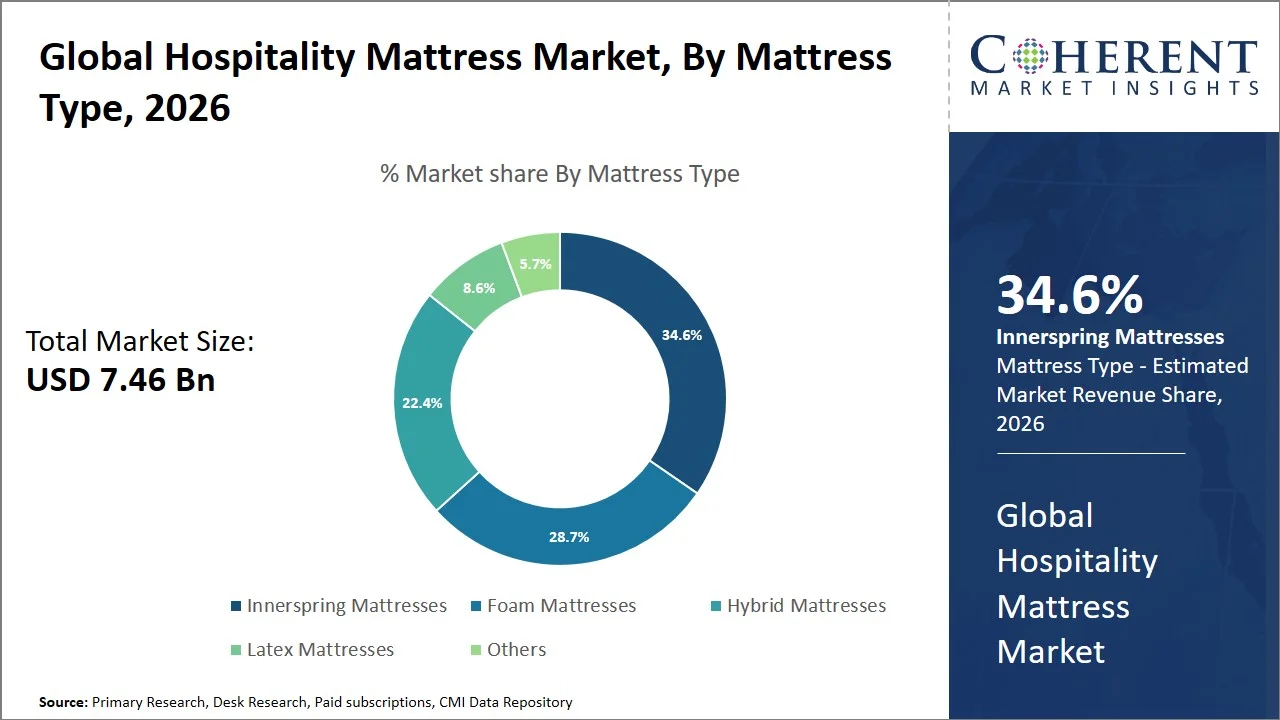
Why Do Innerspring Mattresses Dominate the Global Hospitality Mattress Market?
Innerspring Mattresses are expected to account for 34.6% of the global hospitality mattress market in 2026, supported by their strong suitability for high-frequency commercial usage across hotels, resorts, and large accommodation facilities. The segment maintains leadership due to proven durability, consistent support performance, better airflow characteristics, and cost efficiency for bulk hospitality procurement. Hotel operators often prefer innerspring systems because they can withstand repeated guest usage while maintaining structural integrity over longer replacement cycles. Manufacturers benefit from established production capabilities, standardized designs, and broad distribution networks serving hospitality buyers. In July 2024, Serta Simmons Bedding expanded its hospitality mattress portfolio with updated commercial sleep solutions designed for hotel applications, reinforcing continued supplier focus on durable spring-based systems.
- Current Industry Events of 2026
- Market Size Estimation
- Regional Breakdown
- Competitive Landscape
- Customer Intelligence
- Segmental Analysis
- Pricing Analysis
- Key Market Drivers, Challenges & Future Trends
- Customized Insights Section
Why Do Midscale Hotels Represent the Largest Hotel Category Segment in the Global Hospitality Mattress Market?
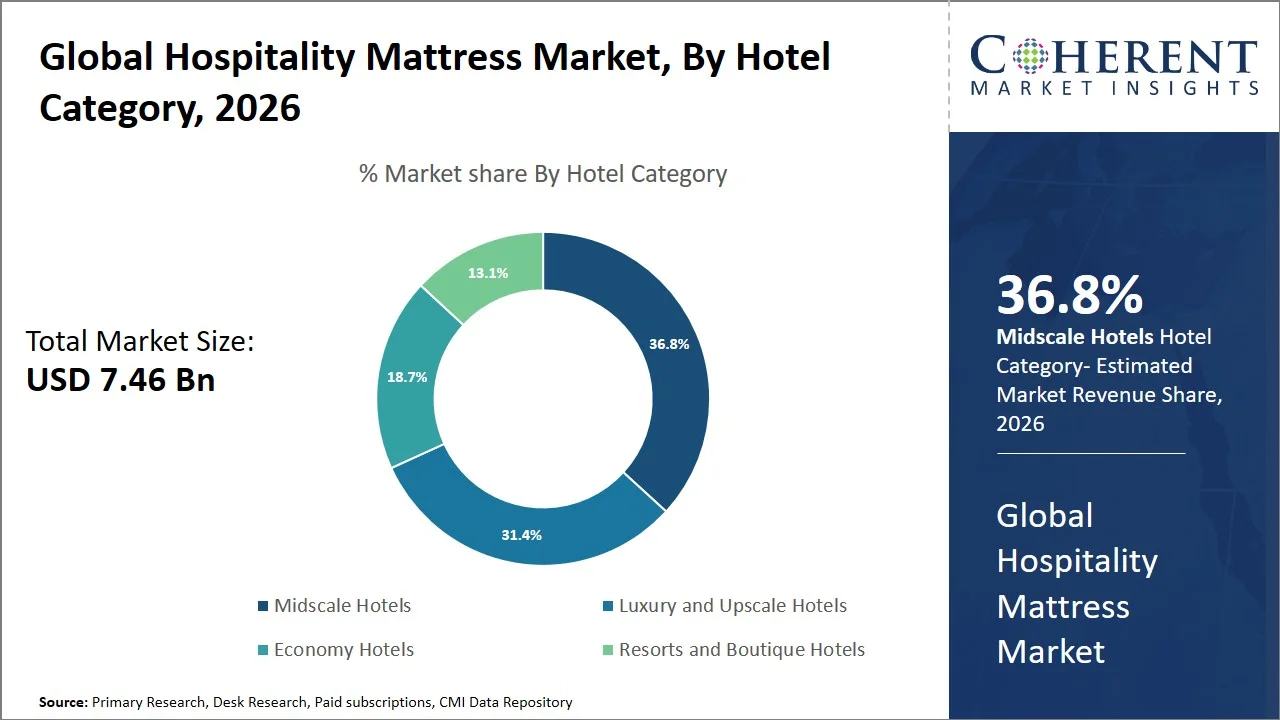
Midscale Hotels are projected to represent 36.8% of the global hospitality mattress market in 2026, as this category requires scalable bedding solutions that balance guest comfort expectations with strict operational cost management. The segment benefits from continuous room additions, franchised property expansion, and standardized procurement models that encourage repeat purchases of reliable mattress systems. Midscale operators typically prioritize products offering durability, easy maintenance, and consistent quality across multiple locations rather than highly customized luxury specifications. Mattress suppliers with contract manufacturing capabilities and regional distribution networks are well positioned to serve this customer group. In February 2025, Hilton announced an agreement with NILE Hospitality to develop 75 Hampton by Hilton hotels in India, highlighting continued expansion of mid-market accommodation infrastructure requiring standardized hospitality furnishings.
Why Does Polyurethane Foam Dominate the Material Segment of the Global Hospitality Mattress Market?
Polyurethane Foam is expected to hold 32.8% of the global hospitality mattress market in 2026, driven by its adaptability across different hospitality applications requiring lightweight, durable, and cost-effective mattress constructions. The material provides manufacturers with flexibility to engineer varying firBness levels, support structures, and comfort layers while maintaining efficient production economics. Hotels and serviced accommodation providers adopt polyurethane foam-based mattresses because they are easier to handle, replace, and integrate into standardized room setups. Suppliers benefit from established foam manufacturing infrastructure and broad availability of raw material inputs. In March 2025, BASF highlighted continued development of polyurethane foam solutions for comfort applications, including bedding-related uses, demonstrating ongoing material innovation supporting commercial sleep product manufacturers.
Current Events and their Impact
Current Event | Description and Its Impact |
May 2024 – Westin Heavenly Bed redesign and global rollout |
|
January 2025 – U.S. hotel renovation activity supporting bedding replacement demand |
|
2025 – European sustainability regulations influencing product lifecycle considerations |
|
Global Hospitality Mattress Market Dynamics
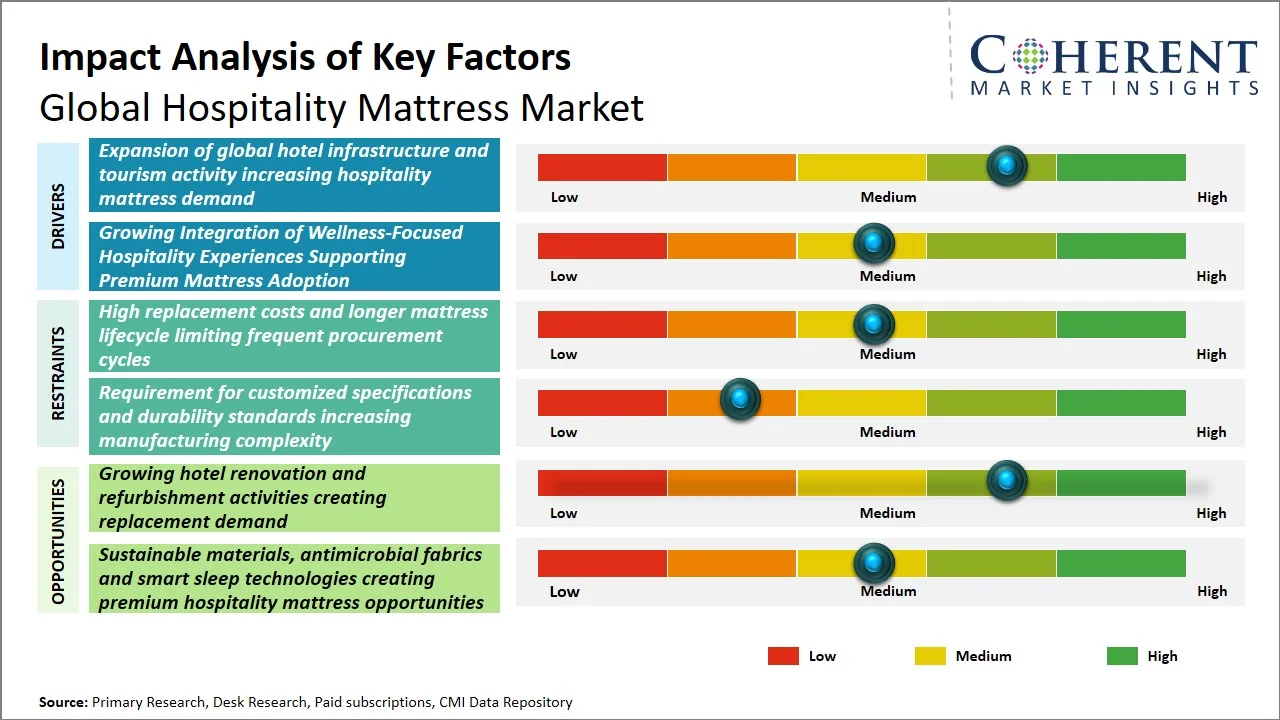
Key Market Drivers
Expansion of hotel renovation cycles and property upgrades increasing commercial mattress replacement demand
Expansion of hotel renovation programs and periodic refurbishment cycles is strengthening demand for hospitality mattresses as operators replace aging bedding systems to maintain guest comfort, hygiene standards, and brand consistency. Unlike new hotel construction, renovation-driven demand creates recurring replacement opportunities for mattress manufacturers, distributors, and contract suppliers. Large accommodation providers increasingly require mattresses engineered for extended commercial use, consistent specifications, and efficient replacement logistics across multiple properties. Suppliers with strong manufacturing capacity, customization capabilities, and hospitality distribution networks are positioned to benefit from this procurement trend. In June 2025, the U.S. Department of Energy highlighted continued energy-efficiency upgrades across commercial building renovations, reflecting broader modernization activity within commercial properties, including hospitality facilities that often involve coordinated interior upgrades and furnishing replacements.
Growing integration of wellness-focused hospitality experiences supporting premium mattress adoption
Growing emphasis on wellness-oriented travel and differentiated guest experiences is encouraging hospitality operators to invest in premium mattress solutions that support sleep quality, comfort personalization, and overall stay satisfaction. Hotels, resorts, and boutique accommodation providers increasingly view bedding systems as an important component of brand positioning rather than only a functional room asset. This shift benefits manufacturers offering advanced comfort layers, hybrid constructions, temperature-management materials, and customized hospitality collections. Premium mattress suppliers can capture higher-value opportunities by aligning product development with wellness trends, guest expectations, and long-term hospitality partnerships. In October 2024, the Global Wellness Institute reported continued expansion of wellness tourism, highlighting stronger integration of wellness concepts into hospitality offerings and accommodation experiences.
Emerging Market Trends
Sustainability-driven transformation of hospitality mattress materials
Hospitality operators are increasingly incorporating sustainability considerations into mattress procurement decisions as environmental commitments influence supplier selection. Manufacturers are developing products using recycled foams, renewable fibers, organic latex, recyclable components, and improved end-of-life solutions to address waste concerns associated with mattress disposal. This shift is encouraging suppliers to redesign material sourcing, manufacturing processes, and certification strategies. Over the forecast period, companies capable of combining comfort performance with environmental responsibility are likely to gain stronger positioning among hotel groups, resorts, and environmentally conscious accommodation providers.
Personalization and advanced comfort engineering shaping next-generation hotel mattresses
Hospitality mattress development is moving toward customized comfort solutions that address diverse guest preferences and expectations. Manufacturers are increasingly focusing on hybrid constructions, zoned support systems, temperature management layers, antimicrobial treatments, and adjustable comfort features to improve sleep experiences. Hotels are also evaluating bedding solutions as part of broader wellness offerings rather than basic room infrastructure. This trend may increase competition among suppliers based on engineering capabilities, customization options, and technical expertise, creating opportunities for companies that can provide differentiated sleep solutions instead of standardized mattress products.
Regional Insights
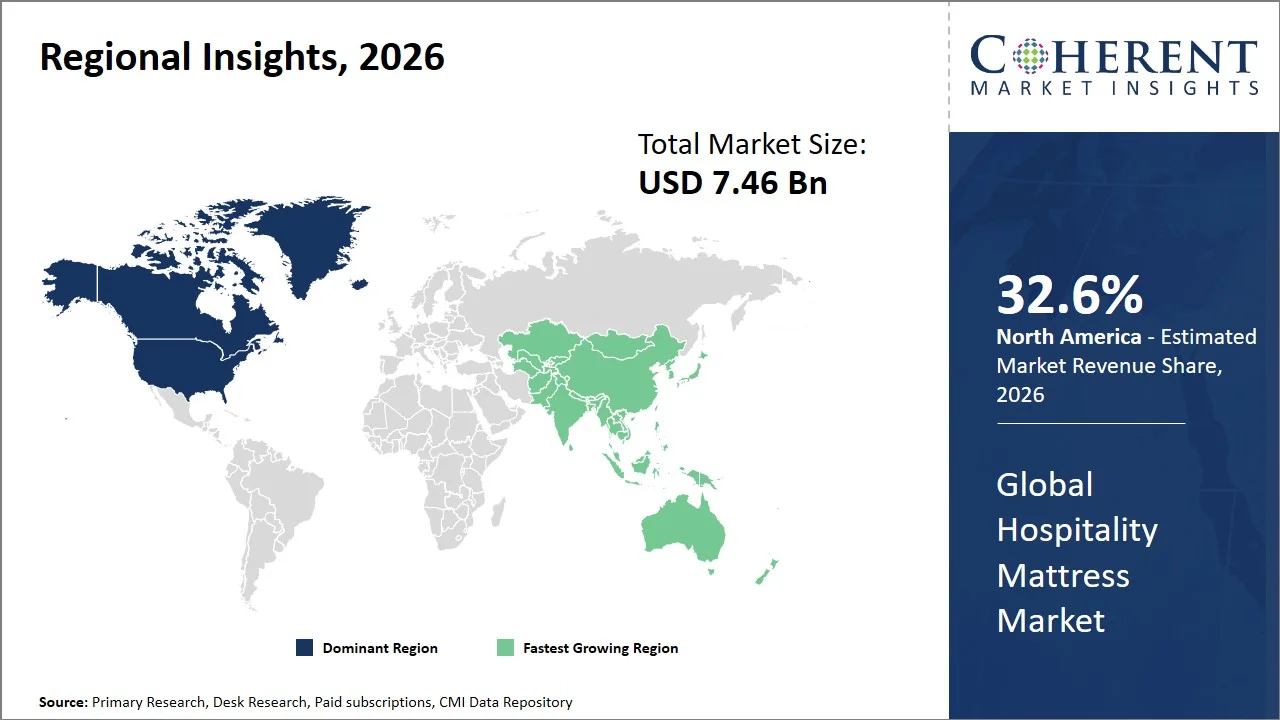
Why Does North America Dominate the Global Hospitality Mattress Market?
The North America's hospitality mattress market is expected to hold 32.6% of the global market share in 2026, owing to the high number of hotel properties, international hotel brands, and frequent renovations of the property. There is a strong demand for replacement beds in the area as guests have a high expectation of being well attended to whilst staying at the hotel or resort, and the area has a high level of accommodation specification with a variety of branded mattresses in use. The United States has a well-developed procurement network in the hospitality sector, including mattress manufacturers, contract suppliers, distributors and hospitality purchasing groups. Other growth factors include upscale lodging, extended-stay lodging and wellness-focused lodging concepts. In March 2025, the American Hotel & Lodging Association highlighted continued hotel industry investment priorities around improving guest experience and operational performance, reinforcing refurbishment activity across the accommodation sector.
Why Is Asia Pacific Emerging as the Fastest-Growing Region in the Global Hospitality Mattress Market?
Asia Pacific is projected to expand as a high-growth region and is expected to represent share 30.8% in the global hospitality mattress market due to rapid hotel development, expanding domestic tourism, and increasing penetration of international hospitality brands. Countries across the region are witnessing significant additions of branded hotels, resorts, and serviced accommodation facilities, creating demand for standardized and durable mattress solutions. The region also benefits from competitive manufacturing capabilities, strong textile and foam supply chains, and growing investment in premium hospitality infrastructure. In November 2024, the World Travel & Tourism Council reported continued recovery and expansion of Asia Pacific travel activity, supporting accommodation investment and related hospitality supply requirements.
Global Hospitality Mattress Market Outlook for Key Countries
Why Is the U.S. a Key Market for the Global Hospitality Mattress Market?
The U.S. is a key market for the global hospitality mattress market as it is home to a large number of hotels, presence of hospitality chains, and organized procurement. The country has a steady demand for luxury properties, midscale hotels, resorts, and extended-stay properties that need commercially produced mattresses that are durable, consistent in comfort and compliant with certification standards. Increasingly, U.S. hotel stakeholders consider mattresses a part of the guest experience management process, and they increasingly ask their suppliers to offer customized bedding solutions, rather than standard residential mattresses. The country also has the capacity to produce mattresses and has an existing hospitality distribution network. Marriott International announced in January 2025 that it was continuing with its growth in the U.S. lodging portfolio, which will meet future needs for standardized guest-room furnishings solutions.
Why Is India Important in the Global Hospitality Mattress Market?
India hospitality mattress market is growing at a fast pace, driven by the rising domestic tourism, growing number of branded hotels, and a significant boost in investment in business and leisure accommodation infrastructure. Midscale hotels, resorts, serviced apartments and budget hotel providers all look for mattresses that offer a balance of comfort and value to visitors, which is why demand for durable mattresses is steady. Domestic manufacturers enjoy the advantage of local production of foam, availability of textiles and manufacturing economics whereas international hospitality brands are expanding their footprint in major Indian cities and tourism destinations. Hilton has announced a strategic licensing agreement with NILE Hospitality for the development of 75 Hampton by Hilton properties across India in February 2025, thus meeting the additional demand for a standardized range of hospitality bedding solutions.
Why Does China Support Growth in the Global Hospitality Mattress Market?
China is able to support the growth of the global hospitality mattress market owing to its large domestic accommodation sector, availability of raw material in the form of foam and textile and a well-established manufacturing base. It is a major manufacturing center for bedding companies, and the country is able to supply mattresses to domestic hotels and international markets cheaply. Further growth is also driven by increased business travel, domestic tourism and the development of high quality and high-end hospitality product at key urban and leisure markets. The Chinese manufacturers have integrated supply chain, from materials to production to distribution, and thus they can enter into the various segments of the hospitality sector. In June 2025, China’s Ministry of Culture and Tourism highlighted continued efforts to expand tourism consumption and improve tourism-related infrastructure, supporting accommodation demand.
Why Is Germany a Strategic Country in the Global Hospitality Mattress Market?
Germany is a strategic market for the global hospitality mattress market, given its established hospitality industry, high-quality standards, and focus on sustainability. The country possesses a solid hotel system that caters to business travelers, international tourists and domestic tourists, thus presenting a demand for quality and durability in mattresses. German suppliers have high levels of advanced manufacturing skills, engineering knowledge, and knowledge of environmentally-sound materials and circular economy practices. European accommodation providers are demanding sustainable solutions, which is pushing manufacturers to make components that can be recycled and mattress solutions that consider the mattress's life cycle. In April 2025, the German Hotel Association (DEHOGA) continued promoting sustainability initiatives among hospitality operators, supporting greater adoption of environmentally responsible products and services within hotels.
Why Is Brazil an Important Growth Market for the Global Hospitality Mattress Market?
Brazil represents an important growth opportunity for the global hospitality mattress market due to its expanding tourism sector, large domestic accommodation base, and increasing demand for upgraded hotel infrastructure. The country’s hospitality market includes urban hotels, coastal resorts, and business accommodation facilities requiring reliable mattress solutions suited for frequent guest turnover. Local manufacturing capabilities and regional distribution networks support supply availability, while tourism investments create additional opportunities for bedding suppliers. Brazil’s hospitality operators are increasingly focused on improving guest experience standards to compete in domestic and international tourism markets. In September 2024, Brazil’s Ministry of Tourism reported continued initiatives to strengthen tourism infrastructure and promote destination development, supporting future accommodation-related investment.
Technology Adoption Landscape in the Global Hospitality Mattress Market
Technology | Adoption Level | Key Application Area | Business Impact |
Hybrid Mattress Construction Technology | High | Luxury hotels, resorts, premium accommodation properties | Combines coil support systems with foam comfort layers, enabling manufacturers to deliver improved durability, motion isolation, and customized comfort profiles for high-value hospitality customers. |
Memory Foam and Pressure-Relief Layer Technology | High | Hotels, serviced apartments, wellness-focused lodging facilities | Enhances guest sleep experience through body-contouring support, reduced motion transfer, and improved comfort consistency, helping hotel brands differentiate their accommodation offerings. |
Cooling Material and Temperature Regulation Technology | Medium | Upscale hotels and premium guest rooms | Supports climate-responsive sleep solutions through gel-infused foams, breathable fabrics, and thermal regulation layers, addressing guest expectations for personalized comfort in different climates. |
Antimicrobial and Hygiene Enhancement Technology | Medium | High-occupancy hotels, resorts, healthcare hospitality environments | Improves mattress cleanliness, durability, and maintenance efficiency by incorporating protective fabrics and treatment technologies that support stricter hygiene requirements. |
Recyclable and Circular Mattress Manufacturing Technology | Medium | Sustainable hotels and environmentally certified hospitality properties | Enables suppliers to reduce material waste, improve lifecycle management, and align with sustainability-focused procurement strategies through recyclable components and recovery programs. |
Smart Mattress and Sleep Monitoring Technology | Low | Premium hotels, wellness resorts, technology-enabled accommodations | Provides opportunities for personalized guest experiences through sleep tracking, adjustable comfort settings, and data-enabled hospitality services, although adoption remains limited due to cost and infrastructure requirements. |
How Are Circular Economy Solutions and Sustainable Mattress Lifecycle Models Creating New Growth Opportunities in the Global Hospitality Mattress Market?
Circular economy-based mattress solutions represent an emerging opportunity for hospitality mattress manufacturers as hotel operators increasingly seek alternatives to traditional replacement-driven procurement models. Sustainable mattress designs incorporating recyclable materials, washable components, refurbishment programs, and recovery systems can help suppliers differentiate beyond conventional comfort specifications. This opportunity is particularly relevant for large hotel chains, environmentally certified properties, and premium resorts seeking measurable sustainability improvements without compromising guest experience. Companies that develop reverse logistics capabilities, recycling partnerships, and lifecycle-based service models can create recurring revenue opportunities through maintenance, refurbishment, and replacement management. The opportunity favors manufacturers with strong material expertise, supply-chain control, and the ability to provide complete bedding lifecycle solutions rather than standalone mattress products.
Market Players, Key Development, and Competitive Intelligence
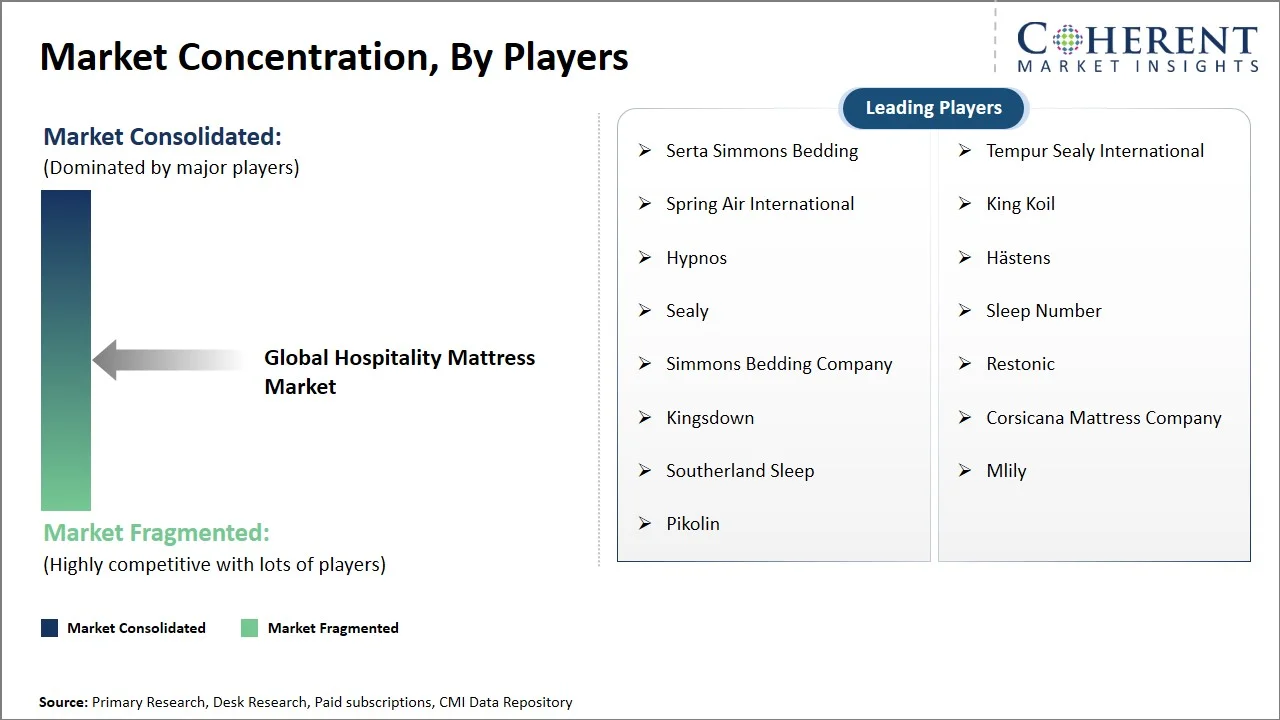
Key Developments
- In January 2025, MATR and NEVEON supplied recyclable mattress solutions to Boutique Hotel Stadthalle in Vienna, introducing hospitality bedding designed around sustainability, comfort, and material circularity. This development strengthens the role of environmentally responsible mattress solutions in premium hospitality properties and highlights increasing demand for recyclable commercial bedding systems.
- In September 2025, SWISSFEEL highlighted its SWISSFEEL-2-CYCLE circular mattress system for the hotel industry, combining washable mattress technology, extended product life, and recycling pathways. This approach supports hospitality operators seeking lower lifecycle costs and sustainable alternatives to conventional mattress replacement practices.
- In May 2024, Westin Hotels & Resorts expanded availability of its Next Generation Heavenly Bed featuring updated comfort materials and enhanced sleep performance specifications. This initiative demonstrates how global hospitality brands continue investing in differentiated bedding experiences as part of broader guest satisfaction strategies.
Competitive Landscape
The global hospitality mattress market is moderately consolidated, with international bedding manufacturers competing alongside regional hospitality-focused suppliers and specialist mattress producers. Competition is primarily based on product durability, comfort engineering, customization capability, manufacturing reliability, certifications, and long-term hotel supply relationships. Large players benefit from global distribution networks and brand recognition, while regional manufacturers compete through pricing flexibility, faster delivery, and localized customer support. Sustainability positioning and advanced sleep technologies are becoming increasingly important differentiators among suppliers. Key focus areas Include
- Product performance, durability, and comfort consistency for commercial hospitality usage
- Customization capability based on hotel brand standards and guest experience requirements
- Manufacturing scale and supply reliability for multi-property contracts
- Adoption of advanced materials such as memory foam, hybrid systems, and sustainable components
- Certifications related to material safety, quality assurance, and environmental compliance
- Distribution capabilities covering global hotel chains, contractors, and procurement networks
- Lifecycle management solutions including recycling, refurbishment, and replacement programs
- Ability to provide specialized hospitality collections rather than residential mattress products
Market Report Scope
Hospitality Mattress Market Report Coverage
| Report Coverage | Details | ||
|---|---|---|---|
| Base Year: | 2025 | Market Size in 2026: | USD 7.46 Bn |
| Historical Data for: | 2020 To 2024 | Forecast Period: | 2026 To 2033 |
| Forecast Period 2026 to 2033 CAGR: | 6.10% | 2033 Value Projection: | USD 11.29 Bn |
| Geographies covered: |
| ||
| Segments covered: |
| ||
| Companies covered: | Serta Simmons Bedding, Tempur Sealy International, Spring Air International, King Koil, Hypnos, Hastens, Sealy, Sleep Number, Simmons Bedding Company, Restonic, Kingsdown, Corsicana Mattress Company, Southerland Sleep, Mlily, Pikolin | ||
| Growth Drivers: |
| ||
| Restraints & Challenges: |
| ||
Analyst Opinion (Expert Opinion)
- The hospitality mattress industry is likely to move from traditional product replacement cycles toward integrated sleep solution partnerships. Suppliers that combine mattress manufacturing with customization, lifecycle services, sustainability programs, and procurement support may gain stronger relationships with hotel operators compared with manufacturers competing only on unit pricing.
- The next competitive shift may emerge from circular mattress business models that redefine ownership, maintenance, and replacement practices. Companies capable of managing collection, refurbishment, recycling, and long-term service agreements could challenge conventional suppliers by changing how hotels evaluate mattress economics.
- Market participants should prioritize material innovation, sustainable manufacturing capabilities, and hospitality-specific product engineering. Companies must balance premiumization opportunities with cost pressures from large hotel chains while strengthening supply-chain resilience, certification capabilities, and regional manufacturing presence to secure long-term commercial contracts.
Speak to the analyst
Want personalized insights?
Take the findings above to one of our principal consultants, or have the report rebuilt around the segments, geographies and competitors you actually track.
Market Segmentation
- Mattress Type Insights (Revenue, USD Bn, 2021 - 2033)
- Innerspring Mattresses
- Foam Mattresses
- Hybrid Mattresses
- Latex Mattresses
- Others
- Hotel Category Insights (Revenue, USD Bn, 2021 - 2033)
- Midscale Hotels
- Luxury and Upscale Hotels
- Economy Hotels
- Resorts and Boutique Hotels
- Material Insights (Revenue, USD Bn, 2021 - 2033)
- Polyurethane Foam
- Memory Foam
- Coiled Spring Systems
- Latex
- Others
- End User Insights (Revenue, USD Bn, 2021 - 2033)
- Hotels and Resorts
- Serviced Apartments
- Hostels and Budget Accommodation
- Healthcare and Institutional Hospitality
- Others
- Regional Insights (Revenue, USD Bn, 2021 - 2033)
- North America
- U.S.
- Canada
- Latin America
- Brazil
- Argentina
- Mexico
- Rest of Latin America
- Europe
- Germany
- U.K.
- Spain
- France
- Italy
- Russia
- Rest of Europe
- Asia Pacific
- China
- India
- Japan
- Australia
- South Korea
- ASEAN
- Rest of Asia Pacific
- Middle East
- GCC Countries
- Israel
- Rest of Middle East
- Africa
- South Africa
- North Africa
- Central Africa
- North America
Sources
Primary Research Interviews
- Hospitality mattress manufacturers, bedding solution providers, foam and spring system suppliers, hotel procurement managers, hospitality consultants, distributors, and accommodation industry experts
- Product development specialists, sleep technology professionals, hotel operators, purchasing executives, and mattress material experts
Stakeholders
- Hospitality mattress manufacturers, bedding companies, foam producers, spring system suppliers, textile and material providers, and sleep technology companies
- Hotels, resorts, serviced apartments, hospitality procurement agencies, distributors, retailers, and contract furnishing providers
End-use Sectors
- Hotels and resorts
- Luxury and upscale accommodations
- Midscale and economy hotels
- Serviced apartments and extended-stay properties
- Boutique hotels, hospitality chains, and institutional lodging facilities
Regulatory and Government Bodies
- Consumer product safety authorities
- Mattress flammability and safety regulatory agencies
- Environmental and waste management authorities
- Material safety and chemical compliance organizations
- International standards organizations
Databases
- UN Comtrade and ITC Trade Map – Mattress, bedding, foam, and furniture-related trade analysis
- Government import-export databases and customs records
- Company annual reports, investor presentations, product catalogues, and technical documents
- Hospitality industry databases, hotel development reports, and lodging market intelligence sources
Magazines and Journals
- Hotel Management
- Hospitality Design
- Sleep Review
- Furniture Today
- Journal of Sleep Research
Associations
- American Hotel & Lodging Association (AHLA)
- International Sleep Products Association (ISPA)
- National Bed Federation (NBF)
- International Hotel & Restaurant Association (IHRA)
- Hospitality industry associations and bedding manufacturing organizations
Public Domain Sources
- Hospitality industry development reports, hotel investment updates, and accommodation infrastructure data
- Mattress technology developments, material innovation announcements, and sustainability initiatives
- Product safety standards, flammability requirements, and environmental compliance updates
- Trade statistics and industry publications related to bedding and hospitality products
Key Standards and Regulations
- Mattress flammability and fire safety standards
- Material safety and chemical compliance requirements
- CertiPUR-US foam certification standards
- OEKO-TEX textile safety standards
- ISO quality management and manufacturing standards
Proprietary Elements
- CMI Data Analytics Tool
- Proprietary CMI Existing Repository of information for the last 10 years
Get access to 250+ pages report
Every segment, forecast, competitor profile and data table behind the analysis above — available for instant download.
- ESOMAR Member
- ISO 9001:2015 Certified
- D-U-N-S Registered
- GDPR & CCPA Compliant
Missing comfort of reading report in your local language? Find your preferred language:
Transform your Strategy with Exclusive Trending Reports
Frequently Asked Questions
The CAGR of global hospitality mattress market is projected to be 6.10% from 2026 to 2033.
The global hospitality mattress market is estimated to be valued at USD 7.46 Bn in 2026 and is expected to reach USD 11.29 Bn by 2033.
Businesses should evaluate supplier capabilities, product quality standards, customization options, manufacturing capacity, distribution networks, sustainability practices, and the ability to meet hospitality procurement requirements before investing in the hospitality mattress market.
Hospitality mattress solutions include innerspring mattresses, foam mattresses, hybrid mattresses, latex mattresses, and specialized commercial bedding systems designed to meet the requirements of hotels, resorts, serviced apartments, and other accommodation providers.
Hotels typically select mattresses based on guest comfort requirements, durability, maintenance needs, brand standards, lifecycle value, hygiene considerations, and compatibility with their target accommodation category.
The hospitality mattress market is being shaped by increasing adoption of sustainable materials, customized comfort solutions, premium sleep experiences, circular mattress programs, and advanced material technologies that improve durability and guest satisfaction.
Expansion of global hotel infrastructure and tourism activity increasing hospitality mattress demand and Rising focus on guest comfort, sleep quality and premium accommodation experiences supporting mattress upgrades are the major factor driving the growth of global hospitality mattress market.