

Global Human Liver Model Market Size and Forecast – 2026 To 2033
The global human liver model market is expected to grow from USD 1,842.6 Mn in 2026 to USD 4,986.2 Mn by 2033, registering a compound annual growth rate (CAGR) of 15.3% from 2026 to 2033. The market for global human liver model is poised for significant expansion, fueled by the growing regulatory acceptance of human-relevant, non-animal testing methods in drug development.
In March 2026, the U.S. Food and Drug Administration (FDA) issued draft guidance providing a validation framework for New Approach Methodologies (NAMs), including organoids, spheroids, and organs-on-chips, for use in regulatory submissions, strengthening the pathway for advanced human liver models.
Key Takeaways of the Global Human Liver Model Market
- 3D human liver models are projected to hold 54.4% of the global human liver model market share in 2026, making it dominant product type segment, across Europe due to established regulatory evaluation of human liver-cell systems for safety testing. In April 2026, the OECD issued a Call for Assays specifically seeking evidence on 3D liver toxicity models, including organoids, spheroids, and liver-on-chip systems, for potential regulatory assessment.
- ADME studies are projected to hold 36.8% of the global human liver model market share in 2026, making it dominant application segment, across North America due to the established regulatory use of hepatic systems for drug metabolism and transporter studies. The U.S. FDA specifically identifies freshly prepared and cryopreserved human hepatocytes as in-vitro systems for evaluating metabolic pathways and drug–drug interactions before first-in-human studies.
- Pharmaceutical and biotechnology companies are projected to hold 49.2% of the global human liver model market share in 2026, making it dominant end user segment, across North America due to increasing regulatory pathways for advanced human-relevant models in drug development. In September 2024, the U.S. FDA accepted the first organ-on-a-chip technology into its ISTAND Pilot Program specifically for assessing drug-induced liver injury and generating data for potential IND submission.
- North America market maintains dominance with an expected share of 41.9% in 2026, bolstered by strong public investment in standardized human-relevant liver models and their integration into preclinical research. In September 2025, the U.S. NIH established the Standardized Organoid Modeling (SOM) Center, initially focusing on liver organoids and developing standardized, reproducible models for researchers, industry, and regulatory applications.
- Asia Pacific is expected to exhibit the fastest growth in the global human liver model market, registering an estimated CAGR of 15.8% during 2026–2033, driven by increasing government investment in liver organoid development and standardization of organ-on-chip technologies. For instance, China’s National Standardization Administration has advanced a national standard for “General Technical Requirements of Liver-on-a-Chip,” with the proposed standard currently in the approval stage, covering technical requirements for liver-on-chip systems.
Segmental Insights
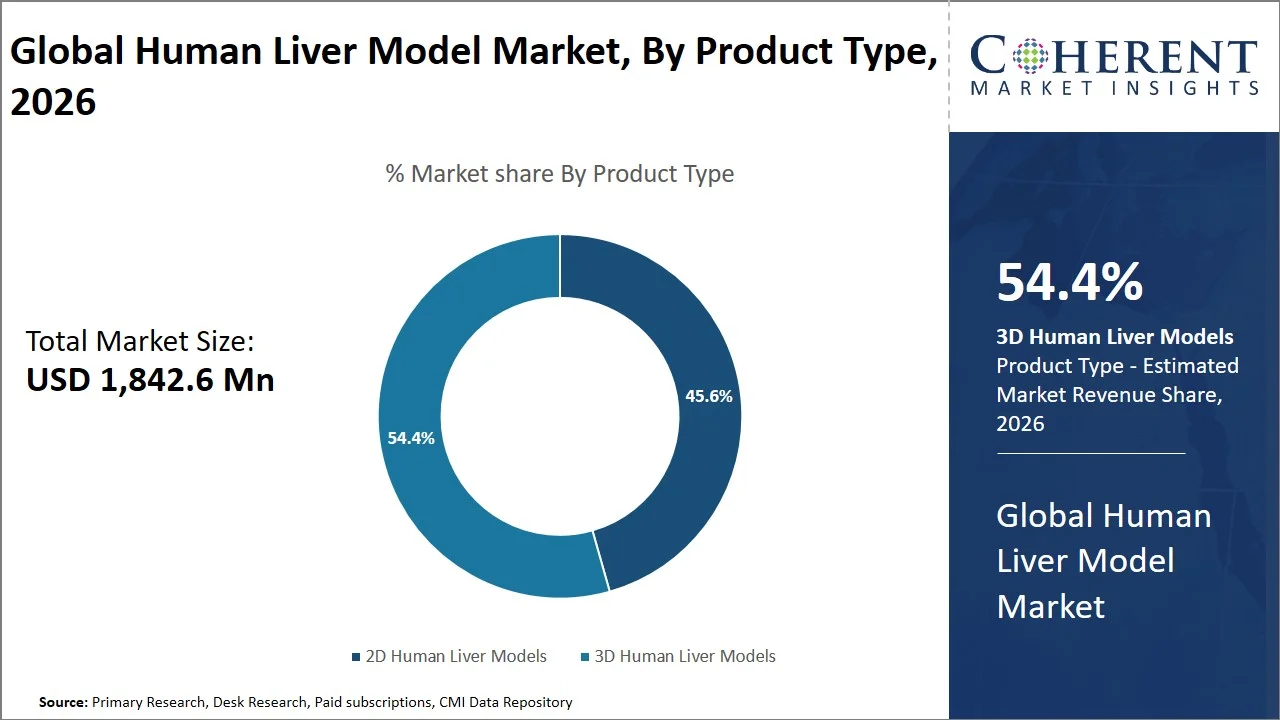
Why Do 3D Human Liver Models Dominate the Global Human Liver Model Market?
3D human liver models are projected to hold the market share of 54.4% in 2026, due to their ability to recapitulate the normal tissue architecture, cell-cell communications, metabolic status and function more closely than 2D cultures, this is desirable for drug testing and toxicity evaluation studies. The maintenance of normal liver functions for extended periods of time also benefits chronic toxicity, ADME, and disease modeling studies. For instance, in June 2025, a study published by Frontiers introduced a three-dimensional model of liver tissue, which was successful in preserving key biological processes, the ability of drug-metabolizing enzymes to be employed, toxicity assessment of hepatotoxic compounds, highlighting its potential in a DILI research setup.
- Current Industry Events of 2026
- Market Size Estimation
- Regional Breakdown
- Competitive Landscape
- Customer Intelligence
- Segmental Analysis
- Pricing Analysis
- Key Market Drivers, Challenges & Future Trends
- Customized Insights Section
Why Does ADME Studies Represent the Largest Application Segment in the Human Liver Model Market?
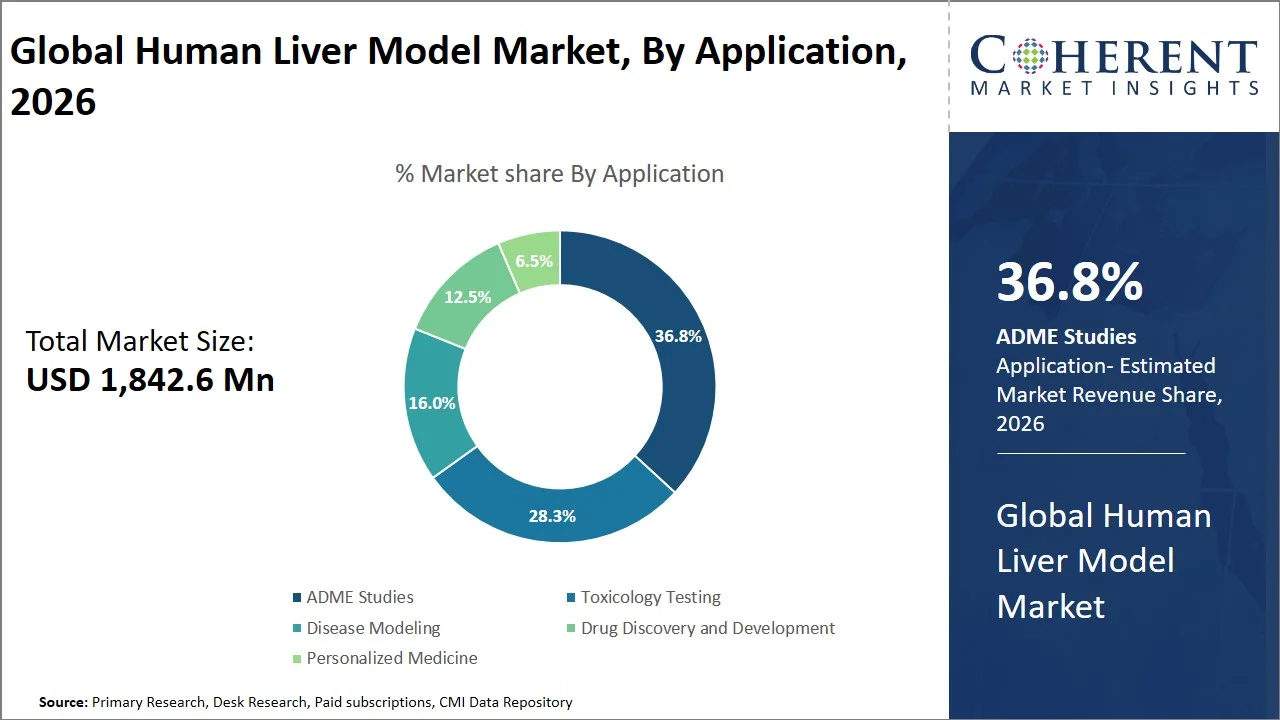
ADME studies are projected to hold a market share of 36.8% in 2026, as it gives vital information about the drug metabolism, metabolic stability, the enzyme activities, clearance, drug-drug interactions. Since liver models produce human-centric metabolic data, it is often considered ideal for use during lead optimization and selection of a preclinical drug candidate. For instance, the U.S. Food and Drug Administration (FDA) drug development tool qualification program provides drug metabolism and pharmacokinetics (DMPK) characterization tools that are supportive of the use of higher-tier human relevant models of drug development.
Pharmaceutical and Biotechnology Companies Segment Dominates the Global Human Liver Model Market
The pharmaceutical and biotechnology companies segment is projected to hold a market share of 49.2% in 2026, owing to strong adoption of liver models in testing for candidate selection, drug metabolism, ADME profile and hepatotoxicity testing in pre-clinical drug discovery and development. These companies have capabilities to employ sophisticated 3D models, organoids and liver-on-chip technology with automated high-throughput screening. For instance, the European medicines Agency (EMA’s) 2025 regulatory science plan specifically highlighted animal- free human- cell and organoid- based non- clinical models as methods that have the potential to help with early drug development and decrease drug development that relies on animals, while supporting their qualification into regulatory use.
Currents Events and their Impact
Current Events | Description and its Impact |
India Reports Expansion of Government-Supported Non-Animal Liver Models (August 2026) |
|
OECD Calls for Assays on 3D Liver Toxicity Models for Regulatory Assessment (April 2026) |
|
OECD Advances Test Guideline Using Human Hepatic Cells (November 2025) |
|
Human Liver Model Market Dynamics
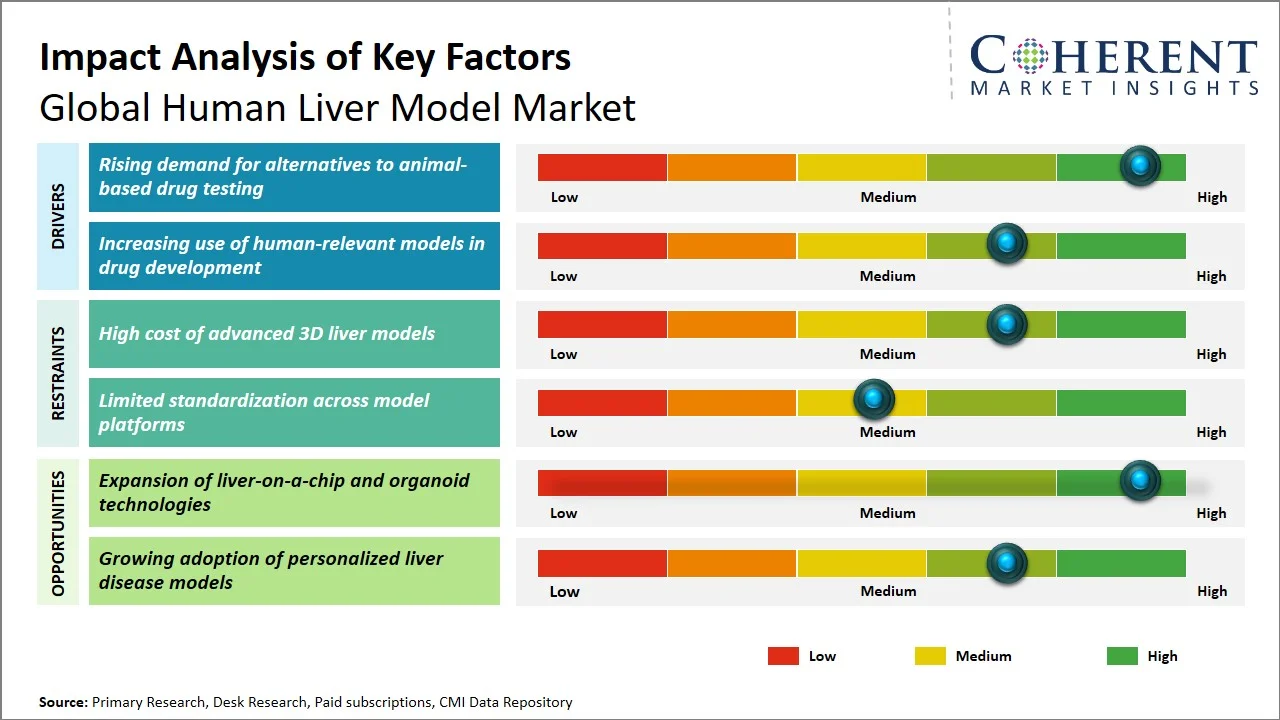
Market Drivers
Rising demand for alternatives to animal-based drug testing
The shift toward human-relevant preclinical methods is increasing demand for organoids, 3D tissues, and other human liver models that can provide more predictive insights into drug response and toxicity. Their ability to better replicate human-specific liver functions are encouraging pharmaceutical and research organizations to integrate these models earlier in the drug-development process. For instance, in August 2026, the U.K. Government committed USD 27.1 million (£20 million) to establish a pre-clinical translational models hub in Cambridge to develop and share human-tissue models, including organoids, for testing new treatments.
Increasing use of human-relevant models in drug development
Pharmaceutical researchers are increasingly incorporating human liver organoids, spheroids, and liver-on-chip models into preclinical workflows to improve prediction of drug metabolism, efficacy, and hepatotoxicity before clinical testing. This is expanding demand for models that more closely reproduce human-specific liver responses than conventional preclinical systems. For instance, in June 2025, the U.S. National Center for Advancing Translational Sciences (NCATS) highlighted human liver organoids and tissue chips as tools for evaluating drug responses and improving the translation of preclinical findings to humans.
Growing adoption of 3D organoids and liver-on-chip platforms
Advances in stem-cell biology, microfluidics, and tissue engineering are enabling liver models that better reproduce cellular interactions, metabolic activity, tissue architecture, and disease-specific characteristics. Their increasing ability to support complex drug-response and toxicity studies is expanding applications beyond conventional 2D cultures. For instance, the growing use of multicellular liver organoids and perfused liver-on-chip systems is enabling researchers to evaluate drug-induced liver injury under more physiologically relevant conditions.
Emerging Trends
Shift Toward High-Throughput Liver-on-a-Chip Platforms
Human liver models are increasingly moving toward perfused, microfluidic platforms that combine physiological liver functions with higher-throughput screening, enabling simultaneous assessment of hepatotoxicity, metabolism, and disease mechanisms.
Integration of Organoids with Microfluidic Systems
The integration of 3D liver organoids with liver-on-a-chip technology is emerging as a key trend, creating more physiologically representative models with dynamic fluid flow, functional bile-canaliculi structures, and improved modeling of drug-induced liver injury.
AI-Enabled Predictive Toxicology and Liver Modeling
AI is increasingly being combined with human liver models to support dose-response prediction, toxicity classification, experimental optimization, and analysis of complex biological datasets, creating more data-driven approaches to preclinical liver safety assessment.
Regional Insights
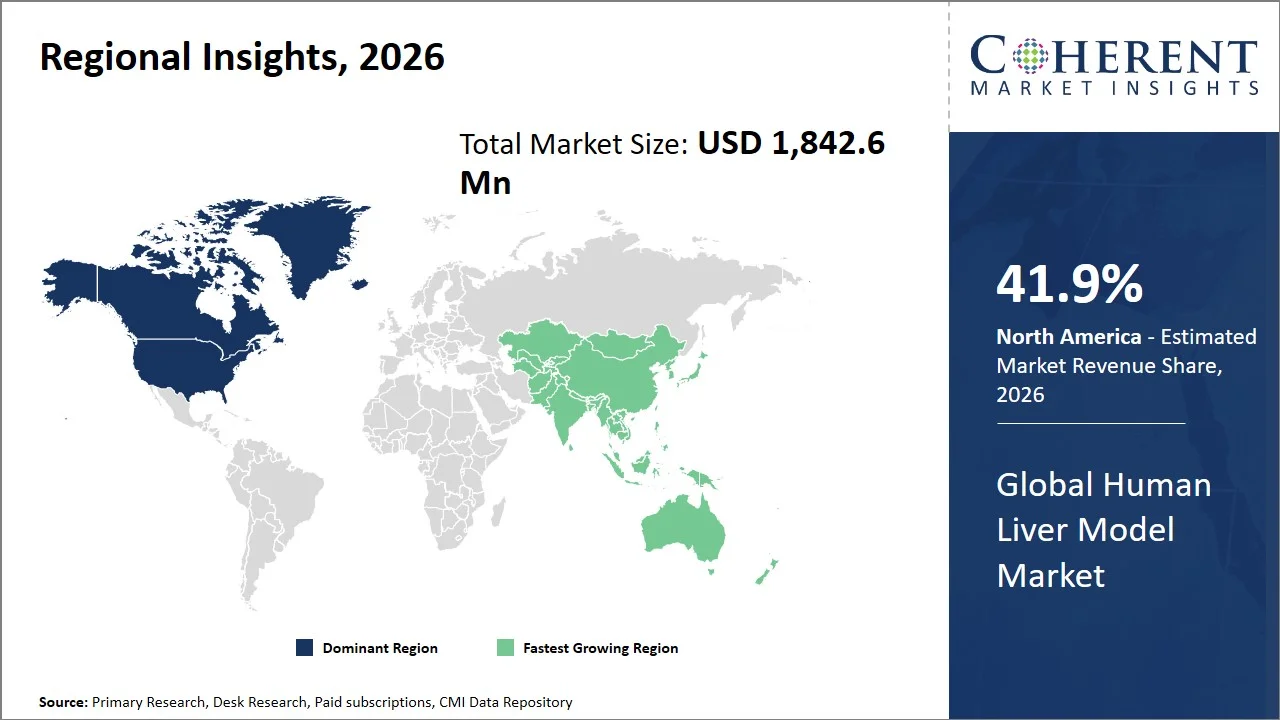
Why is North America a Strong Market for Human Liver Model?
North America leads the global human liver model market, accounting for an estimated 41.9% share in 2026, owing to well-established pharmaceutical research activities, high biotechnological infrastructure, and support from regulatory agencies for testing human-like organs. This provides smooth and rapid clinical trial procedures and the commercialization of innovative human liver models to conduct preclinical testing and analysis of drugs for safety and efficacy. Furthermore, government initiatives to support R&D in organoid culture and tissue regeneration are driving the demand for human liver organs, 3-D tissue cultures and other models. For instance, in May 2025, the U.S. National Center for Advancing Translational Sciences (NCATS) unveiled an SBIR program targeted at the scalable generation of liver and brain organoids from human iPS cells, emphasizing enhancement of cost-effectiveness, scalability and batch-to-batch consistency.
Why Does Asia Pacific Human Liver Model Market Exhibit High Growth?
Asia Pacific is expected to exhibit the fastest growth in the global human liver model market, registering an estimated CAGR of 15.8% during 2026–2033. The region is projected to account for approximately 22.4% of the global market in 2026, due to expanding life science infrastructure, increasing healthcare spending and supportive policies & schemes by government for biotechnological innovations. For instance, in February 2025, the Department of Biotechnology (DBT) organized the Center-State Partnership Conclave on the BioE3 Policy and urged the States to establish BioE3 Cells, with a view to speed up the adoption of new technologies, biomanufacturing and biotechnologies. (Source: Press Information Bureau)
The growth in the pharmaceutical industry and their R&D activities along with increased investment in organoids, liver-on-chips and 3D tissue models are augmenting the adoption in countries such as China, Japan, South Korea and India. Furthermore, growing research skills and high demand for human-relevant model for use in drug development research, ADME studies and toxicity assessment by this region have led to this strong growth.
Global Human Liver Model Market Outlook for Key Countries
Why is the U.S. Leading Innovation and Adoption in the Human Liver Model Market?
The U.S. is at the forefront of innovation and adoption in the human liver model market as it had established human liver models to be employed in the drug development, regulatory science, drug-induced liver toxicity and hepatic toxicity profiling workflow. U.S. FDA is conducting studies on liver micro physiological systems for evaluating drug metabolism and hepatotoxicity and federal initiatives are developing standard liver organoids and cell models from human cells to enable pre-clinical use
Is Japan a Favorable Market for Human Liver Model Market?
Japan has an attractive market for human liver model which benefits from on-going efforts of developing iPSC-derived models, organoids and MPS for liver drug discovery. Japan Agency for Medical Research and Development (AMED) supports the development of organoid and human iPSC-derived cells utilized with micro physiological systems (MPS) for assessing safety, efficacy and pharmacokinetics of drug compounds, including those specifically targeting the liver.
Is China Emerging as a Key Growth Hub for the Human Liver Model Market?
China is the prime focus area of growth for the human liver model market propelled by advancements in development of the new types of models such as liver organoids, liver-on-chip platforms, and 3D in vitro liver models for the purposes of drug research and drug toxicity testing. China enacted the first group standard on human liver-on-a-chip technology in 2024. This standard defines technical requirements and methods for testing and quality assurance measures in their application, followed by research institutes in China’s development of human liver organoids-on-chip to evaluate drug-induced liver injury under the national key R&D program and the national science foundation programs of China.
Why Does Germany Top the European Human Liver Model Market?
Germany leads the European human liver model market owing to its broad adoption of high-tech 3D liver models for applications including drug metabolism, hepatotoxicity and disease models in conjunction with a supportive translational research infrastructure. Meanwhile, the country is developing patient-specific 3D liver organoids and multicellular 3D liver models to accelerate the usage of the technology for precision medicine and pre-clinical drug development.
Is Human Liver Model Market Developing in India?
India is emerging as a new global market with research into human liver organoids initiated by the government and improved 3D models for liver disease studies and drug discovery. BRIC-THSTI’s multi-cellular human liver organoid is generated from the liver tissues of healthy donors and those with NAFLD and is now being used as the liver model for screening new treatments for steatohepatitis and several other liver pathologies.
Gross Domestic Expenditure on R&D (GERD), 2024
Region | Country | 2024 R&D Expenditure (USD Bn) |
North America | U.S. | 1,009.3 |
Canada | 48.4 | |
Europe | Germany | 193.4 |
France | 93.4 | |
UK | 76.0 | |
Asia Pacific | China | 1,028.3 |
Japan | 233.8 | |
South Korea | 161.9 | |
Middle East & Africa | Israel | 38.7 |
Saudi Arabia | 7.86 | |
Latin America | Brazil | 42.0 |
How is the expansion of liver-on-a-chip and organoid technologies creating new growth opportunities in the human liver model market?
The acceleration in the development and utilization of liver-on-a-chip and organoid technologies is opening exciting avenues for establishing better, more reproducible and scalable models for testing new therapeutics, toxicity evaluation and liver diseases research. Indeed, the interfacing of organoids with microfluidic systems (3D organoids-on-chips) allows further recreation of 3D structures, as well as maintaining normal perfusion and mimicking tissue pathologies. For instance, in August 2026, the Department of Science & Technology of India, reported that Indian laboratories funded by Government efforts is progressing with the development of organ-on-chips and 3-D tissues for drug and toxicity testing, with ICMR supporting 109 animal-free experiments across the country. (Source: Press Information Bureau)
Market Players, Key Development, and Competitive Intelligence
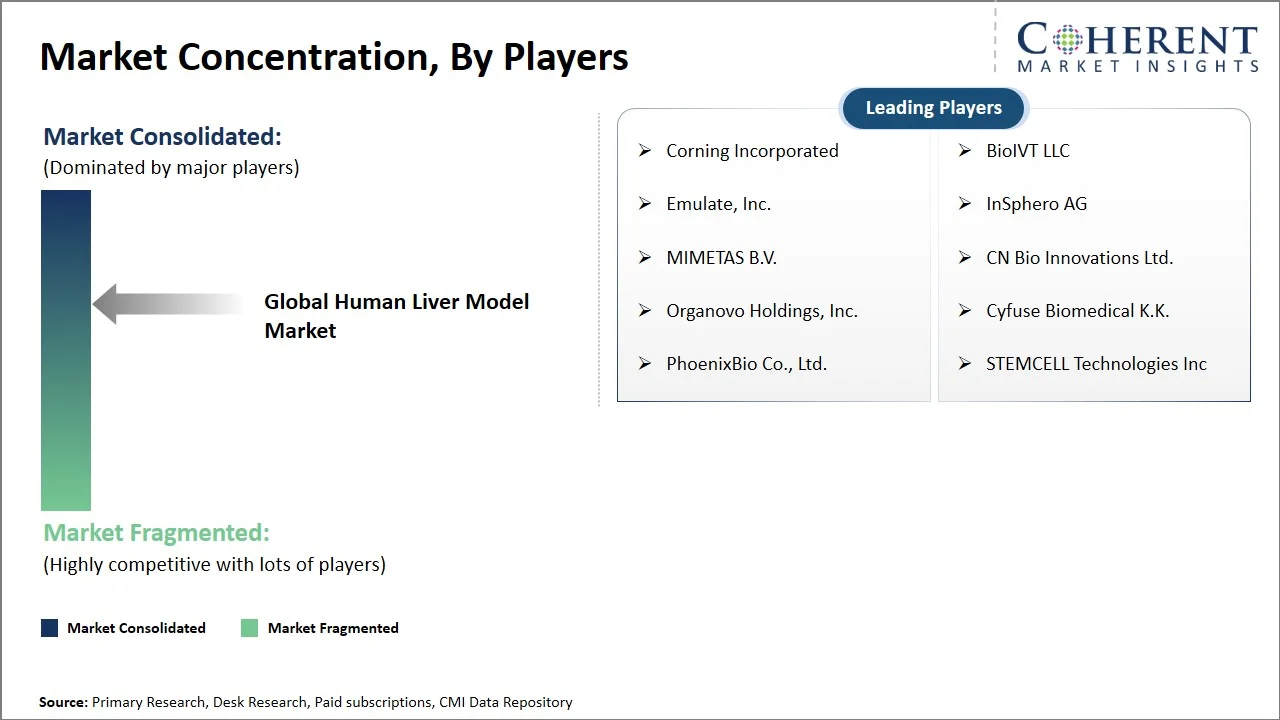
Key Developments
- In August 2026, Daewoong Pharmaceutical signed a technology-transfer agreement with the Korea Research Institute of Bioscience and Biotechnology (KRIBB) to acquire 3D human liver organoid production and toxicity-evaluation technology. The platform replicates human liver tissue and bile-duct structures and is intended to improve preclinical liver-toxicity assessment of drug candidates. The technology is also undergoing OECD and ISO standardization, supporting its potential commercialization in drug development.
- In May 2025, GSK announced an agreement to acquire efimosfermin alfa from Boston Pharmaceuticals for an upfront payment of USD 1.2 billion, with an additional USD 800 million in potential success-based milestone payments. The Phase III-ready therapy targets steatotic liver disease, including MASH and cirrhosis, strengthening GSK’s hepatology pipeline and broader focus on liver-disease development.
- In February 2025, TOPPAN Holdings Inc. and PhoenixBio Co., Ltd. entered into a business partnership to provide artificial 3D liver tissue samples fabricated using TOPPAN’s invivoid 3D cell-culture technology and PhoenixBio’s fresh human hepatocytes. The liver model is designed for drug discovery, safety evaluation, and functional-food development, supporting the commercialization of advanced 3D human liver models.
Competitive Landscape
The global human liver model market is moderately competitive, with competition centered on physiological relevance, model reproducibility, scalability, throughput, and predictive performance in drug development and toxicology. Market participants are increasingly focusing on advancing 3D models, organoids, and liver-on-chip platforms while improving functional stability and standardization to strengthen adoption across pharmaceutical and research applications. Key focus areas include:
- Development of 3D liver organoids and spheroids that better reproduce native liver architecture and function
- Advancement of liver-on-a-chip platforms incorporating microfluidic perfusion and dynamic liver microenvironments
- Improvement of hepatocyte viability, maturation, and long-term functional stability in human liver models
- Expansion of high-throughput models for ADME, hepatotoxicity, and drug-response screening
- Integration of multiple liver cell types to replicate complex cellular interactions and disease phenotypes
- Development of patient-derived and iPSC-based liver models for personalized medicine and disease modeling
- Standardization of model protocols to improve reproducibility, validation, and cross-laboratory comparability
- Integration of automated imaging and AI-based analysis to improve screening efficiency and interpretation of complex liver-model data
Market Report Scope
Human Liver Model Market Report Coverage
| Report Coverage | Details | ||
|---|---|---|---|
| Base Year: | 2025 | Market Size in 2026: | USD 1,842.6 Mn |
| Historical Data for: | 2020 To 2024 | Forecast Period: | 2026 To 2033 |
| Forecast Period 2026 to 2033 CAGR: | 15.3% | 2033 Value Projection: | USD 4,986.2 Mn |
| Geographies covered: |
| ||
| Segments covered: |
| ||
| Companies covered: | Corning Incorporated, BioIVT LLC, Emulate, Inc., InSphero AG, MIMETAS B.V., CN Bio Innovations Ltd., Organovo Holdings, Inc., Cyfuse Biomedical K.K., PhoenixBio Co., Ltd., STEMCELL Technologies Inc | ||
| Growth Drivers: |
| ||
| Restraints & Challenges: |
| ||
Analyst Opinion (Expert Opinion)
- In the coming years, the global human liver model market is expected to move toward integrated 3D liver models, organoids, and liver-on-chip platforms that combine physiological relevance with higher-throughput testing. Over time, models that integrate multiple liver cell types, perfusion, functional biomarkers, and computational analysis are likely to gain greater importance in drug development and toxicology.
- The maximum opportunities will probably exist within 3D liver-on-chip models for toxicology testing in the U.S. These platforms can address a key unmet need in predicting drug-induced liver injury (DILI) while also supporting hepatic metabolism and clearance studies, making toxicology a particularly attractive application for advanced liver-model developers.
- In order to obtain a competitive advantage, market participants should prioritize reproducibility, scalability, and functional maturity rather than competing only on model complexity. Developing standardized platforms with long-term hepatocyte function, multiple relevant cell types, and compatibility with high-throughput workflows can improve adoption, while integrating AI/ML, imaging, and pharmacokinetic modeling can create additional differentiation.
Speak to the analyst
Want personalized insights?
Take the findings above to one of our principal consultants, or have the report rebuilt around the segments, geographies and competitors you actually track.
Market Segmentation
- Product Type Insights (Revenue, USD Mn, 2021 - 2033)
- 2D Human Liver Models
- 3D Human Liver Models
- Application Insights (Revenue, USD Mn, 2021 - 2033)
- ADME Studies
- Toxicology Testing
- Disease Modeling
- Drug Discovery and Development
- Personalized Medicine
- End User Insights (Revenue, USD Mn, 2021 - 2033)
- Pharmaceutical and Biotechnology Companies
- Contract Research Organizations (CROs)
- Academic and Research Institutes
- Others
- Regional Insights (Revenue, USD Mn, 2021 - 2033)
- North America
- U.S.
- Canada
- Latin America
- Brazil
- Argentina
- Mexico
- Rest of Latin America
- Europe
- Germany
- U.K.
- Spain
- France
- Italy
- Russia
- Rest of Europe
- Asia Pacific
- China
- India
- Japan
- Australia
- South Korea
- ASEAN
- Rest of Asia Pacific
- Middle East
- GCC Countries
- Israel
- Rest of Middle East
- Africa
- South Africa
- North Africa
- Central Africa
- North America
Sources
Primary Research Interviews
- Scientists and principal investigators developing human liver organoids, spheroids, and 3D liver models
- Drug discovery and toxicology researchers using human liver models for ADME and hepatotoxicity assessment
- Pharmaceutical and biotechnology R&D professionals involved in preclinical drug development and human-relevant testing
- CRO scientists and laboratory directors conducting liver toxicity, metabolism, and disease-modeling studies
- Microphysiological systems and organ-on-chip specialists developing liver-on-chip platforms
- Regulatory and scientific affairs professionals involved in qualification and adoption of New Approach Methodologies (NAMs)
Stakeholders
- Human liver model, organoid, and liver-on-chip manufacturers
- Primary human hepatocyte, stem-cell, and cell-culture suppliers
- Microfluidics, biomaterials, and 3D bioprinting technology providers
- Pharmaceutical and biotechnology companies
- Contract research organizations (CROs) and preclinical testing laboratories
- Academic and translational research institutions
- End-use Sectors
- Pharmaceutical and biotechnology companies
- Contract research organizations (CROs)
- Academic and research institutes
- Government and regulatory research laboratories
- Drug discovery and preclinical testing centers
- Toxicology and safety-assessment laboratories
- Regulatory & Health Bodies
- U.S. Food and Drug Administration (FDA)
- European Medicines Agency (EMA)
- Organisation for Economic Co-operation and Development (OECD)
- Medicines and Healthcare products Regulatory Agency (MHRA), U.K.
- Pharmaceuticals and Medical Devices Agency (PMDA), Japan
- National Medical Products Administration (NMPA), China
- Therapeutic Goods Administration (TGA), Australia
Databases
- FDA Drug Development Tool (DDT) Qualification Programs Database
- FDA New Approach Methodologies (NAMs) Resources
- ClinicalTrials.gov
- NIH RePORTER
- OECD Science, Technology and Innovation Data
- EU Clinical Trials Information System (CTIS)
Journals
- Nature Biomedical Engineering
- Stem Cell Reports
- Cell Stem Cell
- Toxicological Sciences
- ALTEX – Alternatives to Animal Experimentation
- Biofabrication
- Advanced Healthcare Materials
Associations
- International Society for Stem Cell Research (ISSCR)
- Society of Toxicology (SOT)
- Tissue Engineering and Regenerative Medicine International Society (TERMIS)
- Controlled Release Society (CRS)
- American Association for the Study of Liver Diseases (AASLD)
- European Association for the Study of the Liver (EASL)
Public Domain Sources
- U.S. Food and Drug Administration (FDA) – NAMs, organ-on-chip, DILI and drug-development-tool resources
- National Institutes of Health (NIH) – organoid research, liver-model development and translational research programs
- National Institute of Standards and Technology (NIST) – organ-on-chip standardization initiatives, including liver models
- European Medicines Agency (EMA) – regulatory guidance and scientific resources for medicines and advanced technologies
- OECD – alternative testing methods, toxicology and New Approach Methodologies
- National Center for Biotechnology Information (NCBI) – liver-model and organ-on-chip research literature
Proprietary Elements
- CMI Data Analytics Tool
- Proprietary CMI Existing Repository of information for last 10 years.
Get access to 250+ pages report
Every segment, forecast, competitor profile and data table behind the analysis above — available for instant download.
- ESOMAR Member
- ISO 9001:2015 Certified
- D-U-N-S Registered
- GDPR & CCPA Compliant
Missing comfort of reading report in your local language? Find your preferred language:
Frequently Asked Questions
The global human liver model market is estimated to be valued at USD 1,842.6 Mn in 2026 and is expected to reach USD 4,986.2 Mn by 2033.
3D human liver models dominate due to their ability to better replicate native liver architecture, cell–cell interactions, metabolic activity, and long-term hepatic functionality, making them increasingly valuable for drug screening and hepatotoxicity testing.
A human liver model is an in vitro or ex vivo system that replicates key structural, metabolic, and functional characteristics of the human liver for drug development, toxicity testing, and disease modeling.
The CAGR of global human liver model market is projected to be 15.3% from 2026 to 2033.
Rising demand for alternatives to animal-based drug testing, and increasing use of human-relevant models in drug development are the major factors driving the growth of the global human liver model market.
High cost of advanced 3D liver models, and limited standardization across model platforms are the major factors hampering the growth of the global human liver model market.
In terms of end user, pharmaceutical and biotechnology companies are estimated to dominate the market revenue share in 2026.