
Global Human-Relevant Drug Safety Testing Services Market Size and Forecast – 2026 To 2033
The global human-relevant drug safety testing services market is expected to grow from USD 2.18 Bn in 2026 to USD 4.94 Bn by 2033, registering a compound annual growth rate (CAGR) of 12.4% from 2026 to 2033. The global market for human-relevant drug safety testing services is projected to grow rapidly owing to the growing regulatory support for human-relevant testing.
According to the U.S. Food and Drug Administration (FDA), more than 90% of drug candidates that are considered safe in animal trials are not safe for human consumption in clinical trials, demonstrating the need for increased capacity for testing safety.
Key Takeaways of the Global Human-Relevant Drug Safety Testing Services Market
- Toxicity testing services are projected to hold 31.6% of the global human-relevant drug safety testing services market share in 2026, making it dominant service type, across North America as it possesses an established pharmaceutical R&D infrastructure and high demand for reliable preclinical data. For instance, the U.S. National Institute of Standards and Technology (NIST) has initiated projects on measurement science for biological measurements to improve the comparability and reliability of biological measurements.
- Human cell-based models are projected to hold 28.4% of the global human-relevant drug safety testing services market share in 2026, making it dominant model type segment, across Europe owing to its extensive collaborative biomedical research, as well as cellular technology development. For instance, the Innovative Health Initiative (IHI) of the European Commission promotes public-private research collaborations for healthcare innovation and biomedical research.
- Oncology is projected to hold 29.7% of the global human-relevant drug safety testing services market share in 2026, making it dominant therapeutic area segment, across Asia Pacific owing to the increasing number of cancer research infrastructure in the region. For instance, Japan's National Cancer Center promotes research on cancer, including research of cancer cells derived from individual patients and translational oncology projects to improve the evaluation of anticancer drugs.
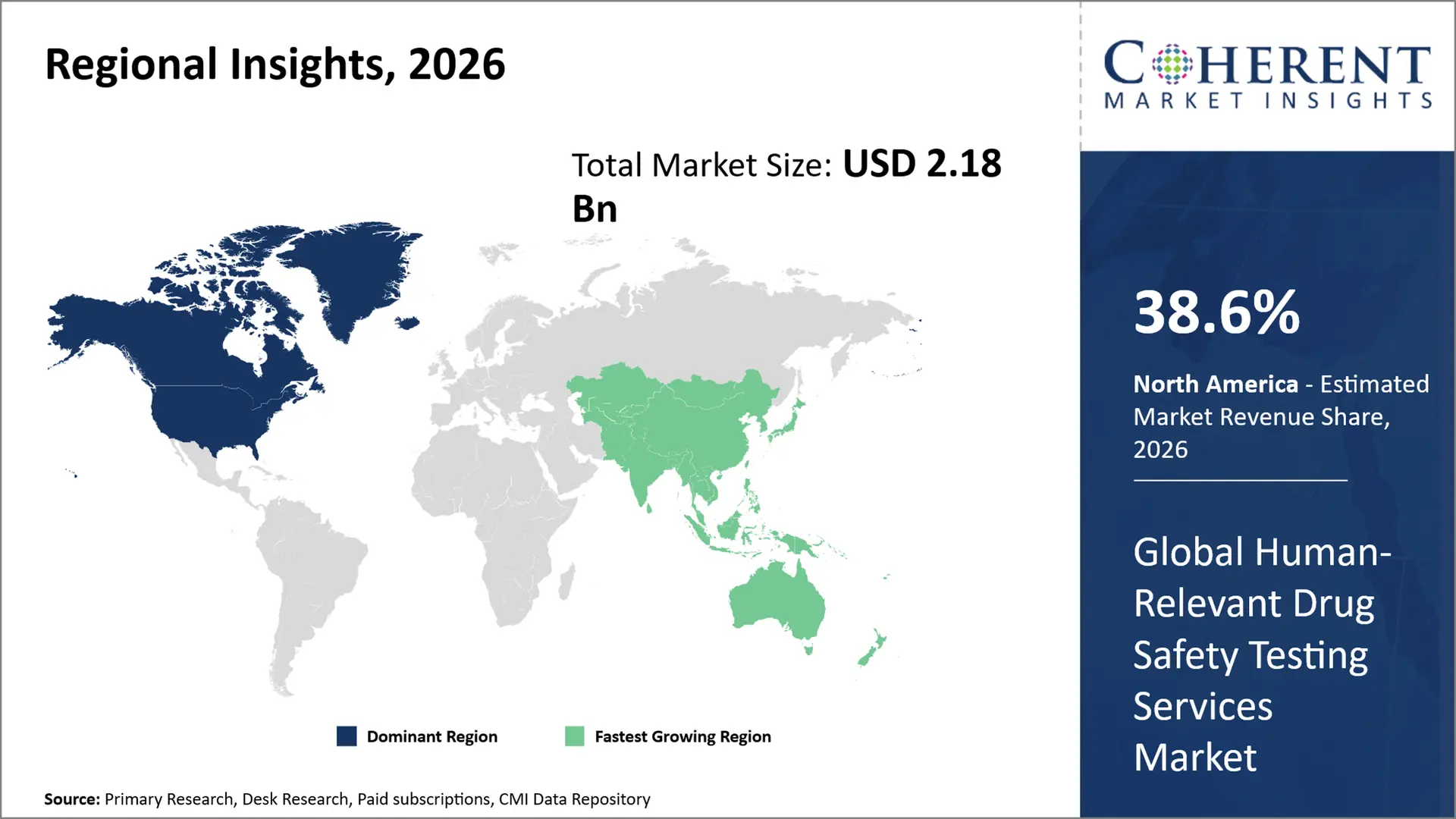
- North America market maintains dominance with an expected share of 38.6% in 2026, owing to the presence of a well-established biotechnology sector and sophisticated biomedical research infrastructure. For instance, the National Research Council of Canada contributes to biomedical technology development and strengthen preclinical studies expertise through its research programs.
- Asia Pacific is expected to exhibit the fastest growth in the global human-relevant drug safety testing services market, registering an estimated CAGR of 24.3% during 2026–2033, owing to the growth of biopharmaceutical research and development and the growing need for sophisticated preclinical testing. For instance, South Korea’s Ministry of Food and Drug Safety supports the development of novel nonclinical testing systems to ensure the scientific integrity of drug safety evaluation.
Segmental Insights
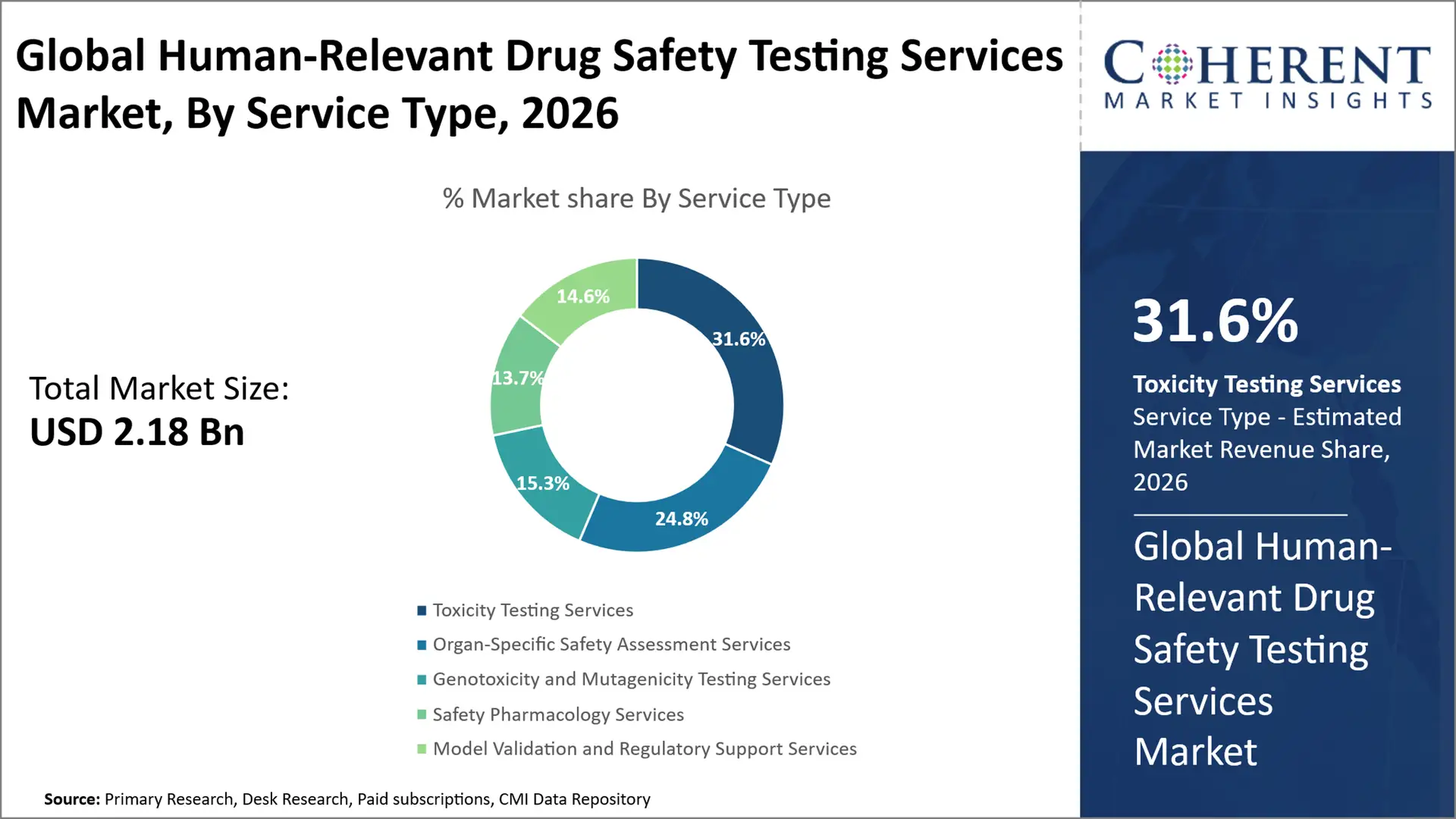
Why Do Toxicity Testing Services Dominate the Global Human-Relevant Drug Safety Testing Services Market?
Toxicity testing services are projected to hold the market share of 31.6% in 2026, attributed to their ability to determine the adverse biological responses and organ-specific risks before clinical trials. Additionally, the growing complexity of biologics and other types of advanced therapeutics is anticipated to fuel the usage of predictive human-based assays that help in early safety decisions, thereby reducing late-stage development risks. For instance, the Tox Cast programme by the U.S. Environmental Protection Agency, uses high-throughput screening assays to evaluate potential toxicity of chemicals and prioritize substances for further assessment.
- Current Industry Events of 2026
- Market Size Estimation
- Regional Breakdown
- Competitive Landscape
- Customer Intelligence
- Segmental Analysis
- Pricing Analysis
- Key Market Drivers, Challenges & Future Trends
- Customized Insights Section
Why Does Human Cell-Based Models Represent the Largest Model Type Segment in the Human-Relevant Drug Safety Testing Services Market?
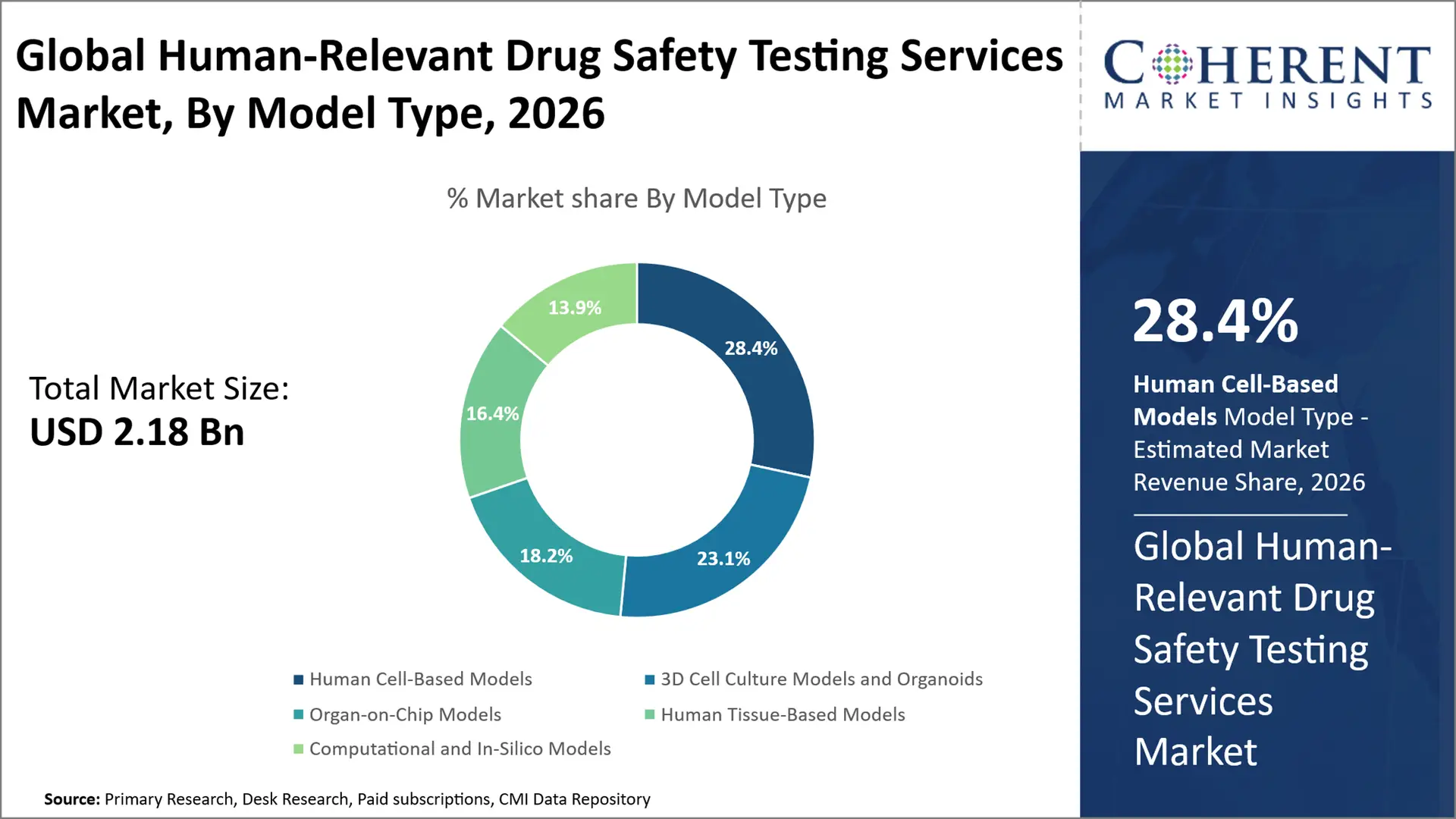
Human cell-based models are anticipated to contribute a share of 28.4% in 2026, owing to their ability of capturing human-specific cellular response and generating relevant biological information on drug toxicity, metabolism and immune response. Furthermore, emerging trends in co-culture and cell differentiation methods allow more diverse use of these models for both safety screening and mechanistic toxicology. For instance, the European Centre for the Validation of Alternative Methods (EURL ECVAM) assesses and supports scientifically validated non-animal procedures, including those based on human cells to be used in safety testing for regulatory purposes. (Source: European Commission)
Oncology Segment Dominates the Global Human-Relevant Drug Safety Testing Services Market
The oncology segment is projected to hold a market share of 29.7% in 2026, mainly due to the expanding cancer drugs pipeline and the complex safety assessments required for immunotherapies, antibody-drug conjugates, and targeted therapies. These therapies require comprehensive assessment of off target toxicity, immune-related toxicity and organ toxicity using predictive human relevant models. For instance, the U.S. National Cancer Institute's Patient-Derived Models Repository aids cancer research by providing models originating from tumors. These models are useful in assessing responses to therapies, and advancing preclinical oncology studies.
Current Events and their Impact
Current Events | Description and its Impact |
Australia’s TGA Updates Its Position on New Approach Methodologies (October 2026) |
|
UK MHRA Issues Guidance on No Animal Testing for Drugs (March 2026) |
|
Human-Relevant Drug Safety Testing Services Market Dynamics
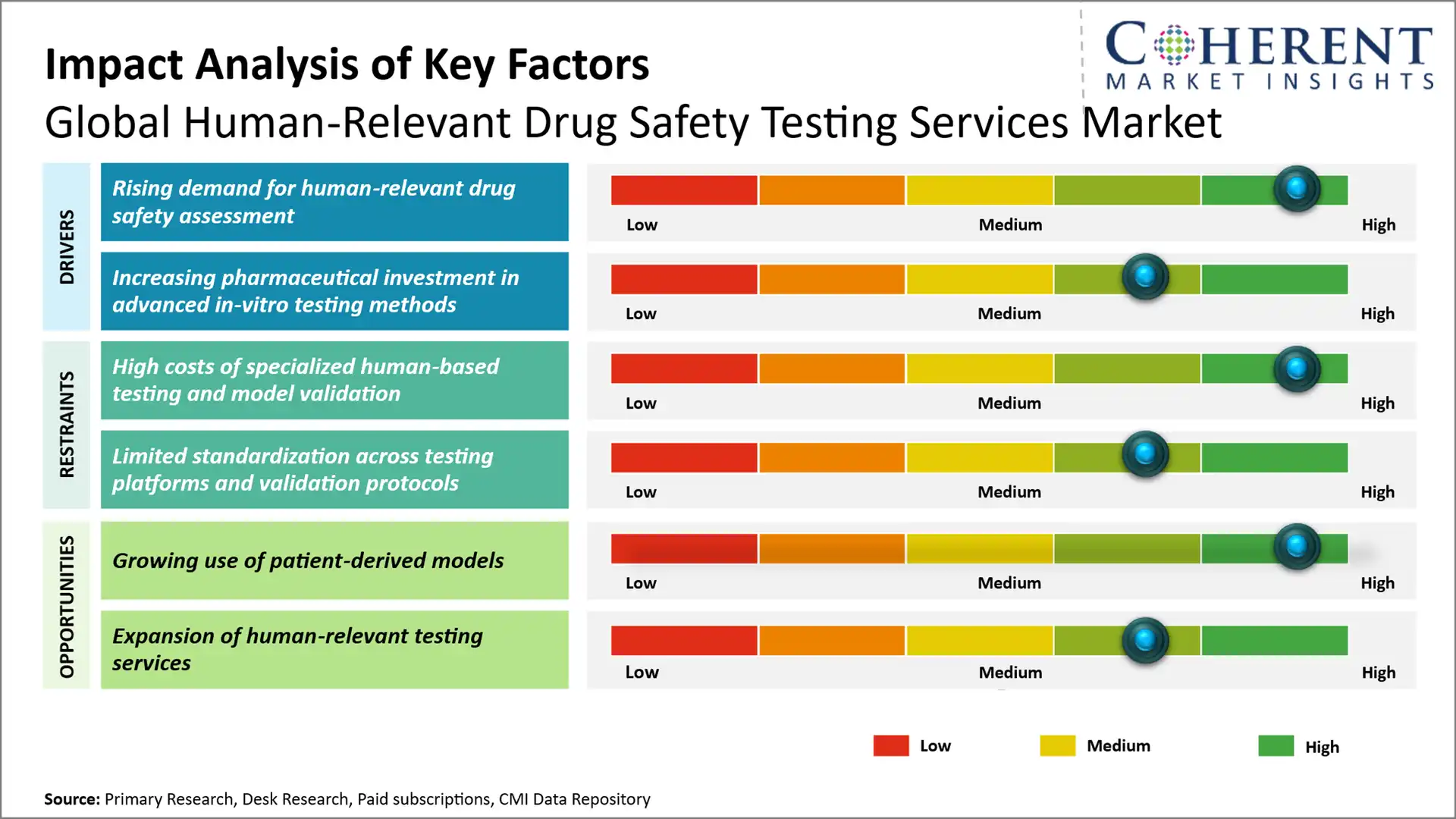
Market Drivers
- Rising demand for human-relevant drug safety assessment: The rising demand for human-relevant drug safety assessment is driven by the need to predict human responses to drugs, and to detect toxicities earlier during development. For instance, in March 2026, U.S. Food and Drug Administration (FDA) published draft guidance on validation principles for New Approach Methodologies (NAMs), which promotes the use of human-relevant methods where they can improve the reliability of nonclinical safety assessments. This is leading to increased interest in complex cell-based tests, organoids and computational testing strategies.
- Increasing pharmaceutical investment in advanced in-vitro testing methods: The rise in pharmaceutical investments in advanced drug testing in vitro approaches is propelled by the demand for high efficiency drug discovery process and improved preclinical safety evaluation. For instance, the Department of Pharmaceuticals in India has launched the Promotion of Research and Innovation in Pharma-Med Tech Sector (PRIP) Scheme with a total budget outlay of USD 525 million (INR 5,000 crore). The scheme envisages promotion of pharmaceutical research and development, stimulation of innovation, and furthering industry-academia collaborations.
- Growing regulatory acceptance of non-animal testing methods: The greater regulatory acceptance of New Approach Methodologies (NAMs) is encouraging pharmaceutical companies to adopt human-relevant testing approaches for preclinical safety studies. For instance, on October 1, 2026, International Coalition of Medicines Regulatory Authorities (ICMRA) published a joint statement calling for and supporting the regulatory acceptance of scientifically validated non-animal methods, such as those based on organ-on-chip or three-dimensional cell-based technologies.
Emerging Trends
- Growing Adoption of Organ on Chip and Advanced 3D Models: The pharmaceutical companies are increasingly adapting the use of organ-on-chip systems, advanced 3D cell cultures, and organoids. These methods can effectively mimic the functions of human tissues and drug responses.
- Impact: t enables a finer readout of organ-specific toxicity, drug-drug interactions, and biological responses that may be difficult to model with cell cultures alone. These can provide a more physiologically relevant pre-clinical readout.
- Market Relevance: The increasing demand for advanced biologics as testing systems will provide more opportunities for specialized human-relevant drug safety testing services, particularly for those providing liver, cardiac and neurological toxicity testing.
- Integration of AI with Human-Relevant Toxicity Testing: The industry is moving toward developing standardized protocols and performance indicators for organoids and organ-on-chip systems to bring greater consistency to their use in pre-clinical work.
- Impact: Integrating human cell assays, organoids and organ-on-chip platforms with human-specific artificial intelligence and machine learning will accelerate the prediction of drug toxicity.
- Market Relevance: Demand is growing for testing services that use both experimental models and predictive analytics via AI. Suppliers using integrated, data-oriented approaches to safety assessments will be able to build on their competitive advantage.
Regional Insights
Why is North America a Strong Market for Human-Relevant Drug Safety Testing Services?
North America leads the global human-relevant drug safety testing services market, accounting for an estimated 38.6% share in 2026, owing to well-established pharmaceutical and biotechnology ecosystem, well-established regulatory environment, and growing investments in cutting-edge drug safety research & development. The stringent regulations set by U.S. Food and Drug Administration (FDA) regarding drug safety could help the market to maintain high standards and encourage investments in emerging technological platforms including organ on chip technology and induced pluripotent stem cell models. For instance, in September 2026, the U.S. Food and Drug Administration (FDA) revised its guidelines recognizing alternative non-animal testing methods-cell-based, organ-on-chip, and computational models-as a foundation for alternative approaches in preclinical drug safety testing.
Why Does Asia Pacific Human-Relevant Drug Safety Testing Services Market Exhibit High Growth?
Asia Pacific is expected to exhibit the fastest growth in the global human-relevant drug safety testing services market, registering an estimated CAGR of 12.1% during 2026–2033. The region is projected to account for 24.3% of the global market in 2026, driven by well-established manufacturing infrastructure, increasing government support for biotechnology & innovation, and high-cost benefits for research & development activities. The countries such as China, Japan, South Korea, and India are expanding their drug safety assessment capabilities by increasing investments in research and development and establishing changing regulatory environments.
For instance, in August 2026, the Government of India stated that the Indian Council of Medical Research (ICMR) supported 109 research projects on non-animal-based testing methods such as organ-on-chip, 3D tissue models and computer-based approaches, to develop India’s capability in human-relevant drug safety research. (Source: Press Information Bureau)
Global Human-Relevant Drug Safety Testing Services Market Outlook for Key Countries
Why is the U.S. Leading Innovation and Adoption in the Human-Relevant Drug Safety Testing Services Market?
The U.S. is expected to be a pioneer country in the development and adoption of the human-relevant drug safety testing services market owing to its advanced bio-technology environment, large investments in pharmaceutical R&D, and availability of large research infrastructure. Rising focus on improving the preclinical prediction capability and decreasing dependency on animal testing have created the demand for human-based models like organoids, organ-on-chip, as well as cell-based assay. Moreover, increasing integration of artificial intelligence and computational toxicology is further complementing the status of the country in next-generation drug safety testing.
Is Japan a Favorable Market for Human-Relevant Drug Safety Testing Services Market?
Japan is an attractive market for human-relevant drug safety testing services because of its strong pharma sector and significant biomedical research strength. The country has a track record of innovation in regenerative medicine, stem-cell science, and disease modeling, and there is increased interest in improving prediction, reducing animal testing, and shorting timeframes for new drug development.
Is China Emerging as a Key Growth Hub for the Human-Relevant Drug Safety Testing Services Market?
China is emerging as a major hub for growth in the human-relevant drug safety testing services market attributed to the growth of pharmaceutical research and development, the rising biotechnology sector, and increased investments in state-of-the-art preclinical research. Moreover, the need for predictive and efficient drug safety testing may further push the application of human cell-based models, organoids, and organ-on-chip in the country. Moreover, growing research infrastructure and focus on improving the efficiency of drug development offer lucrative prospects to market players providing research services.
Why Does Germany Top the European Human-Relevant Drug Safety Testing Services Market?
Germany's role in the European human-relevant drug safety testing services market owing to the strong pharmaceutical market, high investment in the field of drug discovery and a well-established ecosystem for biotechnology research. The cutting-edge laboratory infrastructure in the country, combined with the availability of capable capacity to carry out assays based on human cells, organoids and 3D tissue models, is likely to pave the way for more predictive preclinical safety assessment.
Is Human-Relevant Drug Safety Testing Services Market Developing in UK?
The market for human-relevant drug safety testing services in the UK appears to be growing steadily, aided by government investment into novel preclinical studies and drug development, as well as biotech innovation and alternative to animal tests. Additionally, the strong academic research activity and the increasing cooperation between universities, the pharma industry and government agencies are expected to accelerate market development.
Drug Development and Preclinical Safety Assessment Statistics Supporting Human-Relevant Drug Safety Testing
Indicator | Data to Include | Relevance to the Market |
Clinical development success rate | % of drug candidates progressing from Phase I to approval | Highlights the need for more predictive preclinical safety testing |
Drug development cost | Estimated average cost of developing a new drug | Supports demand for testing methods that can reduce late-stage failures and development costs |
Regulatory adoption of New Approach Methodologies (NAMs) | Government initiatives and regulatory guidance supporting non-animal testing methods | Shows increasing regulatory acceptance of alternative safety assessment methods |
Drug development timeline | Average time required to develop and approve a new drug | Demonstrates the value of efficient human-relevant testing approaches |
Pharmaceutical R&D expenditure | Annual global or regional pharmaceutical R&D spending | Indicates the investment base supporting advanced drug safety testing services |
How is the growing use of patient-derived models creating new growth opportunities in the human-relevant drug safety testing services market?
The increased use of patient-derived models provides the opportunity to perform human-relevant drug safety testing by allowing biological variability between patients to manifest and to understand the response and toxicity profiles of a treatment. 3D personalized disease models can also help detect variability in drug sensitivities between different patient groups and inform more targeted preclinical screening. For instance, in July 2026, Indian Council of Medical Research (ICMR), and National Institute for Research on Women’s Health (NIRWoH) supported the development of a placenta-on-chip platform at the Indian Institute of Technology, Bombay. The placenta-on-chip platform was designed to mimic the functions and evaluate drug response using human placental cells. (Source: The Indian Practitioner)
Market Players, Key Development, and Competitive Intelligence
Key Developments
- On October 28, 2026, Transpharmation Ltd. announced the merger with Organo Therapeutics SARL, a provider of patient derived, iPSC-derived brain organoids and assembloid models of neurological diseases. The merger combines Transpharmation’s preclinical research capabilities with human-relevant organoid technologies to accelerate discovery and therapeutic screening.
- In September 2026, VeriSIM Life has signed an agreement with the U.S. Department of War on computational New Approach Methodologies (NAMs) of medical countermeasure development and safety evaluation. This project will use artificial intelligence-enabled biological simulations and drug-specific data to accelerate translation of preclinical data to humans for next-generation medical countermeasures. ".
Competitive Landscape
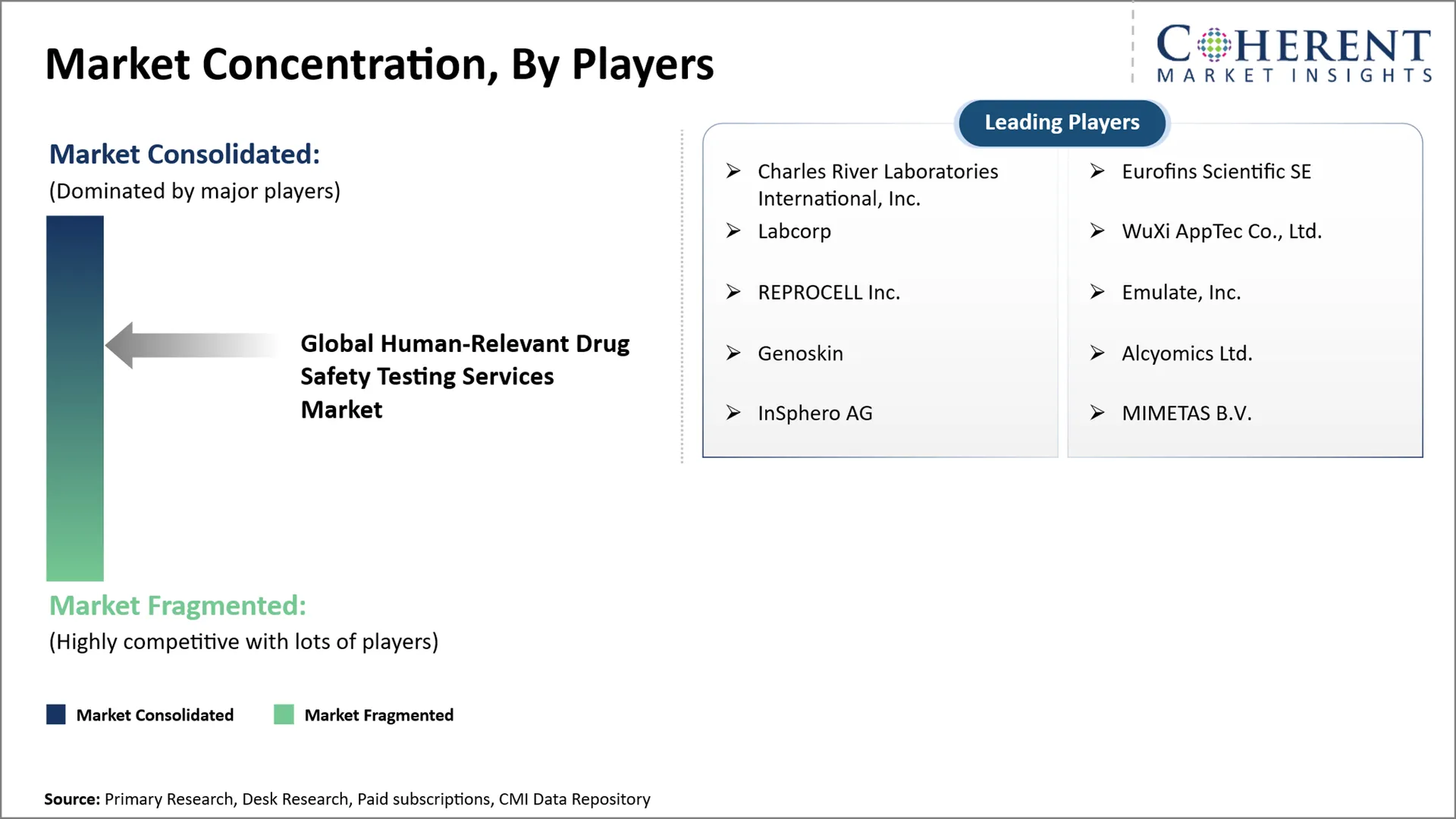
The global human-relevant drug safety testing services market is profoundly evolving as the service providers are focusing on improving the predictive accuracy, reproducibility, and translational utility of human based biological model approaches. The major organizations are expanding their expertise in the field of human cell-based models, organs-on-chips, advanced in-vitro testing techniques, and organoids for evaluating drug safety, toxicity, and efficacy.
Key focus areas include
- Standardization of validation protocols
- Expansion of human-relevant testing platforms
- Use of next-generation analytical tools
- Alignment with evolving regulatory expectations
Market Report Scope
Global Human-Relevant Drug Safety Testing Services Market Report Coverage | |||
Report Coverage | Details | ||
Base Year | 2025 | Market Size in 2026: | USD 2.18 Bn |
Historical Data For: | 2020 To 2024 | Forecast Period: | 2026 To 2033 |
Forecast Period 2026 To 2033 CAGR: | 12.4% | 2033 Value Projection: | USD 4.94 Bn |
Geographies covered: |
| ||
Segments covered: |
| ||
Companies covered: | Charles River Laboratories International, Inc., Eurofins Scientific SE, Labcorp, WuXi AppTec Co., Ltd., REPROCELL Inc., Emulate, Inc., Genoskin, Alcyomics Ltd., InSphero AG, MIMETAS B.V. | ||
Growth Drivers: |
| ||
Restraints & Challenges: |
| ||
Analyst Opinion (Expert Opinion)
- In the coming years, global human-relevant drug safety testing services market is expected to adopt integrated human-relevant safety assessment including cell-based assays, organoids, organ-on-chip systems and computational toxicology. Greater emphasis will be placed on validation of the reproducibility of the model, prediction of organ-specific toxicity and veracity of results over the entire drug development cycle. In addition, artificial intelligence enabled data analysis and automated testing pipelines will be used to improve screening throughput and rationalize the importance of human-relevant methods.
- The strongest potential opportunity exists in human cell-based models and Organ-on-Chip models for organ-specific toxicity testing in the U.S. These models provide solutions for important safety liabilities of drug candidates for the liver, heart, kidney, and nervous system, and provide more human-relevant safety evidence. The U.S. market is attractive due to the size of its pharma research market, presence of dedicated testing companies, and demand for cutting-edge preclinical safety testing.
- The market players should focus on verified testing workflows, robust quality controls and unambiguous demonstration of model performance in relevant testing scenarios. Combining AI-based toxicity prediction with experimental assays could help to distinguish different providers' services and provide insight into complex biological responses. Suppliers should consider tailoring expertise for new modalities of drugs, provide adaptable outsourced testing packages and build on relationships with pharmaceutical companies to provide safety testing support during preclinical development.
Speak to the analyst
Want personalized insights?
Take the findings above to one of our principal consultants, or have the report rebuilt around the segments, geographies and competitors you actually track.
Market Segmentation
- Service Type Insights (Revenue, USD Bn, 2021 - 2033)
- Toxicity Testing Services
- Organ-Specific Safety Assessment Services
- Genotoxicity and Mutagenicity Testing Services
- Safety Pharmacology Services
- Model Validation and Regulatory Support Services
- Model Type Insights (Revenue, USD Bn, 2021 - 2033)
- Human Cell-Based Models
- 3D Cell Culture Models and Organoids
- Organ-on-Chip Models
- Human Tissue-Based Models
- Computational and In-Silico Models
- Therapeutic Area Insights (Revenue, USD Bn, 2021 - 2033)
- Oncology
- Neurological Disorders
- Cardiovascular Diseases
- Metabolic and Liver Diseases
- Infectious Diseases
- Others
- Application Insights (Revenue, USD Bn, 2021 - 2033)
- Drug Discovery and Development
- Preclinical Toxicity Assessment
- Drug-Induced Organ Toxicity Testing
- Biologics and Advanced Therapy Safety Testing
- Regulatory Safety Assessment
- Others
- End User Insights (Revenue, USD Bn, 2021 - 2033)
- Pharmaceutical and Biotechnology Companies
- Contract Research Organizations (CROs)
- Academic and Research Institutions
- Medical Device and Diagnostics Companies
- Others
- Regional Insights (Revenue, USD Bn, 2021 - 2033)
- North America
- U.S.
- Canada
- Latin America
- Brazil
- Argentina
- Mexico
- Rest of Latin America
- Europe
- Germany
- U.K.
- Spain
- France
- Italy
- Russia
- Rest of Europe
- Asia Pacific
- China
- India
- Japan
- Australia
- South Korea
- ASEAN
- Rest of Asia Pacific
- Middle East
- GCC Countries
- Israel
- Rest of Middle East
- Africa
- South Africa
- North Africa
- Central Africa
- North America
Sources
Primary Research Interviews
- Human-relevant drug safety testing and toxicology specialists
- Organoid, organ-on-chip, and micro physiological systems developers
- Pharmaceutical safety assessment and preclinical research leaders
- Regulatory toxicology and nonclinical validation experts
Stakeholders
- Pharmaceutical and biotechnology companies
- Contract Research Organizations (CROs)
- Human-based model developers and testing service providers
- Academic and biomedical research institutions
- End-use Sectors
- Drug Discovery and Development
- Toxicity and Safety Assessment
- Disease Modeling and Precision Medicine
- Biologics and Advanced Therapy Development
- Regulatory & Health Bodies
- U.S. Food and Drug Administration (FDA)
- European Medicines Agency (EMA)
- Pharmaceuticals and Medical Devices Agency (PMDA), Japan
- Organisation for Economic Co-operation and Development (OECD)
Databases
- FDA New Approach Methodologies (NAMs) Database
- NIH RePORTER
- NIH Tissue Chip Program Database and Resources
- NC3Rs New Approach Methodologies (NAMs) Resources
Associations
- International Society for Stem Cell Research (ISSCR)
- Society of Toxicology (SOT)
- National Centre for the Replacement, Refinement and Reduction of Animals in Research (NC3Rs)
- IQ Consortium
Public Domain Sources
- National Institutes of Health (NIH)
- National Center for Advancing Translational Sciences (NCATS)
- U.S. Environmental Protection Agency (EPA)
- European Commission Joint Research Centre (JRC) – EURL ECVAM
Proprietary Elements
- CMI Data Analytics Tool
- Proprietary CMI Existing Repository of information for last 10 years.
Get access to 250+ pages report
Every segment, forecast, competitor profile and data table behind the analysis above — available for instant download.
- ESOMAR Member
- ISO 9001:2015 Certified
- D-U-N-S Registered
- GDPR & CCPA Compliant
Frequently Asked Questions
The global human-relevant drug safety testing services market is estimated to be valued at USD 2.18 Bn in 2026 and is expected to reach USD 4.94 Bn by 2033.
Toxicity testing services dominate due to the vital role of these services in identifying adverse effects caused by drugs and in evaluating the safety of drug candidates before initiating clinical trials.
Human-relevant drug safety testing services assess drug candidate toxicity and safety profiles by utilizing human-based model systems as well as advanced testing techniques improving the predictability of preclinical results.
The CAGR of global human-relevant drug safety testing services market is projected to be 12.4% from 2026 to 2033.
Rising demand for human-relevant drug safety assessment, and increasing pharmaceutical investment in advanced in-vitro testing methods are the major factors driving the growth of the global human-relevant drug safety testing services market.
High costs of specialized human-based testing and model validation, and limited standardization across testing platforms and validation protocols are the major factors hampering the growth of the global human-relevant drug safety testing services market.
In terms of model type, human cell-based models are estimated to dominate the market revenue share in 2026.