

Organ On A Chip Market Analysis & Forecast: 2026-2033
The Global Organ-on-a-Chip Market is estimated to be valued at USD 208.6 Mn in 2026 and is expected to reach USD 1,643.5 Mn by 2033, exhibiting a compound annual growth rate (CAGR) of 34.3% from 2026 to 2033.
Key Takeaways of the Organ-on-a-Chip Market
- In terms of Products & Service, The Products Segment is expected to contribute the highest share of the market with 53.1% in 2026.
- In terms of Application, The Toxicology Testing Segment is expected to contribute the highest share of the market with 34.4% in 2026.
- In terms of End User, The Pharmaceutical and Biotechnology Companies Segment is expected to contribute the highest share of the market with 44.4% in 2026.
- North America is expected to top the market with 37.4% share, followed by Asia pacific with 27.4% share in 2026.
Market Overview
The increasing need for alternative methods for drug screening and the growing focus on developing organ-level models of disease pathology are major factors expected to drive the demand for organ-on-a-chip devices. Furthermore, increasing collaborations between research academics and market players to develop more sophisticated organ-on-a-chip platforms will further augment the market growth. Availability of funding from private and public organizations for research on microfluidic devices is also expected to propel the organ-on-a-chip market during 2025-2032. However, the high costs associated with organ-on-a-chip systems may hamper market growth to some extent during the forecast years.
Current Events and Its Impact on the Global Organ-on-a-Chip Market
Event | Description and Impact |
Regulatory Advances in Alternative Testing Methods |
|
Technological Breakthroughs in Microfluidics and Biotechnology |
|
Pharmaceutical Industry Transformation and Drug Development Crisis |
|
Pipeline Analysis
The Organ On a Chip Market for disease modeling is rapidly advancing as a transformative platform primarily focused on disease modeling and Organ On a Chip in precision medicine applications rather than traditional therapeutic development. Leading companies such as Emulate Inc., Mimetas, and CN Bio Innovations offer commercial platforms that simulate human organ functions, enabling detailed Organ On a Chip with drug metabolism studies and toxicity screening. Notably, CN Bio’s PhysioMimix platform is widely used for drug metabolism and pharmacokinetic investigations.
In the Organ On a Chip Market for neurodegenerative diseases, emerging research pipelines from academic institutions like Harvard Wyss Institute and collaborations between MIT and Harvard focus on multi-organ and patient-specific chips to better model complex neurological conditions and tailor precision medicine strategies. These platforms incorporate sensor technology in Organ On a Chip to monitor real-time biological responses, enhancing data reliability.
Moreover, Organ On a Chip By tissue regeneration research is gaining momentum, enabling studies on organ repair and cellular regeneration in vitro. Overall, the pipeline emphasizes platform validation, regulatory qualification, and integration of sensor technologies rather than traditional clinical trials, positioning Organ On a Chip as a crucial tool in drug development, personalized therapy, and disease modeling.
- Current Industry Events of 2026
- Market Size Estimation
- Regional Breakdown
- Competitive Landscape
- Customer Intelligence
- Segmental Analysis
- Pricing Analysis
- Key Market Drivers, Challenges & Future Trends
- Customized Insights Section
Patent Landscape
The patent scope of the Organ On a Chip Market is decidedly active and evolving due to intense innovation in the design of microfluidic devices, biomimetic tissue engineering, and sensor integration. Leading Emulate Inc., Mimetas, and CN Bio Innovations, as well as some newer companies, have issued patents for organ-specific models such as liver, kidney, lung, and blood-brain barrier chips. The most recent patents are directed towards increasing chip function within Organ On a Chip systems through multiplexing, automation, and real-time sensor integration.
Moreover, there is a rise in biocompatibility and scalability concerning novel biomaterials and associated fabrication methods. Market and competition dynamics are driven by sophisticated patent portfolios and licensing agreements which consolidate joint marketing strategies, while overall innovation trends are shaped by multi-organ-on-a-chip systems as well as Organ On a Chip frameworks in precision medicine and drug metabolism studies.
The focus on protecting innovations around chips for modeling diseases and tissue regeneration reveals the expansion applications beyond traditional drug testing. Thus, the Organ On a Chip Market is maturing toward widespread commercialization and regulatory acceptance.
Reimbursement Scenario
The global scenario for reimbursement related to Organ-on-a-Chip (OoC) technologies is still in the early stages and remains disorganized, similarly to the developmental phase of these platforms. In the United States, OoC devices are usually categorized as Class II medical devices which require FDA 510(k) clearance.
There are, however, no specific CPT codes for OoC testing and service provisions are billed under unlisted microbiology, cytopathology, or chemistry procedure codes (e.g., 87999, 88299). Medicare reimbursement is confined primarily to indemnity plans, limited to testing conducted in investigational settings. Estimated reimbursement levels are in the range of $150 to $800 per test. State-by-state variation is notable for Medicaid and reimbursement from commercial payers is negligible.
In the European Union, OoC devices require CE marking which falls under the scope of MDR 2017/745 and are usually classified as Class IIa or IIb. Often there are no reimbursement codes or they are included in broader laboratory service bundles. Some countries provide temporary codes for innovative procedures. The timeframe for coverage after CE marking can range from 12 to 24 months.
In the Asia–Pacific region, Japan and China have special pathways such as Sakigake in Japan, and varying provincial reimbursement policies in China. There is, however, regulatory clearance which follows lengthy health technology assessments and negotiations on reimbursement, highlighting the gaps that remain to be addressed in order to facilitate clinical and commercial adoption of OoCs.
Prescribers’ Preference
Organ-on-a-chip (OoC) technologies have been receiving keen interest from prescribers in various clinical areas because they simulate human tissues more accurately for predicting and assessing human physiological responses to drugs. In oncology, prescribers place the highest importance on OoC platforms when deciding on first line treatment for metastatic cancers. The treatment approaches for lung, breast, and colorectal cancer are being significantly enhanced through OoC-guided chemotherapy and immunotherapy selection, which has led to better tailored therapy achievements.
Cardiologists prefer heart-on-chip models for early hypertension and arrhythmia intervention to assess drug action and cardiotoxic potential. In more advanced cardiovascular diseases such as heart failure and atrial fibrillation, OoC also aid in improving the safety and efficacy of dosing and drug combination therapies. There is an emerging influence among neurologists using brain-on-chip models for investigating neurodegenerative disorders which aids in Alzheimer's and Parkinson’s precision medicine tailoring within the disease frameworks.
Generally, Urologists and Cardiologists prefer organ-on-chips technologies that permit bespoke pharmacotherapy and adverse impact minimization with swift optimization of therapeutic interventions. There is a growing interest because of the potentials these technologies have to revolutionize drug development and clinical decisions, particularly within the frameworks of personalized medicine.
Segmental Insights
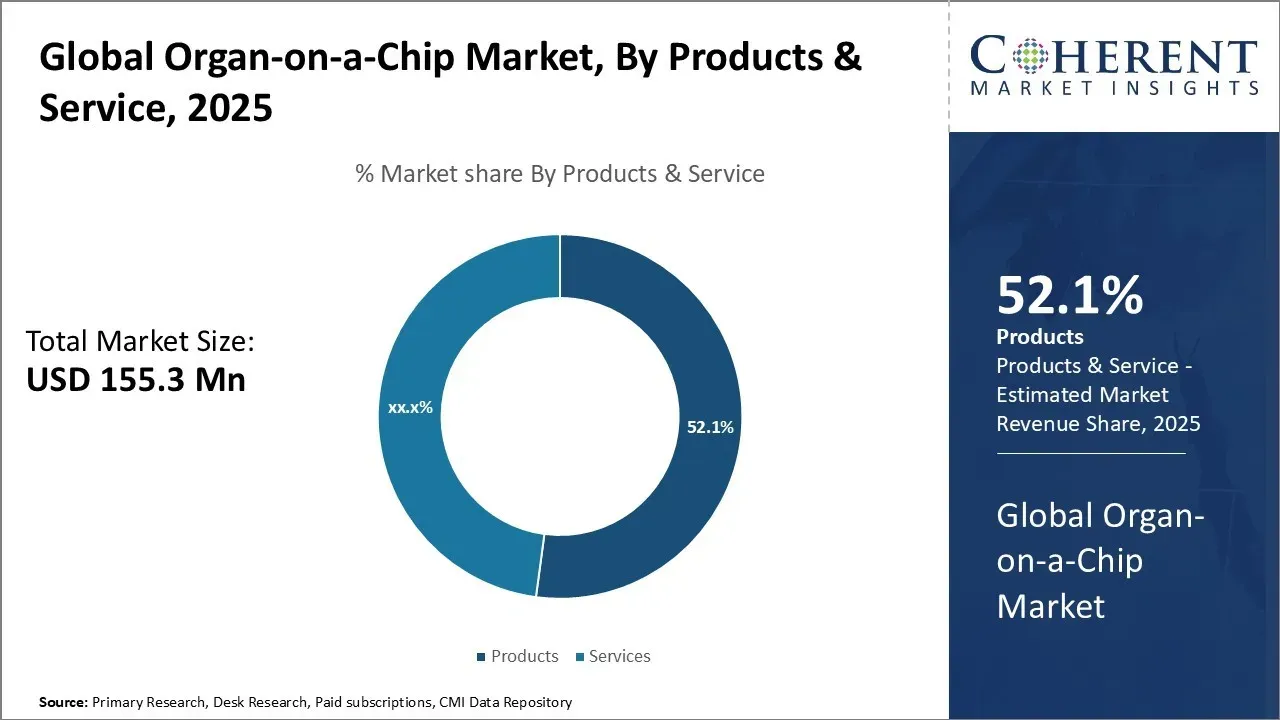
Global Organ-On-a-Chip Market Insights, By Products & Service
In terms of products & service, the products segment is expected to contribute the highest share of the market with 53.1% in 2026 owing to their accessibility and utility in research. Organ-chips allow replicating human physiology and pathology more effectively than traditional models. Products like heart-on-chip and lung-on-chip provide affordable access to cutting edge microchip technologies. Their small size and compatibility with laboratory equipment enables convenient experimentation.
Complex human tissues are recreated on these chips with precision and real-time monitoring capabilities. Researchers can gain deeper insights into organ functions and disease mechanisms, without restrictions of traditional animal or cell-based models. The products also find wide acceptance due to replicating multiple organ interactions critical for advanced trials. Their portability facilitates collaborative research worldwide. The storage stability of organ tissue on chips aids product longevity.
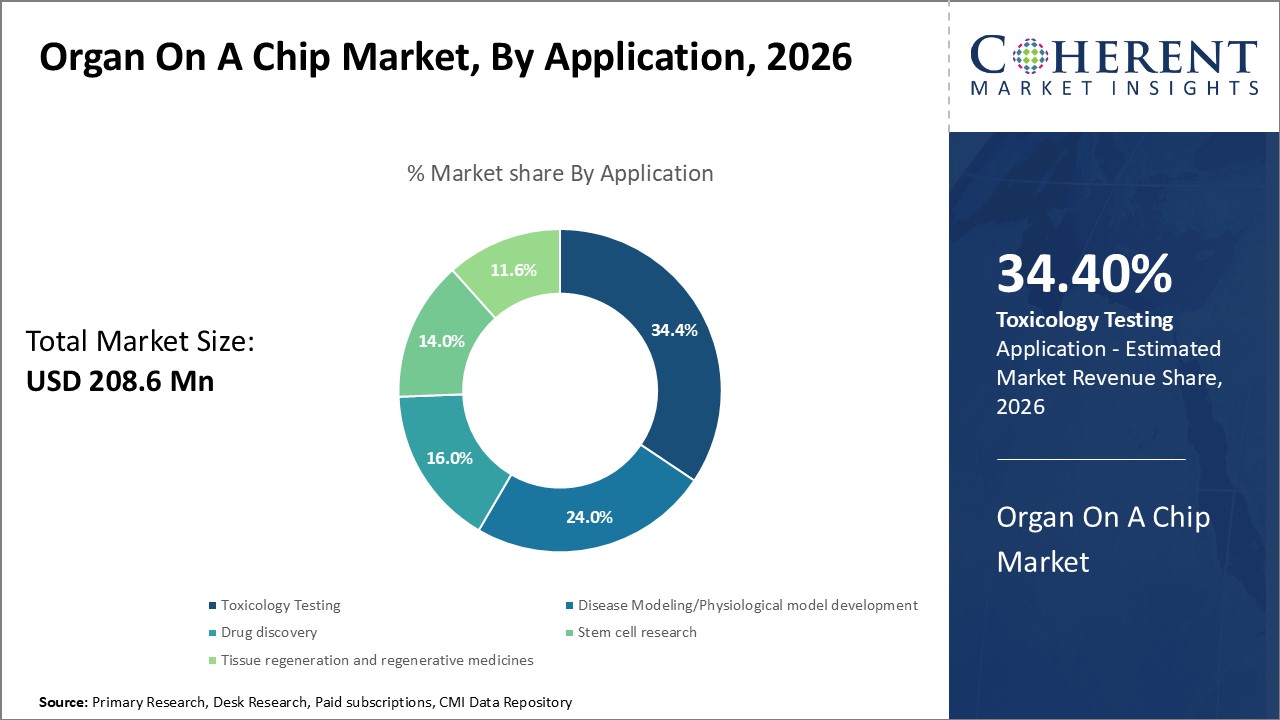
Global Organ-On-a-Chip Market Insights, By Application
In terms of application, the toxicology testing segment is expected to contribute the highest share of the market with 34.4% in 2026 owing to efficiency and predictability benefits. Organ-chips drastically accelerate drug development by simulating human responses much earlier. They replace animal models to assess toxicity and potentially dangerous side effects in a fraction of time.
Complex multi-organ interactions are replicated to gain human-relevant data predictive of clinical outcomes. This improves decision making on viable drug candidates. It avoids costs and delays from late-stage drug failures. With strict safety regulations, organ chips provide a human-focused solution to assay drugs effectively at low volumes.
Global Organ-On-a-Chip Market Insights, By End User
In terms of end user, the pharmaceutical and biotechnology companies’ segment is expected to contribute the highest share of the market with 44.4% in 2026 due to customization opportunities and compliance with regulatory standards. Organ chips allow custom modeling of disease conditions and patient variability crucial for precision medications.
Their flexible, on-demand organ mimicking solutions match unique research needs. This drives personalized insights and streamlines drug development. The human physiology replication abilities also meet regulatory standards of safety and efficacy. Organ chips comply with "Animal Rule" for medical countermeasures.
Global Organ-On-a-Chip Market - Regional Insights
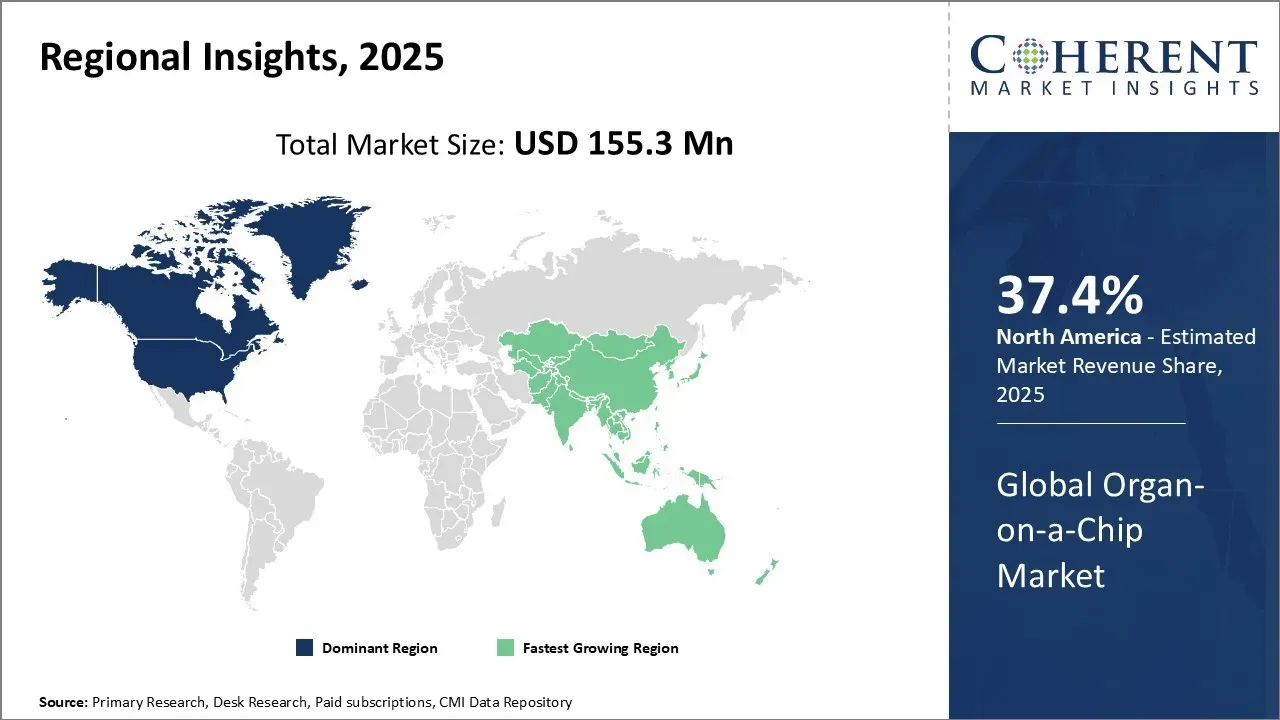
North America Organ-On-a-Chip Market Trends
The North America will continue to lead in the organ-on-a-chip market with a staggering 37.4% market share in 2026. This is due to the dominant spending on medical devices and advanced research funding available in the U.S. and Canadian regions. The advanced organ chips are being developed at some of the best research universities in the region which are actively working in areas like new drug research, basic biology, and disease modeling.
Asia Pacific Organ-On-a-Chip Market Trends
The Asia Pacific region exhibits the fastest growth with share of 27.4% in 2026, led by China, Japan, and South Korea. Significant investments by governments and private players in developing local life sciences clusters are helping boost research activities in organ-on-a-chip technologies. Many companies like AstraZeneca are also stepping up efforts to commercialize organ chips.
Organ-on-a-Chip Market Outlook for Key Countries
U.S. Organ-On-A-Chip Market Trends
The U.S. market remains a leader in organ chips for preclinical research because of the extensive resources available from pharmaceutical and biotech companies. Startups focused on this technology can be found on the west coast. For example, just last month, the National Institutes of Health announced a budget of over $34 billion for more than 58,900 grants which support universities, hospitals, and private enterprises globally. This nets a 4.7% rise in funding and 1% rise in awards compared to the previous year. Such funding helps advanced research with organ-on-a-chip technologies and consequently, expanding the market.
U.K. Organ-On-A-Chip Market Trends
The United Kingdom has one of the most promising organ-on-a-chip markets in revenues and growth, and the faster growth of the region's infrastructure is expected to significantly benefit medical research throughout the region. In March 2024, Professor Mr. Hazel Screen from Queen Mary University of London together with other bioengineers received a US$ 7.66 million grant to set up an EPSRC Centre for Doctoral Training (CDT). The grant is intended to educate future scientists and bioengineers on organ-on-a-chip (OOC) technologies, thereby advancing next generation innovations in the field.
Germany Organ-On-A-Chip Market Trends
The growth forecast for the organ-on-a-chip market in Germany anticipates steady advancement. Although OOC technology has the capability to simulate human lung biology, it lacks an integrated vascular system. To address this issue, bioengineers from the Institute of Biomedical Engineering began a three-year fellowship at the Max Delbrück Center in Berlin-Buch in June 2024, focusing on improving the vascular integration of organ-on-a-chip systems.
China Organ-On-A-Chip Market Trends
China organ-on-a-chip market is projected to expand significantly over the forecast period. As highlighted in July 2024 China Daily’s press release, Chinese researchers and biotechnology companies are making strides in developing organ-on-a-chip technologies that replicate human lungs, livers, skin, and tumor metastasis. These transparent, flexible devices, ranging in size from a fingernail to a bank card, house 3D organ models created from cultured cells encased in silicone and polymer materials.
India Organ-On-A-Chip Market Trends
India organ-on-a-chip market is anticipated to witness significant growth during the forecast period. In August 2024, the government of India introduced the ‘BioE3’ policy, as announced in a September 2024 press release. This initiative aims to foster innovation in the biotechnology sector by establishing biomanufacturing facilities, bio-AI hubs, and bio-foundries.
Market Players, Key Development, and Competitive Intelligence
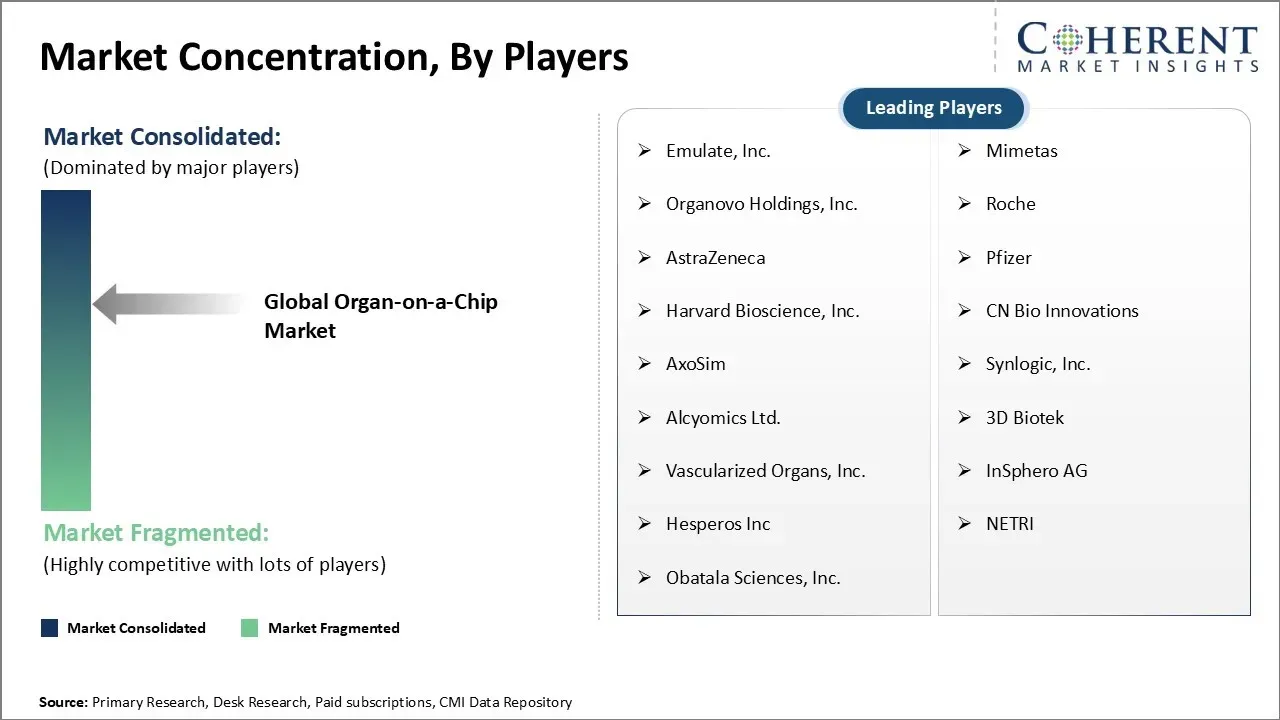
Key Developments
- In October 2024, InSphero, a leader in 3D cell culture technology, launched a next-generation liver-on-a-chip platform to enhance the assessment of drug-induced liver injury, delivering more reliable data for preclinical studies.
- In October 2024, Allevi Inc., renowned for its 3D bioprinting solutions, introduced a new bioprinting kit for creating customizable organ-on-a-chip models, simplifying the fabrication of tissue-specific chips for researchers.
- In September 2024, Hesperos, a pioneer in human-on-a-chip systems, secured a significant grant to develop a multi-organ-on-a-chip system for modeling complex human diseases, advancing personalized medicine applications.
- In September 2024, Emulate Inc., a key player in organ-on-a-chip technology, announced a collaboration with a leading pharmaceutical company to leverage its platform for advanced drug testing, aiming to improve predictive accuracy in human biology models.
- In August 2024, MIMETAS BV, a global leader in organ-on-a-chip platforms, expanded its OrganoPlate technology to include a kidney-on-a-chip model, enabling more accurate studies of renal diseases and drug nephrotoxicity.
Top Strategies Followed by Global Organ-on-a-Chip Market Players
- Established Players: The most prominent organ-on-a-chip companies invest greatly in R&D to develop new and novel solutions.
- For example, Quris, an AI-powered innovator in the pharmaceuticals sector, announced additional $9 million in seed funding which raised at The focus of their spending is continuing development of Bio-AI clinical prediction platform. Designed to “predict” clinical outcomes using a patient-on-chip system coupled with advanced AI, the platform aims to significantly minimize animal testing and lower costs associated with drug development.
- Mid-Level Players: Mid-level companies focus on delivering quality, budget-friendly products targeting price-sensitive consumers. For example, Altis Biosystems offers a stem cell platform to recreate the human intestinal epithelium, providing cost-effective solutions for drug discovery and toxicity testing.
- For example, Altis Biosystems offers a stem cell platform to recreate the human intestinal epithelium, providing cost-effective solutions for drug discovery and toxicity testing.
- Small-Scale Players: Small players often target niche markets with unique features or innovative products.
- For instance, Bi/ond develops customizable organ-on-a-chip solutions for in vitro assays, focusing on specific organ models to cater to specialized research needs. Adopting cutting-edge technologies is essential for competitiveness. Bi/ond utilizes advanced microfabrication techniques to develop its organ-on-a-chip platforms, ensuring high precision and functionality.
Emerging Startups - Organ-on-a-Chip Industry Ecosystem
- Innovative Technologies: Recent startups are developing advanced technological solutions and pioneering innovations in the field. For example, Cherry Biolabs is creating body-on-a-chip platforms with smart microsensors and tissue engineering while AxoSim is working on AI-driven neural organoids. If successful, these attempts may drastically change the drug testing paradigm and reliance on animal models. For instance, AI-driven chips could perform intricate simulations of human responses with much greater precision. This will greatly impact the industry by allowing custom simulations to be conducted for any patient and significantly lowering costs.
- Sustainable Solutions: Some new businesses are also focusing on sustainability in the sector. For instance, Elveflow manufactures tissue chips with 3D bioprinted alginate and collagen, derived from seaweed and animal tissues, respectively. This enables accurate simulation of organ microenvironments while mitigating environmental damage. Another innovative startup is self-assembling liver and bone tissues from donor cells without scaffolds, growing them entirely from the cells which may allow the creation of patient-specific implants and methods that generate zero biowaste.
Market Report Scope
Organ-on-a-Chip Market Report Coverage
| Report Coverage | Details | ||
|---|---|---|---|
| Base Year: | 2025 | Market Size in 2026: | USD 208.6 Mn |
| Historical Data for: | 2020 To 2024 | Forecast Period: | 2026 To 2033 |
| Forecast Period 2026 to 2033 CAGR: | 34.3% | 2033 Value Projection: | USD 1,643.5 Mn |
| Geographies covered: |
| ||
| Segments covered: |
| ||
| Companies covered: | Emulate, Inc., Mimetas, Organovo Holdings, Inc., Roche, AstraZeneca, Pfizer, Harvard Bioscience, Inc., CN Bio Innovations, AxoSim, Synlogic, Inc., Alcyomics Ltd., 3D Biotek, Vascularized Organs, Inc., InSphero AG, Hesperos Inc, NETRI, and Obatala Sciences, Inc. | ||
| Growth Drivers: |
| ||
| Restraints & Challenges: |
| ||
Organ-on-a-Chip Market Growth Factors Driver - Increasing demand for alternative testing methods to reduce animal testing
The global organ-on-a-chip market is expected to witness significant growth over the forecast period owing to the increasing need for alternatives to animal testing, early detection of drug toxicity, and technological advancements, along with new product launches. Animal testing has been an integral part of drug development and toxicology studies to evaluate the safety and efficacy of new drugs and chemicals.
For instance, in December 2021, Emulate, Inc. (a leader in organ-on-a-chip technology) announced that its Brain Chip was sent to the International Space Station (ISS) National Laboratory (NL) to study the effects of microgravity on human brain physiology. This project was part of the Tissue Chips in Space program, sponsored by the National Center for Advancing Translational Sciences (NCATS) at the National Institutes of Health (NIH) and the ISS-NL, highlighting Emulate’s pioneering role in biomedical research innovation.
Organ-on-a-Chip Market Challenge - High development costs associated with organ-on-a-chip technologies
The exorbitant development costs involved in developing organ-on-a-chip technologies pose a significant challenge for the growth of the global organ-on-a-chip market. The fabrication of organ-on-a-chips requires a multidisciplinary approach involving microengineering, cell biology, and microfabrication procedures which elevates the development costs.
Additional expenses are also involved in securing primary tissues or stem cells, developing tissue-specific microenvironments, optimizing tissue integrity and establishing functional readouts. Manufacturing organ-on-a-chips necessitates the usage of sophisticated microfabrication facilities and cell culture equipment as well.
Organ-on-a-Chip Market Opportunity - Advancements in microfluidics and 3D bioprinting technologies
The growing advancements in the fields of microfluidics and 3D bioprinting offer plethora of opportunities for the global organ-on-a-chip market. Incorporation of microfluidic systems enables mimicking vital physiological functions such as fluid shear stresses, gradients, and tissue-tissue interfaces in organ-on-a-chips. This facilitates accurate evaluation of absorption, distribution, metabolism, and excretion of drugs.
Meanwhile, 3D bioprinting allows constructing tissues and organ models with high precision by positioning different cell types at designated locations in a layered extracellular matrix. Such advanced cellular structures closely recapitulate human physiology for predictive toxicology and pharmacokinetics testing.
Analyst Viewpoint
- The development of microfluidic cell culture models that better mimic human physiology will drive demand. Organ-on-a-chip technology allows for more accurate disease modeling and analysis of complex human pathways compared to traditional 2D cell cultures. Life science researchers and pharmaceutical companies are expected to widely adopt organ-on-a-chip systems to screen drug candidates and analyze human tissue and organ responses.
- North America currently dominates the market owing to substantial investments in R&D by government bodies like the NIH. However, Asia Pacific is likely to be the fastest growing region with increasing focus on medical technology in countries like China, Japan, and India. High costs associated with development and production of organ-chip devices could restrain initial adoption rates.
- On the opportunities front, the expansion of application areas from drug development to disease pathogenesis, and from efficacy testing to toxicity screening will boost the organ-chip market potential over the long-term.
Market Segmentation
- Products & Service Insights (Revenue, USD Mn, 2021 - 2033)
- Products
- Instruments
- Devices
- Heart-on-Chip
- Lung-on-Chip
- Liver-on-Chip
- Kidney-on-Chip
- Brain-on-Chip
- Intestine-on-Chip
- Others
- Services
- Application Insights (Revenue, USD Mn, 2021 - 2033)
- Toxicology Testing
- Disease Modelling/Physiological model development
- Drug discovery
- Stem cell research
- Tissue regeneration and regenerative medicines
- End User Insights (Revenue, USD Mn, 2021 - 2033)
- Pharmaceutical and Biotechnology Companies
- Academic & Research Institutes
- Contract Research Organizations
- Others
- Regional Insights (Revenue, USD Mn, 2021 - 2033)
- North America
- U.S.
- Canada
- Latin America
- Brazil
- Argentina
- Mexico
- Rest of Latin America
- Europe
- Germany
- U.K.
- Spain
- France
- Italy
- Russia
- Rest of Europe
- Asia Pacific
- China
- India
- Japan
- Australia
- South Korea
- ASEAN
- Rest of Asia Pacific
- Middle East
- GCC Countries
- Israel
- Rest of Middle East
- Africa
- South Africa
- North Africa
- Central Africa
- Key Players Insights
- Emulate, Inc.
- Mimetas
- Organovo Holdings, Inc.
- Roche
- AstraZeneca
- Pfizer
- Harvard Bioscience, Inc.
- CN Bio Innovations
- AxoSim
- Synlogic, Inc.
- Alcyomics Ltd.
- 3D Biotek
- Vascularized Organs, Inc.
- InSphero AG
- Hesperos Inc
- NETRI
- Obatala Sciences, Inc.
Sources
Primary Research Interviews
- Organ-on-chip technology developers and manufacturers
- Pharmaceutical and biotechnology companies
- Academic researchers and laboratory professionals
- Contract research organizations (CROs)
- Others
Databases
- Science Citation Index
- Scopus Database
- Global Health Observatory (WHO)
- Others
Magazines
- Nature Biotechnology Magazine
- Drug Discovery & Development Magazine
- Laboratory Equipment Magazine
- BioWorld Magazine
- Others
Journals
- Lab on a Chip Journal
- Biomicrofluidics Journal
- Tissue Engineering Journal
- Others
Newspapers
- The Wall Street Journal
- Financial Times
- Reuters Health News
- Bloomberg Healthcare
- Others
Associations
- International Society for Organ-on-Chip (ISOC)
- Society for Biomaterials
- Tissue Engineering and Regenerative Medicine International Society (TERMIS)
- American Association for Laboratory Animal Science (AALAS)
- Others
Public Domain sources
- FDA (Food and Drug Administration) publications
- NIH (National Institutes of Health) research databases
- European Medicines Agency (EMA) reports
- World Health Organization (WHO) publications
- Others
Proprietary Elements
- CMI Data Analytics Tool
- Proprietary CMI Existing Repository of information for last 8 years
Get access to 250+ pages report
Every segment, forecast, competitor profile and data table behind the analysis above — available for instant download.
- ESOMAR Member
- ISO 9001:2015 Certified
- D-U-N-S Registered
- GDPR & CCPA Compliant
Missing comfort of reading report in your local language? Find your preferred language:
Transform your Strategy with Exclusive Trending Reports
Frequently Asked Questions
The global organ-on-a-chip market size is estimated to be valued at USD 208.6 Mn in 2026 and is expected to reach USD 1,643.5 Mn by 2033.
The CAGR of the global market is projected to be 34.3% from 2026 to 2033.
Increasing demand for alternative testing methods to reduce animal testing and growing focus on personalized medicine and targeted therapies are the major factors driving the growth of the global market.
High development costs associated with organ-on-a-chip technologies and limited awareness and adoption in some regions are the major factors hampering the growth of the global market.
In terms of products & service, the products segment is estimated to dominate the market revenue share in 2026.
Emulate, Inc., Mimetas, Organovo Holdings, Inc., Roche, AstraZeneca, Pfizer, Harvard Bioscience, Inc., CN Bio Innovations, AxoSim, Synlogic, Inc., Alcyomics Ltd., 3D Biotek, Vascularized Organs, Inc., InSphero AG, Hesperos Inc, NETRI, and Obatala Sciences, Inc. are the major players.
North America is expected to lead the global market in 2026.